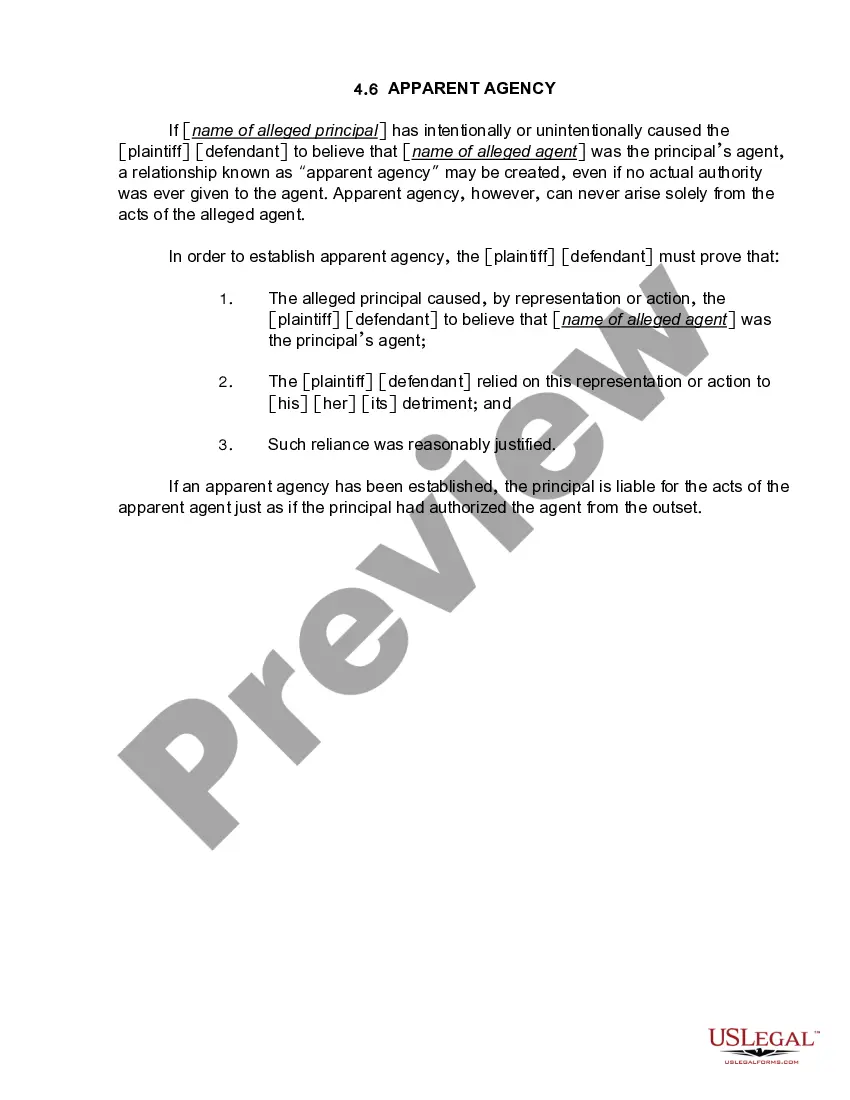
4.6 Apparent Agency
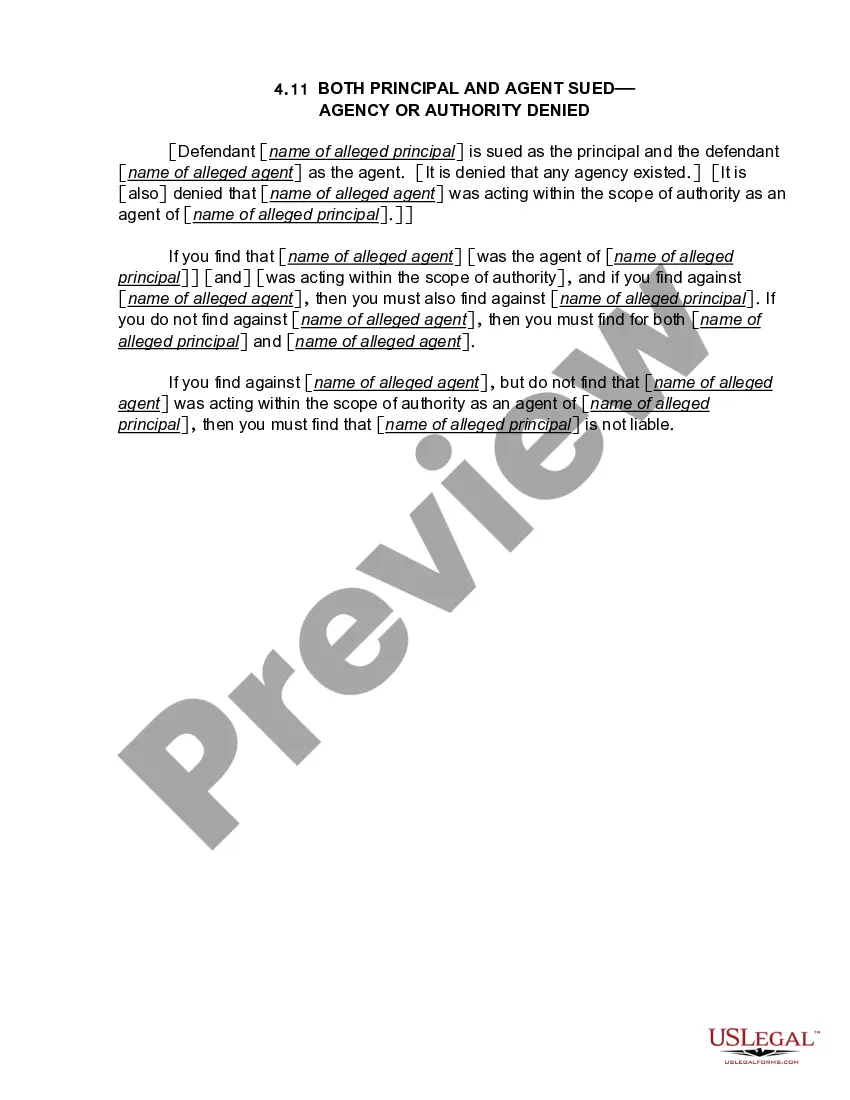
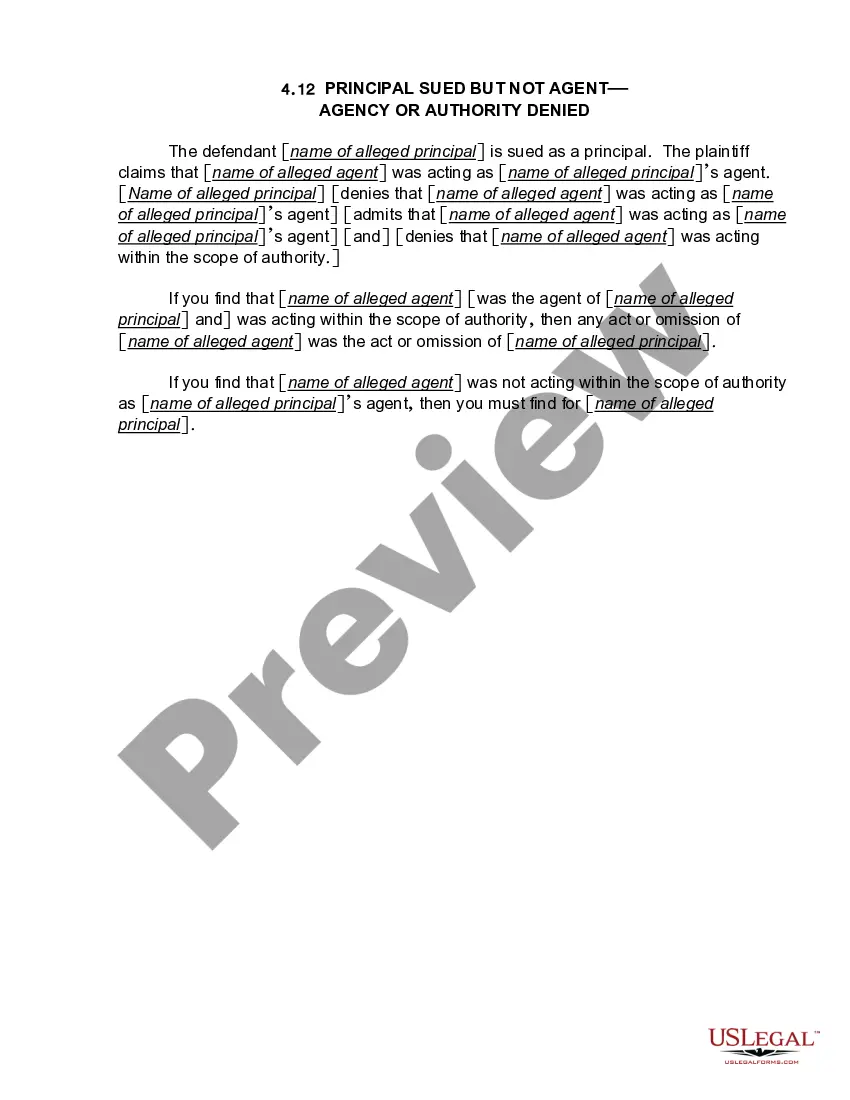



Is notarization required?
In most cases, this form does not require notarization. However, some jurisdictions or signing circumstances might. US Legal Forms offers online notarization powered by Notarize, accessible 24/7 for a quick, remote process.
Get your form ready online
Our built-in tools help you complete, sign, share, and store your documents in one place.
Make edits, fill in missing information, and update formatting in US Legal Forms—just like you would in MS Word.
Download a copy, print it, send it by email, or mail it via USPS—whatever works best for your next step.
Sign and collect signatures with our SignNow integration. Send to multiple recipients, set reminders, and more. Go Premium to unlock E-Sign.
If this form requires notarization, complete it online through a secure video call—no need to meet a notary in person or wait for an appointment.
We protect your documents and personal data by following strict security and privacy standards.

Make edits, fill in missing information, and update formatting in US Legal Forms—just like you would in MS Word.

Download a copy, print it, send it by email, or mail it via USPS—whatever works best for your next step.

Sign and collect signatures with our SignNow integration. Send to multiple recipients, set reminders, and more. Go Premium to unlock E-Sign.

If this form requires notarization, complete it online through a secure video call—no need to meet a notary in person or wait for an appointment.

We protect your documents and personal data by following strict security and privacy standards.
Looking for another form?
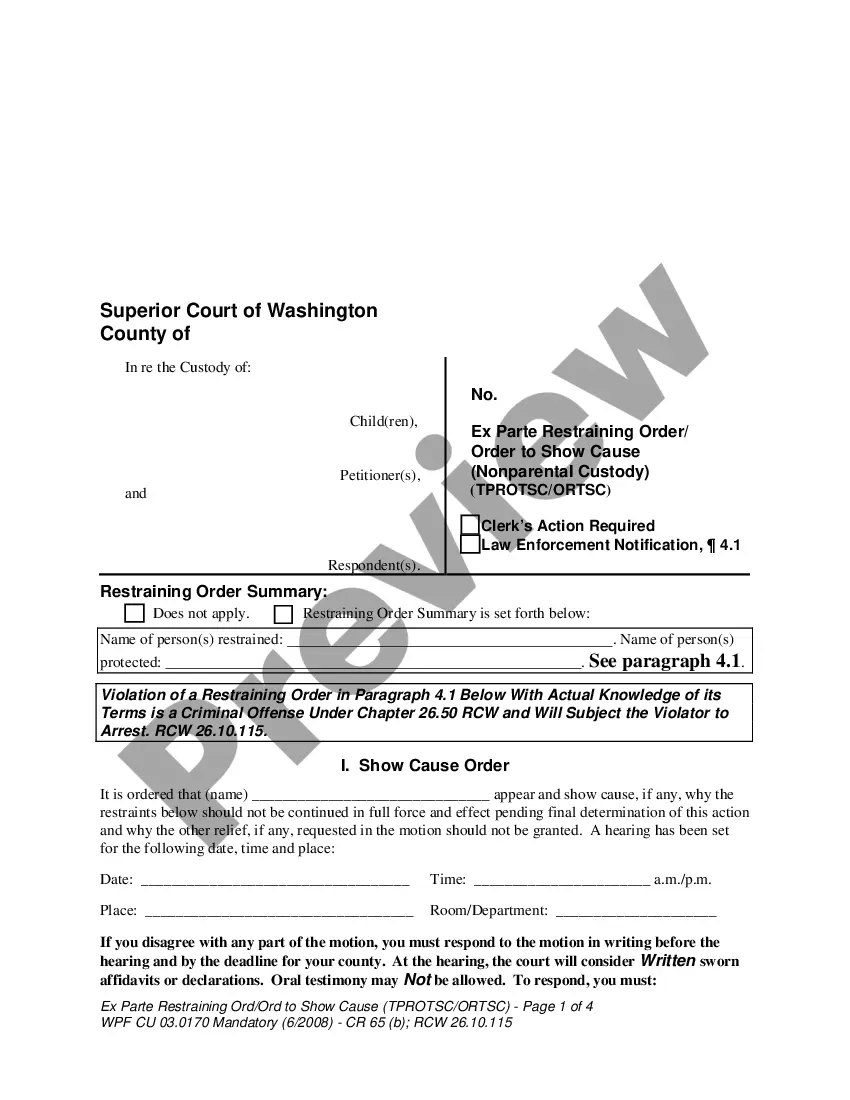
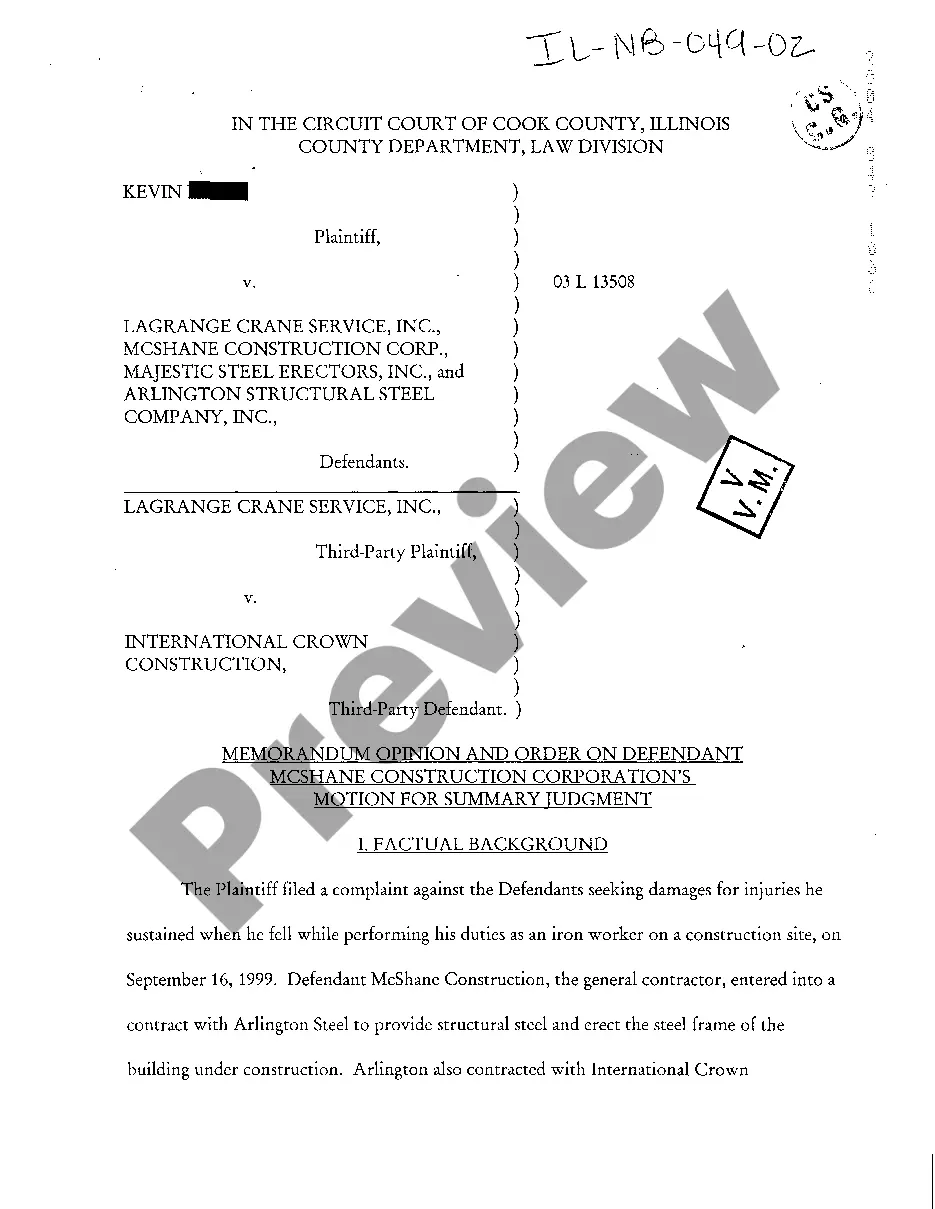


Form popularity
FAQ
An agent will have apparent or ostensible (not actual) authority if the principal has indicated to a third party that an agent has the authority to act on their behalf, despite the fact that the agent doesn't have the actual authority to do so.
Apparent authority is the power of an agent to act on behalf of a principal, even though not expressly or impliedly granted. This power arises only if a third party reasonably infers, from the principal's conduct, that the principal granted such power to the agent.
Apparent agency will require three elements: 1) an act by the apparent agent or his principal justifying a belief that an agency relationship exists, 2) the principal has knowledge of the general circumstances, and 3) a third party is reasonably relying on his belief in the apparent agency relationship.
You are told that Angelo is actually a car mechanic and has no authority to bind that deal. However, you reasonably believed that Angelo was a car salesman who had the authority to sell you the car. Basically, you believed Angelo had the apparent authority to sell you the car.