Attornment Agreement between Lessor and Sublessee of Lessee
About this form
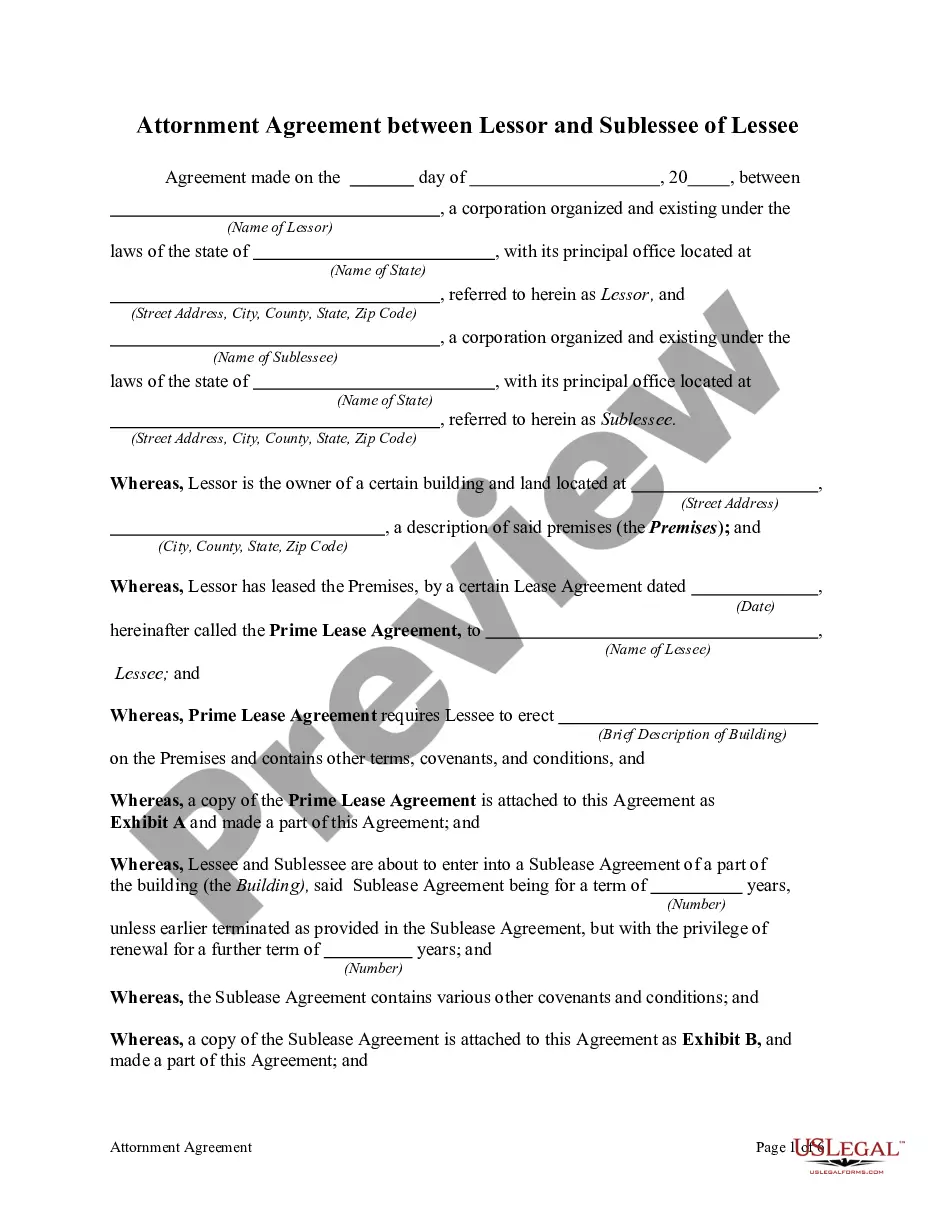
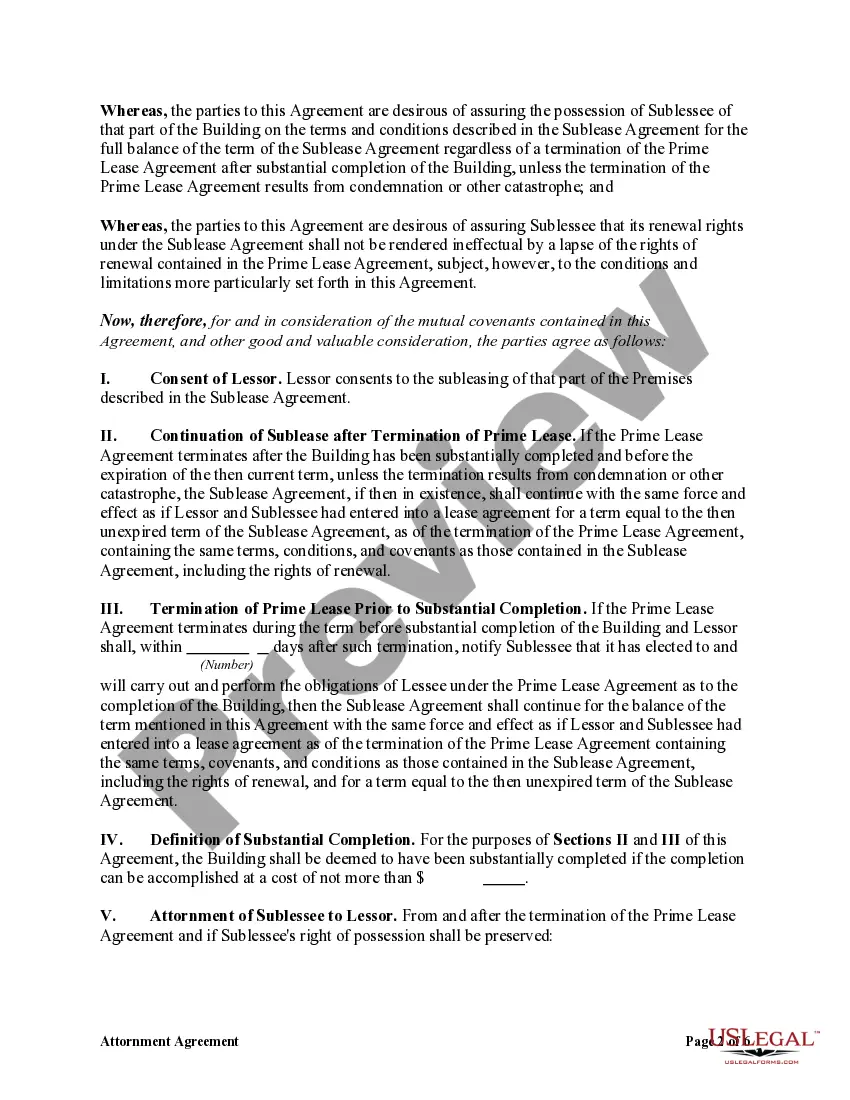
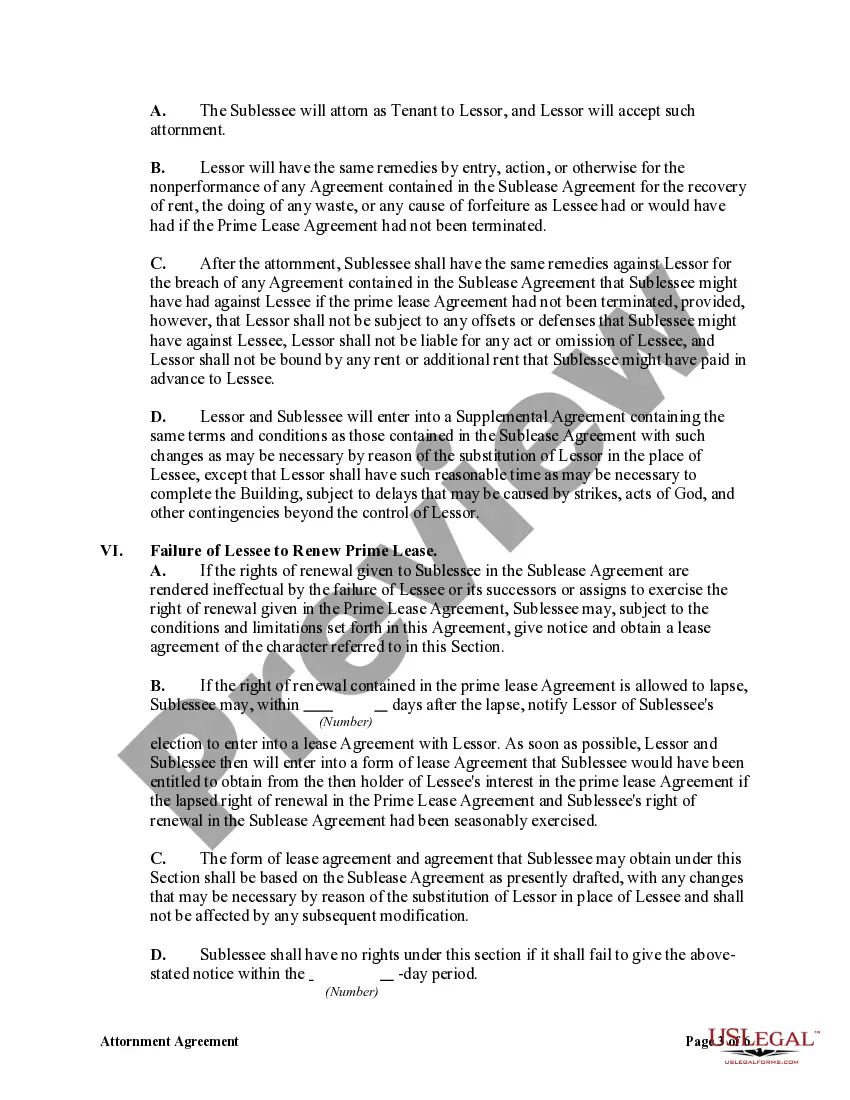
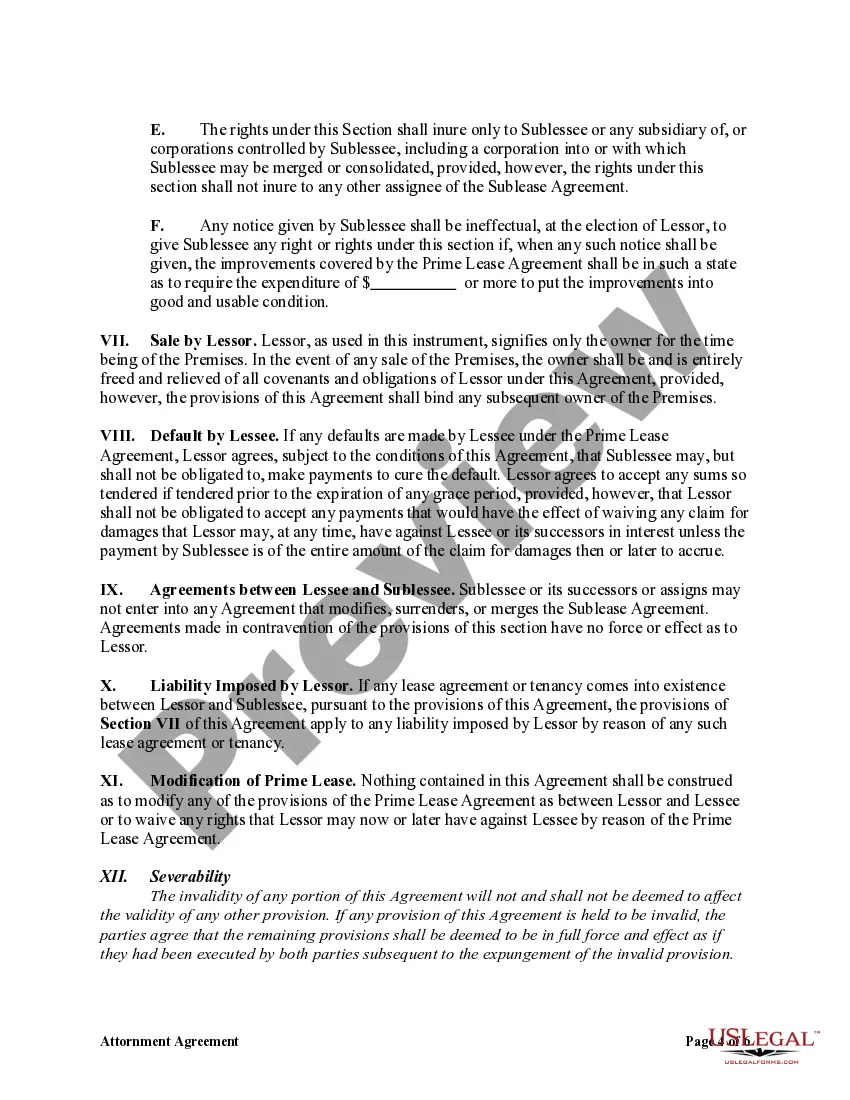
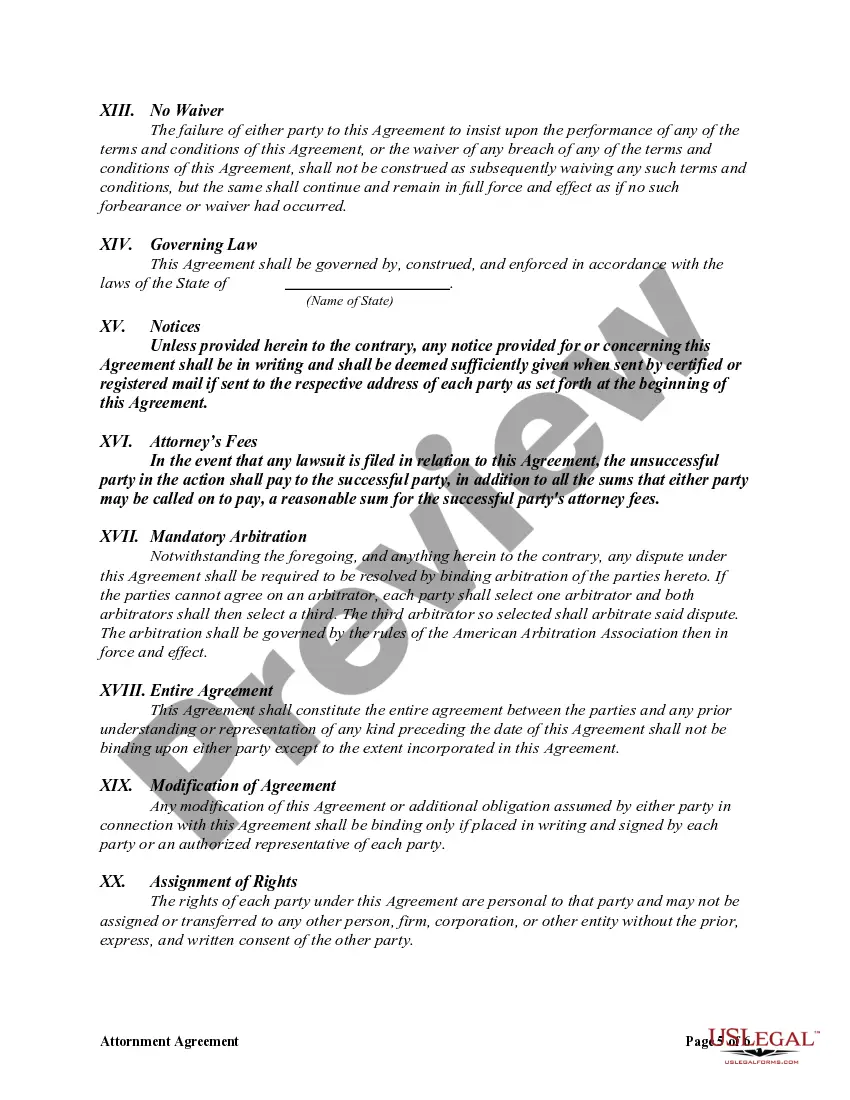
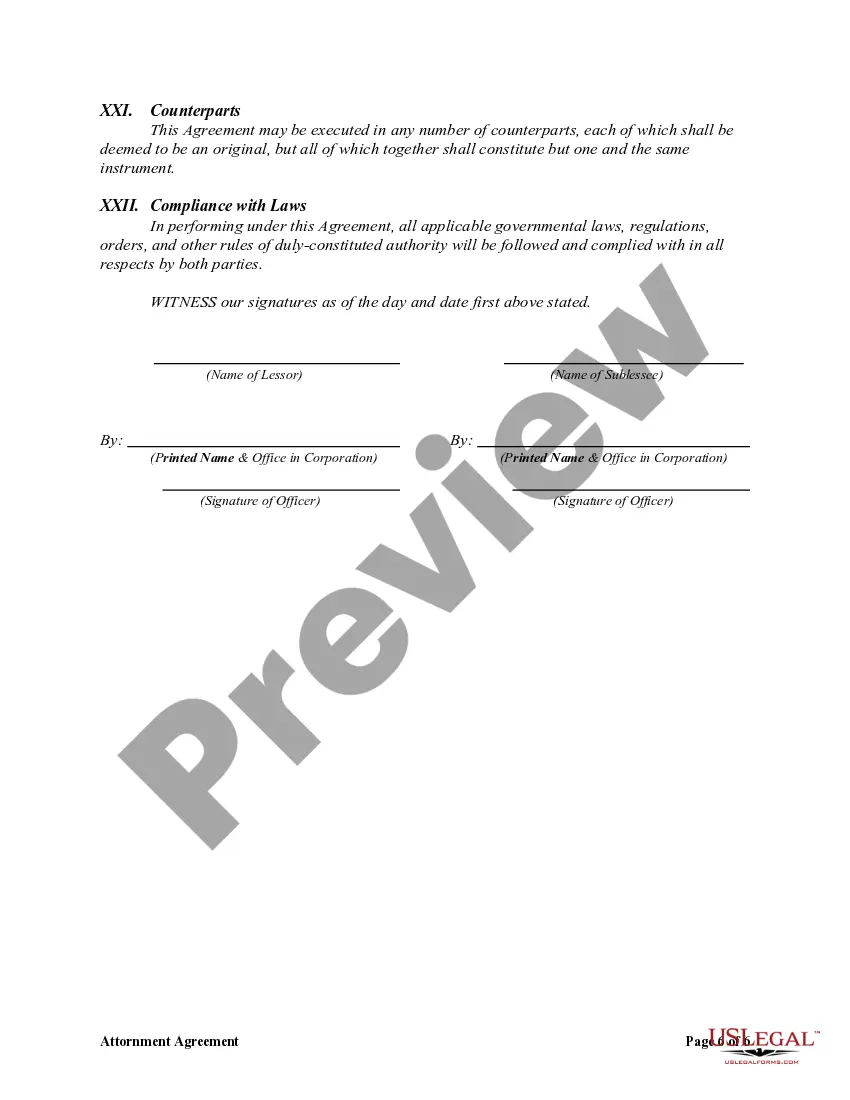
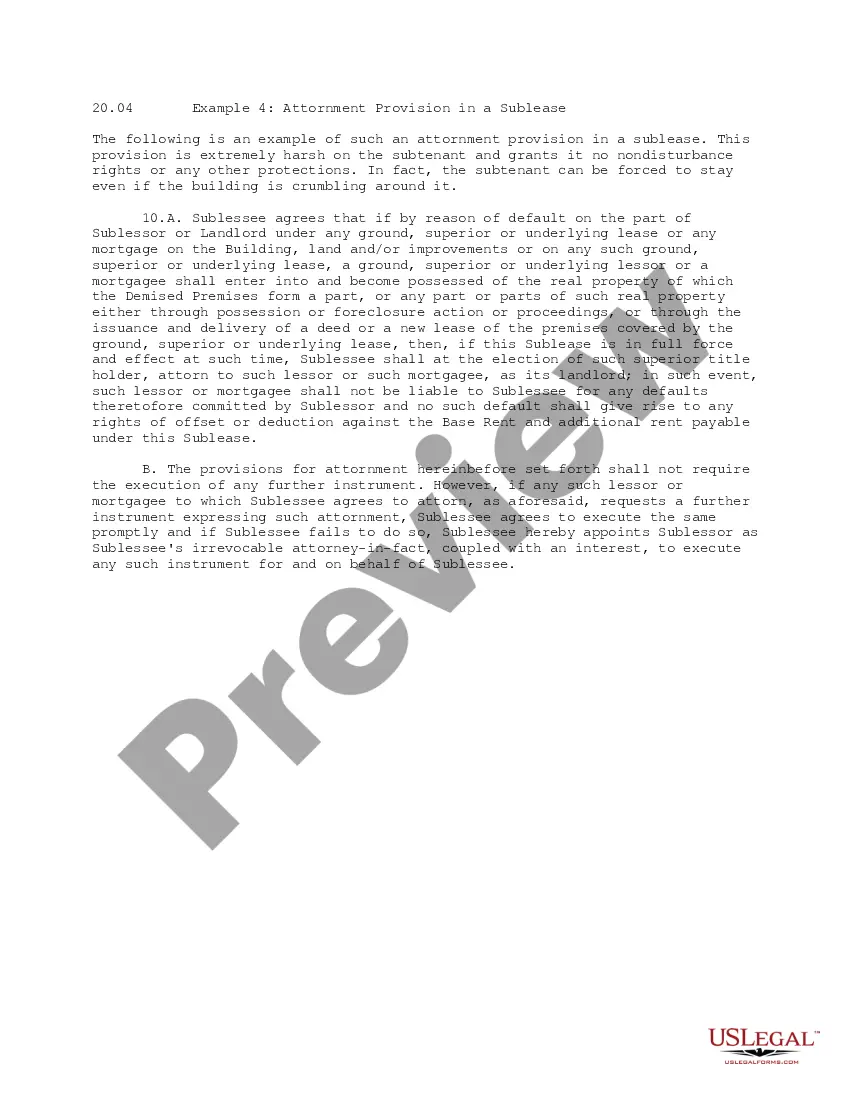
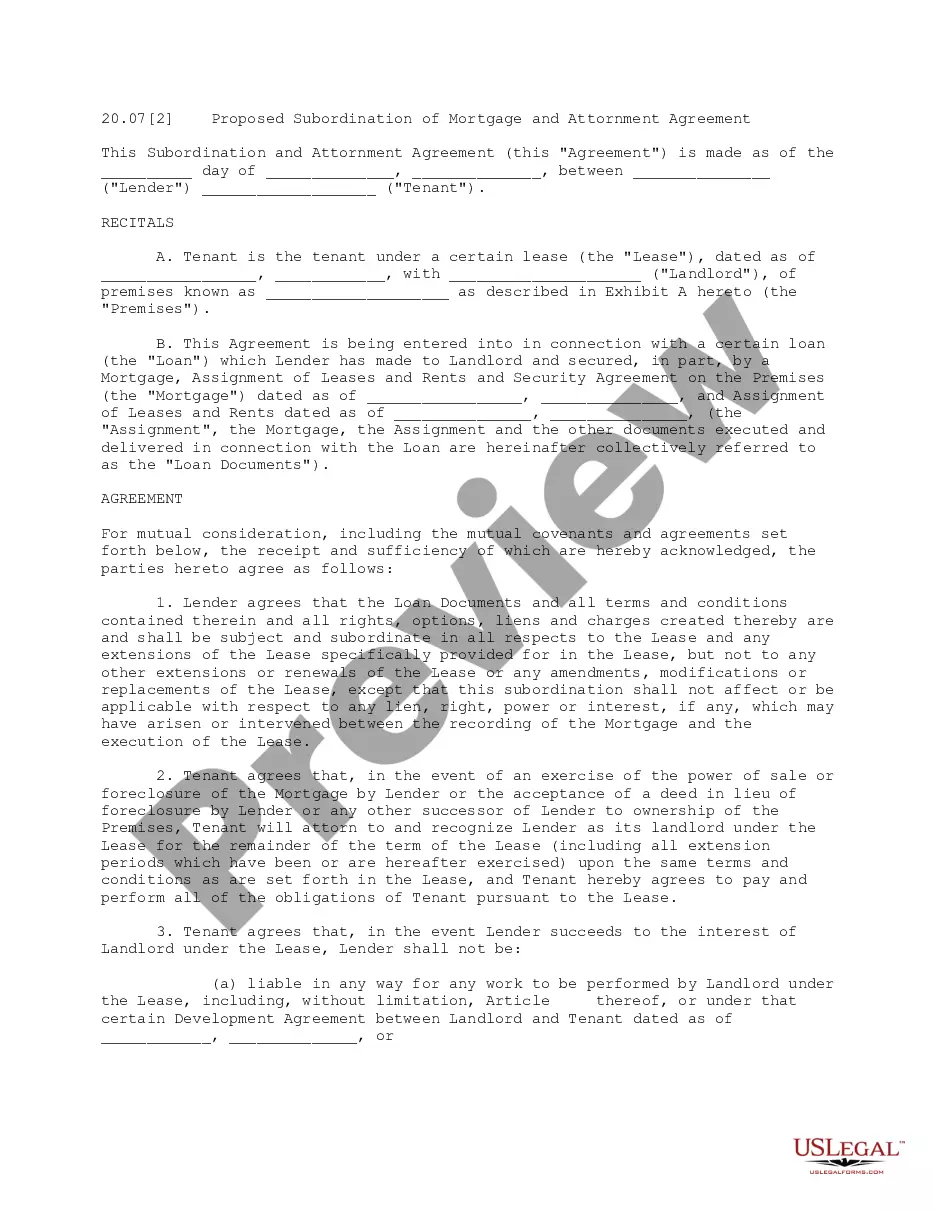
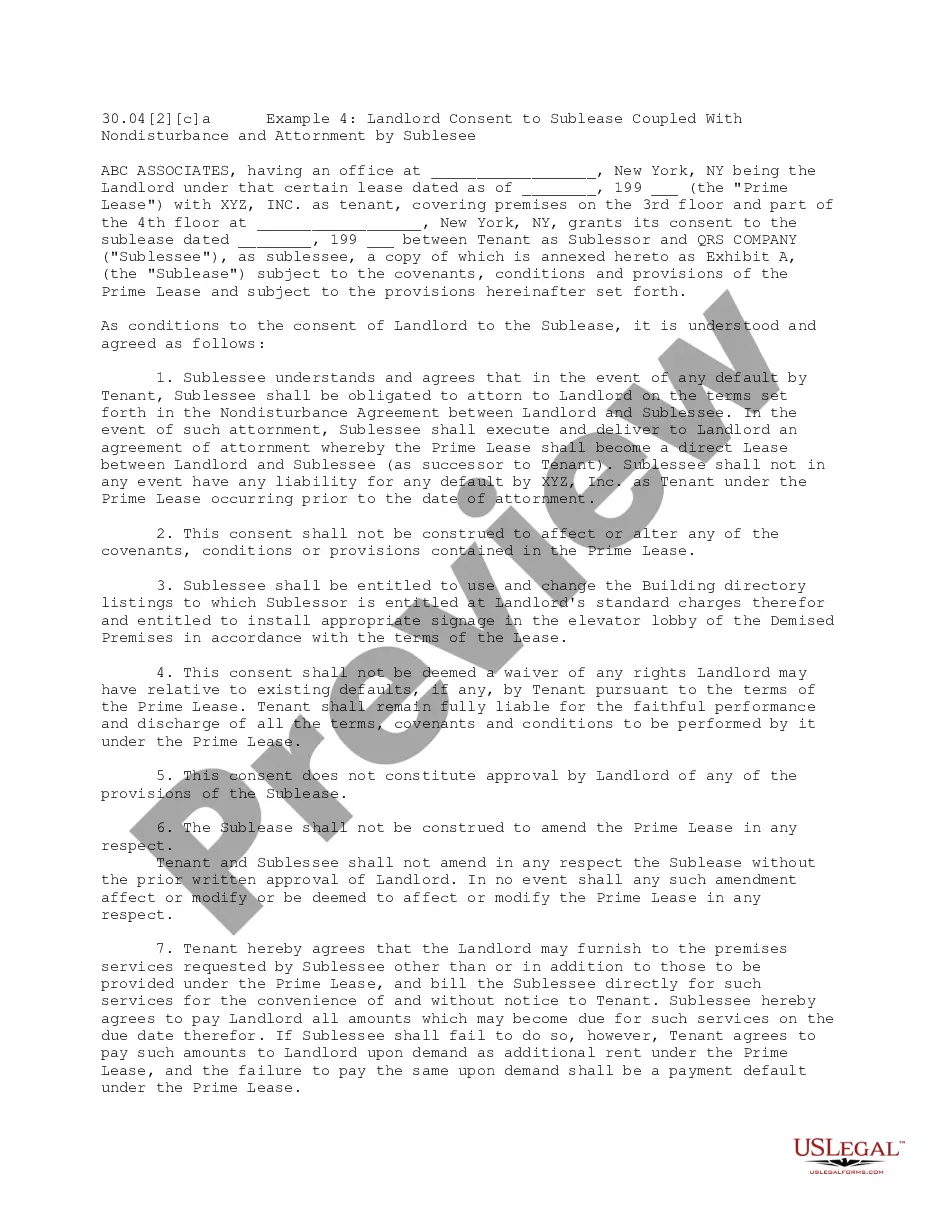
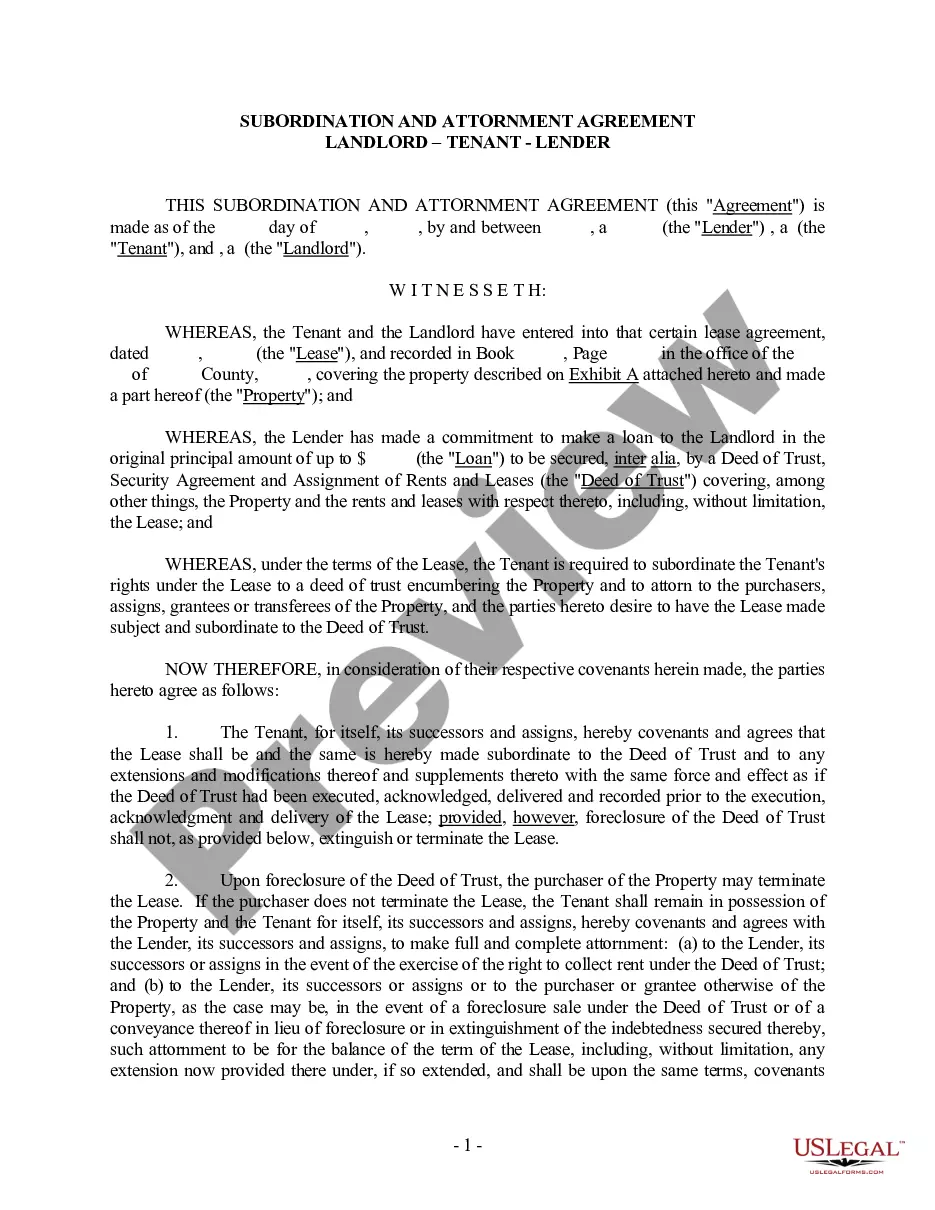
The Attornment Agreement between Lessor and Sublessee of Lessee is a legal document designed to establish a formal relationship between a property owner (lessor) and a tenant who subleases a portion of the property (sublessee). This form ensures that the sublessee's rights are secured even if the original lease (prime lease) is terminated, except in cases of condemnation or catastrophic events. It clarifies the obligations of both lessor and sublessee, distinguishing it from other lease agreements by its focus on rental rights under a sublease context.
Form components explained
- Consent of Lessor: Documented permission from the lessor for the sublease.
- Continuation of Sublease: Clarifies that the sublease remains valid even if the prime lease is terminated, barring specific circumstances.
- Default by Lessee: Outlines procedures the sublessee can follow if the original tenant defaults.
- Renewal Rights: Ensures that any renewal options under the sublease are protected.
- Liability and Agreements: Details the responsibilities and limitations of the lessor concerning the sublessee.
When this form is needed
This form should be used when a sublessee wants to secure their rights after entering into a sublease, particularly when there may be concerns about the termination of the prime lease. It is relevant in scenarios such as when a lessee is contemplating renewing their lease or ensuring their sublease remains effective despite potential lease changes from the lessor.
Who can use this document
- Property owners (lessors) who allow tenants (lessees) to sublease their rented property.
- Subtenants (sublessees) looking to protect their rental rights in case the primary lease is terminated.
- Real estate professionals involved in lease agreements and subletting arrangements.
Completing this form step by step
- Identify the parties involved: Name the lessor and sublessee.
- Specify the property: Clearly describe the premises being subleased.
- Enter the dates: Include the start date and duration of the sublease.
- Detail each party's obligations: Outline the responsibilities under the sublease agreement.
- Sign the agreement: Ensure both parties sign and date the document for validity.
Does this document require notarization?
This form usually doesn’t need to be notarized. However, local laws or specific transactions may require it. Our online notarization service, powered by Notarize, lets you complete it remotely through a secure video session, available 24/7.
Get your form ready online
Our built-in tools help you complete, sign, share, and store your documents in one place.
Make edits, fill in missing information, and update formatting in US Legal Forms—just like you would in MS Word.
Download a copy, print it, send it by email, or mail it via USPS—whatever works best for your next step.
Sign and collect signatures with our SignNow integration. Send to multiple recipients, set reminders, and more. Go Premium to unlock E-Sign.
If this form requires notarization, complete it online through a secure video call—no need to meet a notary in person or wait for an appointment.
We protect your documents and personal data by following strict security and privacy standards.

Make edits, fill in missing information, and update formatting in US Legal Forms—just like you would in MS Word.

Download a copy, print it, send it by email, or mail it via USPS—whatever works best for your next step.

Sign and collect signatures with our SignNow integration. Send to multiple recipients, set reminders, and more. Go Premium to unlock E-Sign.

If this form requires notarization, complete it online through a secure video call—no need to meet a notary in person or wait for an appointment.

We protect your documents and personal data by following strict security and privacy standards.
Common mistakes
- Failing to properly describe the leased premises, leading to confusion over what is being subleased.
- Not obtaining consent in writing, which can cause disputes later.
- Ignoring the renewal clauses in the sublease, risking lost rights.
Benefits of using this form online
- Convenience: Easily download and complete the agreement at your own pace.
- Editability: Modify the form as required to fit specific agreements.
- Reliability: Access forms drafted by licensed attorneys to ensure legality and completeness.
Legal use & context
- The Attornment Agreement is enforceable in a court of law as long as both parties have signed it.
- This agreement provides necessary protections for sublessees in case of termination of the primary lease.
- Consultation with a legal professional is advised to address unique circumstances or local regulations.
Main things to remember
- The Attornment Agreement ensures sublessee rights are upheld amidst changes to the primary lease.
- It is essential for anyone involved in subleasing properties to understand their rights and obligations under this agreement.
- Utilizing this form can help prevent legal complications between lessors and sublessees.
Looking for another form?
Form popularity
FAQ
If you are a leaseholder, you cannot change the lease terms without agreeing such change with your landlord. The reason for this is that as the lease is a contract between two parties, the leaseholder and the landlord, both parties must agree to change (referred to also as variation) of the terms of the lease.
With Tenant Consent. If the tenant and landlord both agree to the change, the parties can either (1) execute a new lease or rental agreement that includes the new clause, or (2) amend the existing lease or rental agreement. Without Tenant Consent.
1 attorney answer No, not without the landlord's agreement to amend the lease to shorten its duration, or a signed lease termination agreement. Under California law, all leases have the implied...
Most rental agreements are short-term agreements, such as month-to-month tenancies, while lease agreements are usually for longer rental periods, such as six months, a year, or more.
A lease is automatically void when it is against the law, such as a lease for an illegal purpose. In other circumstances, like fraud or duress, a lease can be declared void at the request of one party but not the other.
Your landlord can change a rental agreement at any time during the term of the agreement, with or without your consent. Changes must be made with adequate notice; notice periods are 30 days in most states. Changing a lease is harder because both parties must consent to almost any change.
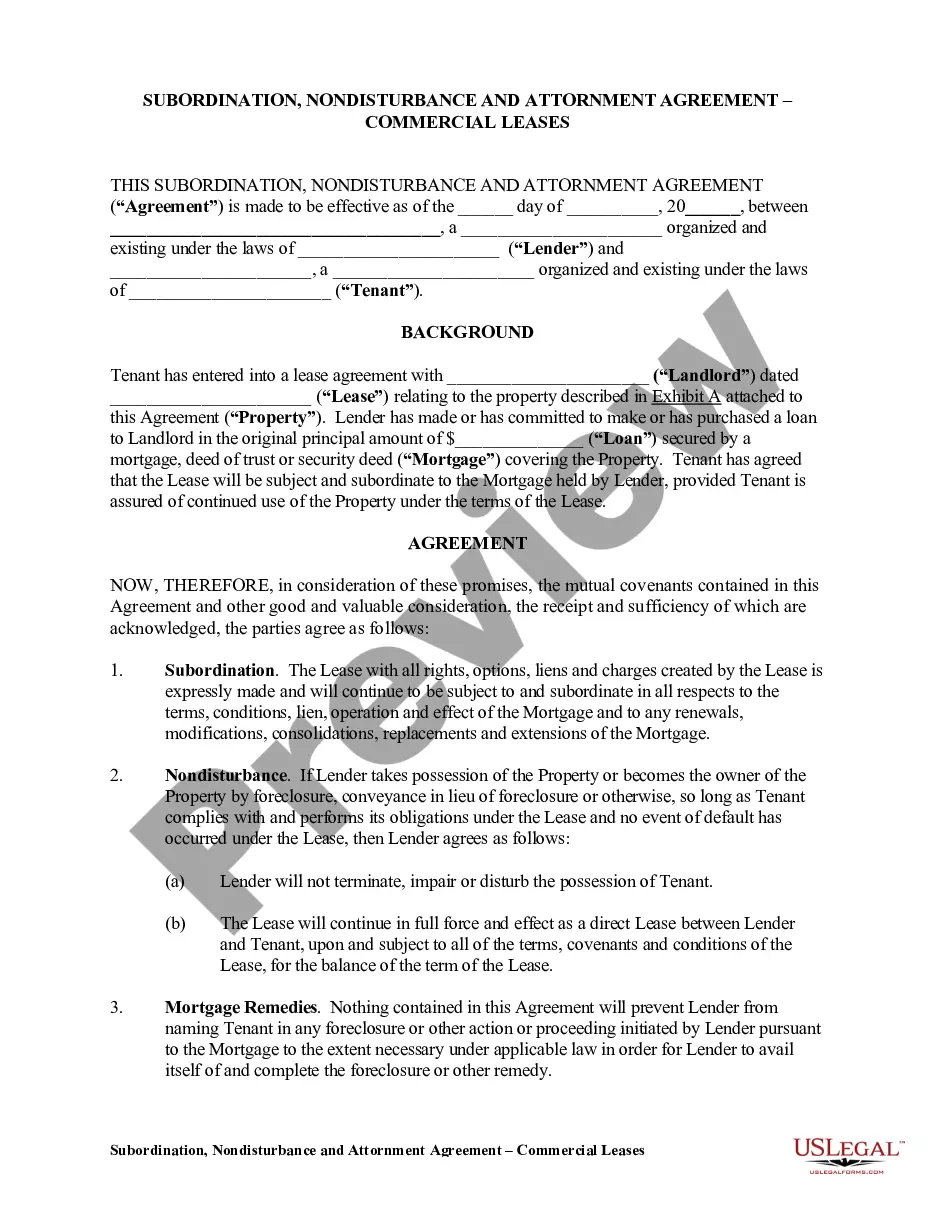
Attornment is the tenant's agreement to become the tenant of someone other than the original landlord and who has now taken title to the property.
Collect each party's information. Include specifics about your property. Consider all of the property's utilities and services. Know the terms of your lease. Set the monthly rent amount and due date. Calculate any additional fees. Determine a payment method. Consider your rights and obligations.
Attornment in a commercial lease is similar. The attornment clause in an SNDA obligates the tenant to recognize the new owner of the property as its landlord regardless of whether the new owner acquired the property through a normal sale or a foreclosure.