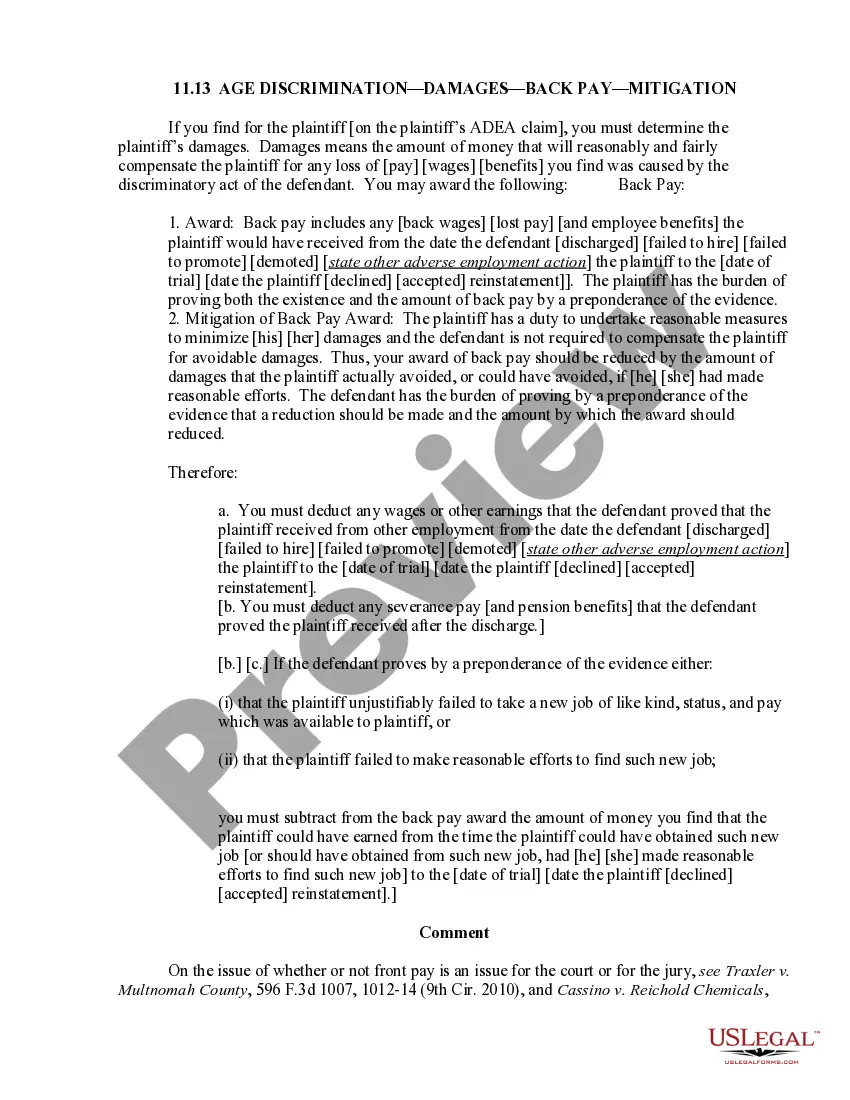
11.13 Age Discrimination-Damages-Back Pay-Mitigation
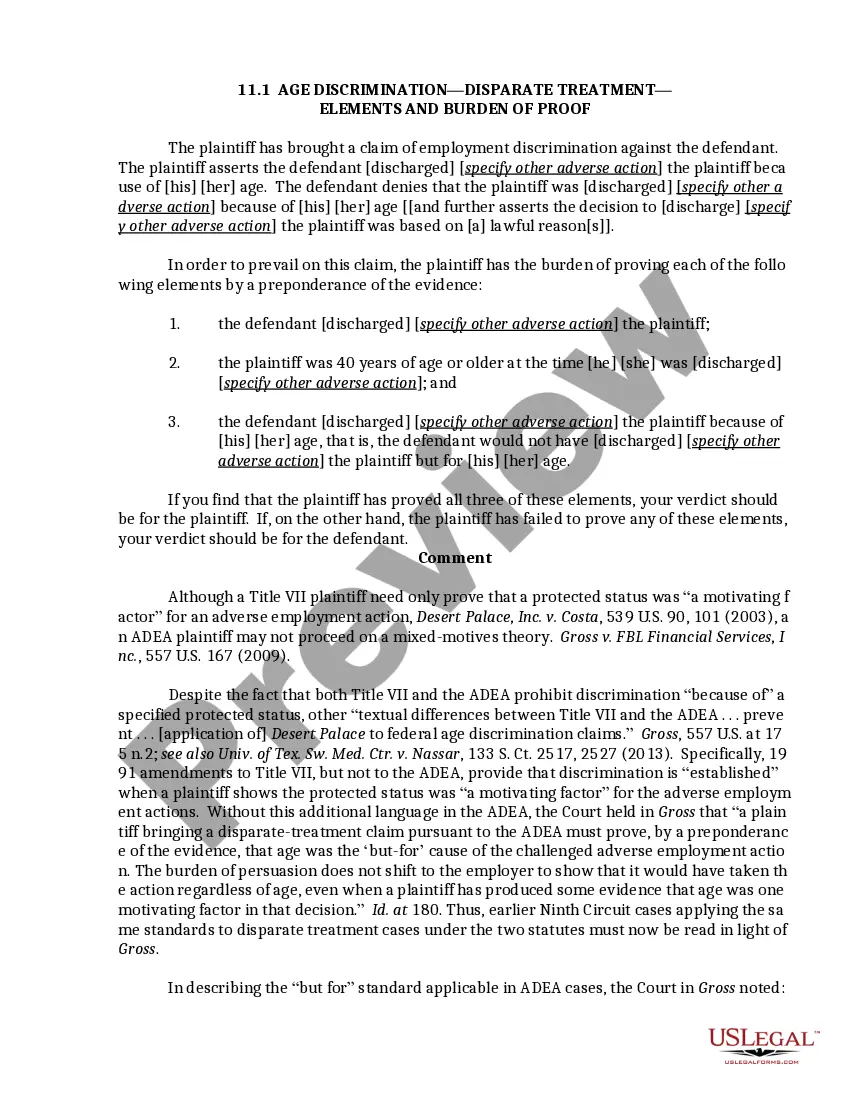

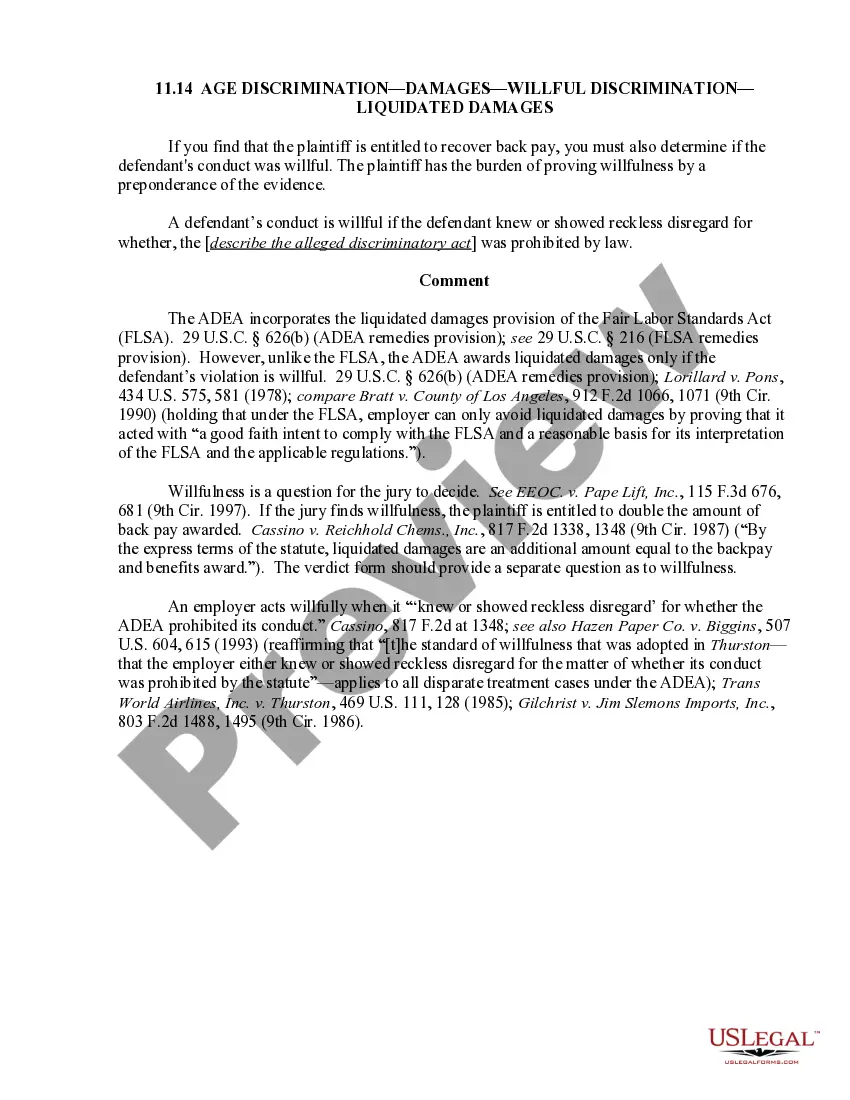
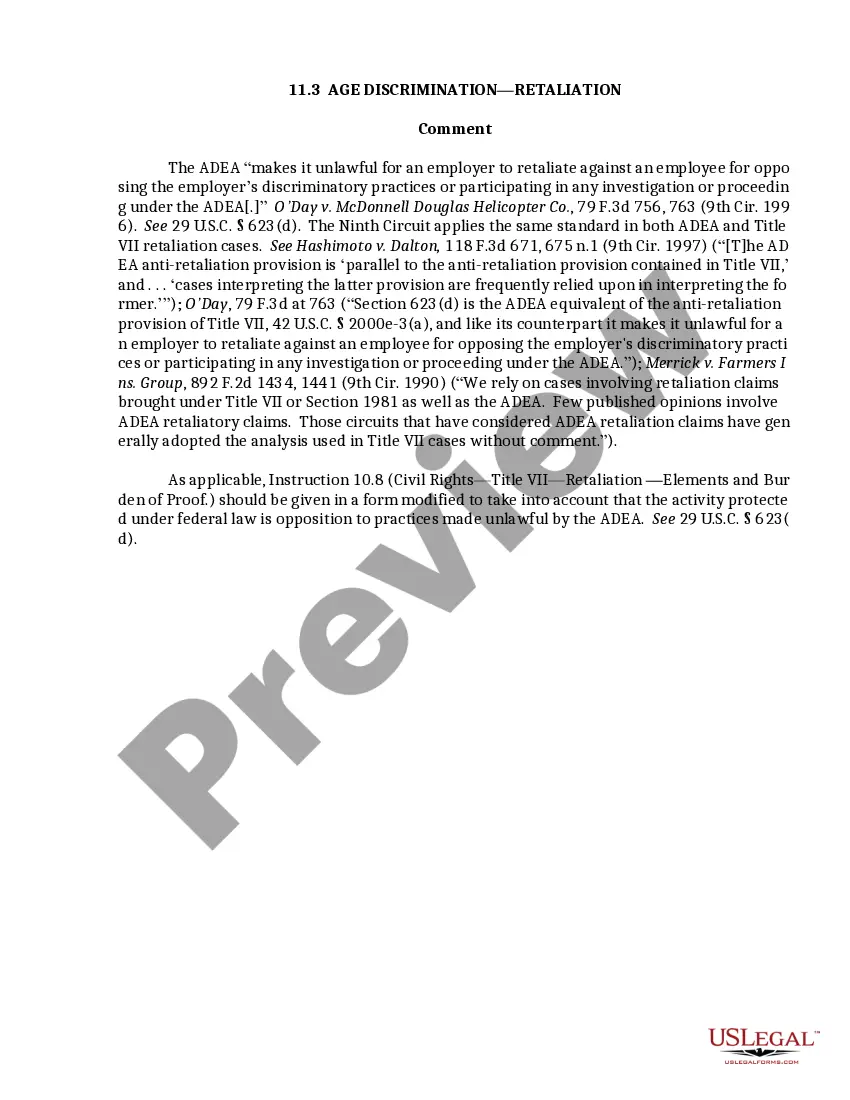
Notarization requirements for this form
Notarization is not commonly needed for this form. However, certain documents or local rules may make it necessary. Our notarization service, powered by Notarize, allows you to finalize it securely online anytime, day or night.
Get your form ready online
Our built-in tools help you complete, sign, share, and store your documents in one place.
Make edits, fill in missing information, and update formatting in US Legal Forms—just like you would in MS Word.
Download a copy, print it, send it by email, or mail it via USPS—whatever works best for your next step.
Sign and collect signatures with our SignNow integration. Send to multiple recipients, set reminders, and more. Go Premium to unlock E-Sign.
If this form requires notarization, complete it online through a secure video call—no need to meet a notary in person or wait for an appointment.
We protect your documents and personal data by following strict security and privacy standards.

Make edits, fill in missing information, and update formatting in US Legal Forms—just like you would in MS Word.

Download a copy, print it, send it by email, or mail it via USPS—whatever works best for your next step.

Sign and collect signatures with our SignNow integration. Send to multiple recipients, set reminders, and more. Go Premium to unlock E-Sign.

If this form requires notarization, complete it online through a secure video call—no need to meet a notary in person or wait for an appointment.

We protect your documents and personal data by following strict security and privacy standards.
Looking for another form?
Form popularity
FAQ
Back pay is typically calculated as the difference between the earnings that the plaintiff could have been expected to earn at the employer/defendant and the actual and/or expected earnings from replacement employment.
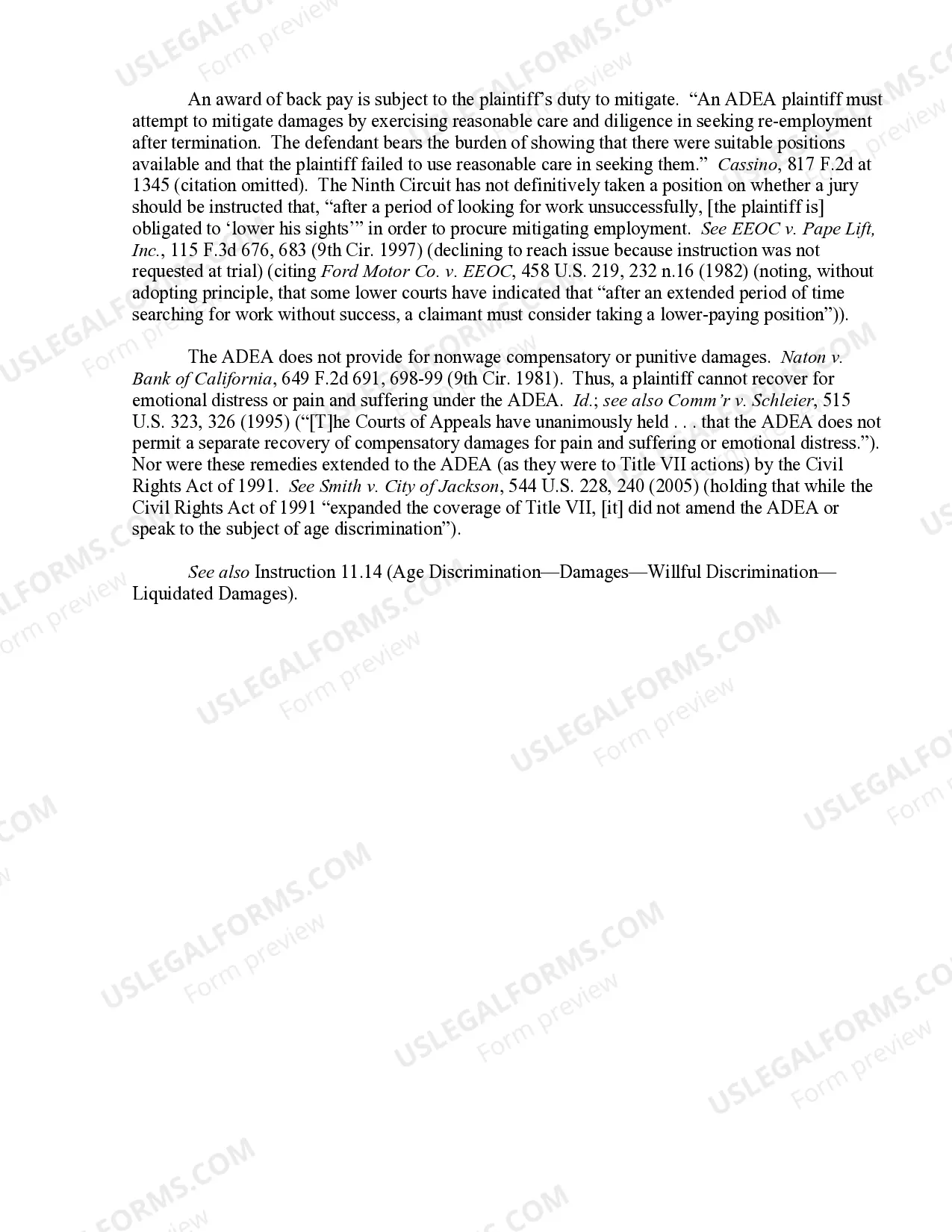
Compensatory damages pay victims for out-of-pocket expenses caused by the discrimination (such as costs associated with a job search or medical expenses) and compensate them for any emotional harm suffered (such as mental anguish, inconvenience, or loss of enjoyment of life).
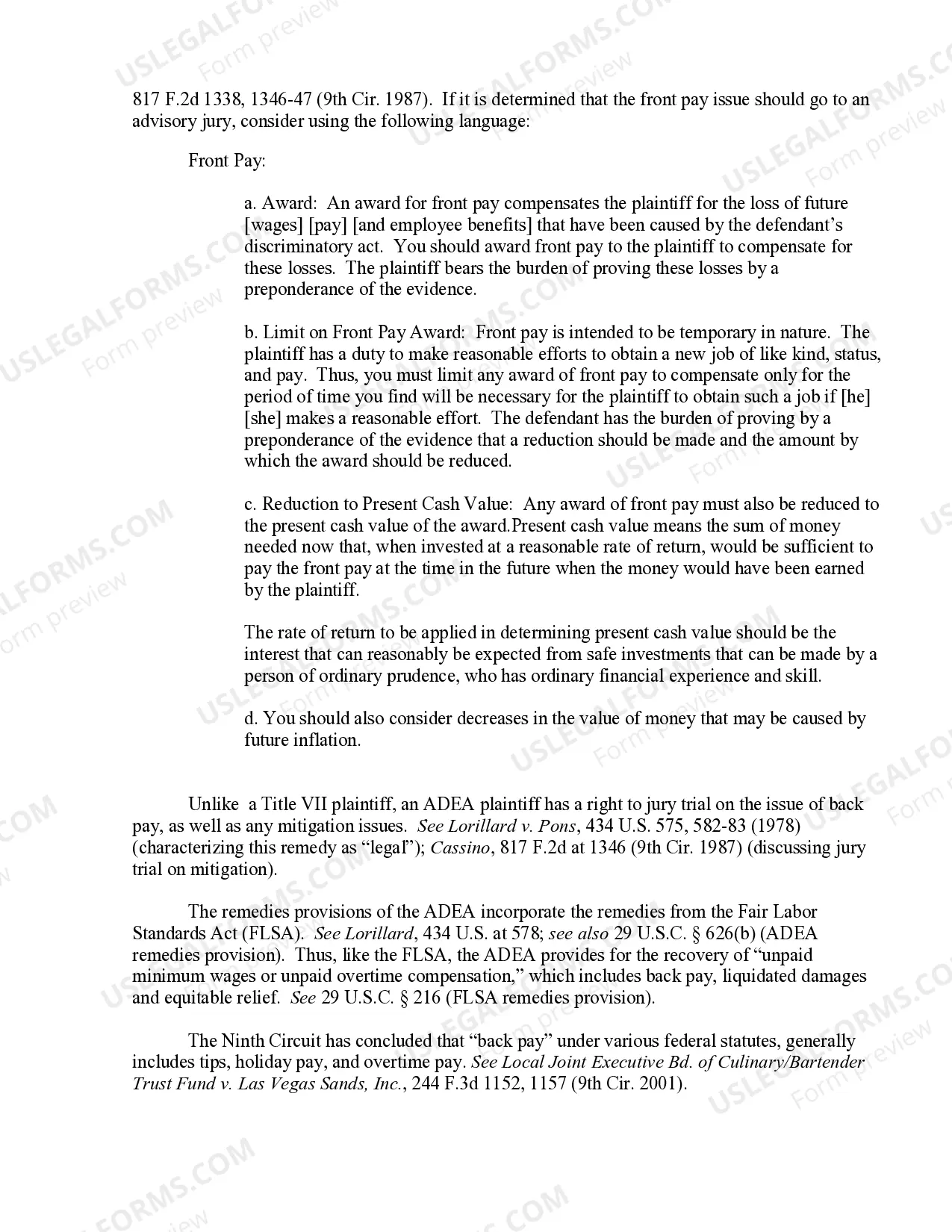
Front pay is an equitable remedy, an element of the "make whole" relief available to victims of employment discrimination.
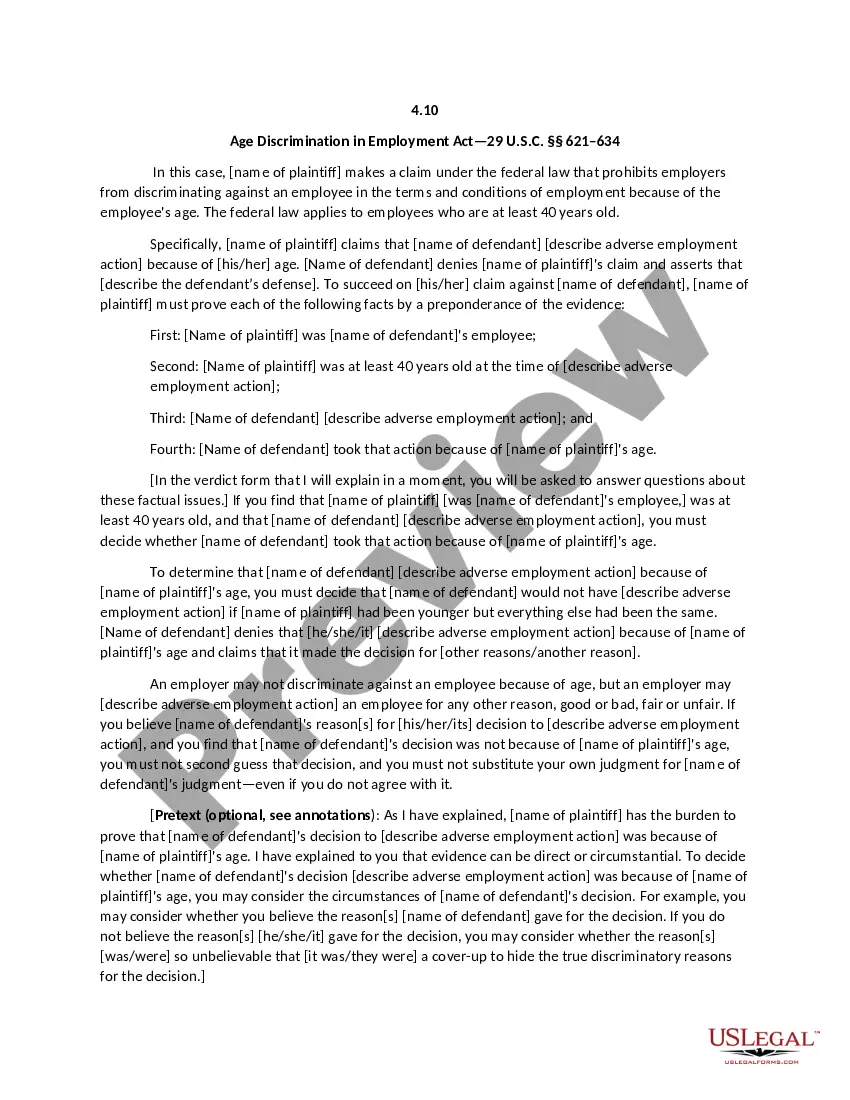
The remedies available under the ADEA for age discrimination may include injunctions, reinstatement, lost wages, and liquidated damages in the same amount as the lost wages.
Back pay is typically calculated as the difference between the earnings that the plaintiff could have been expected to earn at the employer/defendant and the actual and/or expected earnings from replacement employment.
Front pay is awarded to former employees whose employers can't rehire or reinstate them within the organization. Back pay is also awarded to former employees but this obligation can be voided if the employee accepts an offer to be reinstated to the same or similar position that accounts for the wages that they're due.
Back pay is payment for work done in the past where payment was not made at the time work was performed. The employer must make up the difference between what the employees were paid, if they were paid, and what they should have been paid.
Hence, back pay and front pay are deemed to be forms of equitable relief regardless of the fact they are money payments. The Civil Rights Act of 1991 expanded the types of damages avail- able to include the legal remedy of compensatory damages, which is defined to include future pecuniary losses (Mead 2003).