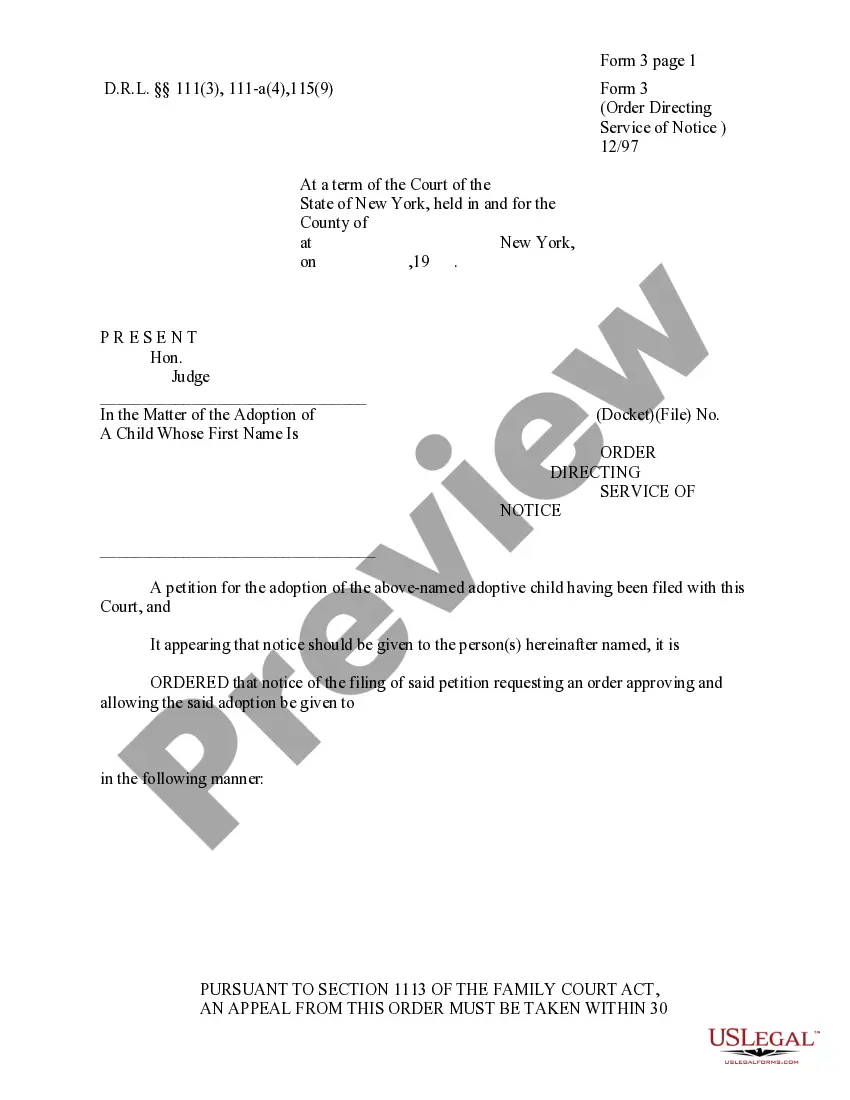
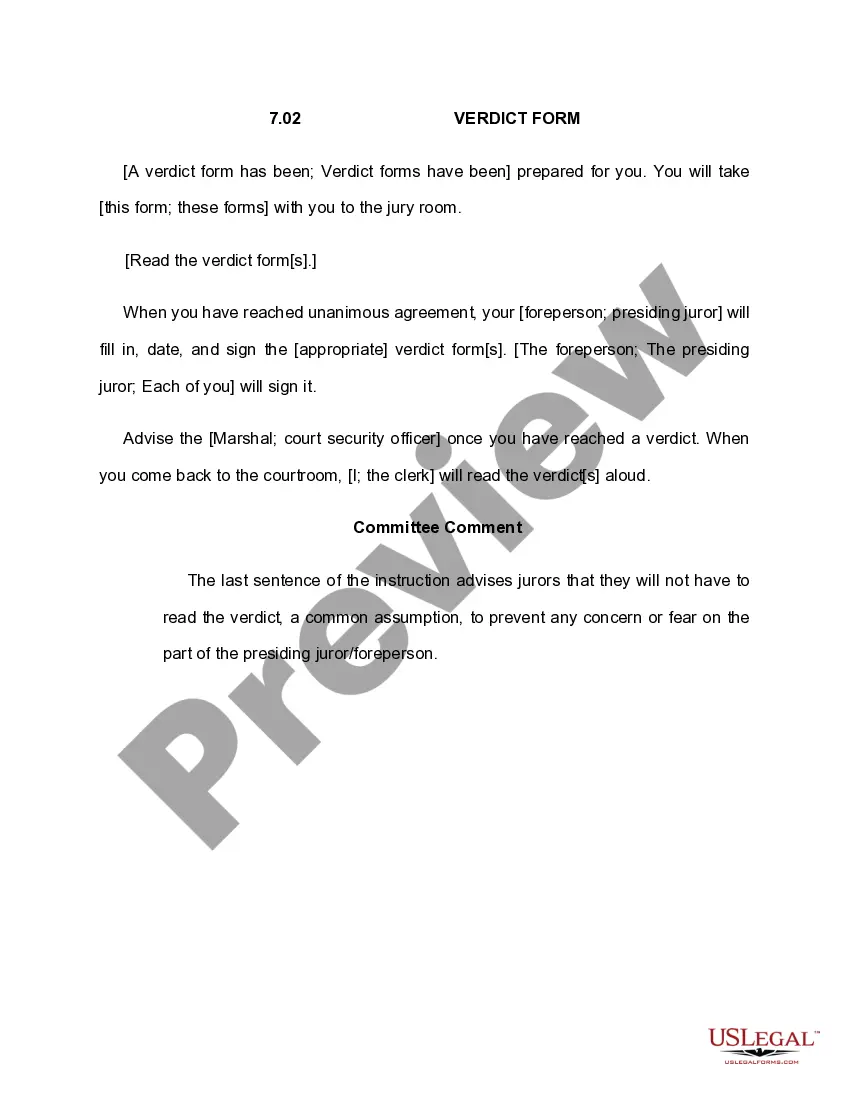
7.02 VERDICT FORM
Overview of this form
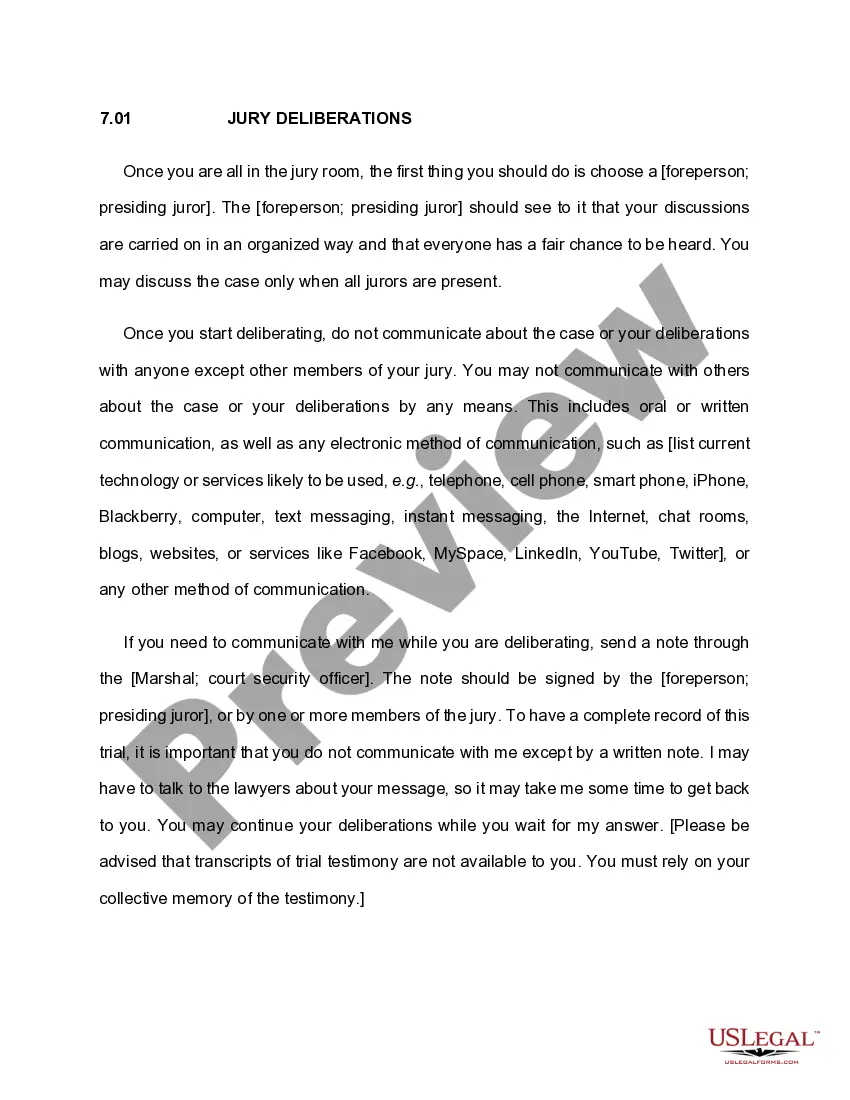
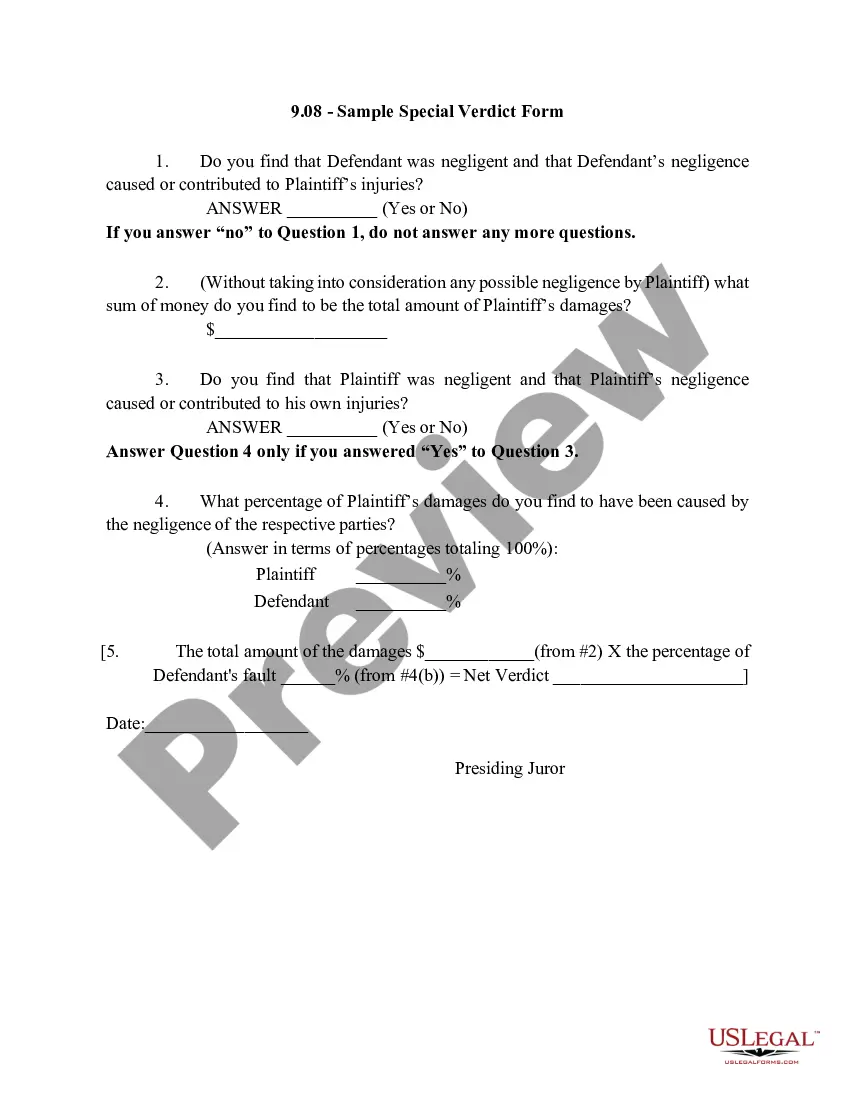
The 7.02 Verdict Form is an official template used by jurors in the Federal 7th Circuit Court to record their unanimous decision in a trial. It serves as a formal declaration of the jury's conclusions and differs from similar forms because it is specifically based on the patterns adopted by the 7th Circuit, ensuring compliance with federal legal standards. This form is vital in clearly documenting the jury's decision for the court record.
Key parts of this document
- Instructions on filling out the verdict form based on jury consensus.
- Designated areas for the foreperson's signature and date to validate the form.
- Guidelines for notifying court officials upon reaching a verdict.
- Clear instructions to reassure jurors regarding the reading of the verdict in court.

Situations where this form applies
This form should be used when a jury has completed its deliberations and reached a unanimous verdict in a legal case. It is essential in trial settings to formally record the jury's decision before it is presented in court. The verdict form serves as a critical component of the judicial process, ensuring transparency and accountability in the ruling.
Who should use this form
This form is intended for:
- Jurors who are serving on a trial panel in federal court.
- Forepersons of the jury responsible for submitting the final verdict.
- Court officials and clerks involved in the processing of jury decisions.
How to prepare this document
- Read the instructions provided on the verdict form carefully.
- Ensure all jurors have reached an unanimous agreement before proceeding.
- The foreperson should fill in the appropriate sections and date the form.
- Each juror must sign the verdict form to validate the decision.
- Notify the marshal or court security officer that a verdict has been reached.
Does this document require notarization?
This form does not typically require notarization unless specified by local law. It is important for jurors to complete the form accurately to uphold its validity within the court system.
Get your form ready online
Our built-in tools help you complete, sign, share, and store your documents in one place.
Make edits, fill in missing information, and update formatting in US Legal Forms—just like you would in MS Word.
Download a copy, print it, send it by email, or mail it via USPS—whatever works best for your next step.
Sign and collect signatures with our SignNow integration. Send to multiple recipients, set reminders, and more. Go Premium to unlock E-Sign.
If this form requires notarization, complete it online through a secure video call—no need to meet a notary in person or wait for an appointment.
We protect your documents and personal data by following strict security and privacy standards.

Make edits, fill in missing information, and update formatting in US Legal Forms—just like you would in MS Word.

Download a copy, print it, send it by email, or mail it via USPS—whatever works best for your next step.

Sign and collect signatures with our SignNow integration. Send to multiple recipients, set reminders, and more. Go Premium to unlock E-Sign.

If this form requires notarization, complete it online through a secure video call—no need to meet a notary in person or wait for an appointment.

We protect your documents and personal data by following strict security and privacy standards.
Avoid these common issues
- Failing to ensure all jurors agree unanimously before completing the form.
- Neglecting to properly sign and date the verdict form.
- Misinterpreting instructions about notifying court officials of the verdict.
- Inadvertently altering any preprinted instructions outlined on the form.
Why use this form online
- Immediate access to the official template ensures you have the correct version.
- Convenient download options allow for easy printing and sharing among jurors.
- Editable format provides flexibility to customize the report for specific case needs.
- Access to forms prepared by licensed attorneys guarantees legal compliance.
What to keep in mind
- The 7.02 Verdict Form is essential for documenting jury decisions in federal trials.
- It is vital for jurors to understand the formâs completion process and guidelines.
- Proper use and access to this form enhance the efficiency of judicial procedures.
Looking for another form?
Form popularity
FAQ
In federal criminal trials, the jury must reach a unanimous decision in order to convict the defendant. After they reach an agreement on a verdict, they notify the judge, the lawyers, and the defendant in open court. Everyone is present in court for the reading of the verdict.
Beyond a reasonable doubt: A verdict of "guilty" in a criminal case means that the jury has found that the person's guilt has been established beyond a reasonable doubt. The proof has to leave you with the conviction that the charge is true.
A general verdict with special interrogatories is sort of an amalgam of both a general and special verdict. It instructs the jury to return a general verdict, while also answering specific questions of fact.
"The unclean hands doctrine demands that a plaintiff act fairly in the matter for which he seeks a remedy. He must come into court with clean hands, and keep them clean, or he will be denied relief, regardless of the merits of his claim." (Kendall-Jackson Winery, Ltd.
A decision by a jury as to whether someone is guilty after having heard the facts given at a trial: The jury reached/returned a verdict of not guilty after six hours of deliberation.
Criminal law Different counts in the same case may have different verdicts. A verdict of guilty in a criminal case is generally requires evidence to be tested and true beyond reasonable doubt and is normally followed by a judgment of conviction rendered by judge, which in turn be followed by sentencing.
The verdict form, in turn, formalizes the jury's decisions on the case, telling us how it will answer the claims and defenses. Its structure and language could influence the jury's ultimate answers. It may also control what issues may be raised on appeal.
A verdict alone is not the final statement made by the court, and does not completely conclude the trial. A judgment, however, will conclude the entire trial. After a judgment is imposed, a plaintiff or defendant could appeal the decision. There are several different types of judgments that a judge can make.