2.01 Cautionary Instruction Before Recess
What this document covers
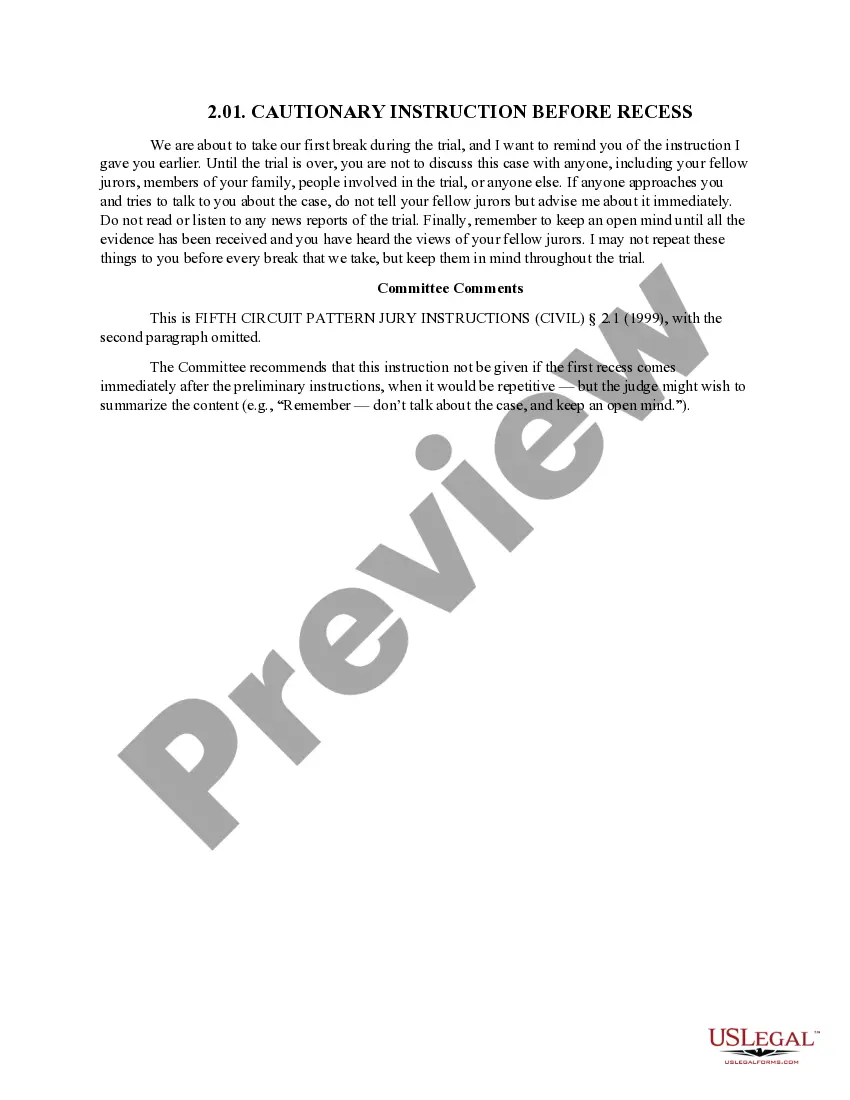
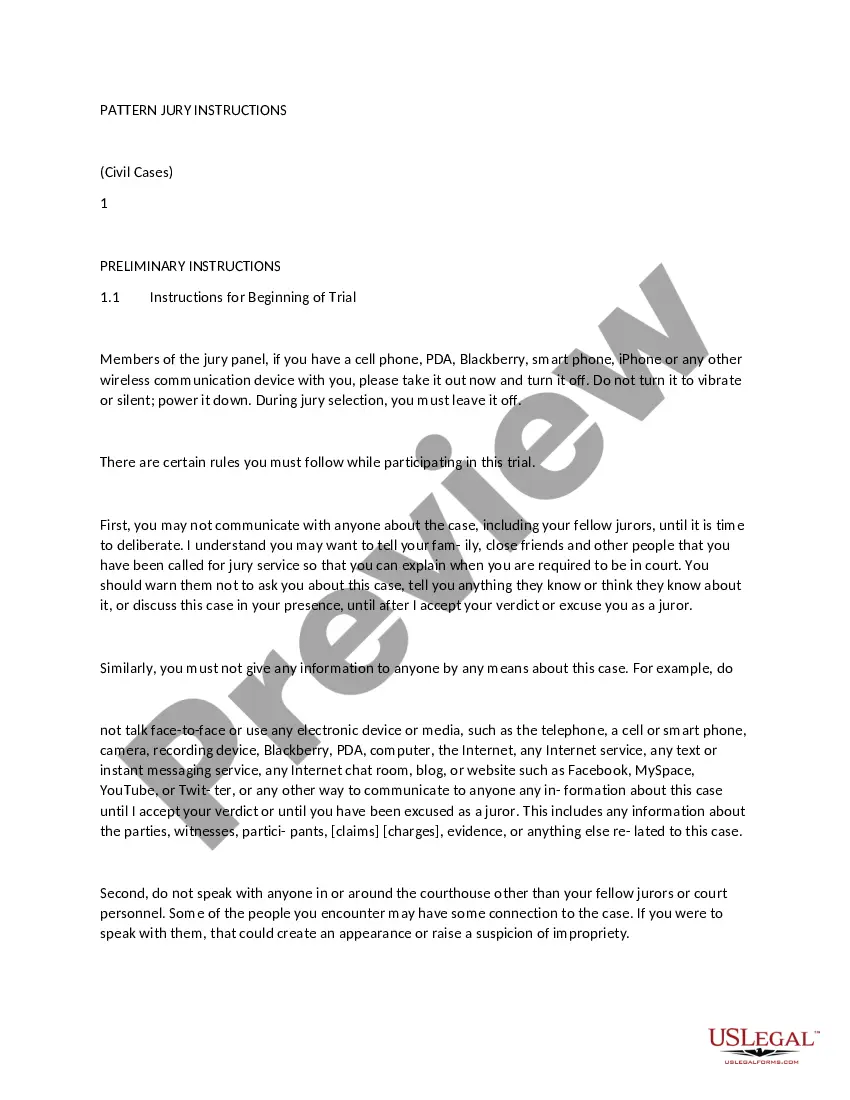
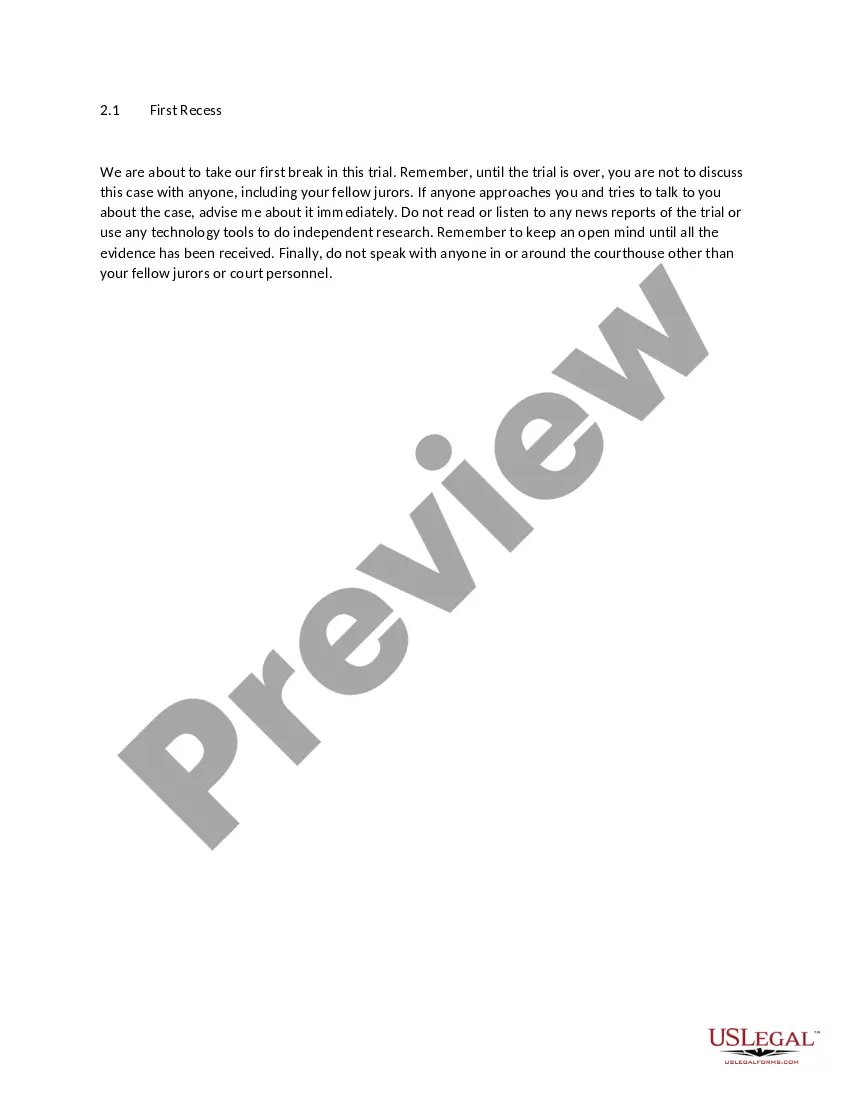
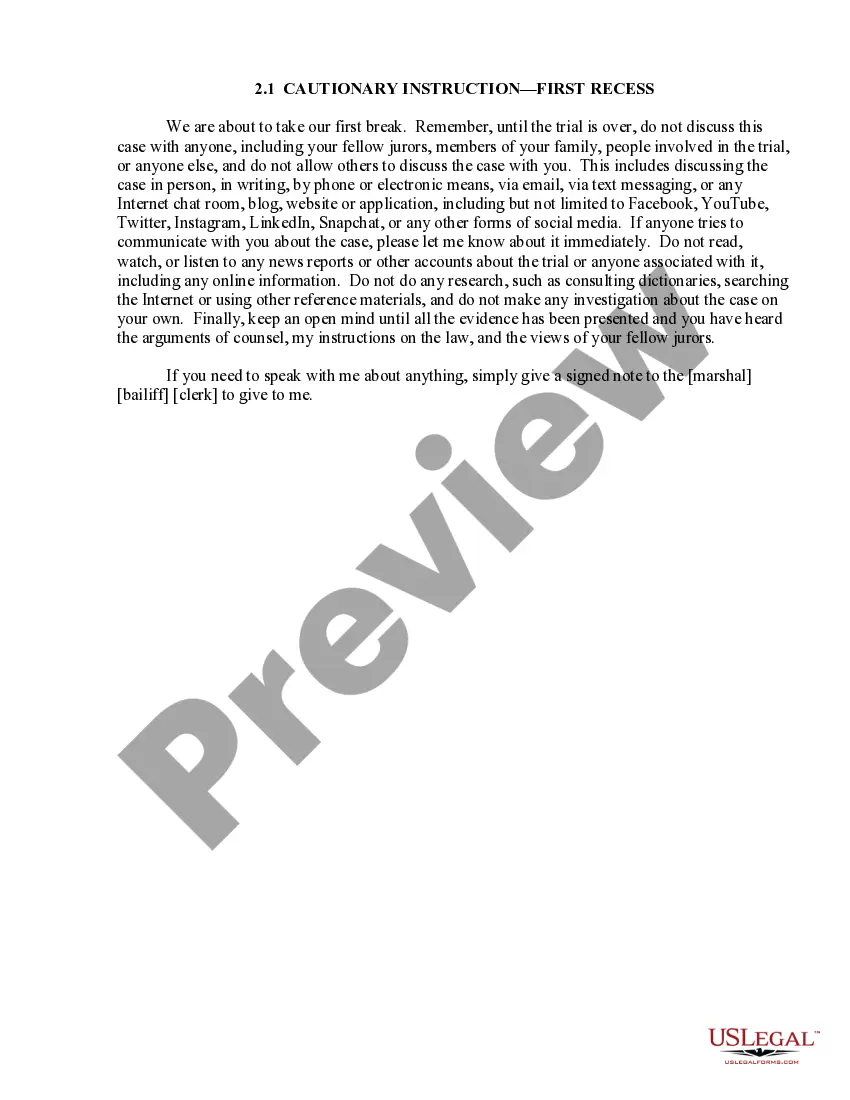
The Cautionary Instruction Before Recess form is an official jury instruction used by judges in the Federal 7th Circuit Court. Its primary purpose is to remind jurors to refrain from discussing the trial and to keep an open mind until all evidence has been presented. This form differs from other jury instructions as it specifically addresses behavior during recesses, emphasizing juror conduct and maintaining impartiality throughout the trial process.
What’s included in this form
- Reminds jurors not to discuss the case during breaks.
- Instructs jurors to avoid external information about the trial.
- Emphasizes maintaining an open mind until all evidence is heard.
- Includes guidance on how to handle conversations about the case if approached.
- Notes that this instruction may not be repeated before every recess.
When to use this form
This form should be used by judges during a trial when taking the first break or recess. It serves to establish proper conduct for jurors before they leave the courtroom. Utilizing this instruction helps prevent any premature discussions or prejudgments regarding the case while jurors are separate from one another.
Who this form is for
This instruction is intended for:
- Judges presiding over civil trials in the Federal 7th Circuit.
- Legal professionals involved in facilitating jury trials.
- Court staff managing jury processes during trials.
How to complete this form
- Prepare the instruction before recess during the jury trial.
- Read the instruction clearly to jurors, ensuring they understand the expectations.
- Encourage jurors to maintain confidentiality about the case.
- Remind jurors to refrain from reviewing any external information.
- Set a positive tone for keeping an open mind until the trial concludes.
Does this form need to be notarized?
This form does not typically require notarization to be legally valid. However, some jurisdictions or document types may still require it. US Legal Forms provides secure online notarization powered by Notarize, available 24/7 for added convenience.
Get your form ready online
Our built-in tools help you complete, sign, share, and store your documents in one place.
Make edits, fill in missing information, and update formatting in US Legal Forms—just like you would in MS Word.
Download a copy, print it, send it by email, or mail it via USPS—whatever works best for your next step.
Sign and collect signatures with our SignNow integration. Send to multiple recipients, set reminders, and more. Go Premium to unlock E-Sign.
If this form requires notarization, complete it online through a secure video call—no need to meet a notary in person or wait for an appointment.
We protect your documents and personal data by following strict security and privacy standards.

Make edits, fill in missing information, and update formatting in US Legal Forms—just like you would in MS Word.

Download a copy, print it, send it by email, or mail it via USPS—whatever works best for your next step.

Sign and collect signatures with our SignNow integration. Send to multiple recipients, set reminders, and more. Go Premium to unlock E-Sign.

If this form requires notarization, complete it online through a secure video call—no need to meet a notary in person or wait for an appointment.

We protect your documents and personal data by following strict security and privacy standards.
Typical mistakes to avoid
- Failing to remind jurors about the instruction before every recess.
- Not clarifying the importance of confidentiality regarding case discussions.
- Omitting to address how jurors should respond if approached about the case.
Advantages of online completion
- Convenient access to official jury instructions anytime, anywhere.
- Editable format allows easy customization for specific cases.
- Reliable source ensuring compliance with federal court requirements.
Looking for another form?


Form popularity
FAQ
Another example of a curative instruction is when the judge tells the jury to disregard certain evidence or consider it for specific purposes only. This is called a cautionary instruction and is meant to prevent the evidence from unfairly influencing the jury's decision.
Judge: Members of the jury, you have heard all of the testimony concerning this case. It is now up to you to determine the facts. You and you alone, are the judges of the fact. Once you decide what facts the evidence proves, you must then apply the law as I give it to you to the facts as you find them.
A cautionary instruction is a direction or guideline that a judge gives to a jury concerning the law of the case. It is usually given to warn the jury about certain evidence or to instruct them not to be influenced by outside factors.
The jury listens to the evidence during a trial, decides what facts the evidence has established, and draws inferences from those facts to form the basis for their decision.
Recess is a break in a trial, other adjudicatory proceedings or legislative session until a specified date and time. Recess is not to be confused with adjournment, which winds up the proceedings.