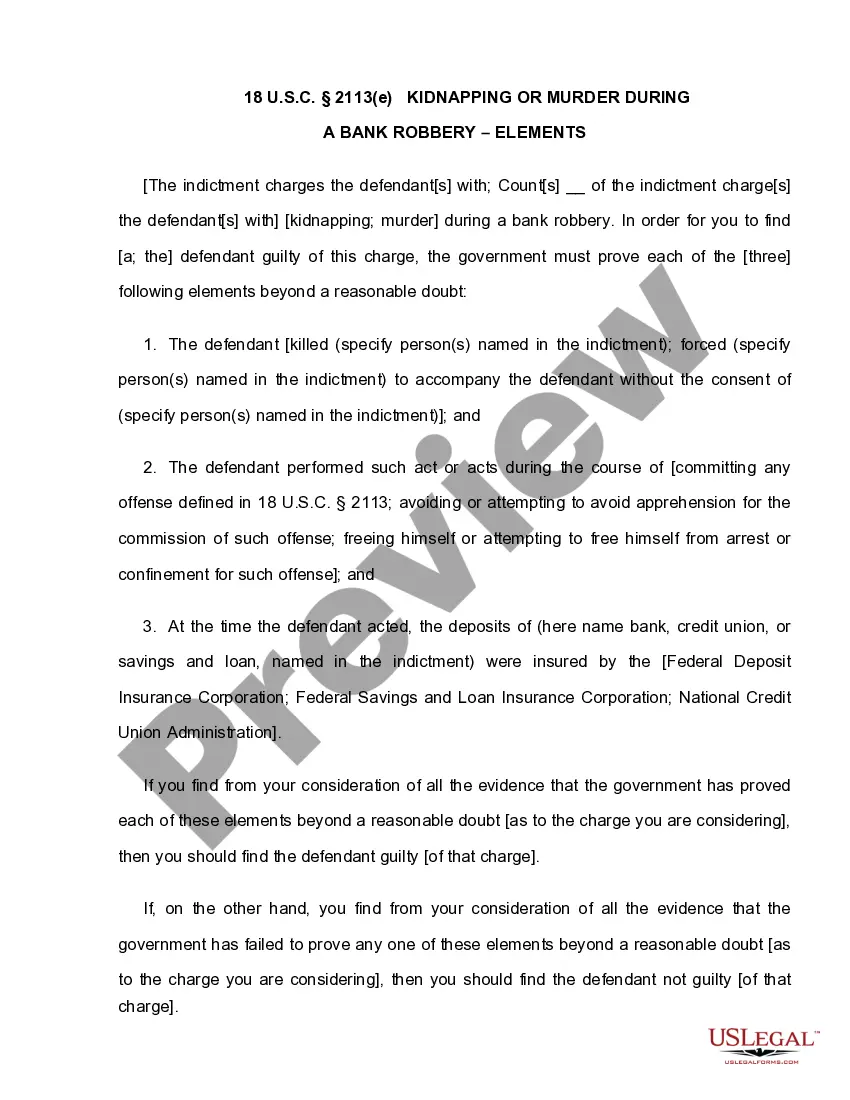
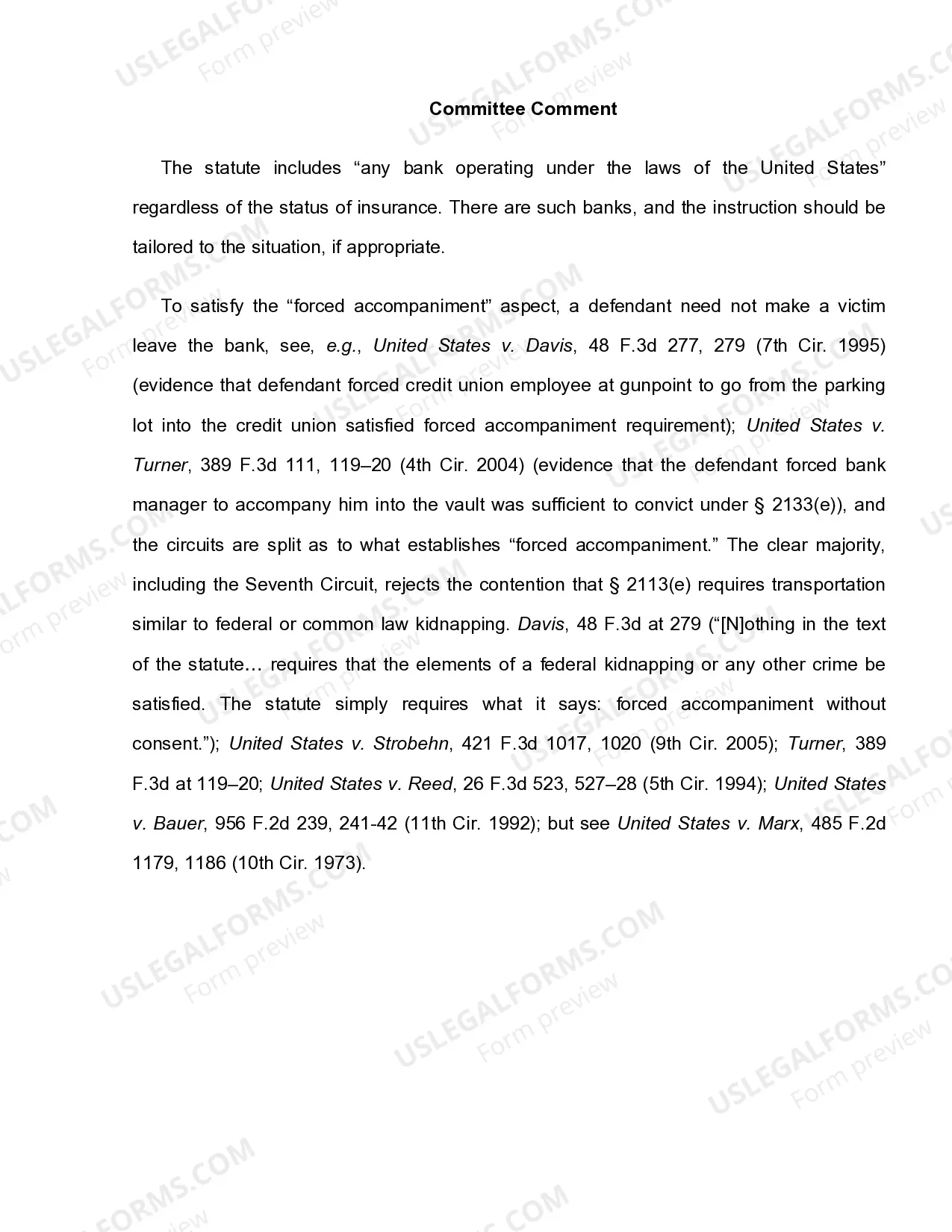
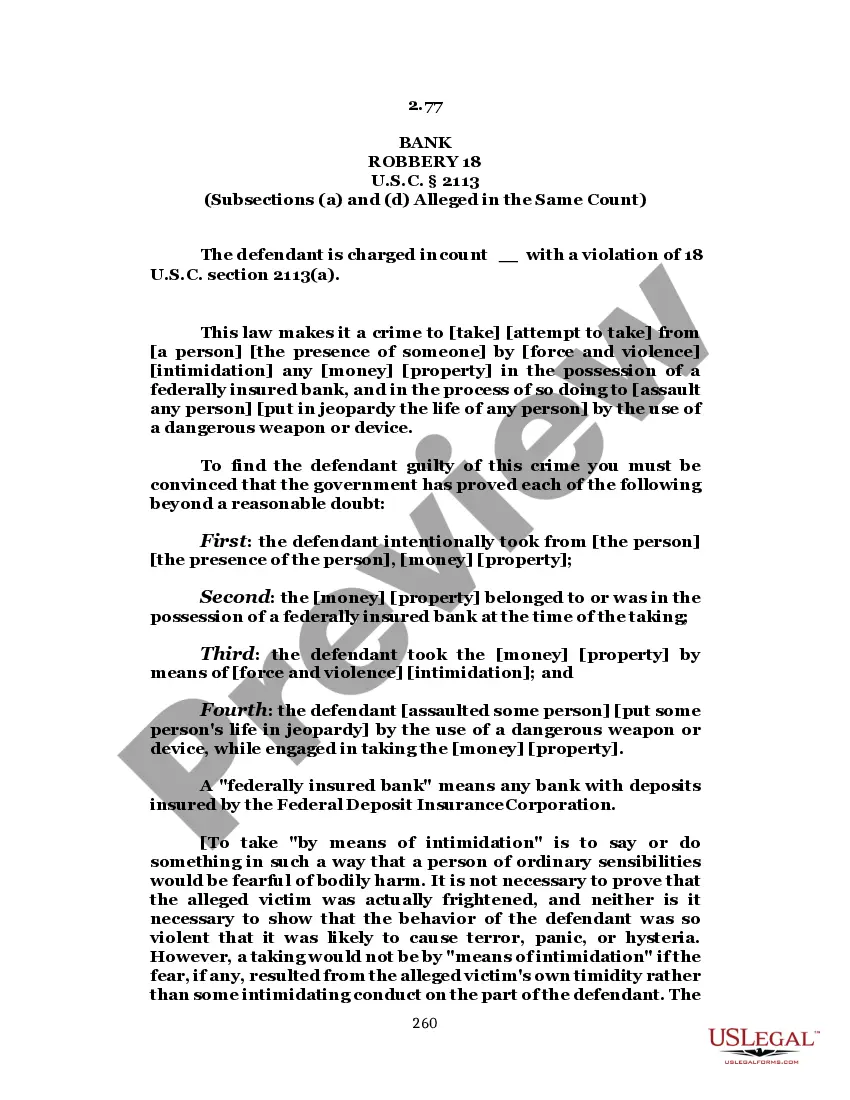
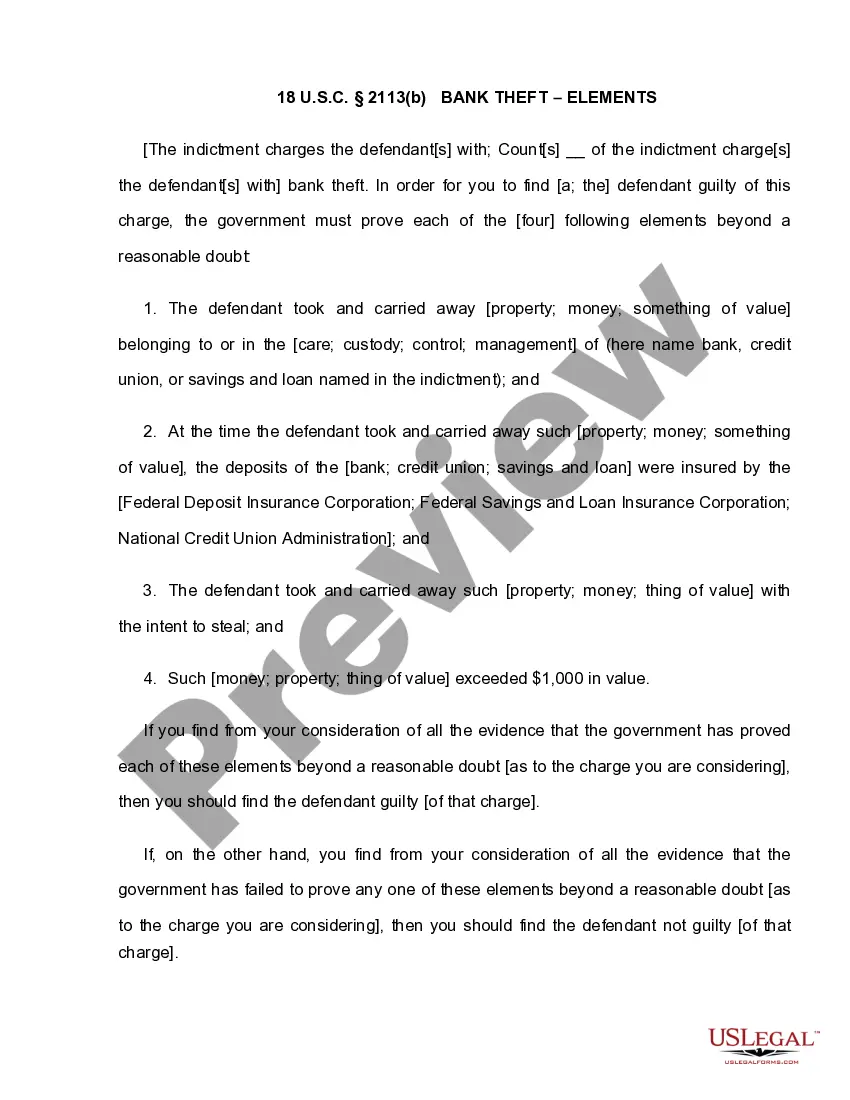
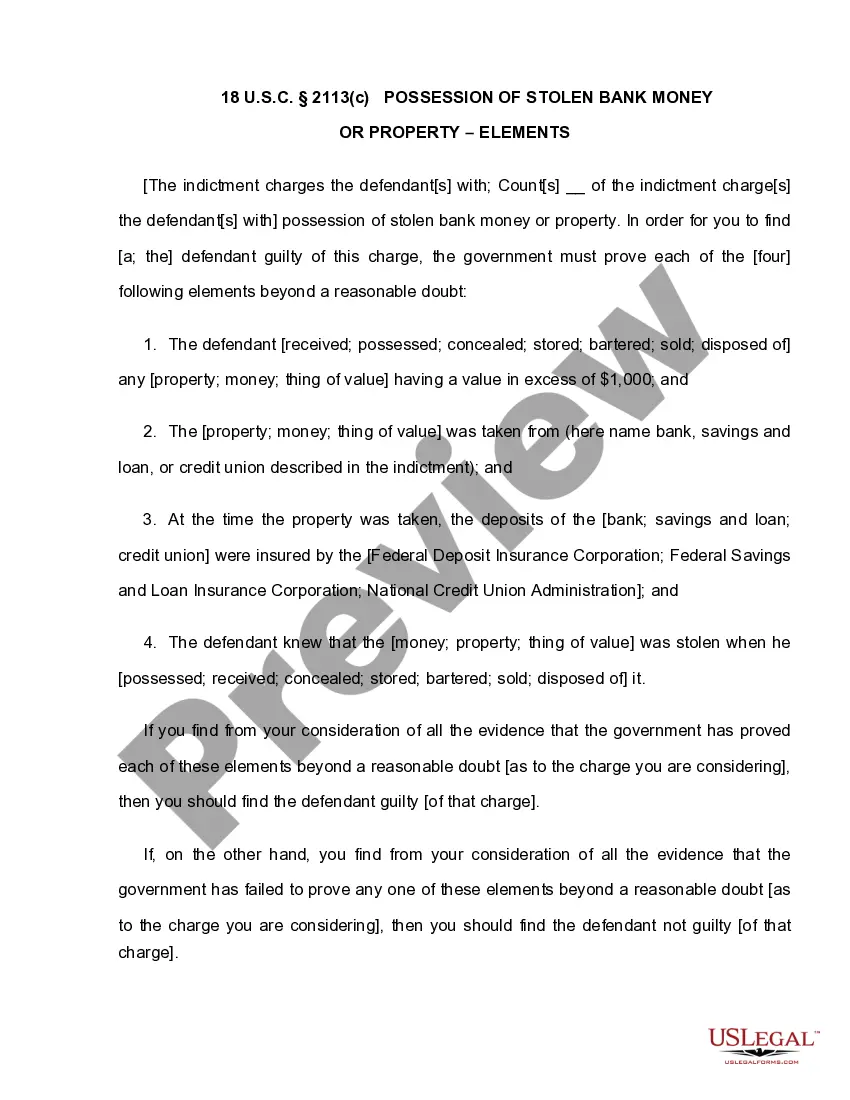
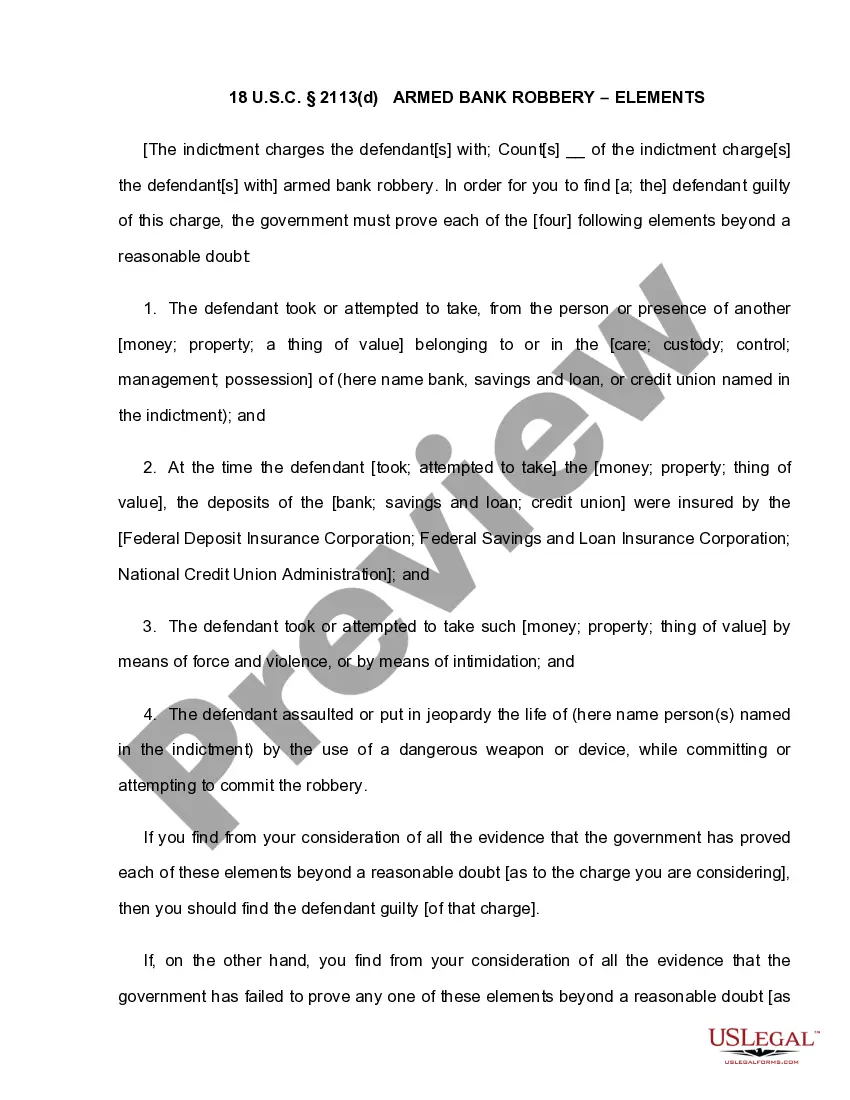
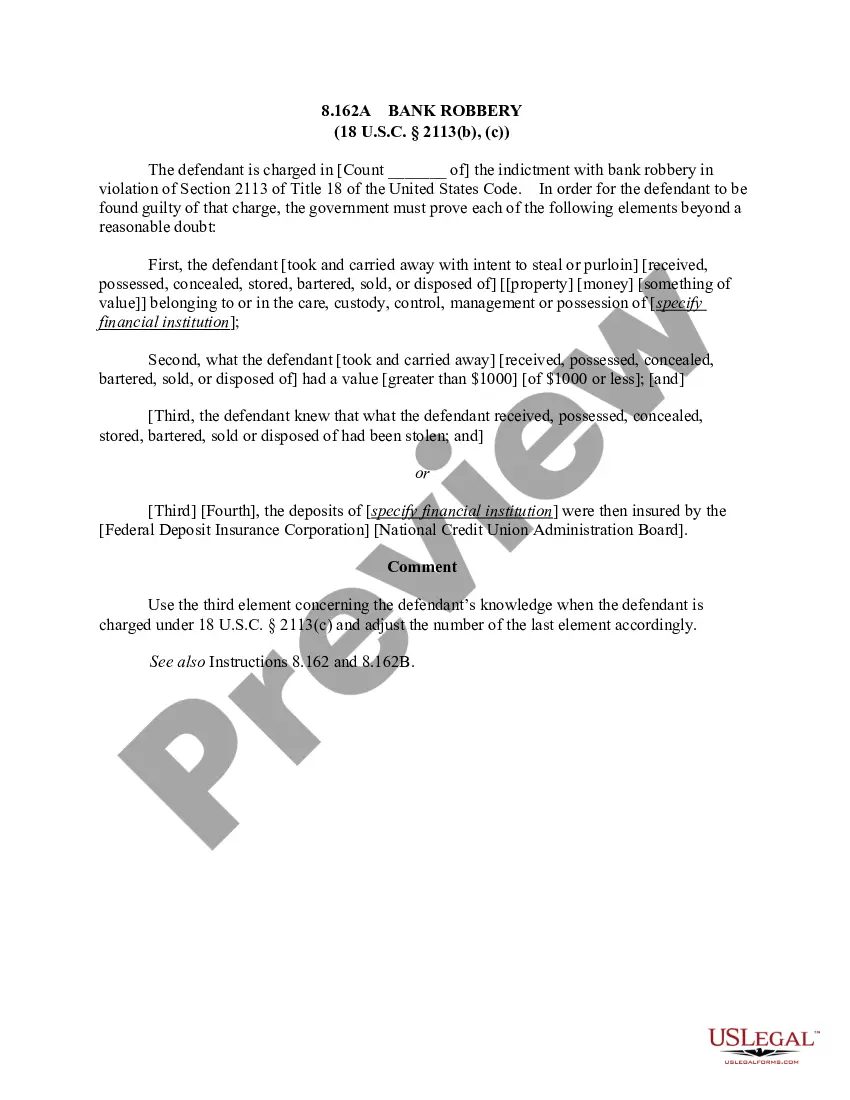
18 U.S.C. Sec. 2113(E) KIDNAPPING OR MURDER DURING A BANK ROBBERY

Notarization requirements for this form
This form usually doesn’t need to be notarized. However, local laws or specific transactions may require it. Our online notarization service, powered by Notarize, lets you complete it remotely through a secure video session, available 24/7.
Get your form ready online
Our built-in tools help you complete, sign, share, and store your documents in one place.
Make edits, fill in missing information, and update formatting in US Legal Forms—just like you would in MS Word.
Download a copy, print it, send it by email, or mail it via USPS—whatever works best for your next step.
Sign and collect signatures with our SignNow integration. Send to multiple recipients, set reminders, and more. Go Premium to unlock E-Sign.
If this form requires notarization, complete it online through a secure video call—no need to meet a notary in person or wait for an appointment.
We protect your documents and personal data by following strict security and privacy standards.

Make edits, fill in missing information, and update formatting in US Legal Forms—just like you would in MS Word.

Download a copy, print it, send it by email, or mail it via USPS—whatever works best for your next step.

Sign and collect signatures with our SignNow integration. Send to multiple recipients, set reminders, and more. Go Premium to unlock E-Sign.

If this form requires notarization, complete it online through a secure video call—no need to meet a notary in person or wait for an appointment.

We protect your documents and personal data by following strict security and privacy standards.
Looking for another form?

Form popularity
FAQ
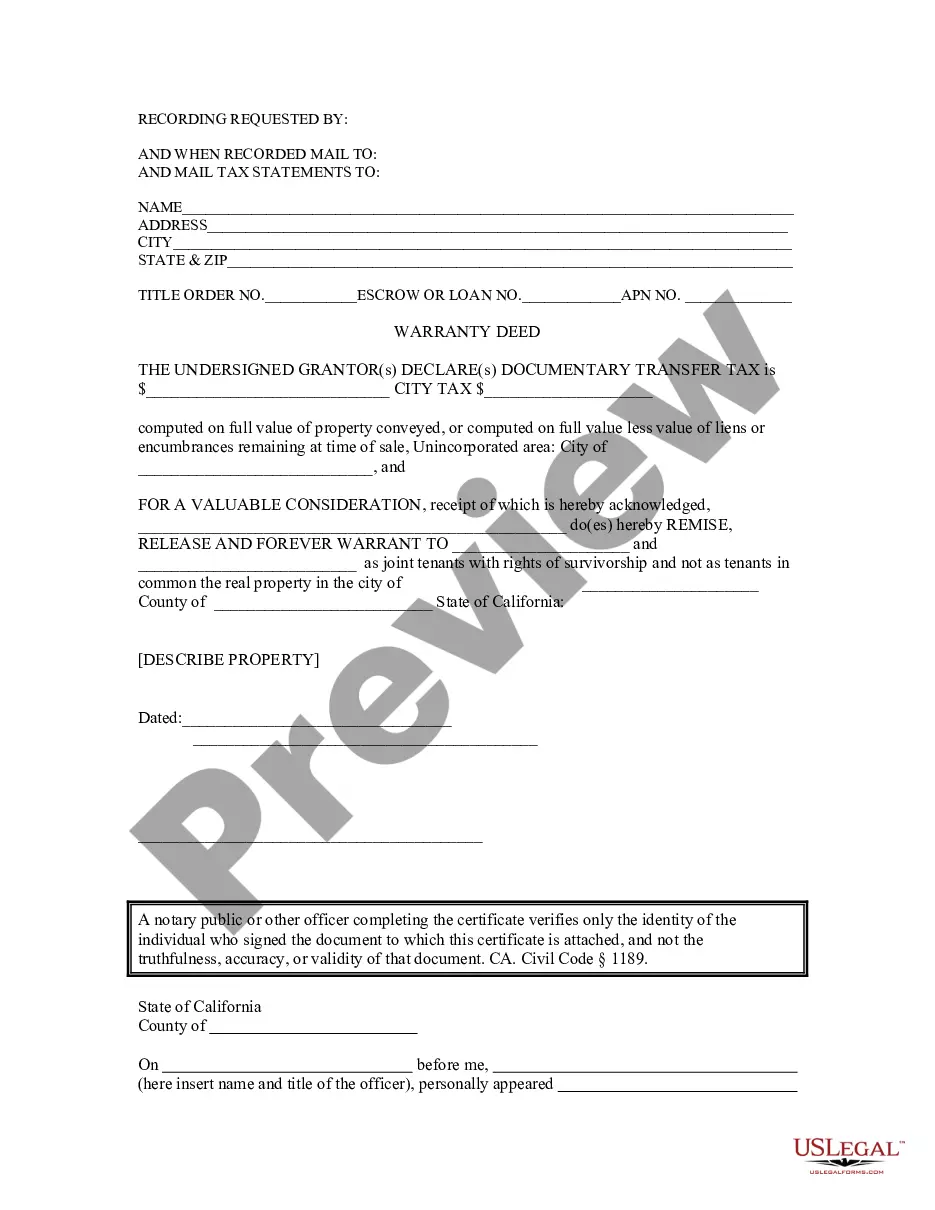
§ 2113 of the United States Code. Under section (a) of this statute, bank robbery is defined as: ?using force, violence, or intimidation to take, attempt to take, or extort any property or money in the possession of any bank, credit union, or savings and loan association.?
Bank Robbery -- General Overview. Title 18, section 2113 of the United States Code is the Federal criminal bank robbery statute. Section 2113 outlines and defines prohibited criminal conduct vis-a-vis federally protected financial institutions and concomitant penalties.
If you are convicted of federal bank robbery in California, you face up to 20 years in state prison. If you are found guilty of felony bank robbery, you may face the following penalties: Up to 20 years in federal prison. Up to $250,000 in fines.
Consequently, many bank robbers are caught the same day. The clearance rate for bank robbery is among the highest of all crimes, at nearly 60%. The urban location of the crime also contributes to its repeat victimization profile, a measure of how quickly a crime victim will suffer a repeat of the original crime.
Title 18, section 2113 of the United States Code is the Federal criminal bank robbery statute.
Under federal law, bank robbery is a serious offense and you could be sentenced for up to 20 years in a federal prison, a fine up to $250,000, or both. If you used violence to accomplish the bank robbery, you could face more severe penalties.
Under federal law, bank robbery is a serious offense and you could be sentenced for up to 20 years in a federal prison, a fine up to $250,000, or both. If you used violence to accomplish the bank robbery, you could face more severe penalties.