Shareholders' Agreement with Special Allocation of Dividends among Shareholders in a Close Corporation
Understanding this form
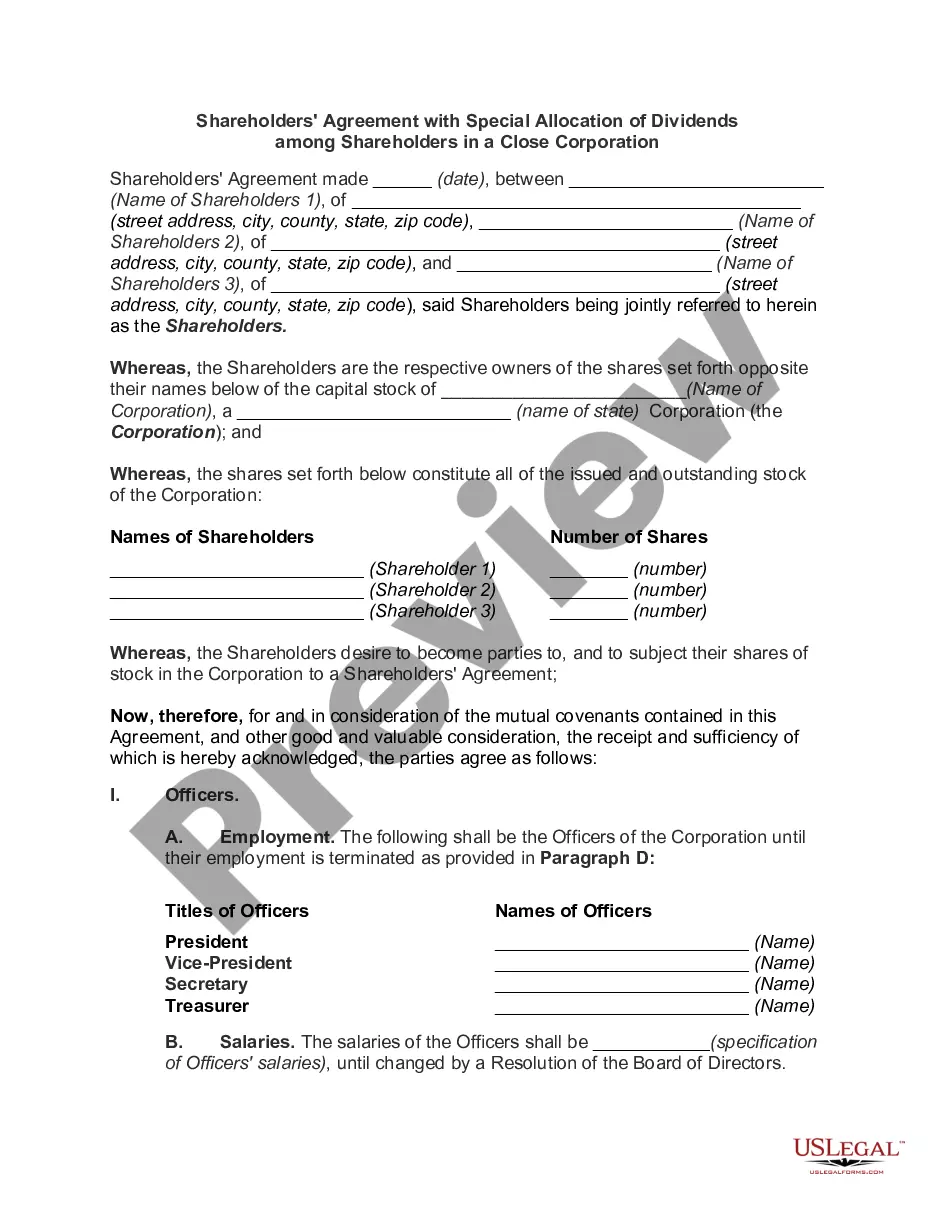
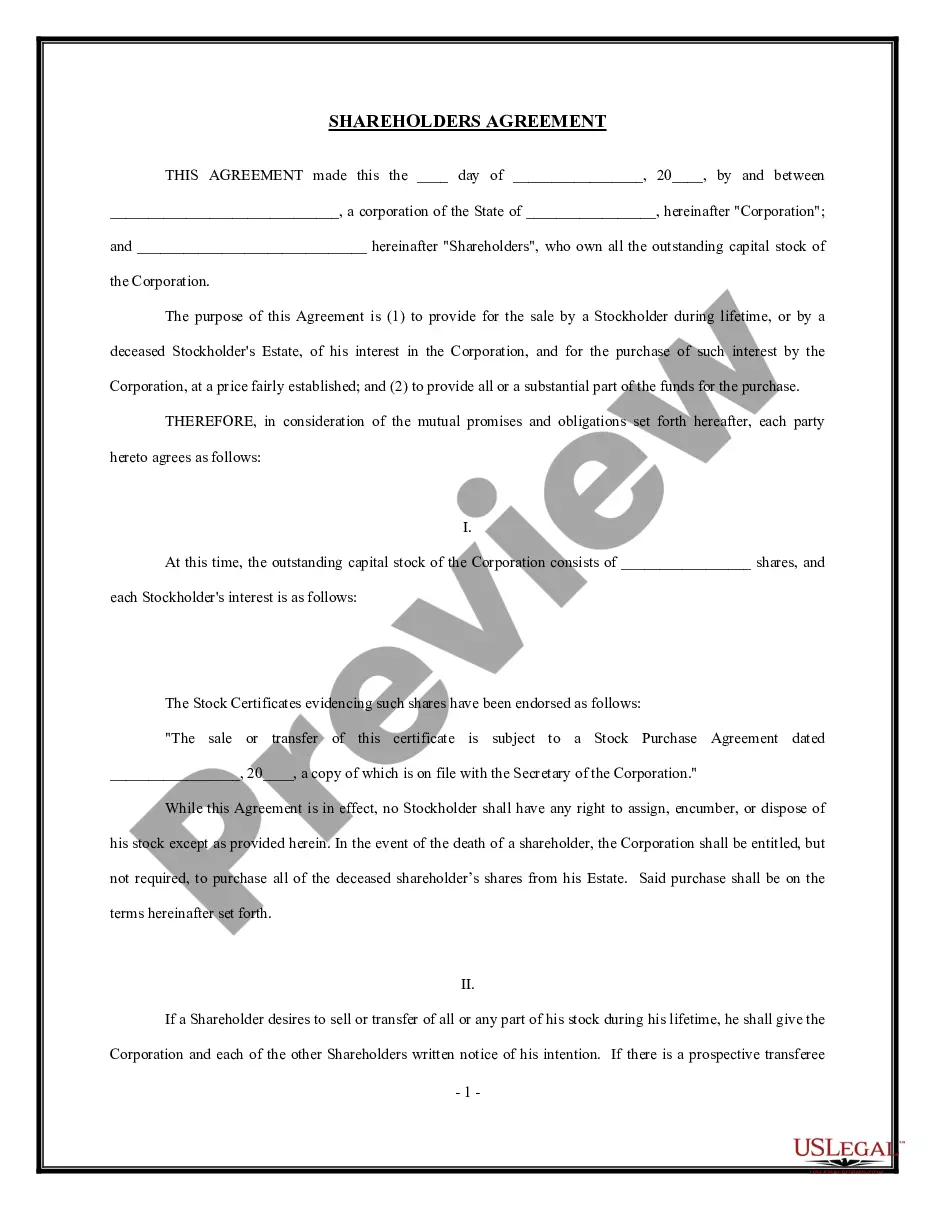
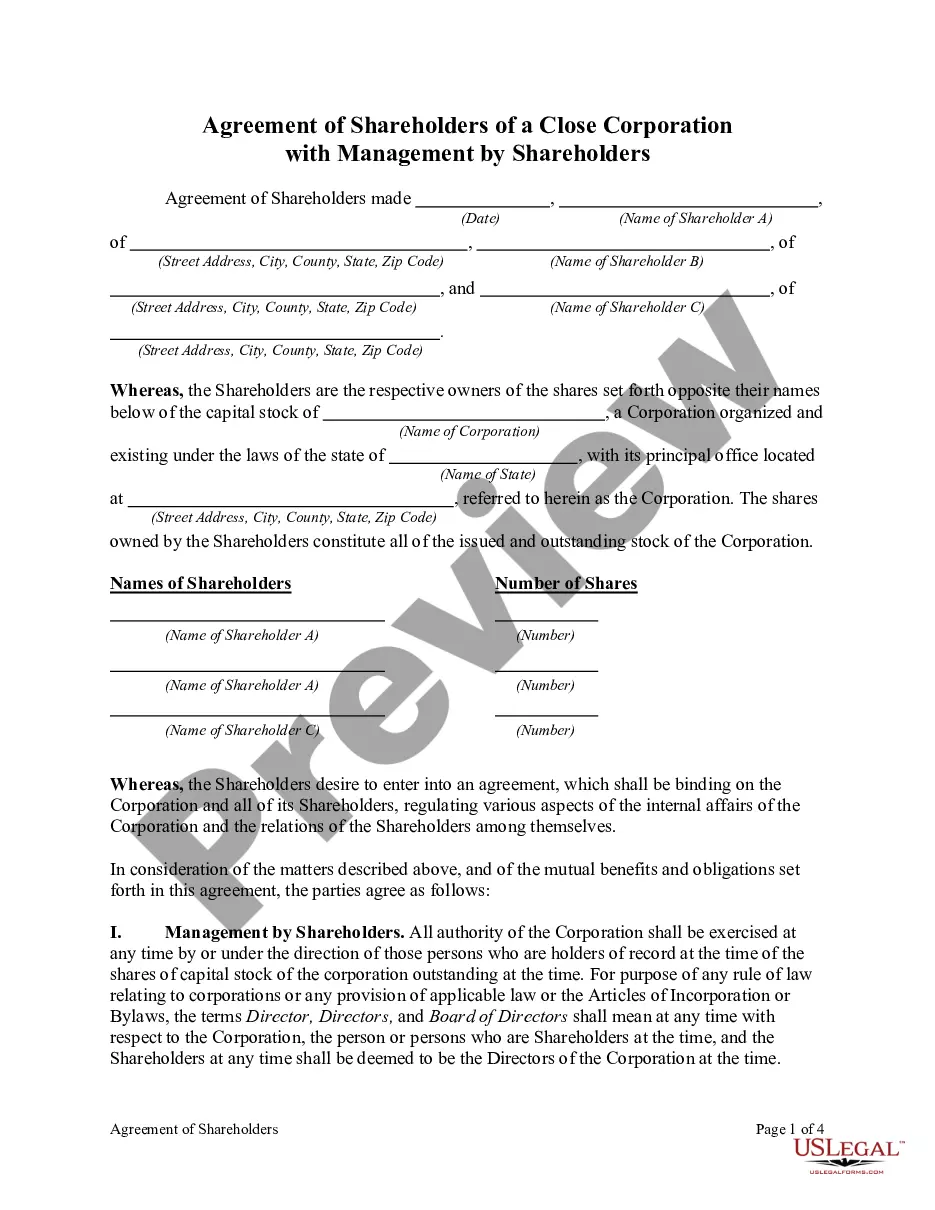
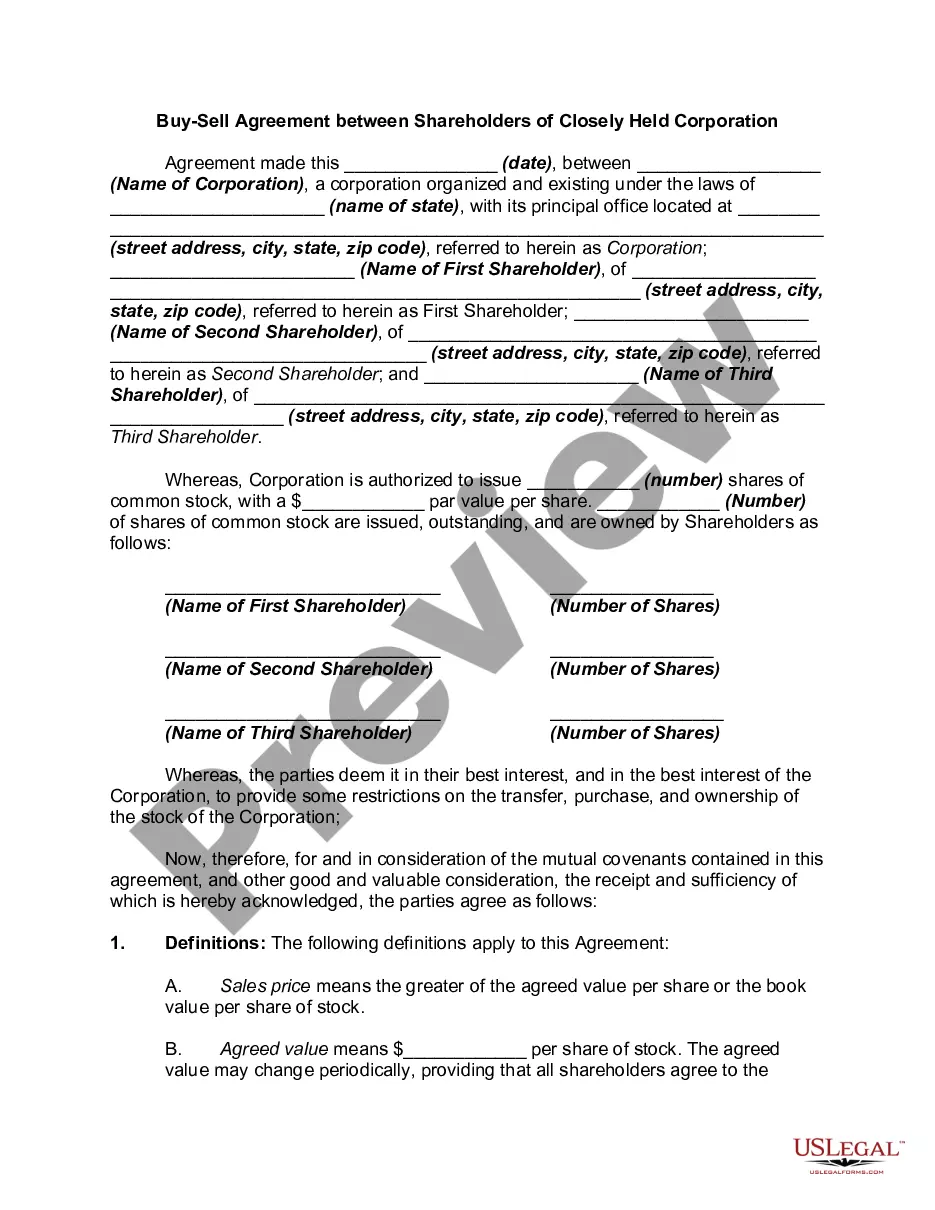
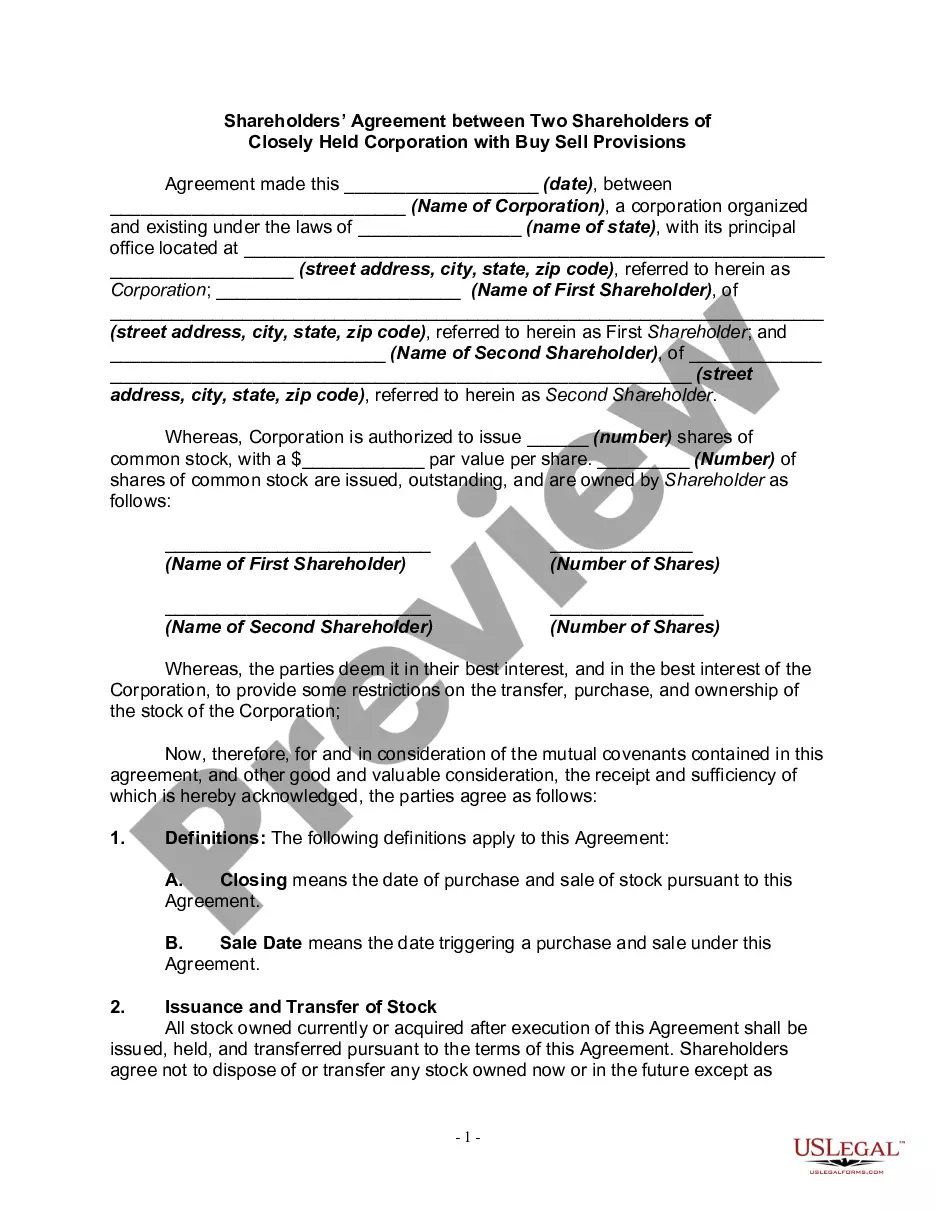
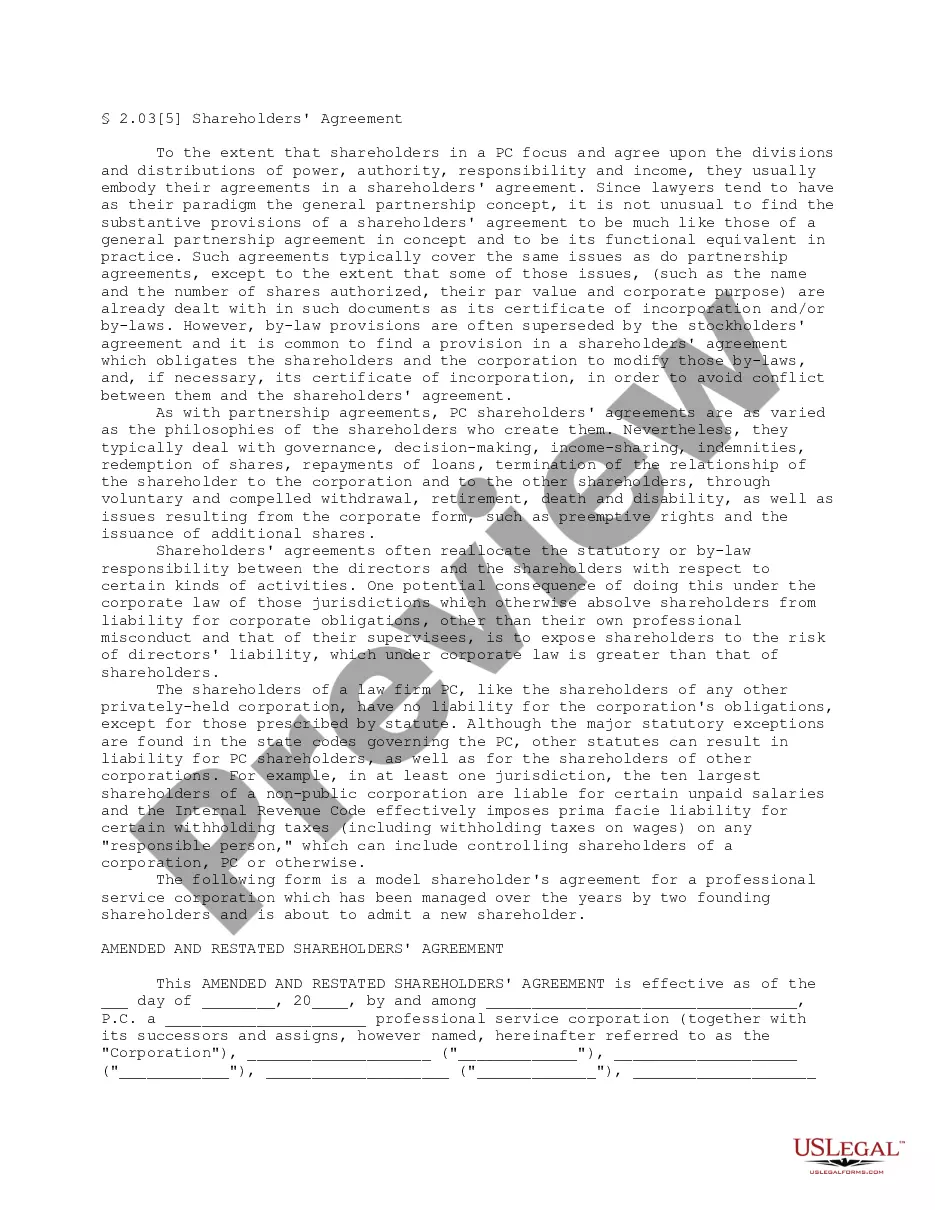
The Shareholders' Agreement with Special Allocation of Dividends is a legal document that outlines the rights and responsibilities of shareholders in a close corporation. Close corporations have a limited number of shareholders whose shares are not publicly traded. This agreement allows shareholders to manage their investments, specify how dividends are allocated, and set forth rules for corporate governance, differing from general corporate bylaws by providing tailored arrangements among a small group of shareholders.
Main sections of this form
- Identification of the shareholders and their respective shares.
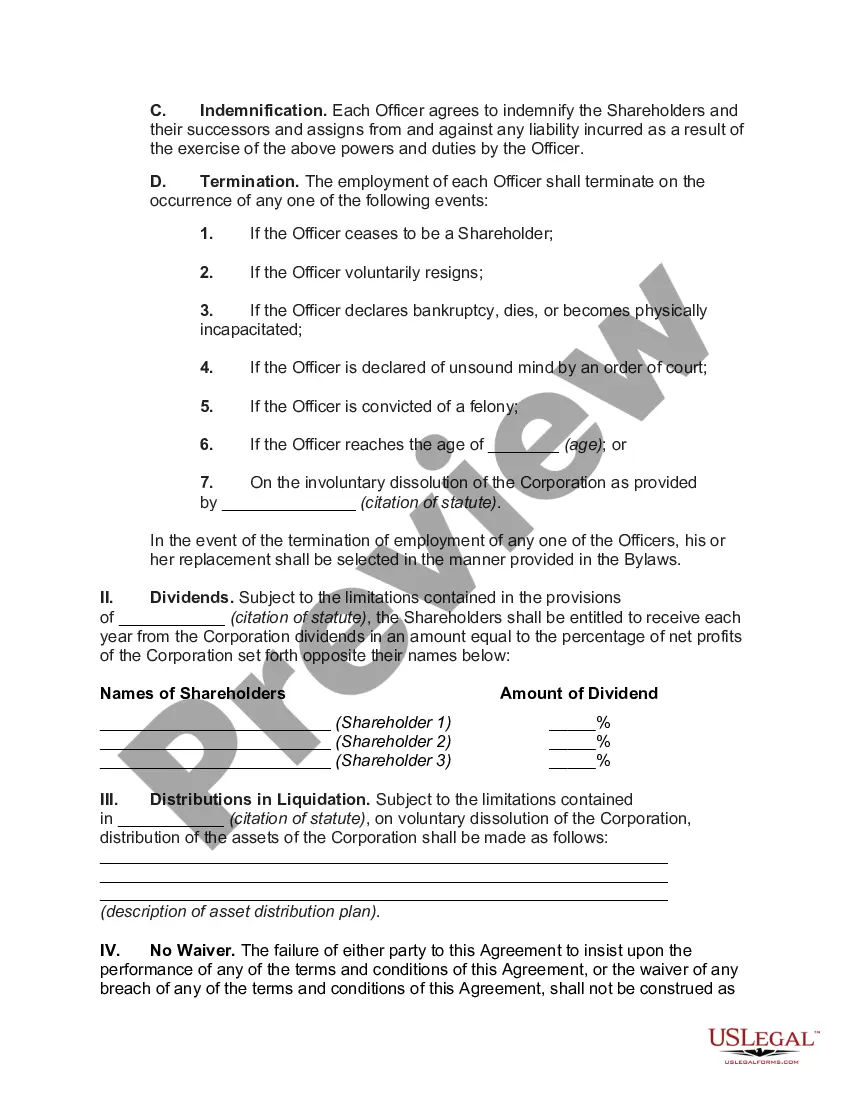
- Appointment and terms of officers, including salaries and conditions for termination.
- Details on dividend distribution among shareholders based on net profits.
- Procedures for asset distribution upon voluntary liquidation of the corporation.
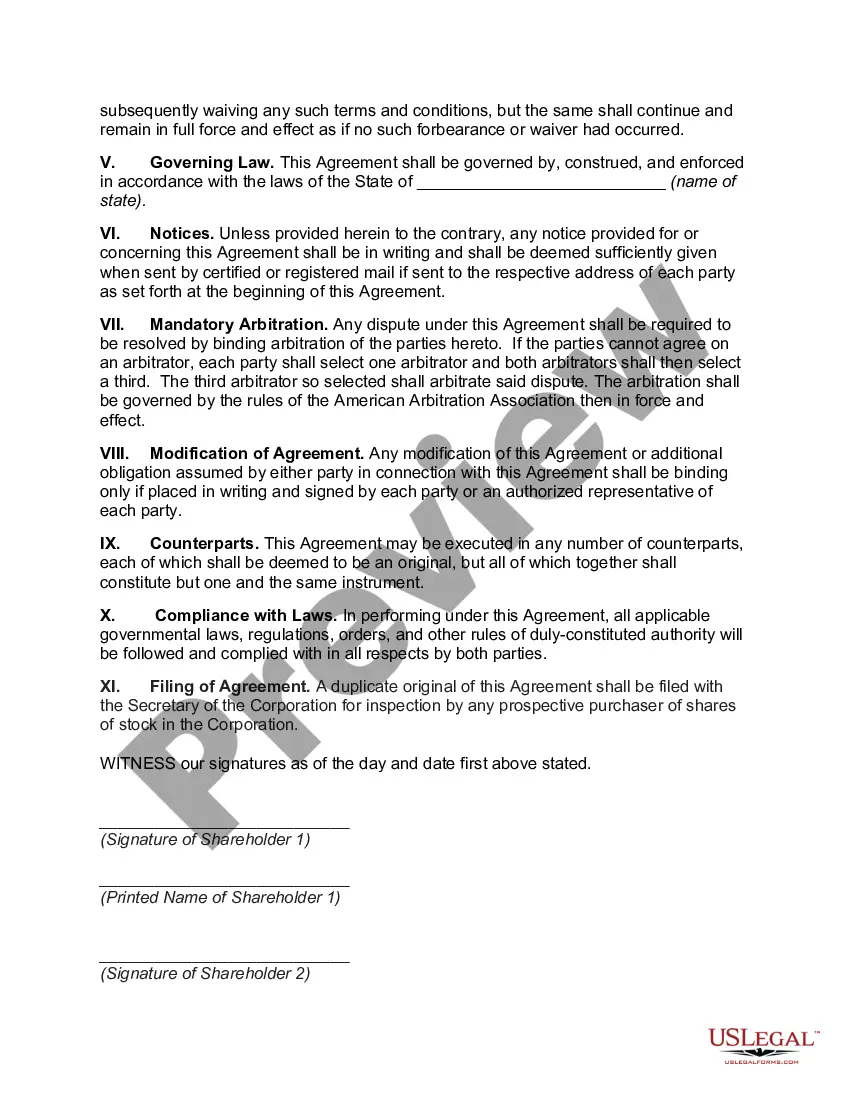
- Clauses for governing law and dispute resolution through mandatory arbitration.
Situations where this form applies
This form is used when a group of shareholders in a close corporation wishes to create a structured agreement regarding ownership, management, and distribution of dividends. It is particularly useful when shareholders are family members or close associates and want to establish specific terms for sharing profits and making corporate decisions. Use this form to ensure clarity in shareholder relations and prevent disputes.
Who needs this form
This form is intended for:
- Small business owners who have formed a close corporation.
- Family groups involved in managing a family business.
- Individuals looking to protect their investments and define their roles within a corporation.
- Shareholders desiring a clearer understanding of dividend allocations and corporate governance.
How to complete this form
- Enter the date of the agreement at the top of the document.
- Provide the names and addresses of all shareholders involved.
- List the number of shares owned by each shareholder along with the percentage of dividends they are entitled to receive.
- Designate the officers of the corporation and specify their salaries.
- Review and fill in any dissolution procedures or asset distribution plans as needed.
Does this form need to be notarized?
This form does not typically require notarization unless specified by local law. However, it is recommended to check state-specific requirements to ensure compliance.
Get your form ready online
Our built-in tools help you complete, sign, share, and store your documents in one place.
Make edits, fill in missing information, and update formatting in US Legal Forms—just like you would in MS Word.
Download a copy, print it, send it by email, or mail it via USPS—whatever works best for your next step.
Sign and collect signatures with our SignNow integration. Send to multiple recipients, set reminders, and more. Go Premium to unlock E-Sign.
If this form requires notarization, complete it online through a secure video call—no need to meet a notary in person or wait for an appointment.
We protect your documents and personal data by following strict security and privacy standards.

Make edits, fill in missing information, and update formatting in US Legal Forms—just like you would in MS Word.

Download a copy, print it, send it by email, or mail it via USPS—whatever works best for your next step.

Sign and collect signatures with our SignNow integration. Send to multiple recipients, set reminders, and more. Go Premium to unlock E-Sign.

If this form requires notarization, complete it online through a secure video call—no need to meet a notary in person or wait for an appointment.

We protect your documents and personal data by following strict security and privacy standards.
Common mistakes
- Failing to include all current shareholders in the agreement.
- Not specifying the conditions under which dividends will be distributed.
- Overlooking the importance of legal compliance with state laws.
- Leaving out critical details regarding officer termination conditions.
Why use this form online
- Convenient and easy access to legal documents from any location.
- Editable formats to tailor the document to specific needs.
- Assurance of using templates drafted by licensed attorneys for accuracy.
- Efficient document management, allowing for quick updates and version control.
Looking for another form?
Form popularity
FAQ
Is a shareholders agreement legally binding? Once a shareholders agreement has been signed it should be legally binding, provided that it complies with the usual 4 aspects of a contract: offer, acceptance, consideration and an intention to create legal relations.
Introduction. Step 1: Decide on the issues the agreement should cover. Step 2: Identify the interests of shareholders. Step 3: Identify shareholder value. Step 4: Identify who will make decisions - shareholders or directors. Step 5: Decide how voting power of shareholders should add up. Further information and documents.
An agreement can provide for many eventualities including the financing of the company, the management of the company, the dividend policy, the procedure to be followed on a transfer of shares, deadlock situations and valuation of the shares. What different types of shareholders' agreements are there?
Introduction. Step 1: Decide on the issues the agreement should cover. Step 2: Identify the interests of shareholders. Step 3: Identify shareholder value. Step 4: Identify who will make decisions - shareholders or directors. Step 5: Decide how voting power of shareholders should add up. Further information and documents.
An agreement can provide for many eventualities including the financing of the company, the management of the company, the dividend policy, the procedure to be followed on a transfer of shares, deadlock situations and valuation of the shares. What different types of shareholders' agreements are there?
Introduction. Why have a Shareholders' Agreement? Identify the interests of the Shareholders. Identify Shareholder Value. Identify who will make decisions - Shareholders or Directors? Decide how the voting power of Shareholders should add up. Decide on the issues that the Shareholders' Agreement should cover.
Shareholders' agreements related to actions by directors are not valid in India. Courts in India came down heavily on clauses under shareholders agreements which oblige a director of a company to undertake an obligation to benefit certain shareholders by compromising his fiduciary duties.
Shareholders' agreements related to actions by directors are not valid in India. Courts in India came down heavily on clauses under shareholders agreements which oblige a director of a company to undertake an obligation to benefit certain shareholders by compromising his fiduciary duties.
The Supreme Court ruled that shareholders can enter into any agreement deemed best for the company, except for the provisions in the shareholders agreement shall not be contrary to the articles of association.The parties that agreed to the agreement can avail of remedies for breach of an agreement.