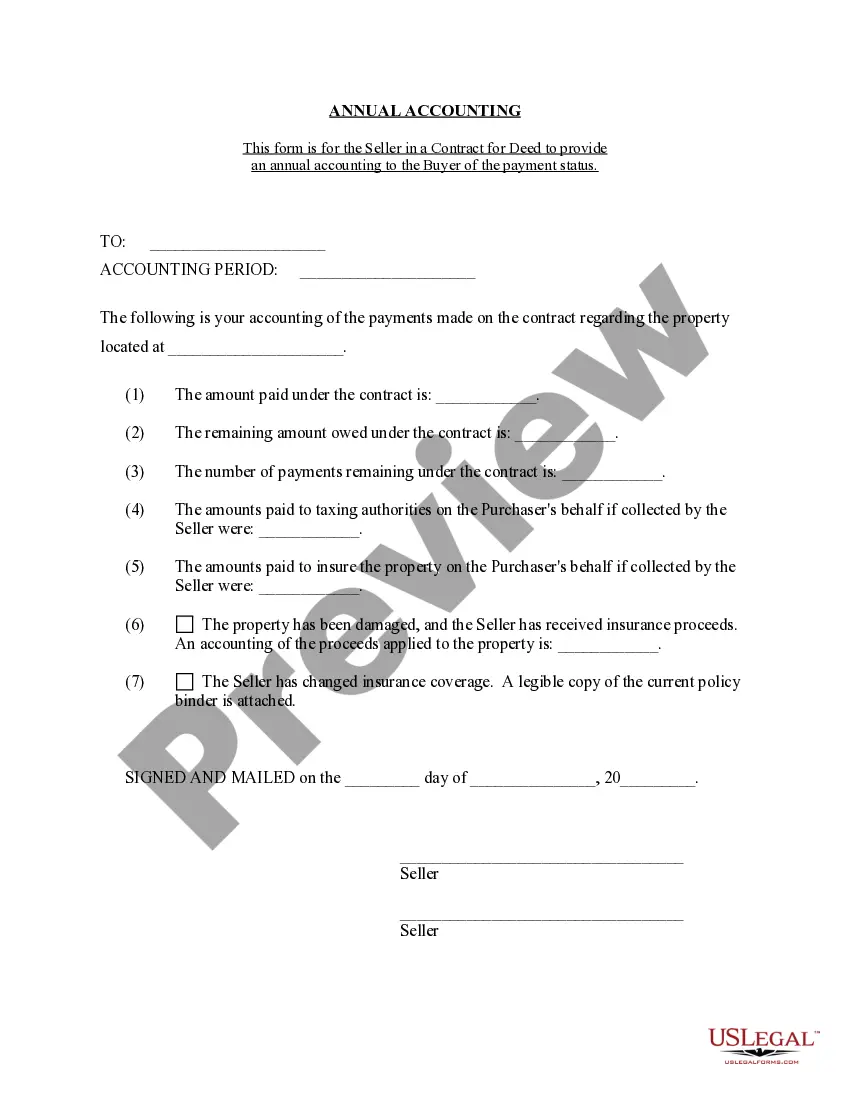
Manuscript License Agreement
Understanding this form
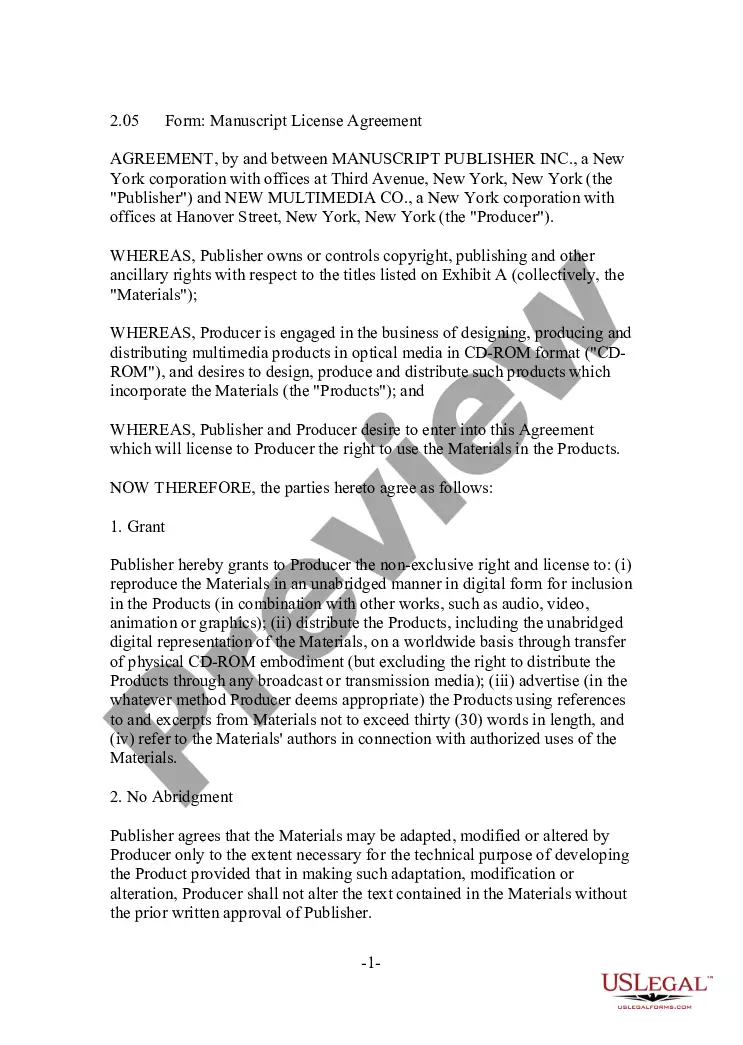
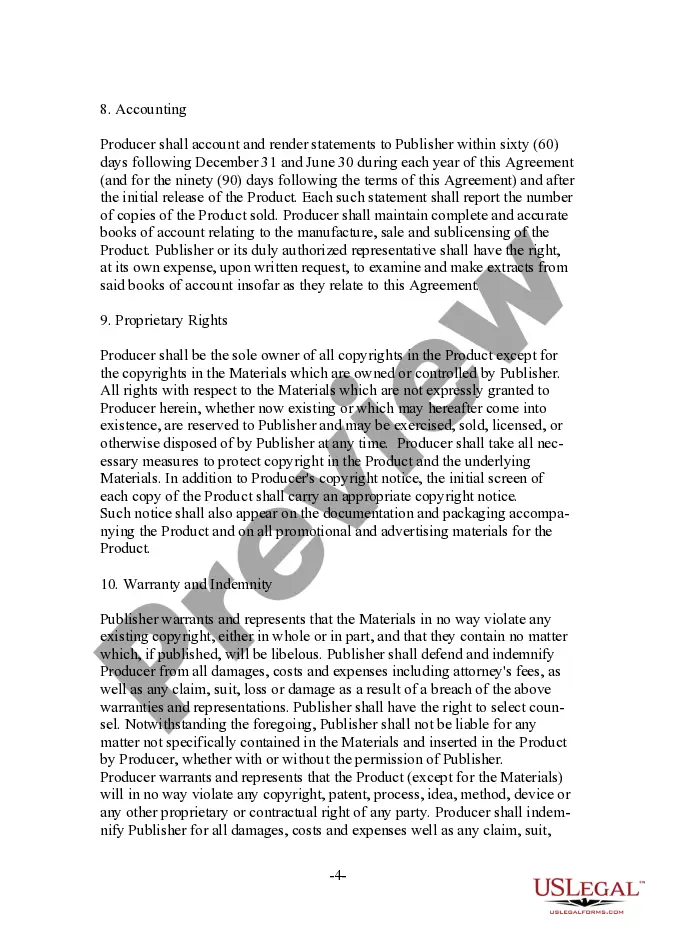
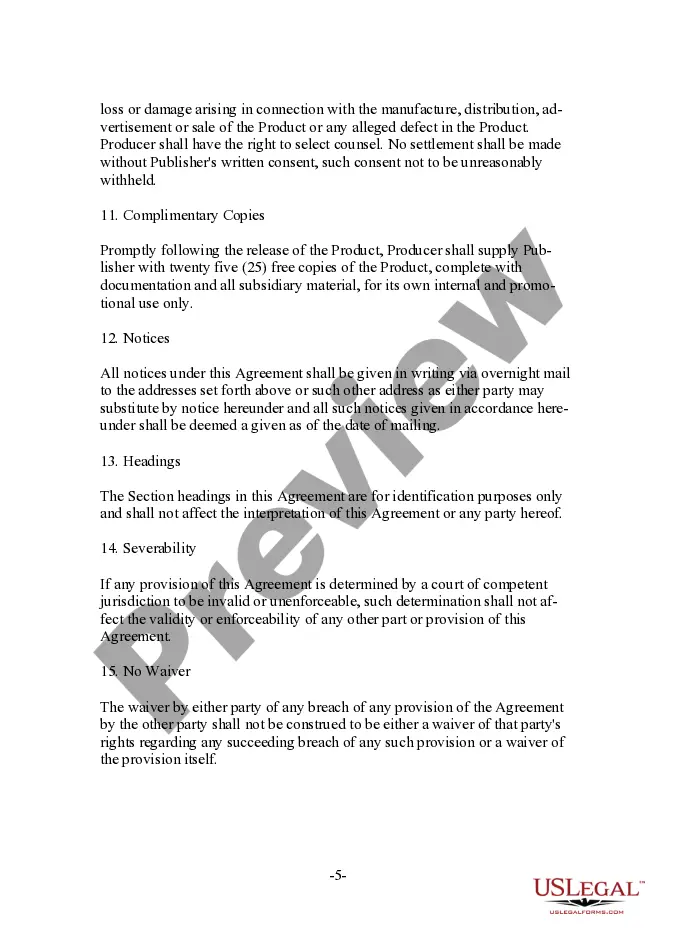
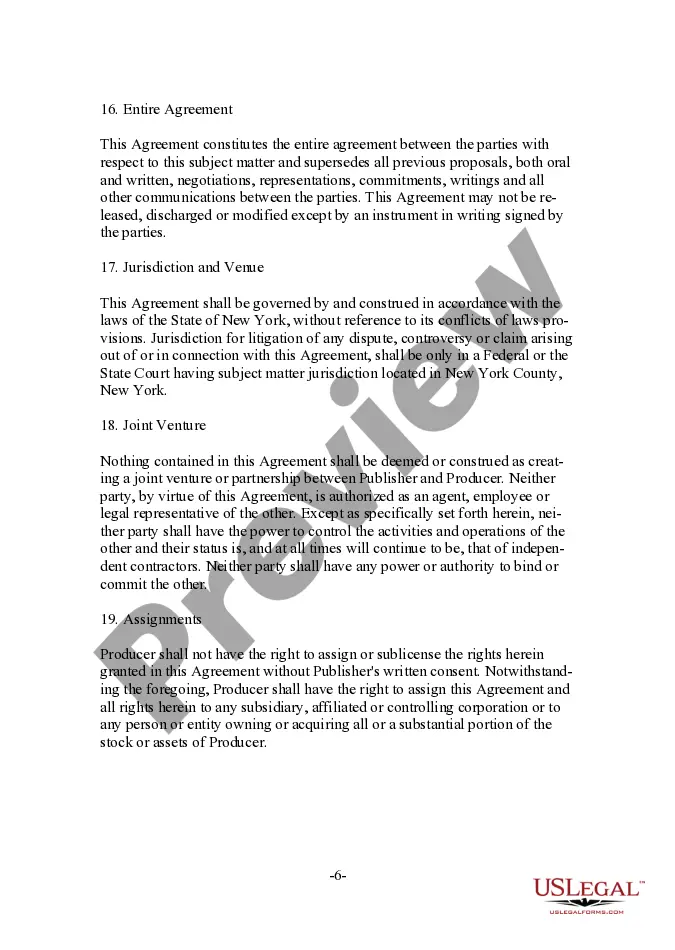
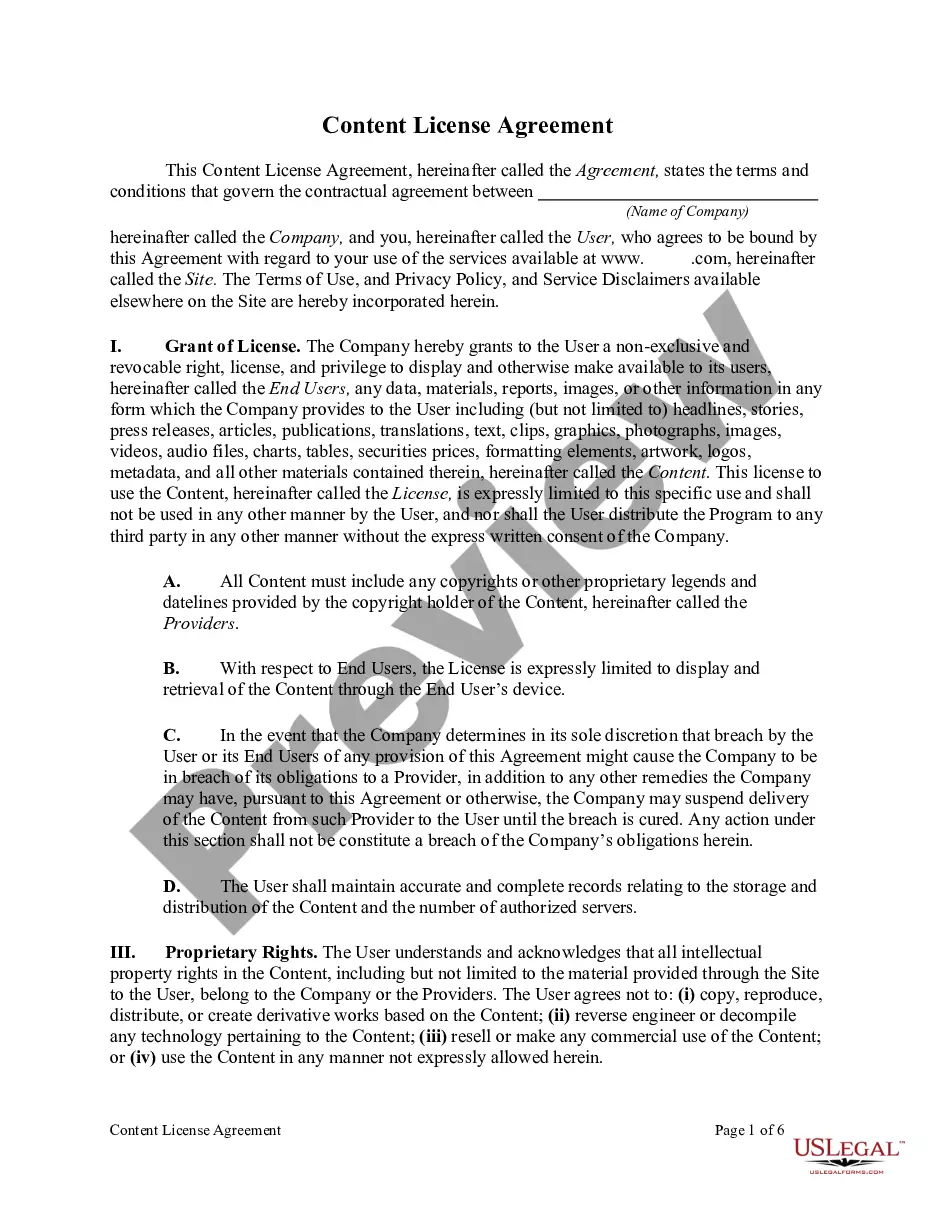
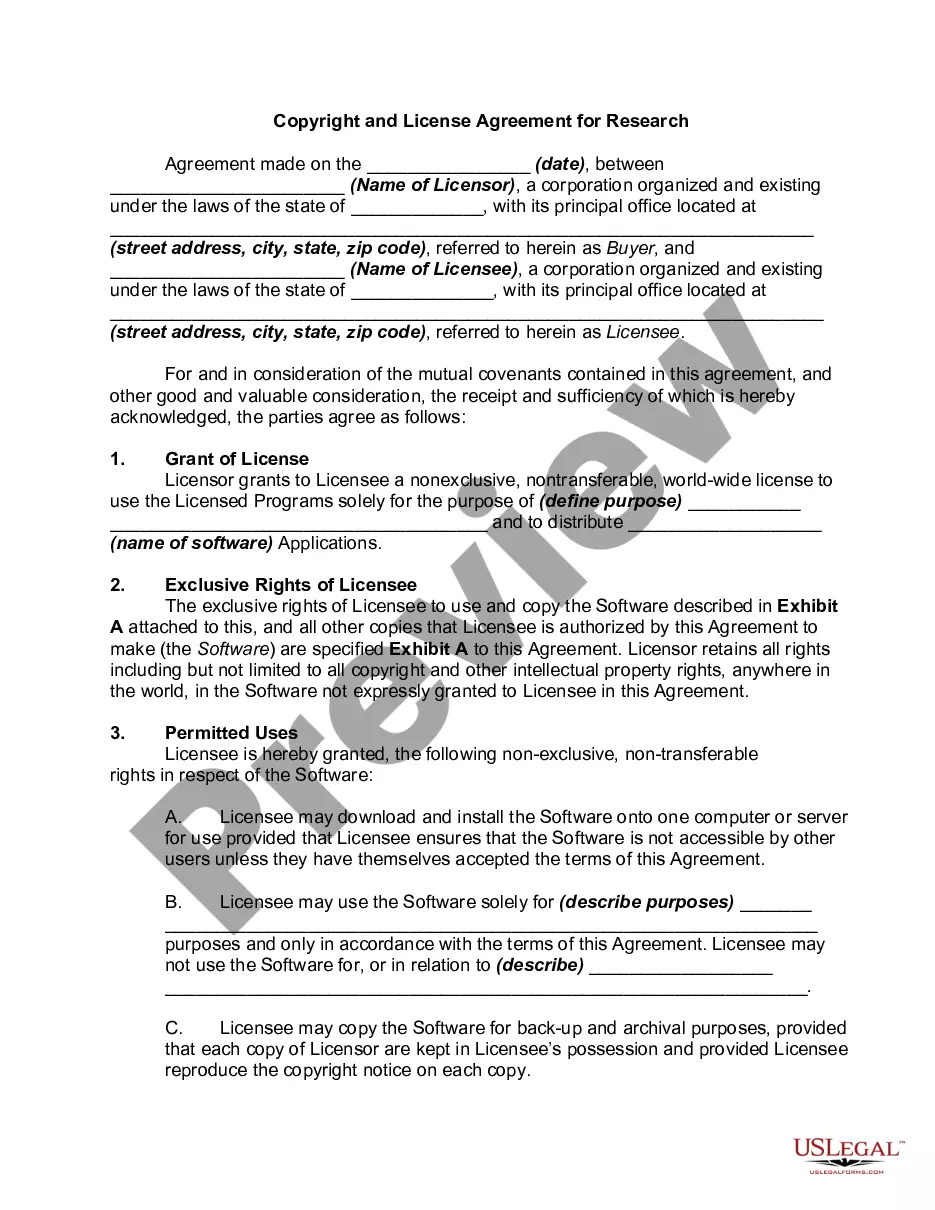
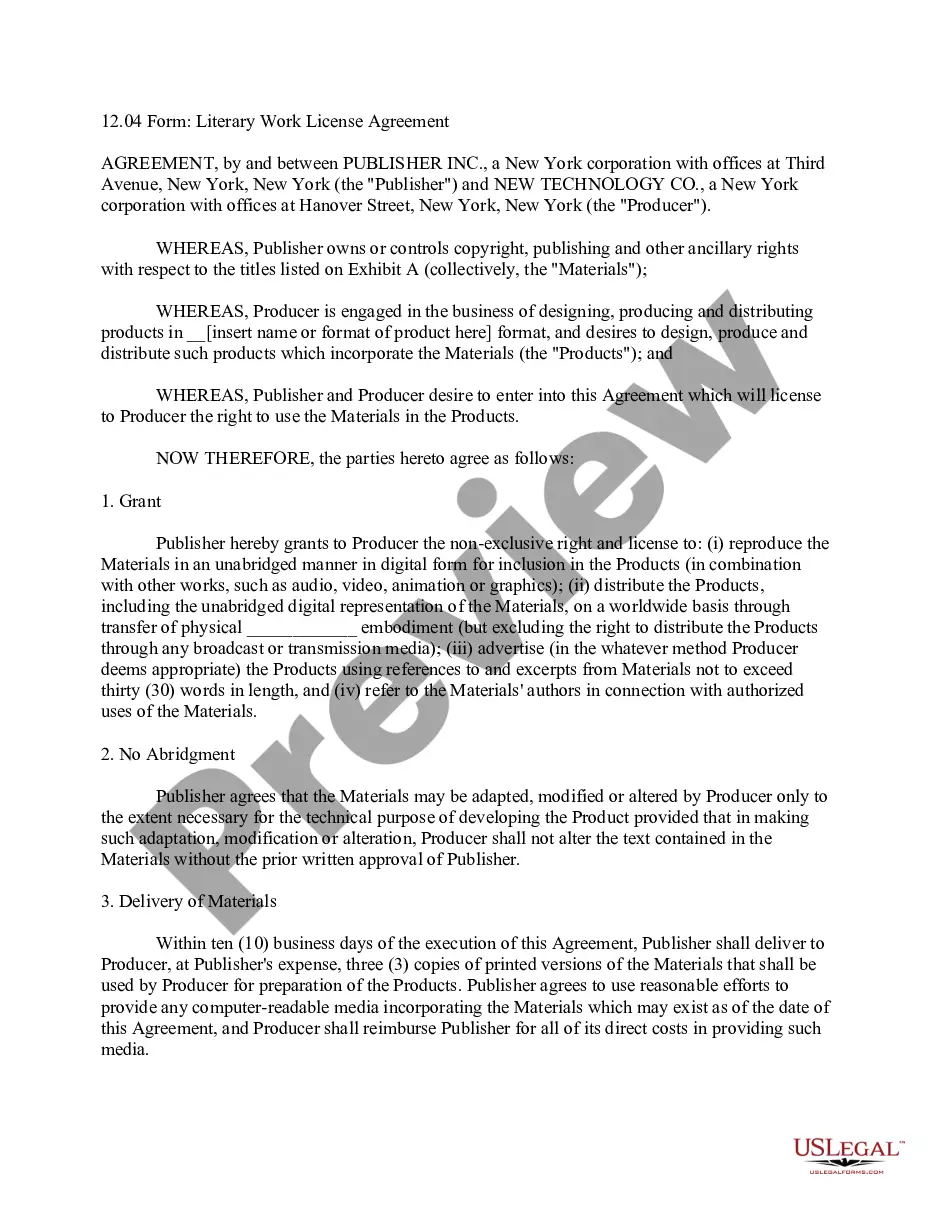
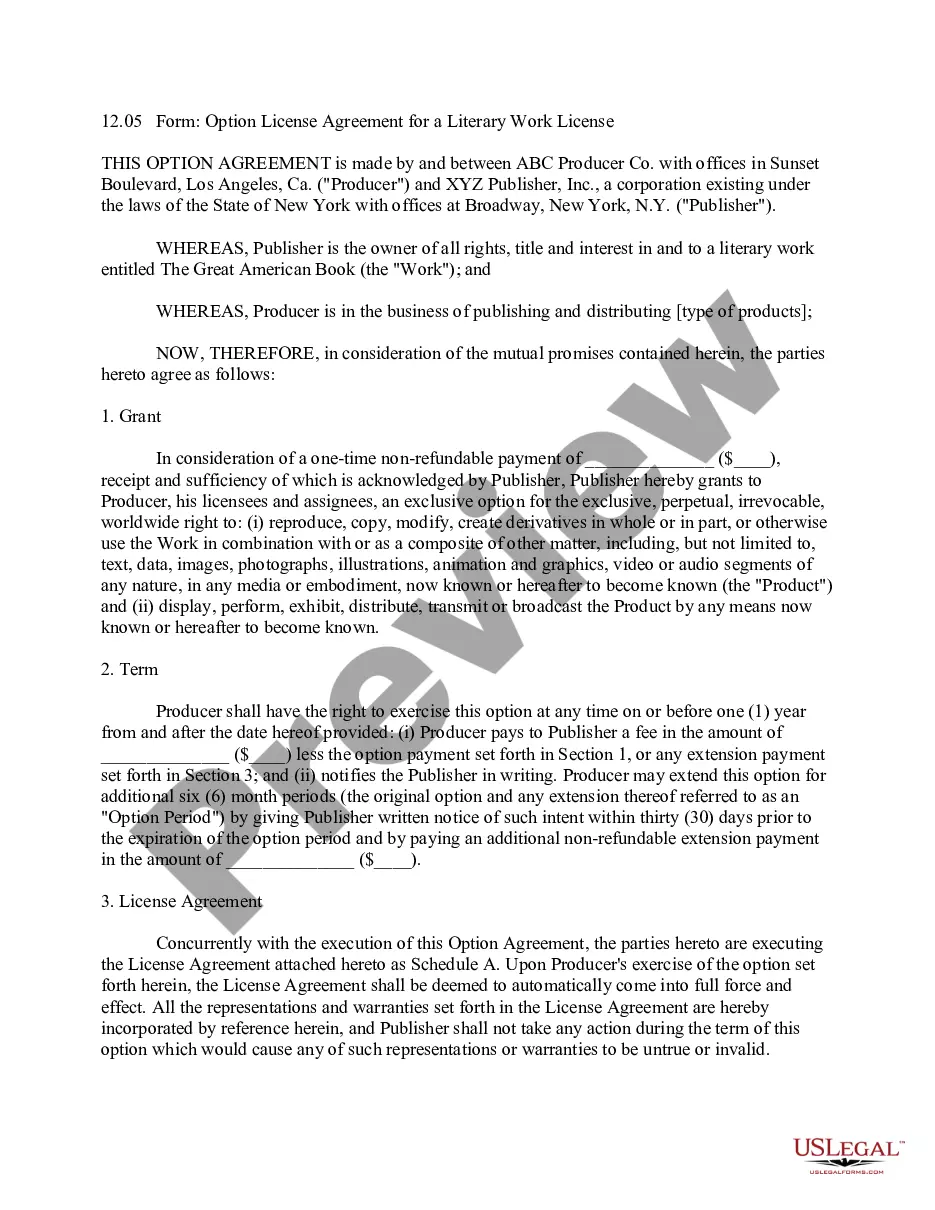
The Manuscript License Agreement is a legal contract that grants producers the rights to use, adapt, and distribute specific published materials in multimedia formats. This agreement is essential for establishing clear rights and obligations between the manuscript publisher and the producer, ensuring that copyrighted works are used legally in the creation of products. It differs from other agreements by specifically addressing the multimedia adaptation and distribution of written content, making it ideal for businesses engaged in creating digital products from published manuscripts.
Key parts of this document
- Grant of license to reproduce and distribute manuscript materials in multimedia products.
- No unauthorized alterations to the text without publisher approval.
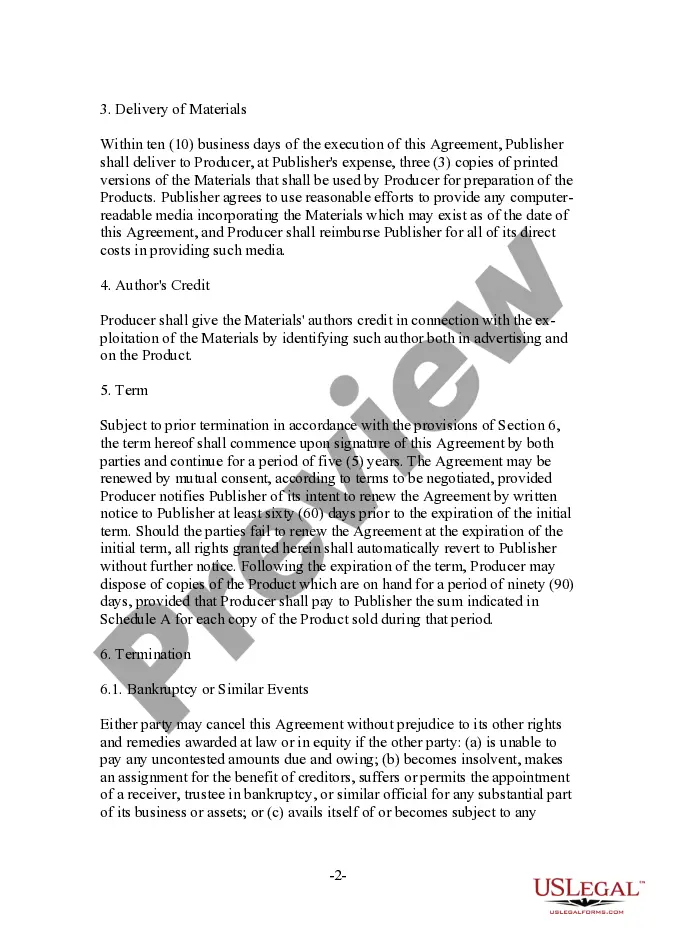
- Delivery requirements for providing manuscript copies to the producer.
- Credit requirements for authors of the manuscript materials.
- Terms regarding the duration of the license and conditions for renewal.
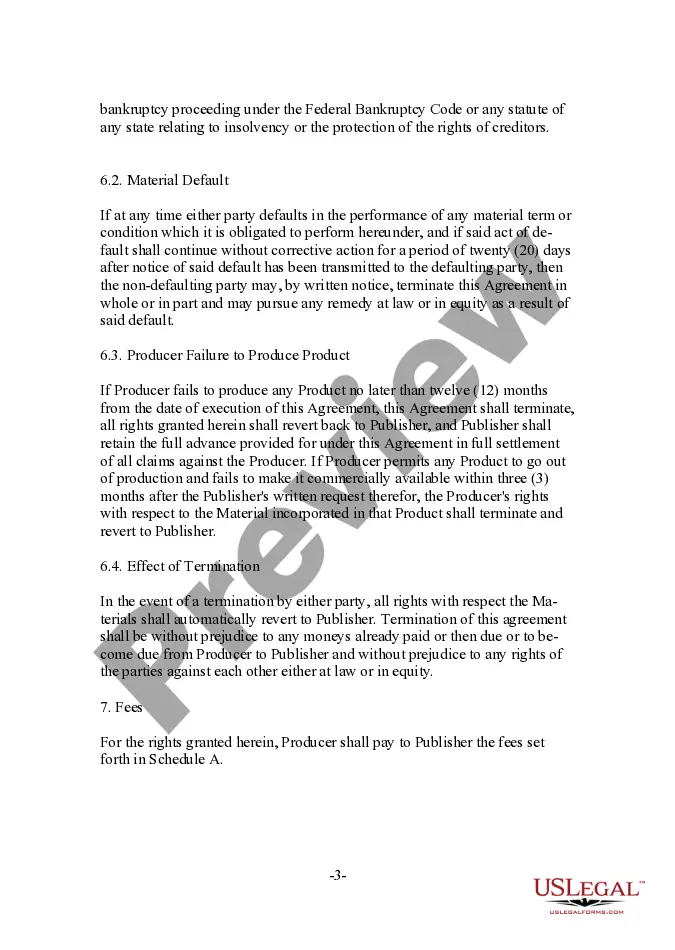
- Termination clauses for non-performance or bankruptcy of either party.
Common use cases
This form should be used when a multimedia producer intends to create products that incorporate written manuscripts. If a publisher wants to allow the producer to adapt their works for CD-ROM distribution or similar digital formats, this agreement will clarify the rights granted, obligations of both parties, and terms for the protection of the manuscript materials involved.
Who can use this document
- Publishers looking to license their manuscript materials for multimedia use.
- Producers or companies intending to create multimedia products that include published writing.
- Businesses in the digital media industry that require clear contractual agreements regarding copyright and distribution.
Steps to complete this form
- Identify and enter the full legal names of the Publisher and Producer in the designated fields.
- Specify the titles of the manuscripts to be licensed, as listed in an attached exhibit.
- State the duration of the license and include any renewal terms as agreed by both parties.
- Detail the compensation or fees to be paid by the Producer to the Publisher.
- Ensure both parties sign and date the agreement to make it legally binding.
Does this document require notarization?
Notarization is generally not required for this form. However, certain states or situations might demand it. You can complete notarization online through US Legal Forms, powered by Notarize, using a verified video call available anytime.
Get your form ready online
Our built-in tools help you complete, sign, share, and store your documents in one place.
Make edits, fill in missing information, and update formatting in US Legal Forms—just like you would in MS Word.
Download a copy, print it, send it by email, or mail it via USPS—whatever works best for your next step.
Sign and collect signatures with our SignNow integration. Send to multiple recipients, set reminders, and more. Go Premium to unlock E-Sign.
If this form requires notarization, complete it online through a secure video call—no need to meet a notary in person or wait for an appointment.
We protect your documents and personal data by following strict security and privacy standards.

Make edits, fill in missing information, and update formatting in US Legal Forms—just like you would in MS Word.

Download a copy, print it, send it by email, or mail it via USPS—whatever works best for your next step.

Sign and collect signatures with our SignNow integration. Send to multiple recipients, set reminders, and more. Go Premium to unlock E-Sign.

If this form requires notarization, complete it online through a secure video call—no need to meet a notary in person or wait for an appointment.

We protect your documents and personal data by following strict security and privacy standards.
Avoid these common issues
- Failing to specify all manuscript titles in the agreement.
- Not including the duration and renewal terms of the license.
- Neglecting to obtain necessary approvals for adaptations of the manuscript.
- Omitting signature and date from the finalized form.
Why use this form online
- Convenient access to legally-sound templates created by licensed attorneys.
- Editable Word format allows for customization to fit specific business needs.
- Quick download means you can start the licensing process immediately.
- Reduced risk of legal issues by using professionally drafted agreements.
Legal use & context
- This agreement protects both parties by clearly defining rights and responsibilities.
- The use of this form helps prevent potential copyright disputes over adapted materials.
- Legally binding once signed, ensuring both parties adhere to the agreed terms.
What to keep in mind
- The Manuscript License Agreement is essential for multimedia adaptation of written works.
- It sets forth clear licensing terms, protecting both the producer's and publisher's rights.
- Ensure all critical details are included to avoid disputes and misunderstandings.
Glossary of terms used in this form
- License: A legal authorization to use copyrighted material in specific ways.
- Publisher: The entity that owns or controls the copyright of the manuscript materials.
- Producer: The individual or organization creating a multimedia product using the licensed materials.
- Materials: The manuscript titles and contents that are subject to licensing under this agreement.
Looking for another form?



Form popularity
FAQ
An example of a licensing agreement is a contract between the copyright holders of software and another company, allowing the latter to use the computer software for their daily business operations.
Pure Open Access Journals allow the author to retain the copyright in their articles. Articles are instead made available under a Creative Commons licence (usually Attribution-Only, or CC-BY) to allow others to freely access, copy and use research provided the author is correctly attributed.
Download a template for a licensing agreement. Choose your role as the licensor or licensee. Define the license(s) in the agreement. Decide whether the license is exclusive or not. Settle the matter of fees and payment schedule. Add a renewal date and rules.
When people think about open access (OA), they immediately relate it with free access.However, there is more to open access, which is especially worthwhile when you consider to publish open access yourself. According to the Open Definition knowledge is open if anyone is free to access, use, modify, and share it.
Open access literature is defined as digital, online, free of charge, and free of most copyright and licensing restrictions. The recommendations of the Budapest Open Access Declarationincluding the use of liberal licensing (such as CC BY) is widely recognized in the community as a means to make a work truly open
The copyright transfer agreement should be filled out using MS Word or hand-printed and signed by all authors (coauthors and copyright holders). These agreements are contracts of adhesion. A copyright transfer agreement enters into force if a manuscript is accepted for publication in English.
A license agreement must spell out what constitutes an improvement and who owns such improvement and all IP that vests in the same. The license agreement also needs to provide for ownership of IP if there is any joint development.
Let's start with the simple question: what is Open Access? It generally involves users' being able to gain access to articles in full text from the open web without having to pay a license fee or a pay-per-use fee or having to provide additional information.
Open Access Increases Visibility Scholarly research spreads more rapidly and widely with open access because it lacks a paywall barrier. This visibility benefits you and your research because more people can and will access your work compared to publishing it behind a paywall in an equivalent journal.