Financial Services Modernization Act (Gramm-Leach-Bliley Act)
What this document covers
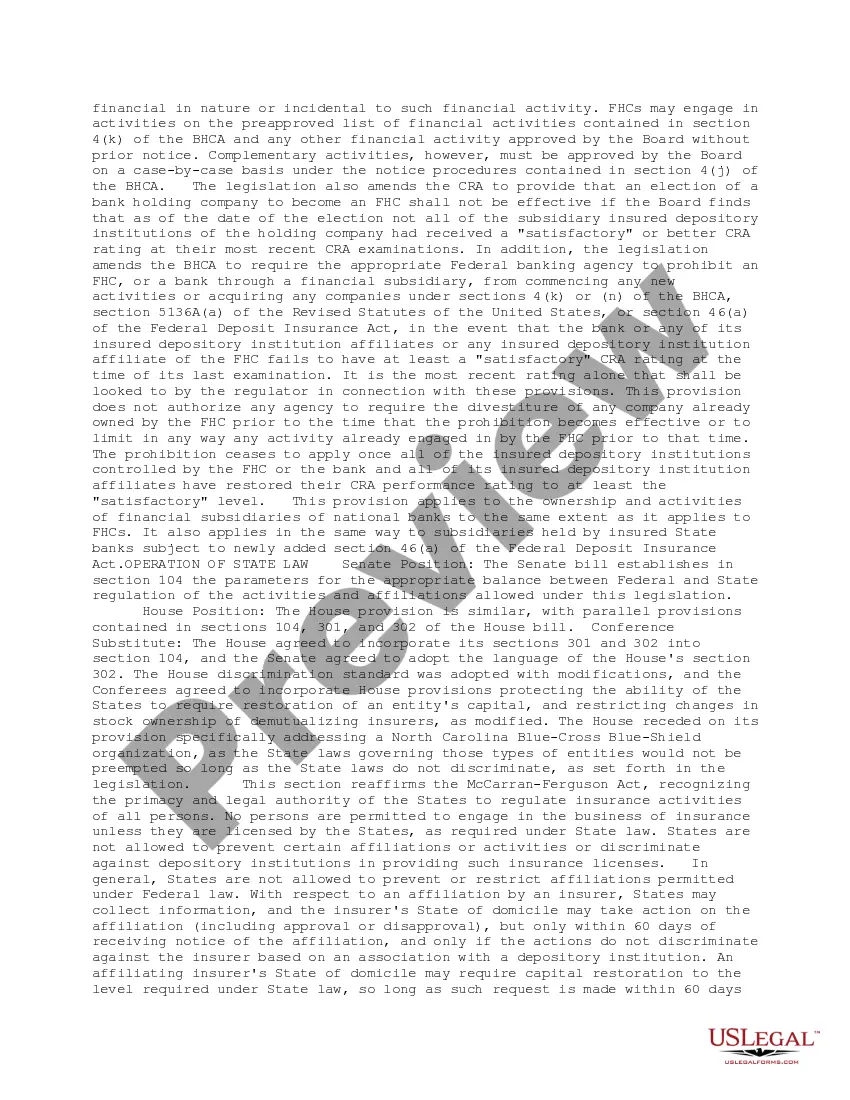
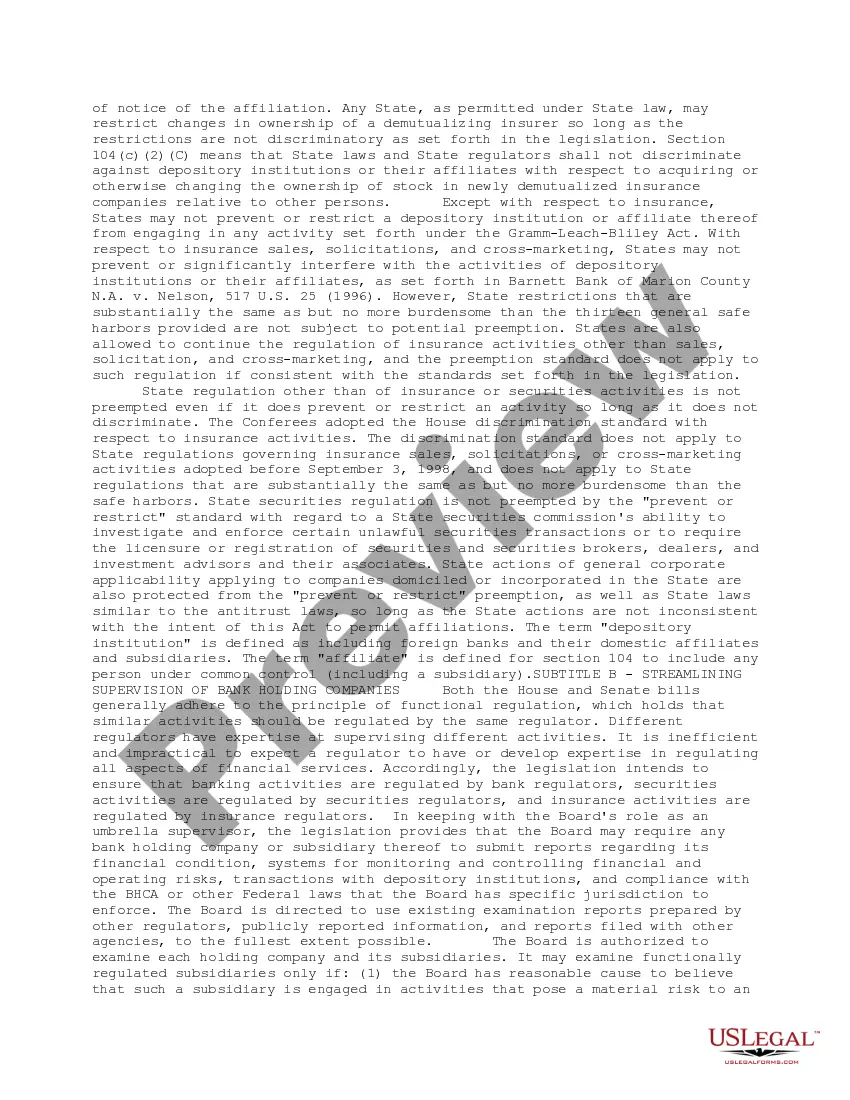
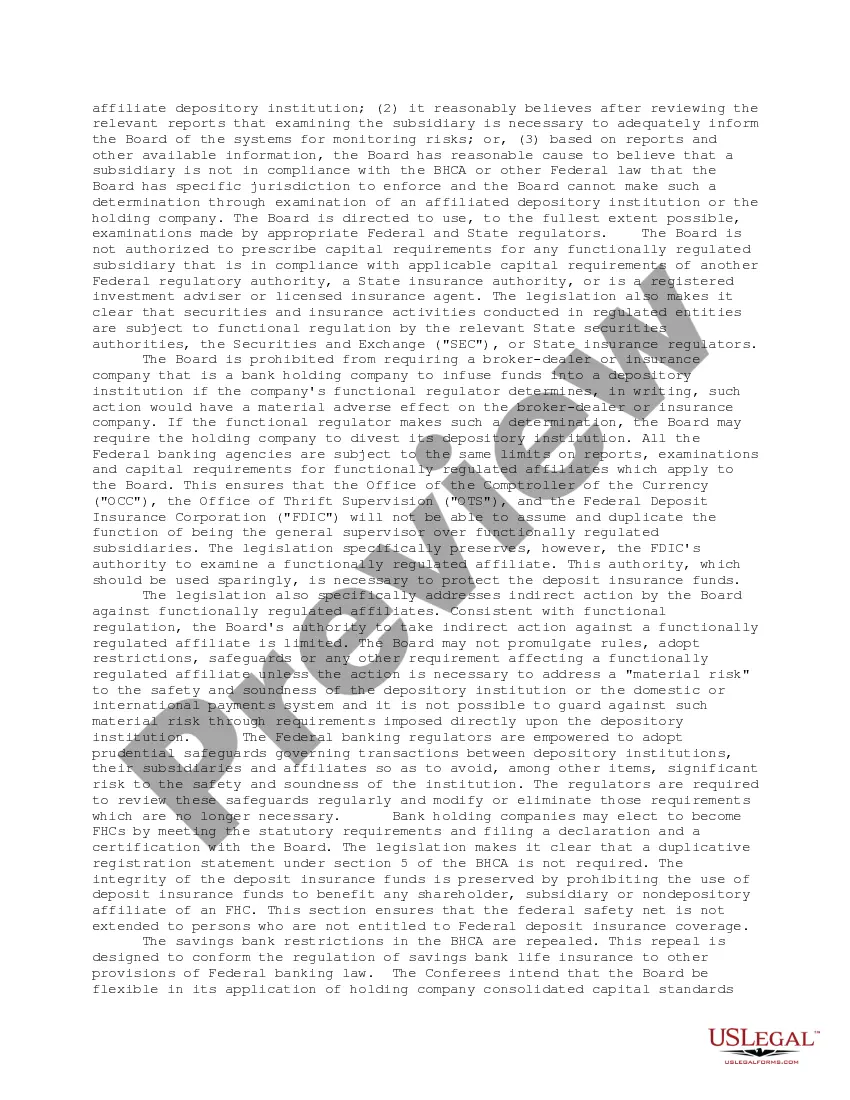
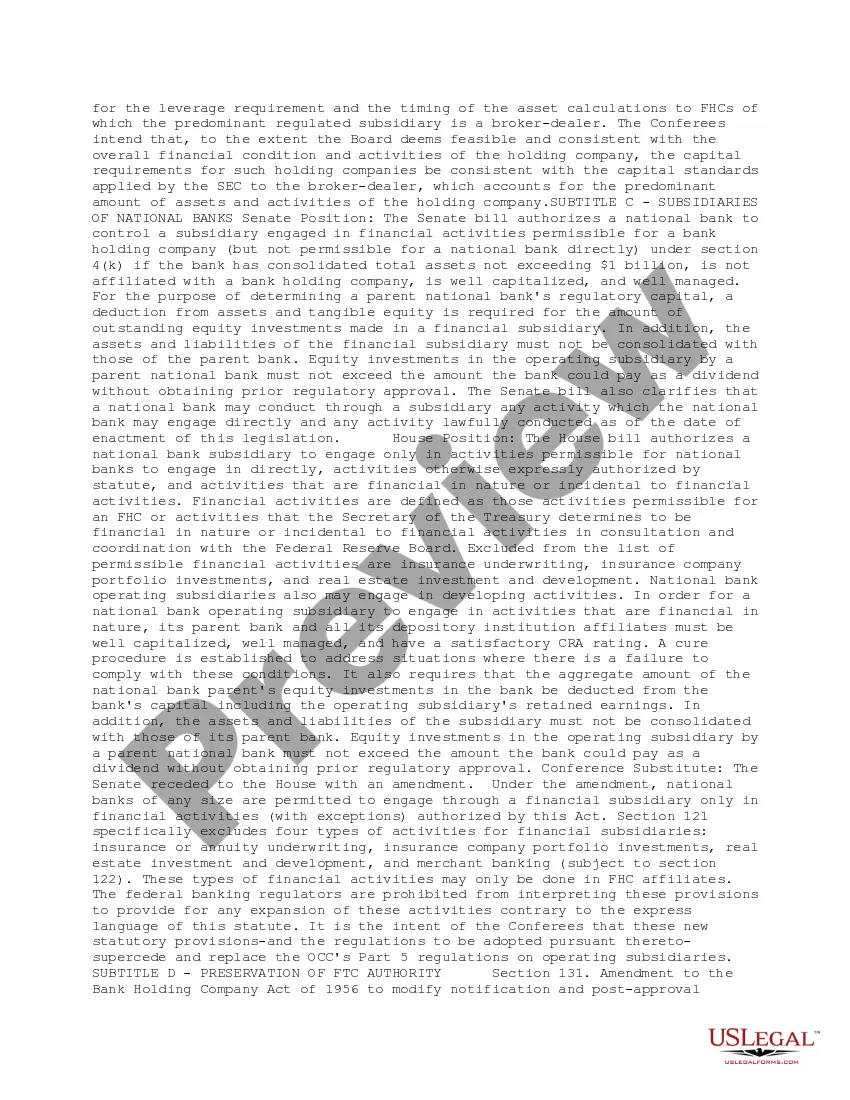
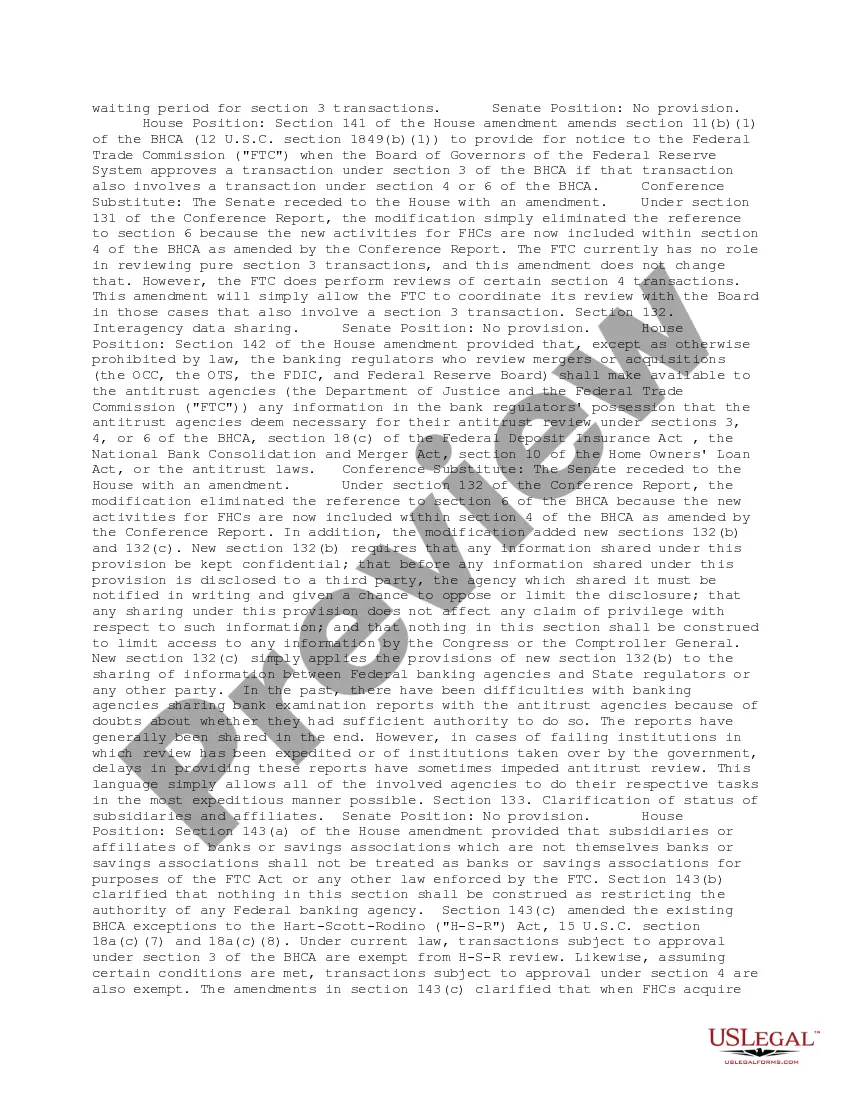
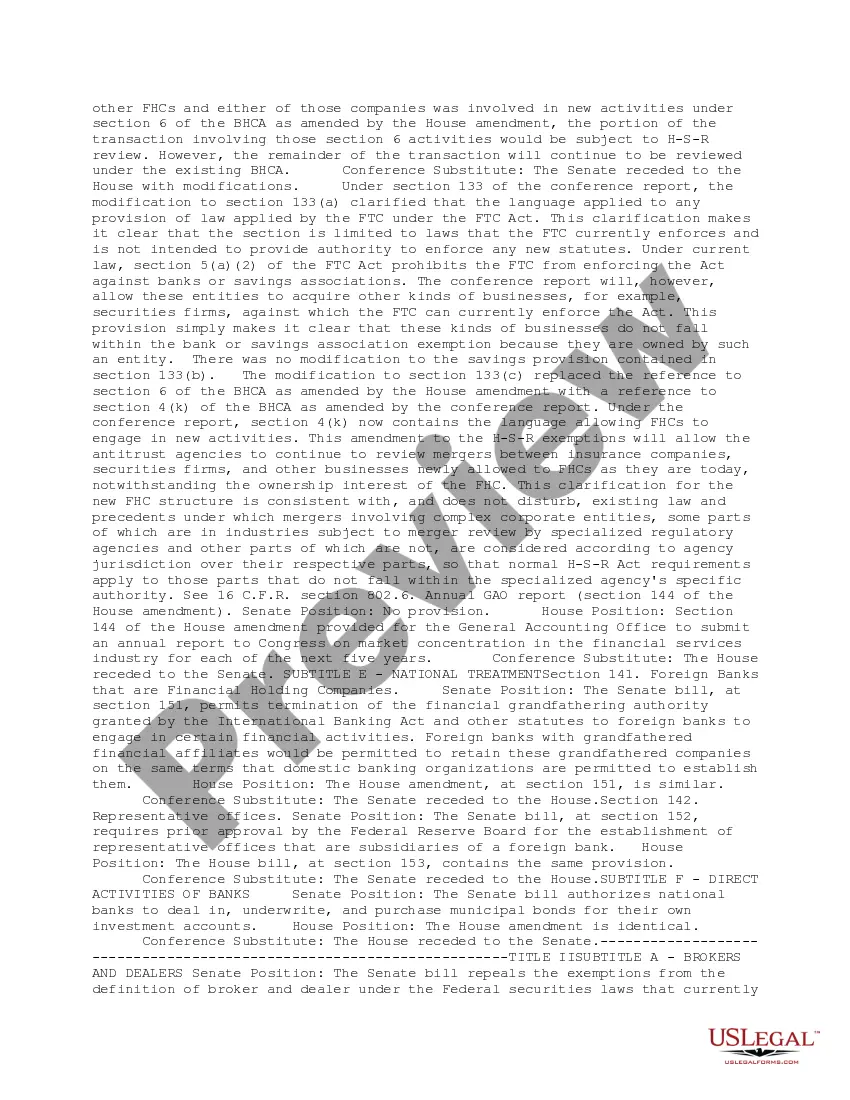
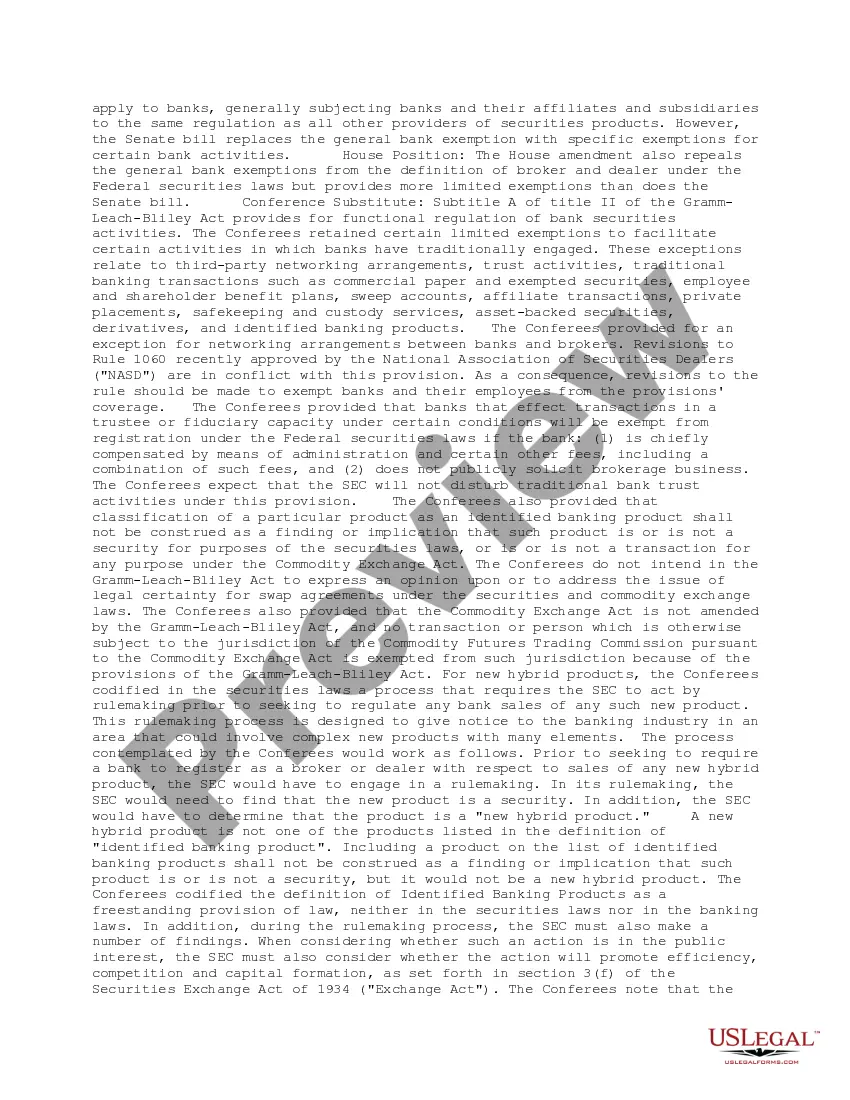
The Financial Services Modernization Act, also known as the Gramm-Leach-Bliley Act, is a federal law that aims to eliminate barriers between the banking, securities, and insurance industries. The act allows institutions to offer a wider range of financial services and imposes certain regulations on protecting consumers' personal financial information. Unlike other financial service forms that may focus solely on one aspect of these services, this act provides a comprehensive legal framework for financial institutions operating across different sectors.
Key components of this form
- Definitions of key terms related to financial services and consumer protection.
- Provisions regarding the sharing of non-public personal information.
- Requirements for financial institutions to establish privacy policies.
- Rights of consumers concerning their financial data and consent for information sharing.
- Restrictions on affiliations between financial institutions and their associated entities.


When to use this form
This form is essential when a financial institution needs to comply with regulations related to consumer privacy and data sharing. It is often used in scenarios such as when launching a new financial product or service, when modifications are made to existing privacy policies, or when merging with or acquiring another financial entity. Understanding the obligations set forth in the Financial Services Modernization Act is crucial for maintaining compliance with federal law.
Intended users of this form
- Financial institutions, such as banks and credit unions.
- Insurance companies looking to streamline services and inform consumers.
- Securities firms that engage in data sharing with other financial sectors.
- Consumers seeking to understand their rights under the act.
Instructions for completing this form
- Identify all involved parties, including the financial institution and consumers.
- Review and define the key terms relevant to your specific services or products.
- Establish privacy policies that align with consumer data protection requirements.
- Include consent clauses where necessary for data sharing.
- Ensure all sections conform to both federal and relevant state requirements.
Does this form need to be notarized?
This form does not typically require notarization unless specified by local law. It is important for users to verify whether additional notarization is needed based on state regulations.
Get your form ready online
Our built-in tools help you complete, sign, share, and store your documents in one place.
Make edits, fill in missing information, and update formatting in US Legal Forms—just like you would in MS Word.
Download a copy, print it, send it by email, or mail it via USPS—whatever works best for your next step.
Sign and collect signatures with our SignNow integration. Send to multiple recipients, set reminders, and more. Go Premium to unlock E-Sign.
If this form requires notarization, complete it online through a secure video call—no need to meet a notary in person or wait for an appointment.
We protect your documents and personal data by following strict security and privacy standards.

Make edits, fill in missing information, and update formatting in US Legal Forms—just like you would in MS Word.

Download a copy, print it, send it by email, or mail it via USPS—whatever works best for your next step.

Sign and collect signatures with our SignNow integration. Send to multiple recipients, set reminders, and more. Go Premium to unlock E-Sign.

If this form requires notarization, complete it online through a secure video call—no need to meet a notary in person or wait for an appointment.

We protect your documents and personal data by following strict security and privacy standards.
Mistakes to watch out for
- Failing to include comprehensive consumer privacy policies.
- Not updating forms to reflect changes in federal or state laws.
- Misunderstanding the rights consumers have under the Act.
- Overlooking state-specific regulations that may apply.
Advantages of online completion
- Immediate access to up-to-date legal information and templates.
- Easy download and editing to fit specific institutional needs.
- Convenience of completing the form from any location, enhancing accessibility.
- Secure storage options for completed forms and documents.
- This act is enforceable under federal law, providing a framework for the conduct of financial institutions.
- Entities must comply with both federal requirements and any additional state regulations.
What to keep in mind
- The Gramm-Leach-Bliley Act facilitates competition among financial service providers.
- It mandates strict consumer privacy protections that must be adhered to by all relevant institutions.
- Understanding the act is crucial for compliance and operational success in the financial sector.
Looking for another form?


Form popularity
FAQ
The GrammLeachBliley Act (GLBA), also known as the Financial Services Modernization Act of 1999, ( Pub. L. 106102 (text) (pdf), 113 Stat. 1338, enacted November 12, 1999) is an act of the 106th United States Congress (19992001).
To be GLBA compliant, financial institutions must communicate to their customers how they share the customers' sensitive data, inform customers of their right to opt-out if they prefer that their personal data not be shared with third parties, and apply specific protections to customers' private data in accordance with
The Gramm-Leach-Bliley Act requires financial institutions companies that offer consumers financial products or services like loans, financial or investment advice, or insurance to explain their information-sharing practices to their customers and to safeguard sensitive data.
The Gramm-Leach-Bliley Act requires financial institutions companies that offer consumers financial products or services like loans, financial or investment advice, or insurance to explain their information-sharing practices to their customers and to safeguard sensitive data.
The GLBA's purpose was to remove legal barriers preventing financial institutions from providing banking, investment and insurance services together.
The Financial Services Modernization Act of 1999 is a law that serves to partially deregulate the financial industry. The law allows companies working in the financial sector to integrate their operations, invest in each other's businesses, and consolidate.
The Act consists of three sections: The Financial Privacy Rule, which regulates the collection and disclosure of private financial information; the Safeguards Rule, which stipulates that financial institutions must implement security programs to protect such information; and the Pretexting provisions, which prohibit