Indiana Warranty Deed from Individual to Individual

Overview of this form
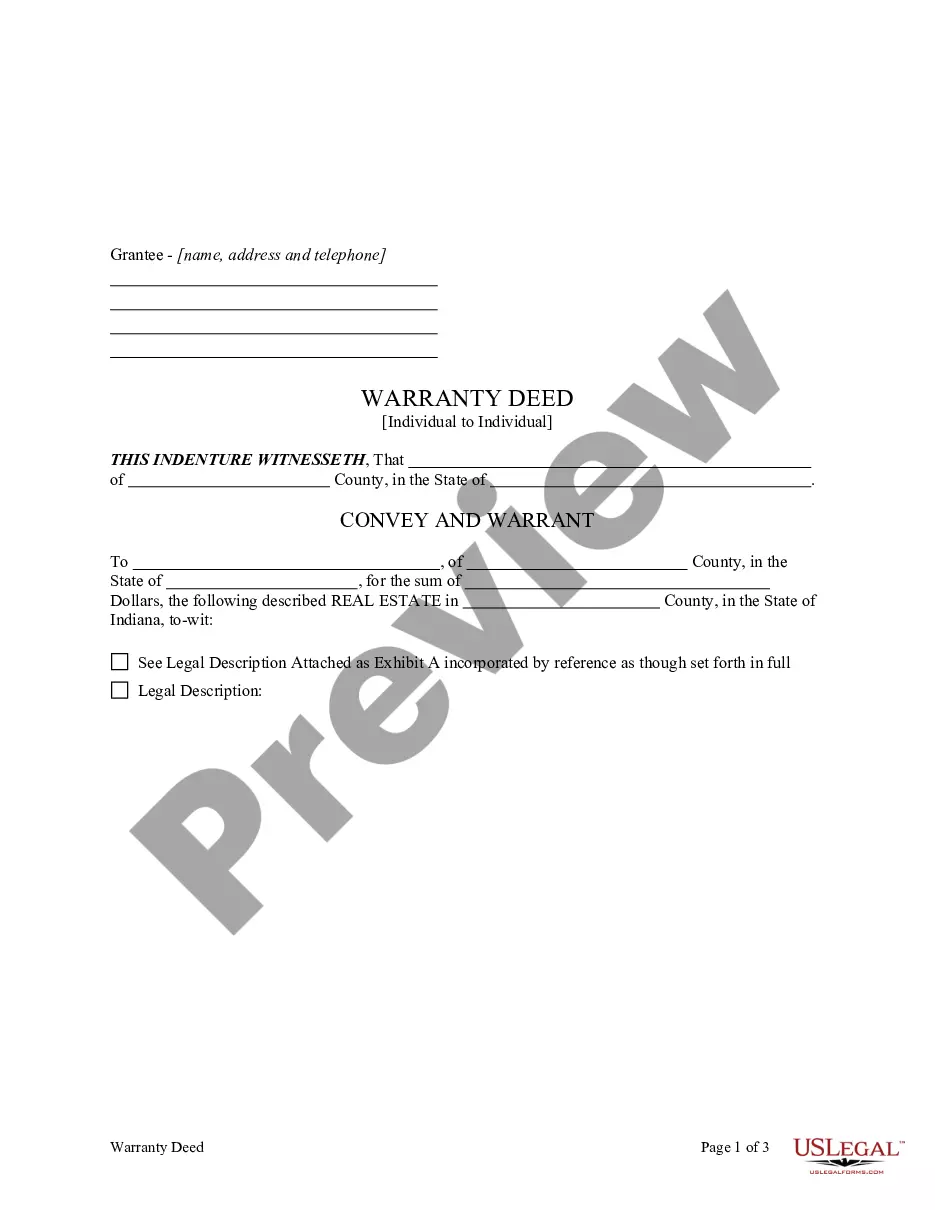
The Warranty Deed from Individual to Individual is a legal document used to transfer ownership of real property between two individuals. This type of deed guarantees that the grantor (the seller) holds clear title to the property and has the legal right to sell it. It is important to note that a warranty deed provides more protection to the grantee (the buyer) than other types of deeds, such as quitclaim deeds, by ensuring that the title is free of liens and other encumbrances.
Form components explained
- Parties Involved: Names and addresses of both the grantor and grantee.
- Property Description: A clear and detailed description of the property being transferred.
- Consideration: The amount paid for the property, which may be stated in dollars or described as "for love and affection."
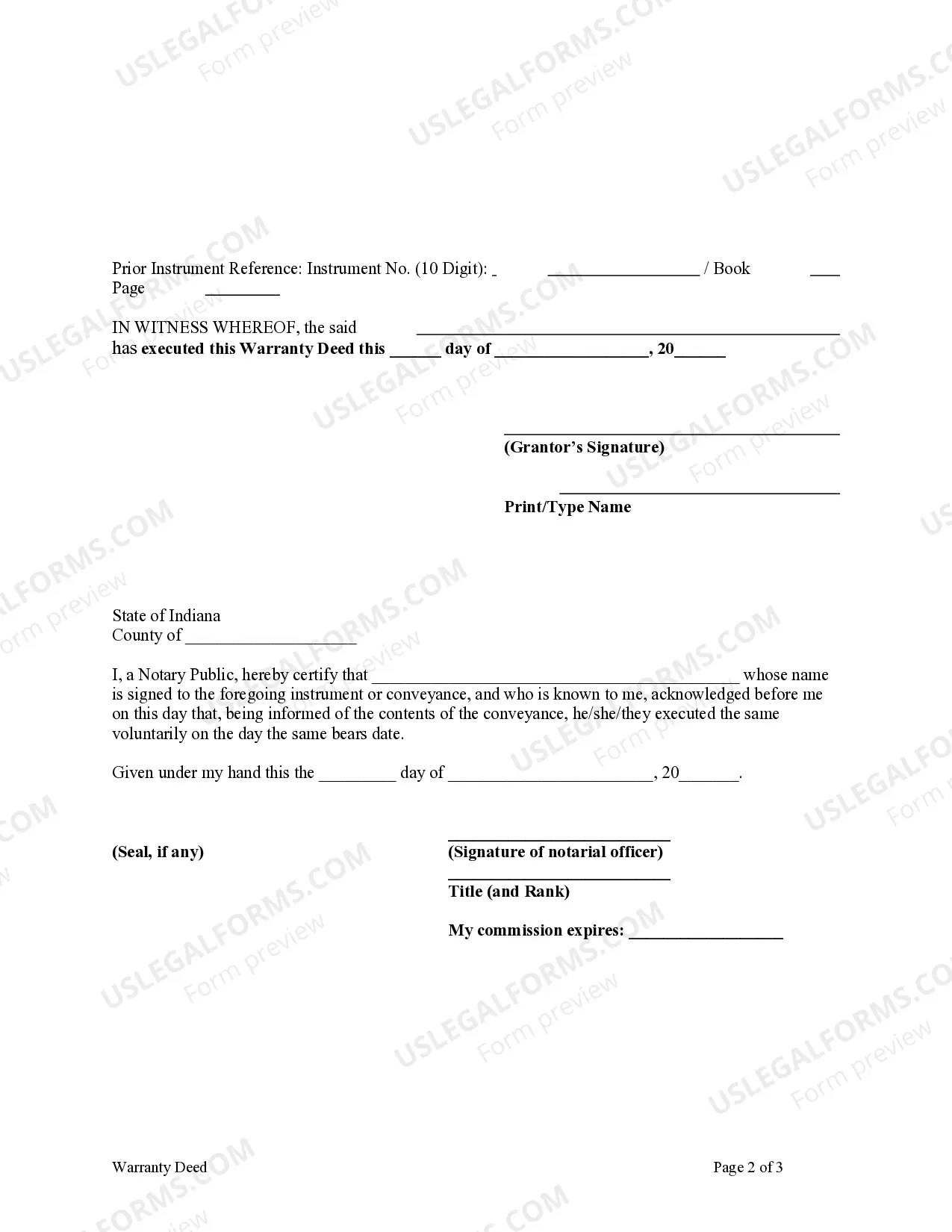
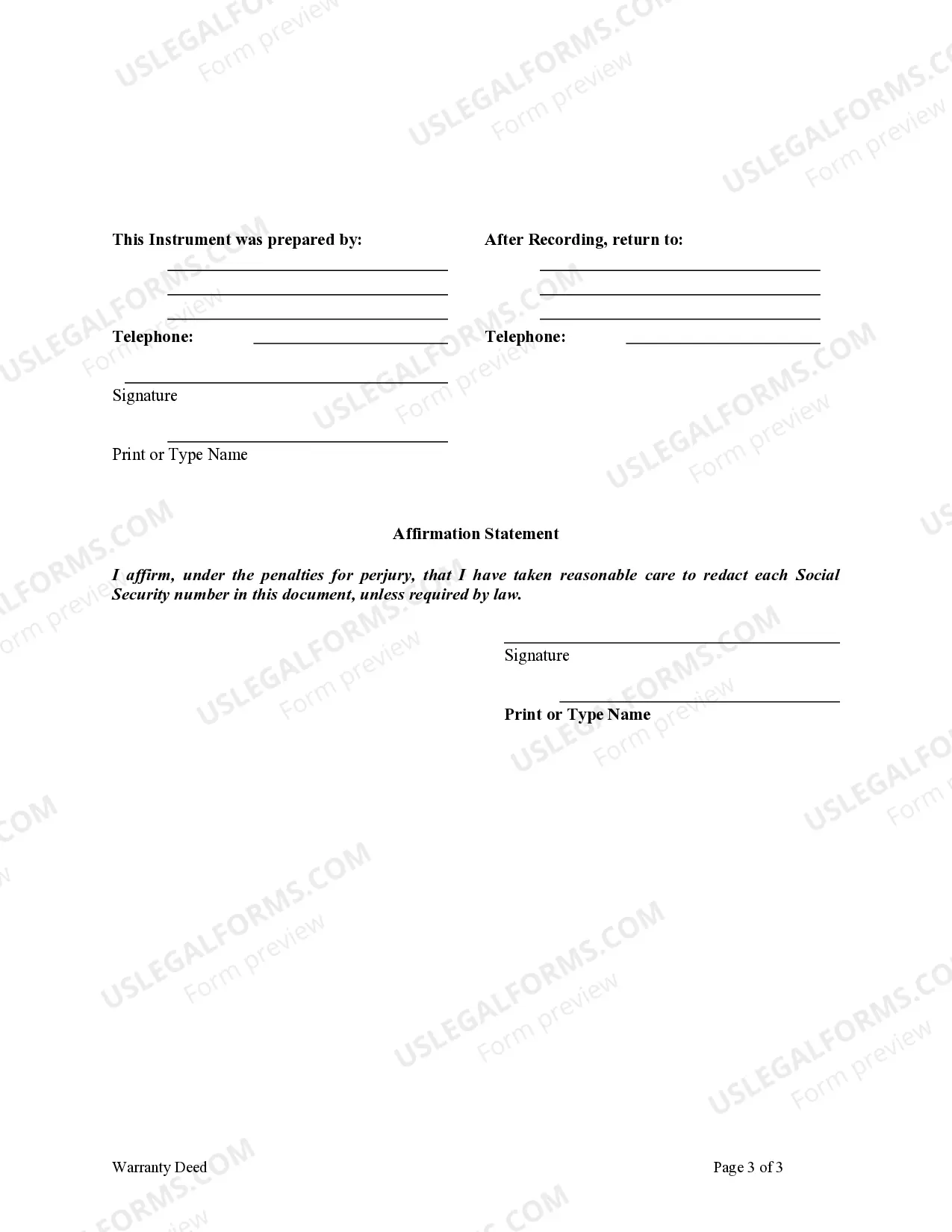
- Signatures: Signatures of the grantor and any necessary witnesses to validate the deed.
- Legal Clauses: Clauses that ensure the grantor guarantees the title and agrees to defend against any future claims.





When to use this form
This form should be used whenever an individual wishes to transfer real estateownership to another individual, whether as part of a sale, gift, or inheritance. Situations may include selling property to a family member, transferring property as part of an estate settlement, or gifting property to a friend. It is crucial to ensure that the property title is clear and that all parties understand their rights and obligations under the terms of the deed.
Who needs this form
This form is intended for:
- Individuals who are looking to sell or transfer real property ownership.
- Family members who wish to gift property to their relatives.
- Beneficiaries of an estate needing to transfer property following a loved oneâs passing.
Completing this form step by step
- Identify the parties: Clearly write the names and addresses of both the grantor and grantee.
- Specify the property: Provide a detailed description of the property, including its address and legal description.
- Determine the consideration: State the amount paid for the property or specify that it is a gift.
- Gather signatures: Both the grantor and any required witnesses must sign the document.
- Review and finalize: Ensure all information is accurate before filing the document with the appropriate county office.
Does this form need to be notarized?
This form does not typically require notarization unless specified by local law. However, it is recommended to have the deed notarized to enhance its validity and ensure proper record-keeping.
Get your form ready online
Our built-in tools help you complete, sign, share, and store your documents in one place.
Make edits, fill in missing information, and update formatting in US Legal Forms—just like you would in MS Word.
Download a copy, print it, send it by email, or mail it via USPS—whatever works best for your next step.
Sign and collect signatures with our SignNow integration. Send to multiple recipients, set reminders, and more. Go Premium to unlock E-Sign.
If this form requires notarization, complete it online through a secure video call—no need to meet a notary in person or wait for an appointment.
We protect your documents and personal data by following strict security and privacy standards.

Make edits, fill in missing information, and update formatting in US Legal Forms—just like you would in MS Word.

Download a copy, print it, send it by email, or mail it via USPS—whatever works best for your next step.

Sign and collect signatures with our SignNow integration. Send to multiple recipients, set reminders, and more. Go Premium to unlock E-Sign.

If this form requires notarization, complete it online through a secure video call—no need to meet a notary in person or wait for an appointment.

We protect your documents and personal data by following strict security and privacy standards.
Mistakes to watch out for
- Omitting required signatures or witness statements.
- Providing an incomplete or unclear property description.
- Failing to notarize the deed when necessary.
Advantages of online completion
- Convenience of downloading and accessing a customizable form instantly.
- Ability to edit the form to meet specific needs.
- Reliability as the form is drafted by licensed attorneys to ensure legal compliance.
Quick recap
- A Warranty Deed is essential for formally transferring property between individuals.
- It provides important protections to the grantee against future claims on the property.
- Proper completion and filing of the deed are critical to ensure legality and enforceability.
Looking for another form?
Form popularity
FAQ
It's important to note that a warranty deed does not actually prove the grantor has ownership (a title search is the best way to prove that), but it is a promise by the grantor that they are transferring ownership and if it turns out they don't actually own the property, the grantor will be responsible for compensating
DEED: A written instrument by which one party, the Grantor, conveys the title of ownership in property to another party, the Grantee. A Warranty Deed contains promises, called covenants, that the Grantor makes to the Grantee.It is even possible that the Grantor does not have any title or ownership interest at all!
The two parties involved in a warranty deed are the seller or owner, also known as the grantor, and the buyer or the grantee. Either party can be an individual or a business, and are often strangers to each other.
A warranty deed guarantees that: The grantor is the rightful owner of the property and has the legal right to transfer the title.The title would withstand third-party claims to ownership of the property. The grantor will do anything to ensure the grantee's title to the property.