South Carolina PRISON RIOT
Understanding this form
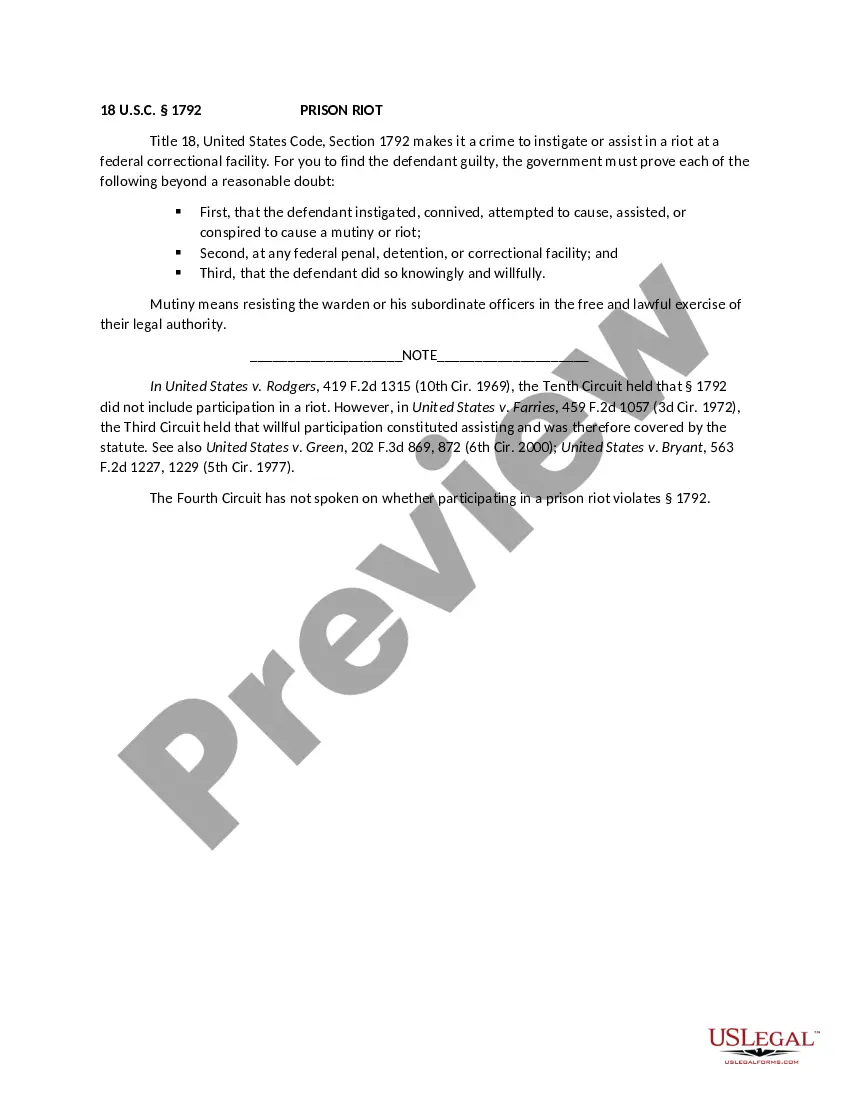
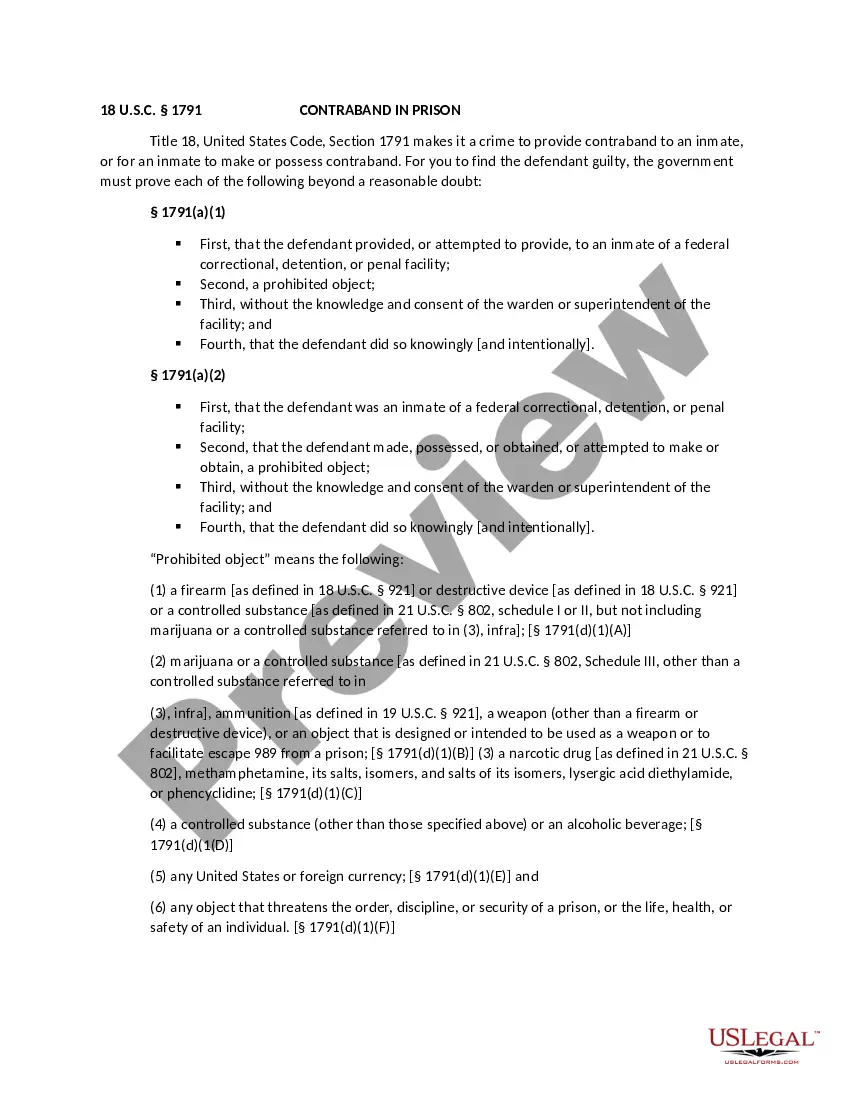
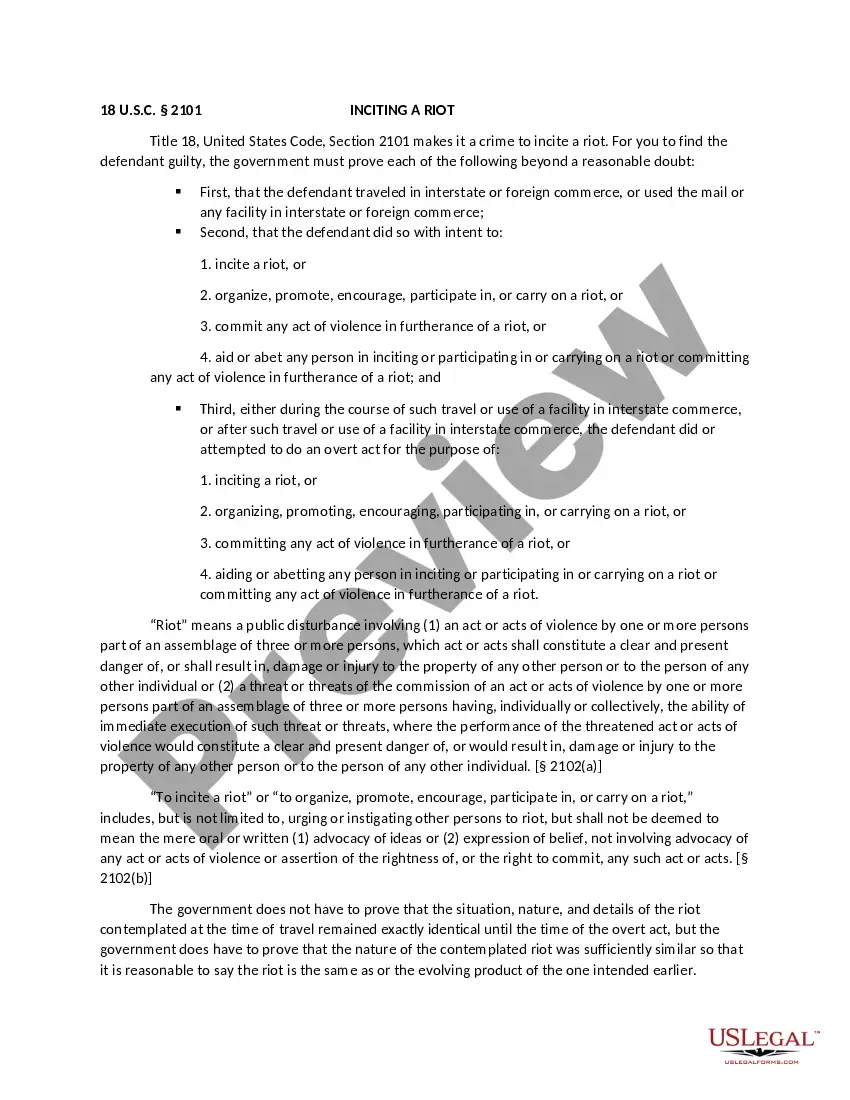
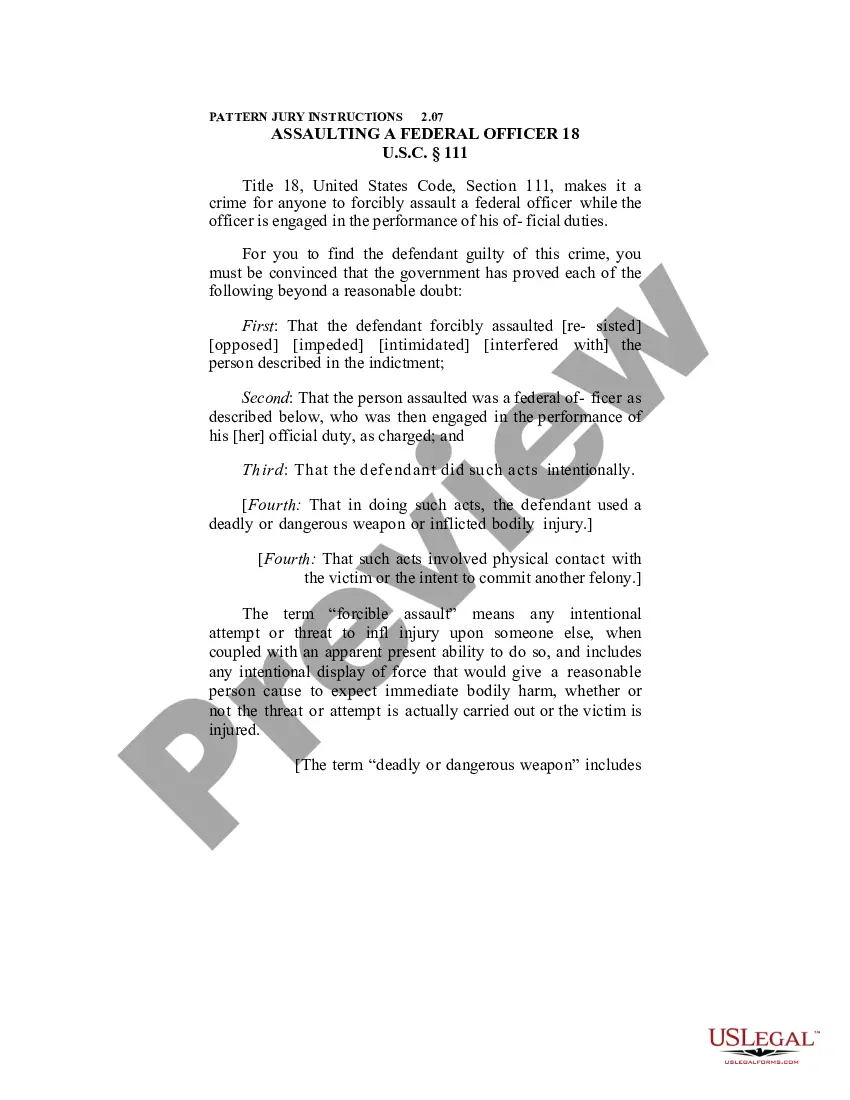
The Prison Riot form provides official pattern jury instructions used in federal criminal cases in the District Court of South Carolina. This document outlines the legal parameters surrounding the offense of instigating or assisting in a riot at a federal correctional facility, as defined under Title 18, United States Code, Section 1792. Unlike other legal forms, this one is specifically tailored for use in federal court settings, making it vital for cases involving prison riots.
Key components of this form
- Definition of mutiny and riot in the context of federal correctional facilities.
- Criteria for proving guilt beyond a reasonable doubt for the defendant.
- Legal implications of assisting or participating in a prison riot.
- Reference to key case law that interprets Section 1792.
When to use this document
This form is used during judicial proceedings when a defendant is accused of instigating, attempting to cause, or participating in a riot at a federal correctional facility. It is essential for jury instructions provided to the jury when deciding on the guilt or innocence of the accused regarding charges of a prison riot.
Who needs this form
- Judges presiding over federal criminal cases involving accusations of prison riots.
- Attorneys representing defendants charged under Title 18, Section 1792.
- Prosecutors attempting to establish the elements of the offense in court.
- Jury members who need clear instructions regarding the charges in a case involving a prison riot.
Instructions for completing this form
- Review the jury instructions thoroughly for clarity on the charges.
- Ensure the definition of key terms, such as "mutiny" and "riot," is included.
- Provide instructions on the burden of proof for establishing guilt.
- Cite relevant case law to support the framework of the instruction.
- Verify that any unique aspects of the case are addressed in the instructions.
Is notarization required?
This form usually doesn’t need to be notarized. However, local laws or specific transactions may require it. Our online notarization service, powered by Notarize, lets you complete it remotely through a secure video session, available 24/7.
Get your form ready online
Our built-in tools help you complete, sign, share, and store your documents in one place.
Make edits, fill in missing information, and update formatting in US Legal Forms—just like you would in MS Word.
Download a copy, print it, send it by email, or mail it via USPS—whatever works best for your next step.
Sign and collect signatures with our SignNow integration. Send to multiple recipients, set reminders, and more. Go Premium to unlock E-Sign.
If this form requires notarization, complete it online through a secure video call—no need to meet a notary in person or wait for an appointment.
We protect your documents and personal data by following strict security and privacy standards.

Make edits, fill in missing information, and update formatting in US Legal Forms—just like you would in MS Word.

Download a copy, print it, send it by email, or mail it via USPS—whatever works best for your next step.

Sign and collect signatures with our SignNow integration. Send to multiple recipients, set reminders, and more. Go Premium to unlock E-Sign.

If this form requires notarization, complete it online through a secure video call—no need to meet a notary in person or wait for an appointment.

We protect your documents and personal data by following strict security and privacy standards.
Avoid these common issues
- Failing to define critical legal terms, which may confuse jurors.
- Overlooking the necessity for citing case law that provides context to the jury instructions.
- Not clarifying the difference between instigation and mere participation in a riot.
Legal use & context
- The instructions provided by this form help guide jury deliberations on serious criminal charges.
- Understanding the precise definitions and expectations assists jurors in rendering fair judgments.
- This form ensures compliance with federal law and promotes effective legal proceedings in federal court.
What to keep in mind
- The Prison Riot form provides essential jury instructions for federal criminal cases.
- Understanding the legal context is crucial for jurors when deciding cases involving alleged riots in correctional settings.
- Proper completion and clarity in these instructions can significantly impact the outcome of a trial.
Looking for another form?
Form popularity
FAQ
The New Mexico State Penitentiary riot, which took place on February 2 and 3, 1980, at the Penitentiary of New Mexico (PNM) south of Santa Fe, was the most violent prison riot in U.S. history. Inmates took complete control of the prison and twelve officers were taken hostage.
America's first recorded prison riot took place even before the Declaration of Independence, in Connecticut's Newgate prison in 1774, and uprisings continue to this day. One report estimates that U.S. correctional institutions saw more than 1,300 riots in the 20th century.
From one o'clock on the afternoon of July 24, 1974, until shortly before ten o'clock the night of August 3, eleven days later, one of the longest hostage-taking sieges in the history of the United States took place in Texas' Huntsville State Prison.
The New Mexico State Penitentiary riot, which took place on February 2 and 3, 1980, at the Penitentiary of New Mexico (PNM) south of Santa Fe, was the most violent prison riot in U.S. history. Inmates took complete control of the prison and twelve officers were taken hostage.
The riot caused more than $20 million in damage to twenty-four buildings, and the state considered closing the prison. A Special Task Force Committee on Penal Institutions convened from 7 August to 21 September 1973 to determine the fate of the McAlester prison and the penal system in Oklahoma.
The inmates overtook the prison after the counts were done, sparking a brutal 36-hour riot where 33 inmates would lose their lives.
Alex Murdaugh has been moved to a statewide protective custody unit of a South Carolina maximum-security prison, a state Department of Corrections spokesperson confirmed to CBS News on Saturday. Murdaugh, 54, was sentenced to life in prison for the 2021 murders of his wife Maggie Murdaugh, and his son, Paul Murdaugh.