South Carolina CONTRABAND IN PRISON
What this document covers
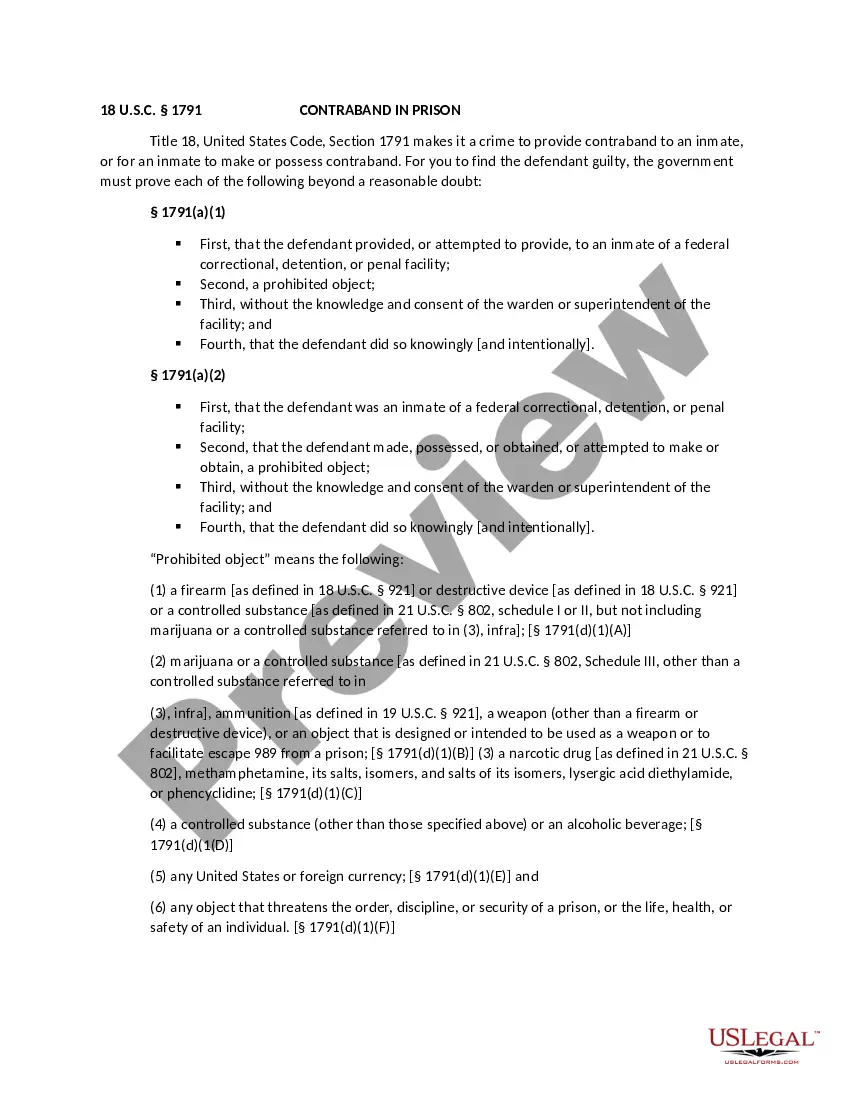
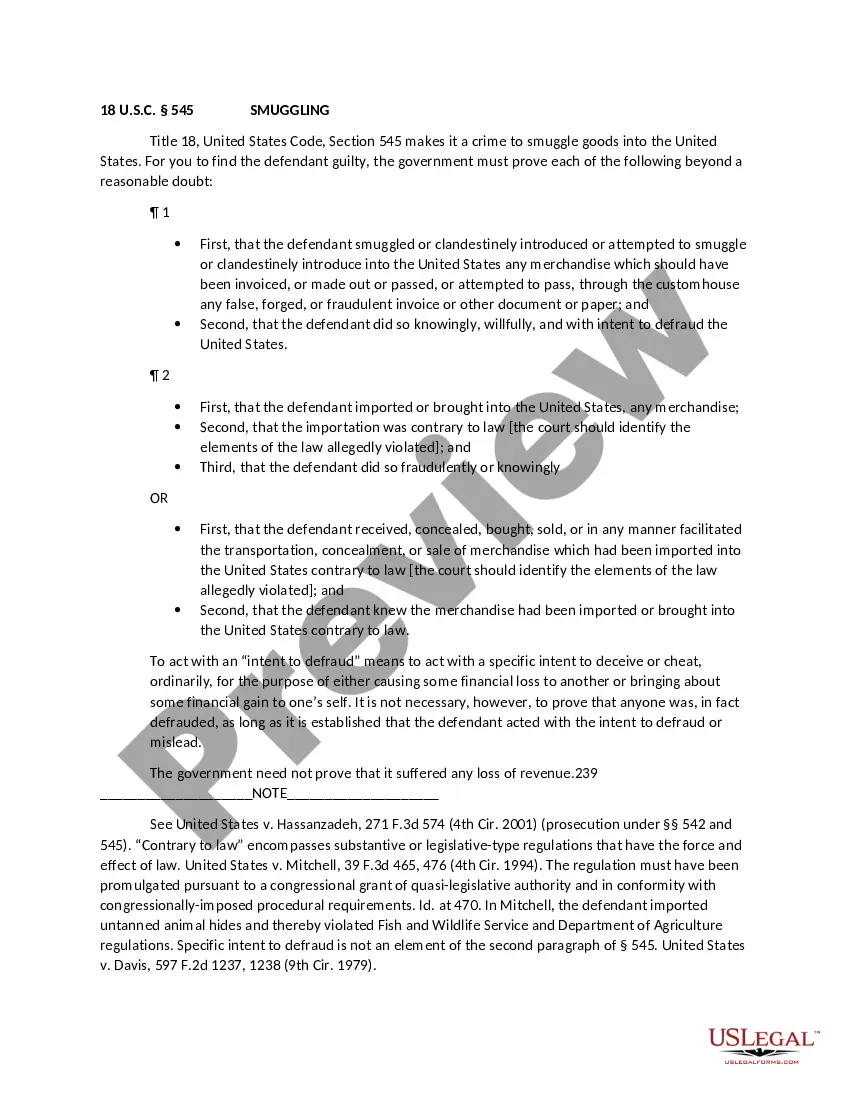
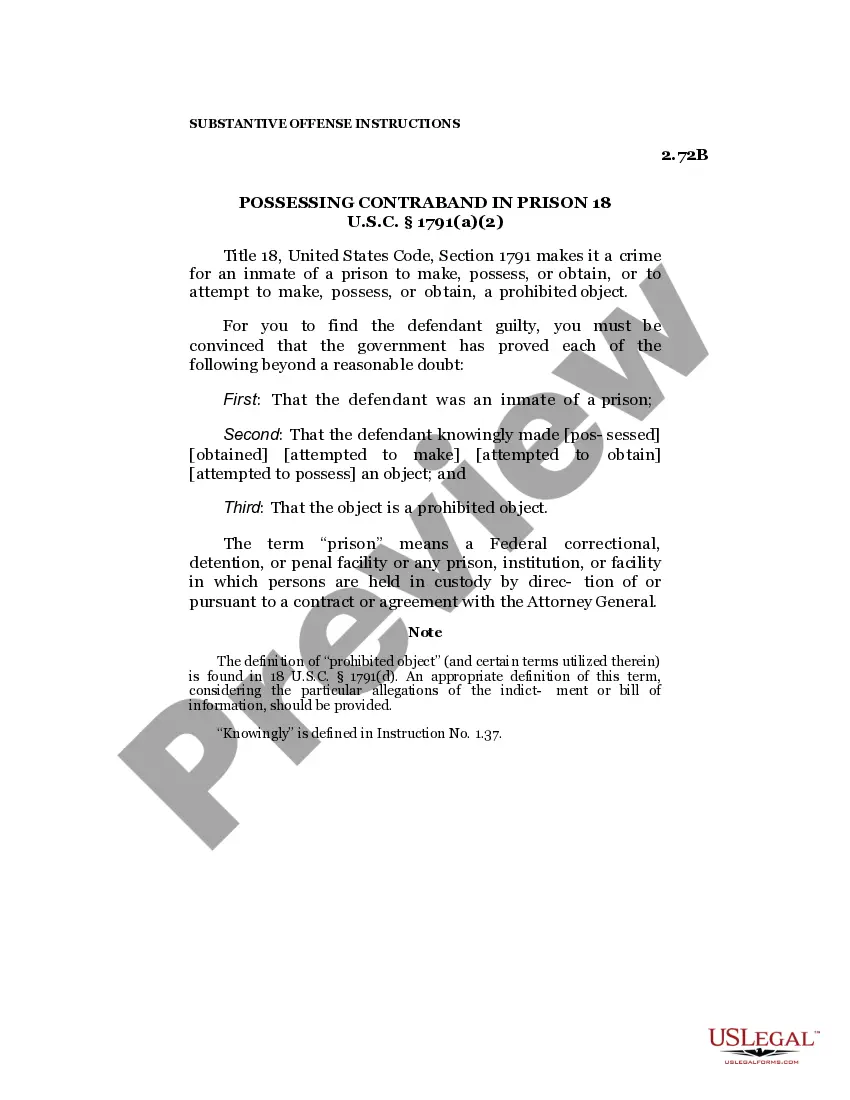
The contraband in prison form provides essential jury instructions for criminal cases involving the unlawful provision, possession, or manufacture of contraband in a federal correctional facility. This form is specifically designed for federal cases in South Carolina, offering a clear legal framework that sets it apart from other legal documents related to contraband offenses. It ensures juries understand the criteria necessary for establishing guilt beyond a reasonable doubt under Title 18, United States Code, Section 1791.
Form components explained
- Definition of contraband and prohibited objects.
- Criteria for determining the defendant's knowledge and intent.
- Responsibilities of the government to prove each element of the offense.
- Explanations of specific types of contraband, such as firearms and controlled substances.
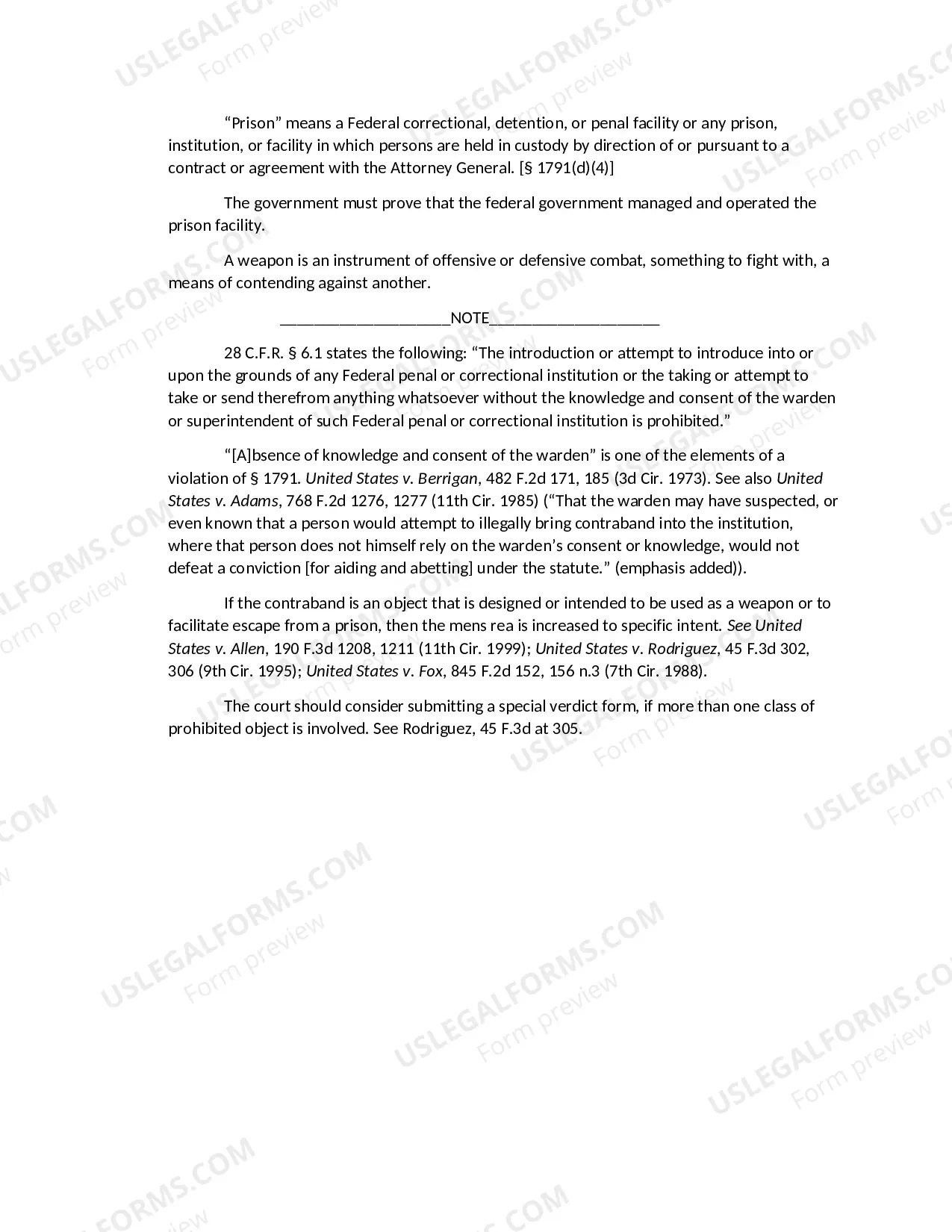
- Legal context for prison environments and the role of facility authorities.
When to use this document
This form should be utilized in federal criminal cases involving individuals accused of providing or possessing contraband in a prison setting. It is relevant in scenarios where an inmate is charged with attempting to introduce prohibited items into the facility or if someone is accused of smuggling contraband to an inmate. Understanding the specific instructions within this form is crucial for jury deliberations in these cases.
Who needs this form
This form is intended for:
- Federal prosecutors handling cases of contraband in prisons.
- Defense attorneys representing individuals accused of contraband-related offenses.
- Judges in federal court who need jury instructions for contraband cases.
Instructions for completing this form
- Review the legal definition of contraband as specified in Title 18.
- Ensure the jury instructions cover all required elements of the offense, including knowledge and intent.
- Read through each category of prohibited objects and clarify definitions as needed.
- Affirm the responsibilities of the government in proving its case beyond a reasonable doubt.
- Ensure the instructions are comprehensible and relevant to the specific case at hand.
Is notarization required?
This form does not typically require notarization unless specified by local law. It is important to verify whether any specific jurisdictional rules apply to the usage of these jury instructions.
Get your form ready online
Our built-in tools help you complete, sign, share, and store your documents in one place.
Make edits, fill in missing information, and update formatting in US Legal Forms—just like you would in MS Word.
Download a copy, print it, send it by email, or mail it via USPS—whatever works best for your next step.
Sign and collect signatures with our SignNow integration. Send to multiple recipients, set reminders, and more. Go Premium to unlock E-Sign.
If this form requires notarization, complete it online through a secure video call—no need to meet a notary in person or wait for an appointment.
We protect your documents and personal data by following strict security and privacy standards.

Make edits, fill in missing information, and update formatting in US Legal Forms—just like you would in MS Word.

Download a copy, print it, send it by email, or mail it via USPS—whatever works best for your next step.

Sign and collect signatures with our SignNow integration. Send to multiple recipients, set reminders, and more. Go Premium to unlock E-Sign.

If this form requires notarization, complete it online through a secure video call—no need to meet a notary in person or wait for an appointment.

We protect your documents and personal data by following strict security and privacy standards.
Avoid these common issues
- Failing to clearly define what constitutes a prohibited object.
- Not adequately explaining the knowledge and intent required for a conviction.
- Omitting specific instructions regarding different types of contraband.
Why use this form online
- Convenient downloadable access, allowing for immediate use in proceedings.
- Easy to edit and customize to fit specific case needs.
- Reliability in utilizing forms drafted by licensed attorneys.
Legal use & context
- The form provides a legal framework guiding jury decisions in contraband cases.
- It emphasizes the burden of proof required for the government to secure a conviction.
- Jurors must understand the necessity of proving knowledge and intent for each element of the crime.
What to keep in mind
- The contraband in prison form outlines jury instructions for federal cases in South Carolina.
- Understanding the legal definitions and requirements is essential for fair jury proceedings.
- Available online for convenient access and alteration to meet specific case needs.
Looking for another form?
Form popularity
FAQ
List of Criminal Charges: A to Z Aggravated AssaultInsurance FraudDrug PossessionSexual AssaultDrug Trafficking / DistributionShopliftingDUI / DWISolicitationEmbezzlementStalking26 more rows ?
Contraband in prisons includes alcohol, communication devices, drugs, drug paraphernalia, tattoo equipment, weapons and other items. Items that are prohibited may include everyday and seemingly innocent items that while not illegal, may be used inappropriately by prisoners.
To make up for paltry wages, people in prison often take part in a thriving underground economy of side hustles, such as bartering stamps or commissary items for everything from hand-drawn greeting cards to legal help.
Ing to correctional officers, the most common types of contraband recovered from cells are cell phones, medication, razor blades, and hoarded food, especially fruits that can be fermented to make alcohol.
It is unlawful for a person to furnish or attempt to furnish a prisoner in any county, municipal, or multijurisdictional jail, prison camp, work camp, or overnight lockup facility with a matter declared to be contraband. It is unlawful for an inmate of a facility to possess a matter declared to be contraband.
Marijuana. Meth. Opiates. Opioid. Percocet. Prescription Opioid. Sedative. Vyvanse.