Indiana Letter from Tenant to Landlord about Landlord using Unlawful Self-Help to Gain Possession
What is this form?
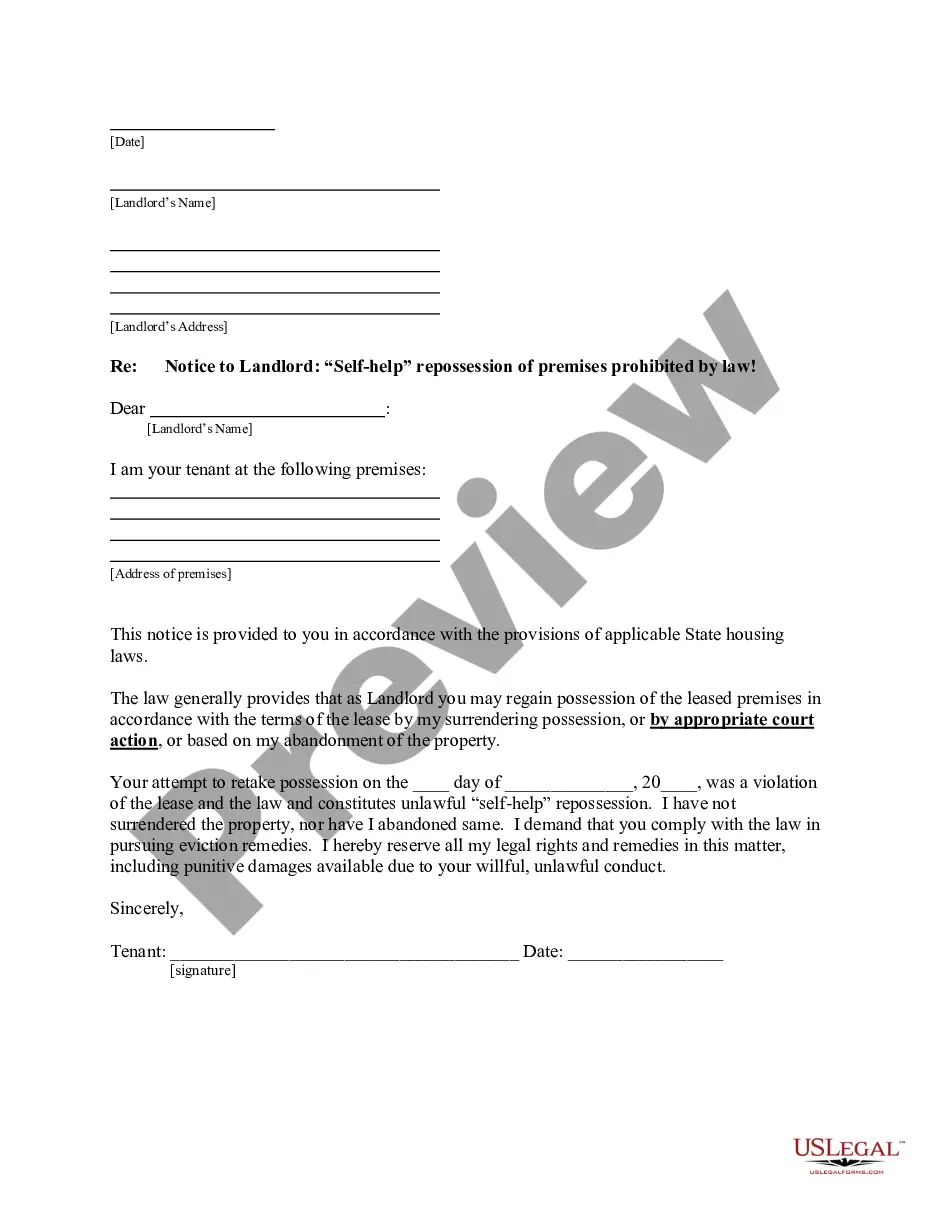
This Letter from Tenant to Landlord about Landlord using Unlawful Self-Help to Gain Possession is a formal document that a tenant can use to notify a landlord of unlawful actions taken to regain possession of rental property. This letter serves as a notice that the landlord's actions violate the rental agreement and applicable laws, distinguishing it from other forms of tenant-landlord communication by its specific focus on unlawful self-help measures.
Key parts of this document
- Date of the unauthorized action taken by the landlord.
- Statement of tenant's non-surrender and non-abandonment of property.
- Demand for the landlord to comply with legal eviction processes.
- Reservation of the tenant's legal rights and potential claims for damages.
- Space for tenant's signature and the date of the letter.
When this form is needed
This form should be used when a tenant has experienced attempts by a landlord to regain possession of a rental property through illegal means, known as unlawful self-help. Situations could include changing locks without notice, forcing entry, or any other method that bypasses legal eviction proceedings. Sending this letter demonstrates the tenantâs awareness of their rights and formally alerts the landlord to their unlawful actions.
Intended users of this form
- Tenants who believe their landlord has illegally attempted to evict them.
- Individuals seeking to protect their rights during a tenancy dispute.
- Those wanting to formally communicate with their landlord regarding unlawful actions.
Steps to complete this form
- Identify the date on which the landlord attempted to regain possession.
- Clearly state that you have not surrendered or abandoned the property.
- Demand that the landlord follow legal procedures for eviction.
- Reserve your legal rights regarding this matter, including possible claims for damages.
- Sign and date the letter to finalize it.
Does this document require notarization?
This form does not typically require notarization unless specified by local law. However, having it notarized can add an additional layer of validation to the document.
Get your form ready online
Our built-in tools help you complete, sign, share, and store your documents in one place.
Make edits, fill in missing information, and update formatting in US Legal Forms—just like you would in MS Word.
Download a copy, print it, send it by email, or mail it via USPS—whatever works best for your next step.
Sign and collect signatures with our SignNow integration. Send to multiple recipients, set reminders, and more. Go Premium to unlock E-Sign.
If this form requires notarization, complete it online through a secure video call—no need to meet a notary in person or wait for an appointment.
We protect your documents and personal data by following strict security and privacy standards.
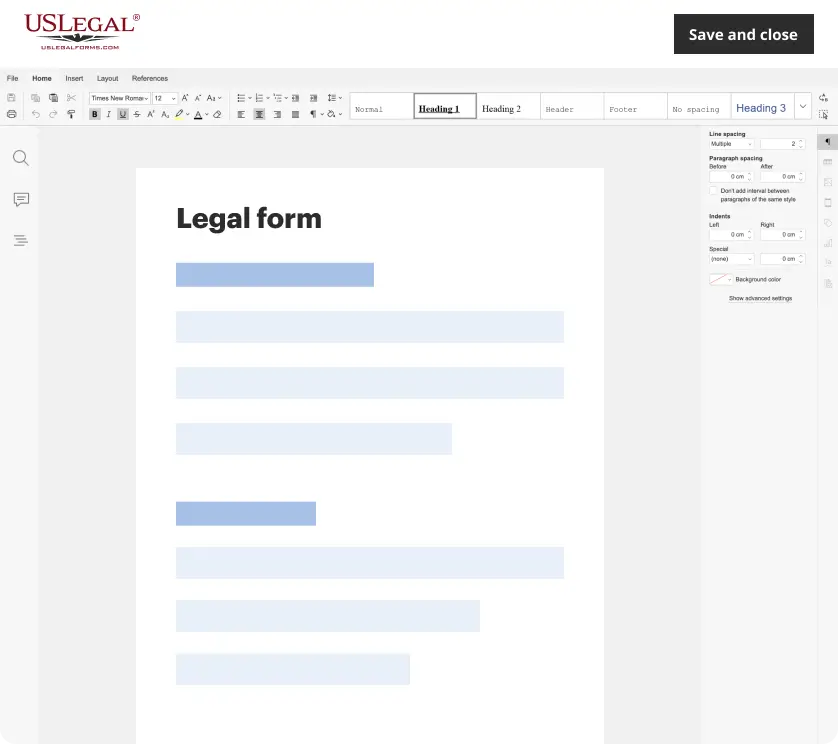
Make edits, fill in missing information, and update formatting in US Legal Forms—just like you would in MS Word.
Download a copy, print it, send it by email, or mail it via USPS—whatever works best for your next step.
Sign and collect signatures with our SignNow integration. Send to multiple recipients, set reminders, and more. Go Premium to unlock E-Sign.
If this form requires notarization, complete it online through a secure video call—no need to meet a notary in person or wait for an appointment.
We protect your documents and personal data by following strict security and privacy standards.
Avoid these common issues
- Failing to include specific details about the unlawful action taken by the landlord.
- Not reserving legal rights in the notice.
- Overlooking the need for a signature and date.
Advantages of online completion
- Convenient access to legally prepared document templates.
- Editable fields to personalize the letter.
- Quick download for immediate use.
Legal use & context
The use of this letter is legally significant as it documents the tenant's position and preserves their rights against unlawful self-help eviction. Courts recognize the necessity of following legal eviction procedures, and this letter serves as a formal record of the tenant's objections to any unlawful actions taken by the landlord.
Key takeaways
- This letter is essential for tenants facing unlawful eviction attempts.
- It protects tenantsâ rights and formalizes their objections.
- The form is suitable for use across multiple states but should respect local laws.
- Completing the letter carefully is crucial to ensure legal enforceability.
Looking for another form?
Form popularity
FAQ
State the purpose of the letter. In the first paragraph, explain that you are writing to verify that the tenants live on your property. Also include the address where they live. For example, you can write, I am writing to confirm that Mr.
Notice to Pay or Quit. Another common landlord letter to tenants is the notice to pay or quit.Include the date by which the tenant must pay or fix the issues. Send this notice by certified mail, as this will act as a record of your attempt to correspond with your tenant.
If the tenant refuses, you are permitted to send them a notice to agree or quit the property. The tenant refusing you access constitutes a breach in the lease agreement, so they could be evicted if they continue to deny access.
The landlord verification form is a document used by a landlord when verifying the previous rental information of an applicant for tenancy. The requesting landlord must send the form to the applicant's current or past landlord in order to obtain all details related to the tenancy of the individual.
While tenants cannot unreasonably deny access to a landlord, landlords must also follow all of the state and local rules regarding access to tenants' apartments. Roughly half of states have rules governing landlord entry into tenants' apartments.
A rental verification helps landlords and property managers to verify the rental history of their applicant. This is done through a background check combined with a phone call verification.Calling the previous and current landlord is an important step of the rental verification.
A landlord reference letter is a statement that: Details what kind of experience it was leasing property to the tenant. Usually takes the form of a written document, but can be served in a variety of mediums. Serves as a character reference for your tenant.
If you're seeking damages for emotional distress caused by a landlord's discrimination, or punitive damages for especially blatant and intentional discrimination, a lawsuit may well be your best bet. Understand what's involved in suing your landlord. You may file a lawsuit in either federal or state court.
If you think your landlord is violating the Fair Housing Act, you can get that landlord in trouble by filing a complaint at HUD.gov. Your remedy for breach of quiet enjoyment is to terminate the lease and move or sue in small claims court.