IMPOSSIBILITY OF SUCCESS
What this document covers
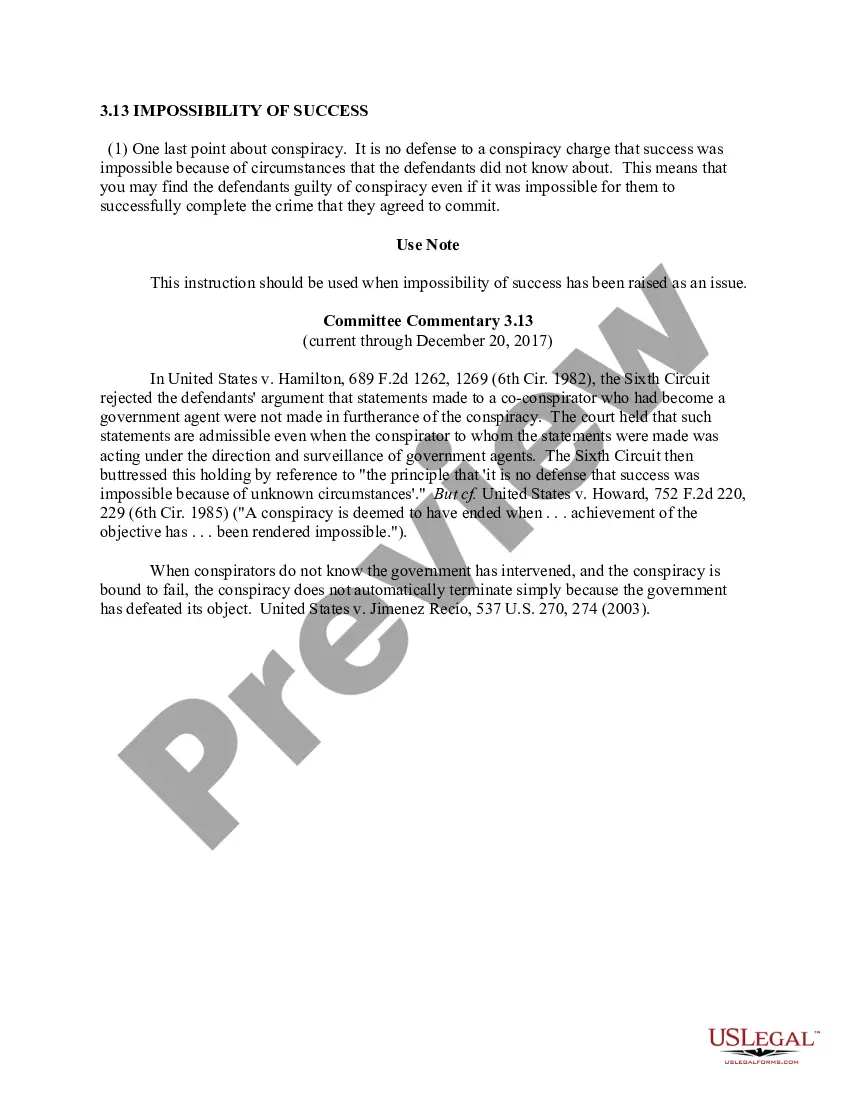
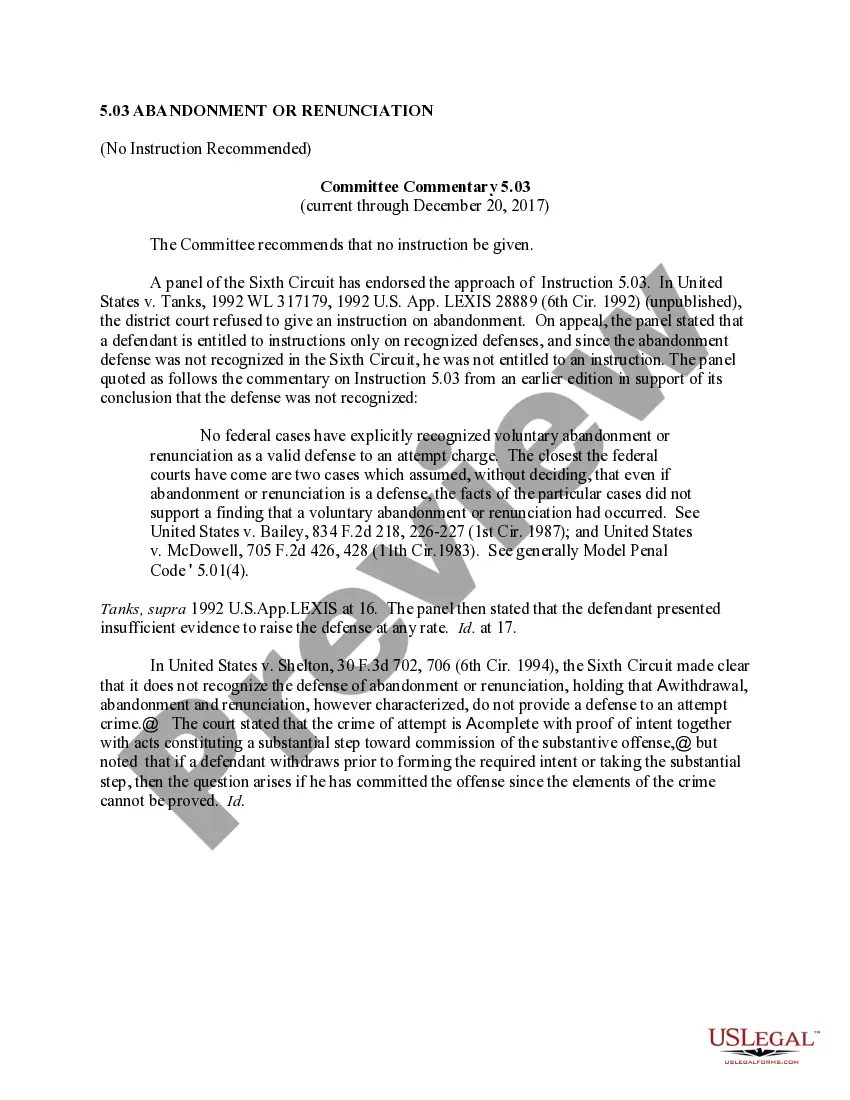
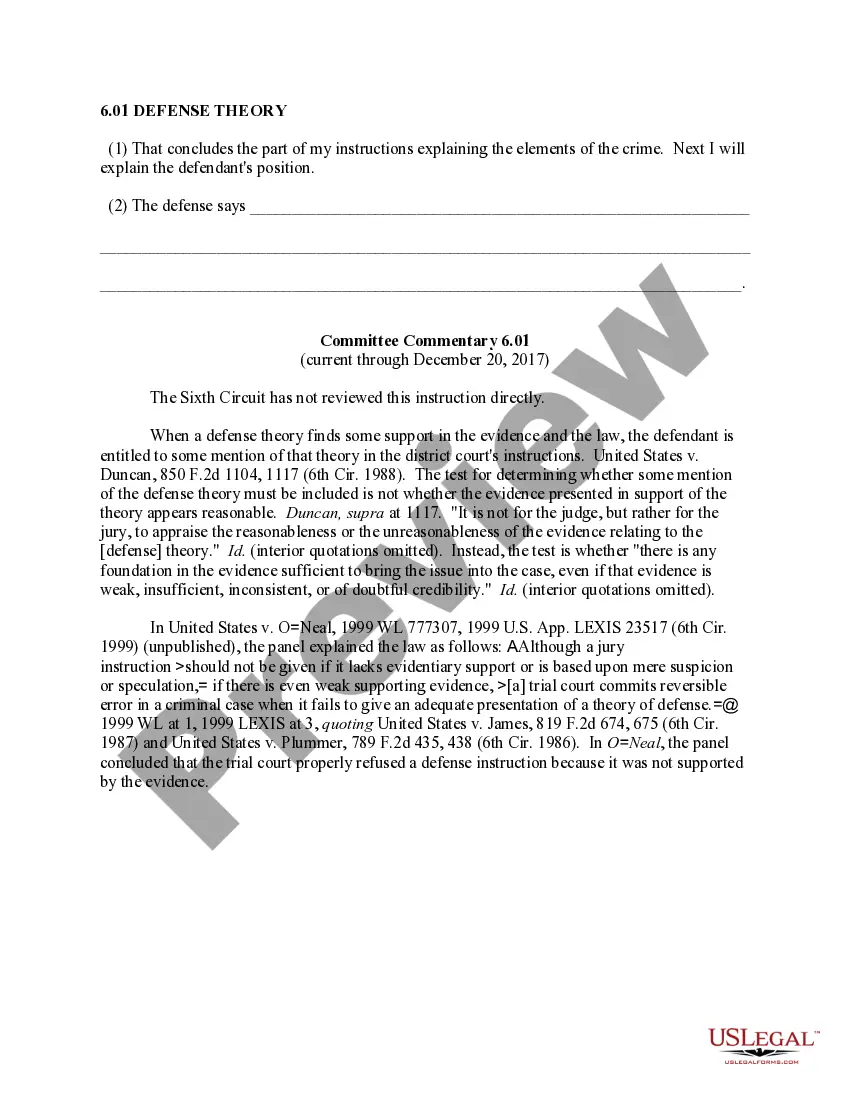
The Impossibility of Success form addresses the legal principle that mere impossibility of achieving a criminal conspiracy does not exempt defendants from being charged with conspiracy. This form outlines how the legal system views conspiracy charges, particularly in situations where defendants were unaware of circumstances that made their intended crime impossible. This form is crucial for understanding the nuances of criminal conspiracy law and should not be confused with other forms related to criminal defense.
What’s included in this form
- Definition of conspiracy and its legal implications.
- Explanation of the principle that ignorance of impossible circumstances does not negate conspiracy charges.
- Citations of relevant case law to illustrate the application of this principle in court.
- Instructions for jury considerations when evaluating conspiracy charges.
Common use cases
This form should be used in cases where the issue of impossibility has been raised as a defense in a conspiracy charge. Situations may include defendants arguing that their planned crime could not succeed due to factors unknown to them at the time of the conspiracy. It is essential for legal practitioners to reference this form when addressing this aspect of conspiracy law during trial proceedings.
Who needs this form
- Criminal defense attorneys defending clients against conspiracy charges.
- Prosecutors seeking to outline the legal standards for conspiracy cases.
- Judges and jury members who need a clear understanding of the law surrounding conspiracy.
- Legal scholars or students studying criminal law principles.
How to prepare this document
- Review the definition of conspiracy and understand the legal framework.
- Identify the specific circumstances of the case at hand, particularly those related to potential impossibility.
- Incorporate relevant case law that supports the arguments being made.
- Prepare instructions or guidance for jurors on how to interpret the impossibility principle.
- Submit the form as part of the legal arguments or documentation in the case.
Does this document require notarization?
Notarization is not commonly needed for this form. However, certain documents or local rules may make it necessary. Our notarization service, powered by Notarize, allows you to finalize it securely online anytime, day or night.
Get your form ready online
Our built-in tools help you complete, sign, share, and store your documents in one place.
Make edits, fill in missing information, and update formatting in US Legal Forms—just like you would in MS Word.
Download a copy, print it, send it by email, or mail it via USPS—whatever works best for your next step.
Sign and collect signatures with our SignNow integration. Send to multiple recipients, set reminders, and more. Go Premium to unlock E-Sign.
If this form requires notarization, complete it online through a secure video call—no need to meet a notary in person or wait for an appointment.
We protect your documents and personal data by following strict security and privacy standards.

Make edits, fill in missing information, and update formatting in US Legal Forms—just like you would in MS Word.

Download a copy, print it, send it by email, or mail it via USPS—whatever works best for your next step.

Sign and collect signatures with our SignNow integration. Send to multiple recipients, set reminders, and more. Go Premium to unlock E-Sign.

If this form requires notarization, complete it online through a secure video call—no need to meet a notary in person or wait for an appointment.

We protect your documents and personal data by following strict security and privacy standards.
Common mistakes to avoid
- Confusing conspiracy with attempts; remember that conspiracy can exist even if the crime is impossible.
- Failing to cite relevant case law, which can weaken the argument.
- Overlooking jury instructions related to the impossibility principle.
Why use this form online
- Convenience of accessing legal documents from anywhere at any time.
- Editability allows users to customize the form for specific cases.
- Reliability of attorney-drafted templates ensures legal accuracy.
Legal use & context
- This form reflects established legal principles surrounding conspiracy law.
- Understanding impossibility in conspiracy can aid in effective legal defense strategies.
- Proper use of this form can impact case outcomes related to conspiracy charges.
Looking for another form?







Form popularity
FAQ
Many notable success stories began in failure: Henry Ford went bankrupt before starting the Ford Motor Company; Thomas Edison and his colleagues tested thousands of materials before creating the carbon-filament lightbulb; J. K. Rowling received twelve rejections before the first Harry Potter book was published.
A successful failure is a failure that we respond to correctly: by finding the good, taking responsibility, moving on, and taking action.
It is part of the road to success. Failure is life's greatest teacher. It builds your character and humbles you. Failure is suspended success until the right moment, but in the meantime, you must work hard, think hard and be consistent.
Failure is defined as a lack of success or the inability to meet an expectation. The problem is that we can read too much into failure. Too often, we tie it to our sense of self-worth, self-esteem, and self-acceptance. The expectation we fail to meet is often our own, or one that we've created in our own head.
Success and failure, however, are terms meant to define events, not people. You are either successful at doing something, or achieving some milestone, or you failed at doing something or did not achieve some milestone. That does not imply that you are a complete success or a complete failure.
Failing in life helps to build resilience. The more we fail, the more resilient we become. In order to achieve great success, we must know resilience. Because, if we think that we're going to succeed on the first try, or even the first few tries, then we're sure to set ourselves up for a far more painful failure.
"We learn more from our failures than from our successes. Not only do we find out what doesn't work so that we can adjust our future attempts, we learn about ourselves in the process and gain a bit of empathy towards others that might be struggling as well."
There are two important relationships to consider between failure and success. Firstly, failure starts where success ends, and it defines the limits of success. But secondly, success often follows failure, since it frequently occurs after other options have been tried and failed.