DEADLOCKED JURY
About this form
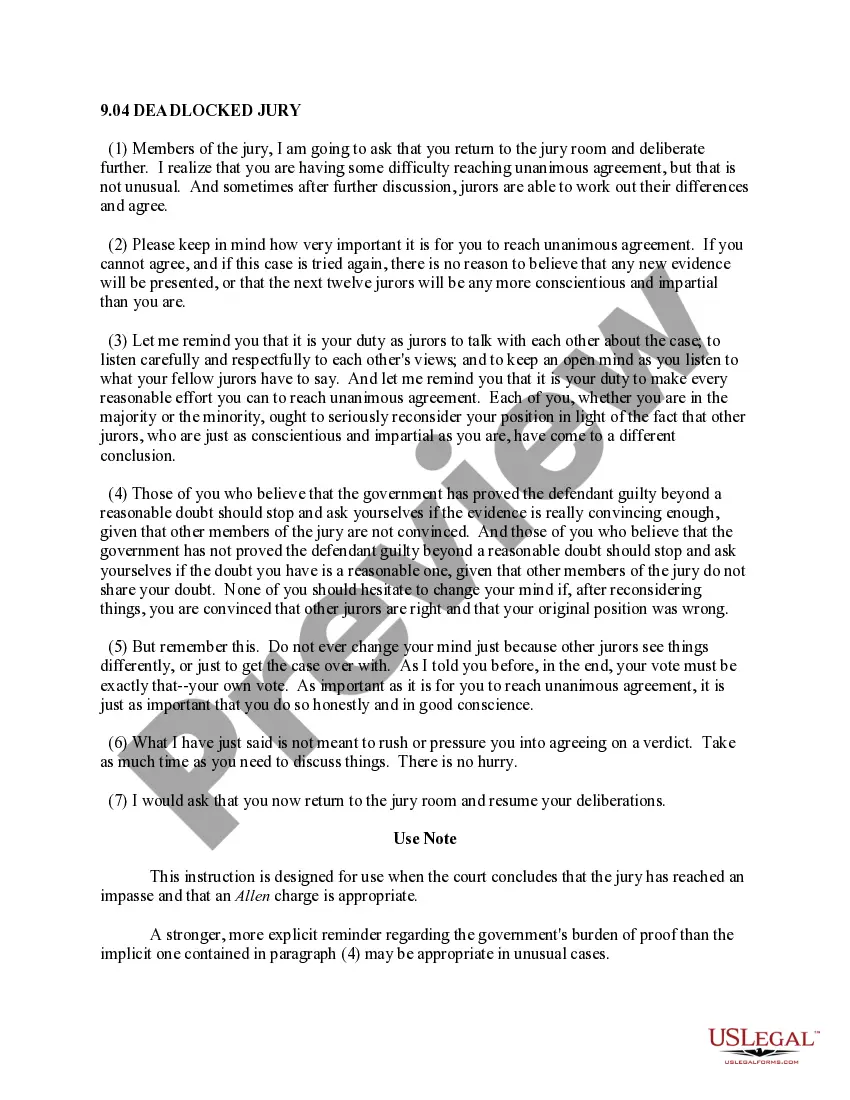
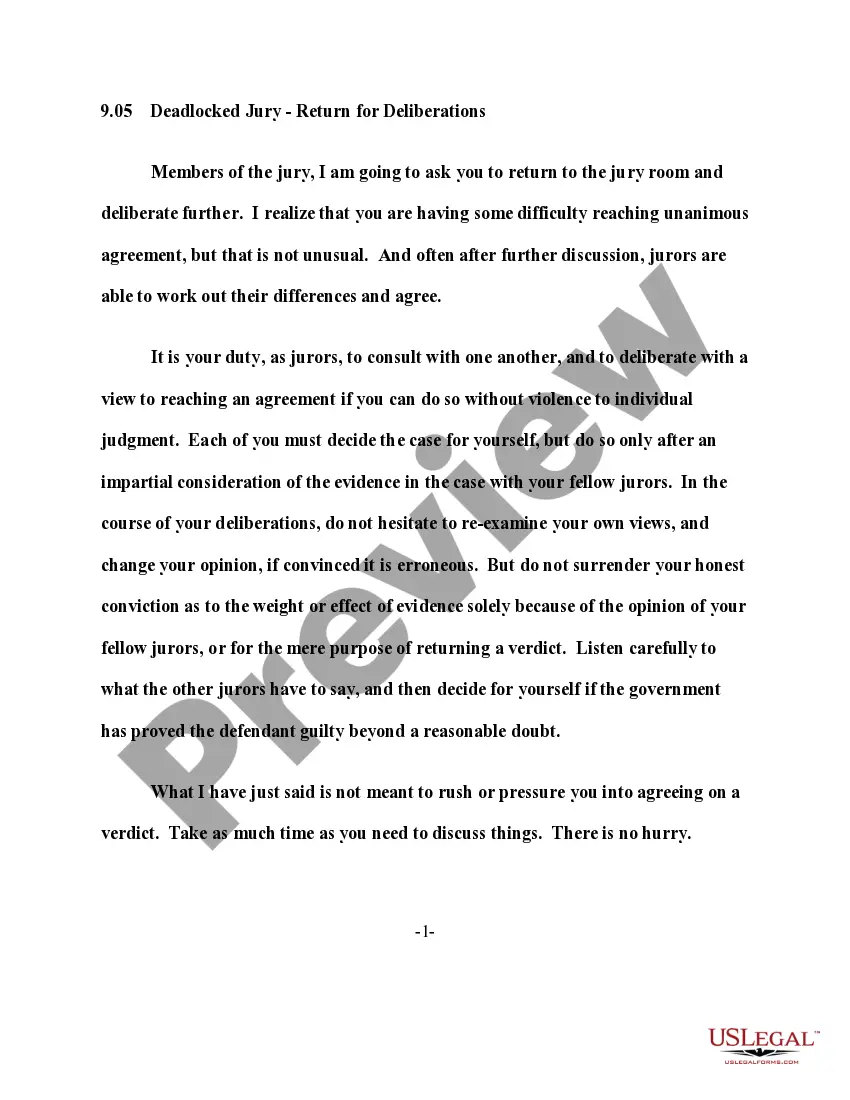
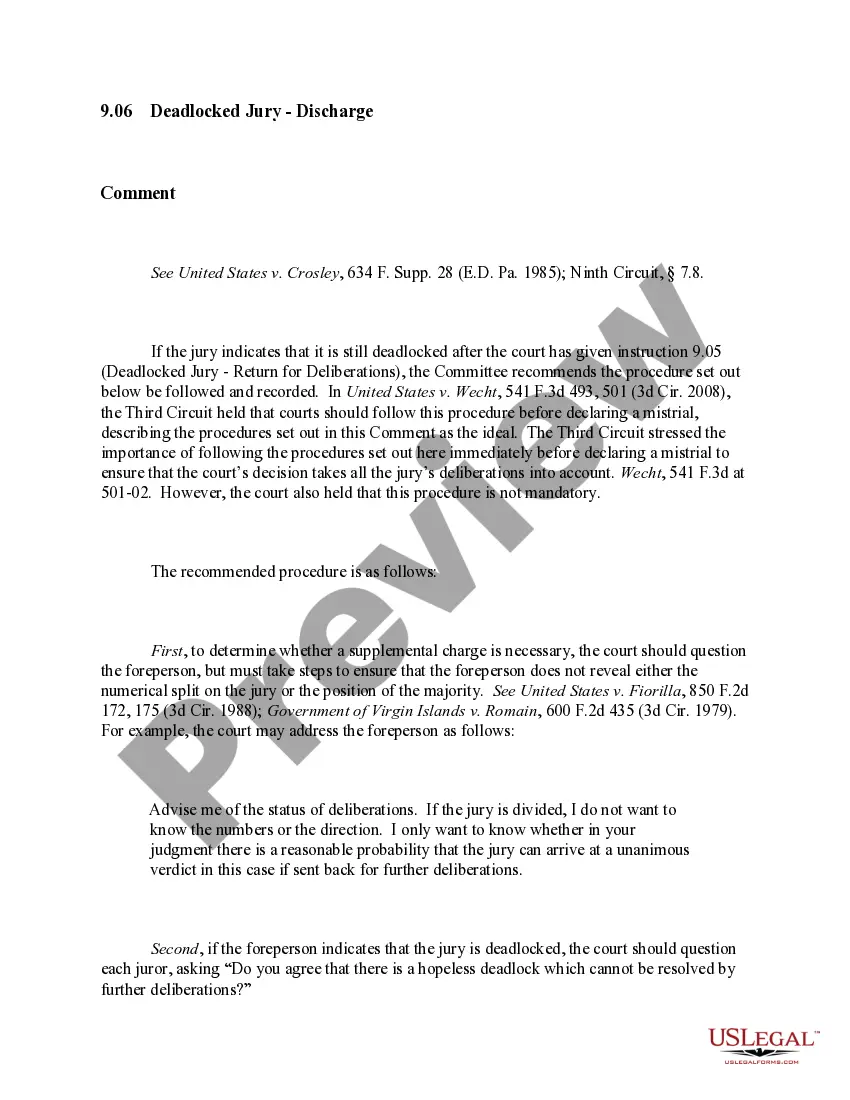
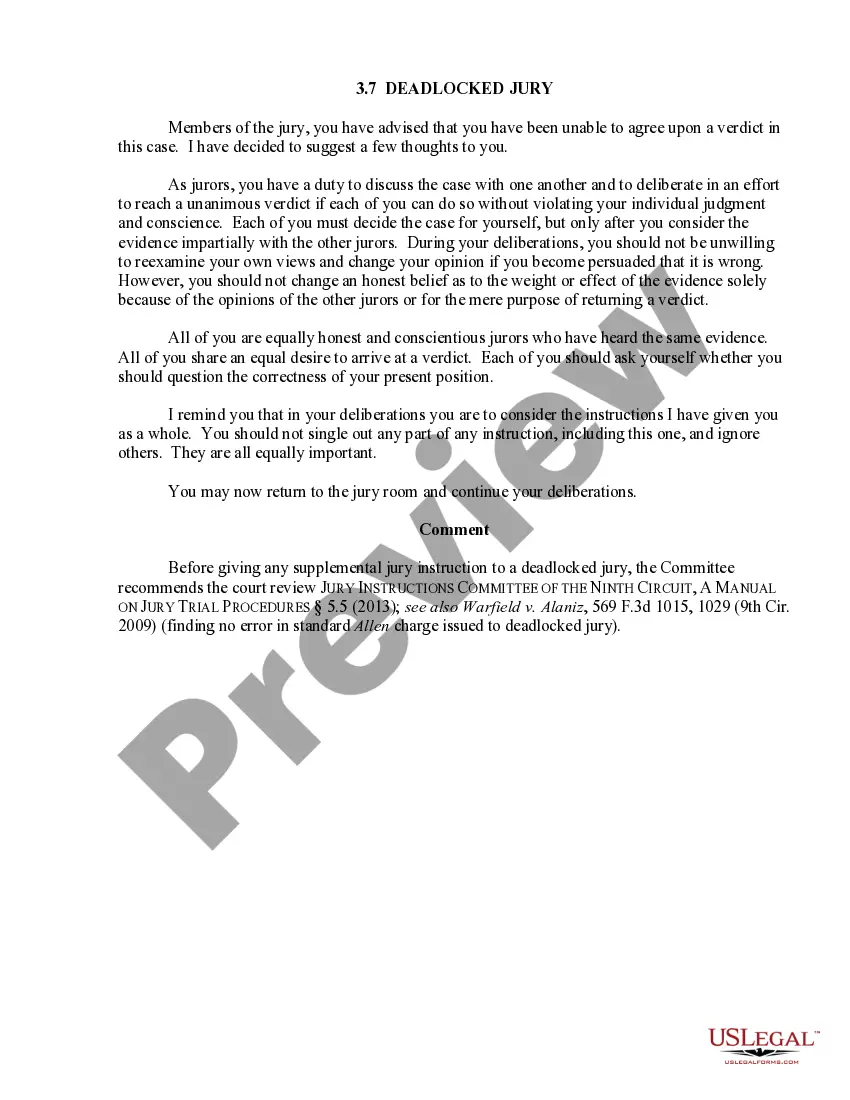
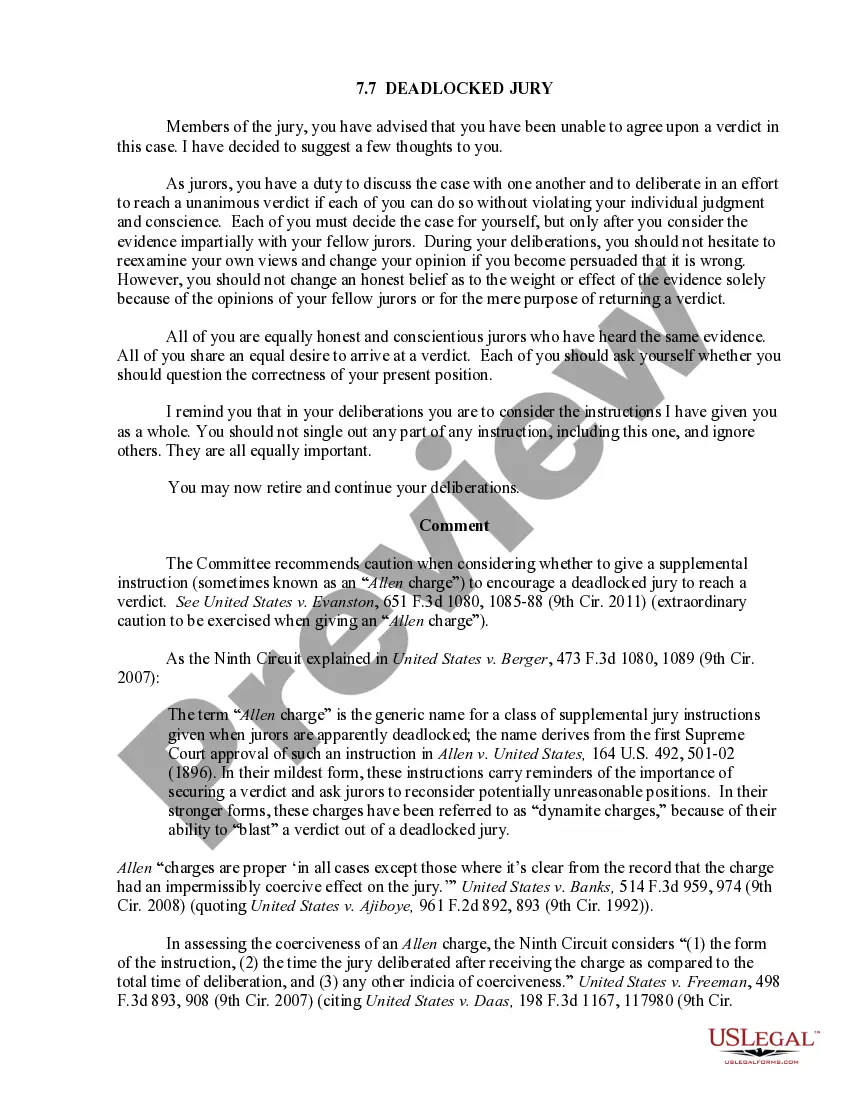
The Deadlocked Jury form provides a standard instruction to jurors when they are unable to reach a unanimous verdict. This form explains the importance of deliberation and encourages jurors to reconsider their positions in order to facilitate agreement. It stands apart from other jury instructions by specifically addressing situations of impasse and reiterating the need for thoughtful discussion among jurors.
What’s included in this form
- Encouragement to resume deliberations and discuss the case further.
- Emphasis on the importance of reaching a unanimous agreement.
- Guidance for jurors to listen and respect each otherâs views.
- Reminder that each jurorâs vote must be personal and based on conscience.
- Clarification that jurors should not feel rushed but rather take their time in discussions.
Situations where this form applies
This form is used when a jury is unable to come to a unanimous decision after deliberating on a case. It serves as an instruction from the court to encourage jurors to continue discussions, reflect on the evidence, and strive for agreement, particularly in criminal cases where the burden of proof lies with the prosecution.
Who should use this form
- Court officials responsible for jury instructions.
- Judges presiding over criminal trials where juries are experiencing a deadlock.
- Legal professionals who want to understand jury instructions related to deadlocked situations.
How to prepare this document
- Review the jury's current deliberations and identify that an impasse has occurred.
- Prepare the instruction based on the criteria established for deadlocked juries.
- Reiterate the importance of reaching a unanimous decision and open-minded discussions.
- Provide jurors with clear guidance to reflect on their views in light of their peers' opinions.
- Ensure that jurors understand they are not being rushed and can take the necessary time for deliberation.
Notarization guidance
This form usually doesn’t need to be notarized. However, local laws or specific transactions may require it. Our online notarization service, powered by Notarize, lets you complete it remotely through a secure video session, available 24/7.
Get your form ready online
Our built-in tools help you complete, sign, share, and store your documents in one place.
Make edits, fill in missing information, and update formatting in US Legal Forms—just like you would in MS Word.
Download a copy, print it, send it by email, or mail it via USPS—whatever works best for your next step.
Sign and collect signatures with our SignNow integration. Send to multiple recipients, set reminders, and more. Go Premium to unlock E-Sign.
If this form requires notarization, complete it online through a secure video call—no need to meet a notary in person or wait for an appointment.
We protect your documents and personal data by following strict security and privacy standards.

Make edits, fill in missing information, and update formatting in US Legal Forms—just like you would in MS Word.

Download a copy, print it, send it by email, or mail it via USPS—whatever works best for your next step.

Sign and collect signatures with our SignNow integration. Send to multiple recipients, set reminders, and more. Go Premium to unlock E-Sign.

If this form requires notarization, complete it online through a secure video call—no need to meet a notary in person or wait for an appointment.

We protect your documents and personal data by following strict security and privacy standards.
Common mistakes
- Failing to clarify the importance of each juror's individual opinion.
- Rushing the jury into a decision without emphasizing thoughtful deliberation.
- Omitting reminders about the burden of proof resting with the prosecution.
Advantages of online completion
- Convenience of accessing the form from anywhere at any time.
- Editability allows court officials to adapt the instruction to specific cases.
- Reliability ensured by templates drafted by licensed attorneys.
Legal use & context
- This instruction is essential for maintaining the integrity of jury deliberations in criminal trials.
- Helps prevent coercion by ensuring jurors understand that unanimity should not come at the expense of personal conscience.
- Widely accepted in various jurisdictions as a standard procedure for addressing deadlocks.
Quick recap
- The Deadlocked Jury form serves to guide jurors when they cannot reach a unanimous verdict.
- Encourages respectful dialogue and critical reflection among jurors.
- This form is applicable across multiple jurisdictions with the need for careful consideration of local legal standards.
Looking for another form?


Form popularity
FAQ
What Happens If a Jury Is Hung Twice? Generally, it is rare for a hung jury to occur, let alone occur twice for the same proceeding. Often, juries will report that they are deadlocked after only deliberating for a short period of time. If there is a hung jury, the judge may order the jurors to deliberate further.
The judge will declare a mistrial if the jury cannot come to a decision. After more discussion, if the jury is still unable to agree on a decision, the judge may declare a mistrial because of the hung jury. In the event of a mistrial, the defendant is neither found guilty nor exonerated.
What Is a Hung Jury? In most jurisdictions, a unanimous jury decision is required for a verdict to be given, meaning all jurors must agree on whether the defendant is guilty or not. A hung jury, also known as a deadlocked jury, is a jury whose members are unable to agree on a verdict of guilty or not guilty.
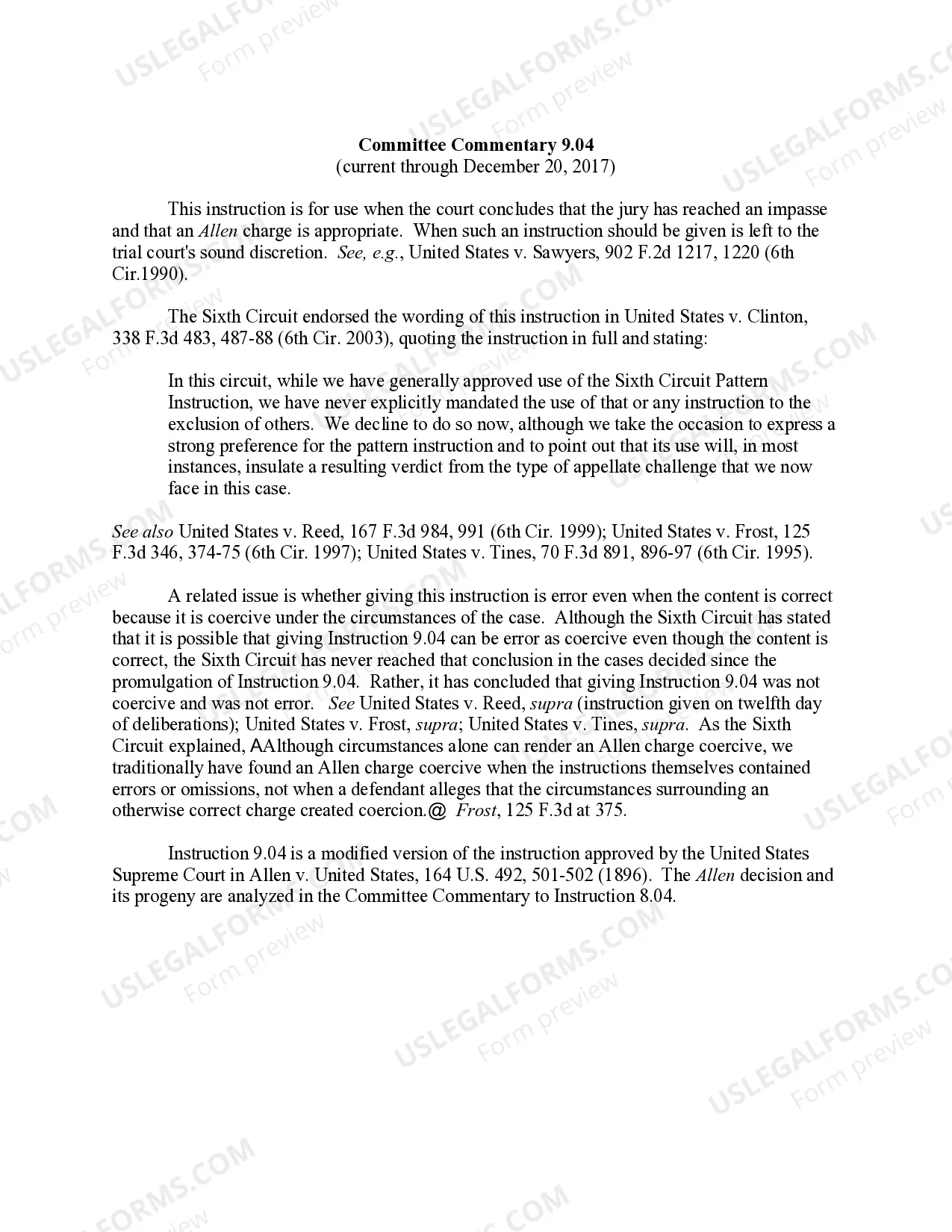
If there is a hung jury, the judge may order the jurors to deliberate further. This is known as an Allen charge and is generally only given once or twice. Often, juries will report that they are deadlocked after only deliberating for a short period of time.
In the event of a mistrial, the defendant is not convicted, but neither is the defendant acquitted. An acquittal results from a not guilty verdict and cannot be appealed by the prosecution, overturned by the judge, or retried. When there is a mistrial, however, the case may be retried.
The judge will declare a mistrial if the jury cannot come to a decision. After more discussion, if the jury is still unable to agree on a decision, the judge may declare a mistrial because of the hung jury. In the event of a mistrial, the defendant is neither found guilty nor exonerated.
In any trial the judge is the ultimate decision maker and has the power to overturn a jury verdict if there is insufficient evidence to support that verdict or if the decision granted inadequate compensatory damages.
If the jury still cannot reach a verdict after further deliberation, the judge can declare a mistrial due to the hung jury. A mistrial means that the defendant is neither convicted or acquitted.