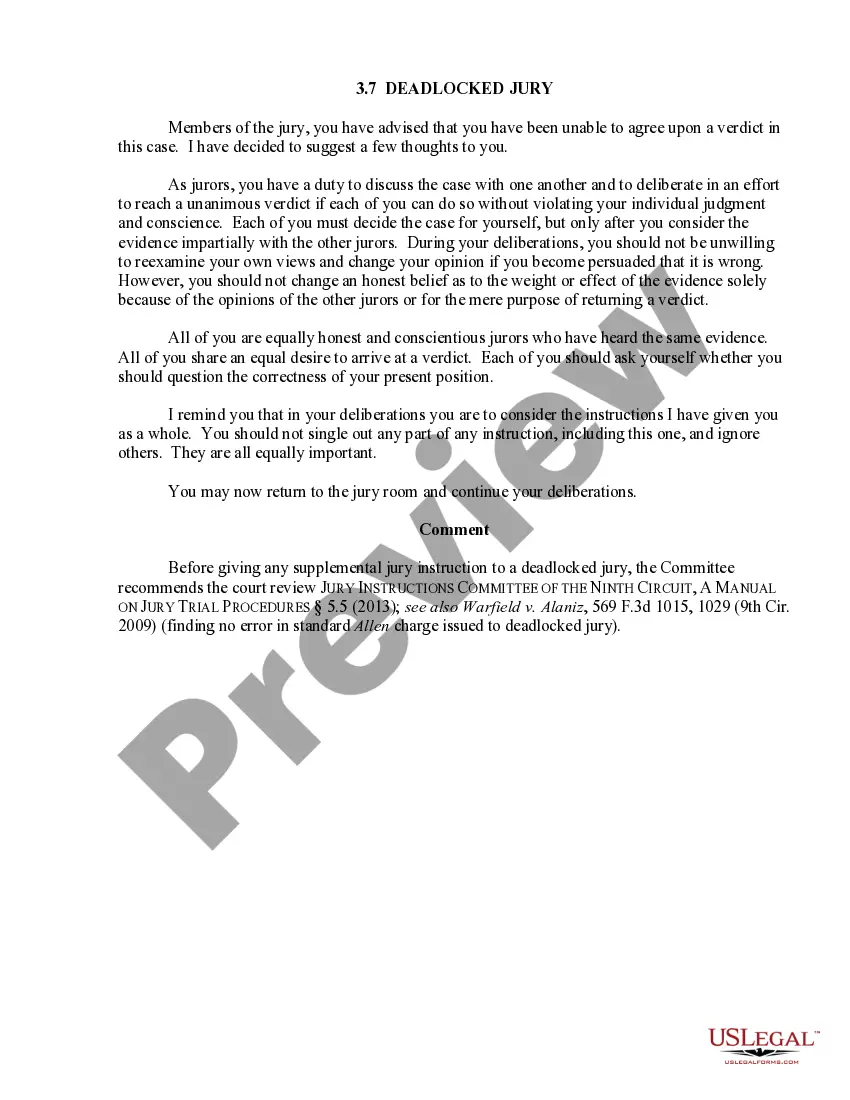
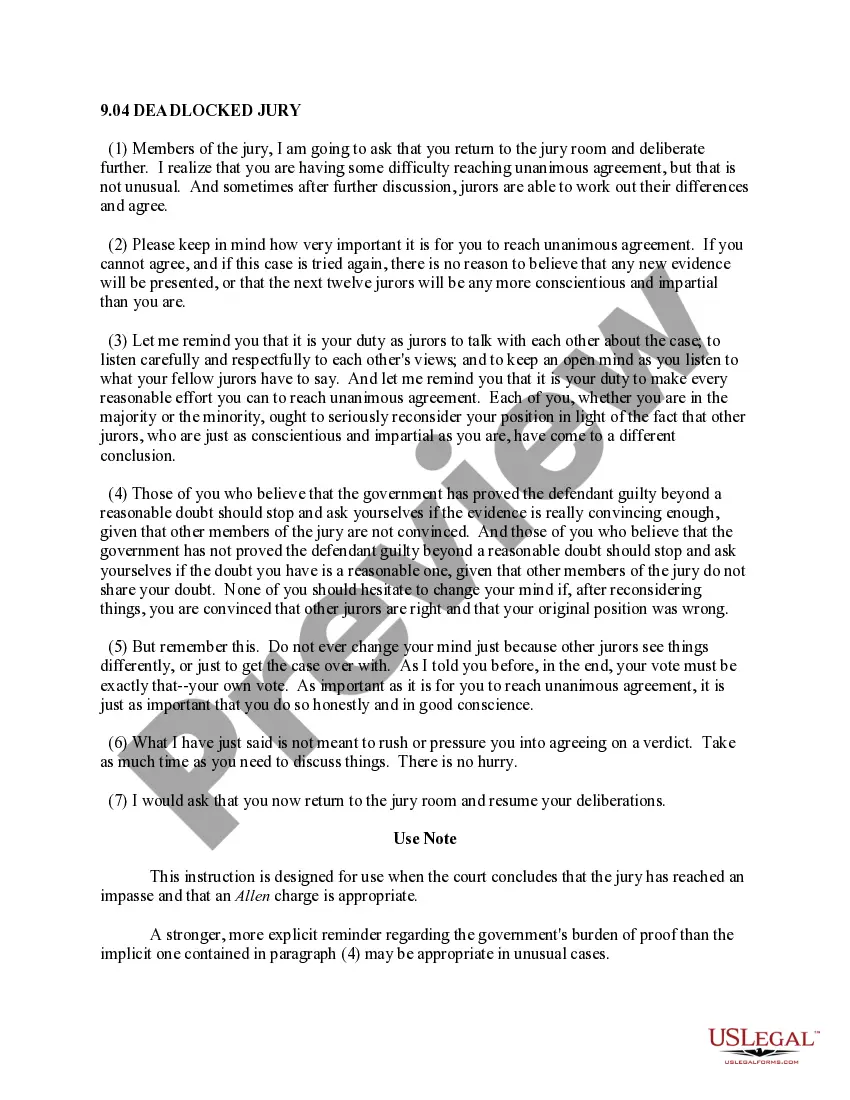
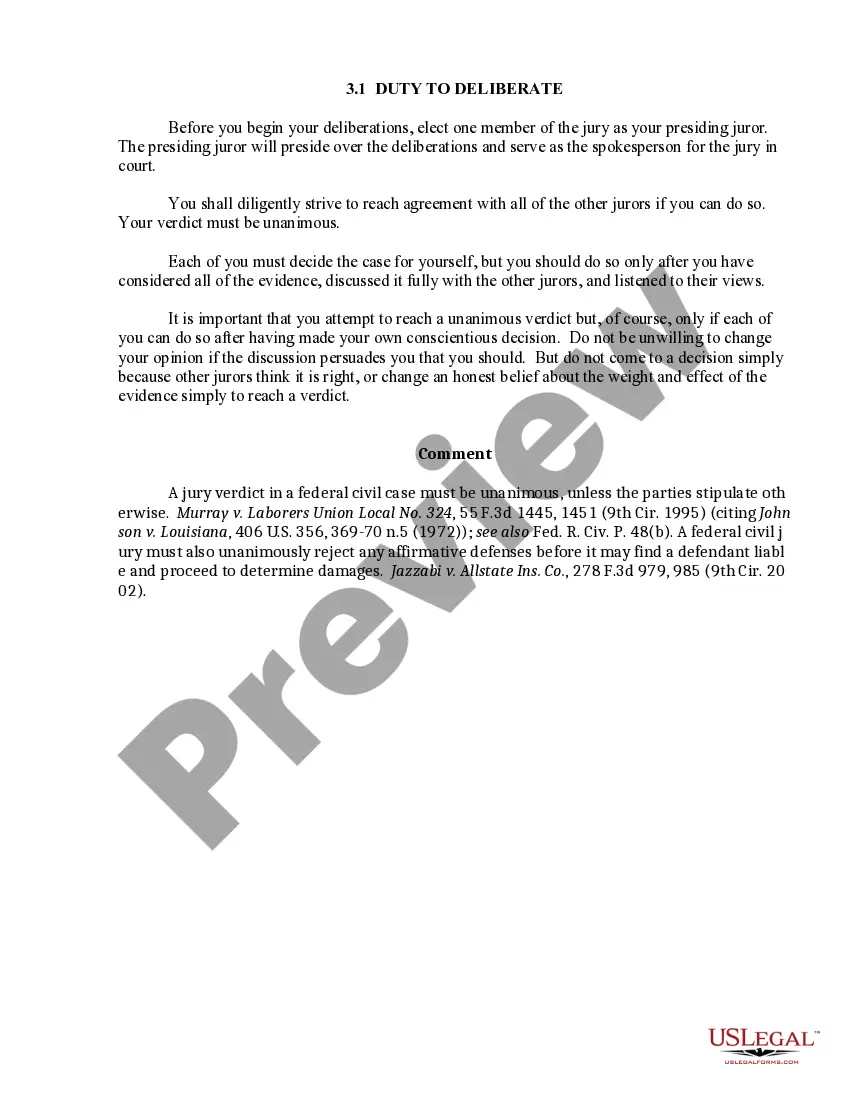
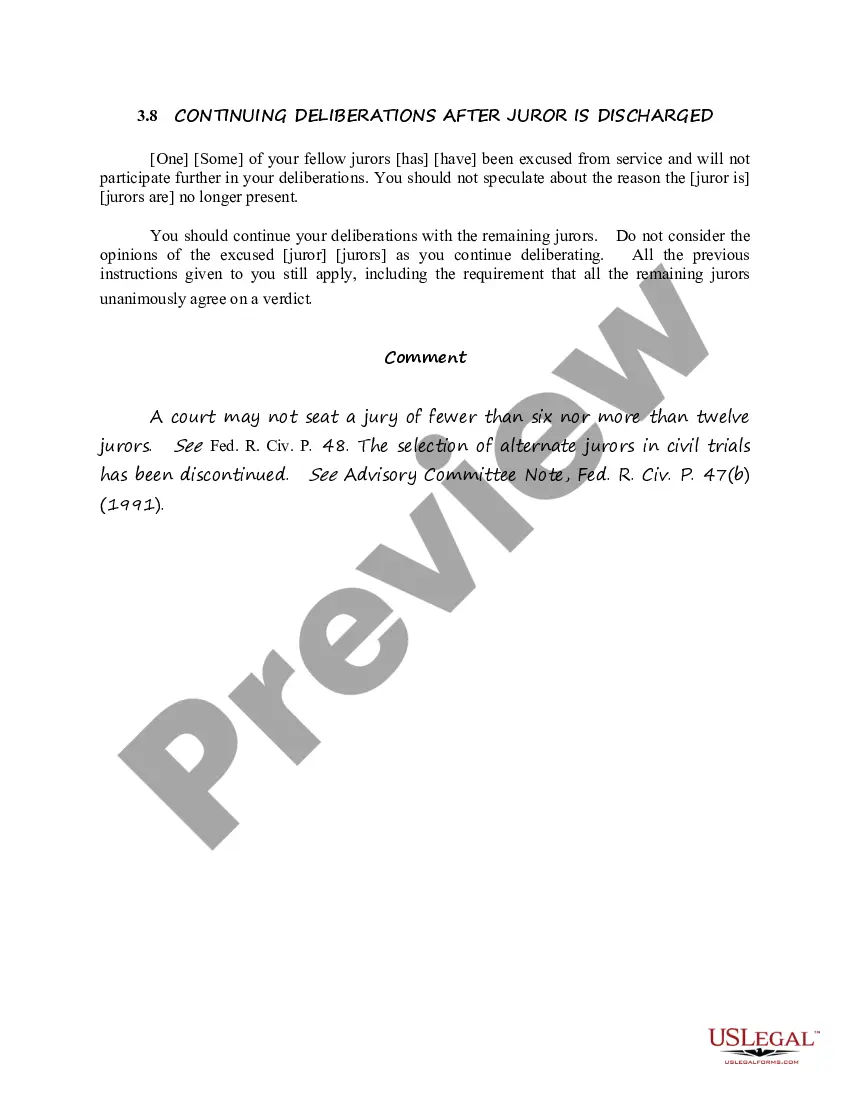
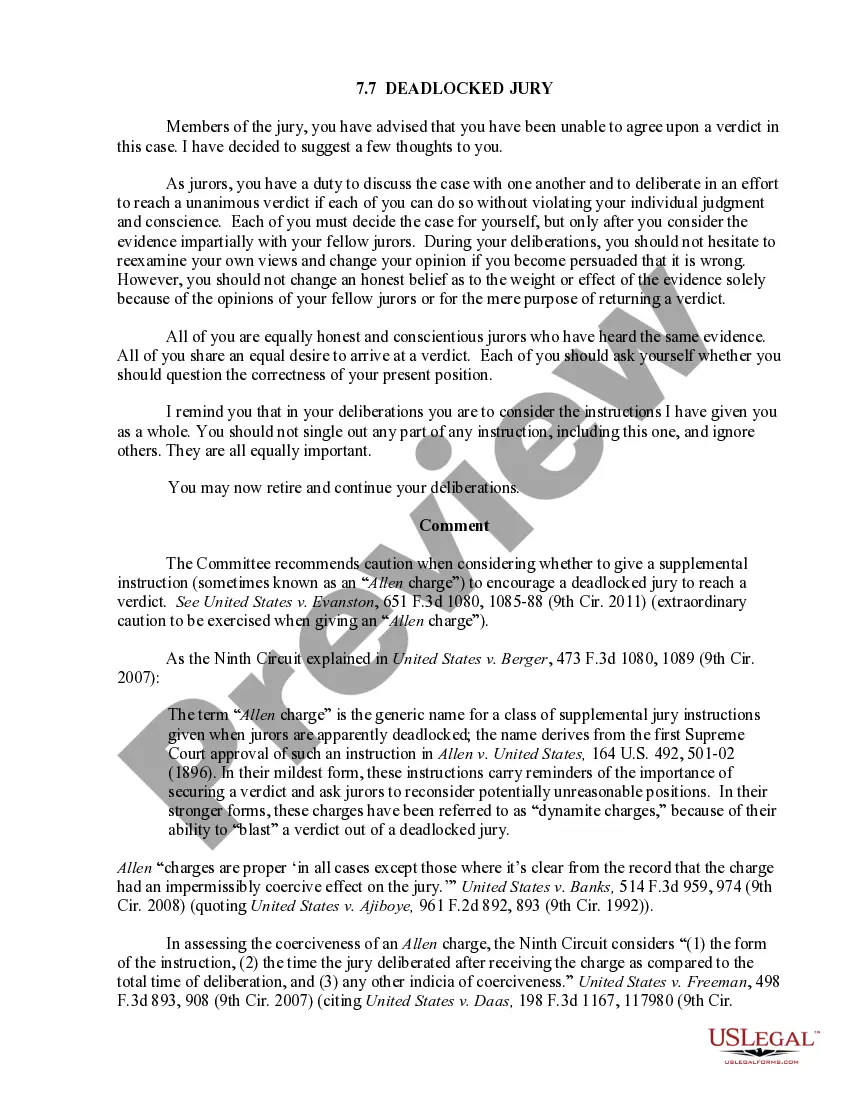
3.7 Deadlocked Jury
Does this form need to be notarized?
In most cases, this form does not require notarization. However, some jurisdictions or signing circumstances might. US Legal Forms offers online notarization powered by Notarize, accessible 24/7 for a quick, remote process.
Get your form ready online
Our built-in tools help you complete, sign, share, and store your documents in one place.
Make edits, fill in missing information, and update formatting in US Legal Forms—just like you would in MS Word.
Download a copy, print it, send it by email, or mail it via USPS—whatever works best for your next step.
Sign and collect signatures with our SignNow integration. Send to multiple recipients, set reminders, and more. Go Premium to unlock E-Sign.
If this form requires notarization, complete it online through a secure video call—no need to meet a notary in person or wait for an appointment.
We protect your documents and personal data by following strict security and privacy standards.

Make edits, fill in missing information, and update formatting in US Legal Forms—just like you would in MS Word.

Download a copy, print it, send it by email, or mail it via USPS—whatever works best for your next step.

Sign and collect signatures with our SignNow integration. Send to multiple recipients, set reminders, and more. Go Premium to unlock E-Sign.

If this form requires notarization, complete it online through a secure video call—no need to meet a notary in person or wait for an appointment.

We protect your documents and personal data by following strict security and privacy standards.
Looking for another form?
Form popularity
FAQ
For the defendant, a hung jury may mean that they have not been found guilty, but it also means that the case could be retried, leading to additional stress and cost. For the prosecution, a hung jury means that they have failed to secure a conviction, which can be a blow to their case and reputation.
If a jury is unable to reach a unanimous verdict and results in a hung jury, the case may be retried with a new jury. If the second jury is also unable to reach a verdict, the judge may declare a mistrial.
A study by the National Center for State Courts showed that 1 in 10 of all cases that go to court end up as mistrial. Of the 10 percent that are mistrials, a little more than half are due to hung juries.
If the jury still cannot reach a verdict after further deliberation, the judge can declare a mistrial due to the hung jury. A mistrial means that the defendant is neither convicted or acquitted.
If there is a hung jury, the judge may order the jurors to deliberate further. This is known as an Allen charge and is generally only given once or twice. Often, juries will report that they are deadlocked after only deliberating for a short period of time.
A deadlocked jury might occasionally portend good news for the defendant. For instance, the prosecution might decide not to retry the case if 11 jurors voted for acquittal and only one juror chose to convict. As a result, the case can be dropped, or the defendant might get a plea deal.
Juries hung on the first count of the indict- ment (generally the most serious charge) in 10 percent of cases and on at least one count charged in 13 percent of cases.
Generally, it is rare for a hung jury to occur, let alone occur twice for the same proceeding. Often, juries will report that they are deadlocked after only deliberating for a short period of time. If there is a hung jury, the judge may order the jurors to deliberate further.