Caution: Punishment (Multiple Defendants, Multiple Counts)
What is this form?
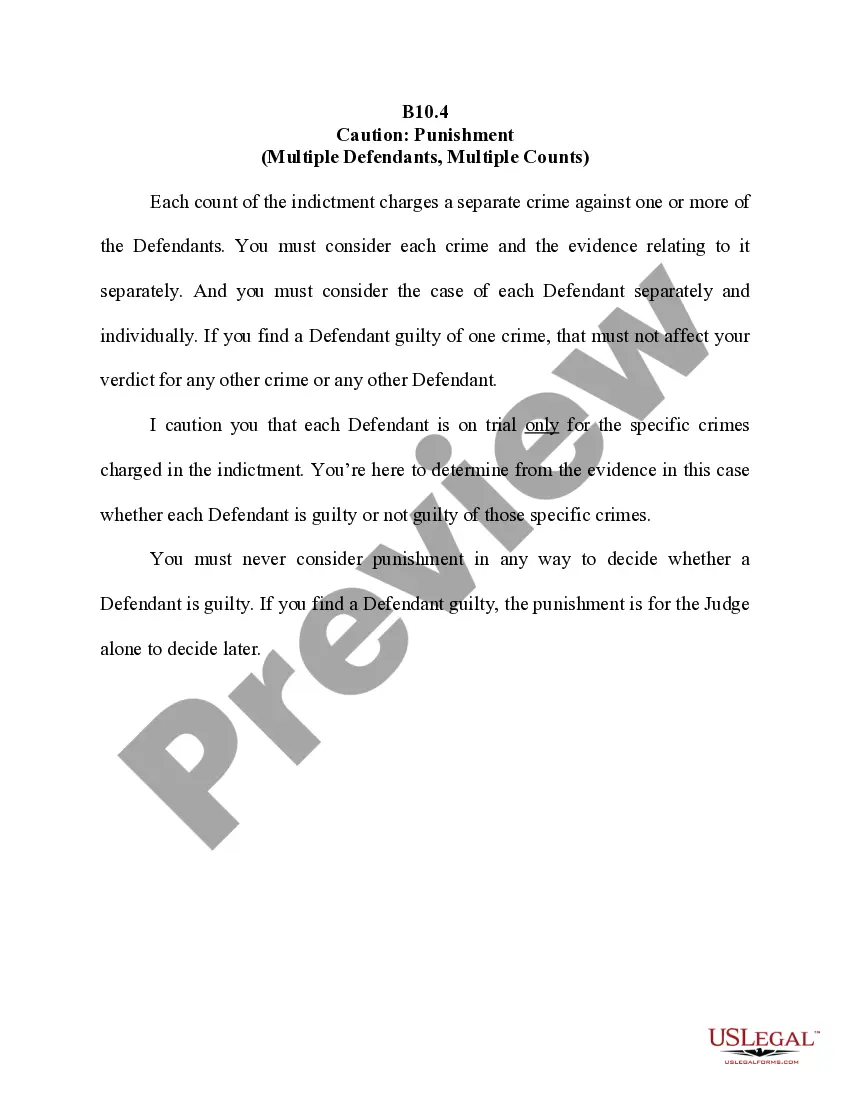
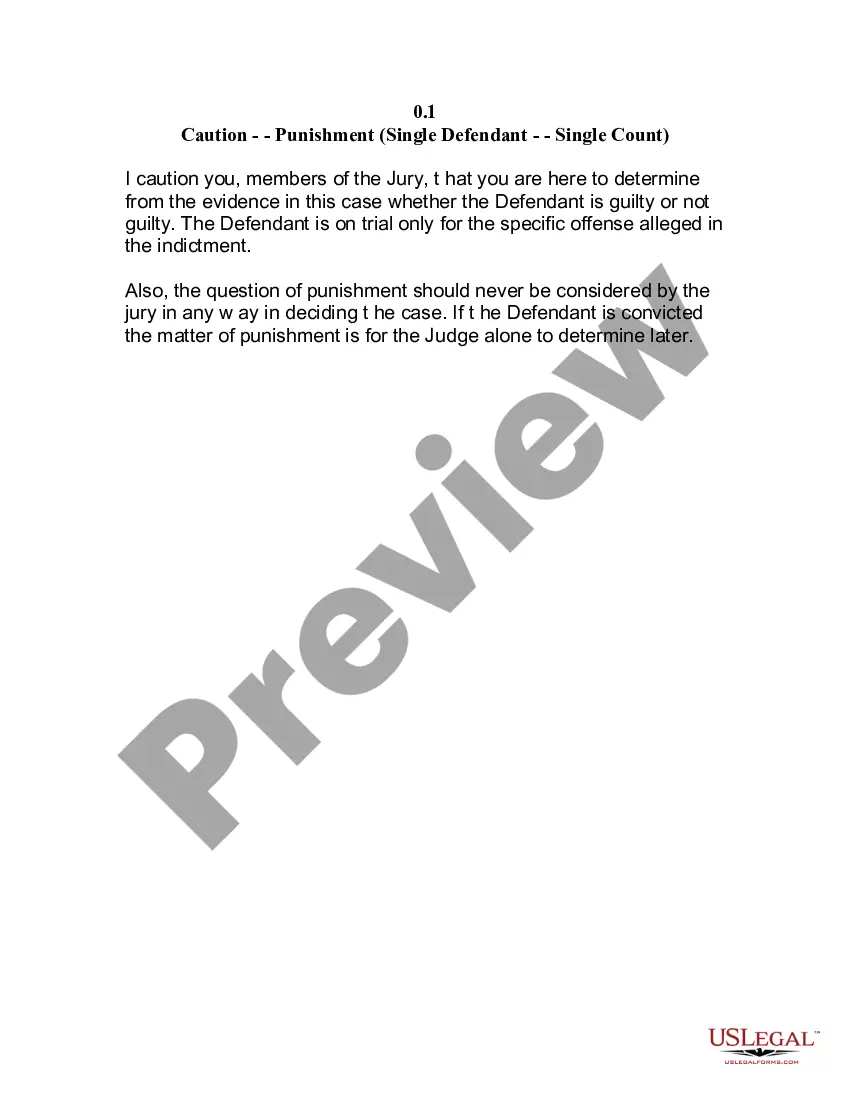
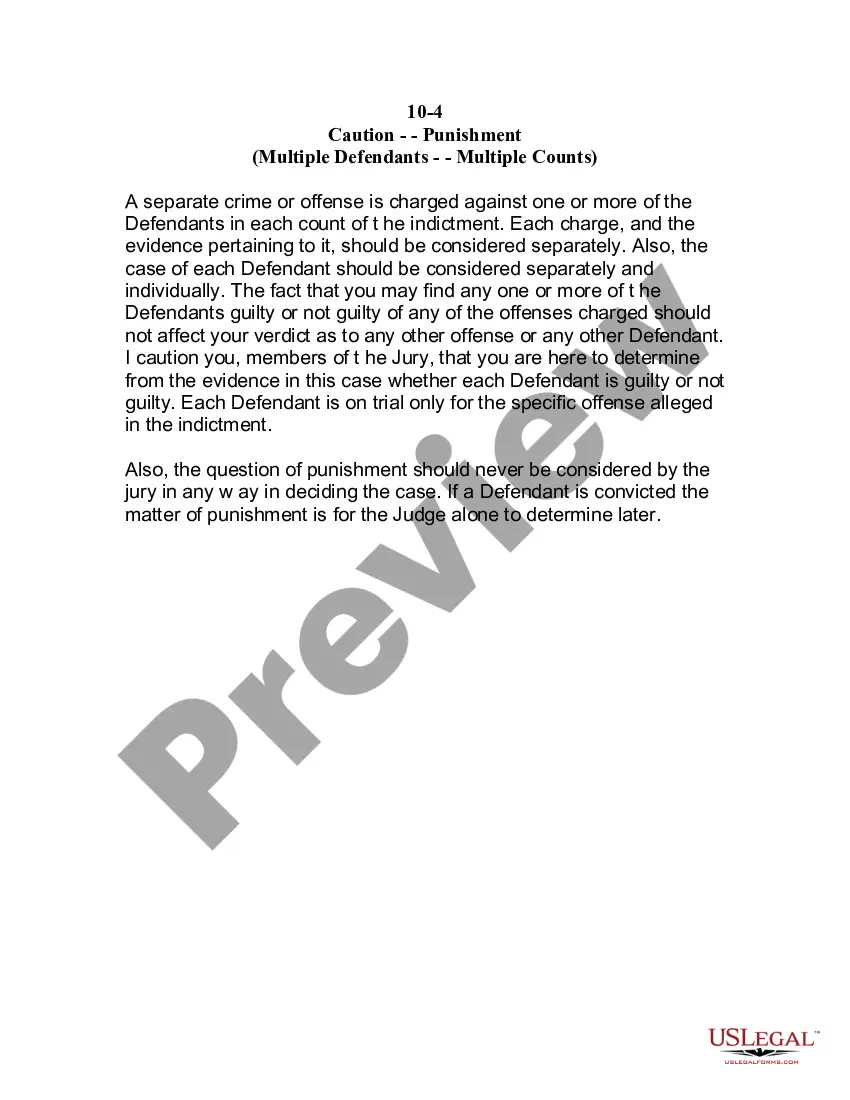
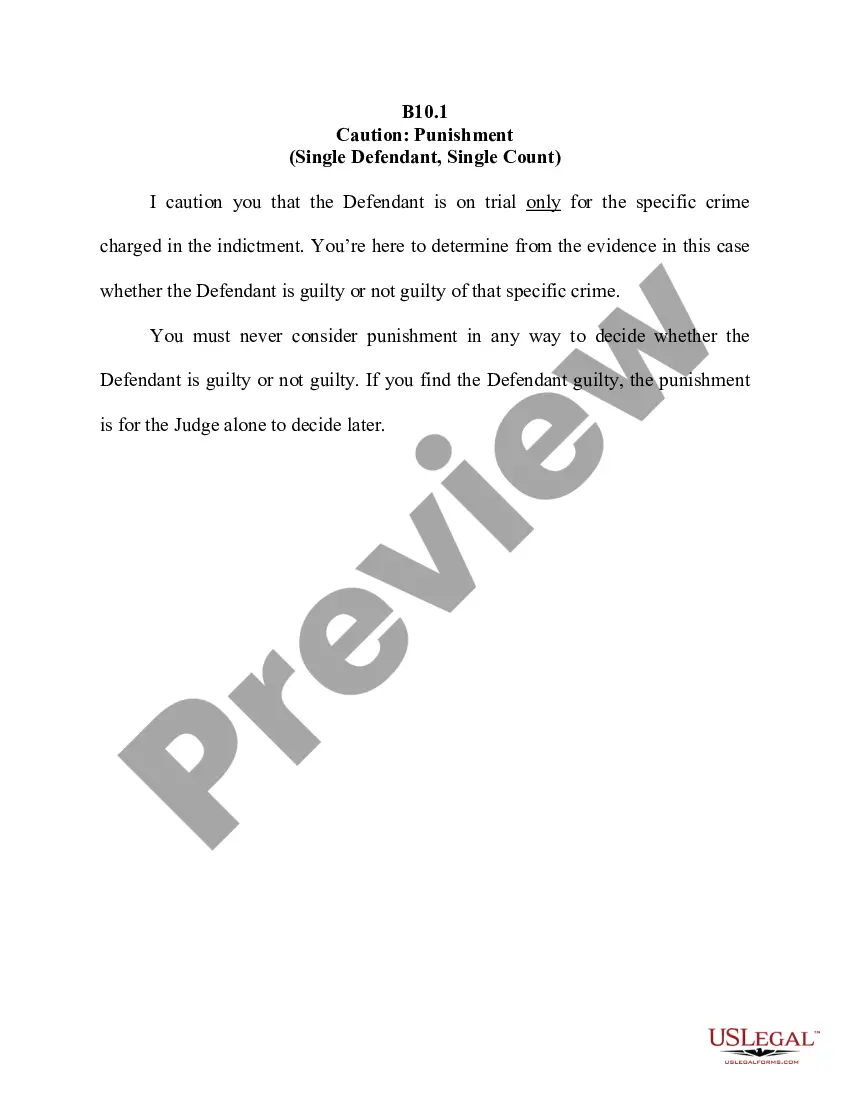
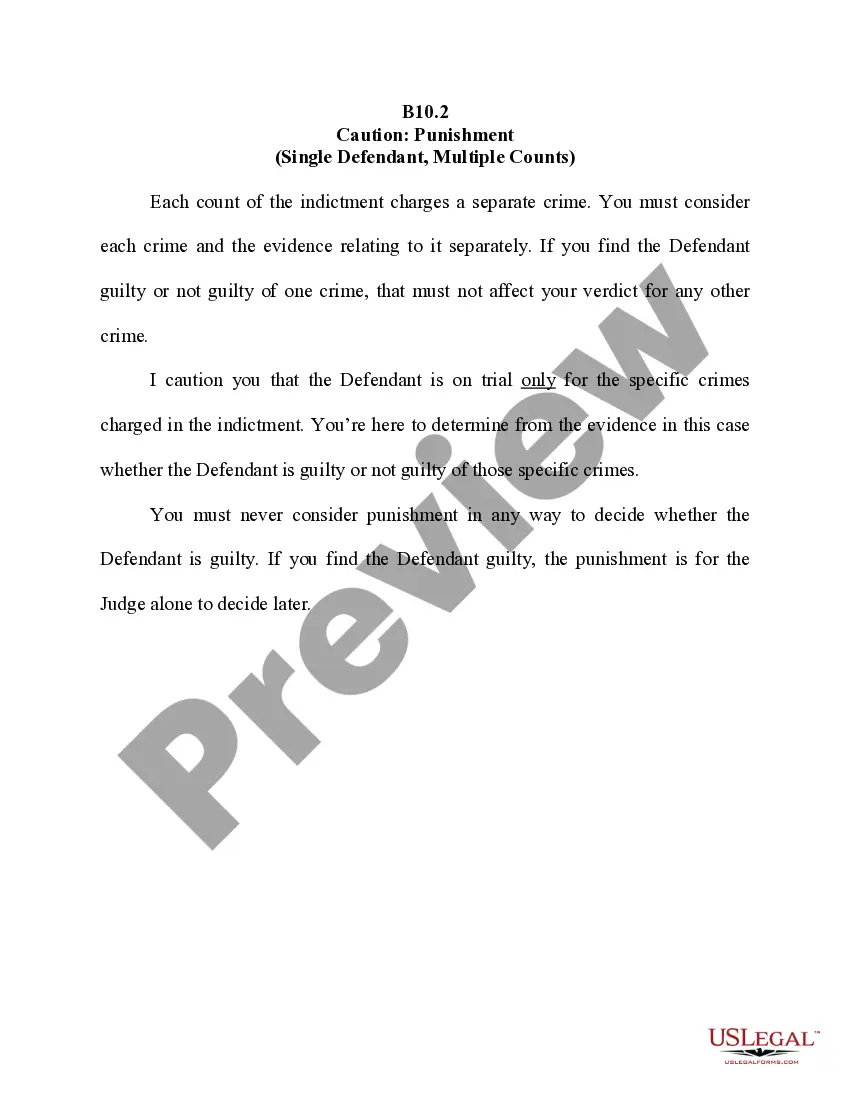
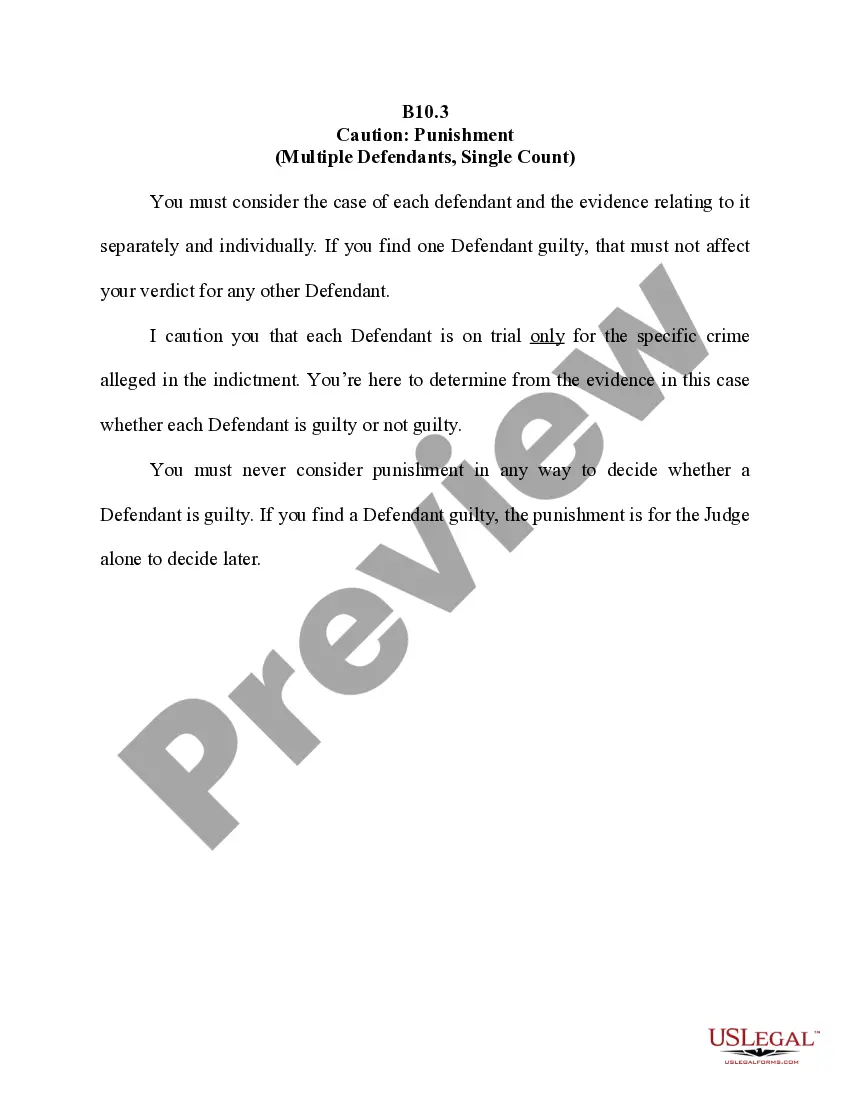
The Caution: Punishment form (Multiple Defendants, Multiple Counts) provides essential guidance for jury instructions in cases involving multiple defendants or counts. This form helps to ensure that jurors understand their role in evaluating each defendant's guilt based solely on the evidence related to specific charges, rather than any potential punishments. It is specifically designed for use within the jurisdiction of the 11th Circuit Federal Court of Appeals, making it distinct from other jury instruction forms.
Key components of this form
- Each count in the indictment represents a separate crime that requires independent consideration.
- Jurors must evaluate the case of each defendant separately and individually.
- The form emphasizes that considerations of punishment should not influence the verdict.
- Clear instructions on the distinction between findings of guilt and subsequent sentencing.
Common use cases
This form is utilized in legal proceedings involving criminal cases where there are multiple defendants and different counts. It is essential when jurors need to navigate complex cases, ensuring that their deliberations focus solely on individual merits of each charge without the distraction of potential penalties. This is particularly relevant in trials where defendants may face different allegations that do not influence one another.
Intended users of this form
- Jurors involved in a criminal trial with multiple defendants.
- Judges presiding over cases requiring clear jury instructions.
- Legal practitioners seeking to provide accurate jury guidance.
Completing this form step by step
- Identify the specific counts in the indictment and distinguish them individually.
- Ensure jurors understand that each defendant's guilt should be assessed based only on the relevant evidence.
- Clarify to jurors that discussions about punishment are to be reserved for the judge's determination after a verdict is reached.
- Communicate that each crime charged is considered separately from others.
Is notarization required?
This form does not typically require notarization unless specified by local law. However, it is advisable to check state-specific regulations related to jury instructions in criminal cases.
Get your form ready online
Our built-in tools help you complete, sign, share, and store your documents in one place.
Make edits, fill in missing information, and update formatting in US Legal Forms—just like you would in MS Word.
Download a copy, print it, send it by email, or mail it via USPS—whatever works best for your next step.
Sign and collect signatures with our SignNow integration. Send to multiple recipients, set reminders, and more. Go Premium to unlock E-Sign.
If this form requires notarization, complete it online through a secure video call—no need to meet a notary in person or wait for an appointment.
We protect your documents and personal data by following strict security and privacy standards.

Make edits, fill in missing information, and update formatting in US Legal Forms—just like you would in MS Word.

Download a copy, print it, send it by email, or mail it via USPS—whatever works best for your next step.

Sign and collect signatures with our SignNow integration. Send to multiple recipients, set reminders, and more. Go Premium to unlock E-Sign.

If this form requires notarization, complete it online through a secure video call—no need to meet a notary in person or wait for an appointment.

We protect your documents and personal data by following strict security and privacy standards.
Mistakes to watch out for
- Failing to differentiate between counts when deliberating.
- Considering potential punishments during the guilt phase of deliberation.
- Not treating each defendantâs case independently from others.
Advantages of online completion
- Immediate access to standardized jury instruction templates.
- Convenience of downloading and customizing forms as needed.
- Reliability, knowing the forms are drafted by licensed attorneys.
- This form serves as an official jury instruction to guide jurors in their deliberations.
- It helps establish clear legal standards that must be adhered to during the trial process.
- Failure to follow these instructions can result in grounds for an appeal if improper consideration occurs.
Key takeaways
- The Caution: Punishment form is essential for ensuring fair trials with multiple defendants.
- Each count must be considered independently, maintaining focus on the individual evidence.
- Jurors must not factor potential punishments into their decision-making.
Looking for another form?






Form popularity
FAQ
A judge in a criminal case may feel that it is appropriate to combine the cases of multiple defendants when their charges involve the same set of circumstances. This can help a judge streamline their calendar and resolve a case more efficiently.
In cases where someone is charged with multiple counts of the same crime, the judge often has to decide if the convicted defendant will serve the sentence concurrently or consecutively. A concurrent sentence means that time for two or more of the convictions will all be served at once.
If a defendant is convicted on two (or more) counts, he or she will enter any future trials with two (or more) prior offenses in his or her criminal history. In addition to spurring tougher sentences in the future, a history of previous offenses can also cause a criminal suspect's bail amount to skyrocket.
It means you committed the same crime more than once. An example is if someone shoots 10 people and they all survive, that person would have 10 counts of attempted murder. He committed the same crime against all of these people. So he has to answer for each person that was wronged by his action.
Law enforcement officers have full discretion over what crimes to submit against a suspect. In some cases, they put forth more charges than is fair for the situation, often in an attempt to strengthen the main case that the prosecutor wishes to pursue.
In California law, this protection is codified in Penal Code 687 PC, which states: "No person can be subjected to a second prosecution for a public offense for which he has once been prosecuted and convicted or acquitted." The double jeopardy principle protects people from being prosecuted twice for the same crime.