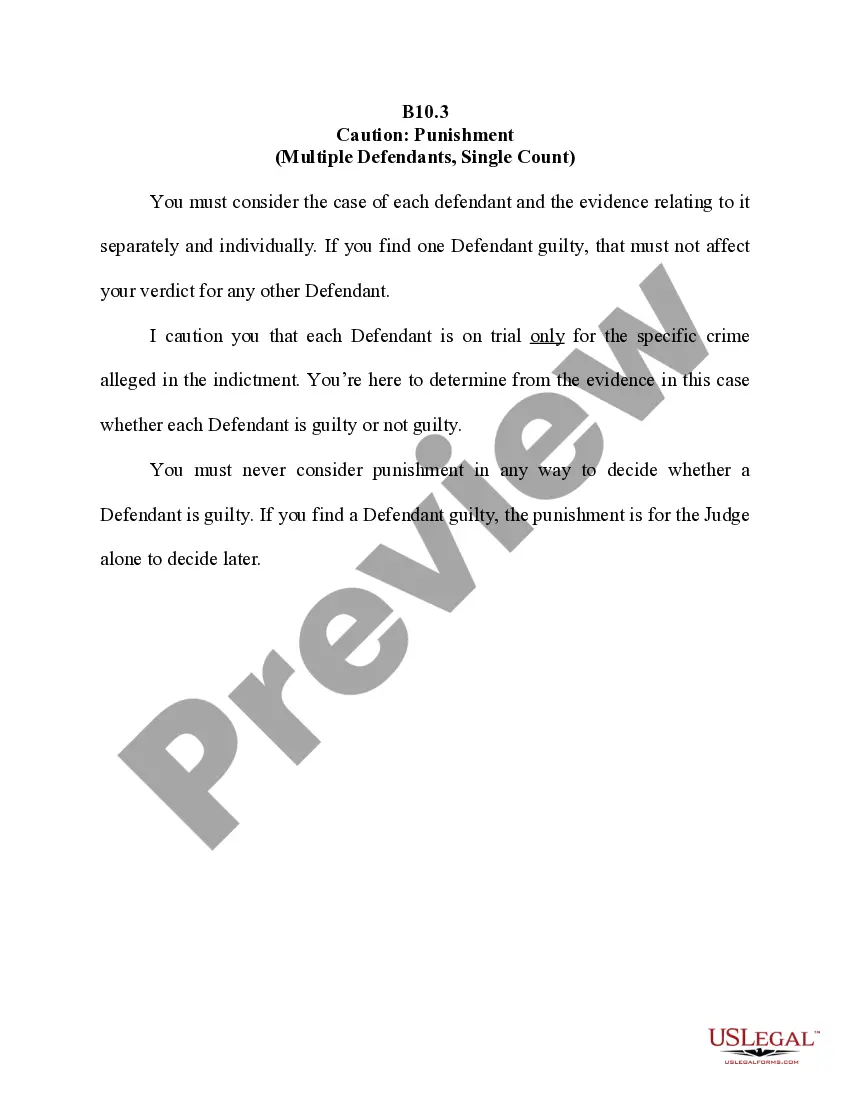
Caution: Punishment (Multiple Defendants, Single Count)
About this form
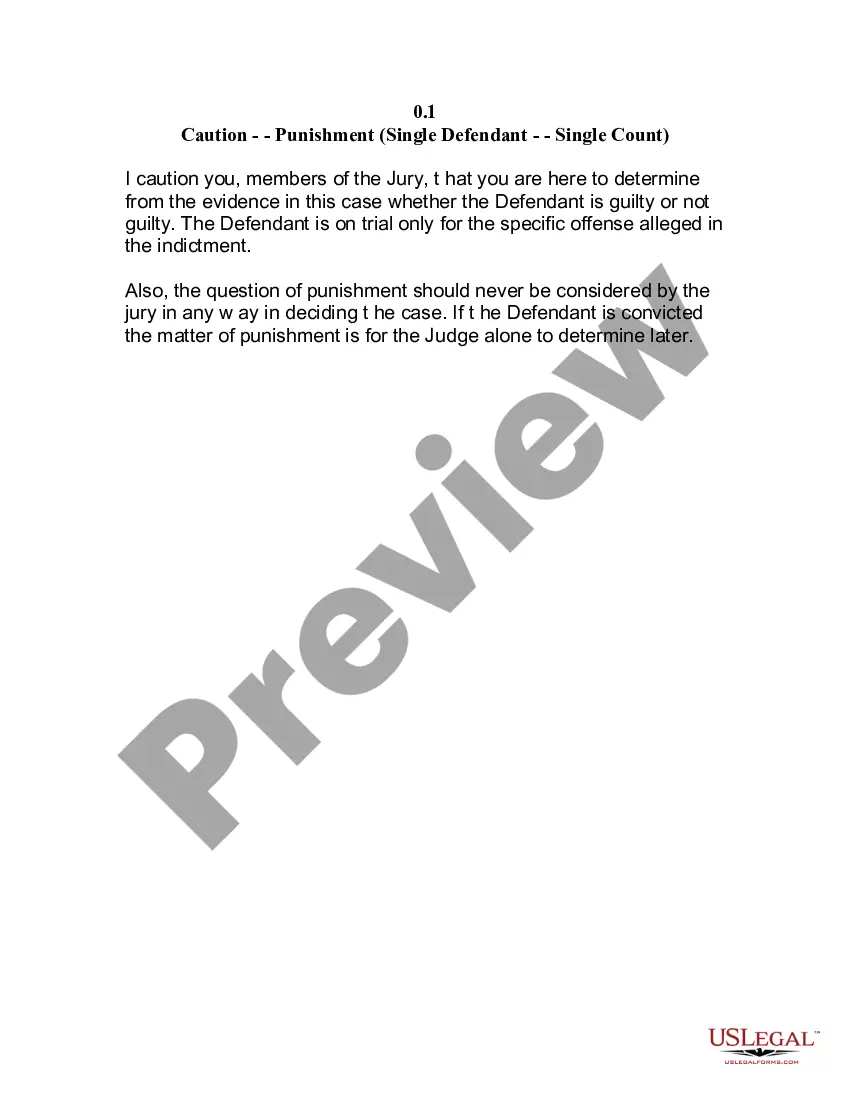
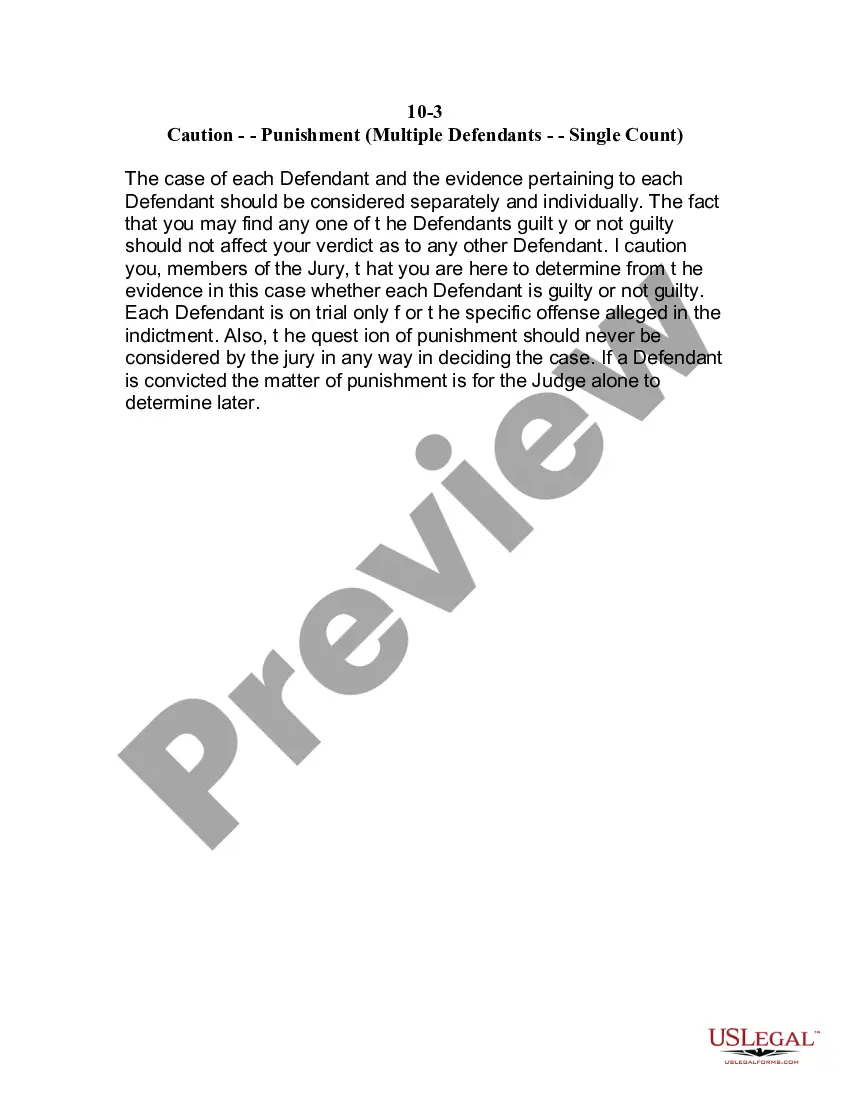
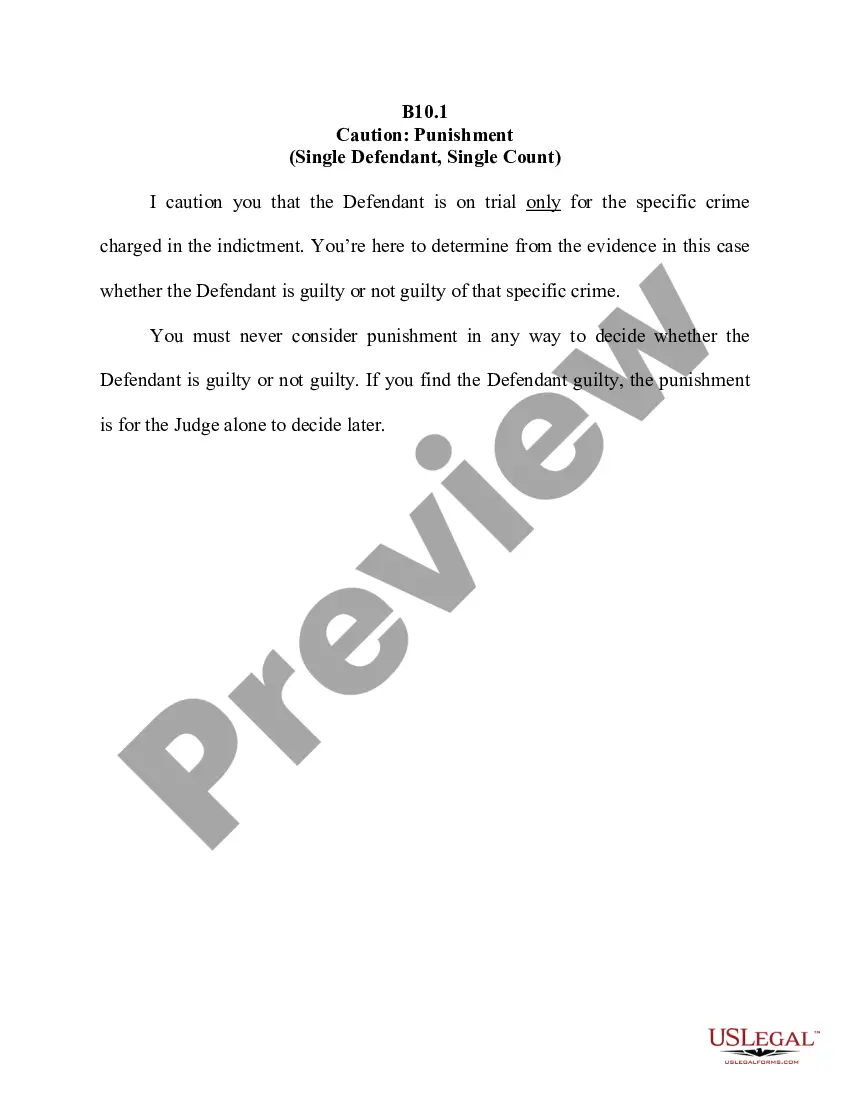
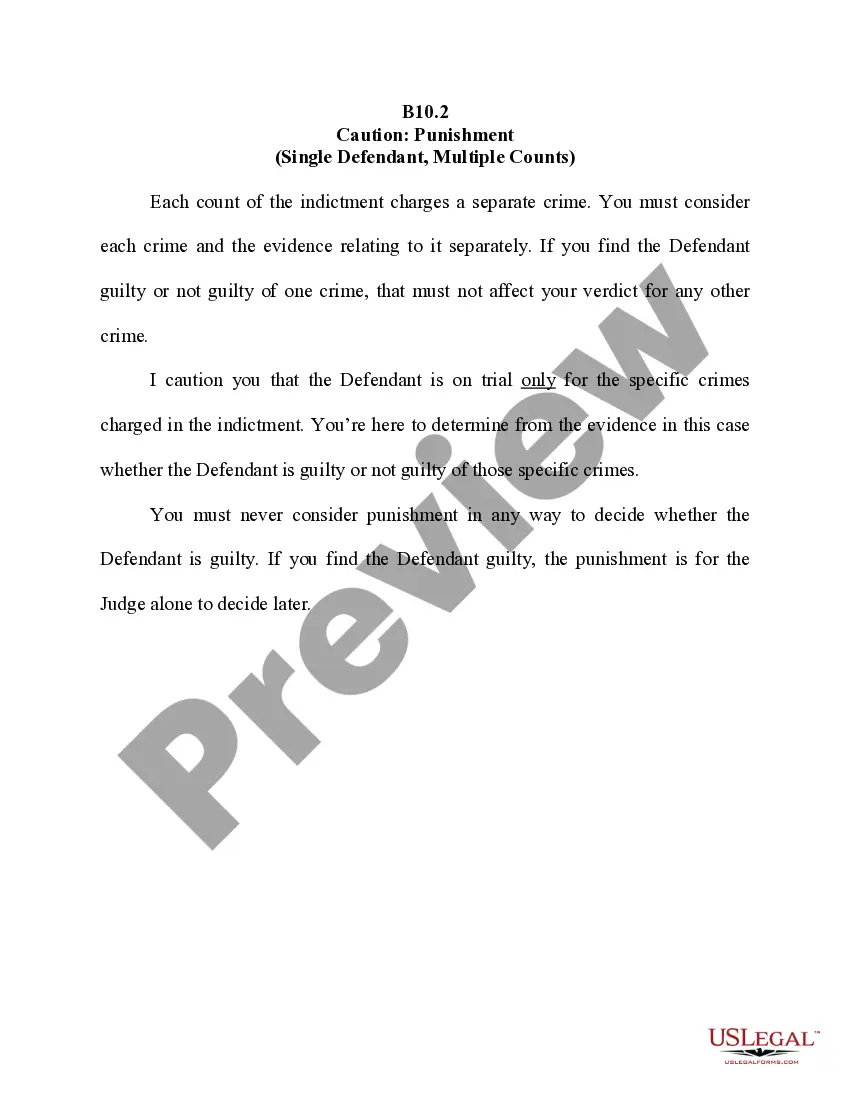
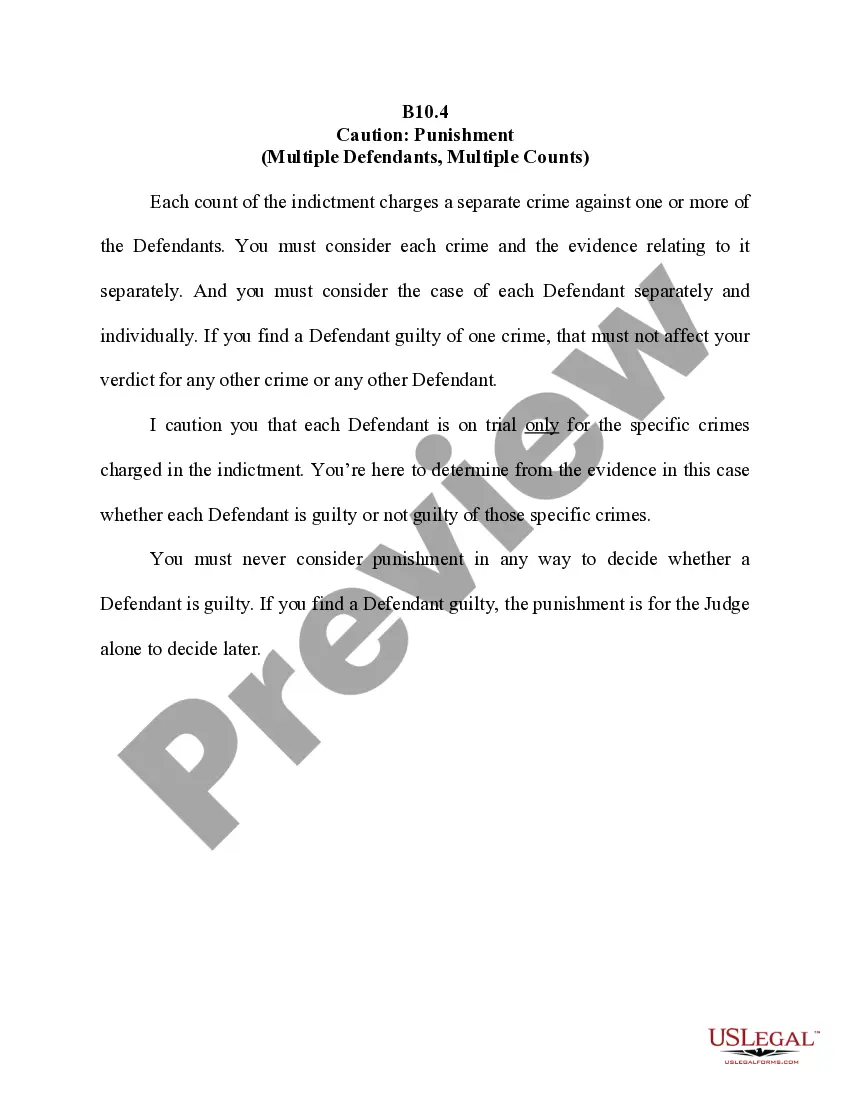
The Caution: Punishment (Multiple Defendants, Single Count) form is a pattern jury instruction from the 11th Circuit Federal Court of Appeals. This instruction guides jurors on how to consider the evidence and reach separate verdicts for each defendant in cases involving multiple defendants facing the same count. It emphasizes that each defendant's guilt is determined independently and that jurors must not factor in punishment in their deliberations.
Form components explained
- Individual consideration of each defendant's case.
- Emphasis on the specific crime alleged in the indictment.
- Clear instruction to jurors to avoid considering punishment in their verdicts.
When this form is needed
This form is essential in any criminal trial where there are multiple defendants charged with the same crime. Jurors use it to ensure they evaluate each defendant's actions and evidence separately, which is crucial in maintaining fairness and clarity in their verdicts.
Intended users of this form
- Jurors in a criminal trial with multiple defendants.
- Judges who need to instruct juries on procedural standards during a trial.
- Legal counsel seeking to ensure compliance with jury instruction requirements.
Completing this form step by step
- Review the case details to understand the specific allegations against each defendant.
- Present evidence clearly and separately for each defendant.
- Use the instruction to guide the jury on how to assess guilt or innocence.
- Ensure that instructions clearly state the prohibition on considering punishment in the verdict.
Notarization guidance
This form does not typically require notarization to be legally valid. However, some jurisdictions or document types may still require it. US Legal Forms provides secure online notarization powered by Notarize, available 24/7 for added convenience.
Get your form ready online
Our built-in tools help you complete, sign, share, and store your documents in one place.
Make edits, fill in missing information, and update formatting in US Legal Forms—just like you would in MS Word.
Download a copy, print it, send it by email, or mail it via USPS—whatever works best for your next step.
Sign and collect signatures with our SignNow integration. Send to multiple recipients, set reminders, and more. Go Premium to unlock E-Sign.
If this form requires notarization, complete it online through a secure video call—no need to meet a notary in person or wait for an appointment.
We protect your documents and personal data by following strict security and privacy standards.

Make edits, fill in missing information, and update formatting in US Legal Forms—just like you would in MS Word.

Download a copy, print it, send it by email, or mail it via USPS—whatever works best for your next step.

Sign and collect signatures with our SignNow integration. Send to multiple recipients, set reminders, and more. Go Premium to unlock E-Sign.

If this form requires notarization, complete it online through a secure video call—no need to meet a notary in person or wait for an appointment.

We protect your documents and personal data by following strict security and privacy standards.
Common mistakes
- Assuming that guilt for one defendant implies guilt for another.
- Failing to clearly define the specific charge for each defendant.
- Inadvertently discussing or considering potential sentences during deliberations.
Advantages of online completion
- Access to reliable and authoritative legal language created by licensed attorneys.
- Convenient downloading options for immediate use in legal settings.
- Easy to tailor instructions based on trial specifics, enhancing clarity for jurors.
Legal use & context
- This form serves a critical role in ensuring fair trials in cases with multiple defendants.
- It helps to establish a consistent approach to jury instructions across similar cases.
- Following these instructions supports the legal process by maintaining the integrity of verdicts.
Looking for another form?







Form popularity
FAQ
The double jeopardy clause of the fifth amendment provides that no person shall be subject for the same offense to be twice put in jeopardy of life or limb. The multiple punishment prohibition doctrine is an integral part of the double jeopardy clause's retrial restrictions.
In cases where someone is charged with multiple counts of the same crime, the judge often has to decide if the convicted defendant will serve the sentence concurrently or consecutively. A concurrent sentence means that time for two or more of the convictions will all be served at once.
A judge in a criminal case may feel that it is appropriate to combine the cases of multiple defendants when their charges involve the same set of circumstances. This can help a judge streamline their calendar and resolve a case more efficiently.
It means the number of crimes or the number of a certain crime. For example, a mass shooters kills 5 people and wounds another 7. They get charged with 5 counts of murder (one murder charge for each victim killed) and 7 counts of attempted murder (one for each victim wounded).
In criminal cases, each count alleges a different crime. For example, a person accused of shooting and killing two people could be charged with two counts of murder and two counts of armed criminal action. Statements identifying probable cause must support each count.
Count. An allegation in an indictment or information, charging a defendant with a crime. An indictment or information may contain allegations that the defendant committed more than one crime. Each allegation is referred to as a count.
For example, the complaint in a civil (non-criminal) lawsuit might state: First Count (or cause of action) for negligence, and then state the detailed allegations; Second Count for breach of contract; Third Count for debt and so forth. In a criminal case each count would be a statement of a different alleged crime.
It means you committed the same crime more than once. An example is if someone shoots 10 people and they all survive, that person would have 10 counts of attempted murder. He committed the same crime against all of these people. So he has to answer for each person that was wronged by his action.