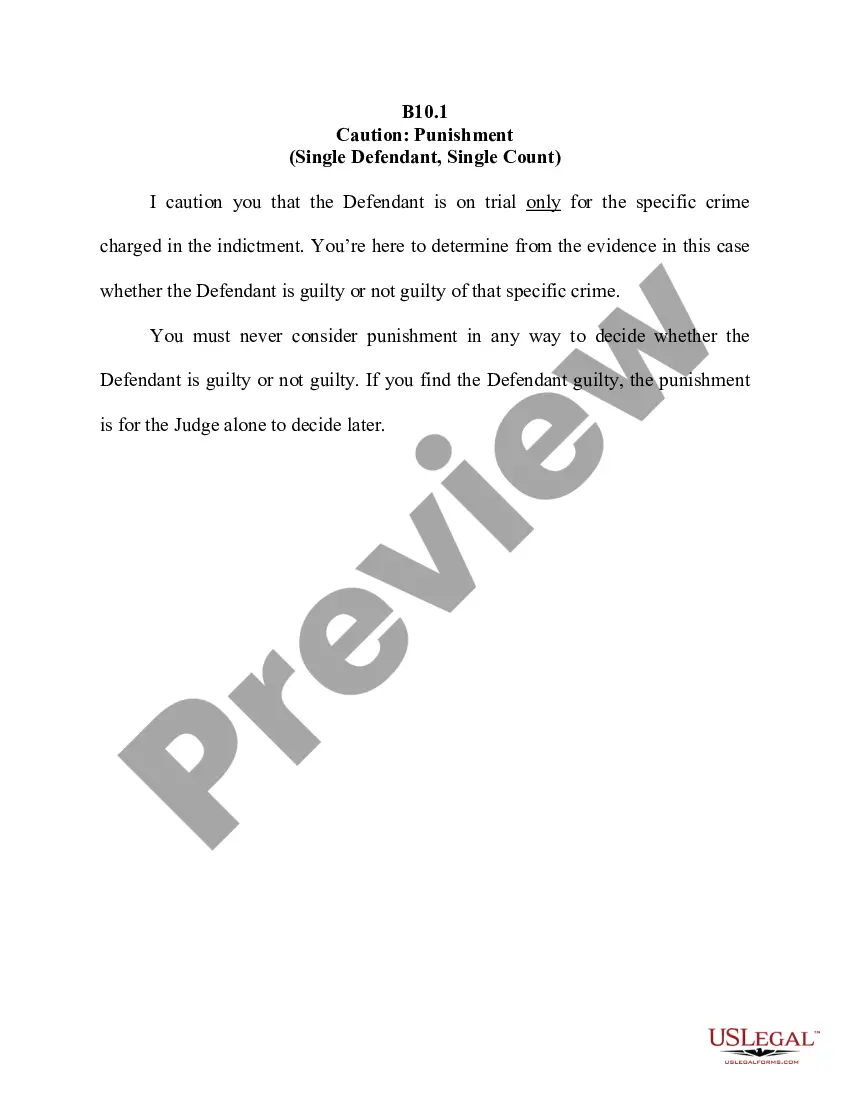
Caution: Punishment (Single Defendant, Single Count)
What this document covers
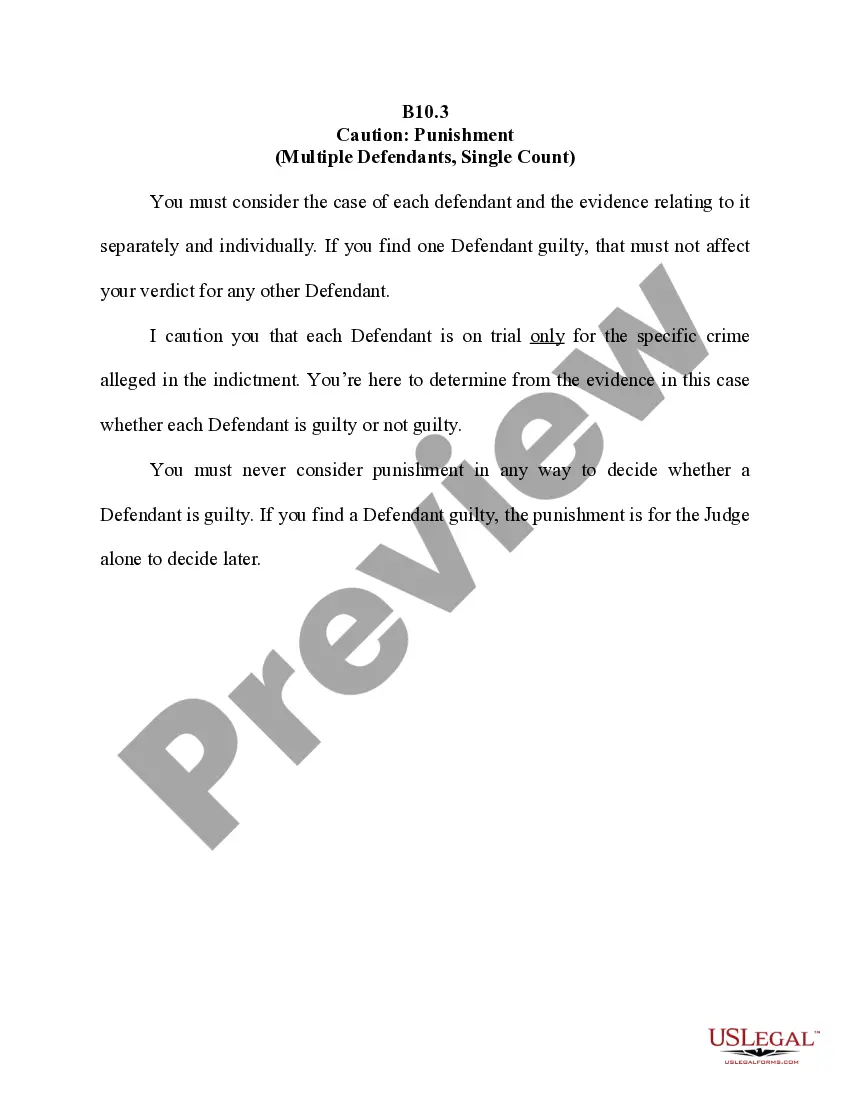
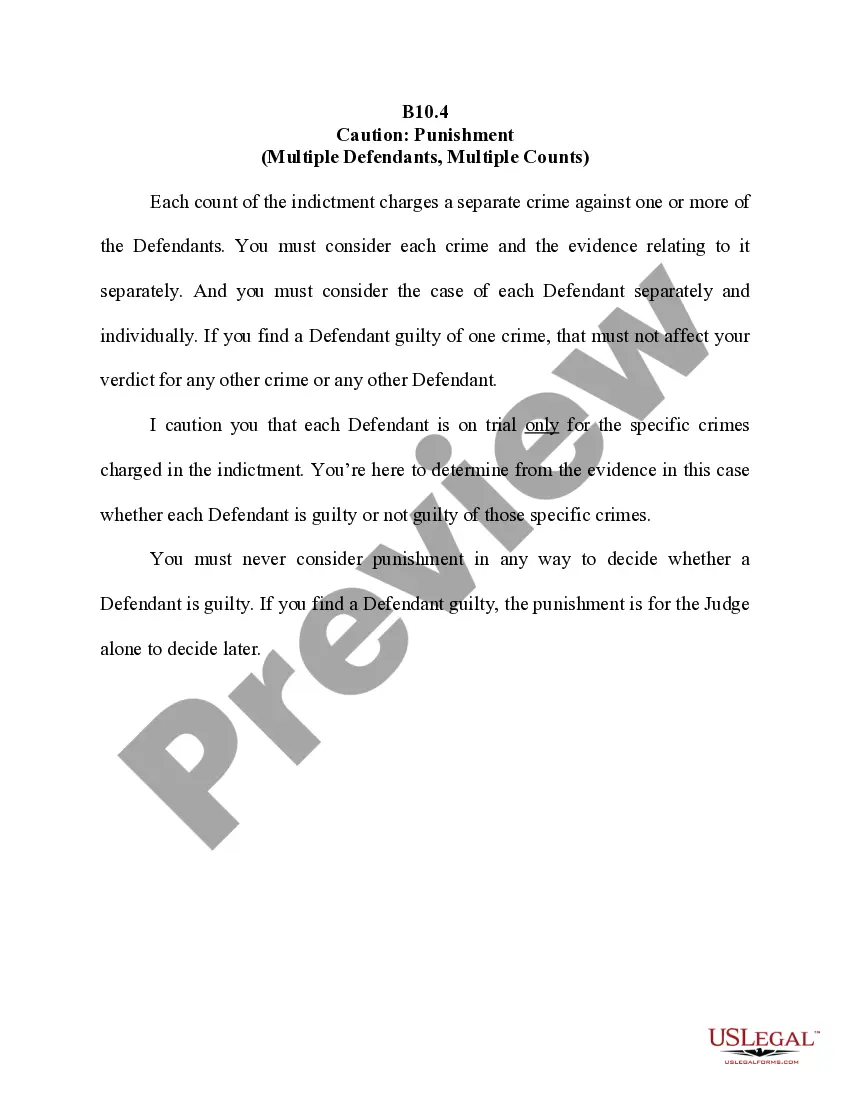
The Caution: Punishment (Single Defendant, Single Count) form is a pattern jury instruction used in criminal trials. It clarifies to jurors their responsibility to determine guilt based solely on the evidence presented, without considering the punishment that may follow a guilty verdict. This instruction is essential for ensuring that jurors focus on the facts of the case rather than the potential consequences for the defendant.
Form components explained
- Clear instruction to jurors to focus solely on the evidence related to the specific crime charged.
- Guidance that the responsibility for determining punishment lies exclusively with the judge.
- A reminder that the jury's role is limited to assessing guilt or innocence of the defendant.
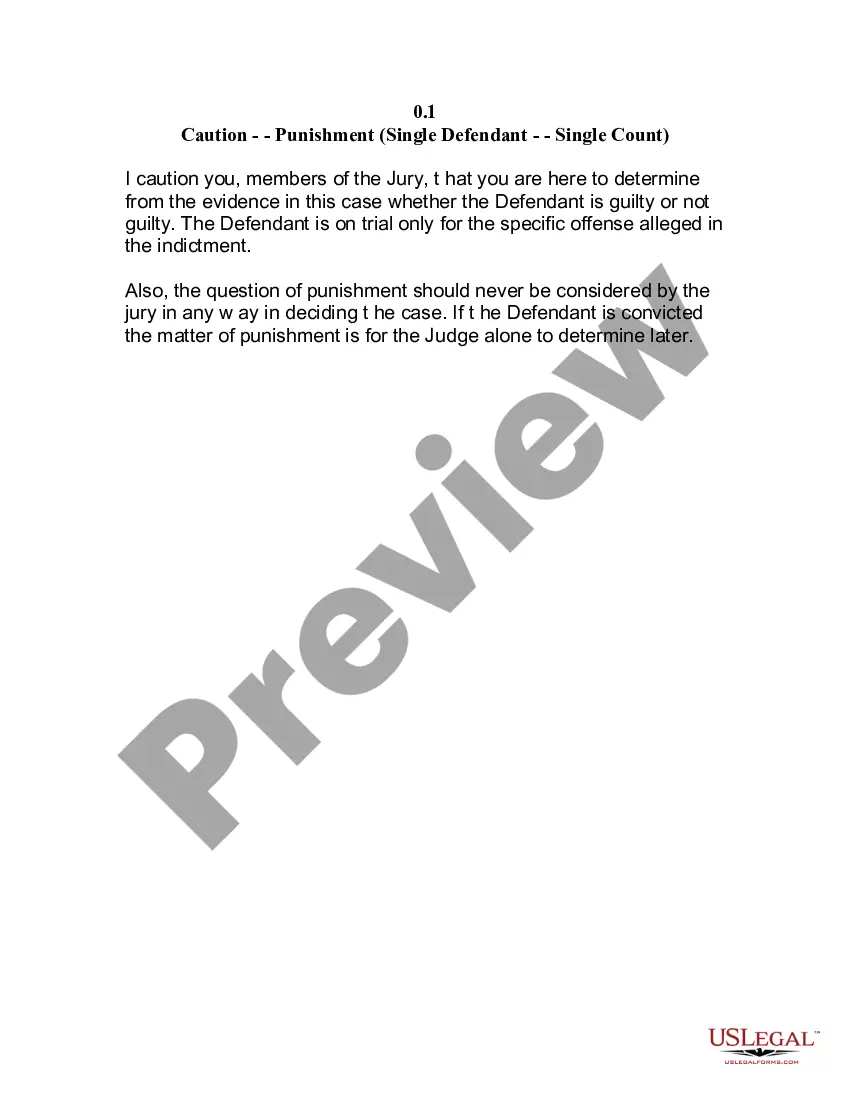
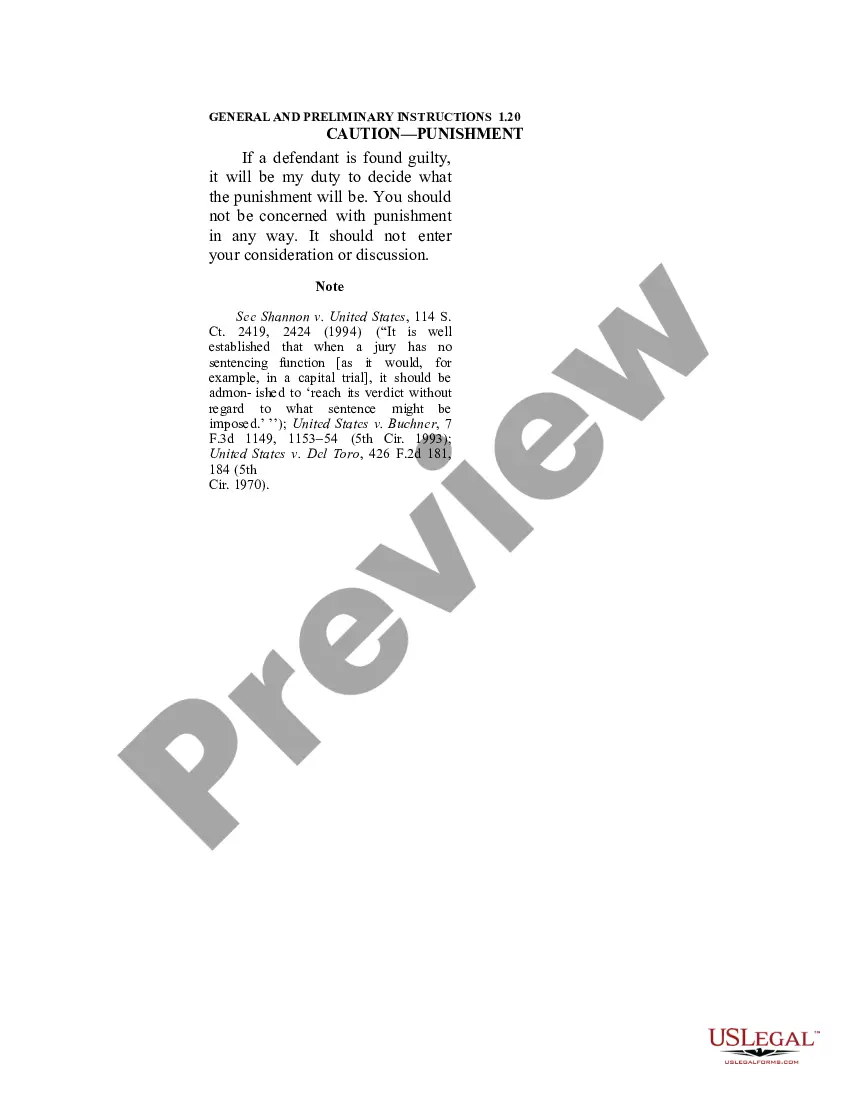
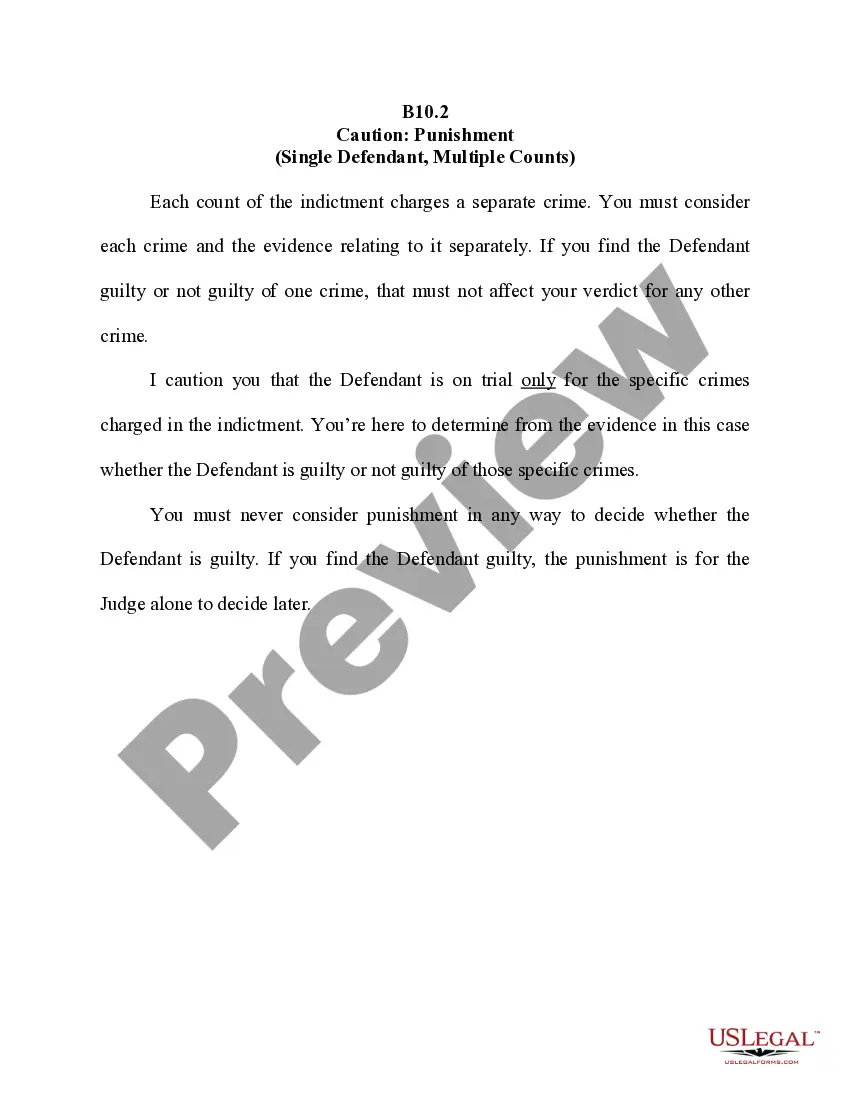
When to use this form
This form is utilized during jury trials in criminal cases. It is essential when a jury is tasked with determining whether a defendant is guilty of a specific charge. Its purpose is to remind jurors that their decision should be based only on the evidence and not influenced by any notions of punishment.
Who should use this form
- Judges overseeing a trial where this instruction is pertinent.
- Attorneys preparing jury instructions for criminal cases.
- Legal professionals seeking standardized jury instructions within the 11th Circuit Federal Court of Appeals jurisdiction.
How to prepare this document
- Identify the specific crime charged against the defendant.
- Present the evidence relevant to the case thoroughly and accurately.
- Explain to jurors their duty regarding the determination of guilt based on this evidence.
- Clarify that decisions on punishments will be made later by the judge.
- Ensure jurors understand that their focus should not include considerations of potential sentencing.
Notarization requirements for this form
Notarization is generally not required for this form. However, certain states or situations might demand it. You can complete notarization online through US Legal Forms, powered by Notarize, using a verified video call available anytime.
Get your form ready online
Our built-in tools help you complete, sign, share, and store your documents in one place.
Make edits, fill in missing information, and update formatting in US Legal Forms—just like you would in MS Word.
Download a copy, print it, send it by email, or mail it via USPS—whatever works best for your next step.
Sign and collect signatures with our SignNow integration. Send to multiple recipients, set reminders, and more. Go Premium to unlock E-Sign.
If this form requires notarization, complete it online through a secure video call—no need to meet a notary in person or wait for an appointment.
We protect your documents and personal data by following strict security and privacy standards.

Make edits, fill in missing information, and update formatting in US Legal Forms—just like you would in MS Word.

Download a copy, print it, send it by email, or mail it via USPS—whatever works best for your next step.

Sign and collect signatures with our SignNow integration. Send to multiple recipients, set reminders, and more. Go Premium to unlock E-Sign.

If this form requires notarization, complete it online through a secure video call—no need to meet a notary in person or wait for an appointment.

We protect your documents and personal data by following strict security and privacy standards.
Typical mistakes to avoid
- Jurors confusing their role with that of the judge regarding punishment decisions.
- Focusing on the consequences of the verdict rather than the evidence presented.
Benefits of using this form online
- Convenience of accessing the jury instruction materials anytime and anywhere.
- Editability that allows legal professionals to adapt the instruction as needed.
- Reliability of having a standardized instruction drafted by licensed attorneys.
Legal use & context
- Helps ensure fairness in criminal trials by protecting the defendant's rights.
- Maintains focus on the evidence during jury deliberations, reinforcing the principle of 'innocent until proven guilty.'
Looking for another form?
Form popularity
FAQ
Simple assault is a misdemeanor that carries a jail sentence of up to 90 days. Simple assault becomes a gross misdemeanor if the accused has a prior conviction within the last 10 years for a domestic assault on the same victim. Committing a second domestic assault within three years is also a gross misdemeanor.
Offenders sentenced to incarceration usually serve time in a local jail or a State prison. Offenders sentenced to less than 1 year generally go to jail; those sentenced to more than 1 year go to prison.
Misdemeanor assaults are the least serious among assault and battery crimes and usually don't involve serious injury. This crime might be referred to as simple assault in your state.
Counts refer to the basis for bringing a case, including each cause of action in civil cases or charge in criminal cases. Lawsuits can involve multiple counts in which someone can be held liable. For example, assault and battery are separate causes of action that often are both present in a lawsuit.
Class A misdemeanor: Up to 1 year in jail, fine of up to $4,000. Third-degree felony: Up to 10 years in prison, fine of up to $10,000. Second-degree felony: Between 2 to 20 years in prison, fine of up to $10,000. First-degree felony: Between 5 years to life in prison, plus a fine.
Simple assault is usually the least severe assault crime, and it is generally charged as misdemeanor assault.
Self-defense is one of the most common forms of defense any assault attorney will use to reduce charges or have them thrown out altogether. Self-defense in assault cases means that you can prove that the person your client attacked was a threat or form of harm against them.
THIRD DEGREE FELONY PUNISHMENT. (a) An individual adjudged guilty of a felony of the third degree shall be punished by imprisonment in the Texas Department of Criminal Justice for any term of not more than 10 years or less than 2 years.