Alabama Option to Purchase Property
What is this form?
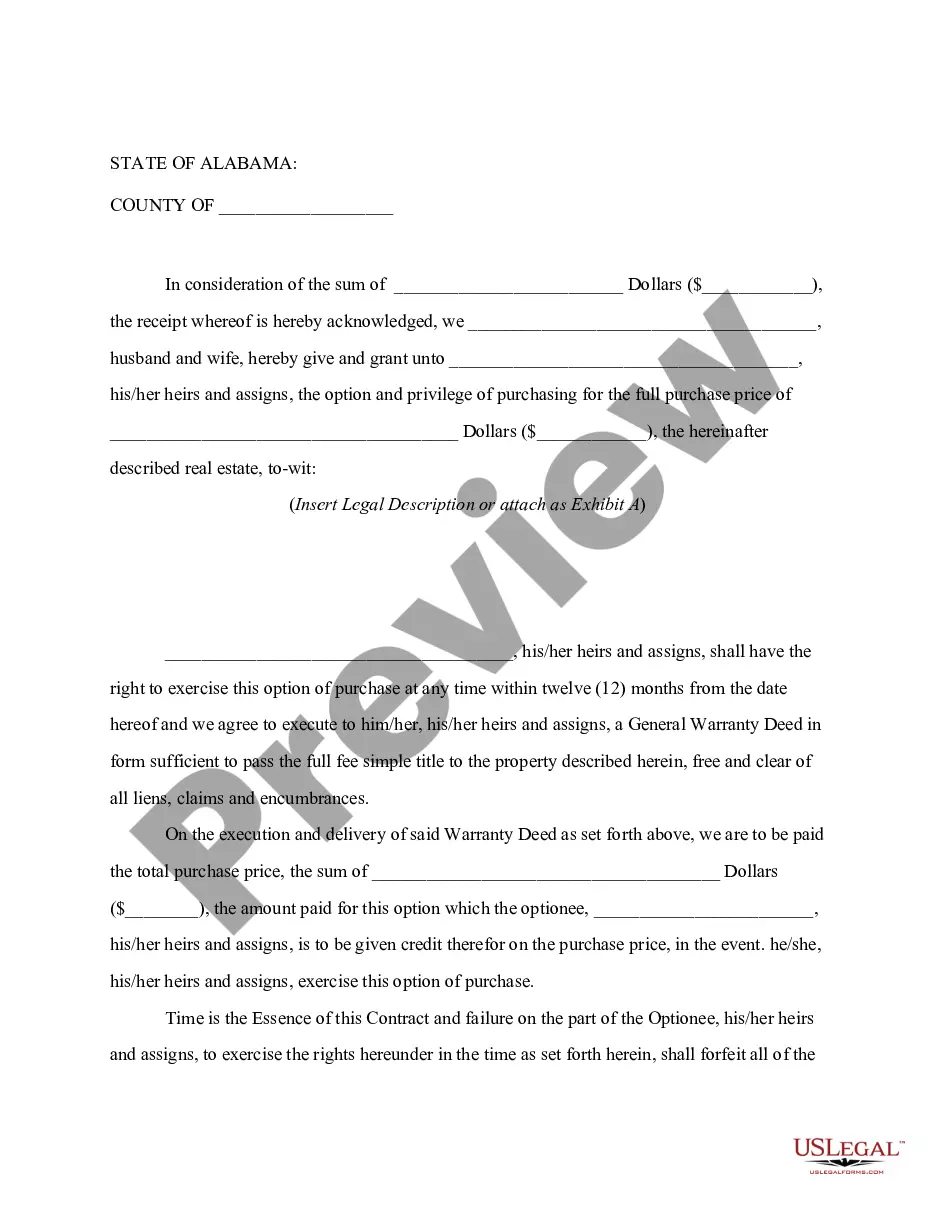
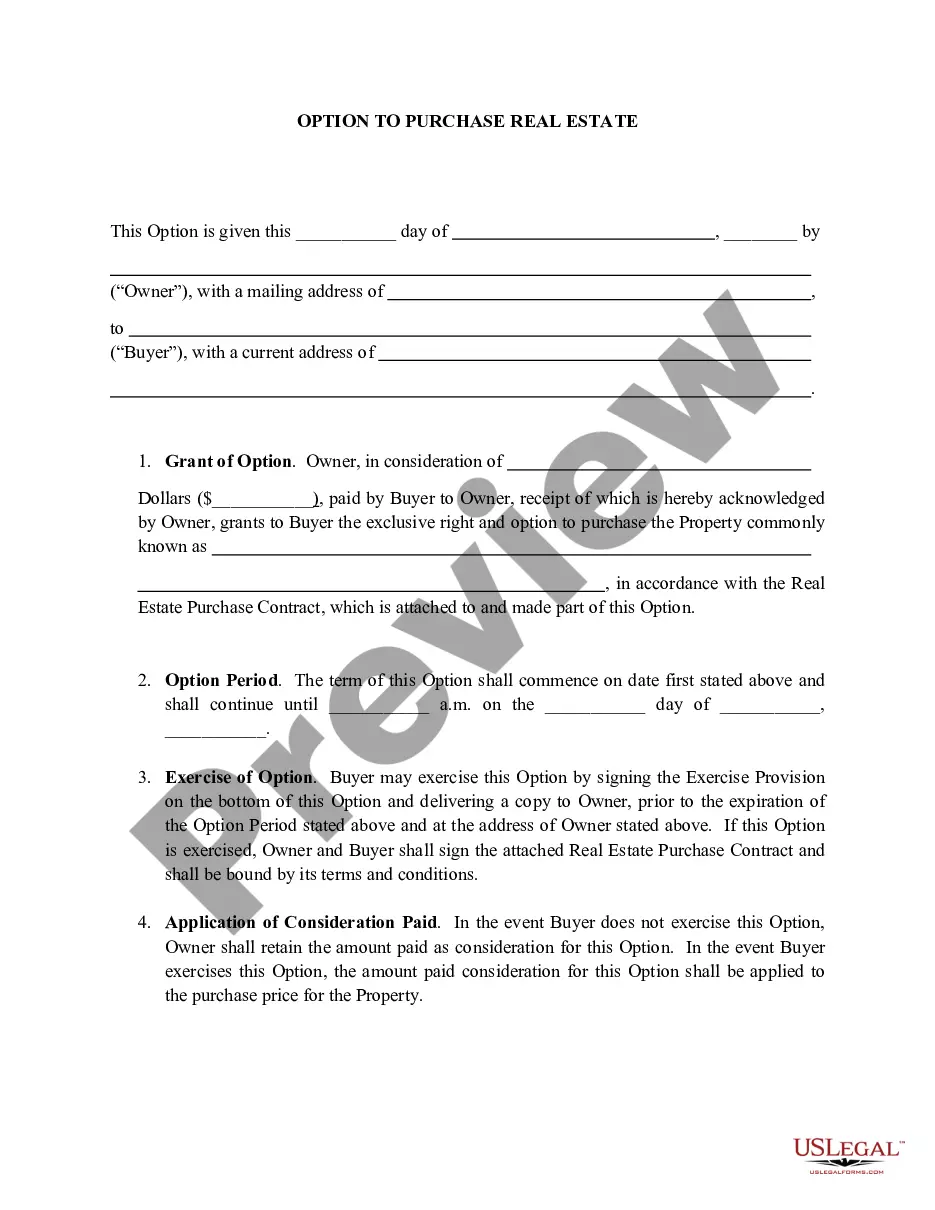
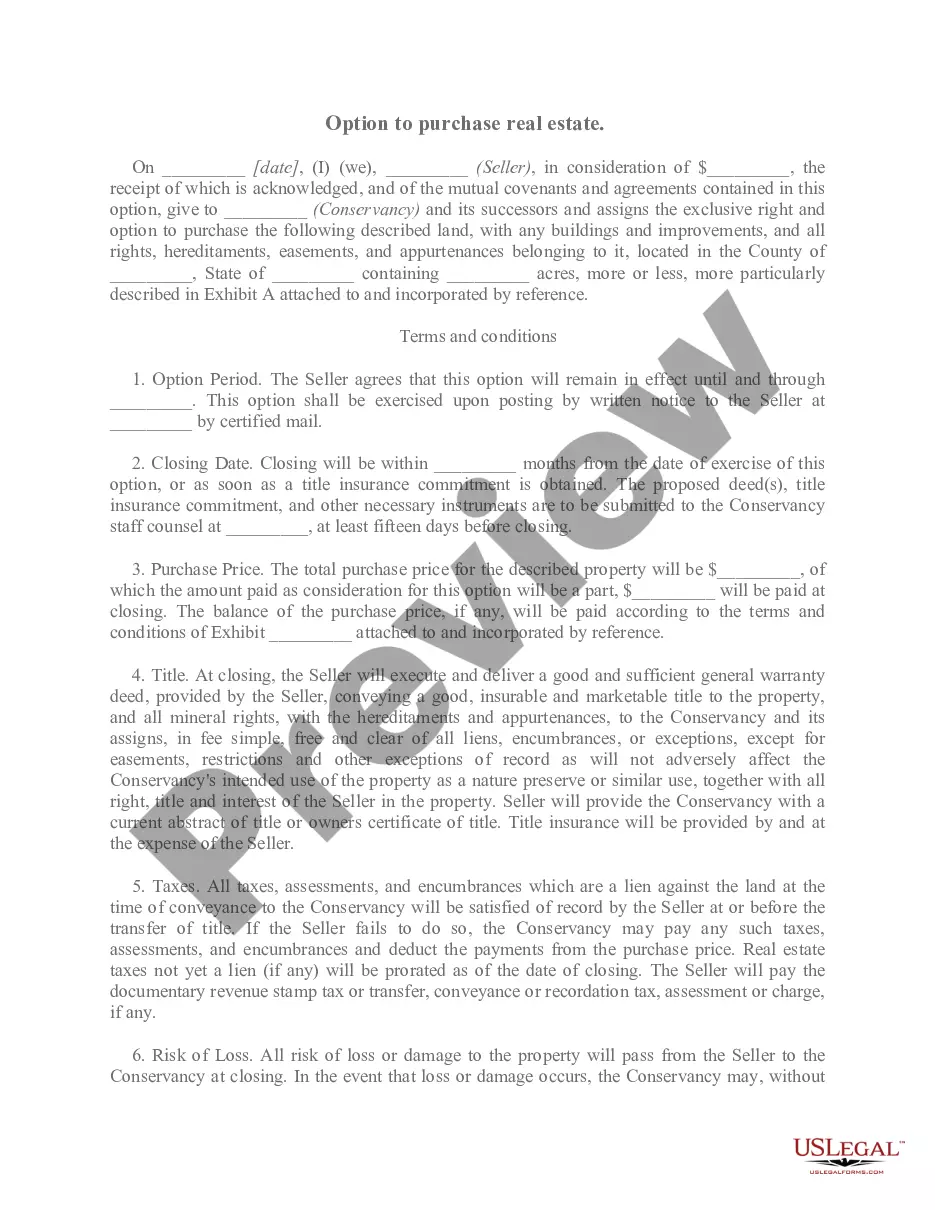
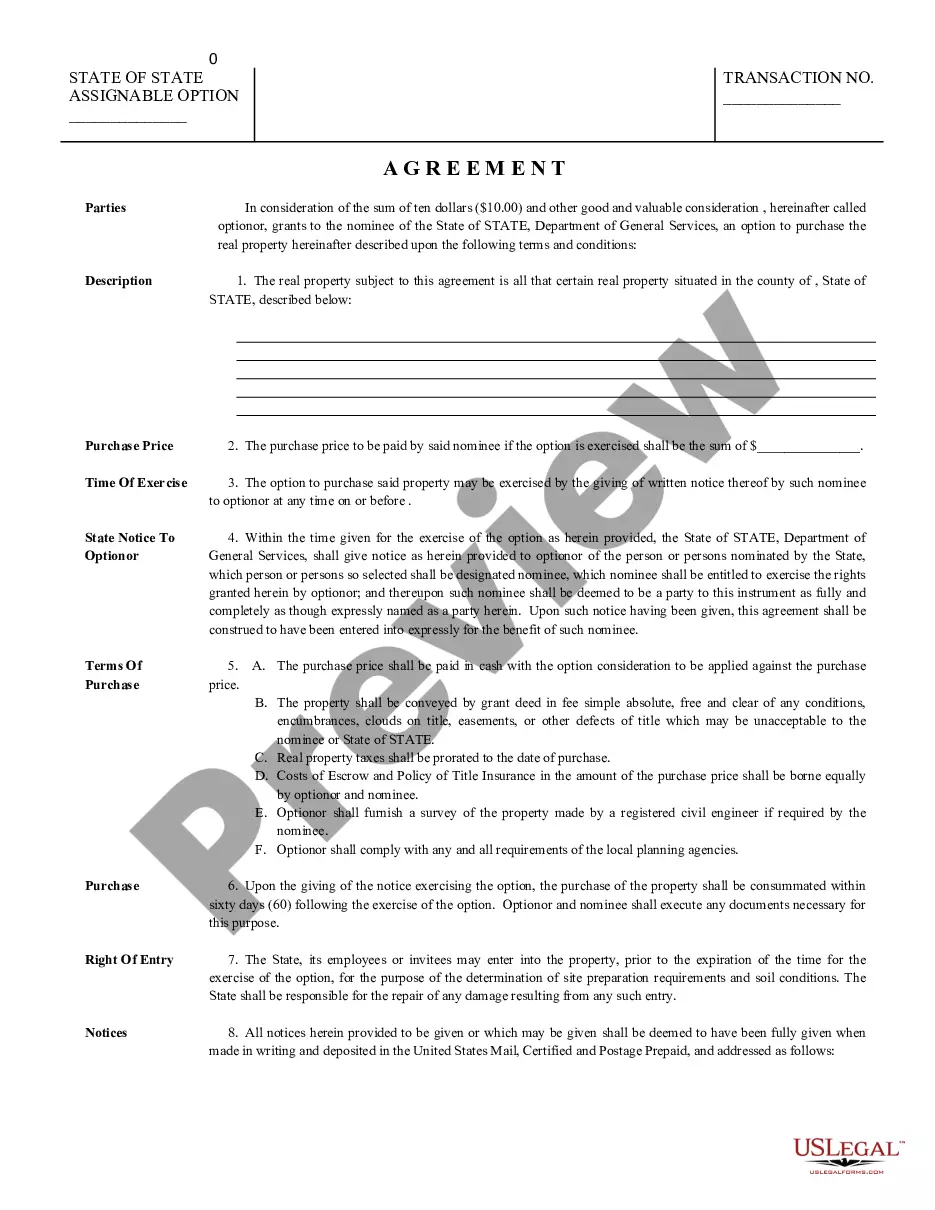
The Option to Purchase Property is a legal document that provides an individual the right to buy a specific piece of real estate for a predetermined price within a designated time frame. This form outlines the terms of the option, including the total purchase price and the property description. Unlike a purchase agreement, this option gives the potential buyer the flexibility to decide whether to proceed with the purchase, making it a useful tool in real estate transactions.
Main sections of this form
- Identification of the parties involved in the agreement.
- Specification of the property, including a legal description.
- Details of the purchase price and consideration paid for the option.
- Date and duration of the option period, typically twelve months.
- Requirements for executing a General Warranty Deed upon exercising the option.
- Provisions for forfeiture of the option if not exercised in time.

Situations where this form applies
This form is useful in various real estate scenarios, such as when a potential buyer wants to secure the right to purchase a property but is not ready to commit immediately. It can also be valuable for sellers seeking to attract buyers by offering them the flexibility to decide later, often seen in competitive markets where properties are highly desirable.
Intended users of this form
This form is intended for:
- Individuals or couples interested in purchasing real estate.
- Property owners looking to provide an option to potential buyers.
- Real estate agents and professionals facilitating property transactions.
- Investors seeking to secure real estate opportunities.
How to prepare this document
- Identify the parties involved: Include the names of the property owner(s) and the potential buyer(s).
- Specify the property: Provide a detailed legal description of the real estate.
- Enter the purchase price: Clearly state the amount for which the property can be purchased.
- Set the option period: Indicate the duration of time the buyer has to exercise the option.
- Sign the document: All parties must sign in the presence of a notary public.
Notarization guidance
Yes, this form must be notarized to be legally valid. This requirement ensures that the signatures are verified and that the document can be enforced in court. US Legal Forms offers integrated online notarization, available 24/7, allowing you to complete this step conveniently through a secure video call.
Get your form ready online
Our built-in tools help you complete, sign, share, and store your documents in one place.
Make edits, fill in missing information, and update formatting in US Legal Forms—just like you would in MS Word.
Download a copy, print it, send it by email, or mail it via USPS—whatever works best for your next step.
Sign and collect signatures with our SignNow integration. Send to multiple recipients, set reminders, and more. Go Premium to unlock E-Sign.
If this form requires notarization, complete it online through a secure video call—no need to meet a notary in person or wait for an appointment.
We protect your documents and personal data by following strict security and privacy standards.

Make edits, fill in missing information, and update formatting in US Legal Forms—just like you would in MS Word.

Download a copy, print it, send it by email, or mail it via USPS—whatever works best for your next step.

Sign and collect signatures with our SignNow integration. Send to multiple recipients, set reminders, and more. Go Premium to unlock E-Sign.

If this form requires notarization, complete it online through a secure video call—no need to meet a notary in person or wait for an appointment.

We protect your documents and personal data by following strict security and privacy standards.
Common mistakes
- Failing to include a complete legal description of the property.
- Not specifying the option expiration date.
- Overlooking the need for notarization.
- Forgetting to mention any encumbrances on the property.
- Neglecting to reference the consideration amount for the option.
Benefits of completing this form online
- Convenient access to professionally drafted legal forms.
- Edit and customize the form to meet personal needs quickly.
- Reliability of having a document reviewed by licensed attorneys.
- Easy download and print options for immediate use.
Main things to remember
- The Option to Purchase Property provides flexibility in real estate transactions.
- It's essential to include a clear legal description and option terms.
- All parties must sign before a notary to validate the document.
- This form can protect both buyers and sellers in property negotiations.
- Timely action is crucial as the option can expire, forfeiting rights to the property.
Looking for another form?
Form popularity
FAQ
Although sellers often require substantial payments to compensate them for tying up their property for a period of time, a hundred dollars is sufficient consideration to cause an option to be legally enforceable.
A rent-to-own agreement is a deal in which you commit to renting a property for a specific period of time, with the option of buying it before the lease runs out.You pay rent throughout the lease, and in some cases, a percentage of the payment is applied to the purchase price.
Rent-to-own programs can be attractive to buyers, especially those who expect to be in a stronger financial position within a few years. Some of the benefits include: Buy with bad credit: Buyers who cannot qualify for a home loan can start buying a house with a rent-to-own agreement.
How long does an option last? An option typically lasts 24 months but the timeframe to exercise is completely negotiable at the agreement stage.
An option agreement is a legally binding contract between two entities outlining each counterparty's responsibilities to the other.
Rent-to-own programs can be attractive to buyers, especially those who expect to be in a stronger financial position within a few years. Some of the benefits include: Buy with bad credit: Buyers who cannot qualify for a home loan can start buying a house with a rent-to-own agreement.
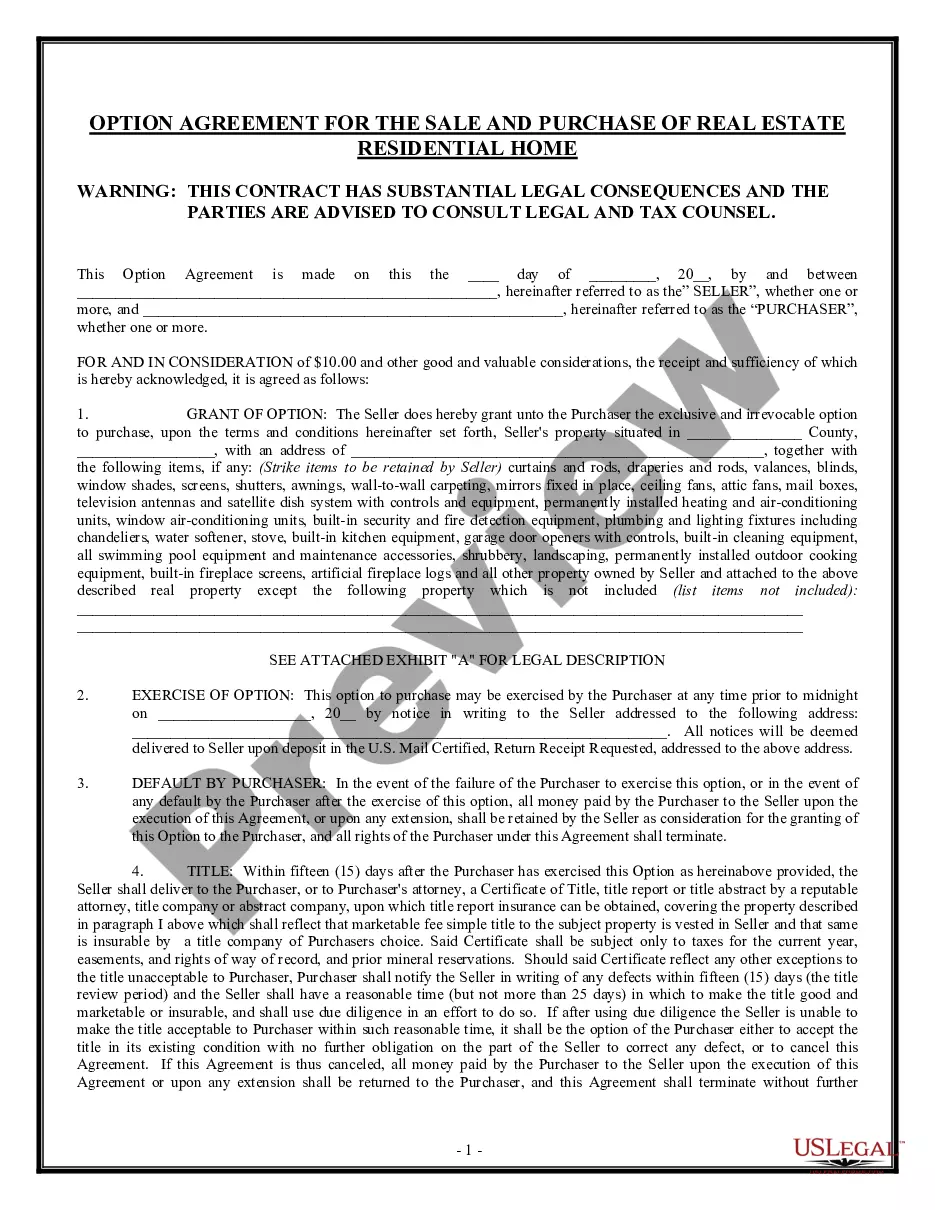
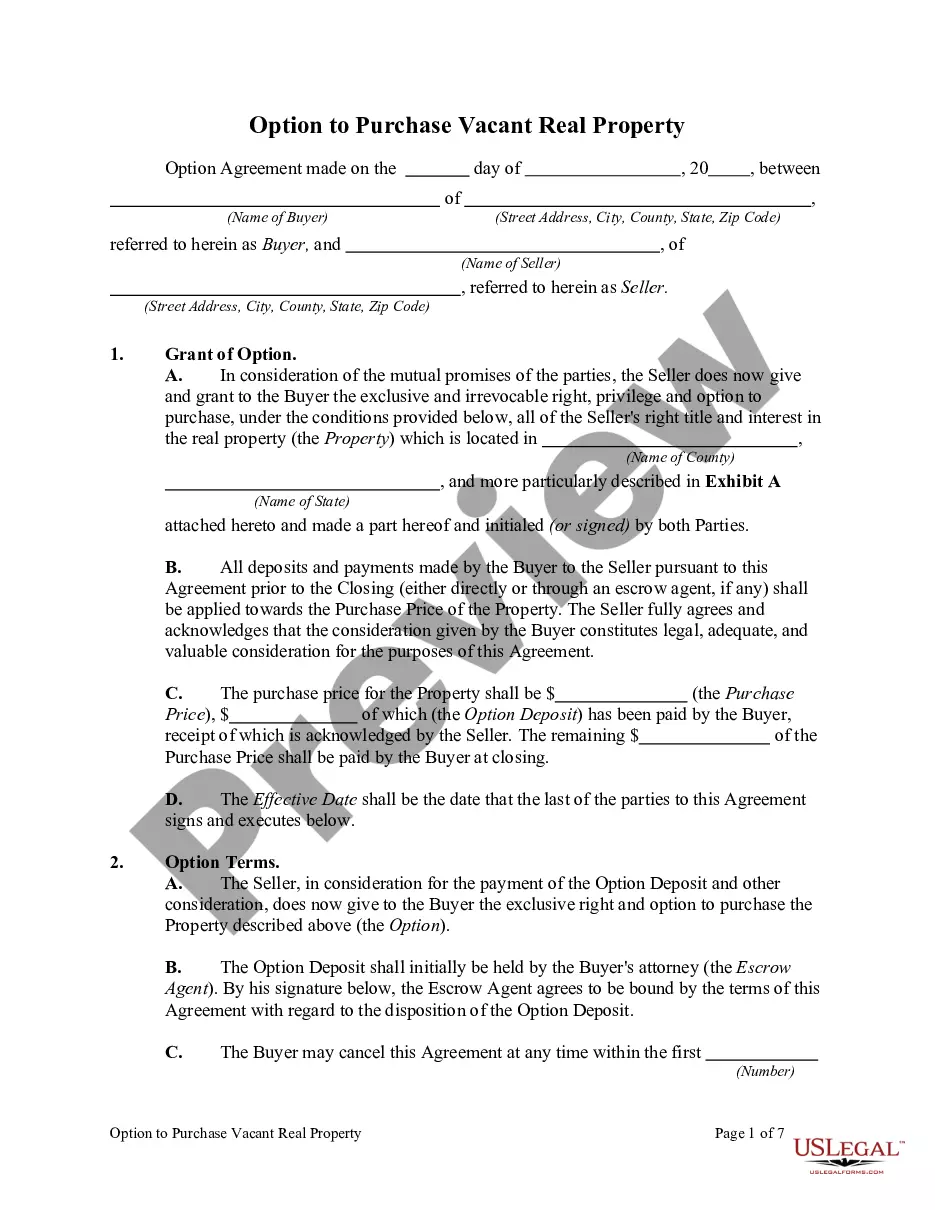
An Option to Purchase agreement is a legal contract signed between a buyer and a seller of a residential property, and basically gives the buyer the exclusive rights to purchase a property from the seller in the future.
An option to purchase agreement therefore gives the buyer rights over the land, and will also bind a future owner of the land too.Pre-emption rights in regard to registered land take effect at the time of their creation however, and can therefore be binding on subsequent owners.