Sample Letter for Preferred Customer Sale
Understanding this form
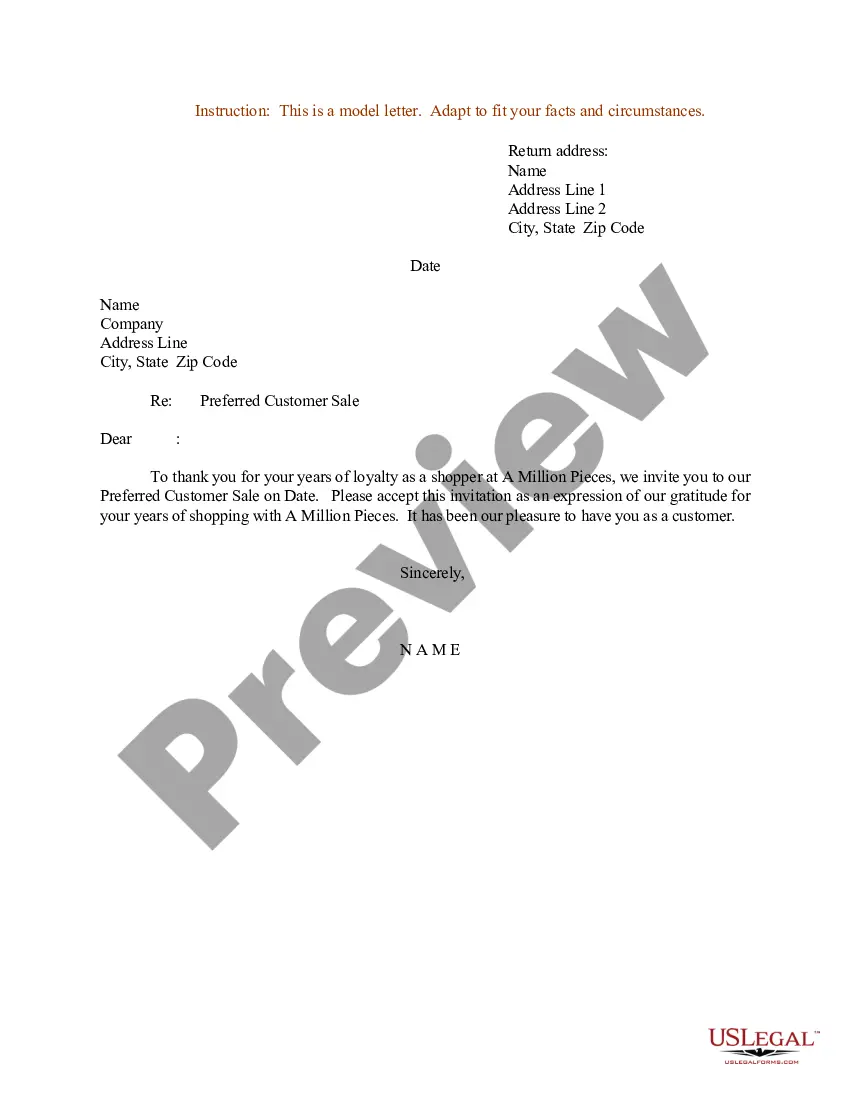
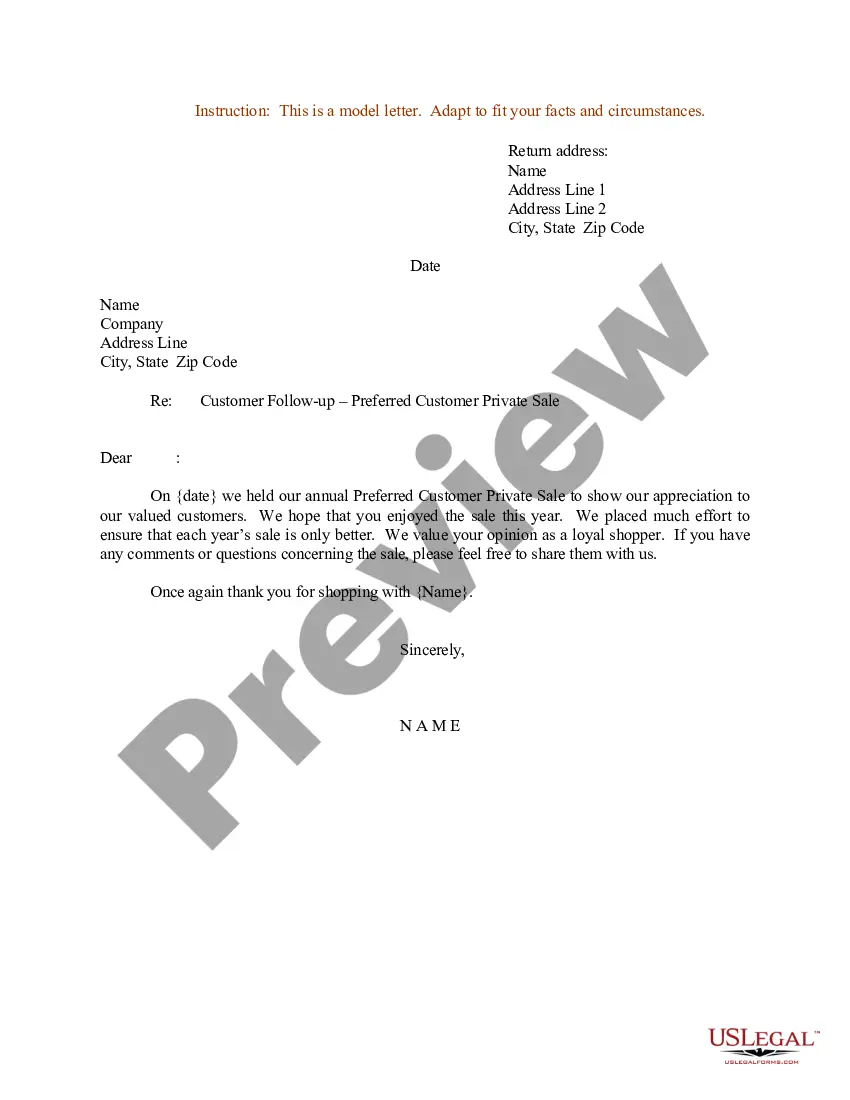
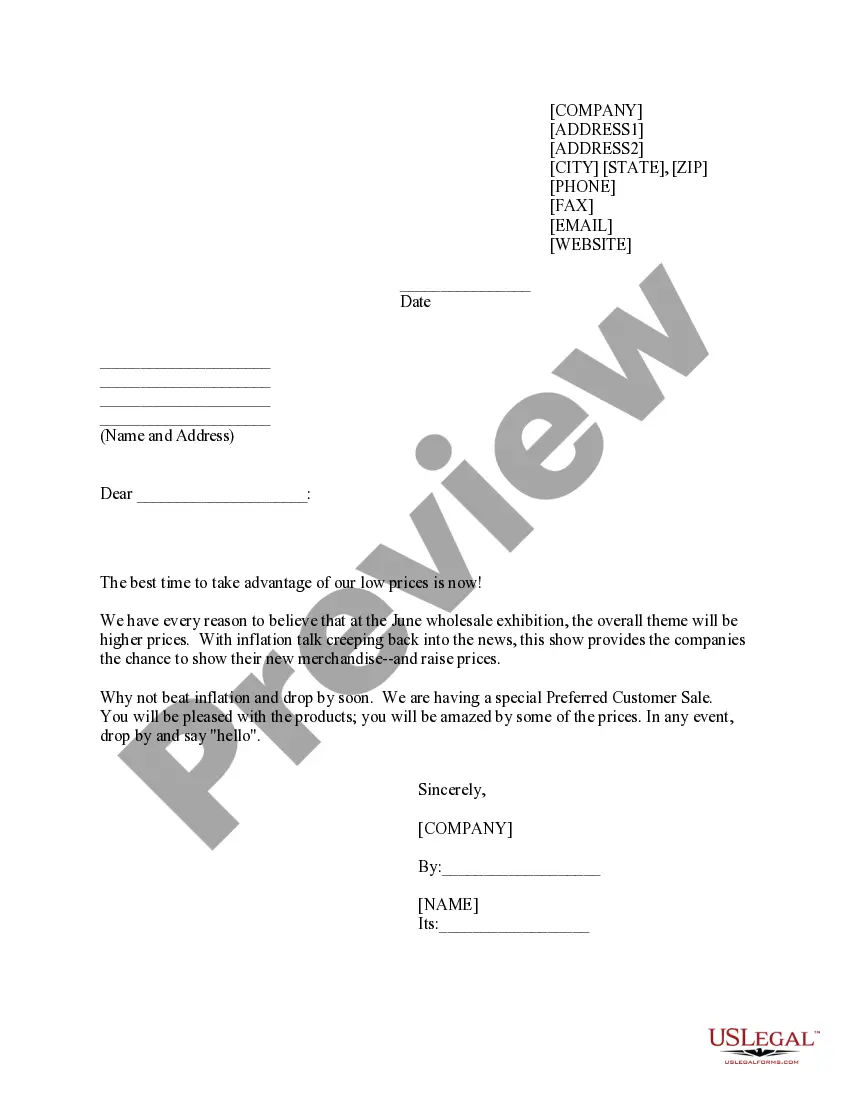
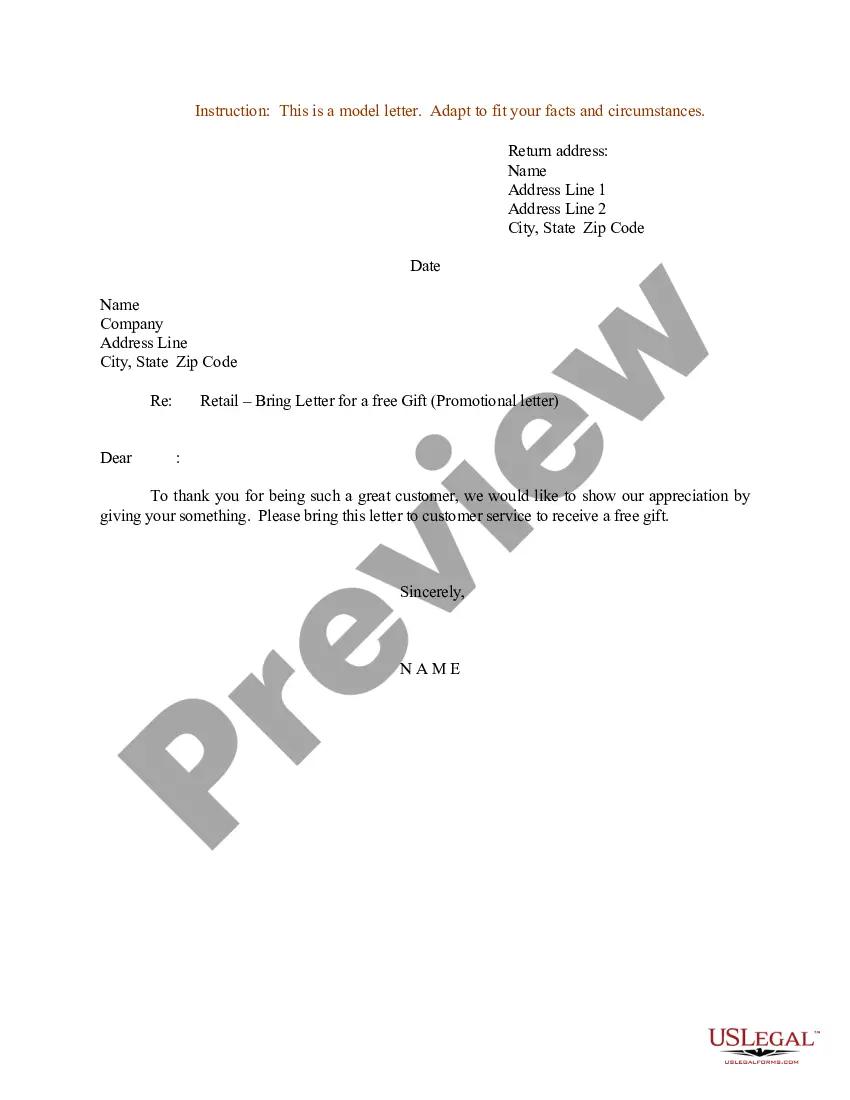
The Sample Letter for Preferred Customer Sale is a formal communication template used to inform selected customers about exclusive promotional sales or discounts. This form helps businesses maintain relationships with valued clients, making them feel appreciated while encouraging repeat business. Unlike general sales letters, this template is specifically tailored for preferred customers, ensuring that the communication feels personal and exclusive.
Form components explained
- Return address: Your companyâs name and address.
- Recipient's information: Name and address of the preferred customer.
- Date: The date when the letter is written.
- Subject line: "Preferred Customer Sale" to indicate the purpose clearly.
- Closing signature: Space for the sender's name and title.
When to use this form
This form is useful when a business wants to reach out to its preferred customers to announce a special sale, promote a limited-time offer, or reward loyalty. It is ideal for occasions such as holiday sales, seasonal promotions, or product launches, where a targeted approach can enhance customer engagement.
Who this form is for
- Small business owners looking to connect with loyal customers.
- Marketing departments crafting promotional communications.
- Customer service teams wanting to enhance customer satisfaction and loyalty.
Steps to complete this form
- Identify the sender's return address, including the company name and address.
- Fill in the recipient's details with their name and address accurately.
- Enter the current date for reference.
- Write a clear subject line emphasizing the special sale for preferred customers.
- Sign off with a closing phrase and include the name and title of the sender.
Is notarization required?
This form does not typically require notarization unless specified by local law. It is a simple letter intended for general business communication.
Get your form ready online
Our built-in tools help you complete, sign, share, and store your documents in one place.
Make edits, fill in missing information, and update formatting in US Legal Forms—just like you would in MS Word.
Download a copy, print it, send it by email, or mail it via USPS—whatever works best for your next step.
Sign and collect signatures with our SignNow integration. Send to multiple recipients, set reminders, and more. Go Premium to unlock E-Sign.
If this form requires notarization, complete it online through a secure video call—no need to meet a notary in person or wait for an appointment.
We protect your documents and personal data by following strict security and privacy standards.

Make edits, fill in missing information, and update formatting in US Legal Forms—just like you would in MS Word.

Download a copy, print it, send it by email, or mail it via USPS—whatever works best for your next step.

Sign and collect signatures with our SignNow integration. Send to multiple recipients, set reminders, and more. Go Premium to unlock E-Sign.

If this form requires notarization, complete it online through a secure video call—no need to meet a notary in person or wait for an appointment.

We protect your documents and personal data by following strict security and privacy standards.
Common mistakes
- Failing to personalize the letter for the intended recipient.
- Neglecting to proofread for grammatical or spelling errors.
- Missing the return address or recipient details.
- Overlooking the inclusion of a clear subject line.
Why use this form online
- Convenience of quick download and easy editing to fit specific marketing needs.
- Reliability of using a template designed by licensed attorneys, ensuring compliance with legal standards.
- Accessibility of the form at any time, allowing for timely communication with customers.
Quick recap
- The Sample Letter for Preferred Customer Sale is a targeted communication tool for businesses.
- It helps in fostering loyalty among customers by offering exclusive promotions.
- Ensuring all sections of the letter are completed accurately is crucial for effective communication.
Looking for another form?

Form popularity
FAQ
Start by Saying Thank You Use Everyday Language and Stick to One Idea per Sentence. Use Headings and Bullet Point Large Chunks of Information. Avoid Cold, Overly Formal Language. Direct the Customer to any Supportive Documents. Set Expectations With Timeframes.
Commence with your contact information. Include the date. Add the recipient's contact information. Start with the most appropriate greeting. Use the most professional form of the recipient's name. Begin the letter with an agreeable tone. Open with the purpose of writing the letter.
Headline. The headline is the first part in the letter, and it should immediately catch the attention of your reader. Offer. Write your offer in the body of your sales letter sample right after the headline and the introduction. Proof. Call to action. Postscript.
Write a catchy headline that grabs your customer's attention. Hook the reader by identifying what they need and why. Include bullet points with key information. Use testimonials or statistics. Give readers a call to action. Offer something to the customer that is limited in time or quantity.
A sales letter is a piece of direct mail which is designed to persuade the reader to purchase a particular product or service in the absence of a salesman.
Be the customer as you write. This is the most important aspect of a good sales letter, but it's often overlooked. Organize your letter. Make it easy to read. Capture your reader's attention. Get your readers interested. Make your readers want your product or service. Ask your readers to take action.
Write words that show you are accessible and real. Meet their needs, in innovative ways. Tell what you've changed by listening.
Ask a question - A good question is immediately reader involving; it provokes thought and will draw the reader into your message. If I could show you a way to slash your health insurance costs by 40% -- and still get top-quality care2026would you be interested?
Be the customer as you write. This is the most important aspect of a good sales letter, but it's often overlooked. Organize your letter. Make it easy to read. Capture your reader's attention. Get your readers interested. Make your readers want your product or service. Ask your readers to take action.