Sample Letter for Customer Follow-up - Preferred Customer Private Sale
Understanding this form
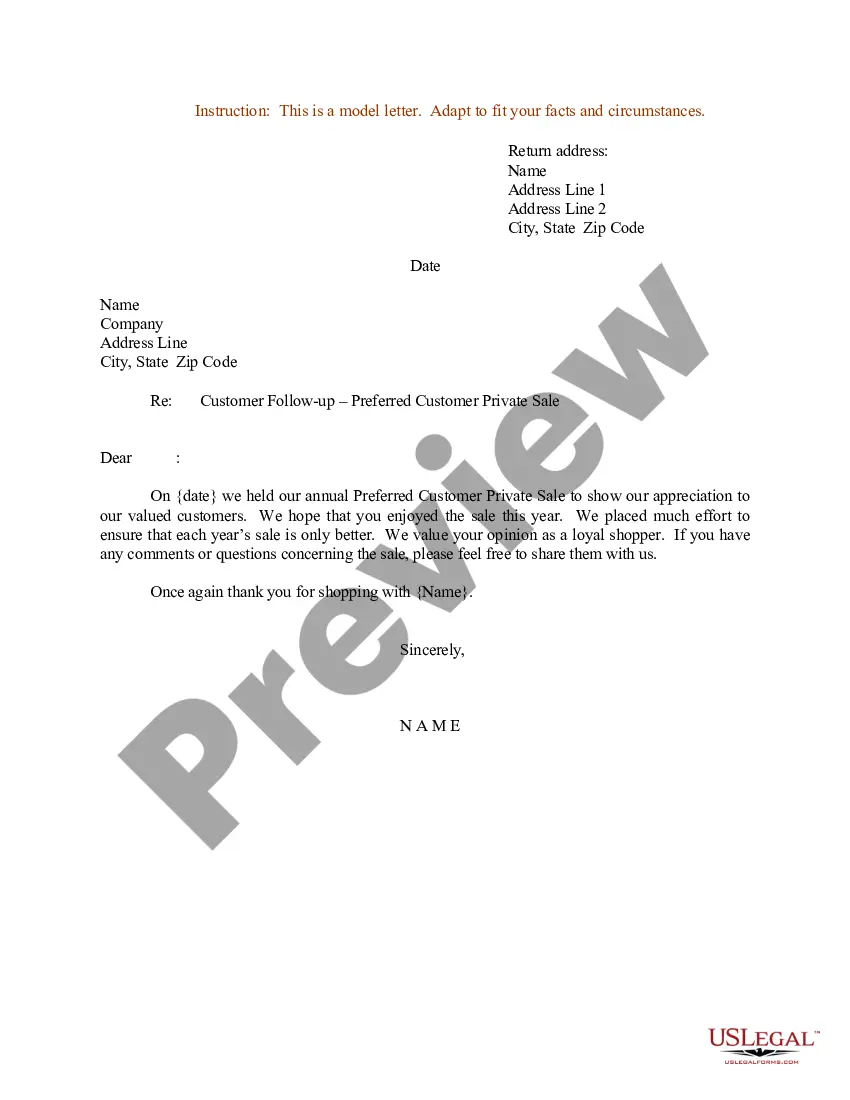
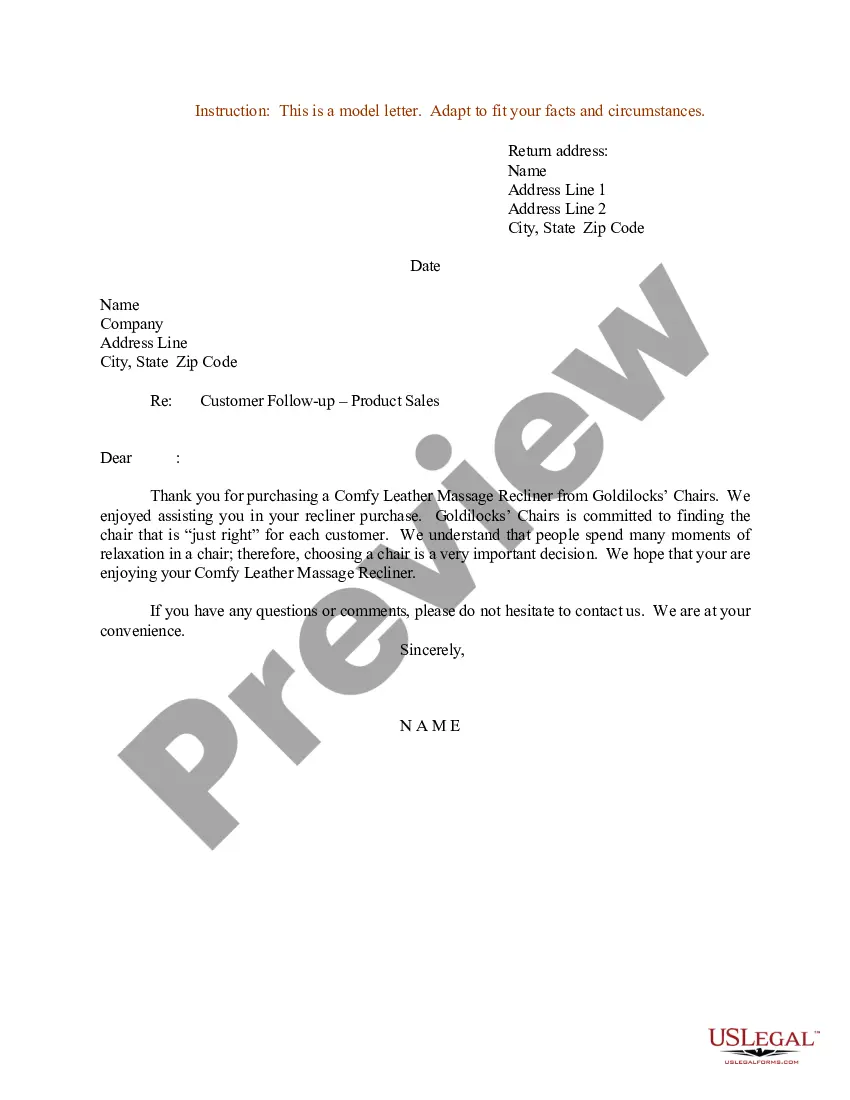
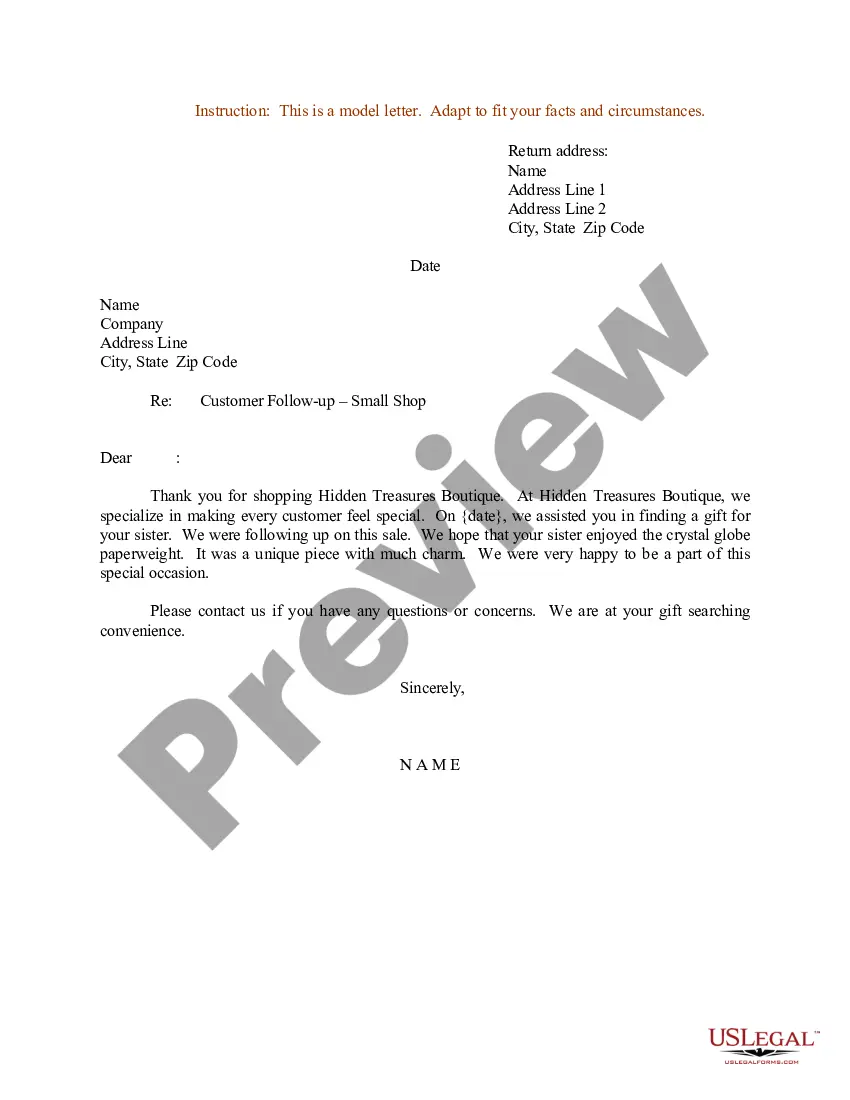
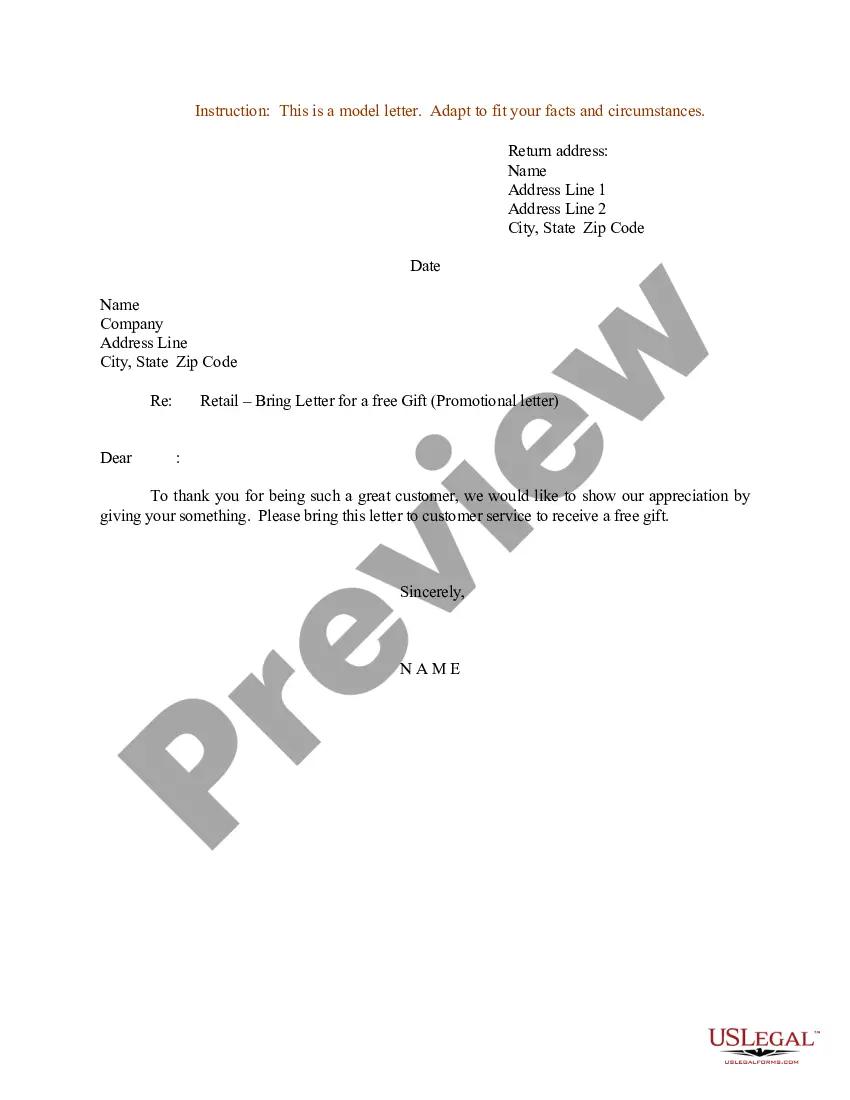
The Sample Letter for Customer Follow-up - Preferred Customer Private Sale is a template used by businesses to communicate with their valued customers after a recent sale. This letter serves to thank customers for their purchases, reinforce their importance, and encourage future business, differentiating it from standard thank-you letters by specifically promoting an exclusive sale for preferred customers.
Key parts of this document
- Return address section to identify the sender.
- Recipient's address for personalization.
- Date to indicate when the letter is sent.
- A greeting opening the communication.
- Body content thanking the customer and detailing the private sale.
- Signature line for a personal touch.
When this form is needed
This form is useful when a business wants to follow up with customers who have recently made a purchase. It is particularly effective for companies looking to offer exclusive sales or discounts to preferred customers, ensuring they feel valued and encouraging repeat business.
Who needs this form
This template is intended for:
- Small business owners seeking to maintain customer relations.
- Sales managers looking to promote exclusive offers.
- Customer service representatives who engage directly with clients.
How to complete this form
- Enter your return address at the top of the letter.
- Fill in the recipient's name and address to personalize the letter.
- Indicate the current date.
- Write a warm greeting to open the letter.
- Express appreciation for the customer's recent purchase.
- Include details about the private sale and sign your name.
Notarization requirements for this form
This form usually doesn’t need to be notarized. However, local laws or specific transactions may require it. Our online notarization service, powered by Notarize, lets you complete it remotely through a secure video session, available 24/7.
Get your form ready online
Our built-in tools help you complete, sign, share, and store your documents in one place.
Make edits, fill in missing information, and update formatting in US Legal Forms—just like you would in MS Word.
Download a copy, print it, send it by email, or mail it via USPS—whatever works best for your next step.
Sign and collect signatures with our SignNow integration. Send to multiple recipients, set reminders, and more. Go Premium to unlock E-Sign.
If this form requires notarization, complete it online through a secure video call—no need to meet a notary in person or wait for an appointment.
We protect your documents and personal data by following strict security and privacy standards.

Make edits, fill in missing information, and update formatting in US Legal Forms—just like you would in MS Word.

Download a copy, print it, send it by email, or mail it via USPS—whatever works best for your next step.

Sign and collect signatures with our SignNow integration. Send to multiple recipients, set reminders, and more. Go Premium to unlock E-Sign.

If this form requires notarization, complete it online through a secure video call—no need to meet a notary in person or wait for an appointment.

We protect your documents and personal data by following strict security and privacy standards.
Mistakes to watch out for
- Failing to customize the recipient's name or address.
- Omitting a personal touch in the letter's body.
- Neglecting to proofread for typos and grammatical errors.
Advantages of online completion
- Immediate access to a professionally drafted letter template.
- Easy to edit and personalize according to your business needs.
- Time-saving compared to creating a custom letter from scratch.
Legal use & context
- This letter serves as a professional courtesy communication to customers.
- Ensures documentation of customer engagement and follow-up efforts.
- Can enhance customer loyalty and encourage repeat business, which is beneficial for the company's reputation.
Main things to remember
- The form is designed to strengthen customer relationships.
- Personalization is crucial for effectiveness.
- Following up can lead to increased customer loyalty and sales.
Looking for another form?

Form popularity
FAQ
Following up with your customers helps improve their overall experience with your company. You might even solve problems before they become an issue. For example, if you communicate with your customers even after a sale is made, you will be able to deal with any problems they had with your products quickly.
Let me know what you think! Your name Let me know if you have any questions. Your name Speak soon? Your name I look forward to hearing from you! Your name
Tip: When you've followed up and had no previous response, be brief and ask them why, while making it easy for them to answer by giving them options. Finish with a call to action letting them know what you want them to do.
Send a note to say thank you. Some companies send emails. Check in. It's a good strategy to call clients a week or two after the sale and find out how everything is going. Keep the lines of communication open. Think second sale. Ask for referrals.
Start with a killer email subject line that grabs their attention. Make your pitch compelling and personalized. Time your follow-up email to stay relevant but not feel overwhelming. Create a consistent cadence and keep following up with every prospect.
Restate the context of the original email and the value to them. Include your explicit ask. More information: Any additional resources for them to review.
Say thank you. Help them get started with your product or service. Inform them of new features. Ask if there's any way you can help. Upsell. Send them articles that might be helpful.
Add Context. Try to jog your recipient's memory by opening your email with a reference to a previous email or interaction. Add Value. You should never send a follow-up without upping the ante and demonstrating your worth. Explain Why You're Emailing. Include a Call-to-Action. Close Your Email.
Let me know if there's anything you had questions about or need any more details. Tip: Be brief. Be polite by asking if they've looked it over rather than accuse or point out that you haven't received it yet. Add value by giving them context for the urgency if needed or urgency about the next steps.