Copyright - Ownership - Transfer
What is this form?
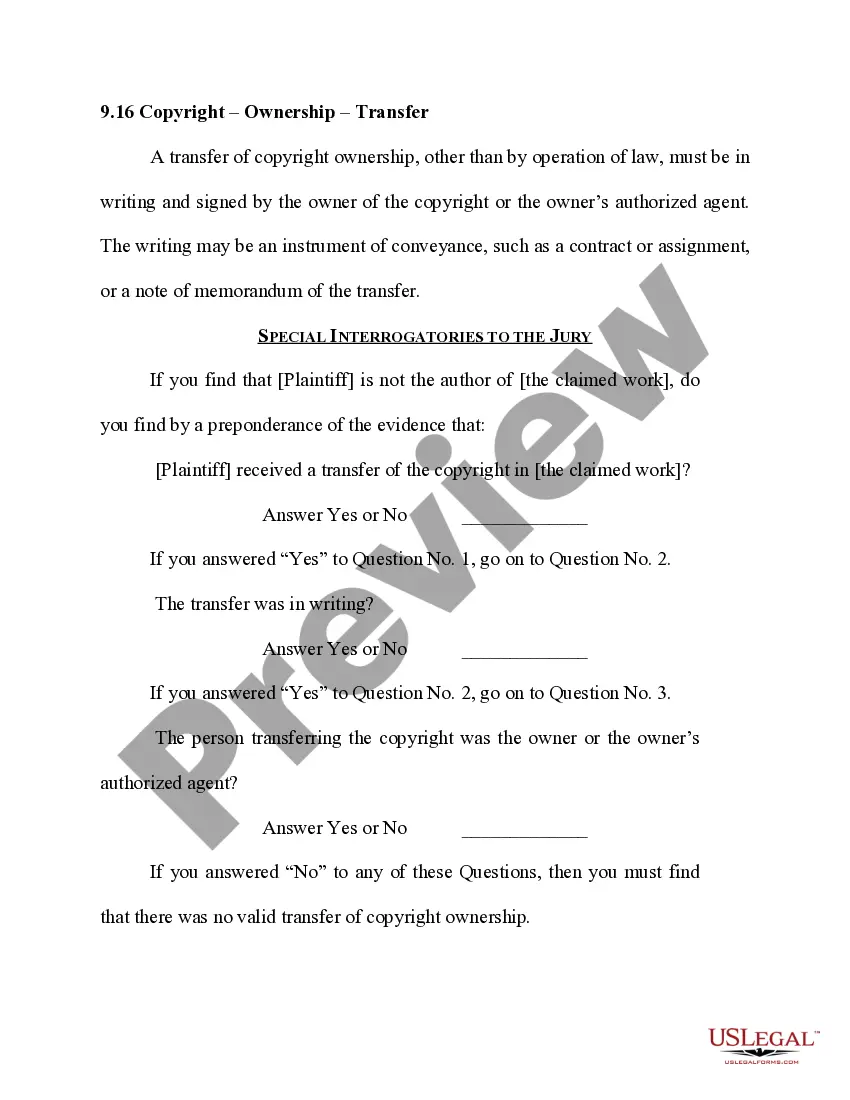
The Copyright - Ownership - Transfer form is a legal document used to officially transfer ownership of copyright from one party to another. Unlike informal agreements, this form must be in writing and signed by the copyright owner or their authorized agent. This ensures that the transfer is legally recognized and enforceable in court. It is typically used in discussions about intellectual property to clarify ownership rights after a creation has been developed.
Main sections of this form
- Written transfer agreement: This form requires a documented agreement for the transfer of copyright ownership.
- Signature requirement: The form must be signed either by the copyright owner or by their authorized agent to be valid.
- Confirmation of authorship: The form includes questions for a jury to determine if the transferor was indeed the owner of the copyright.
- Clear definition of the claimed work: The specific work that is subject to copyright is clearly identified within the form.
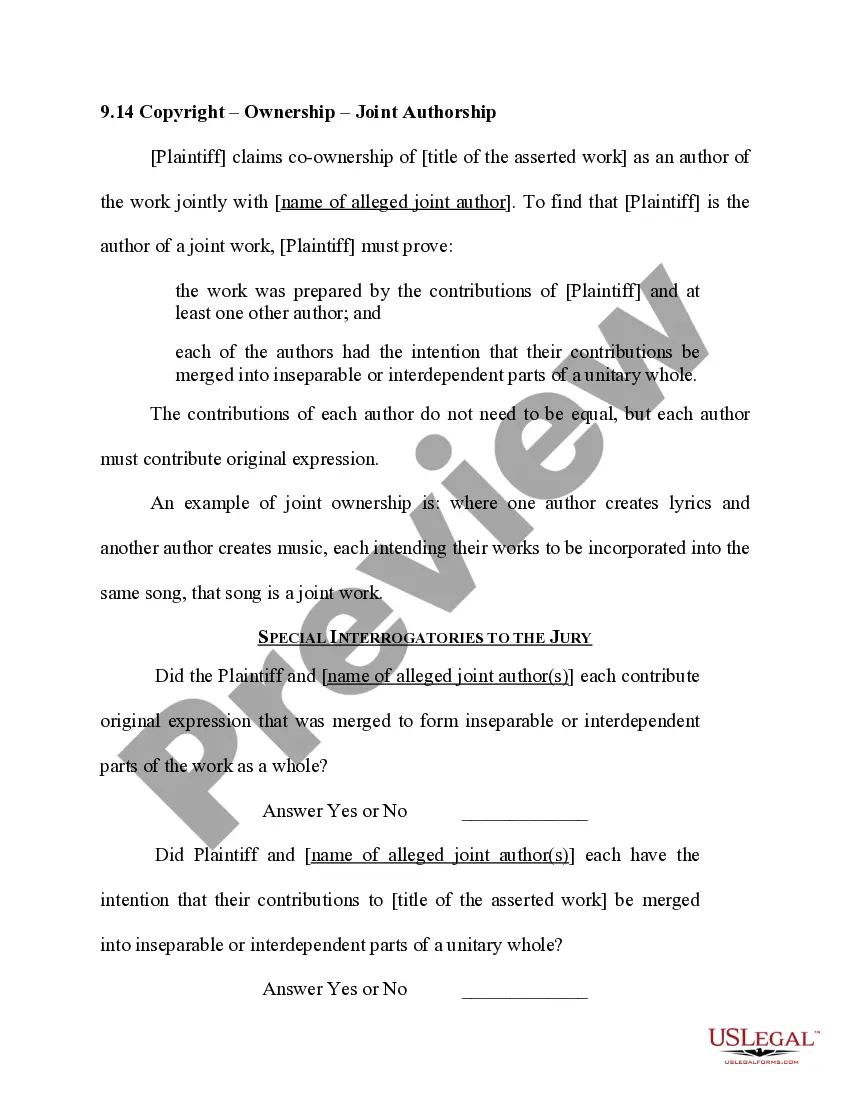
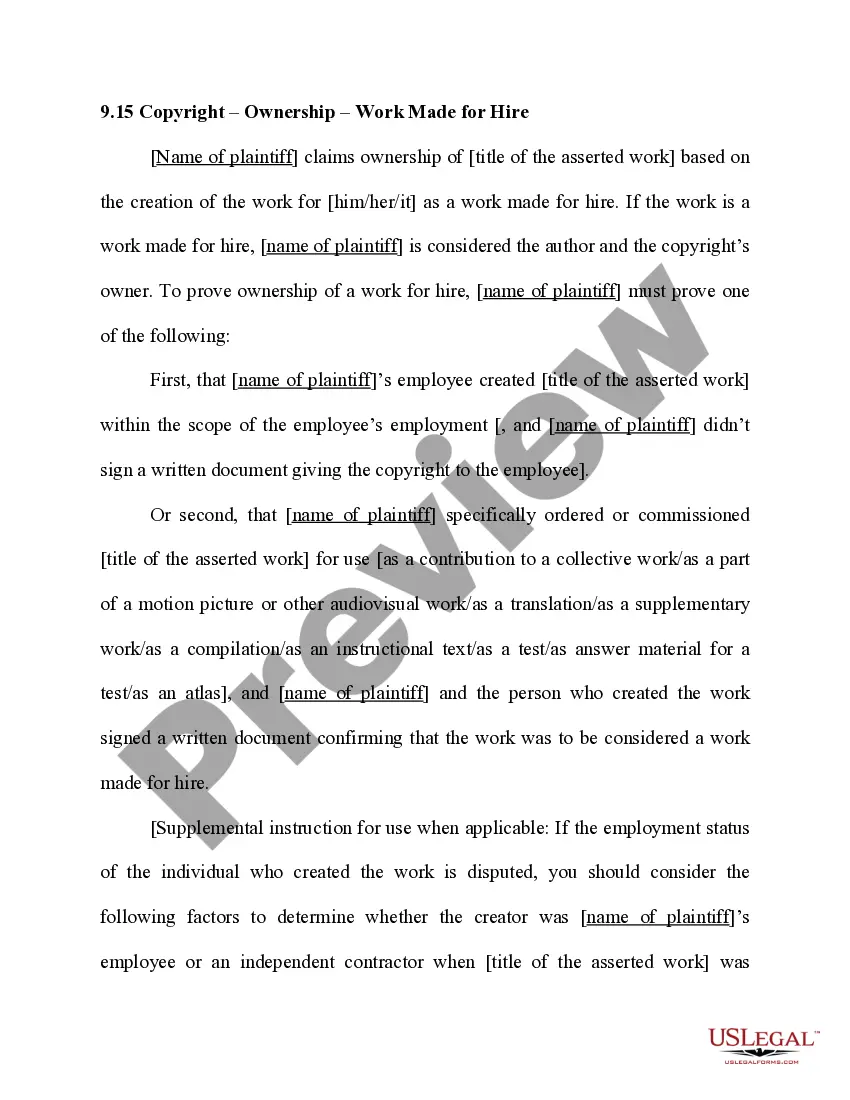
Situations where this form applies
You should use the Copyright - Ownership - Transfer form when you are transferring copyright ownership of a work, such as a book, artwork, software, or other intellectual property. This form is particularly necessary when there is a need to establish and document the rights of the new owner, especially in legal disputes or business transactions involving creative works. It can also be valuable in situations where an artist or creator assigns their rights to a publisher or producer.
Intended users of this form
- Copyright owners looking to transfer their rights to another party.
- Agents representing copyright owners in legal transactions.
- Businesses requiring clear documentation for intellectual property ownership.
- Creators who wish to formally assign their copyright to publishers or production companies.
How to prepare this document
- Identify the parties involved: Clearly state the copyright owner and the party receiving the rights.
- Specify the work: Include a detailed description of the work being transferred, ensuring it is identifiable.
- Document the transfer: Include clear language stating that copyright ownership is being transferred.
- Obtain signatures: Ensure that the copyright owner or their authorized agent signs the document.
- Keep a copy: Retain a copy of the signed form for your records for future reference.
Notarization requirements for this form
This form does not typically require notarization unless specified by local law. However, having the form notarized can add an extra layer of verification to the transfer, providing additional security for all parties involved. Always check local requirements to ensure compliance.
Get your form ready online
Our built-in tools help you complete, sign, share, and store your documents in one place.
Make edits, fill in missing information, and update formatting in US Legal Forms—just like you would in MS Word.
Download a copy, print it, send it by email, or mail it via USPS—whatever works best for your next step.
Sign and collect signatures with our SignNow integration. Send to multiple recipients, set reminders, and more. Go Premium to unlock E-Sign.
If this form requires notarization, complete it online through a secure video call—no need to meet a notary in person or wait for an appointment.
We protect your documents and personal data by following strict security and privacy standards.

Make edits, fill in missing information, and update formatting in US Legal Forms—just like you would in MS Word.

Download a copy, print it, send it by email, or mail it via USPS—whatever works best for your next step.

Sign and collect signatures with our SignNow integration. Send to multiple recipients, set reminders, and more. Go Premium to unlock E-Sign.

If this form requires notarization, complete it online through a secure video call—no need to meet a notary in person or wait for an appointment.

We protect your documents and personal data by following strict security and privacy standards.
Avoid these common issues
- Not having the transfer in writing, which invalidates the agreement.
- Failing to get proper signatures from the copyright owner or their authorized agent.
- Neglecting to clearly identify the work being transferred, leading to confusion or legal disputes.
Advantages of online completion
- Easy access: Download the form instantly and begin the transfer process without delays.
- Editability: Fill in the specific details required for your particular transfer with ease.
- Professional quality: Forms are drafted by licensed attorneys, ensuring legal validity and compliance.
Main things to remember
- A Copyright Ownership Transfer form must be in writing and signed.
- This form ensures legal clarity in copyright transactions.
- It is essential for authors, artists, and businesses involved in copyright transfers.
Looking for another form?

Form popularity
FAQ
First Sale Rights The First Sale Doctrine allows the purchaser of an authorized copy of a copyrighted work to resell, give, lend or otherwise dispose of his copy without any further remuneration to or permission from the copyright holder.
Are copyrights transferable? Yes. Like any other property, all or part of the rights in a work may be transferred by the owner to another. See Circular 1, Copyright Basics, section "Transfer of Copyright," for a discussion of ownership.
2 Transfer of copyright ownership is known as an assignment. Unlike a license, which grants another party the ability to exercise certain copyright rights and isn't a complete transfer of ownership of any of the copyright rights, an assignment of a copyright is a full transfer of ownership of the copyright.
A copyright transfer agreement, also known as a copyright assignment agreement, is a legal document that transfers the copyright for a work from one party to another - usually from the copyright owner to another party. These agreements are common for publishers who want to use copyrighted work of an artist.
Material can have multiple copyright owners. They will all have equal rights in the material, unless there is an agreement in place.
When a person, typically the author, rightfully owns a copyright of a work, that right is not extinguished upon death. Instead, that right exists for an additional 70 years past the life of the author. If the owner of a copyright has a will, he can bequest his copyright to whoever he wants.
Copyrights may be transferred in part or in whole to other people or entities or they may be inherited by one or more heirs. Over time, the copyright to a work may belong to more than one person or entity.