Copyright - Ownership - Individual Authorship
About this form
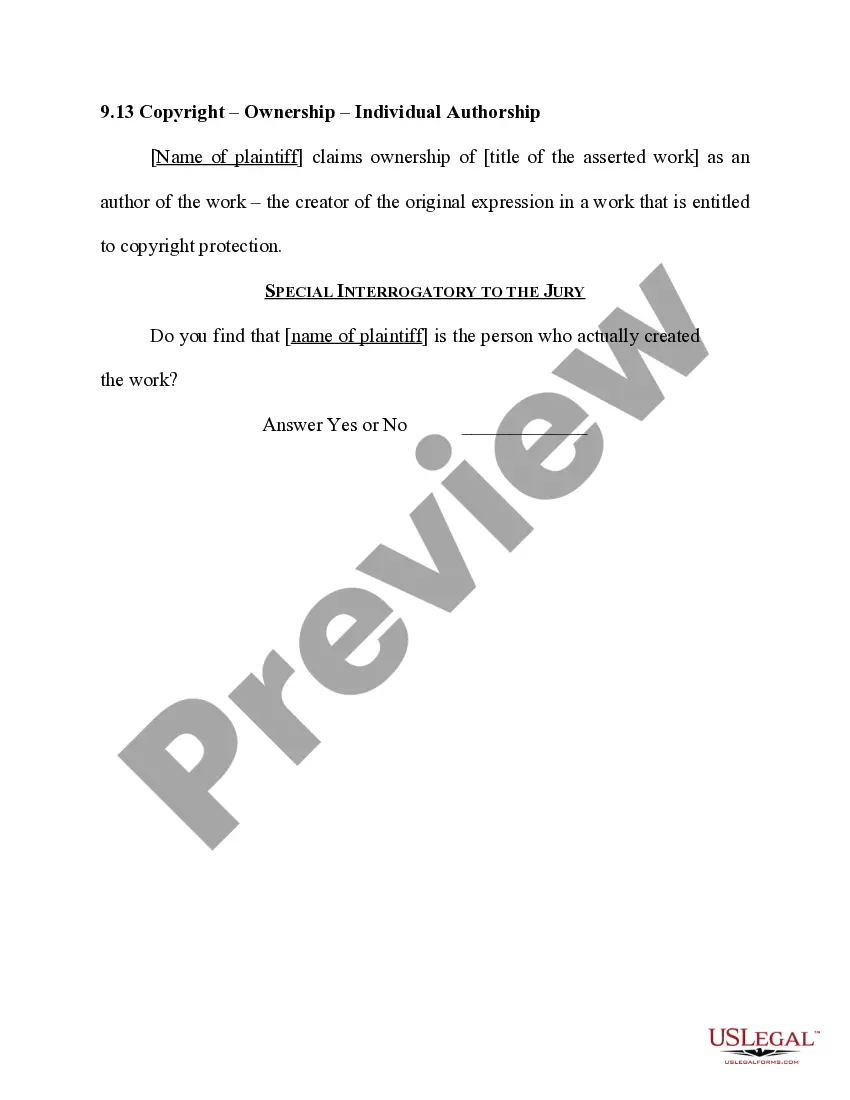
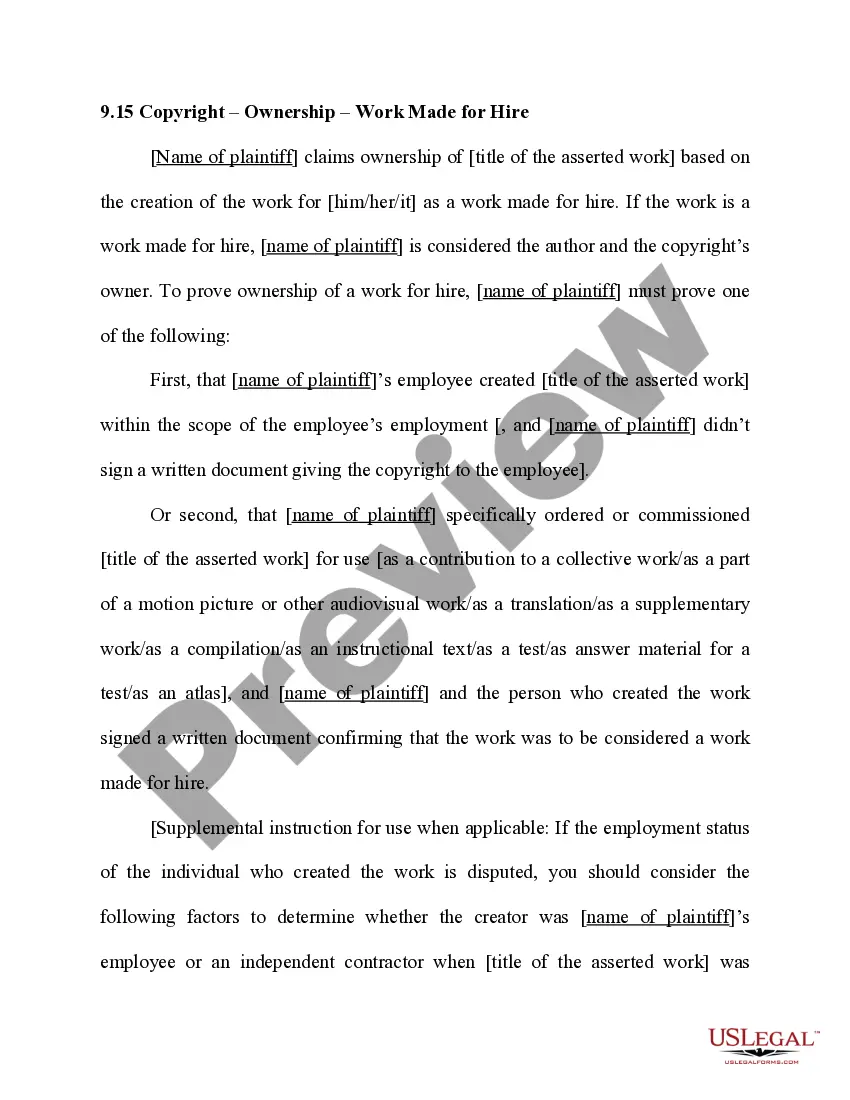
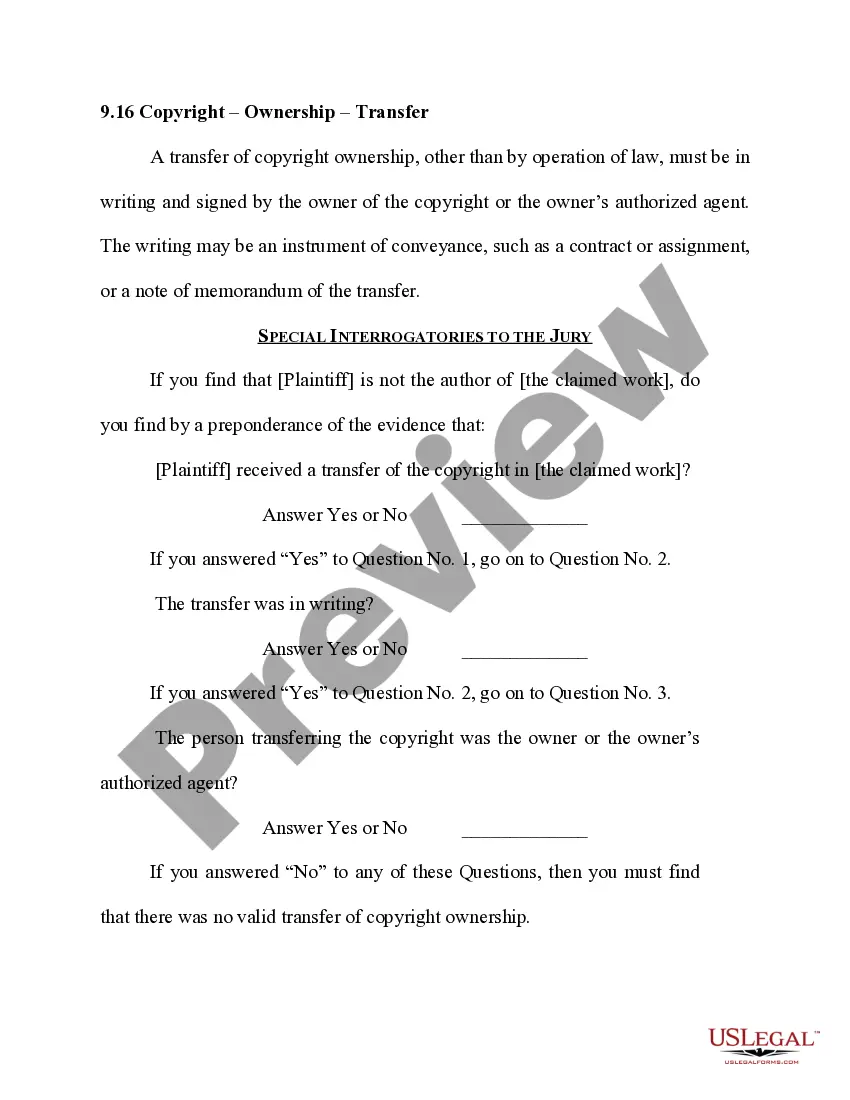
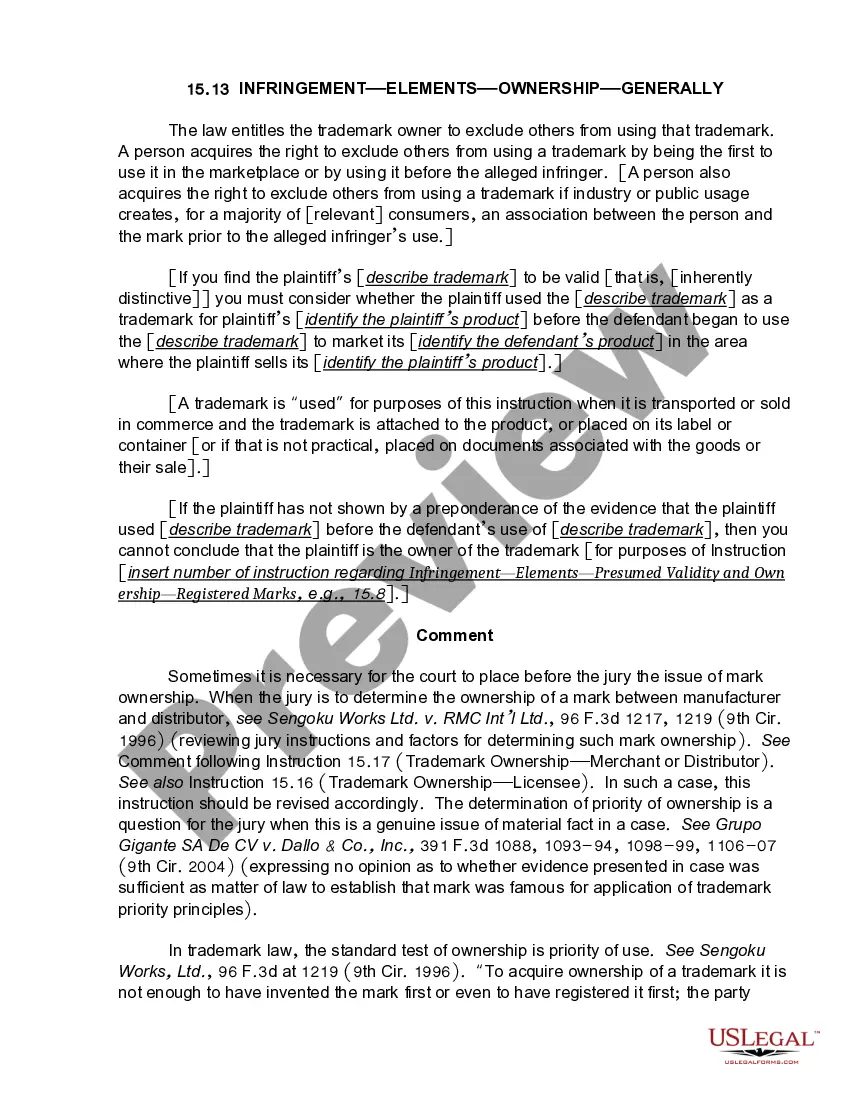
The Copyright - Ownership - Individual Authorship form is a legal document that establishes an individual's claim to ownership of a creative work under copyright law. This form is used when a plaintiff asserts that they are the original author of a specific work, thus entitled to the rights associated with it. Unlike other copyright forms, this one specifically addresses individual authorship and the ownership claim related to that authorship. It serves as a critical tool in resolving disputes over the rights of creative works.
Main sections of this form
- The name of the plaintiff asserting ownership.
- The title of the copyrighted work in question.
- A special interrogatory to the jury regarding the creation of the work.
- A section for the jury to provide their answer (Yes or No).
When to use this form
This form is typically used in legal cases where ownership of a creative work is being disputed. It may be necessary when an author believes their rights have been infringed upon or when they need to establish proof of authorship in a court setting. Scenarios include disputes between co-authors, claims against a publisher, or situations where copyright infringement is alleged.
Who should use this form
Individuals or parties eligible to use this form include:
- Authors and creators of original works.
- Individuals seeking to establish legal ownership of their creative expressions.
- Parties involved in a lawsuit regarding copyright ownership.
Steps to complete this form
- Identify the plaintiff and enter their name in the designated space.
- Specify the title of the work being claimed.
- Ensure the jury interrogatory is clear and correctly formatted.
- Include a section for the jury to indicate their decision (Yes or No).
- Review the form for accuracy before submission.
Notarization requirements for this form
This form does not typically require notarization to be legally valid. However, some jurisdictions or document types may still require it. US Legal Forms provides secure online notarization powered by Notarize, available 24/7 for added convenience.
Get your form ready online
Our built-in tools help you complete, sign, share, and store your documents in one place.
Make edits, fill in missing information, and update formatting in US Legal Forms—just like you would in MS Word.
Download a copy, print it, send it by email, or mail it via USPS—whatever works best for your next step.
Sign and collect signatures with our SignNow integration. Send to multiple recipients, set reminders, and more. Go Premium to unlock E-Sign.
If this form requires notarization, complete it online through a secure video call—no need to meet a notary in person or wait for an appointment.
We protect your documents and personal data by following strict security and privacy standards.

Make edits, fill in missing information, and update formatting in US Legal Forms—just like you would in MS Word.

Download a copy, print it, send it by email, or mail it via USPS—whatever works best for your next step.

Sign and collect signatures with our SignNow integration. Send to multiple recipients, set reminders, and more. Go Premium to unlock E-Sign.

If this form requires notarization, complete it online through a secure video call—no need to meet a notary in person or wait for an appointment.

We protect your documents and personal data by following strict security and privacy standards.
Mistakes to watch out for
- Failing to clearly identify the work in question can lead to confusion.
- Inaccurate or incomplete plaintiff information may weaken the ownership claim.
- Not specifying whether the work was collaboratively created or individually authored.
Benefits of using this form online
- Convenience of instant access and the ability to download the form anytime.
- Editability allows for customization to fit specific situations.
- Accessibility ensures that individuals can complete the form without needing in-person legal assistance.
Looking for another form?
Form popularity
FAQ
Who is an author? Under the copyright law, the creator of the original expression in a work is its author. The author is also the owner of copyright unless there is a written agreement by which the author assigns the copyright to another person or entity, such as a publisher.
Author is the copyright owner. As a general rule, the initial owner of the copyright is the person who does the creative work. If you wrote the book or took the photograph, you are the copyright owner.
Author is the copyright owner. As a general rule, the initial owner of the copyright is the person who does the creative work. If you wrote the book or took the photograph, you are the copyright owner.
You can register a copyright at any time, but filing promptly may pay off in the long run. ?Timely registration? ? that is, registration within three months of the work's publication date or before any copyright infringement actually begins ? makes it much easier to sue and recover money from an infringer.
Under the copyright law, the creator of the original expression in a work is its author. The author is also the owner of copyright unless there is a written agreement by which the author assigns the copyright to another person or entity, such as a publisher.
Copyright is the right of the author of the work or the author's heirs or assignees, not of the one who only owns or possesses the physical work itself. See Circular 1, Copyright Basics, section ?Who Can Claim Copyright.?
If you want to register a single work that includes interdependent or inseparable elements of authorship by the same author (such as an illustrated novel where you are the sole author and owner of the text and illustrations), you may use the Single Application as long as the elements are con- tained in the work
How Long Does Copyright Last? In general, for works created on or after January 1, 1978, the term of copyright is the life of the author plus seventy years after the author's death. If the work is a joint work with multiple authors, the term lasts for seventy years after the last surviving author's death.