ON OR ABOUT
What this document covers
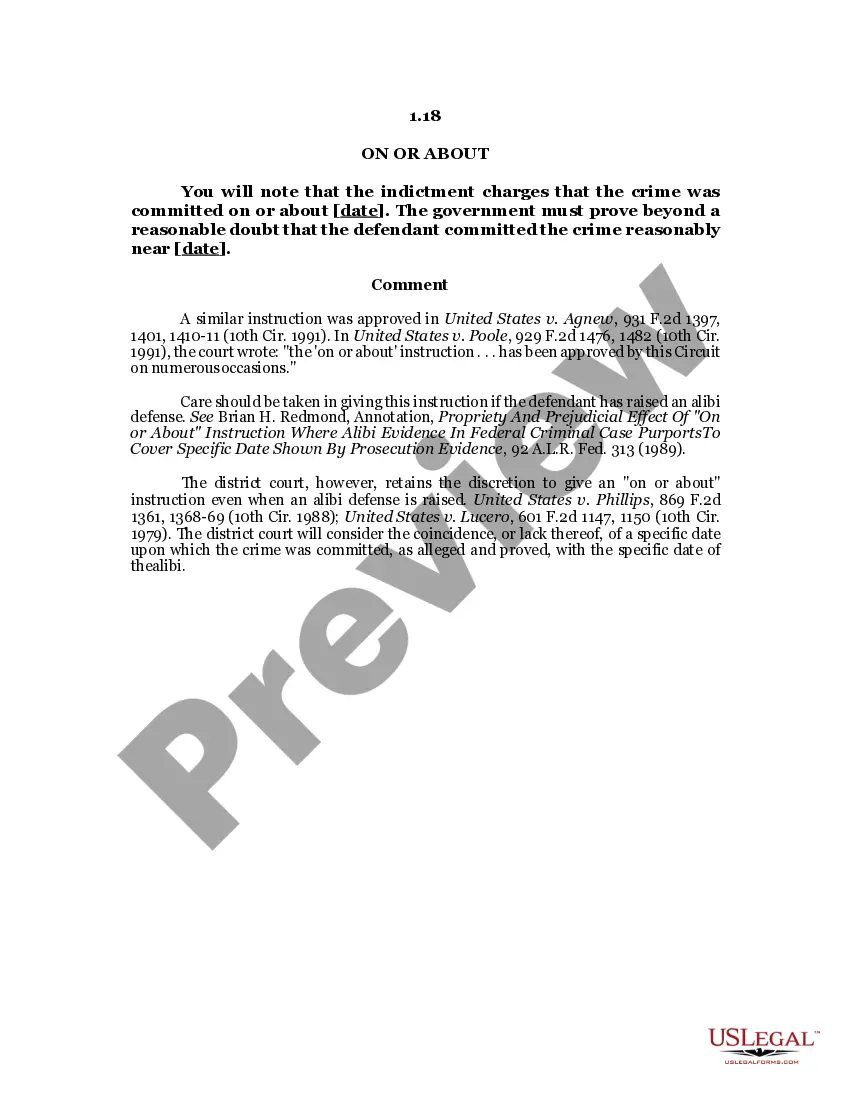
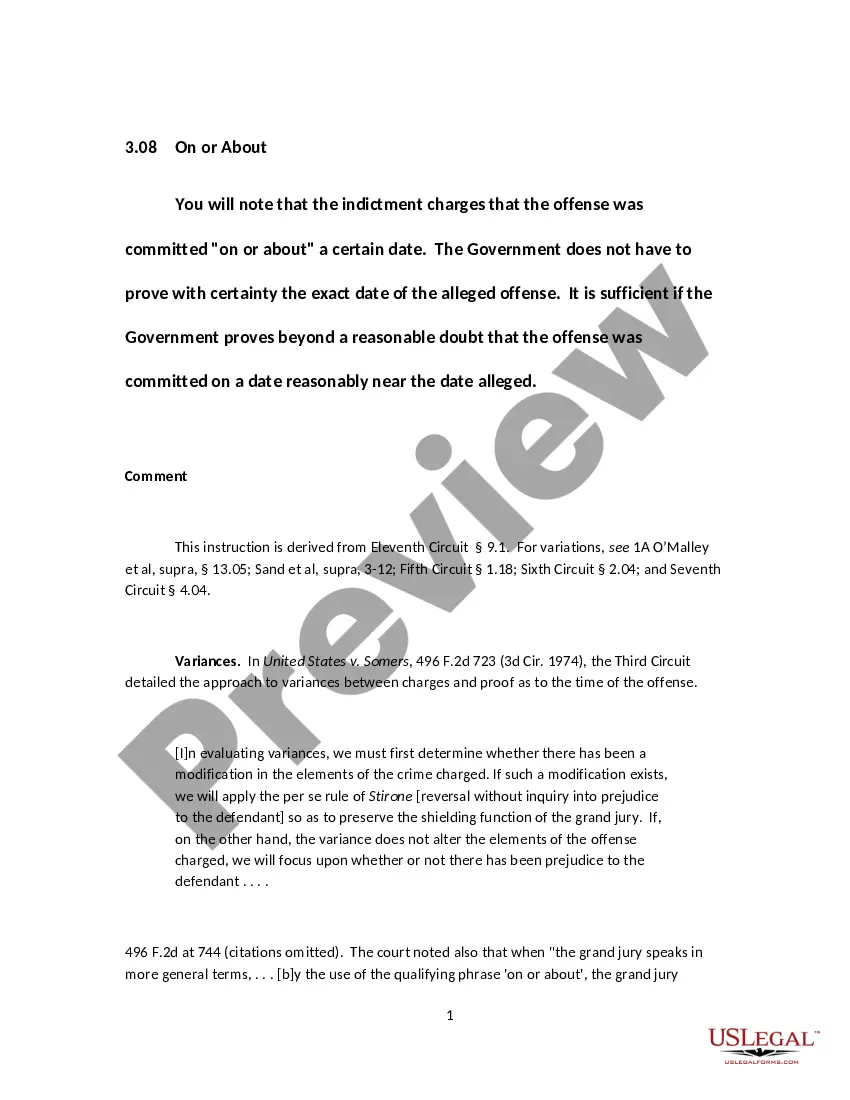
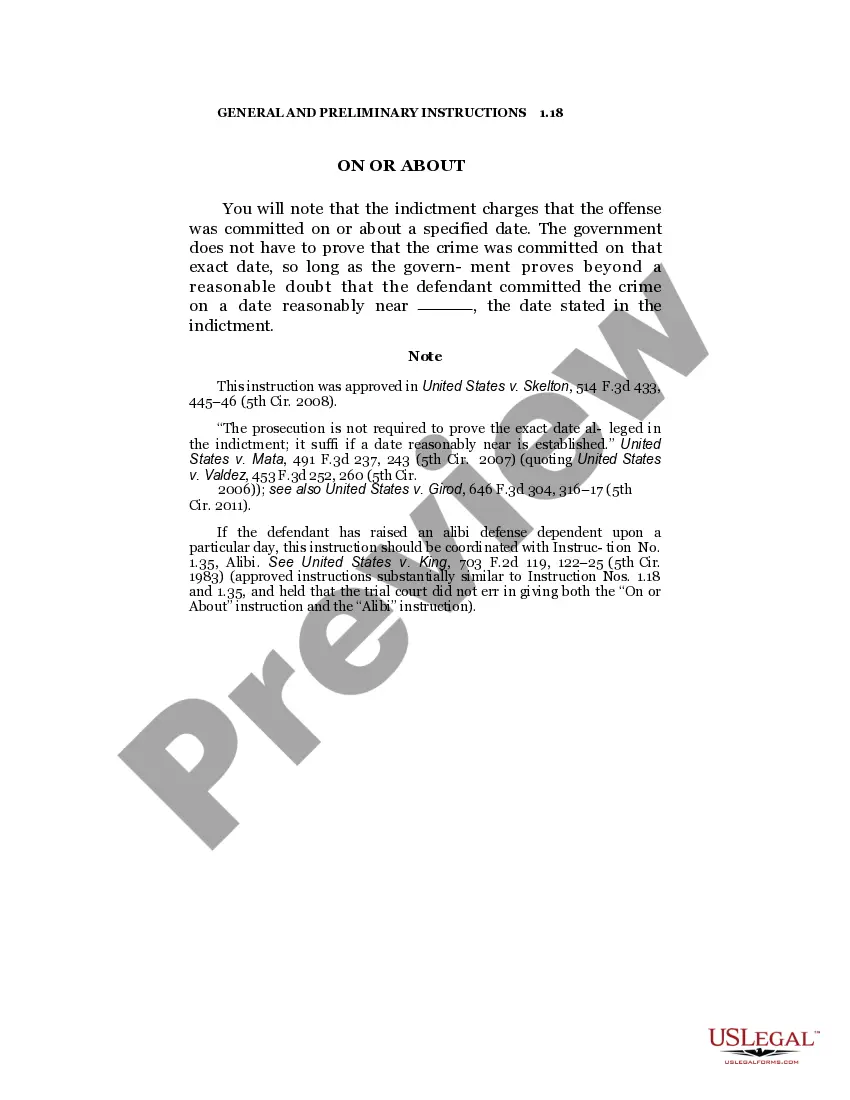
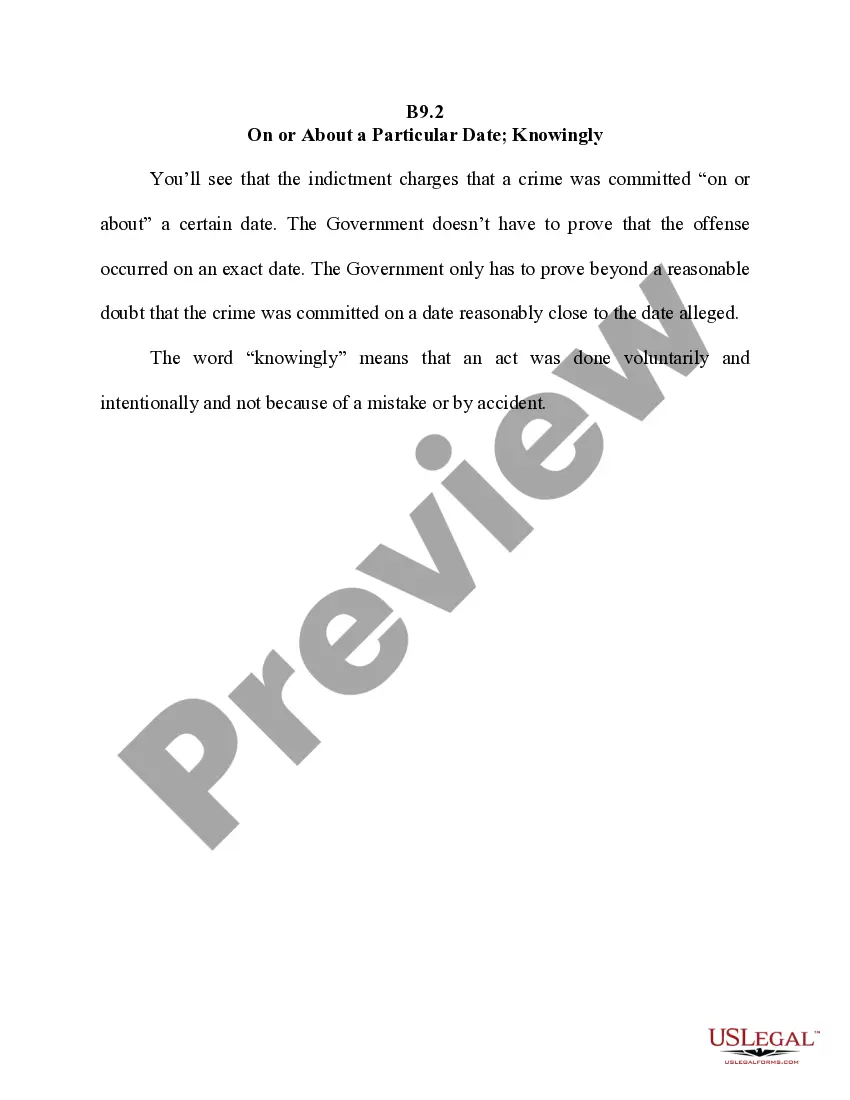
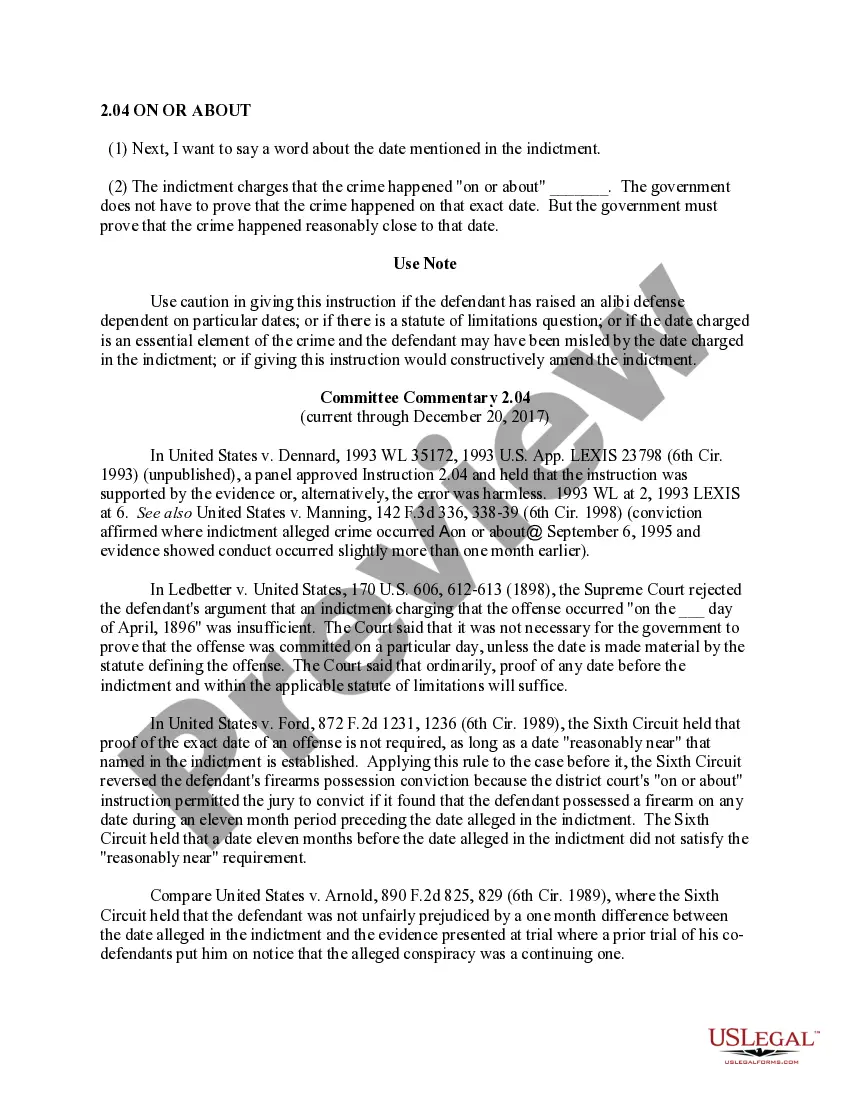
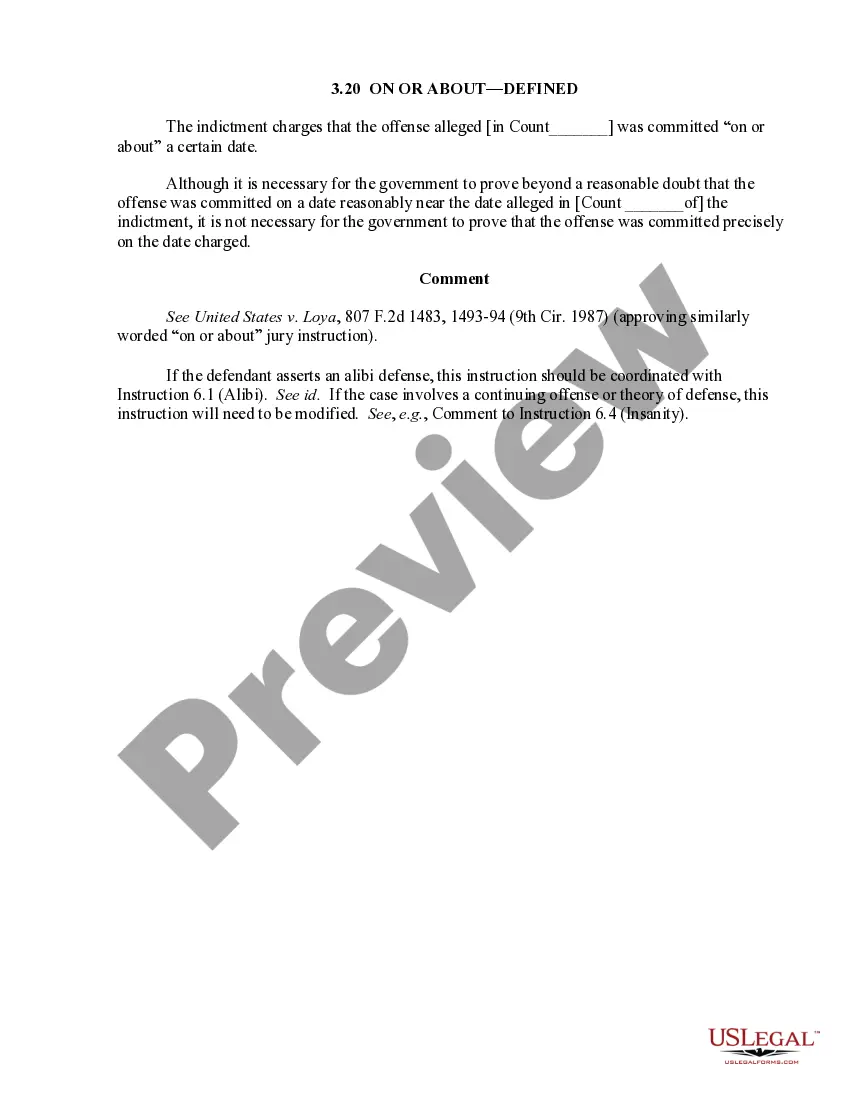
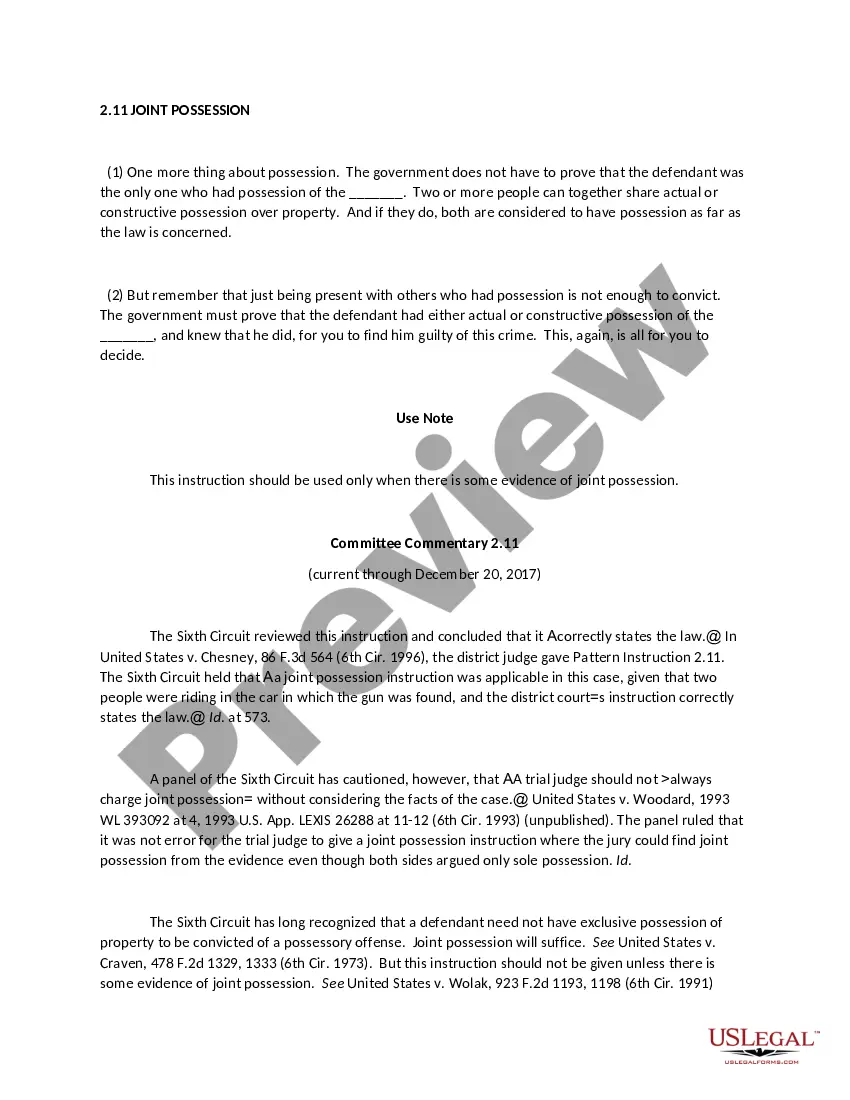
The "On or About" form is a legal instruction used in criminal cases. It establishes that the accused may have committed the crime close to a specified date rather than on an exact date. This flexibility allows the prosecution to prove the timing of the crime while still adhering to legal standards. It differs from strict date requirements as it accommodates the uncertainties that often surround the timing of criminal actions.
What’s included in this form
- Indictment date range: Specifies that a crime occurred on or near a specific date.
- Burden of proof: Emphasizes the prosecutor's responsibility to prove the timing beyond a reasonable doubt.
- Considerations for alibi defense: Notes how an alibi may impact the use of this instruction.
- Discretion of the district court: Details the court's ability to apply this instruction based on case specifics.
When to use this document
This form is used during criminal trials when the prosecution needs to clarify that a crime occurred around a certain date rather than on an exact date. It is particularly useful in cases where the timing of the crime is disputed or where the defendant has presented an alibi defense that could affect the timing of the alleged offense.
Intended users of this form
- Prosecutors handling criminal cases.
- Defense attorneys preparing for trial.
- Judges presiding over criminal proceedings.
- Any party involved in a criminal case requiring clarification on the timing of alleged offenses.
How to prepare this document
- Determine the date relevant to the crime and insert it into the form.
- Ensure the language reflects the necessary legal standards for your jurisdiction.
- Consider any alibi defense that may exist and adjust the timing language accordingly.
- Have the form reviewed by legal counsel to confirm its adequacy for presentation in court.
- File this form with the appropriate court during the trial process.
Does this document require notarization?
In most cases, this form does not require notarization. However, some jurisdictions or signing circumstances might. US Legal Forms offers online notarization powered by Notarize, accessible 24/7 for a quick, remote process.
Get your form ready online
Our built-in tools help you complete, sign, share, and store your documents in one place.
Make edits, fill in missing information, and update formatting in US Legal Forms—just like you would in MS Word.
Download a copy, print it, send it by email, or mail it via USPS—whatever works best for your next step.
Sign and collect signatures with our SignNow integration. Send to multiple recipients, set reminders, and more. Go Premium to unlock E-Sign.
If this form requires notarization, complete it online through a secure video call—no need to meet a notary in person or wait for an appointment.
We protect your documents and personal data by following strict security and privacy standards.

Make edits, fill in missing information, and update formatting in US Legal Forms—just like you would in MS Word.

Download a copy, print it, send it by email, or mail it via USPS—whatever works best for your next step.

Sign and collect signatures with our SignNow integration. Send to multiple recipients, set reminders, and more. Go Premium to unlock E-Sign.

If this form requires notarization, complete it online through a secure video call—no need to meet a notary in person or wait for an appointment.

We protect your documents and personal data by following strict security and privacy standards.
Common mistakes
- Failing to clarify the date range accurately, leading to confusion in court.
- Not considering how an alibi may affect the timing of the crime.
- Using vague language that could weaken the prosecution's case.
Benefits of completing this form online
- Easy access to legal language drafted by licensed attorneys.
- Quick download and customization to fit specific case needs.
- Reliable resource that helps ensure compliance with legal requirements.
Legal use & context
- This instruction is widely accepted in federal criminal cases across various jurisdictions.
- Compliance with this instruction can help maintain the integrity of the prosecution's case.
- The discretion of the district court allows flexibility in its application, depending on case circumstances.
Looking for another form?

Form popularity
FAQ
If you ask someone what they are on about, you are asking that person, often in a slightly annoyed way, what they mean: I dunno what you're on about. Want to learn more?
Continue without stopping, last for a long time, as in This trail goes on and on, or The movie went on and on.
For purposes of the pleading requirement that a petition must give fair and adequate notice of the facts forming the basis of a claim, the term ?on or about? means a date of approximate certainty, with a possible variance of a few days.
He went on and on about how poor he was. She does go on sometimes! He goes on endlessly about his health problems.
If you ask someone what they are on about or what they are going on about, you are puzzled because you cannot understand what they are talking about. British, informal
DEFINITIONS1. to keep talking about someone or something, especially when other people think it is boring. She's always on about her children. Synonyms and related words. To talk continuously and too much.
Phrasal verb. If you go on doing something, or go on with an activity, you continue to do it.
To keep talking about someone or something, especially when other people think it is boring.