On or About a Particular Date; Knowingly
About this form
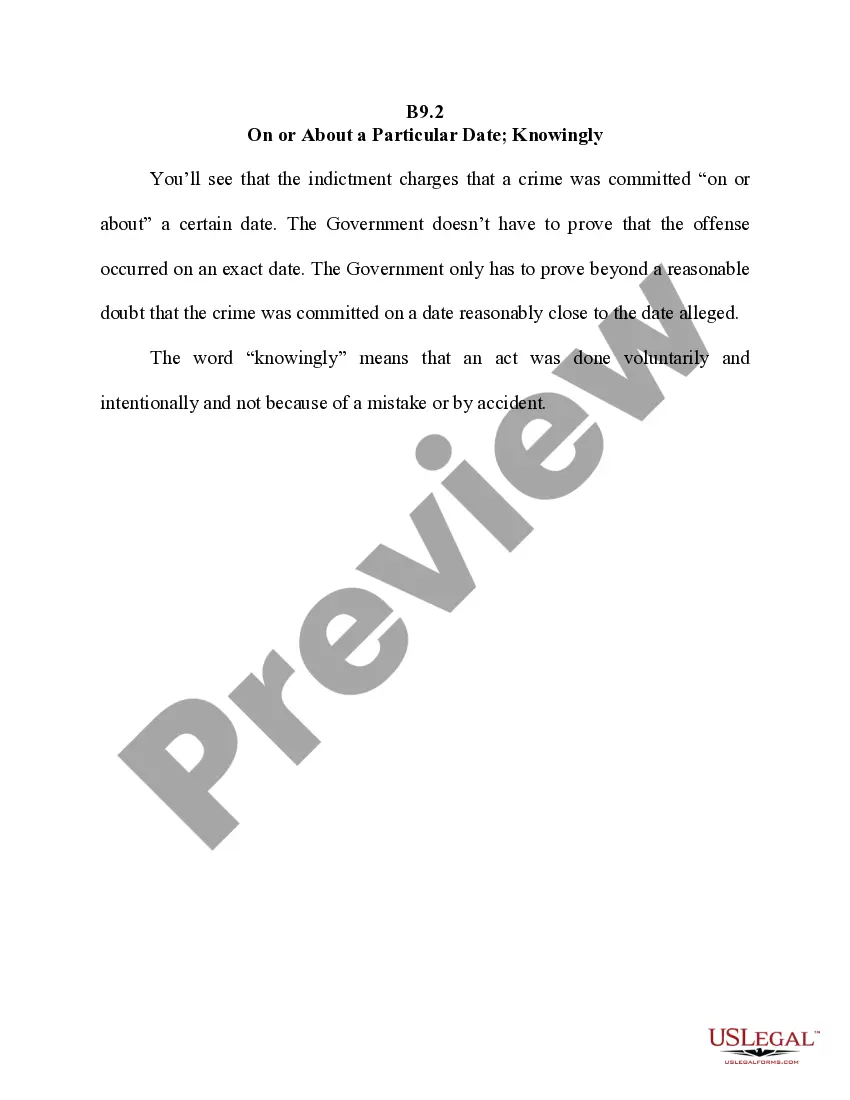
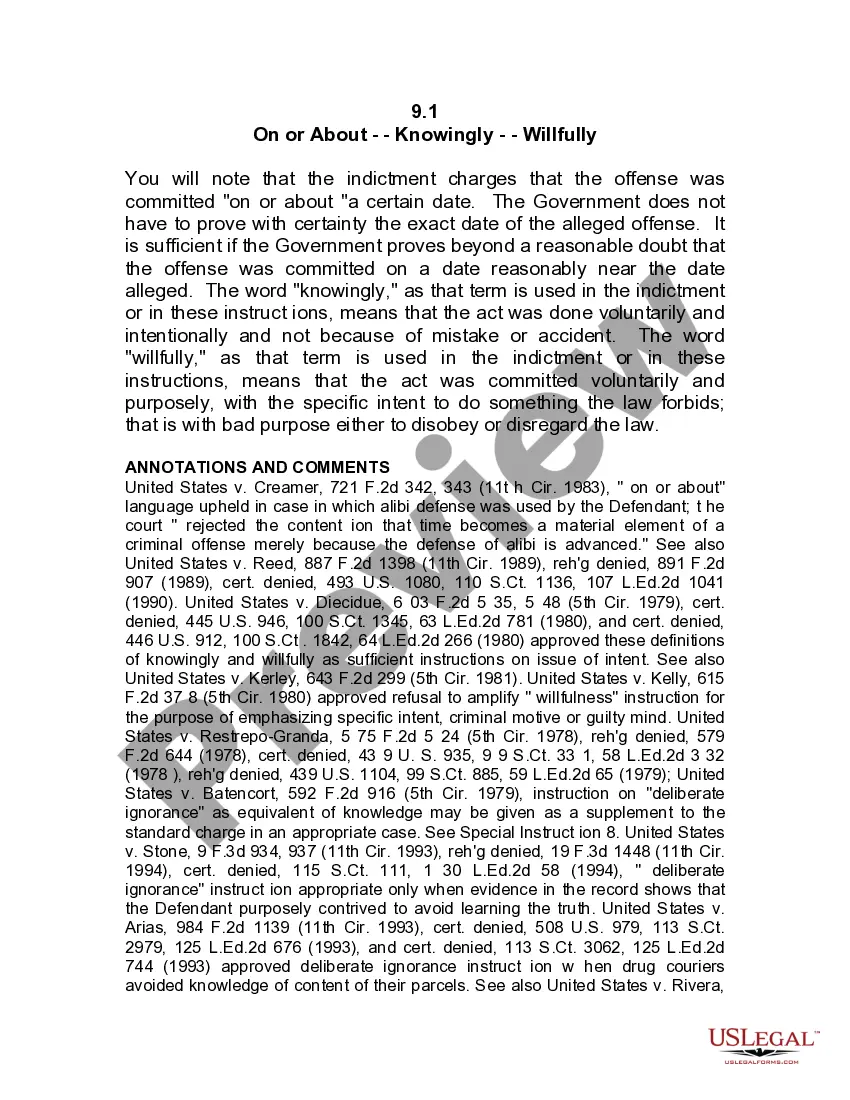
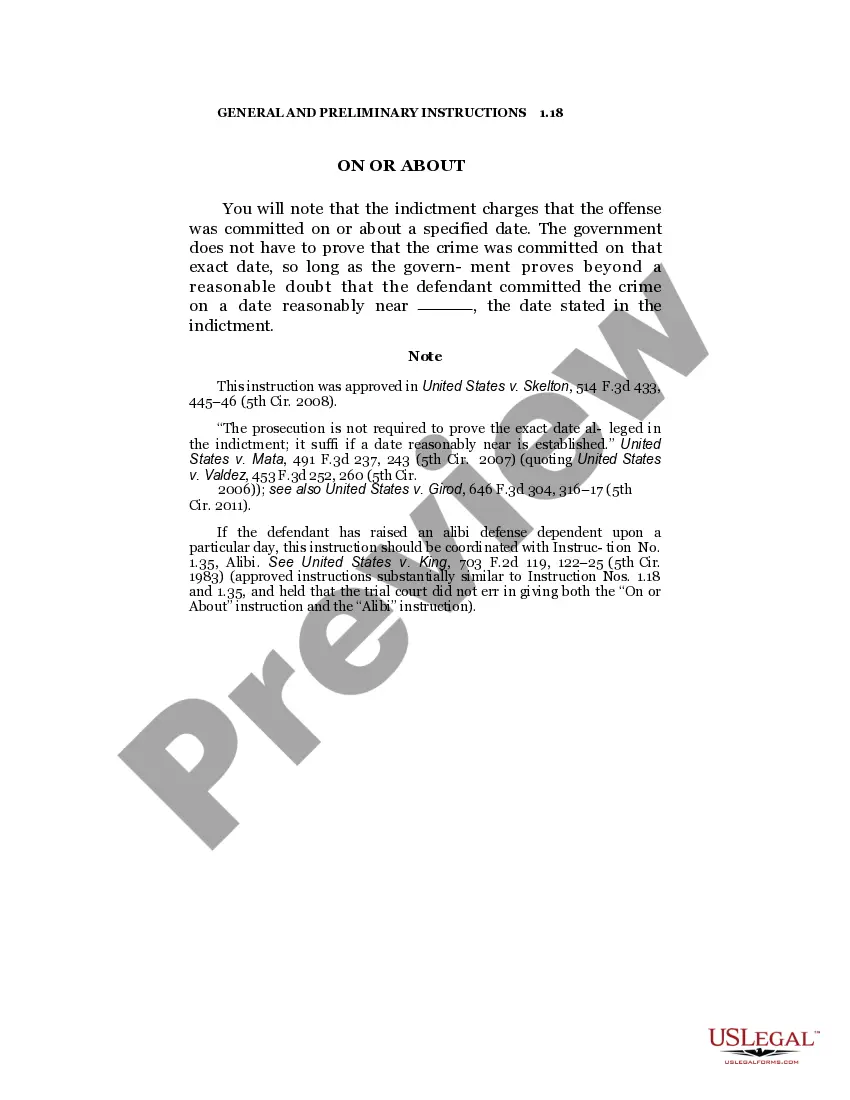
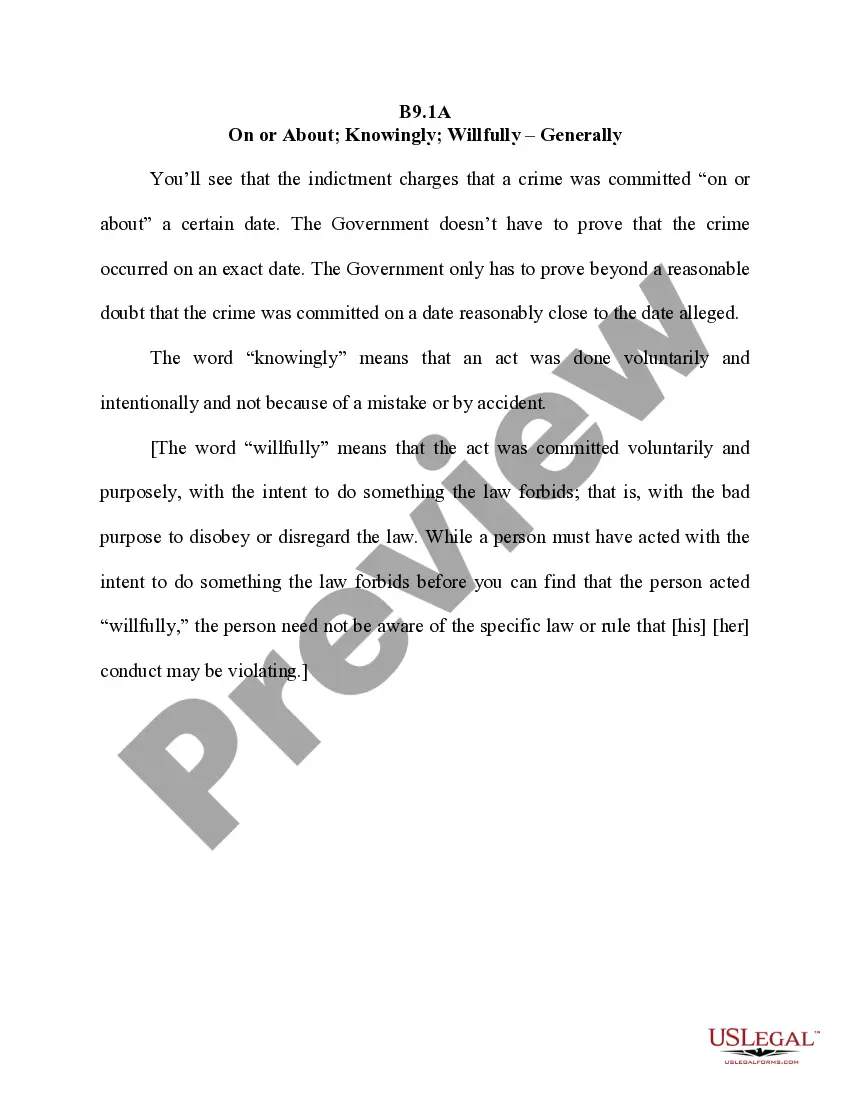
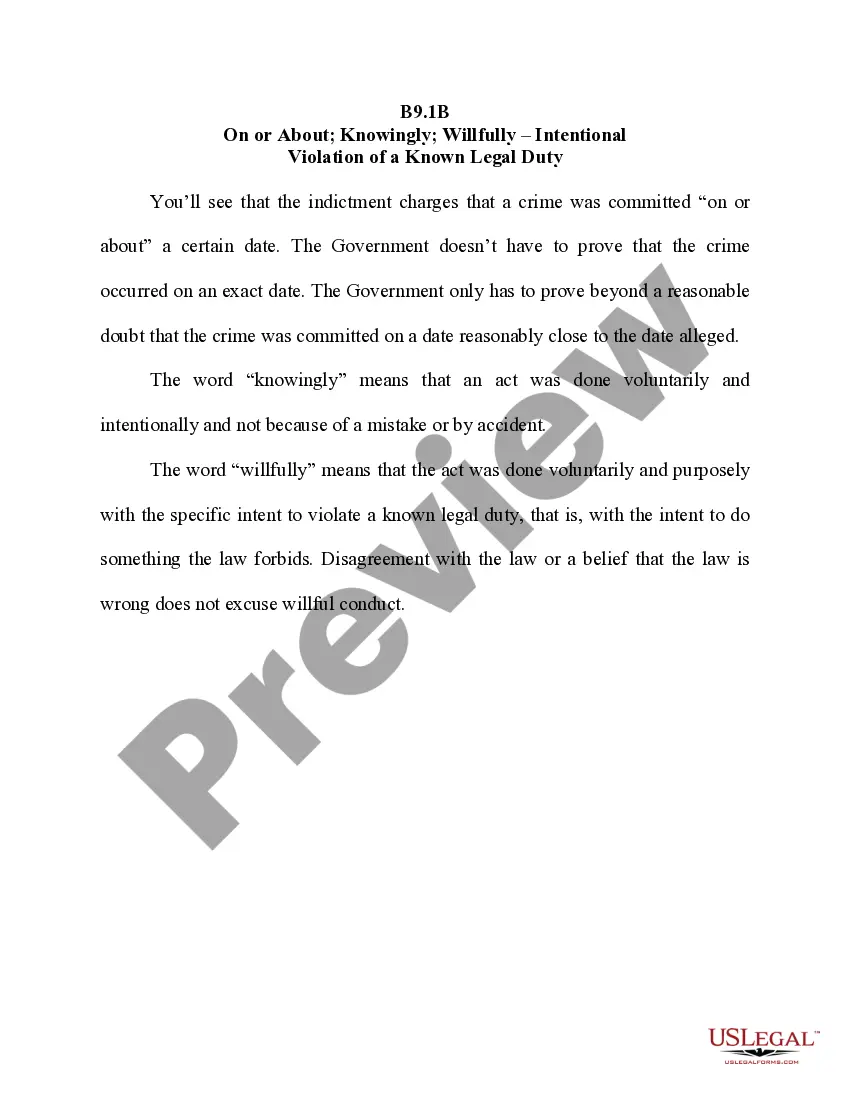
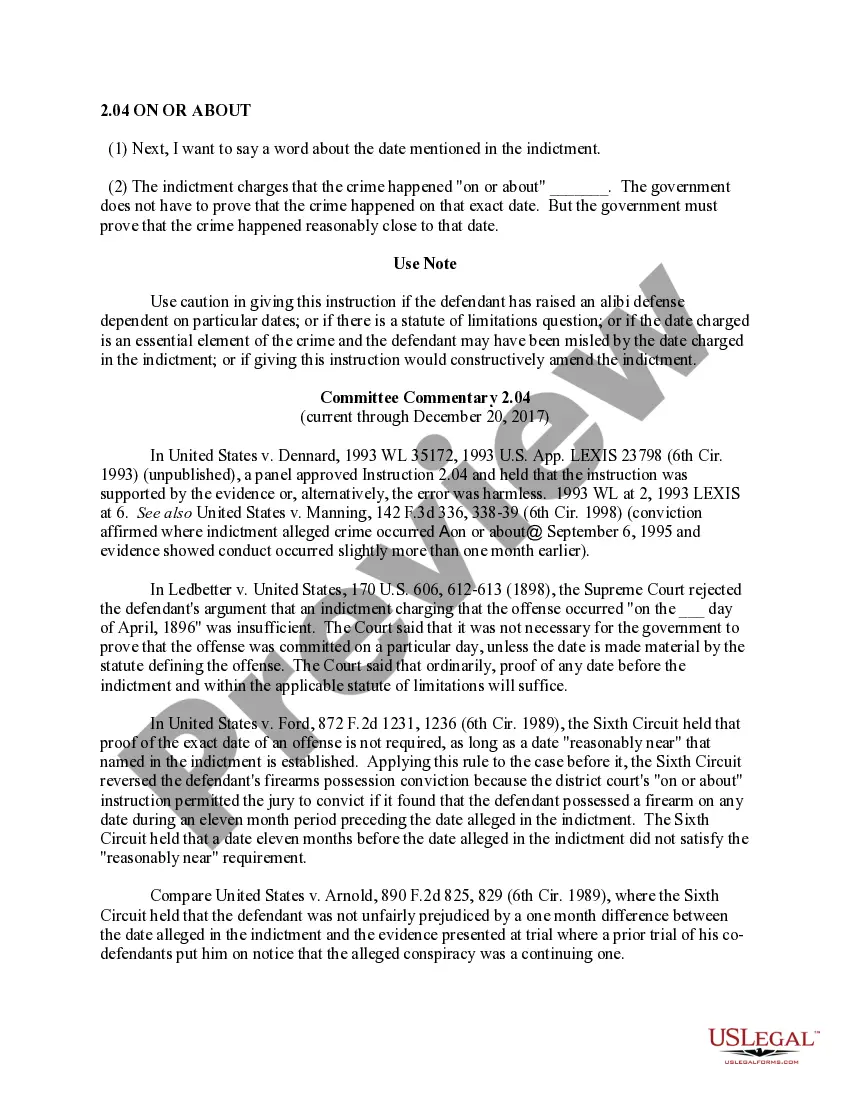
This form, titled "On or About a Particular Date; Knowingly," is a pattern jury instruction from the 11th Circuit Federal Court of Appeals. It clarifies that the government does not need to prove a crime occurred on an exact date but rather within a reasonable timeframe. This instruction also emphasizes the importance of the term "knowingly," which indicates that an act was carried out intentionally. This form distinguishes itself by focusing on the nuances of date and knowledge in legal proceedings, making it essential for related cases.
Main sections of this form
- Clarification of the phrase "on or about a particular date" in legal contexts.
- Explanation of what constitutes the knowledge element in criminal acts.
- Guidelines on the government's burden of proof regarding timing.
Situations where this form applies
This form is typically used in criminal cases where the timing of an alleged crime is a key factor. It's applicable when the prosecution must establish that an offense occurred around a certain date without needing to pinpoint an exact day. Use this form when preparing jury instructions in such cases to ensure jurors understand the legal standards regarding the date and knowingly aspect of the charge.
Who this form is for
- Legal professionals and attorneys preparing criminal cases.
- Judges issuing jury instructions in federal criminal cases.
- Defendants or their representatives seeking to understand their rights concerning date and knowledge in criminal charges.
Completing this form step by step
- Review the indictment to confirm the range of dates alleged.
- Cite the relevant laws or statutes that support the jury's understanding of the date element.
- Incorporate the definition of "knowingly" for clarity.
- Prepare a concise explanation for jurors on the proof required by the government.
- Ensure proper formatting according to federal court standards.
Does this form need to be notarized?
This form usually doesn’t need to be notarized. However, local laws or specific transactions may require it. Our online notarization service, powered by Notarize, lets you complete it remotely through a secure video session, available 24/7.
Get your form ready online
Our built-in tools help you complete, sign, share, and store your documents in one place.
Make edits, fill in missing information, and update formatting in US Legal Forms—just like you would in MS Word.
Download a copy, print it, send it by email, or mail it via USPS—whatever works best for your next step.
Sign and collect signatures with our SignNow integration. Send to multiple recipients, set reminders, and more. Go Premium to unlock E-Sign.
If this form requires notarization, complete it online through a secure video call—no need to meet a notary in person or wait for an appointment.
We protect your documents and personal data by following strict security and privacy standards.

Make edits, fill in missing information, and update formatting in US Legal Forms—just like you would in MS Word.

Download a copy, print it, send it by email, or mail it via USPS—whatever works best for your next step.

Sign and collect signatures with our SignNow integration. Send to multiple recipients, set reminders, and more. Go Premium to unlock E-Sign.

If this form requires notarization, complete it online through a secure video call—no need to meet a notary in person or wait for an appointment.

We protect your documents and personal data by following strict security and privacy standards.
Avoid these common issues
- Failing to clarify what "on or about" means, leading to juror confusion.
- Overlooking the definition of "knowingly," which could affect jury deliberations.
- Neglecting to align with the exact wording prescribed by the 11th Circuit.
Benefits of completing this form online
- Immediate access to the latest pattern jury instructions.
- Editability allows for tailoring instructions to specific cases.
- Reliable resources drafted by licensed attorneys ensure legal accuracy.
Looking for another form?
Form popularity
FAQ
Committing a Crime "Knowingly" Many criminal laws require a person to "knowingly" engage in illegal activity. Which part of the offense needs to be done knowingly depends on the crime. For example, a drug trafficking law might require that the person "knowingly" import an illegal drug into the United States.
A phrase that is used throughout civil and criminal legal practice to refer to a specific date or place by narrow approximation. It is often seen either in a civil or criminal complaint, or within legal documents that create obligations or protections for a party.
Purposely is similar to specific intent to cause a particular result. Knowingly is awareness that results are practically certain to occur.
And/or, however, is not ambiguous at all. It has a definite, agreed-upon meaning: when used properly, the construct means ?A or B or both.? In most areas of law, there simply is no compelling reason to avoid using and/or.
A person acts ?knowingly? when he is aware that his conduct is of a particular nature or knows that his conduct will cause a particular result. A person acts recklessly when he knows of an unjustifiable risk and consciously disregards it.
The word "knowingly," as that term has been used from time to time in these instructions, means that the act was done voluntarily and intentionally and not because of mistake or accident.
Knowing criminal intent based upon knowing means an awareness of the consequences. For example, stabbing someone with a knife is done knowingly by an adult when it can be proved that he knew that a knife would pierce the skin of another and cause injury.
As in other situations, to commit an act "knowingly" is to do so with knowledge or awareness of the facts or situation, and not because of mistake, accident or some other innocent reason. See Fifth Circuit Pattern Jury Instructions, § 1.35 (1990). Knowledge of the criminal statute governing the conduct is not required.