New Hampshire Last Will and Testament for Civil Union Partner with Adult and Minor Children
What is this form?
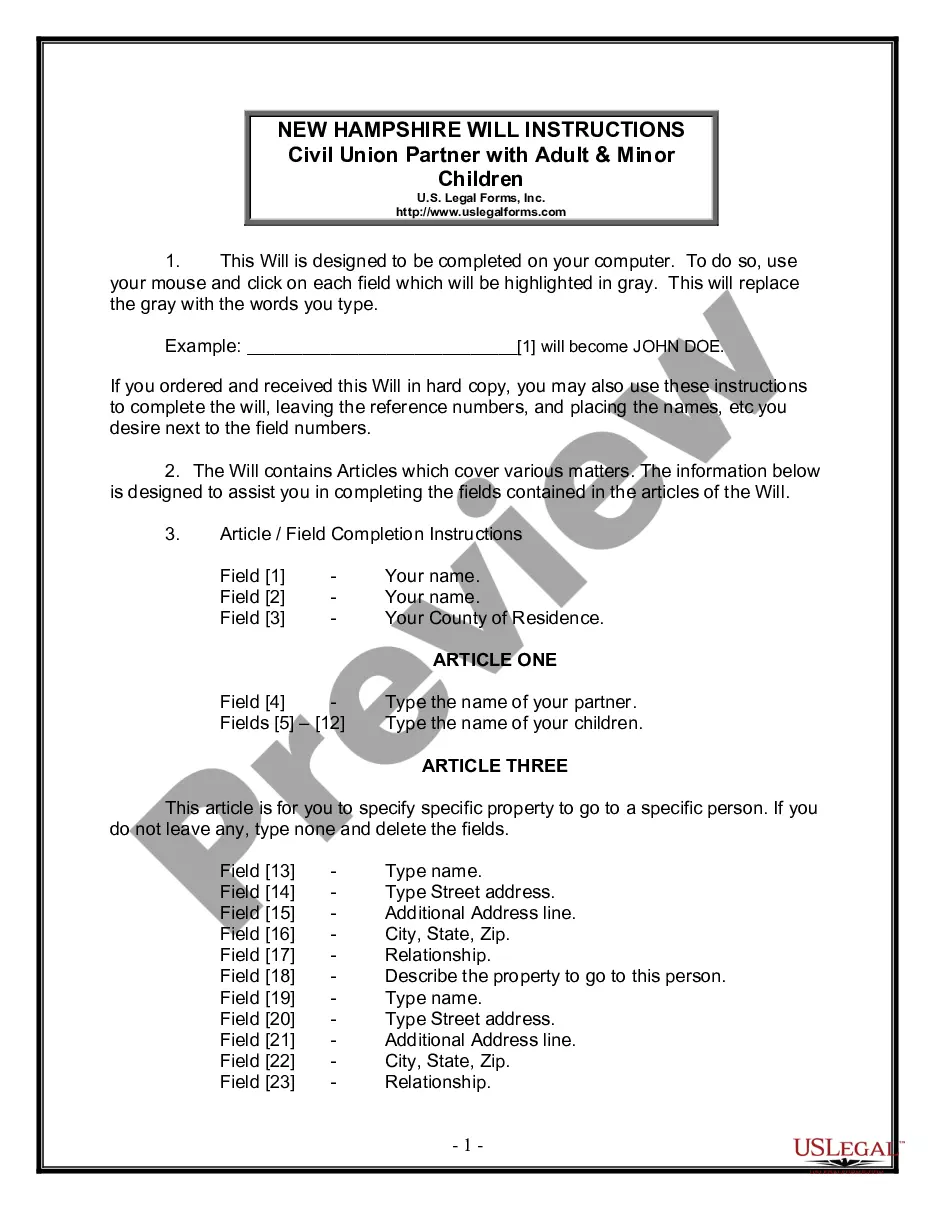
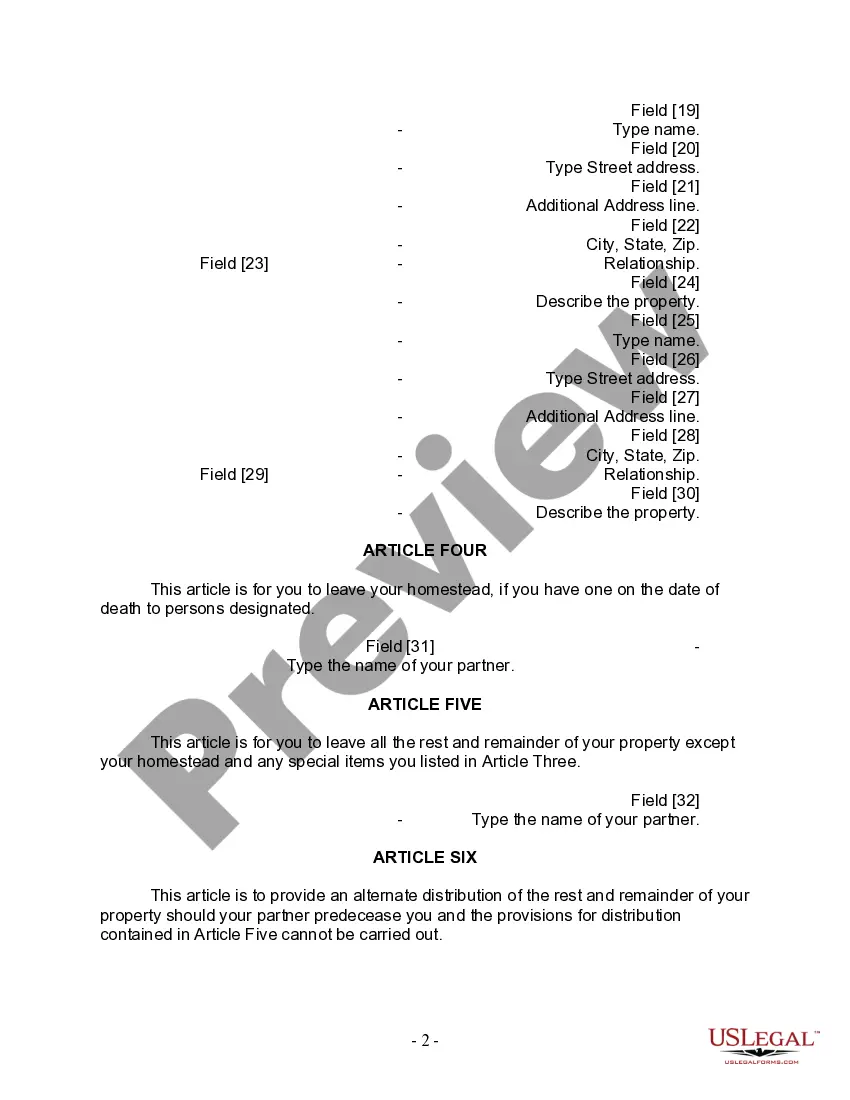
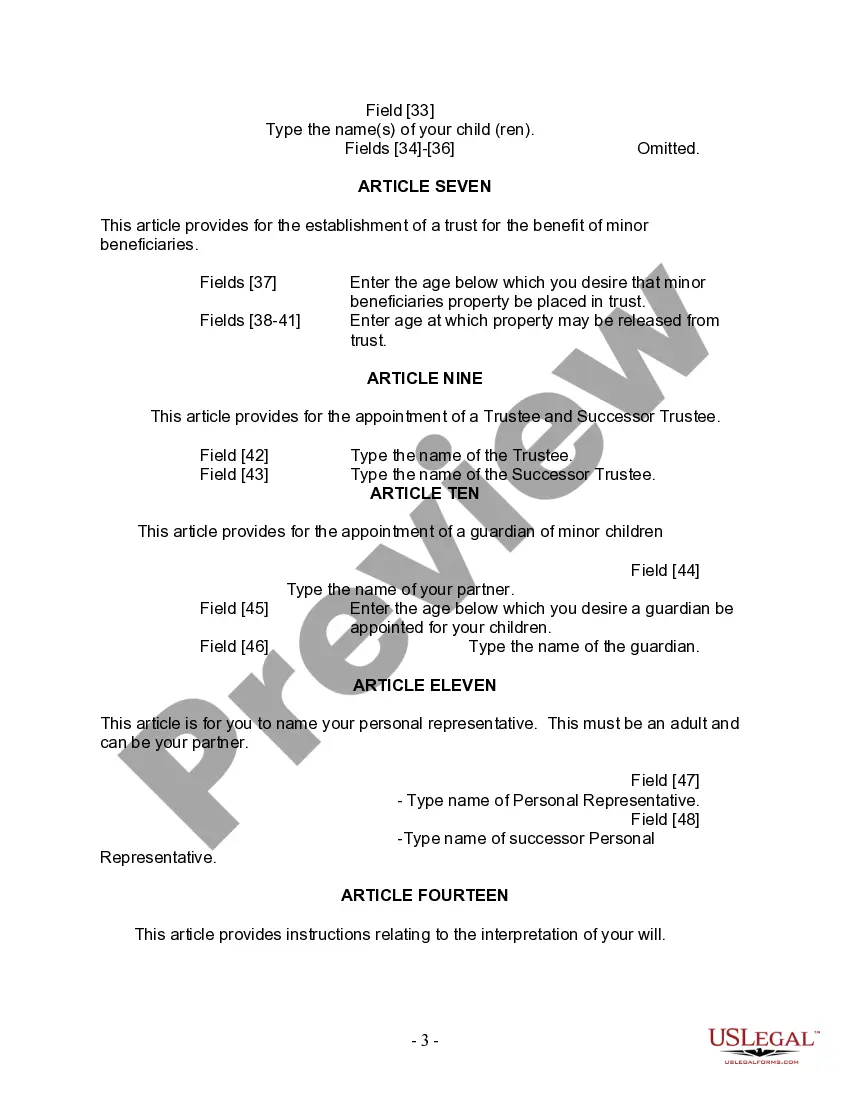
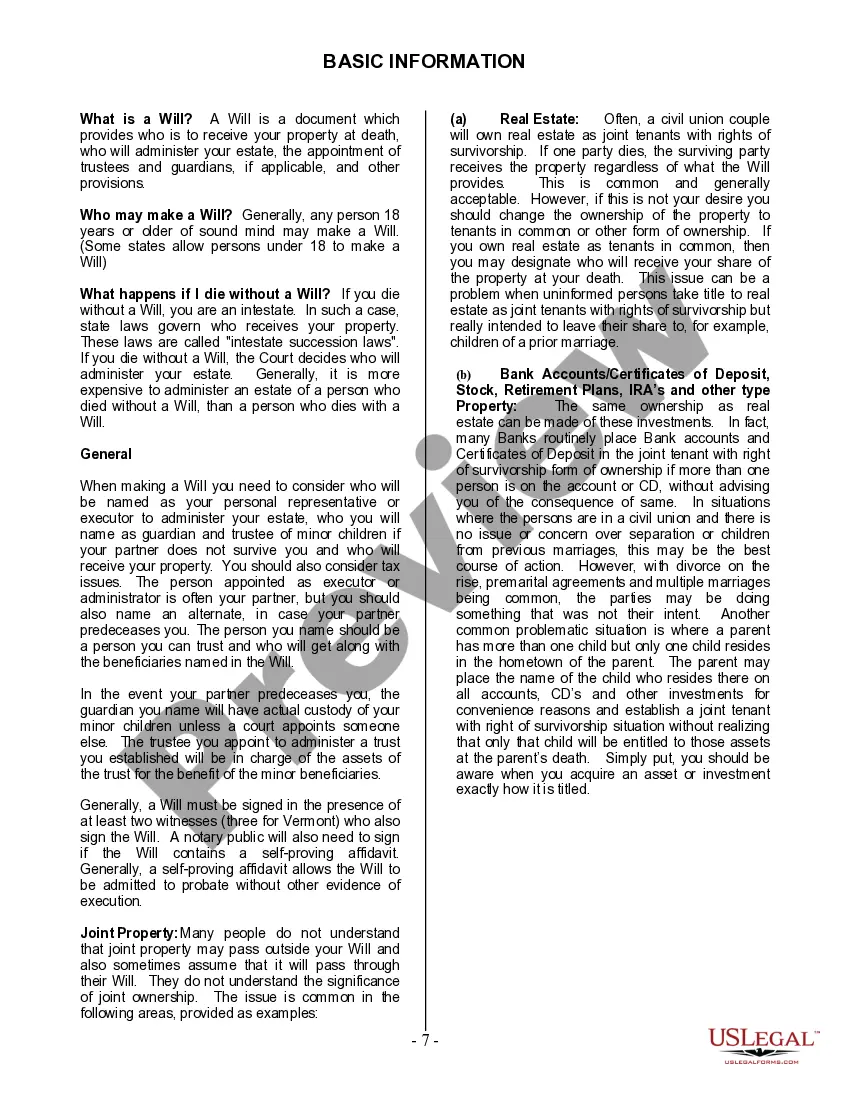
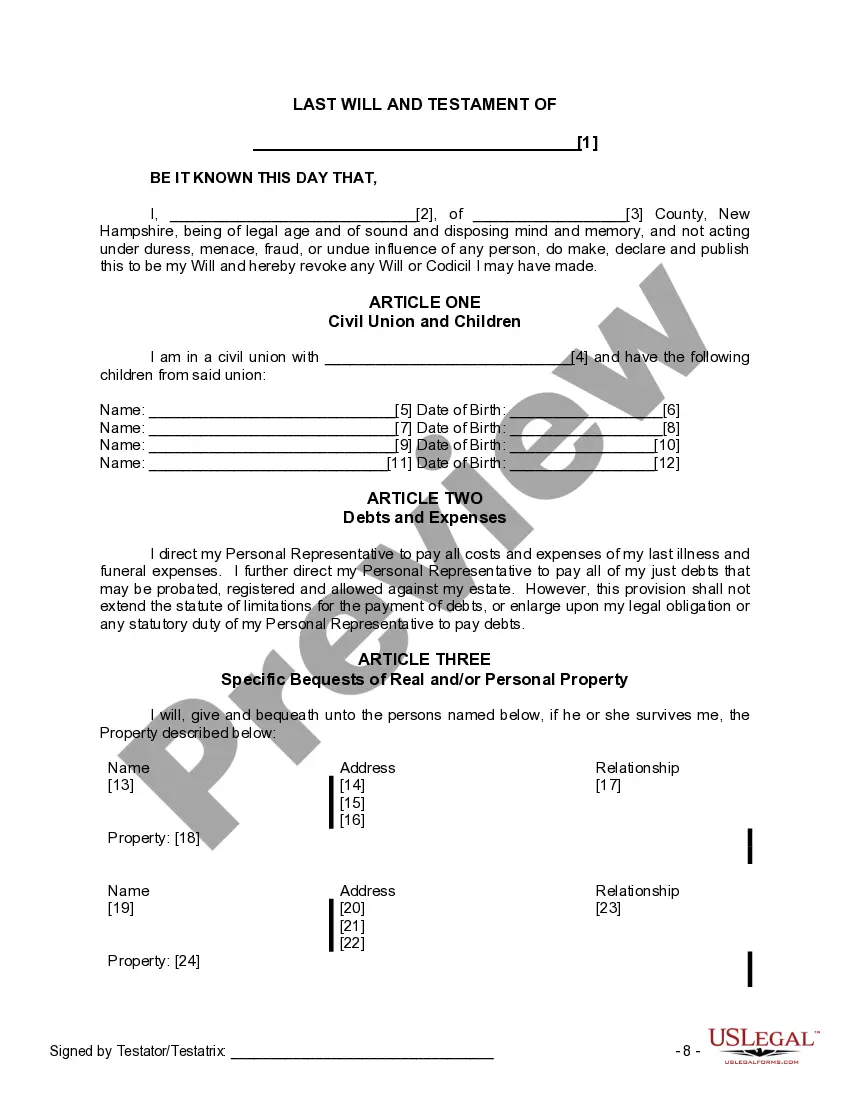
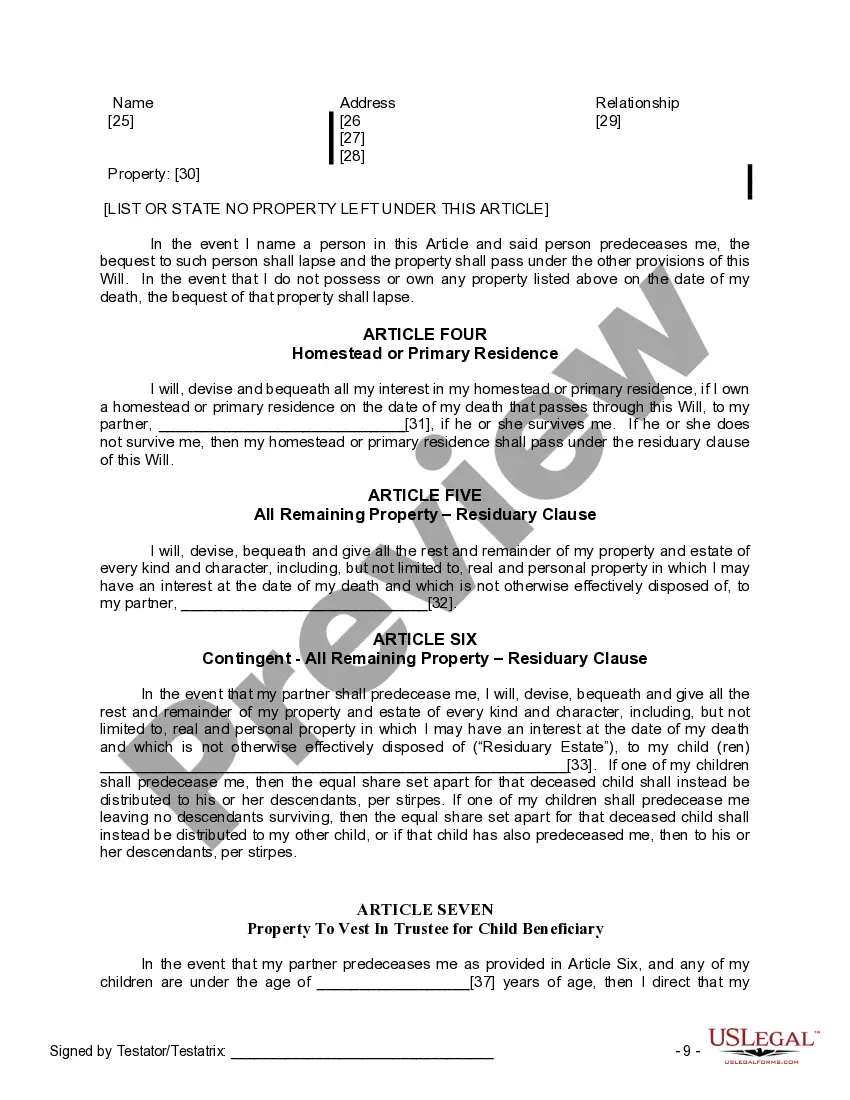
This Last Will and Testament for Civil Union Partner with Adult and Minor Children is a legal document that outlines how your assets will be distributed upon your death. It includes provisions for your civil union partner and specifies who will receive your property, making it critical for those in civil unions with both adult and minor children. This will establishes trusts for minor children, appoints a personal representative, and details guardianship arrangements, ensuring your wishes are honored after your passing.
Key components of this form
- Appointment of a personal representative or executor.
- Designations for property distribution among your partner and children.
- Specific bequests of personal items or property.
- Trust establishment for minor beneficiaries, including ages for distribution.
- Guardianship provisions for minor children.
- Instructions regarding debts and funeral expenses.






When to use this document
This form is essential when an individual in a civil union seeks to outline their wishes regarding the distribution of assets, guardianship of children, and other critical late-life decisions. It is especially important if you have minor children and want to ensure guardianship and financial provisions are in place should you pass away. Using this form helps avoid disputes among heirs and ensures clarity regarding your intentions.
Who this form is for
- Individuals in a civil union with both adult and minor children.
- Those looking to specify asset distribution to partners and children after death.
- Anyone wanting to create a legally binding trust for minor beneficiaries.
- Individuals who wish to designate a guardian for their minor children.
Steps to complete this form
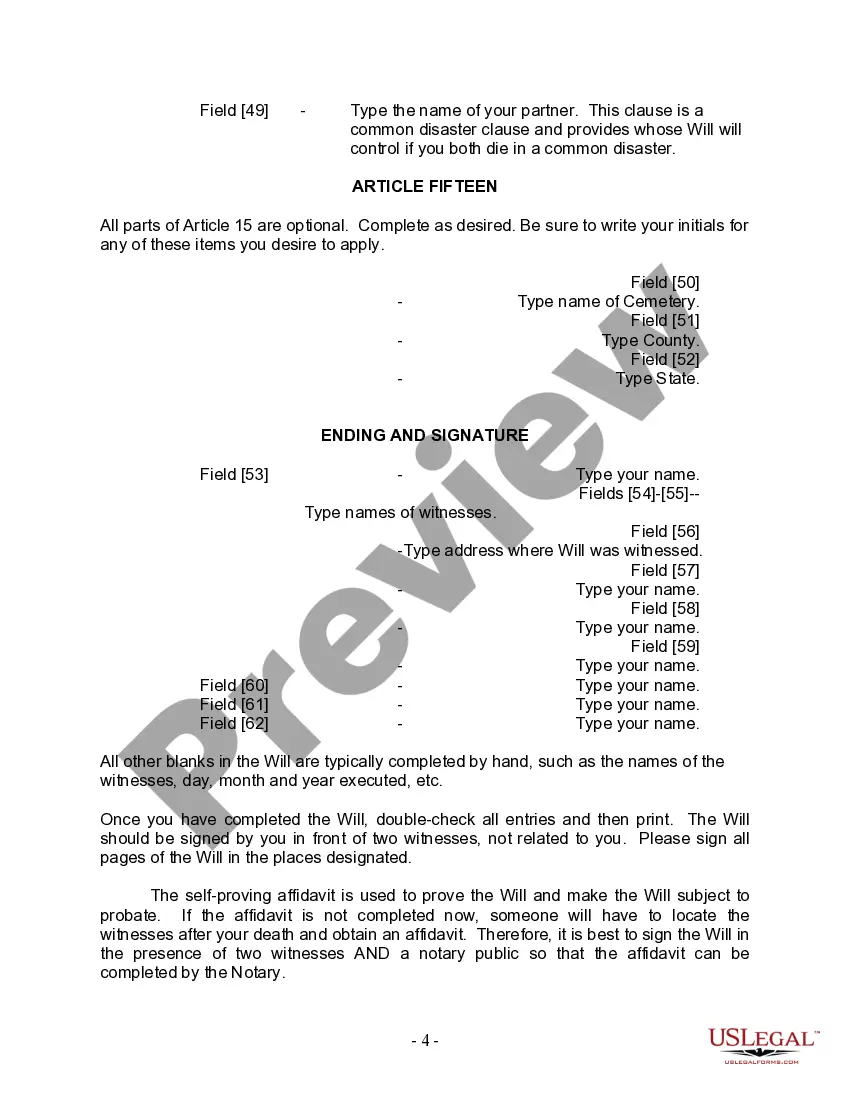
- Identify the parties involved, including your name, your partner's name, and your children's names.
- Specify the property and how it should be divided among your beneficiaries.
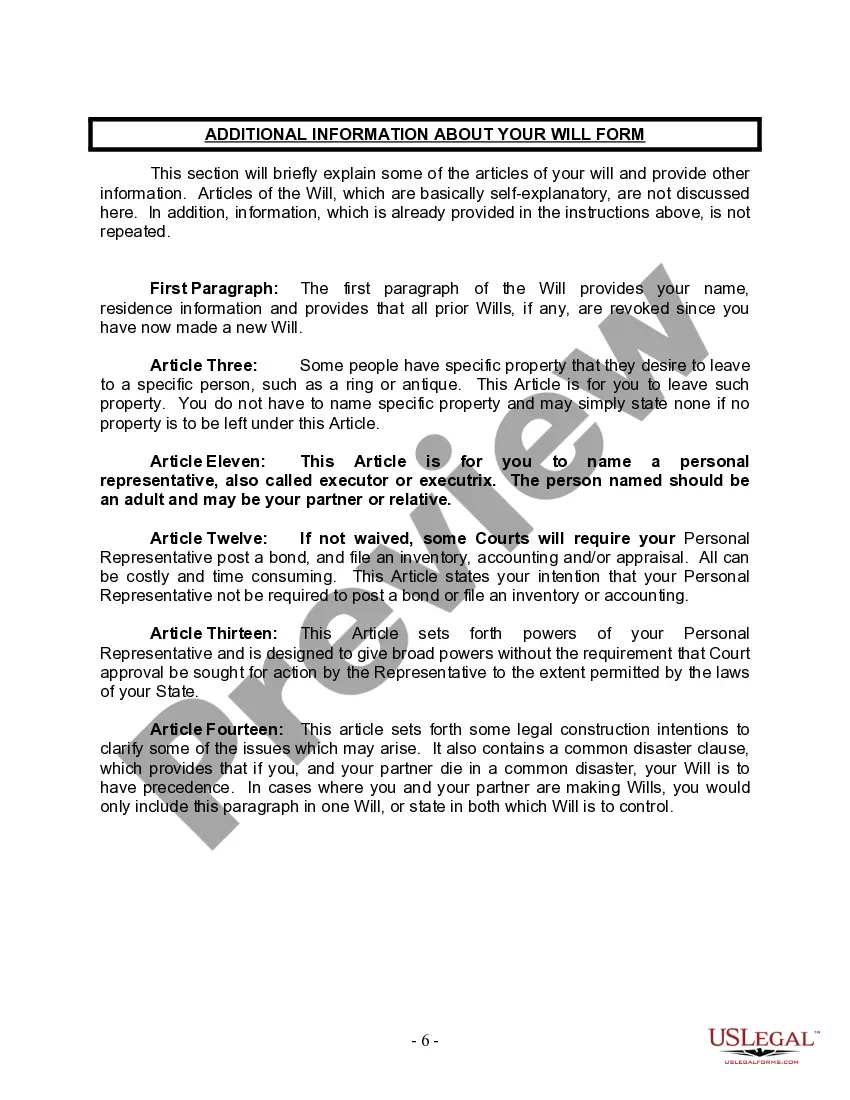
- Designate a personal representative, who will manage estate affairs.
- Outline any trusts for minor children, including terms for when the assets will be distributed.
- Have the will signed in the presence of two witnesses and a notary public if needed.
Does this form need to be notarized?
This form needs to be notarized to ensure legal validity. US Legal Forms provides secure online notarization powered by Notarize, allowing you to complete the process through a verified video call, available anytime.
Get your form ready online
Our built-in tools help you complete, sign, share, and store your documents in one place.
Make edits, fill in missing information, and update formatting in US Legal Forms—just like you would in MS Word.
Download a copy, print it, send it by email, or mail it via USPS—whatever works best for your next step.
Sign and collect signatures with our SignNow integration. Send to multiple recipients, set reminders, and more. Go Premium to unlock E-Sign.
If this form requires notarization, complete it online through a secure video call—no need to meet a notary in person or wait for an appointment.
We protect your documents and personal data by following strict security and privacy standards.

Make edits, fill in missing information, and update formatting in US Legal Forms—just like you would in MS Word.

Download a copy, print it, send it by email, or mail it via USPS—whatever works best for your next step.

Sign and collect signatures with our SignNow integration. Send to multiple recipients, set reminders, and more. Go Premium to unlock E-Sign.

If this form requires notarization, complete it online through a secure video call—no need to meet a notary in person or wait for an appointment.

We protect your documents and personal data by following strict security and privacy standards.
Mistakes to watch out for
- Failing to have the will signed by two witnesses, which can invalidate the document.
- Leaving out required details for guardianship or trusts.
- Not updating the will after major life changes, such as the birth of additional children.
- Failing to consult with local laws regarding civil union recognition.
Benefits of using this form online
- Convenience of downloading and completing the form at your own pace.
- Access to templates created by licensed attorneys, ensuring legal compliance.
- Editability allows for adjustments as your life circumstances change.
- Reliable format that adheres to state legal requirements.
Key takeaways
- This Last Will and Testament is vital for anyone in a civil union with children.
- Properly designating beneficiaries and establishing trusts can protect your loved ones' future.
- Complete the form according to your state's requirements for it to be legally accepted.
Looking for another form?
Form popularity
FAQ
A simple will costs between $200-$400 and a trust from $2,000 upwards, depending on how complex it is. High-profile family feuds over money are notorious and New Hampshire has been at the center of at least two of them.
No, in New Hampshire, you do not need to notarize your will to make it legal.A self-proving will speeds up probate because the court can accept the will without contacting the witnesses who signed it.
Include personal identifying information. Include a statement about your age and mental status. Designate an executor. Decide who will take care of your children. Choose your beneficiaries. List your funeral details. Sign and date your Last Will and Testament.
Yes, people can write their own wills in New Hampshire.For instance, the will must be in writing, signed by the person whose will it is, and signed by two or more credible witnesses who must swear that the person's signature is genuine. The court does not provide standard forms for writing a will.
Contrary to popular belief, you do not need to have an attorney draft a will for you. Anyone can write this document on their own, and as long as it meets all of the legal requirements of the state, courts will recognize one you wrote yourself.
You can either download a template (many are free) and write your Will at your own pace offline using your word processor, or tell us your wishes in our online questionnaire and let us write it for you.
Enter the full name of each beneficiary. Provide a Physical Address for each. Beneficiary's relationship to the testator. Provide the last four digits of each beneficiary's Social Security Number. Provide a list of any property being bequeathed to each selected beneficiary.
Create the initial document. Start by titling the document Last Will and Testament" and including your full legal name and address. Designate an executor. Appoint a guardian. Name the beneficiaries. Designate the assets. Ask witnesses to sign your will. Store your will in a safe place.
It does not matter whether the will was prepared online or by an attorney, so long as it is valid. In order for a will to be valid, it must meet the requirements of the state where the testator lives.