New Jersey Last Will and Testament for Domestic Partner with Minor Children from Prior Marriage
Overview of this form
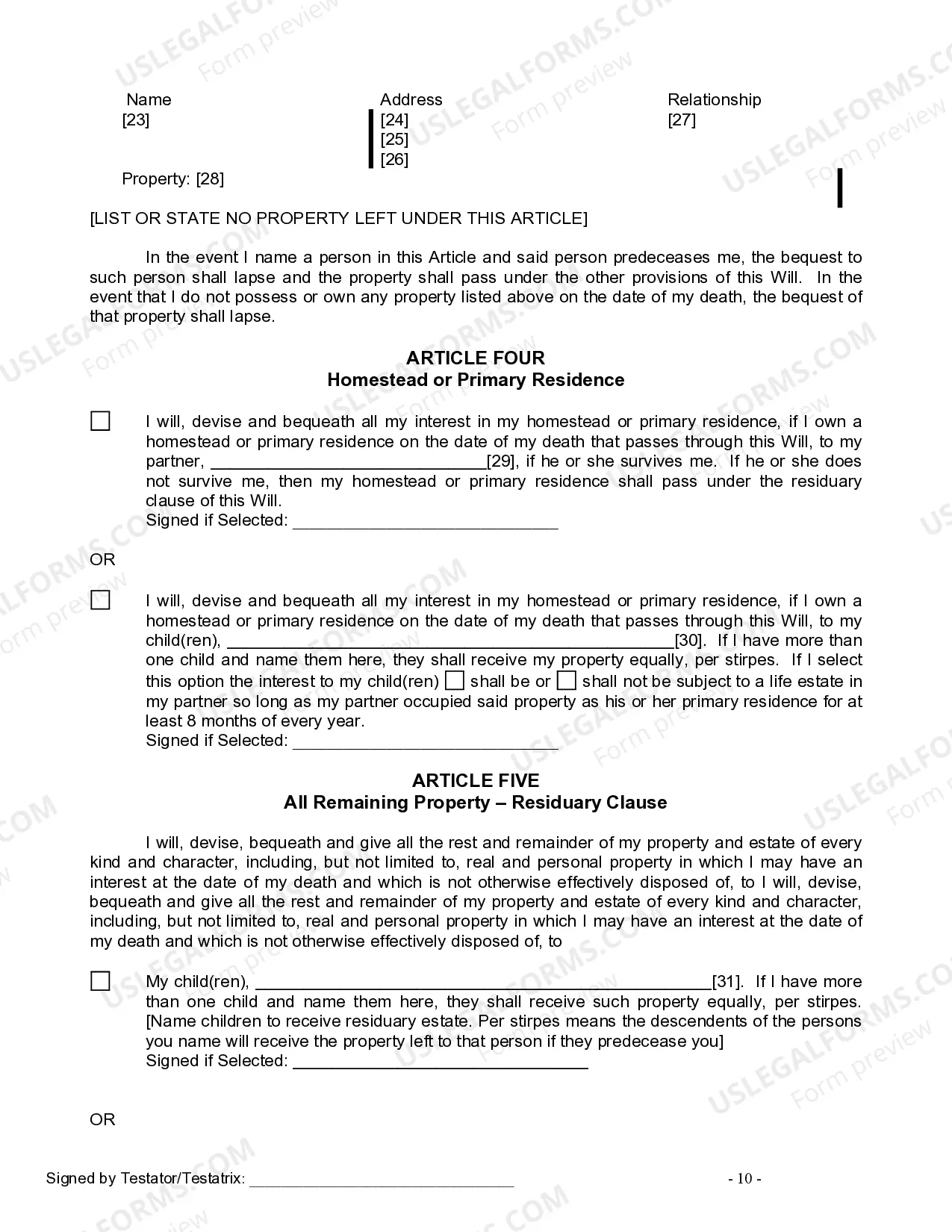
The Last Will and Testament for Domestic Partner with Minor Children from Prior Marriage is a legal document that outlines how a personâs assets will be distributed after their death. This specific type of will is designed for individuals in a domestic partnership who have minor children from a previous marriage. It appoints a personal representative or executor to handle the estate, specifies beneficiaries for property, and allows for the establishment of a trust for minor children. This form ensures that both the partner and children are considered in the distribution of the estate.
Key parts of this document
- Appointment of a personal representative to administer the estate.
- Designation of beneficiaries, including minor children from a prior marriage.
- Instructions for specific bequests of property.
- Establishment of a trust for minor children until they reach a specified age.
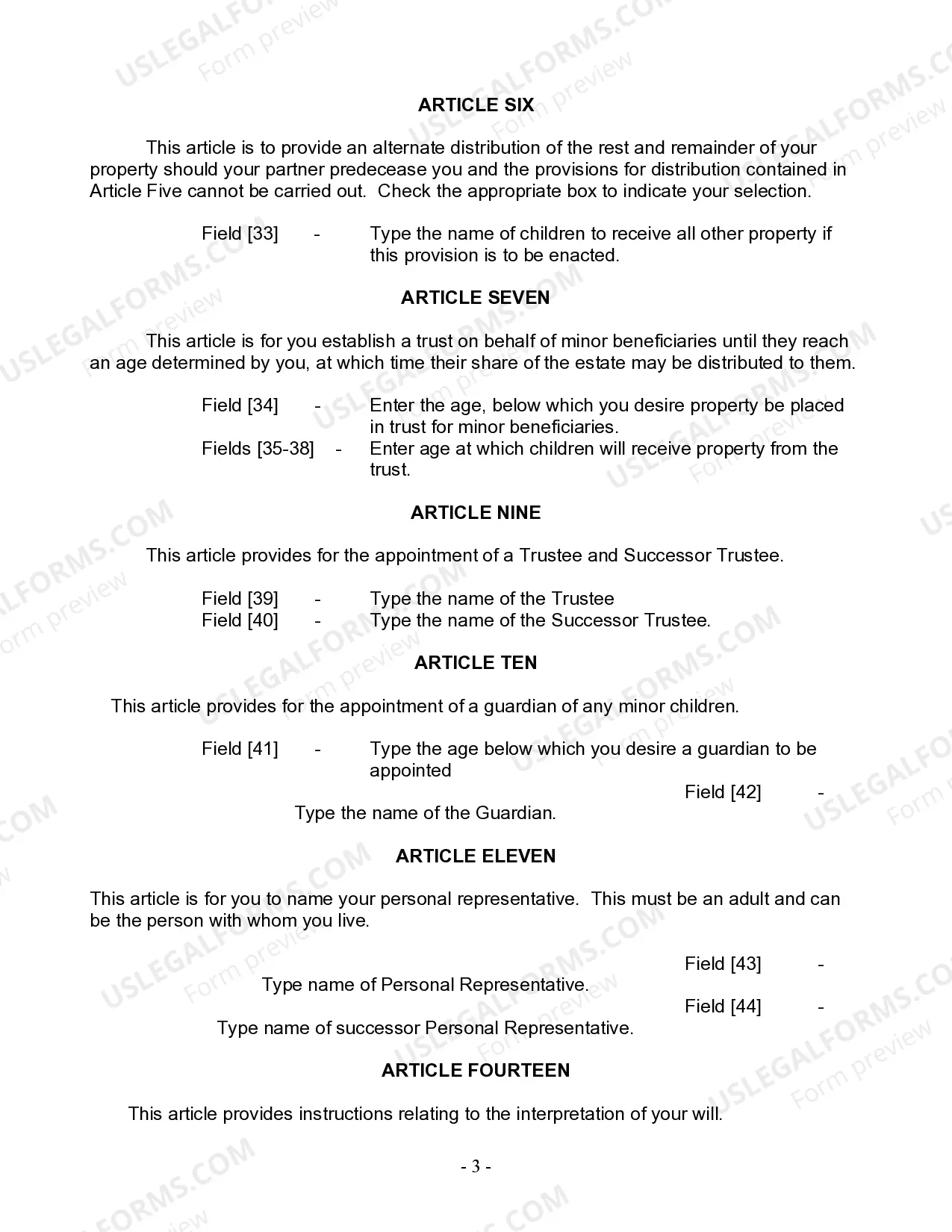
- Provisions for the appointment of a guardian for minor children.
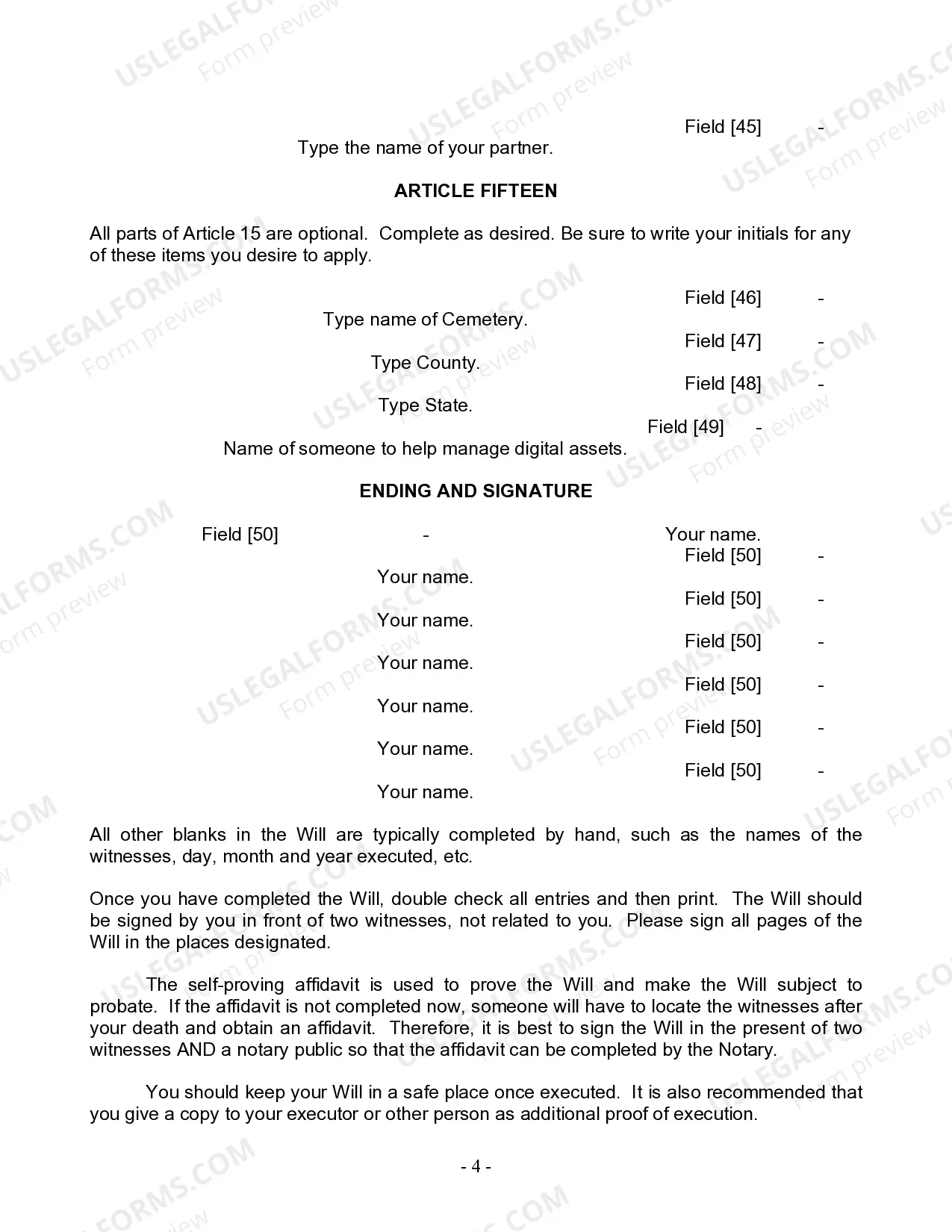
- Legal formalities for signing, including witness requirements.





Common use cases
This form should be used when an individual in a domestic partnership with children from a prior marriage wants to create a legally binding will. It is especially important for ensuring the proper distribution of assets and care for minor children, particularly if the partner or children are involved in the estate process. Itâs a proactive step to avoid conflicts that may arise in the absence of a legal will.
Who can use this document
This form is suitable for:
- Individuals in a domestic partnership.
- Parents with minor children from a previous marriage.
- Anyone looking to specify how their assets should be distributed after death.
- Those wanting to appoint a guardian for their minor children.
Completing this form step by step
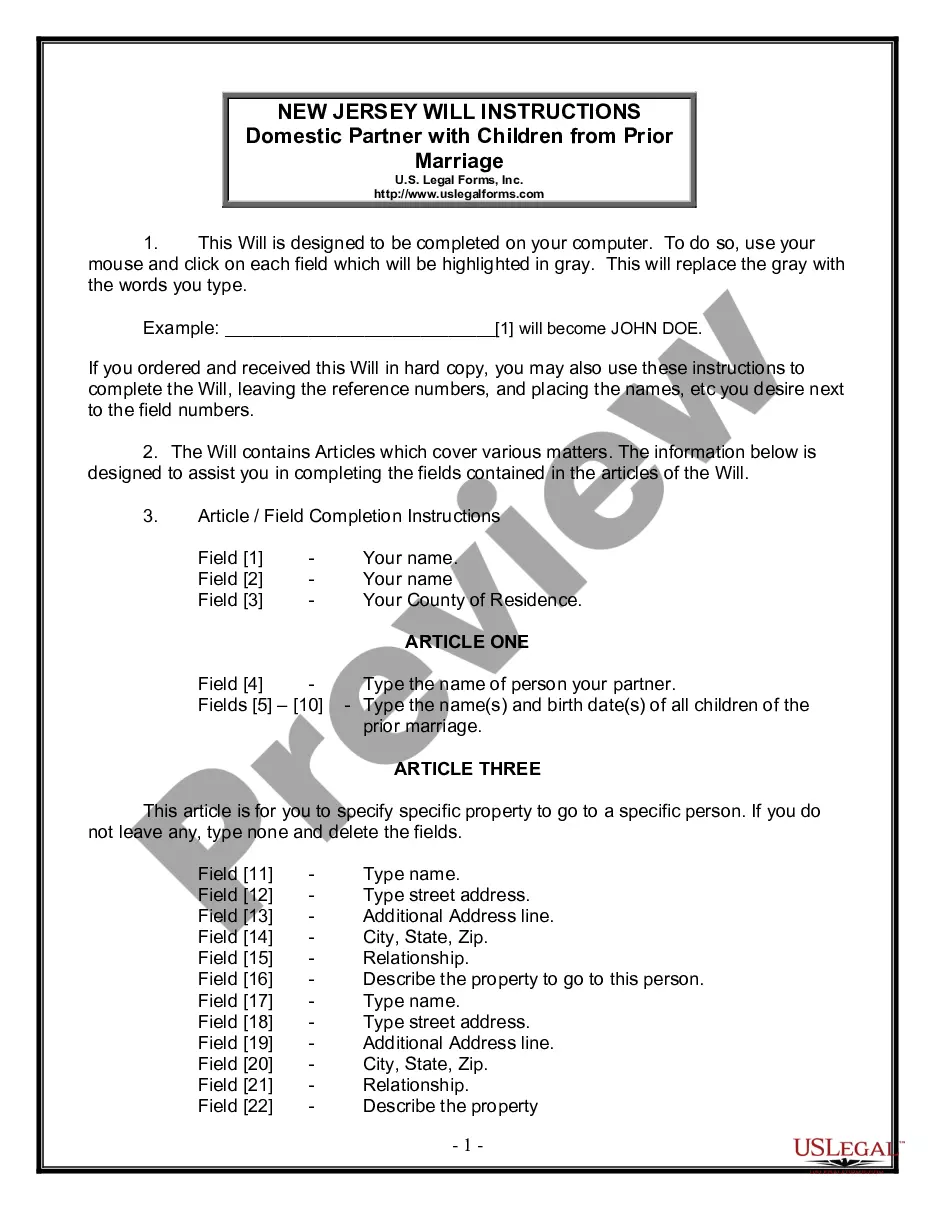
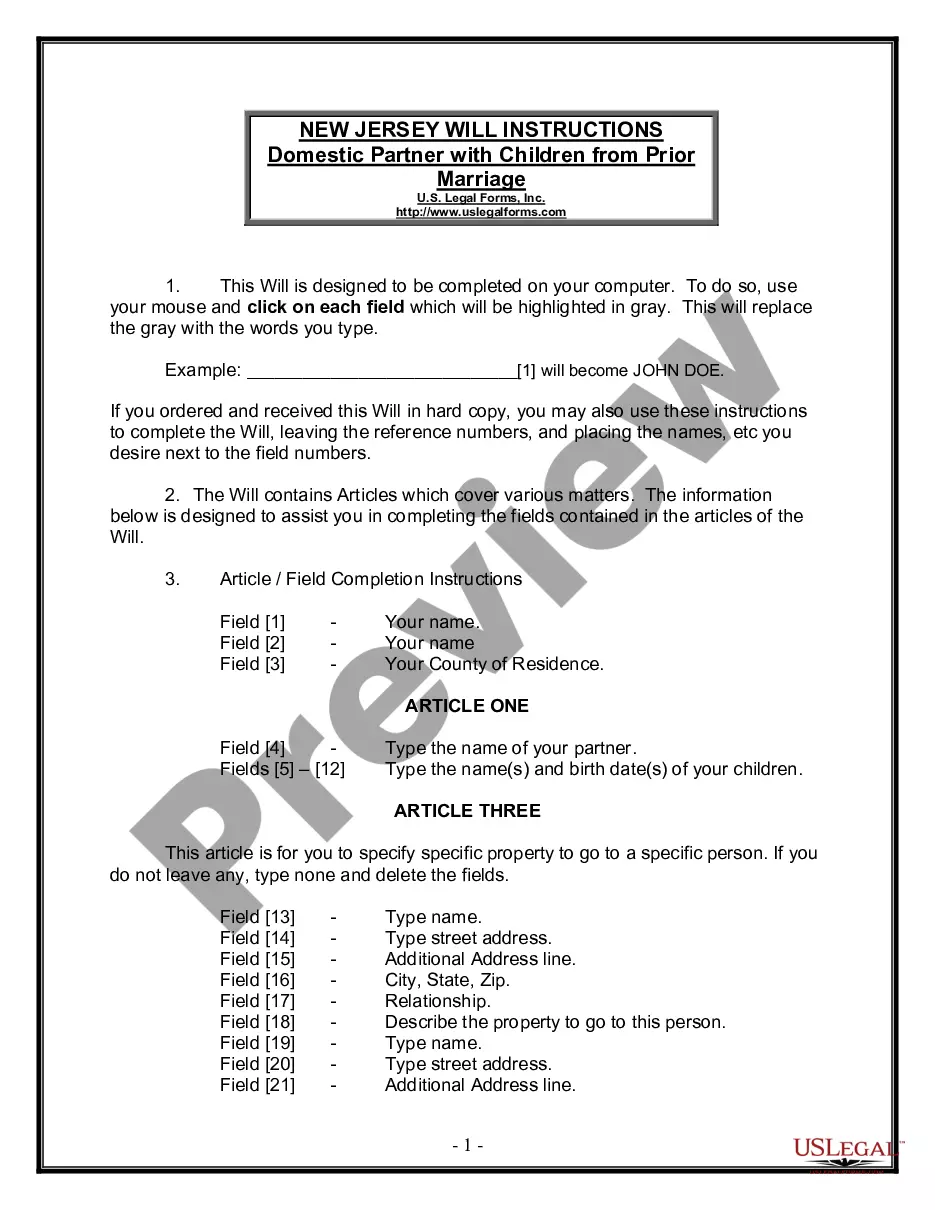
- Identify and enter your name and the name of your domestic partner.
- List all children from any previous marriage, including their birth dates.
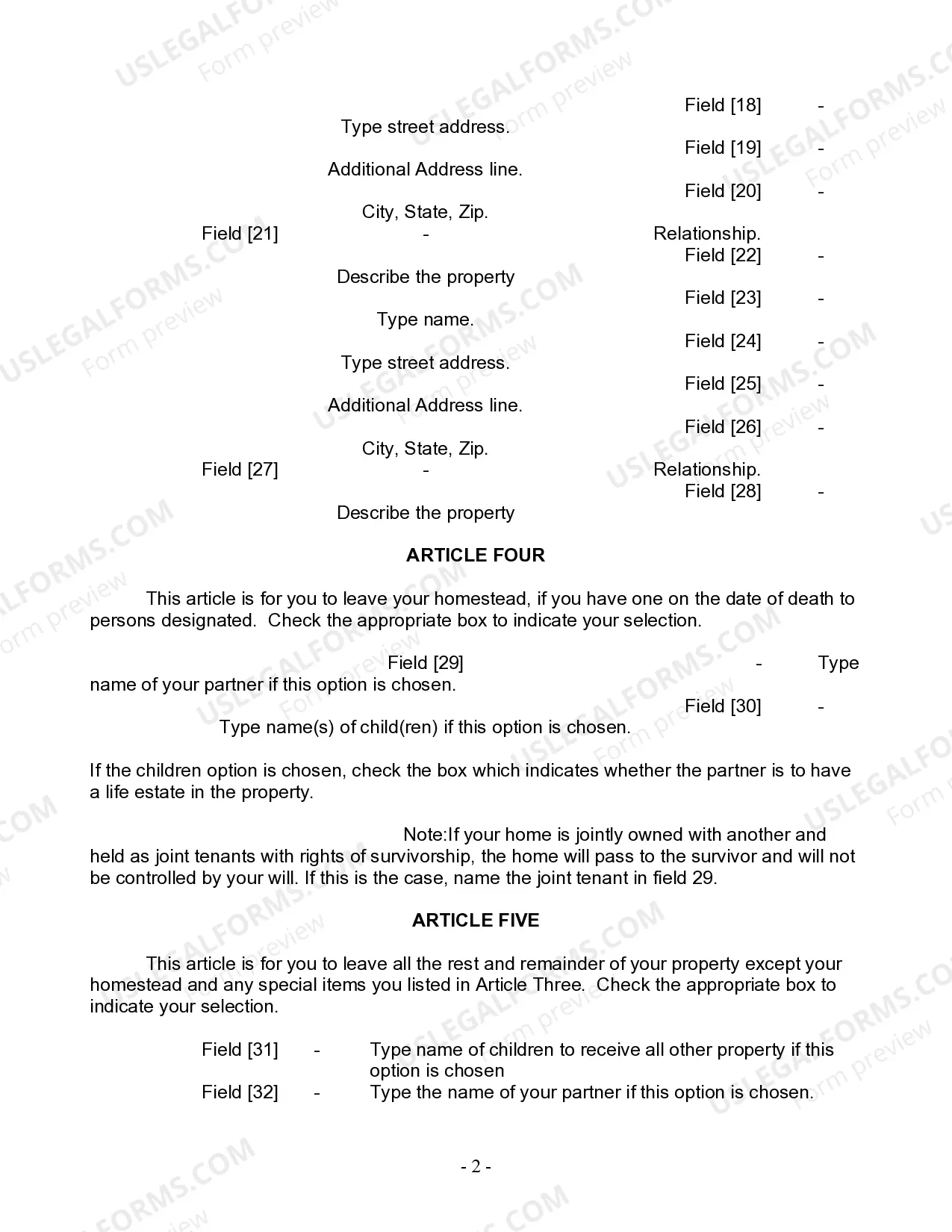
- Specify any specific properties you wish to bequeath to chosen beneficiaries.
- Designate a trustee for managing any assets meant for minor children.
- Sign the will in front of two witnesses who are not related to you.
- Optional: Complete a self-proving affidavit to streamline the probate process.
Notarization requirements for this form
Yes, this form must be notarized to be legally valid. The presence of a notary public during the signing process ensures that the will can be admitted to probate without additional proof of execution, which simplifies the process for your beneficiaries.
Get your form ready online
Our built-in tools help you complete, sign, share, and store your documents in one place.
Make edits, fill in missing information, and update formatting in US Legal Forms—just like you would in MS Word.
Download a copy, print it, send it by email, or mail it via USPS—whatever works best for your next step.
Sign and collect signatures with our SignNow integration. Send to multiple recipients, set reminders, and more. Go Premium to unlock E-Sign.
If this form requires notarization, complete it online through a secure video call—no need to meet a notary in person or wait for an appointment.
We protect your documents and personal data by following strict security and privacy standards.

Make edits, fill in missing information, and update formatting in US Legal Forms—just like you would in MS Word.

Download a copy, print it, send it by email, or mail it via USPS—whatever works best for your next step.

Sign and collect signatures with our SignNow integration. Send to multiple recipients, set reminders, and more. Go Premium to unlock E-Sign.

If this form requires notarization, complete it online through a secure video call—no need to meet a notary in person or wait for an appointment.

We protect your documents and personal data by following strict security and privacy standards.
Common mistakes to avoid
- Failing to have the will signed in the presence of the required witnesses.
- Not including a trust provision for minor children.
- Neglecting to update the will after major life changes.
- Overlooking the need for a contingent plan if the partner predeceases.
Advantages of online completion
- Convenience of completing the form at your own pace.
- Editability allows for easy updates as family circumstances change.
- Reliability of attorney-drafted templates ensures legal compliance.
Key takeaways
- This form is specifically for domestic partners with minor children from prior marriages.
- Clear instructions on how to appoint guardians and trustees are included.
- Legal requirements vary by state; ensure to check New Jersey's specific guidelines.
- Proper notarization is needed for the will to take effect, especially for the self-proving affidavit.
Looking for another form?
Form popularity
FAQ
What Makes a Handwritten Will Legally Binding? A written will is valid if it is: (1) in writing; (2) signed by the testator, i.e., the person making the will; and (3) signed by at least two witnesses who saw the testator sign the will or acknowledge the signature on the will.
Legal age. In the majority of states, you must be at least 18 years old to create a legally binding will.In special circumstances, such as when a minor has inherited or earned a large sum of money, the minor's parents or guardians may petition a court to permit the child to create a will.
A will is legal in New Jersey if it is handwritten or typed by a competent adult and witnessed by two other people.
What makes a will valid in New Jersey? A person must be at least 18 years old and mentally competent to create a valid will. Generally, this means they understand the purpose of the will and know what they wish to happen to their property. The testator, as well as two witnesses, must sign a typed will.
Under New Jersey law, a handwritten Will can be valid as a writing intended as a Will if the material portions of the document are in the handwriting of the decedent and signed by the decedent.
A. You don't have to have a lawyer to create a basic will you can prepare one yourself. It must meet your state's legal requirements and should be notarized.A do-it-yourself will that's poorly drafted can save you money but create a mess for your heirs when you're gone.
No, in New Jersey, you do not need to notarize your will to make it legal. However, New Jersey allows you to make your will "self-proving" and you'll need to go to a notary if you want to do that. A self-proving will speeds up probate because the court can accept the will without contacting the witnesses who signed it.
While New Jersey does not require you to notarize a will to make it legal, there are significant benefits of getting it notarized. When a notary signs and stamps your will in New Jersey, this makes it self-proving.
In New Jersey, the will must be in writing. You must sign your own will, witnessed by two individuals over 18 (You must be at least age 18 as well.) Then, the witnesses must sign the document. If you wish to go the extra step, you can bring your two witnesses to a notary and do the signing there.