Landlord Tenant Investment Trust REIT Due Diligence Supplemental Checklist
What this document covers
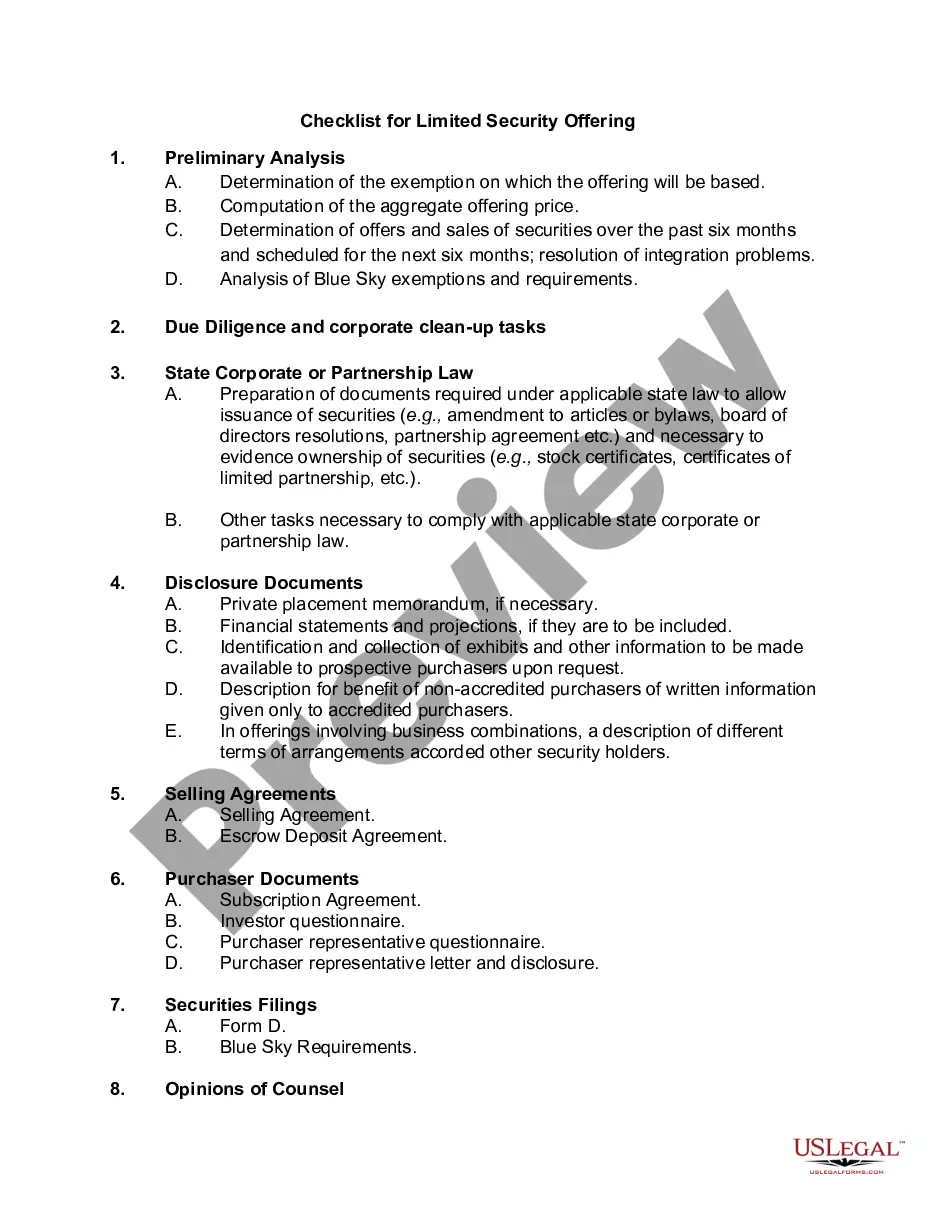
The Landlord Tenant Investment Trust REIT Due Diligence Supplemental Checklist is a comprehensive tool designed to assist in the due diligence process for Real Estate Investment Trusts (REITs). This checklist helps ensure that all necessary legal and financial aspects of property ownership and leasing are thoroughly examined and verified, distinguishing it from general due diligence checklists by its focus on REIT-specific requirements and tax implications.
Main sections of this form
- Verification of property ownership and tax bases
- Evaluation of potential tax legislation impacts
- Checks on earnings and profits regarding REIT eligibility
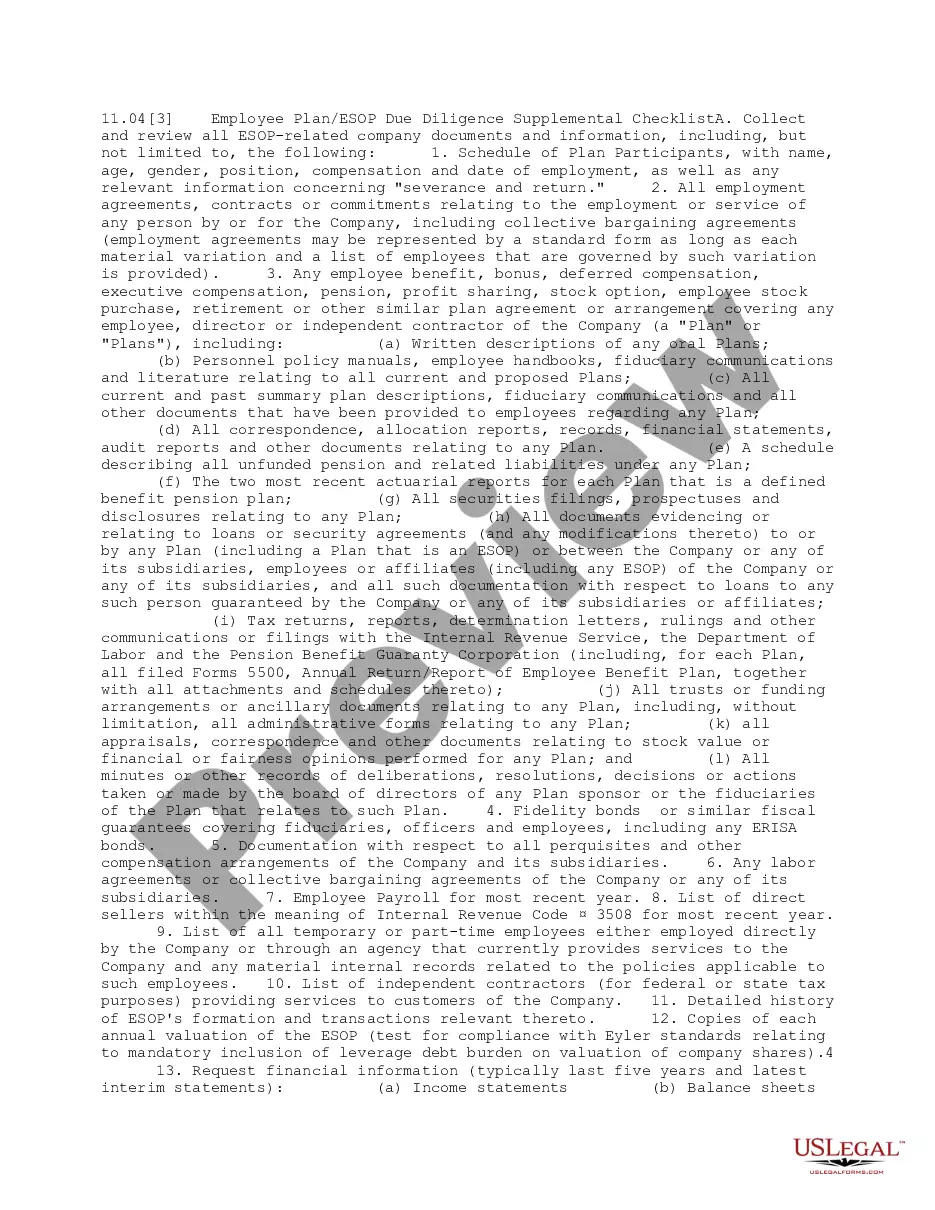
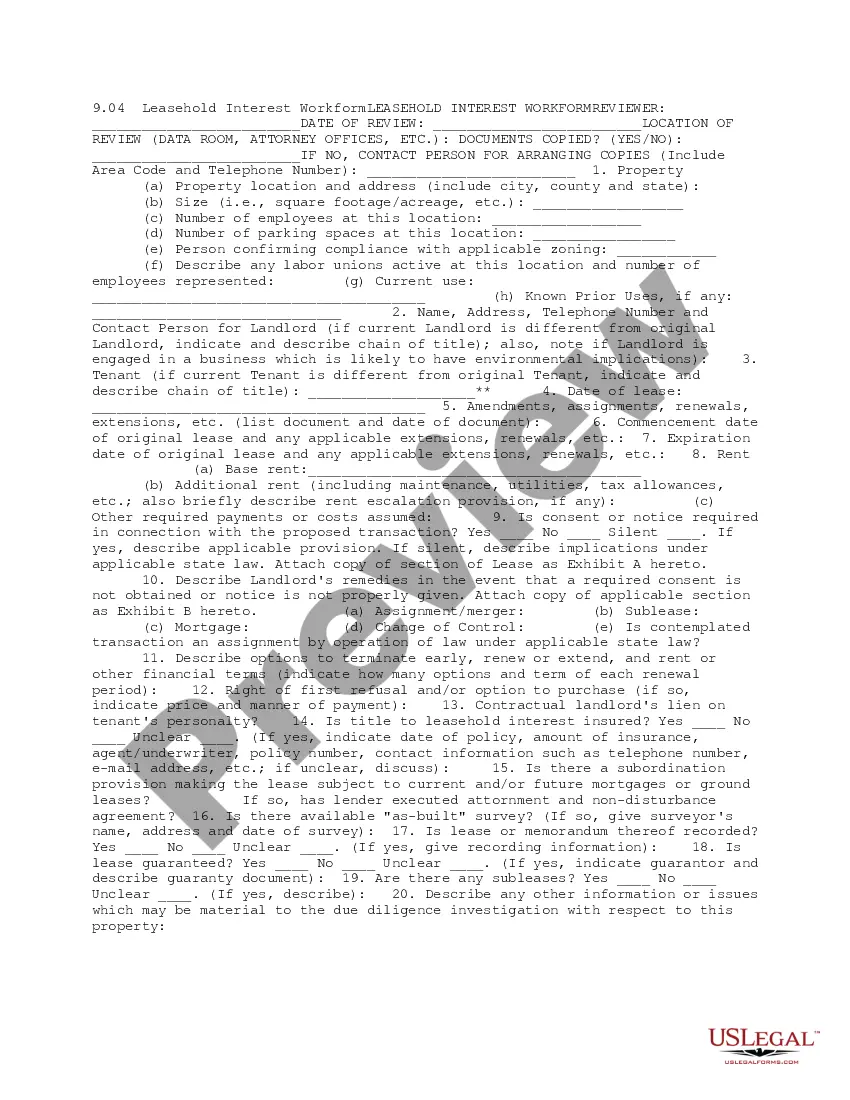
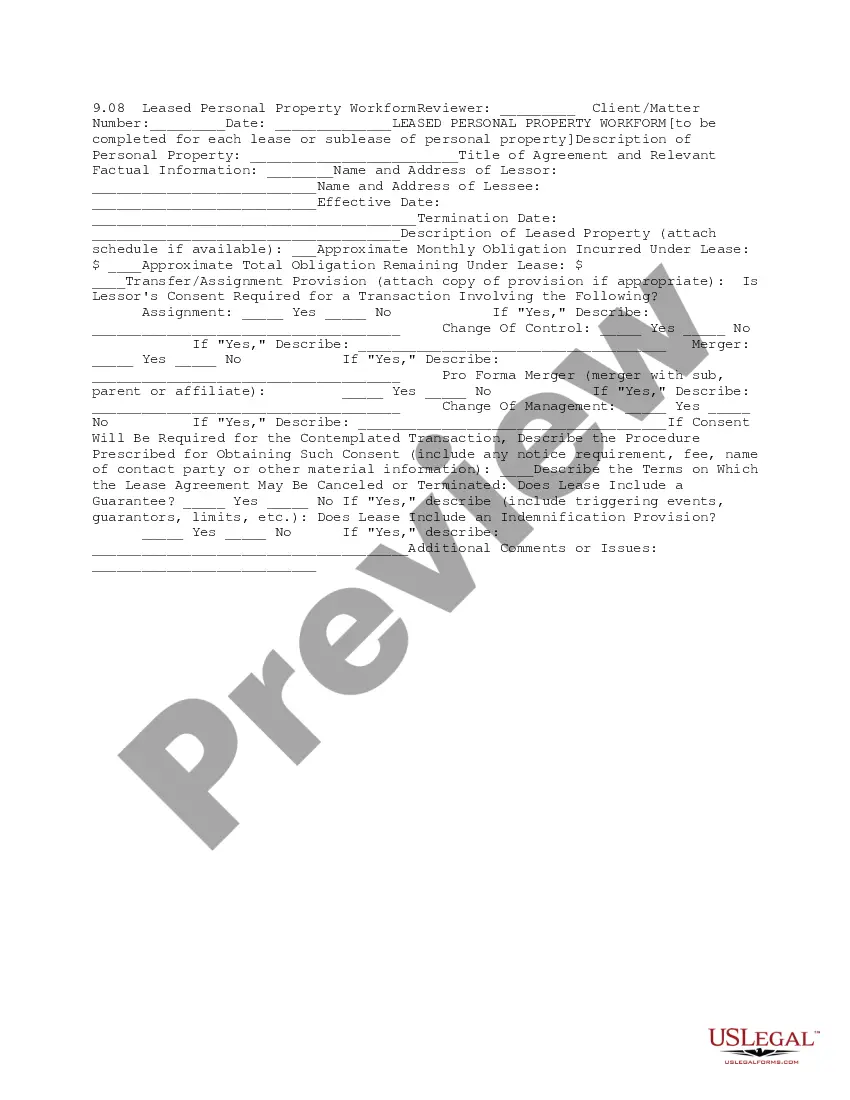
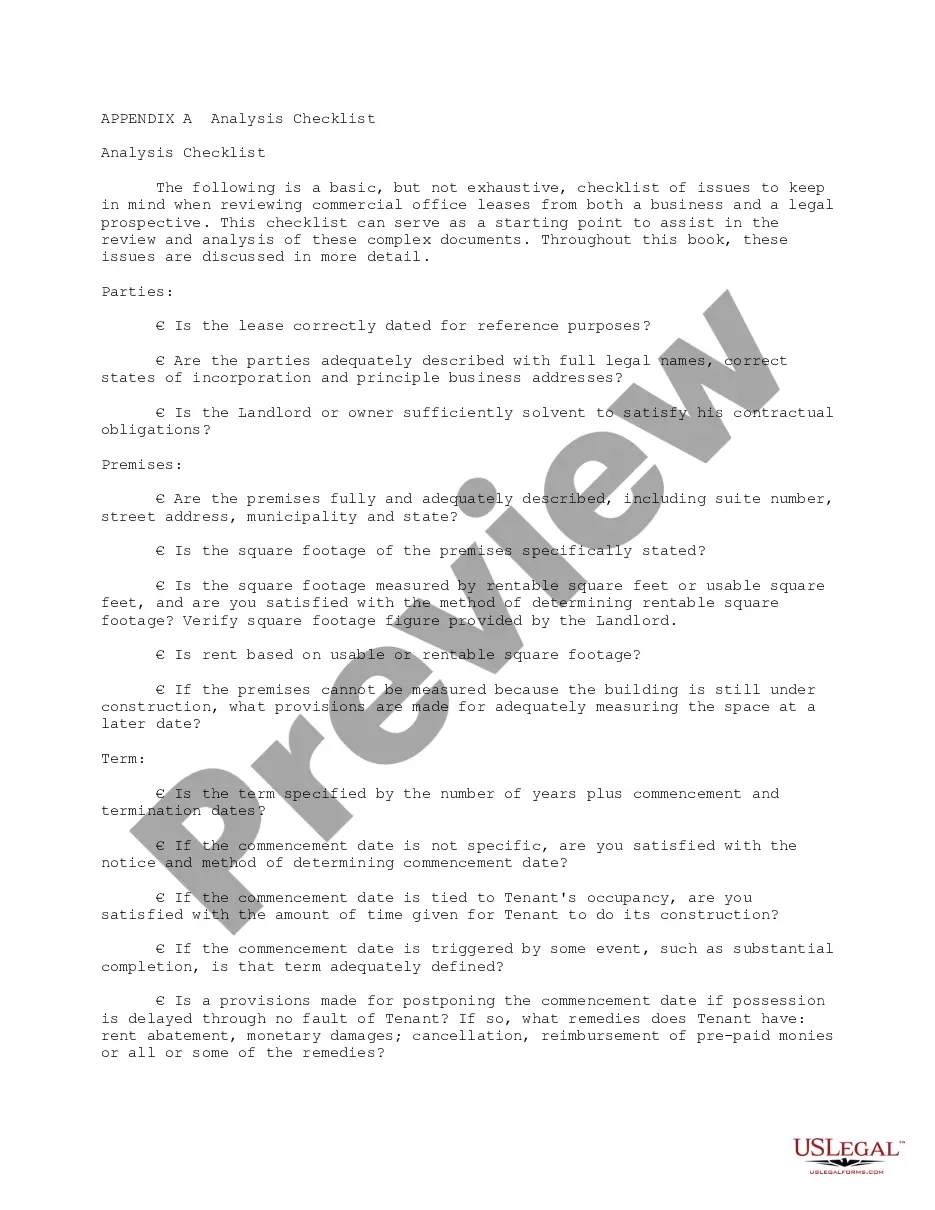
- Review of property leases for compliance
- Confirmation of rental agreements and income sources
- Assessment of property management and service provisions
- Identification of foreign shareholder tax implications
- Ensuring compliance with essential REIT tests



When to use this form
This form is used when acquiring or managing a REIT, particularly during the initial due diligence phase of a transaction. If you are a buyer, investor, or advisor involved in the formation or operation of a REIT, using this checklist will help you identify any potential legal or financial issues that may affect the transaction's success and legal compliance.
Who this form is for
- Real Estate Investors
- Financial Advisors and Analysts
- Owners and Operators of REITs
- Legal Professionals specializing in real estate law
- Tax Professionals or Accountants
How to prepare this document
- Gather information regarding property ownership and tax bases.
- Review relevant tax legislation that may impact the transaction.
- Confirm the earnings and profits status of the Target entity.
- Evaluate all lease agreements for REIT qualification.
- Identify any required modifications to charter documents for compliance.
Notarization guidance
This form usually doesn’t need to be notarized. However, local laws or specific transactions may require it. Our online notarization service, powered by Notarize, lets you complete it remotely through a secure video session, available 24/7.
Get your form ready online
Our built-in tools help you complete, sign, share, and store your documents in one place.
Make edits, fill in missing information, and update formatting in US Legal Forms—just like you would in MS Word.
Download a copy, print it, send it by email, or mail it via USPS—whatever works best for your next step.
Sign and collect signatures with our SignNow integration. Send to multiple recipients, set reminders, and more. Go Premium to unlock E-Sign.
If this form requires notarization, complete it online through a secure video call—no need to meet a notary in person or wait for an appointment.
We protect your documents and personal data by following strict security and privacy standards.

Make edits, fill in missing information, and update formatting in US Legal Forms—just like you would in MS Word.

Download a copy, print it, send it by email, or mail it via USPS—whatever works best for your next step.

Sign and collect signatures with our SignNow integration. Send to multiple recipients, set reminders, and more. Go Premium to unlock E-Sign.

If this form requires notarization, complete it online through a secure video call—no need to meet a notary in person or wait for an appointment.

We protect your documents and personal data by following strict security and privacy standards.
Avoid these common issues
- Failing to verify the REIT status of the Target entity.
- Neglecting to review compliance with rental income tests.
- Overlooking the significance of updated property appraisals.
- Ignoring state-specific tax implications during the due diligence process.
Benefits of completing this form online
- Convenience of immediate access to the checklist.
- Editability to customize the document for specific transactions.
- Reliability of information drafted by licensed attorneys.
- Streamlined completion process to ensure thorough review and compliance.
Legal use & context
- This checklist is designed for compliance with federal tax regulations governing REITs.
- Ensures that all compliance aspects are addressed to maintain REIT status.
- Failure to follow the checklist may result in disqualification of REIT advantages.
Key takeaways
- The checklist is crucial for ensuring REIT compliance during transactions.
- It addresses specific legal and financial considerations unique to REITs.
- Users must remain aware of state-specific requirements for full compliance.
Looking for another form?

Form popularity
FAQ
The REIT sector has now achieved gains in 4 of the first 11 months of 2020, with a 22.2% total return in November. Micro cap (+29.22%) and small cap REITs (+27.91%) surged in November, while large caps (+9.14%) saw smaller gains. 89.44% of REIT securities had a positive total return in November.
Invest at least 75% of total assets in real estate, cash, or U.S. Treasuries. Derive at least 75% of gross income from rents, interest on mortgages that finance real property, or real estate sales. Pay a minimum of 90% of taxable income in the form of shareholder dividends each year.
There are three types of REITs: Equity REITs which usually earn income from rents, Mortgage REITs that earn money from interest, and. Hybrid REITs, a combination that earns income from both rent and interest.
No corporate tax. High dividend yields. Total return potential. Access to commercial real estate. Portfolio diversification. Liquidity. Dividend taxation. Interest rate sensitivity.
REITs. The outlook for REITs in 2020 remains favorable. We expect modest economic growth and see few signs of recession on the horizon. Real estate markets enjoy low vacancy rates and a balance of new supply and growing demand, supporting rent growth and REIT earnings in the year ahead.
What is a REIT?To qualify as a REIT, a company must have the bulk of its assets and income connected to real estate investment and must distribute at least 90 percent of its taxable income to shareholders annually in the form of dividends.
2020 Performance Recap Equity REITs (VNQ) finished 2020 with price-returns of -8.5% and Mortgage REITs (REM) declined by 28.5%. This compares with the 16.2% gain on the S&P 500, the 11.8% gain on the S&P Mid-Cap 400 (MDY).
Invest at least 75% of total assets in real estate, cash, or U.S. Treasuries. Derive at least 75% of gross income from rents, interest on mortgages that finance real property, or real estate sales. Pay a minimum of 90% of taxable income in the form of shareholder dividends each year.
Bad news: REITs have suffered large losses and significantly underperformed in 2020. Good news: Most of these REITs will survive and fully recover. We think that the pre-crisis valuations are too low now that we are in a 0% interest rate world.