Mutual Non-Disclosure Agreement between Companies
Overview of this form
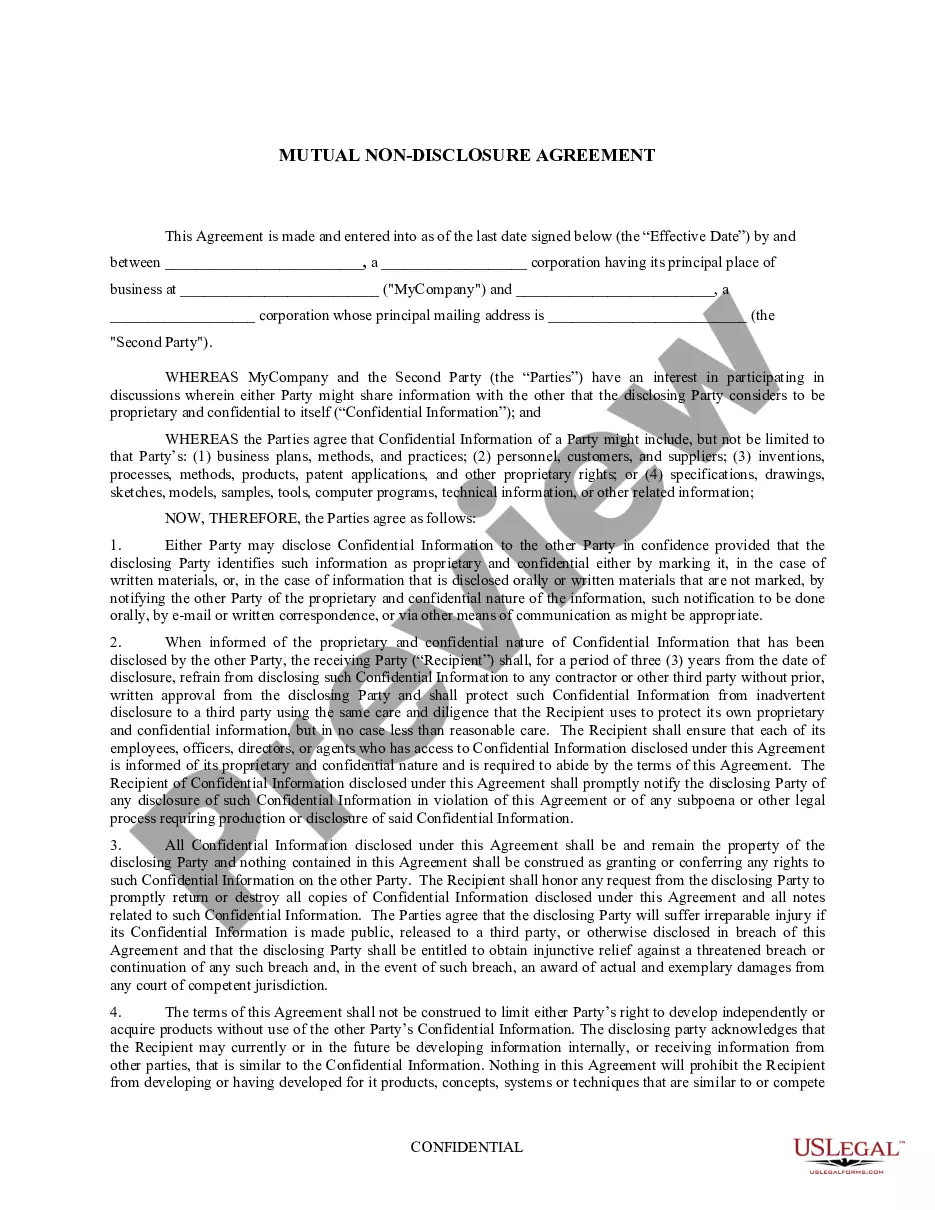
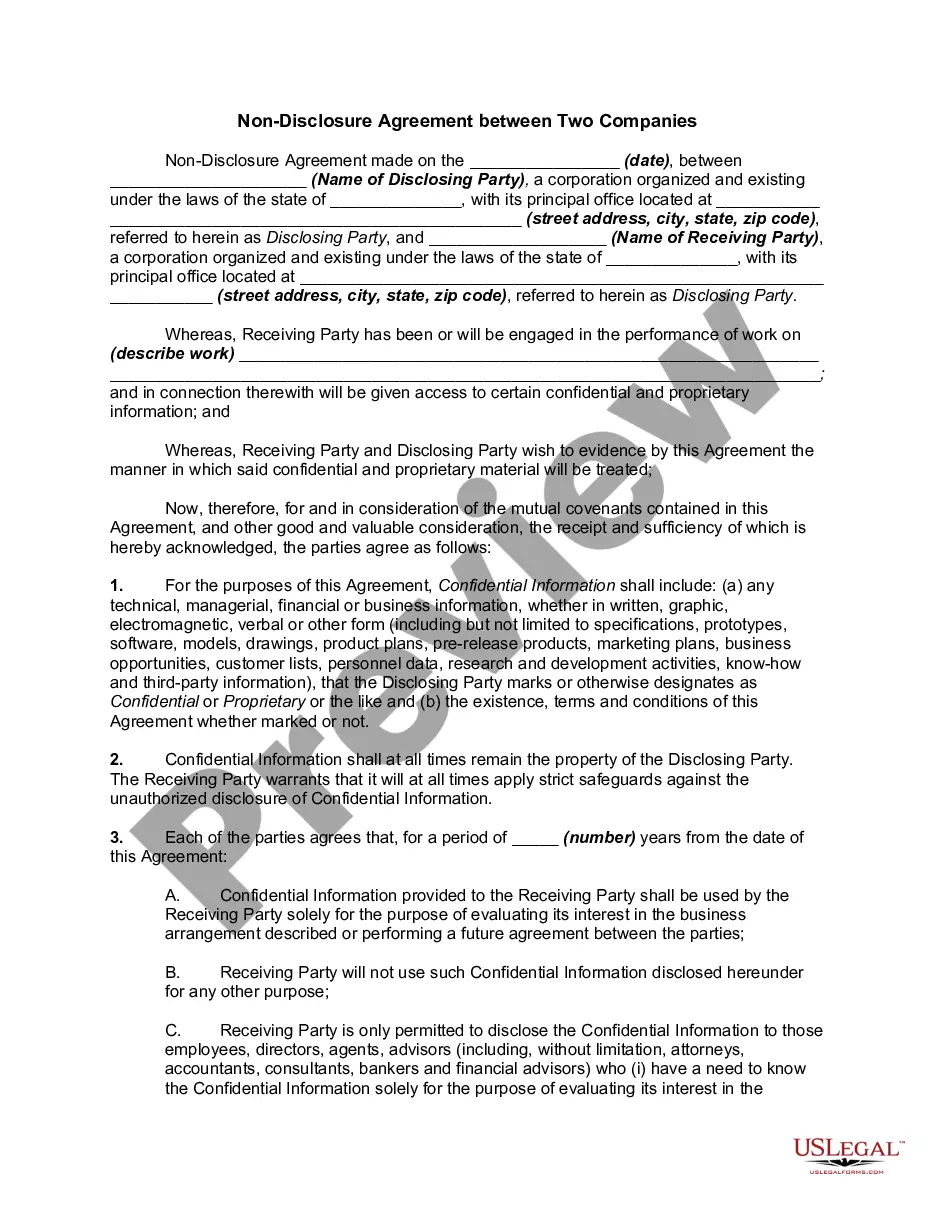
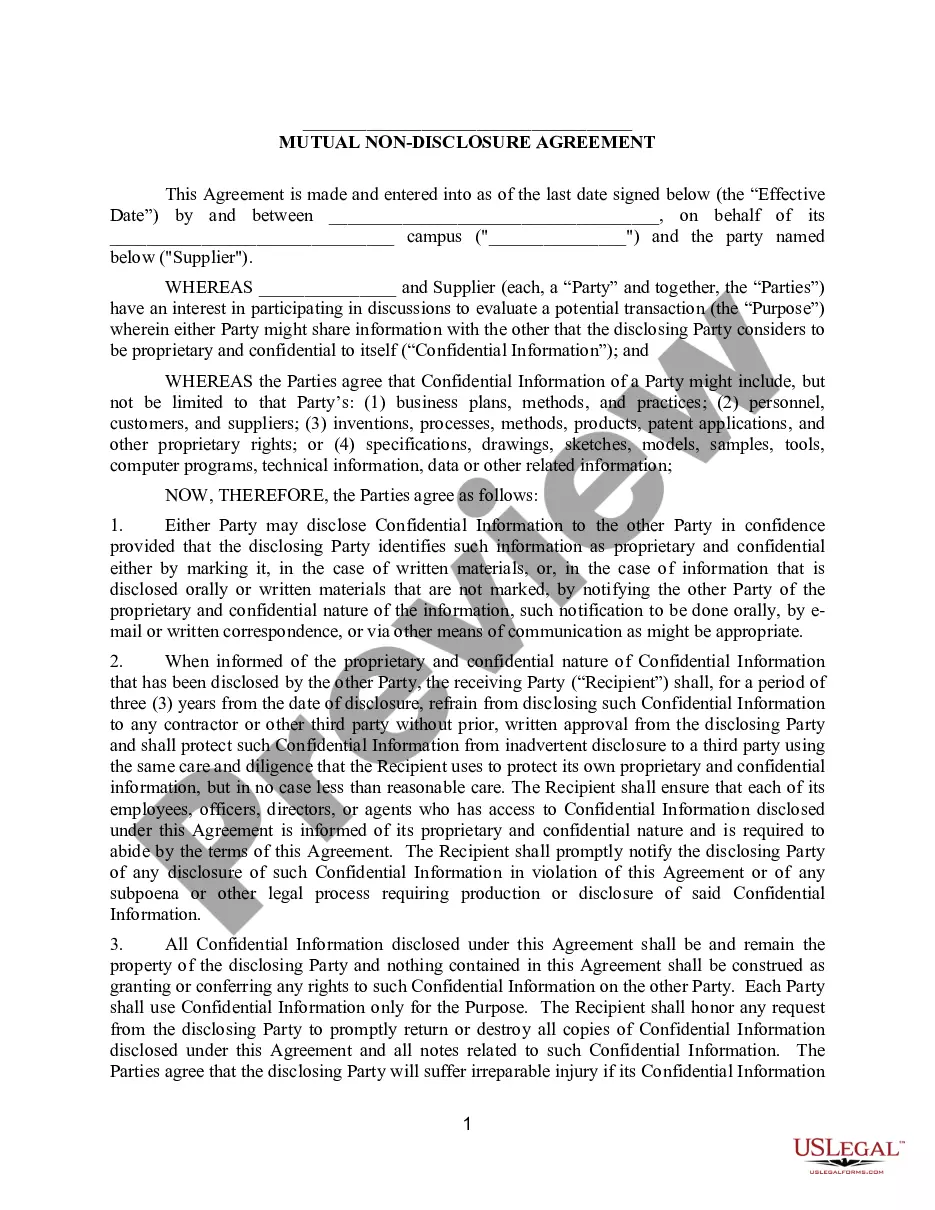
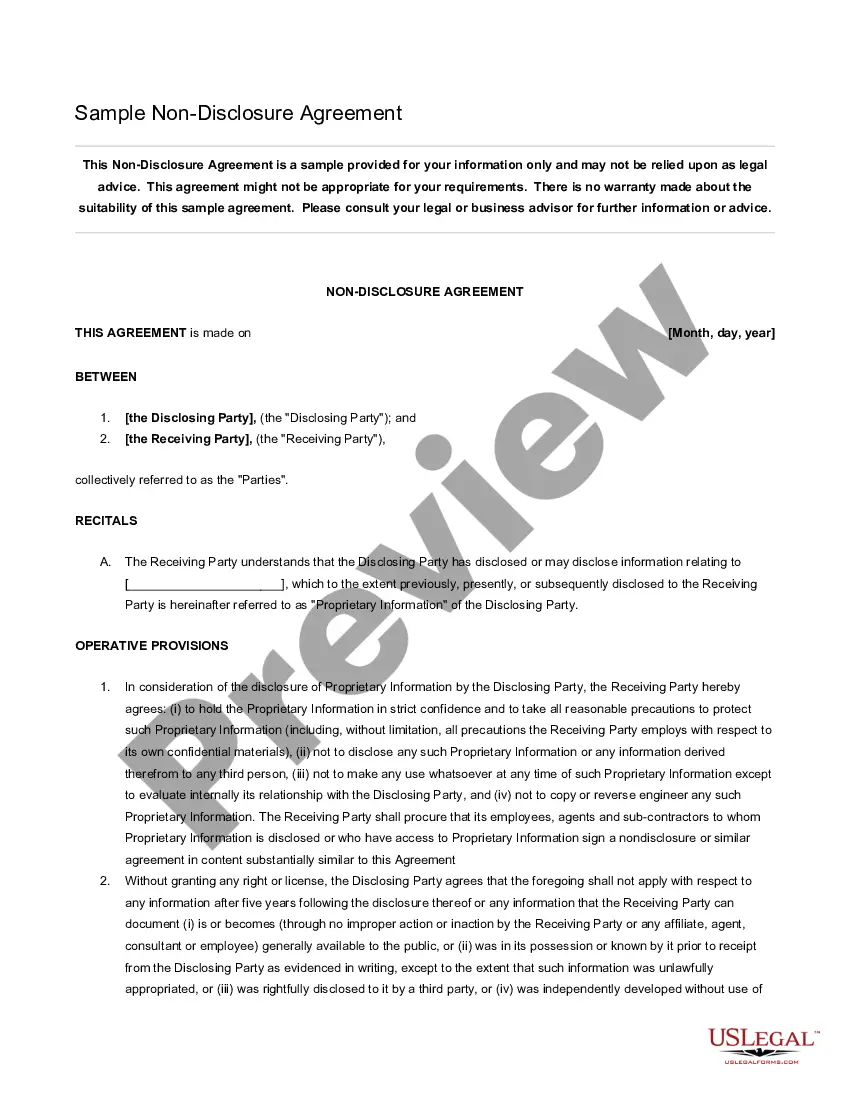
A Mutual Non-Disclosure Agreement (NDA) between companies is a legally binding document designed to protect confidential information shared between two parties during discussions or negotiations. This agreement ensures that sensitive data, such as business plans, customer lists, and proprietary technologies, remains secure and cannot be disclosed to unauthorized individuals. Unlike unilateral NDAs, which protect only one party's information, a mutual NDA safeguards the confidentiality of both parties involved, making it a crucial tool for businesses looking to collaborate while maintaining privacy.
Key parts of this document
- Effective Date: Marks the commencement of the agreement.
- Parties Involved: Identifies the organizations entering into the agreement.
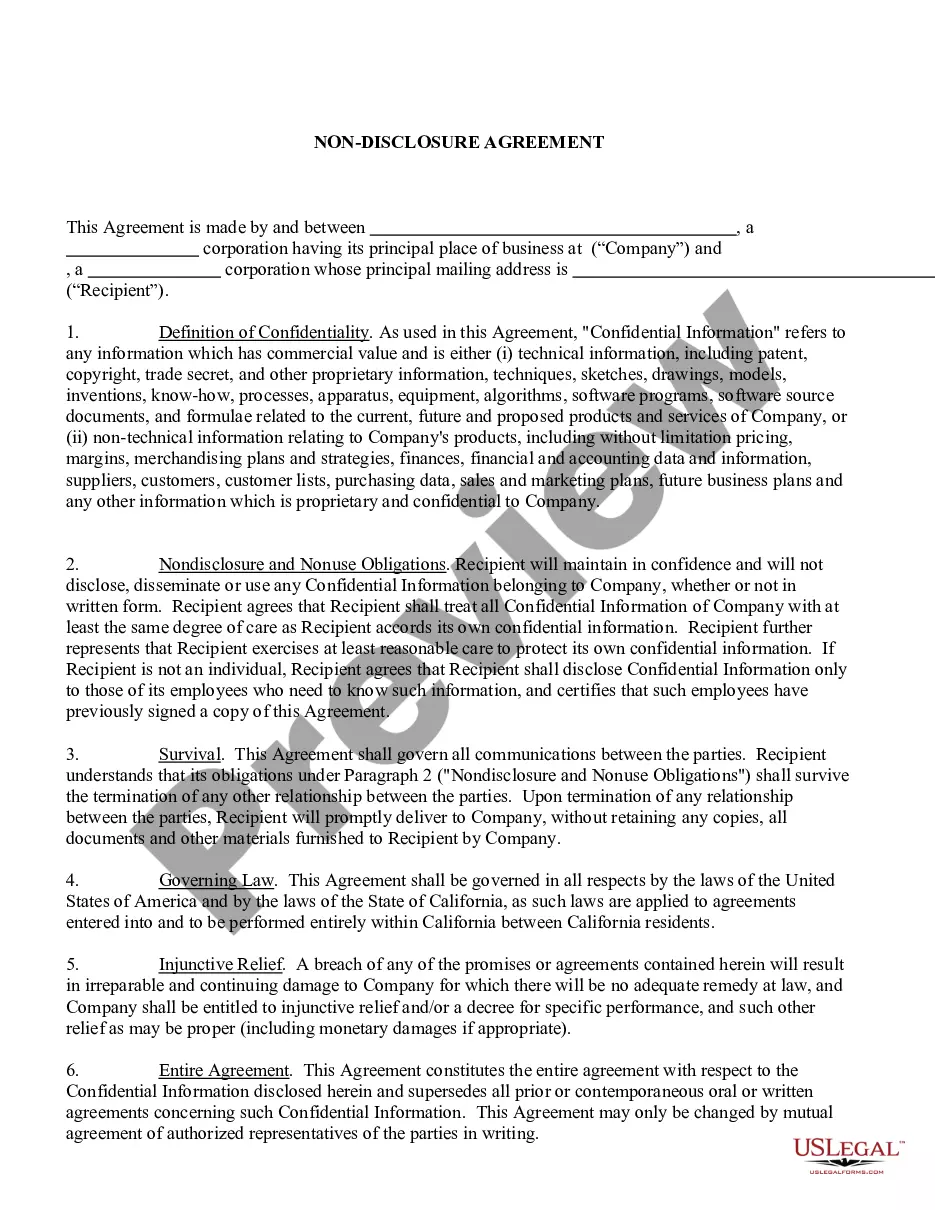
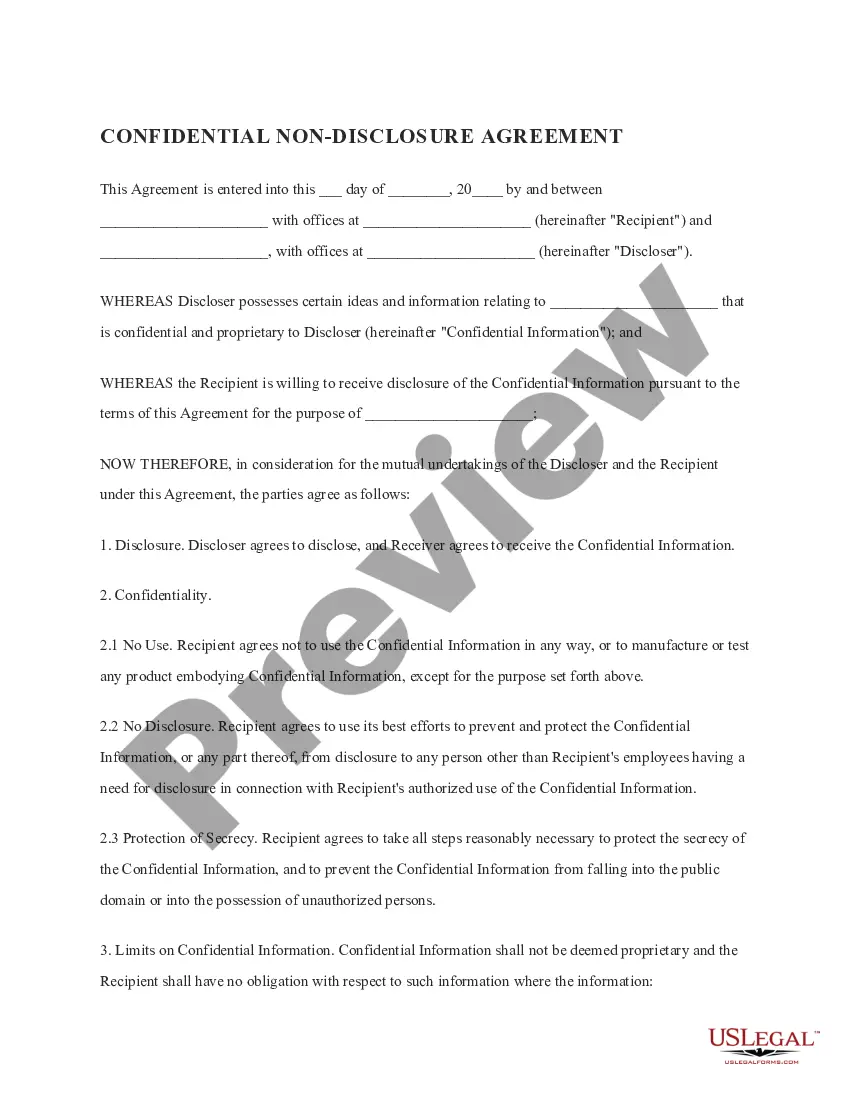
- Confidential Information: Defines what constitutes proprietary information and outlines obligations related to its protection.
- Disclosure Conditions: Specifies how confidential information can be shared and identified by the parties.
- Duration of Confidentiality: States the period during which the information must remain confidential, typically three years.
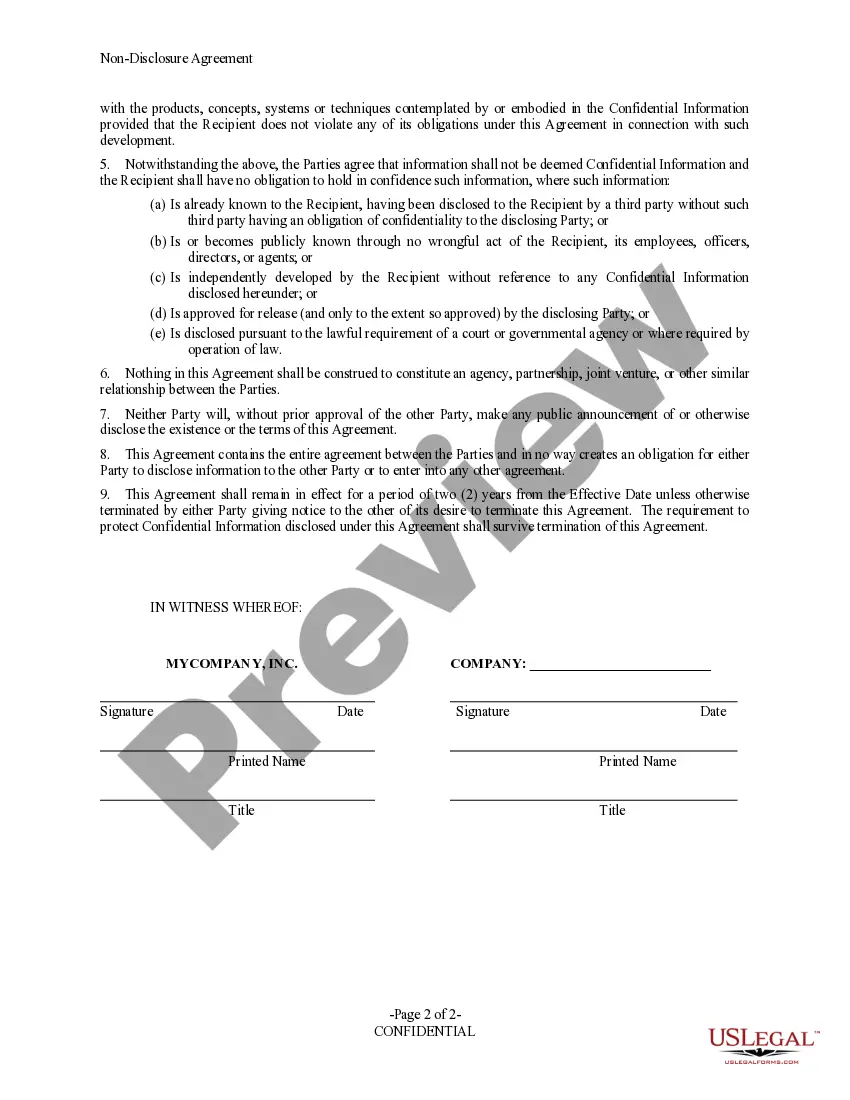
- Exclusions from Confidential Information: Clarifies the information that is not considered confidential.
When to use this form
This Mutual Non-Disclosure Agreement is ideal for businesses entering discussions for collaboration, joint ventures, or any situation where sensitive information may be shared. Use this agreement when you want to:
- Protect proprietary business strategies during negotiations for a merger or partnership.
- Discuss new product ideas and innovations without risking exposure to competitors.
- Share internal data or trade secrets with potential partners or clients.
Intended users of this form
- Business owners looking to protect their company's sensitive information.
- Companies entering partnerships that require the exchange of proprietary data.
- Startups collaborating with established businesses or investors.
- Parties engaging in negotiations for mergers or joint ventures.
Instructions for completing this form
- Identify the parties: Enter the names and business details of both companies involved.
- Specify the effective date: Insert the date when the agreement will take effect.
- Define the Confidential Information: Clearly outline what will be considered confidential information.
- Determine the duration of confidentiality: Indicate the specific time frame (e.g., three years) for which the information must remain protected.
- Gather signatures: Ensure representatives from both parties sign and date the agreement to make it valid.
Does this form need to be notarized?
This form does not typically require notarization unless specified by local law. However, having the agreement notarized can provide an additional layer of legitimacy and proof of intent if disputes arise.
Get your form ready online
Our built-in tools help you complete, sign, share, and store your documents in one place.
Make edits, fill in missing information, and update formatting in US Legal Forms—just like you would in MS Word.
Download a copy, print it, send it by email, or mail it via USPS—whatever works best for your next step.
Sign and collect signatures with our SignNow integration. Send to multiple recipients, set reminders, and more. Go Premium to unlock E-Sign.
If this form requires notarization, complete it online through a secure video call—no need to meet a notary in person or wait for an appointment.
We protect your documents and personal data by following strict security and privacy standards.

Make edits, fill in missing information, and update formatting in US Legal Forms—just like you would in MS Word.

Download a copy, print it, send it by email, or mail it via USPS—whatever works best for your next step.

Sign and collect signatures with our SignNow integration. Send to multiple recipients, set reminders, and more. Go Premium to unlock E-Sign.

If this form requires notarization, complete it online through a secure video call—no need to meet a notary in person or wait for an appointment.

We protect your documents and personal data by following strict security and privacy standards.
Common mistakes to avoid
- Failing to clearly define what constitutes confidential information.
- Not including an expiration date for the confidentiality obligations.
- Neglecting to obtain signatures from both parties, rendering the agreement unenforceable.
- Omitting terms related to the return or destruction of confidential information.
Why complete this form online
- Immediate access to a professionally drafted legal document.
- Ease of customization to fit specific business needs.
- Ability to download and complete the form at your convenience.
- Secure storage of your document electronically for future reference.
Looking for another form?
Form popularity
FAQ
A Mutual Non-Disclosure Agreement (Mutual NDA) is a confidentiality agreement that allows two parties (businesses or individuals) to share and receive proprietary information.
An NDA is a legally binding agreement between at least two parties that outlines the confidential knowledge, information, or material that parties want to share with each other for business purposes but also to restrict access to.
NDAs can be either mutual or one way. A mutual NDA requires each party to protect the confidential information to the other party. A one-way NDA contemplates that only one party will be disclosing confidential information.
Sample Mutual NDA When Apple and Gorilla Glass partnered to make iPhones together, both had protections in their NDA to protect their proprietary information. Apple even went as far as to include a $50 million penalty if Gorilla Glass decided to break the agreement.
In general, a non-disclosure agreement can be categorized as either a unilateral or mutual/bilateral NDA. In unilateral NDAs, only one party agrees not to disclose classified information. A mutual NDA means that both/all parties agree not to share any confidential information.
A mutual non-disclosure agreement between individuals is a contract between two parties analyzing a potential business deal or some other potential merger that may have a collective benefit to both parties.
Sample Mutual NDA When Apple and Gorilla Glass partnered to make iPhones together, both had protections in their NDA to protect their proprietary information. Apple even went as far as to include a $50 million penalty if Gorilla Glass decided to break the agreement.