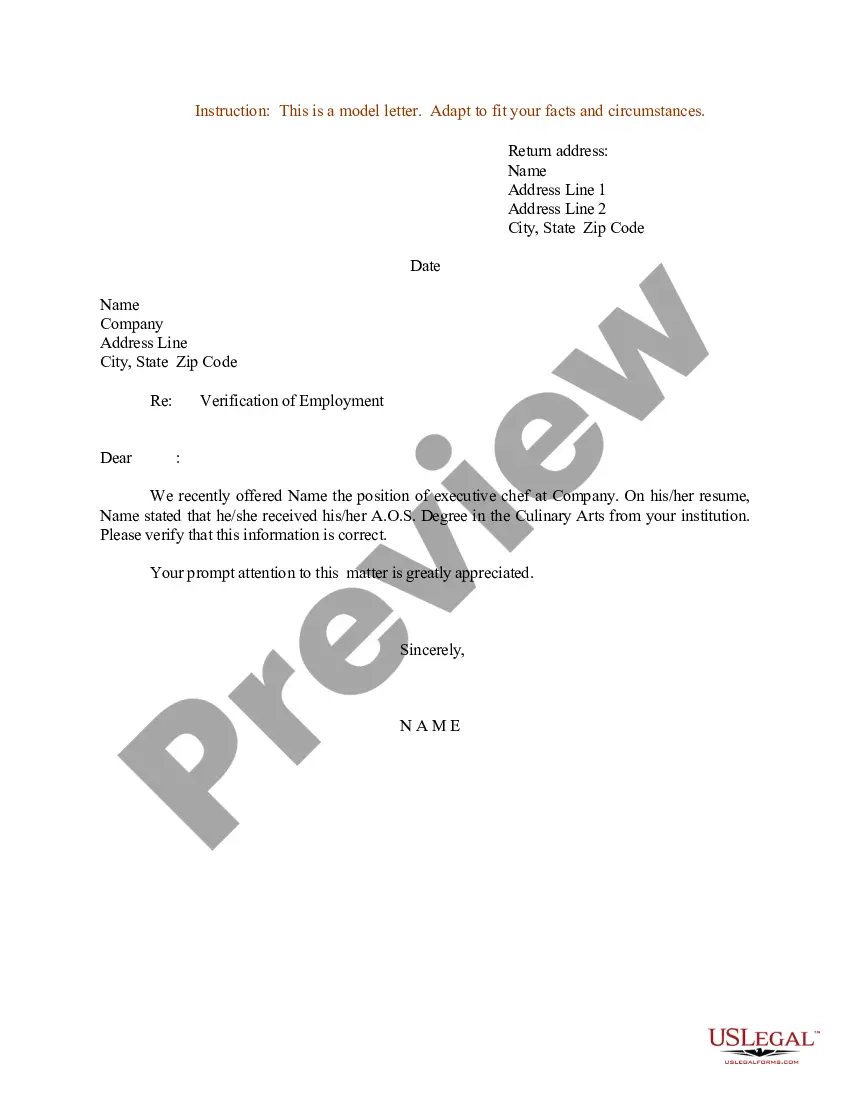
Employment Verification Letter for Remote Employee
Understanding this form
The Employment Verification Letter for Remote Employee is a document that confirms the employment status of an individual working remotely. This form is crucial when a remote employee is applying for loans, housing, or other purposes where proof of employment is required. It differs from other employment verification forms by specifically addressing remote work arrangements, ensuring that it is tailored to the unique circumstances of telecommuting employees.
What’s included in this form
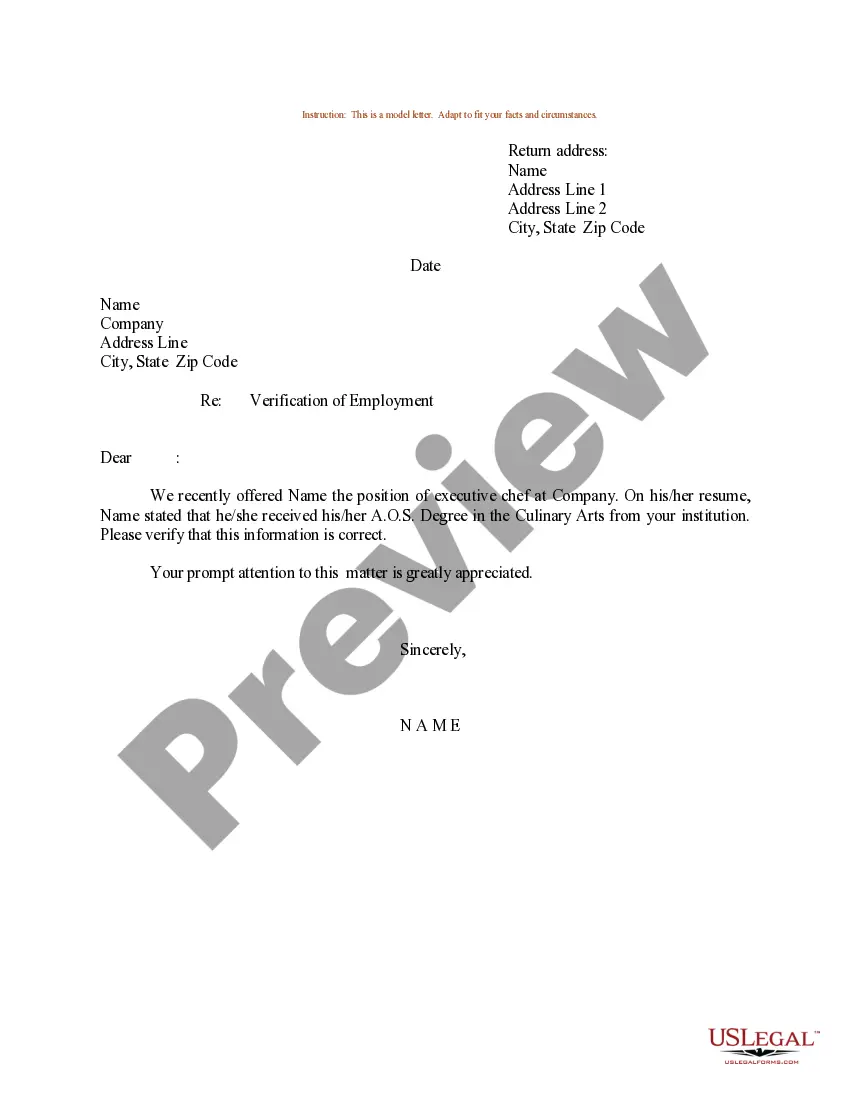
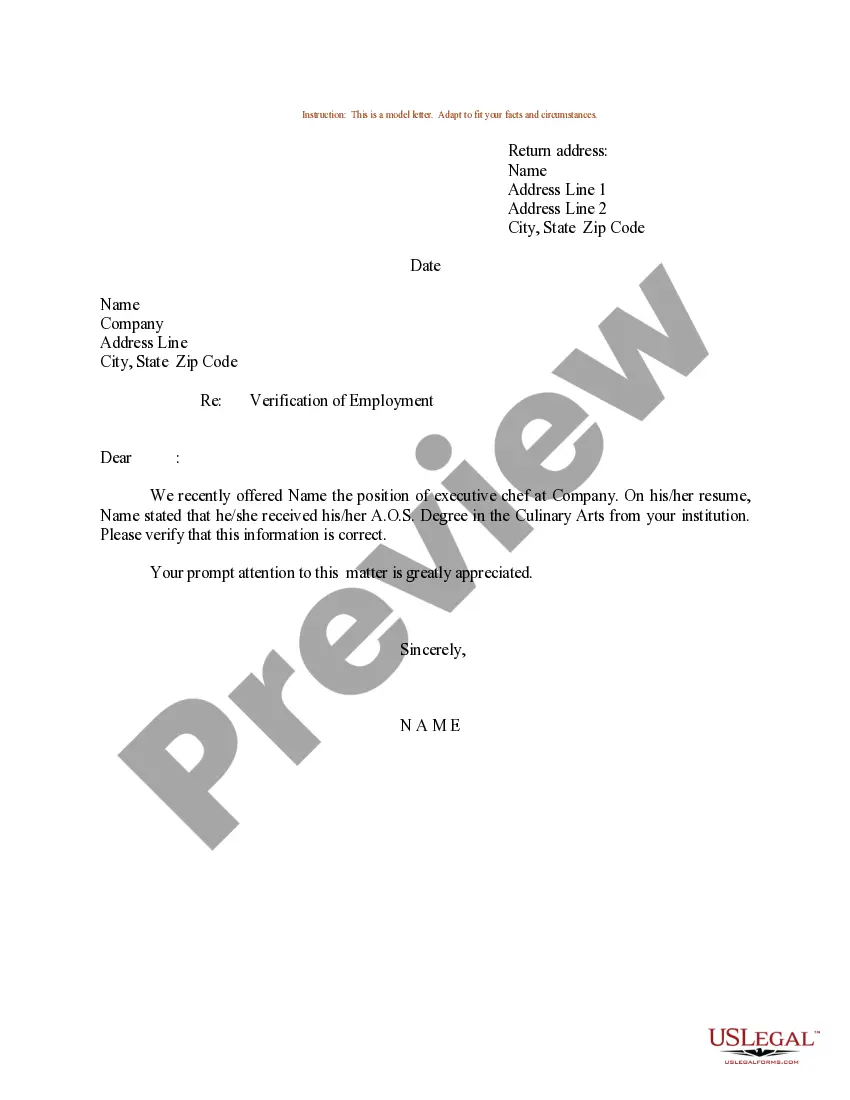
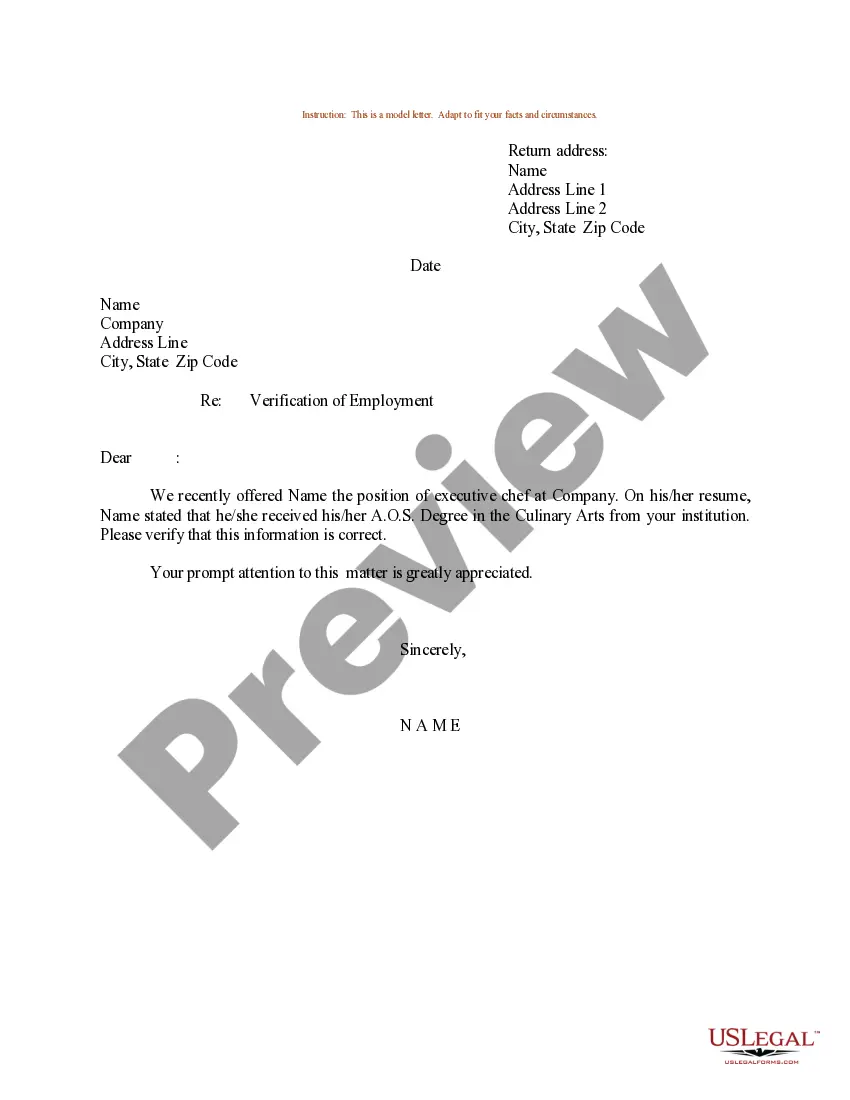
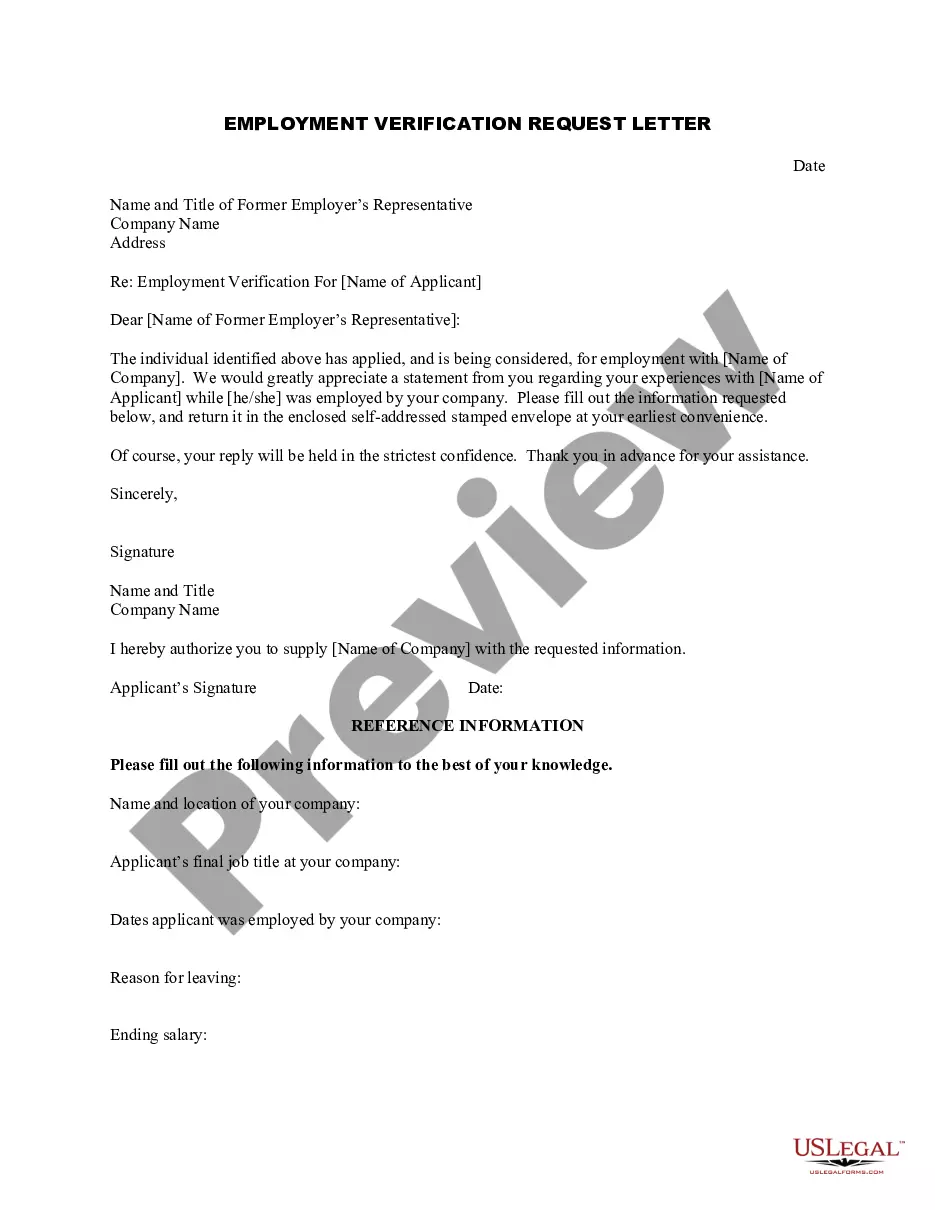
- Return address of the employer or HR representative.
- Recipient's details, including the name and address of the entity requesting verification.
- Date of the letter.
- Subject line indicating the purpose: Verification of Employment.
- Body content confirming the employee's status and appreciation for prompt attention.
- Signature line for the employer or HR representative.

Common use cases
This form should be used when a remote employee needs to validate their employment for various situations, such as applying for a mortgage, rental property, or when required for background checks. It is also helpful in confirming employment status when a remote worker is applying for government assistance or loan approvals.
Who should use this form
- Employers looking to verify the employment status of remote employees.
- Human resources personnel tasked with providing proof of employment.
- Remote employees required to provide employment verification to third parties.
Steps to complete this form
- Identify and enter the return address of the employer or HR representative.
- Fill in the recipientâs name and address where the verification will be sent.
- Include the current date on the letter.
- Write a clear subject line stating the purpose of the letter: Verification of Employment.
- Compose the body of the letter confirming the employee's position, employment status, and any pertinent details as needed.
- Sign the letter, including the name and title of the person providing the verification.
Does this document require notarization?
This form does not typically require notarization unless specified by local law. It is advisable to check with the requesting entity to determine if notarization is necessary.
Get your form ready online
Our built-in tools help you complete, sign, share, and store your documents in one place.
Make edits, fill in missing information, and update formatting in US Legal Forms—just like you would in MS Word.
Download a copy, print it, send it by email, or mail it via USPS—whatever works best for your next step.
Sign and collect signatures with our SignNow integration. Send to multiple recipients, set reminders, and more. Go Premium to unlock E-Sign.
If this form requires notarization, complete it online through a secure video call—no need to meet a notary in person or wait for an appointment.
We protect your documents and personal data by following strict security and privacy standards.

Make edits, fill in missing information, and update formatting in US Legal Forms—just like you would in MS Word.

Download a copy, print it, send it by email, or mail it via USPS—whatever works best for your next step.

Sign and collect signatures with our SignNow integration. Send to multiple recipients, set reminders, and more. Go Premium to unlock E-Sign.

If this form requires notarization, complete it online through a secure video call—no need to meet a notary in person or wait for an appointment.

We protect your documents and personal data by following strict security and privacy standards.
Common mistakes to avoid
- Failing to include complete and accurate recipient information.
- Not specifying the employee's remote work status, which is crucial.
- Omitting the date, which can cause confusion about the validity period.
- Using an informal tone instead of a professional one.
Advantages of online completion
- Quick access to editable templates that save time.
- Convenience of downloading and printing from anywhere.
- Reliability ensured by templates drafted by licensed attorneys.
- Immediate availability without the need for in-person appointments.
What to keep in mind
- An Employment Verification Letter is essential for confirming remote employment status.
- This form should be used in various scenarios like loan applications and housing requests.
- Completing the form accurately ensures that the verification process is seamless.
Looking for another form?
Form popularity
FAQ
Salary: State the starting salary, frequency of payment and method of payment, such as by cheque or direct deposit. Benefits: Briefly describe the benefits coverage provided by your company such as dental, health and/or other types of insurance. Dates and Times: Be explicit.
You've lied on your resume or stretched the truth a little or a lot, and now you're worried.If you're caught lying before you're hired, you won't get a job offer. If the organization discovers you lied after you've been put on the payroll, you can be fired. Lying on your resume can also impact your future employment.
Be brief and straightforward, providing only the information requested or required. Information such as company names, job and course titles etc, should be formally noted. Offer to provide further information if required. Sign the letter to further verify the information.
Employer address. Name and address of the company requesting verification. Employee name. Employment dates. Employee job title. Employee job description. Employee current salary. Reason for termination.
An employment verification letter confirms the current or former employee's employment status. The employment verification letter is a response to a request for information from a potential employer, government agency, or bank, for example.The potential employer may verify dates of employment and salary.
Employer address. Name and address of the company requesting verification. Employee name. Employment dates. Employee job title. Employee job description. Employee current salary. Reason for termination.
An employment verification letter confirms the current or former employee's employment status. The employment verification letter is a response to a request for information from a potential employer, government agency, or bank, for example.The potential employer may verify dates of employment and salary.
For those who want to take things a step further, fake employment verification services are the most common method for falsifying an employment verification. These fake employment verification services provide a number of solutions to help you falsify employment information.
Pay stubs and W-2 forms are commonly used as proof of employment. Your employer may write a verification letter or use an automated verification service to confirm your job title, employment history, and salary information.