Maryland Quitclaim Deed - Three Individuals to Husband and Wife
What this document covers
A Quitclaim Deed is a legal document used to transfer ownership of real property from one party to another. This specific form, the Quitclaim Deed for Three Individuals to Husband and Wife, is designed for situations where three individuals (the Grantors) wish to convey property to a married couple (the Grantees). This deed allows the Grantees to hold the property as either tenants in common or joint tenants with the right of survivorship, distinguishing it from other deed types that may have different implications for ownership and inheritance.
Form components explained
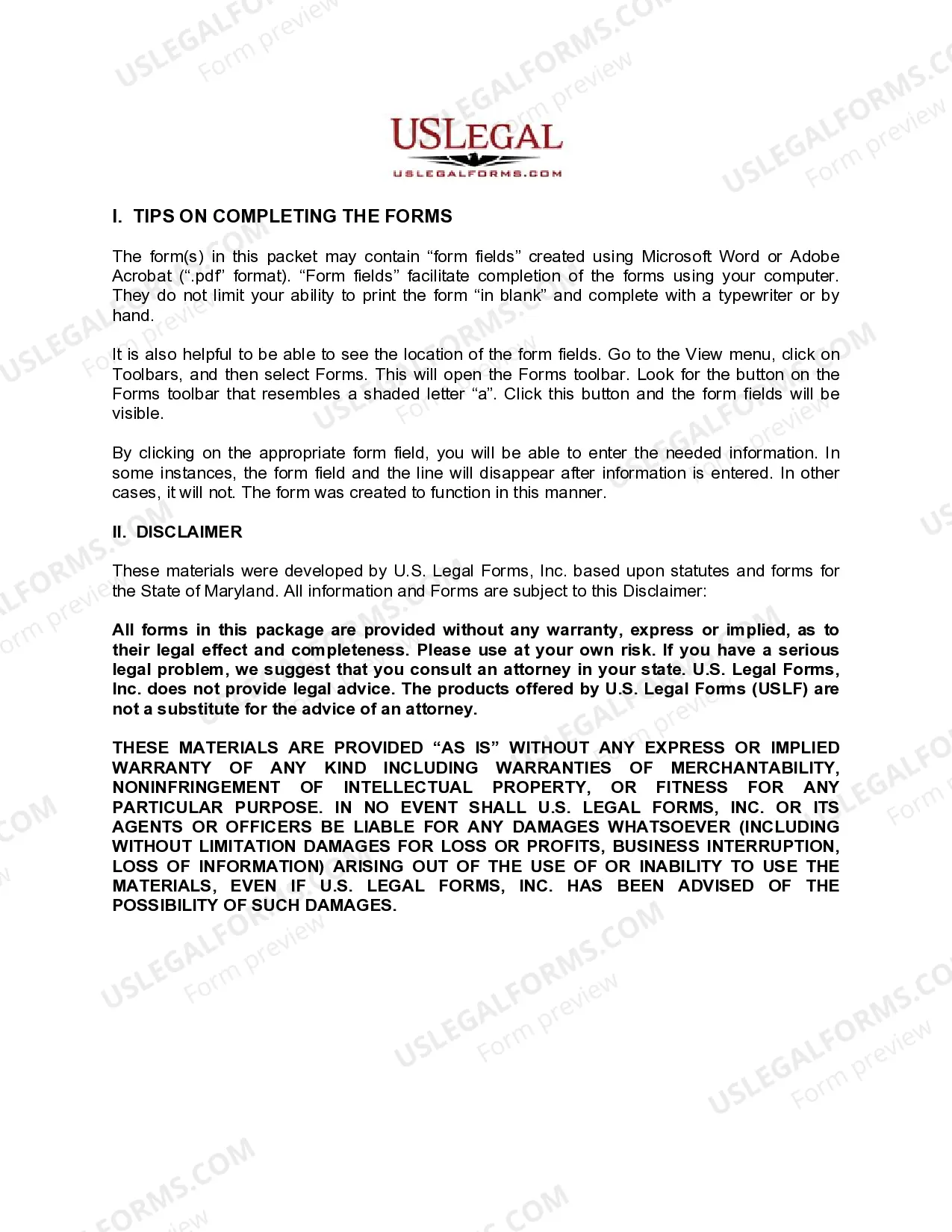
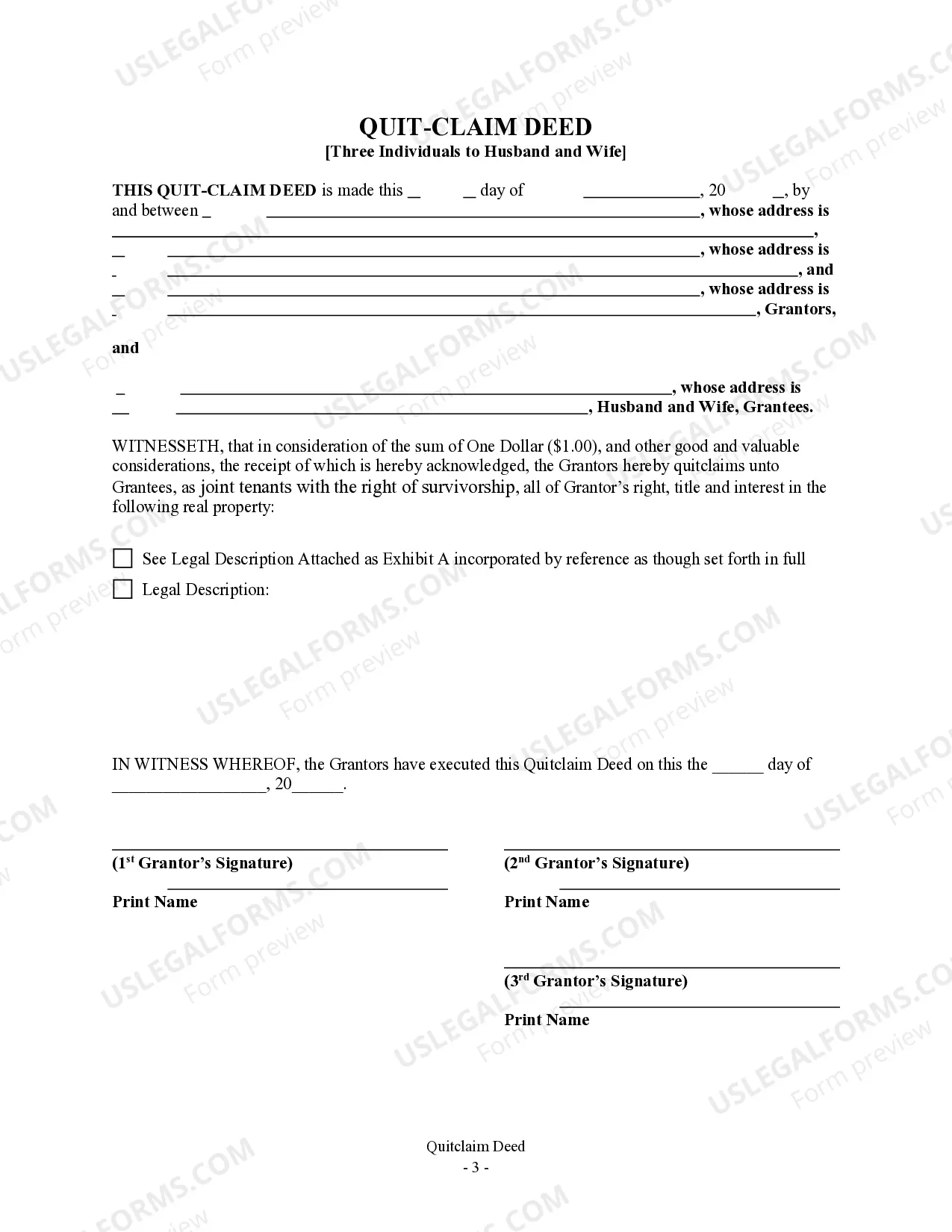
- Grantors: The three individuals transferring their interest in the property.
- Grantees: The husband and wife receiving the property.
- Property Description: The legal description of the property being conveyed.
- Tenancy Type: Specifies how the Grantees will hold the property (tenants in common or joint tenants with right of survivorship).
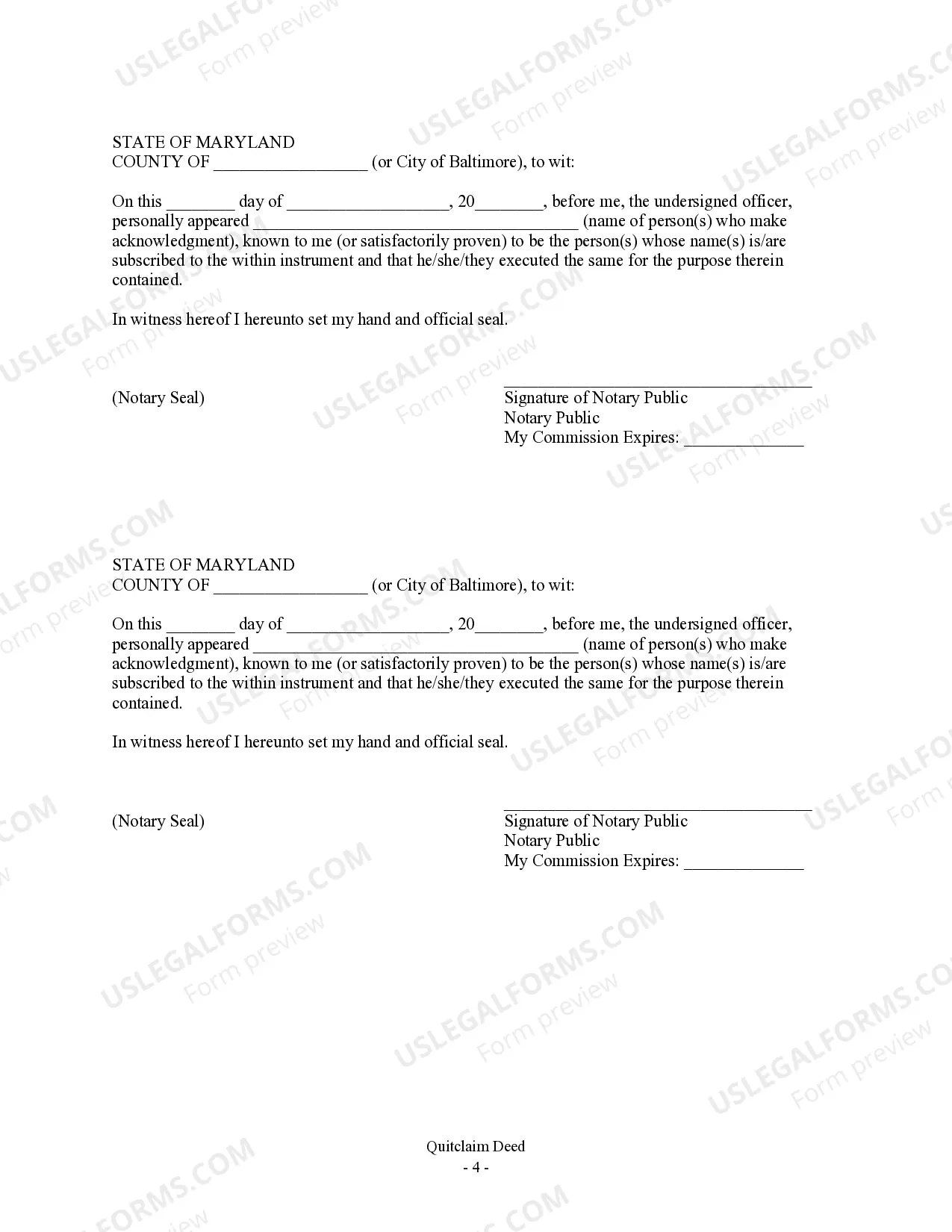
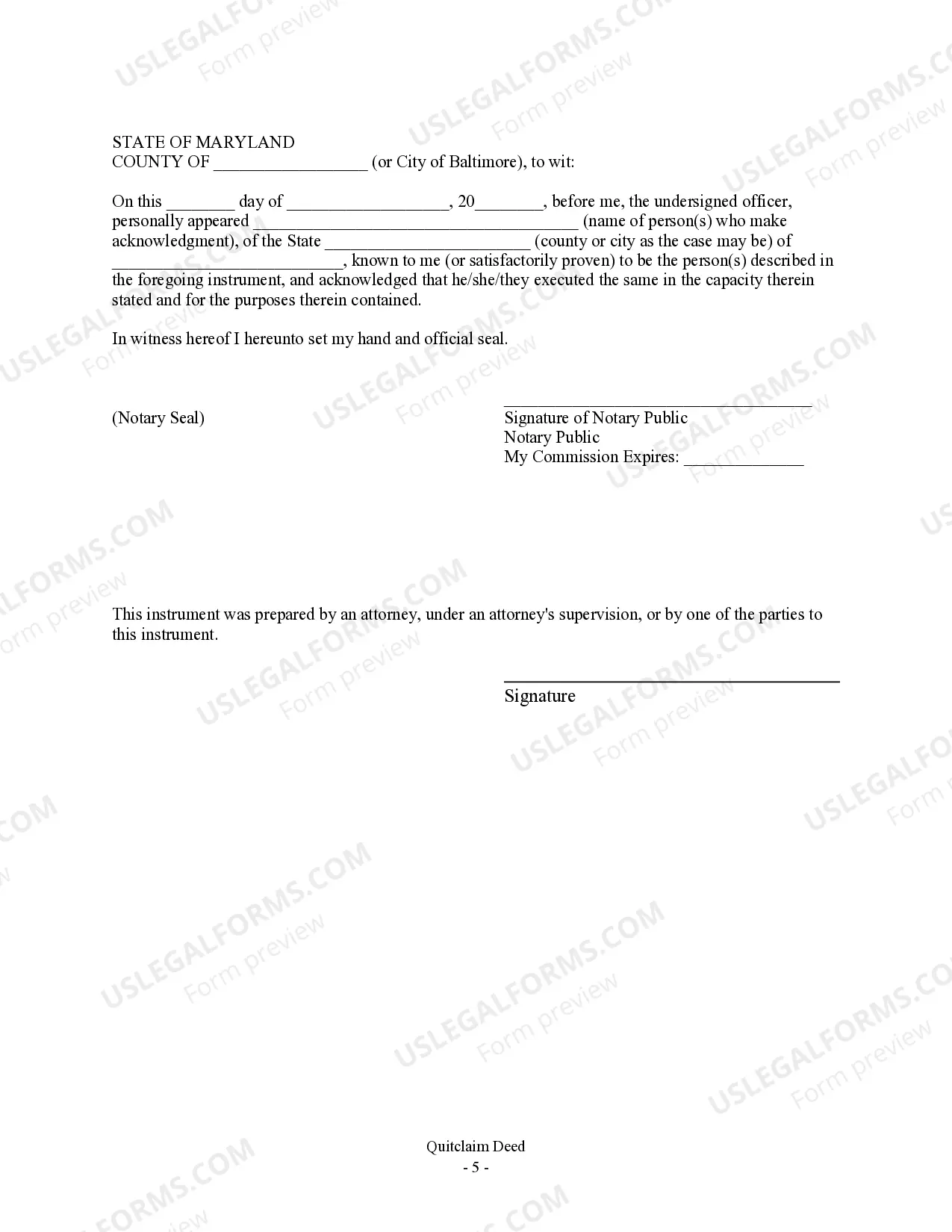
- Notarization Requirement: Information regarding the necessity of notarizing the deed.






When this form is needed
This form is typically used when multiple parties wish to transfer real estate to a married couple, especially when simplifying property ownership during estate planning, divorce settlements, or family transactions. It is particularly useful in situations where the Grantors do not wish to retain any claim to the property after the transfer.
Who needs this form
This form is appropriate for:
- Individuals looking to convey property to a husband and wife.
- Family members involved in property transfers.
- Parties participating in estate planning or property division.
- Anyone needing a straightforward property transfer without complex legal requirements.
How to complete this form
To effectively complete the Quitclaim Deed, follow these steps:
- Identify the parties involved: Clearly state the names of the Grantors and Grantees.
- Specify the property: Provide a legal description and any relevant details of the property being transferred.
- Indicate the type of tenancy: Decide if the Grantees will hold the property as tenants in common or joint tenants with the right of survivorship.
- Enter dates and signatures: Ensure all parties date and sign the document, with any required witness signatures, if applicable.
- Notarize the document: If required, have the deed notarized to finalize the transfer.
Notarization requirements for this form
Yes, this form must be notarized to be legally valid. Notarization helps verify the identities of the Grantors and ensures the integrity of the property transfer. U.S. Legal Forms provides integrated online notarization services, allowing users to meet this legal requirement easily, securely, and without the need for travel.
Get your form ready online
Our built-in tools help you complete, sign, share, and store your documents in one place.
Make edits, fill in missing information, and update formatting in US Legal Forms—just like you would in MS Word.
Download a copy, print it, send it by email, or mail it via USPS—whatever works best for your next step.
Sign and collect signatures with our SignNow integration. Send to multiple recipients, set reminders, and more. Go Premium to unlock E-Sign.
If this form requires notarization, complete it online through a secure video call—no need to meet a notary in person or wait for an appointment.
We protect your documents and personal data by following strict security and privacy standards.

Make edits, fill in missing information, and update formatting in US Legal Forms—just like you would in MS Word.

Download a copy, print it, send it by email, or mail it via USPS—whatever works best for your next step.

Sign and collect signatures with our SignNow integration. Send to multiple recipients, set reminders, and more. Go Premium to unlock E-Sign.

If this form requires notarization, complete it online through a secure video call—no need to meet a notary in person or wait for an appointment.

We protect your documents and personal data by following strict security and privacy standards.
Mistakes to watch out for
- Failing to provide a complete legal description of the property.
- Not specifying the tenancy type, which can lead to confusion about property rights.
- Overlooking the need for notarization in some jurisdictions.
- Not having all parties sign the document before submitting it.
Why complete this form online
- Convenient online access: Allows for easy downloading and immediate use.
- Editable forms: Fill out the Quitclaim Deed using your computer before printing.
- Compliant with state laws: Ensures the document meets necessary legal requirements.
- User-friendly format: Form fields help guide users in providing required information.
Quick recap
- The Quitclaim Deed is essential for transferring property ownership among multiple individuals to a married couple.
- Understanding the implications of tenancy type is crucial for future property rights.
- Proper completion and notarization are necessary for the legal validity of the deed.
- Adhering to state-specific requirements ensures compliance and validity of the transfer.
Looking for another form?
Form popularity
FAQ
A quitclaim deed between a husband and wife is a legal method for transferring property rights without warranties. This type of deed is often used in marital transactions to simplify property division or clarify ownership. Utilizing the Maryland Quitclaim Deed - Three Individuals to Husband and Wife ensures that ownership is clearly defined, protecting both parties.
Two of the most common ways to transfer property in a divorce are through an interspousal transfer deed or quitclaim deed. When spouses own property together, but then one spouse executes an interspousal transfer or a quitclaim deed, this is known as transmutation.
Yes you can. This is called a transfer of equity but you will need the permission of your lender. If you are not married or in a civil partnership you may wish to consider creating a deed of trust and a living together agreement which we can explain to you.
In most states you can file a disclaimer or deed of disclaimer that says specifically you were placed in title without your knowledge or consent and disclaim the deed.
If you are married and your name is not on the title deed, you may have relinquished your ownership right.
To change the names on a real estate deed, you will need to file a new deed with the Division of Land Records in the Circuit Court for the county where the property is located. The clerk will record the new deed.
When it comes to reasons why you shouldn't add your new spouse to the Deed, the answer is simple divorce and equitable distribution. If you choose not to put your spouse on the Deed and the two of you divorce, the entire value of the home is not subject to equitable distribution.
To use a Quitclaim Deed to add someone to a property deed or title, you would need to create a Quitclaim Deed and list all of the current owners in the grantor section. In the grantee section, you would list all of the current owners as well as the person you would like to add.
The easiest way to grant your spouse title to your home is via a quitclaim deed (Californians generally use an interspousal grant deed). With a quitclaim deed, you can name your spouse as the property's joint owner. The quitclaim deed must include the property's description, including its boundary lines.