9.70 DAMAGES: ACTUAL
What is this form?
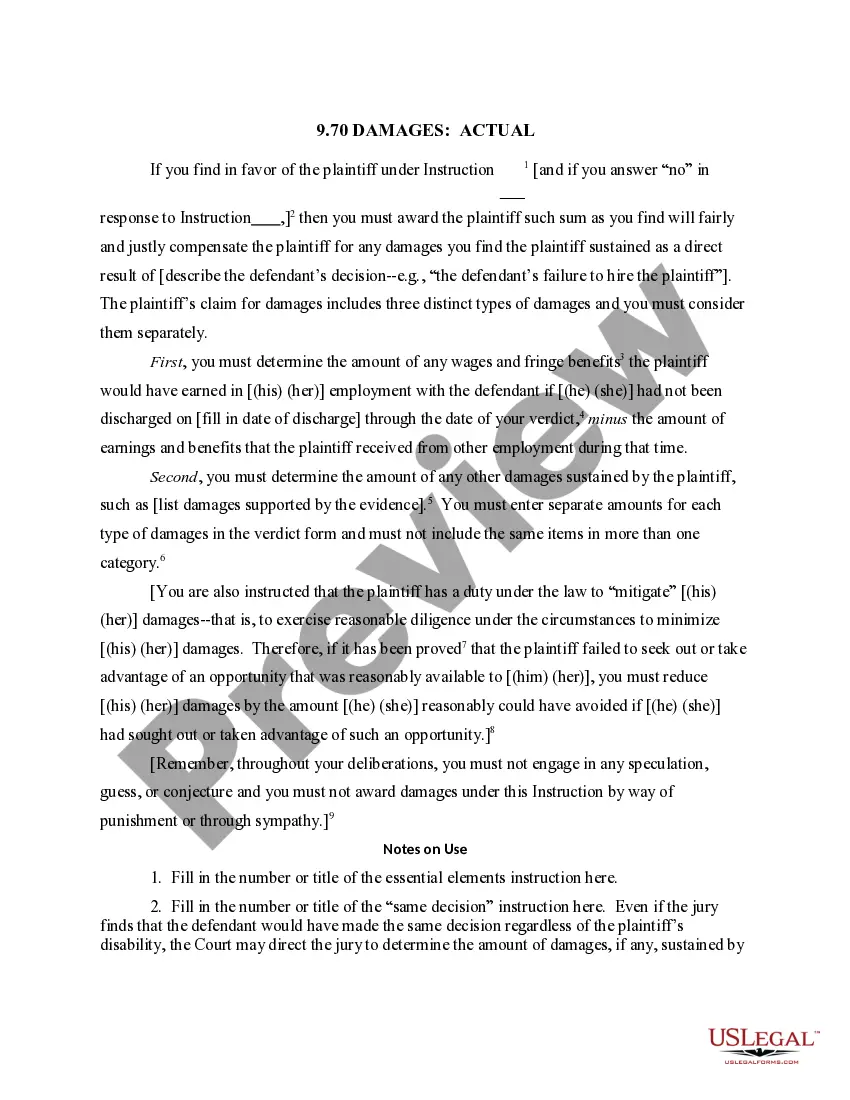
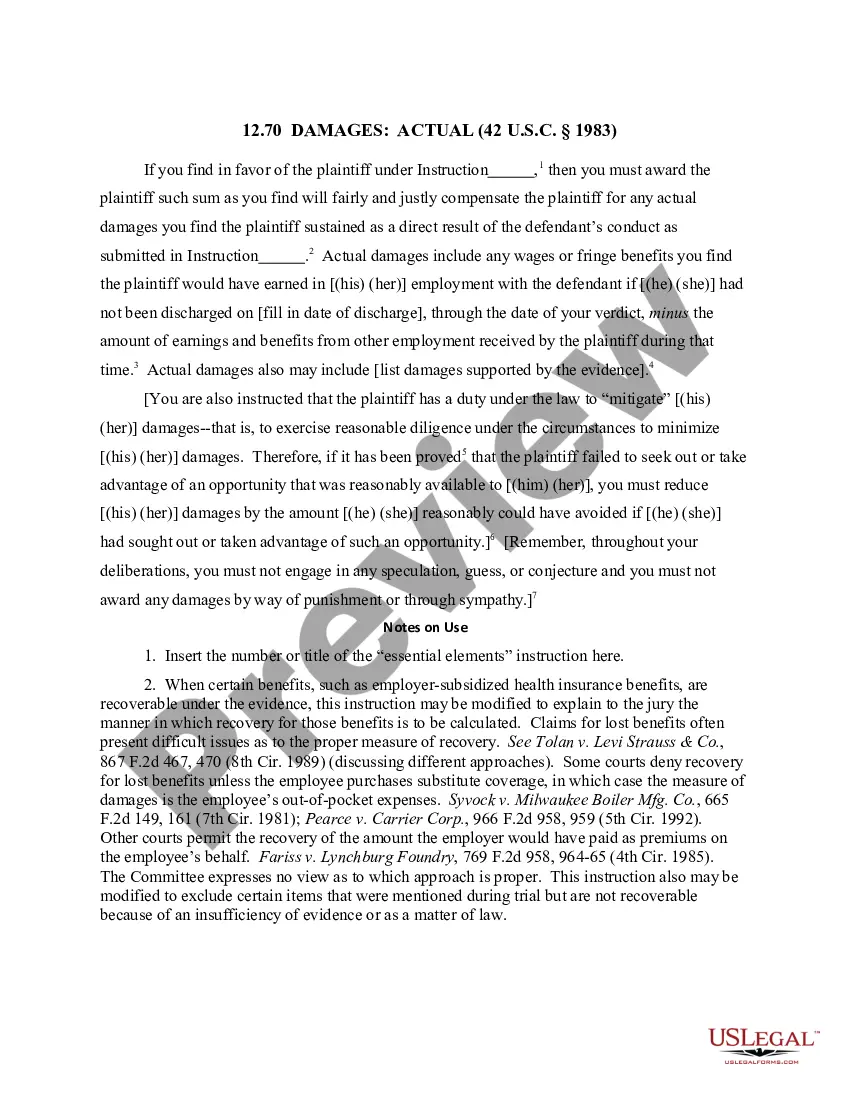
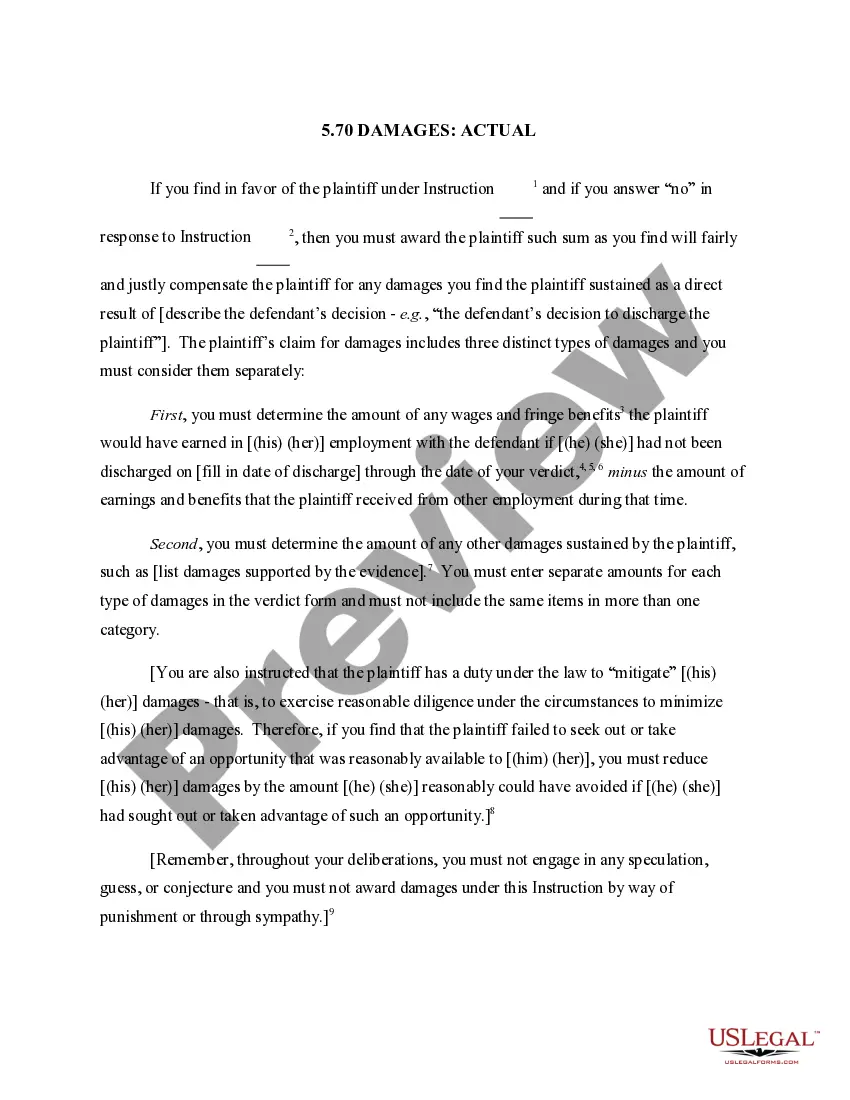
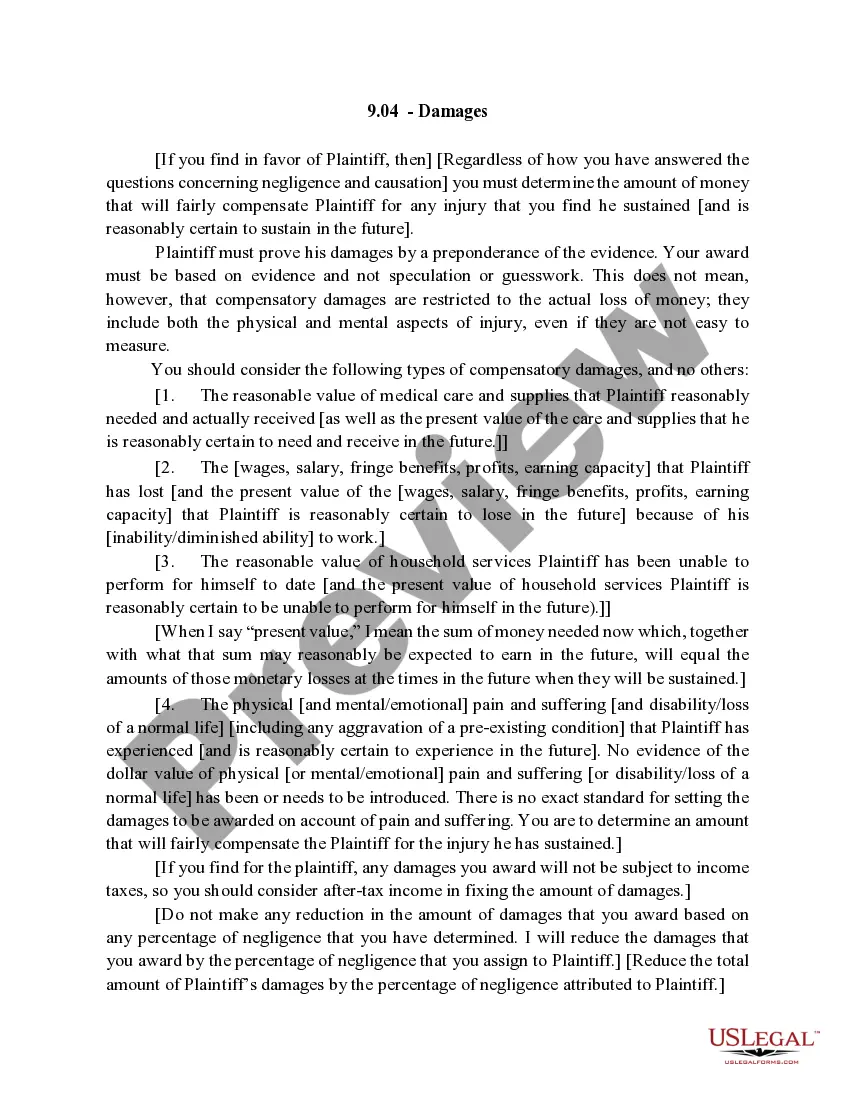
The 9.70 Damages: Actual form is a legal document designed to guide juries in determining actual damages awarded to a plaintiff in a civil lawsuit. This form outlines how to calculate compensation for lost wages, emotional distress, and other damages sustained due to the defendant's actions. Unlike other forms, it specifically addresses the direct financial impact of wrongful employment actions.
What’s included in this form
- Instructions for awarding damages based on the plaintiff's sustained losses.
- Guidelines for calculating lost wages and fringe benefits from the date of discharge until the verdict.
- Provisions for identifying other types of damages based on the evidence presented.
- Clarification of the plaintiff's duty to mitigate damages and how this affects award calculations.
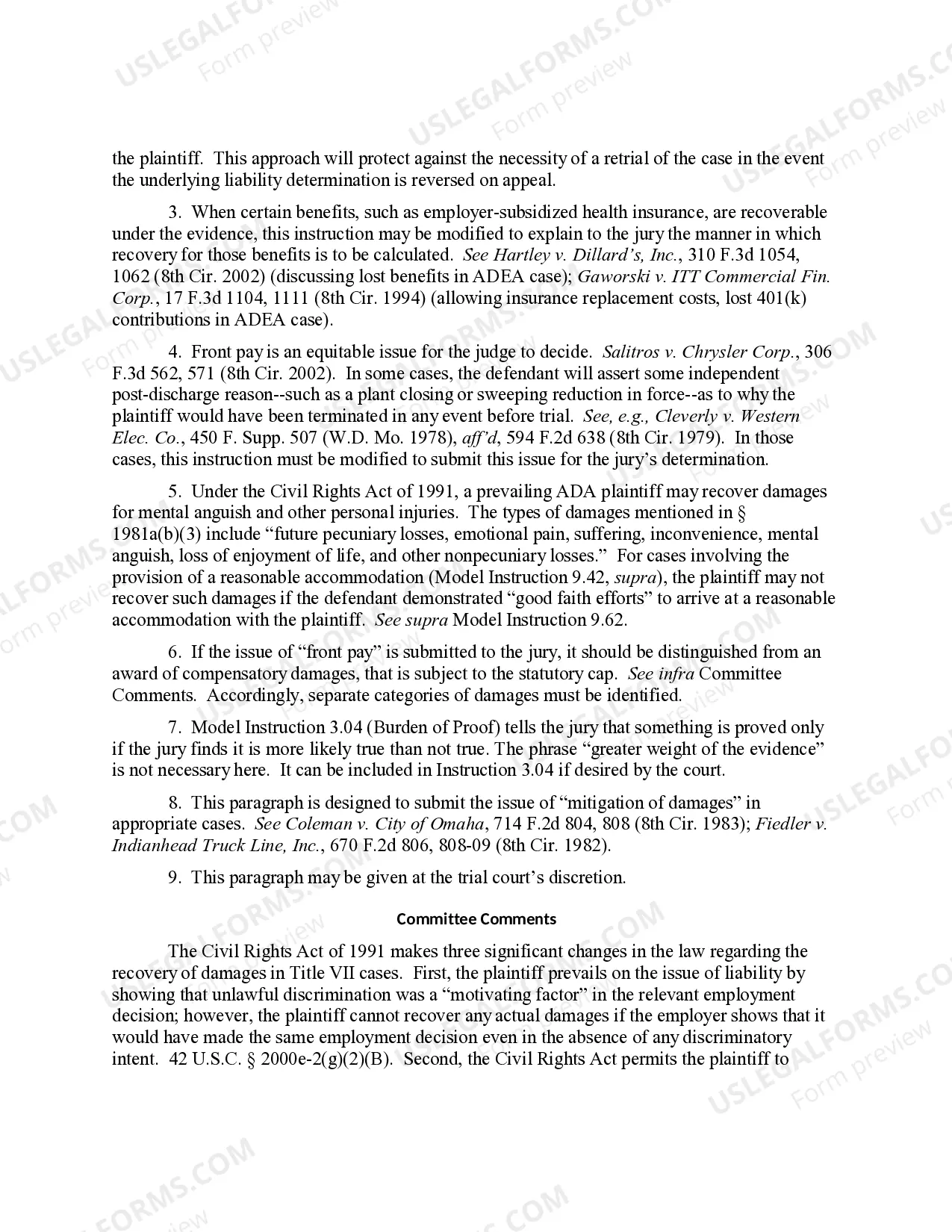
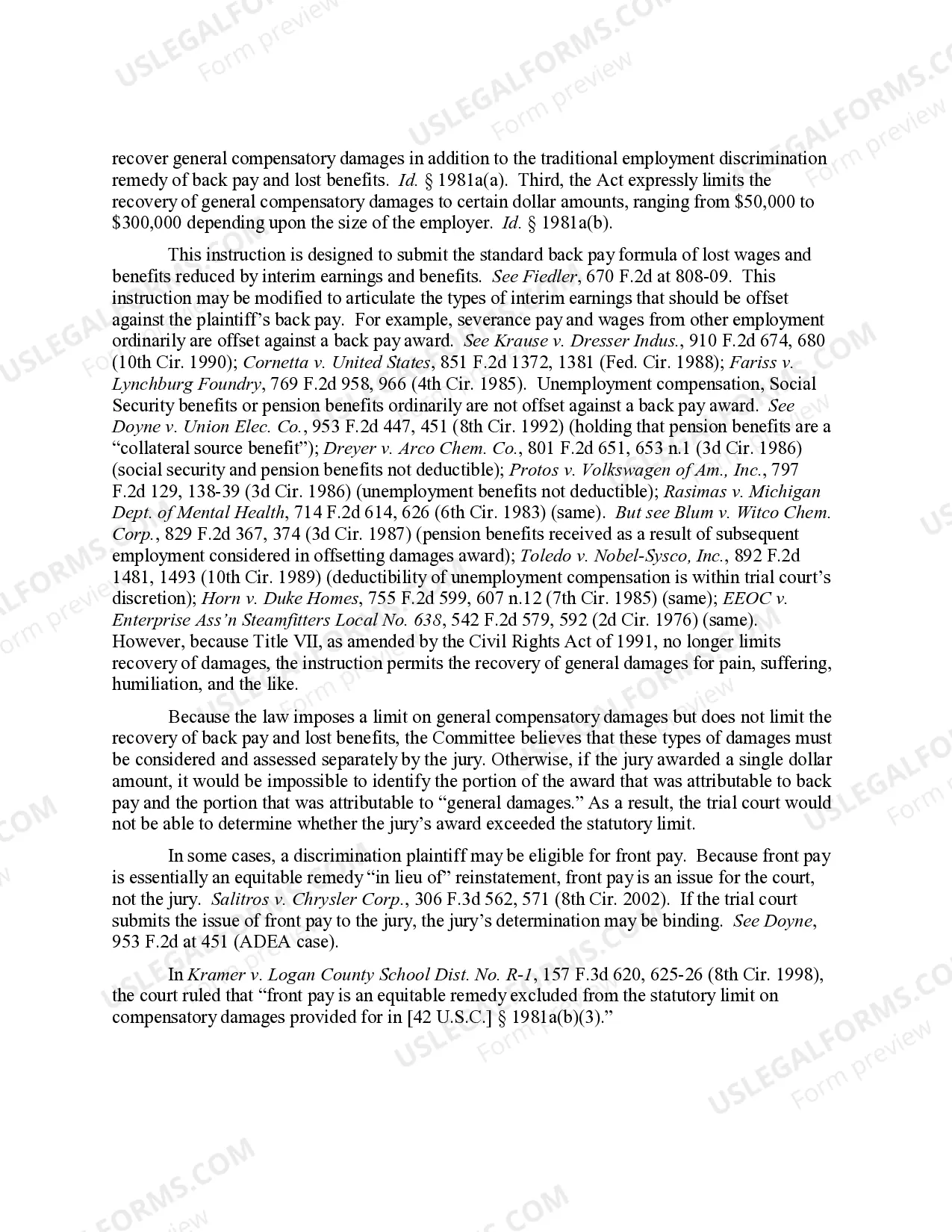
- Notes on relevant legal precedents that may modify interpretations of damages.

Situations where this form applies
This form is used in civil cases where the plaintiff seeks compensation for actual damages resulting from unfair employment practices, such as wrongful termination or failure to promote. It is essential during the deliberation phase of a trial when jurors must determine the financial impact of the defendant's actions on the plaintiff's life.
Who this form is for
Intended users of this form include:
- Juries evaluating claims in civil litigation involving employment discrimination.
- Attorneys presenting cases that require precise calculations of economic and non-economic damages.
- Judges overseeing trials that necessitate clear instructions for jury deliberations on damages.
Instructions for completing this form
- Identify the plaintiff and defendant involved in the case.
- Specify the date of discharge or the relevant employment decision.
- Calculate the total lost wages and fringe benefits the plaintiff would have earned, subtracting any interim earnings.
- List and describe any other damages sustained by the plaintiff, including emotional distress or physical injuries.
- Ensure separate amounts are entered for each type of damage to avoid duplication.
Is notarization required?
This form does not typically require notarization unless specified by local law. However, checking specific jurisdictional requirements is advisable to ensure compliance with any legal standards that may apply.
Get your form ready online
Our built-in tools help you complete, sign, share, and store your documents in one place.
Make edits, fill in missing information, and update formatting in US Legal Forms—just like you would in MS Word.
Download a copy, print it, send it by email, or mail it via USPS—whatever works best for your next step.
Sign and collect signatures with our SignNow integration. Send to multiple recipients, set reminders, and more. Go Premium to unlock E-Sign.
If this form requires notarization, complete it online through a secure video call—no need to meet a notary in person or wait for an appointment.
We protect your documents and personal data by following strict security and privacy standards.

Make edits, fill in missing information, and update formatting in US Legal Forms—just like you would in MS Word.

Download a copy, print it, send it by email, or mail it via USPS—whatever works best for your next step.

Sign and collect signatures with our SignNow integration. Send to multiple recipients, set reminders, and more. Go Premium to unlock E-Sign.

If this form requires notarization, complete it online through a secure video call—no need to meet a notary in person or wait for an appointment.

We protect your documents and personal data by following strict security and privacy standards.
Common mistakes
- Failing to properly calculate interim earnings which can affect overall damage awards.
- Not differentiating between types of damages, potentially leading to double counting.
- Ignoring the plaintiff's duty to mitigate damages, which could result in reduced awards.
Why complete this form online
- Convenient access to a legally vetted template drafted by licensed attorneys.
- Editability to tailor the damages calculations to fit specific case details.
- Immediate download allows for quick use in ongoing legal proceedings.
Legal use & context
- This form is designed for use in civil rights cases, specifically addressing employment discrimination under the Civil Rights Act.
- A successful plaintiff can recover not only lost wages but also damages for emotional pain and suffering.
- The law acknowledges that while compensation for actual damages can be awarded, punitive damages must not be included unless specified.
What to keep in mind
- The 9.70 Damages: Actual form is crucial for guiding juries in calculating appropriate compensation for plaintiffs.
- It is essential to separate different types of damages to comply with legal standards and maximize award accuracy.
- This form benefits legal professionals by ensuring clarity in the evaluation of economic losses and other damage claims.
Looking for another form?
Form popularity
FAQ
Additionally, in order to receive punitive damages in Texas, the plaintiff must prove actual damages. Actual damages, also known as compensatory damages, are awarded based on proven injuries suffered by the plaintiff such as medical bills and lost wages.
Actual damages are meant to directly compensate you for the losses you have experienced due to a defendant's conduct. This includes tangible losses, such as medical bills and lost wages, and intangible losses such as emotional distress.
There are two types of compensatory damages?general and actual. Actual damages are intended to provide funds to only replace what was lost. General compensatory damages awarded are more complex, as these compensatory damages do not represent a monetary expenditure.
Compensatory damages are calculated by adding up all of your economic and non-economic damages and losses. However, when calculating a proper settlement amount, courts consider a variety of factors, including the injured party's negligence.
The term "actual damages" is synonymous with compensatory damages and excludes punitive damages. In a contract case, punitive damages are generally not awarded. This is because the law generally recognizes that parties should be allowed to breach a contract where it would be more economically efficient to do so.
In tort law, actual damages, also known as compensatory damages, are damages awarded by a court equivalent to the loss a party suffered. If a party's right was technically violated but they suffered no harm or losses, a court may instead grant nominal damages.
There is no specific formula to calculate damages as they are usually determined based on the actual expenses of the victim and compensation for their pain and anguish. Compensation should make the injured person ?whole? again.