Minnesota Interrogatories to Plaintiff for Motor Vehicle Occurrence
About this form
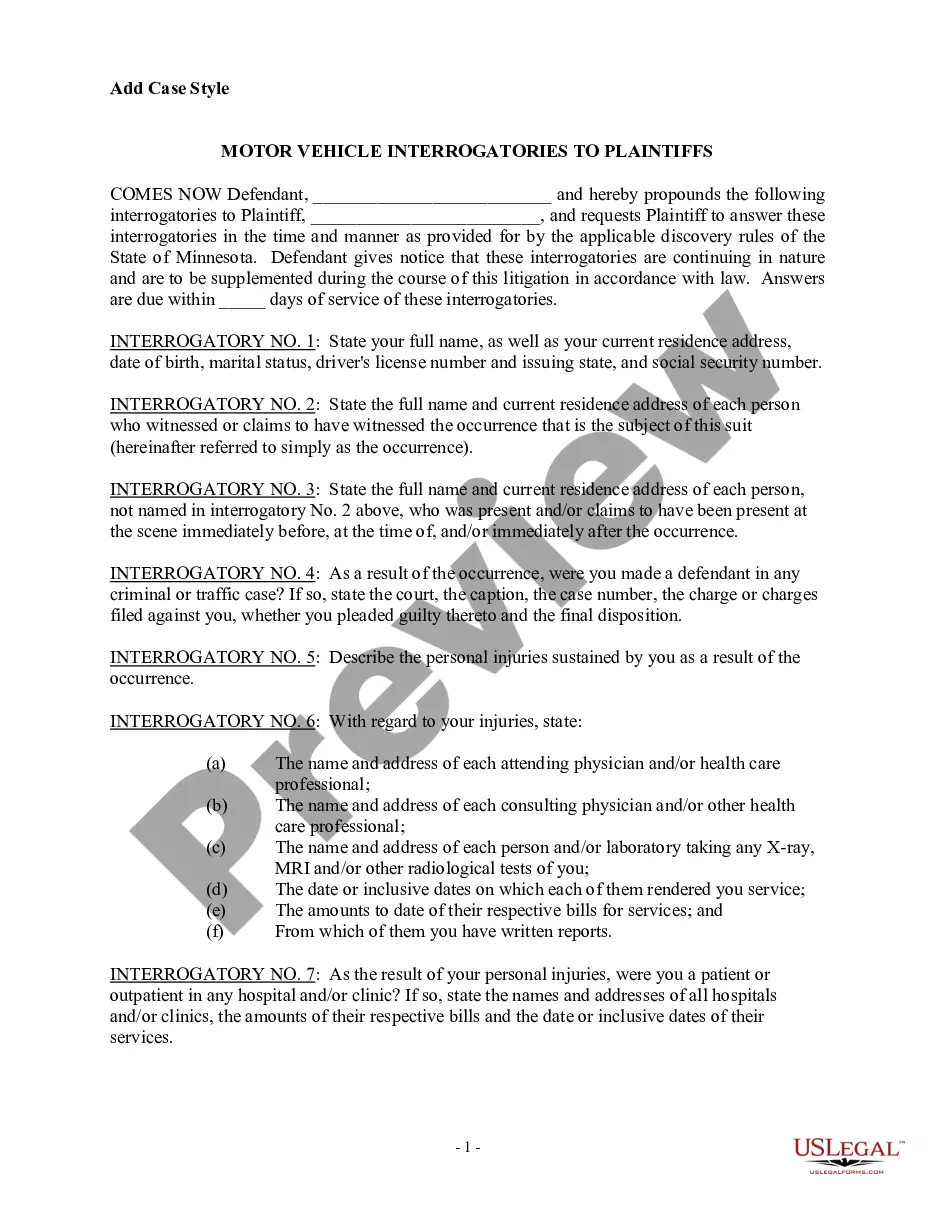
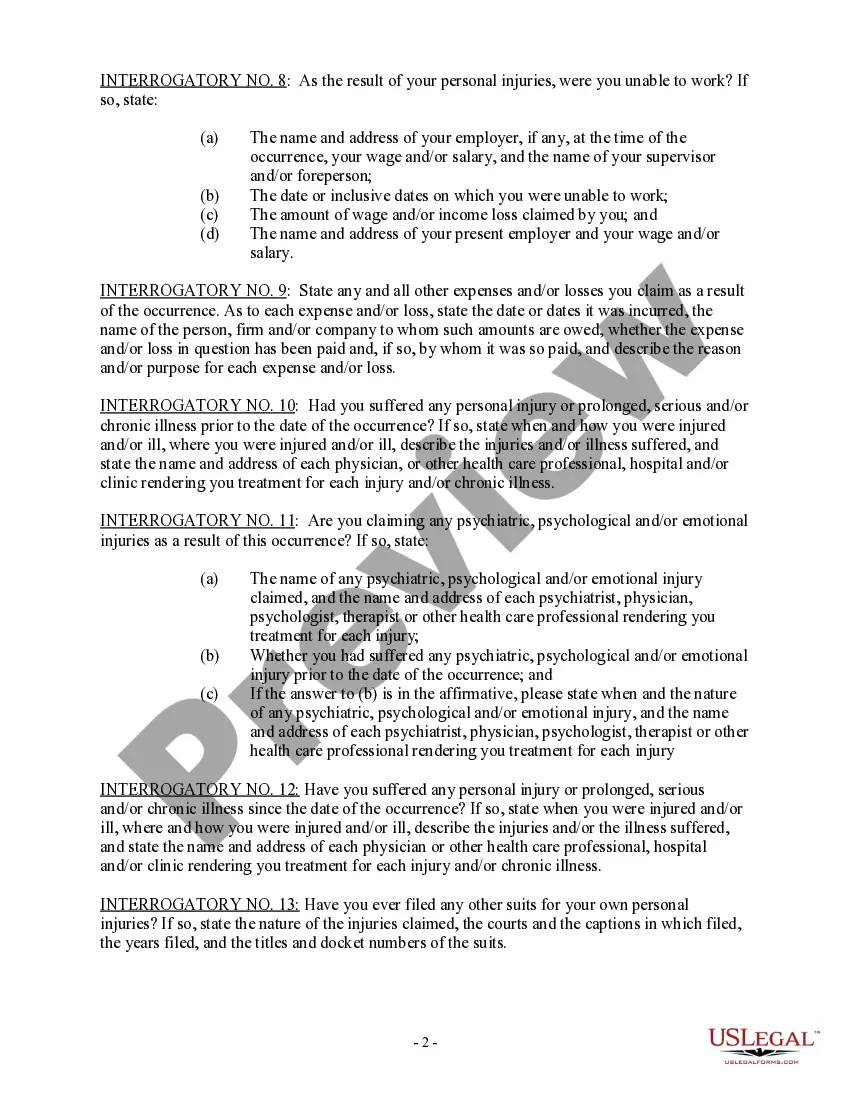
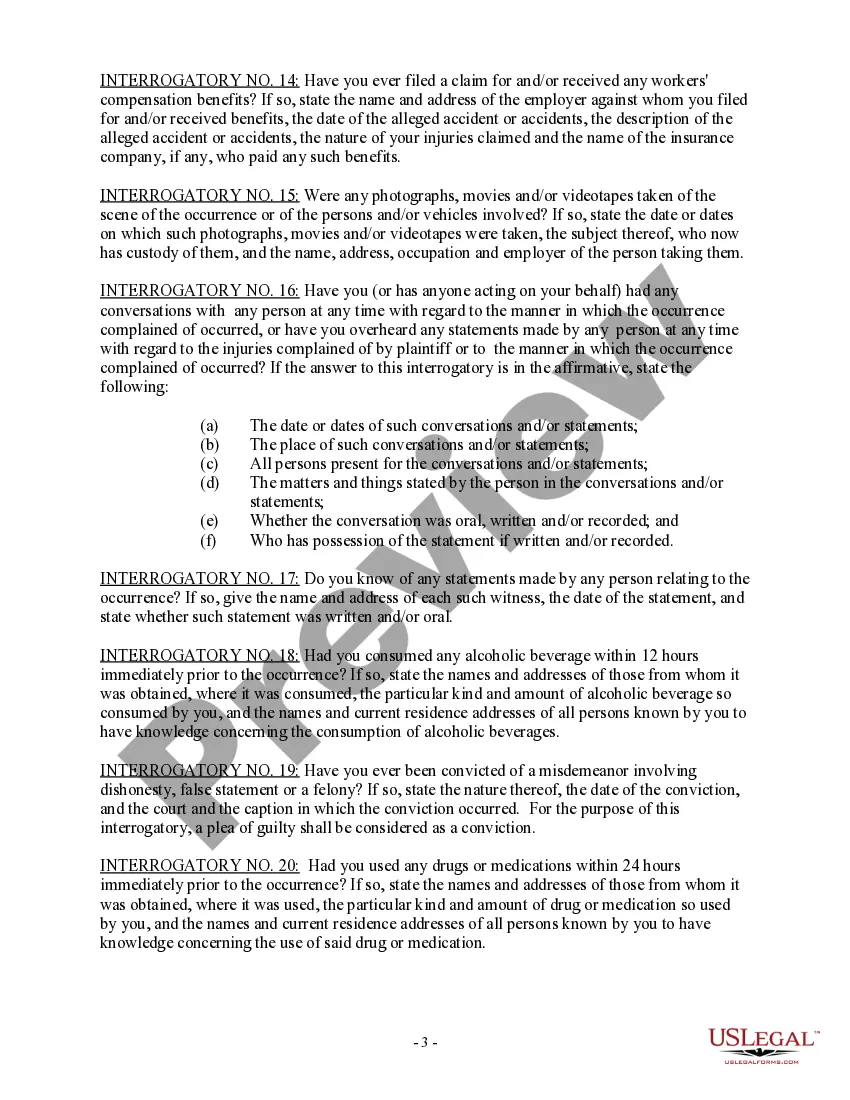
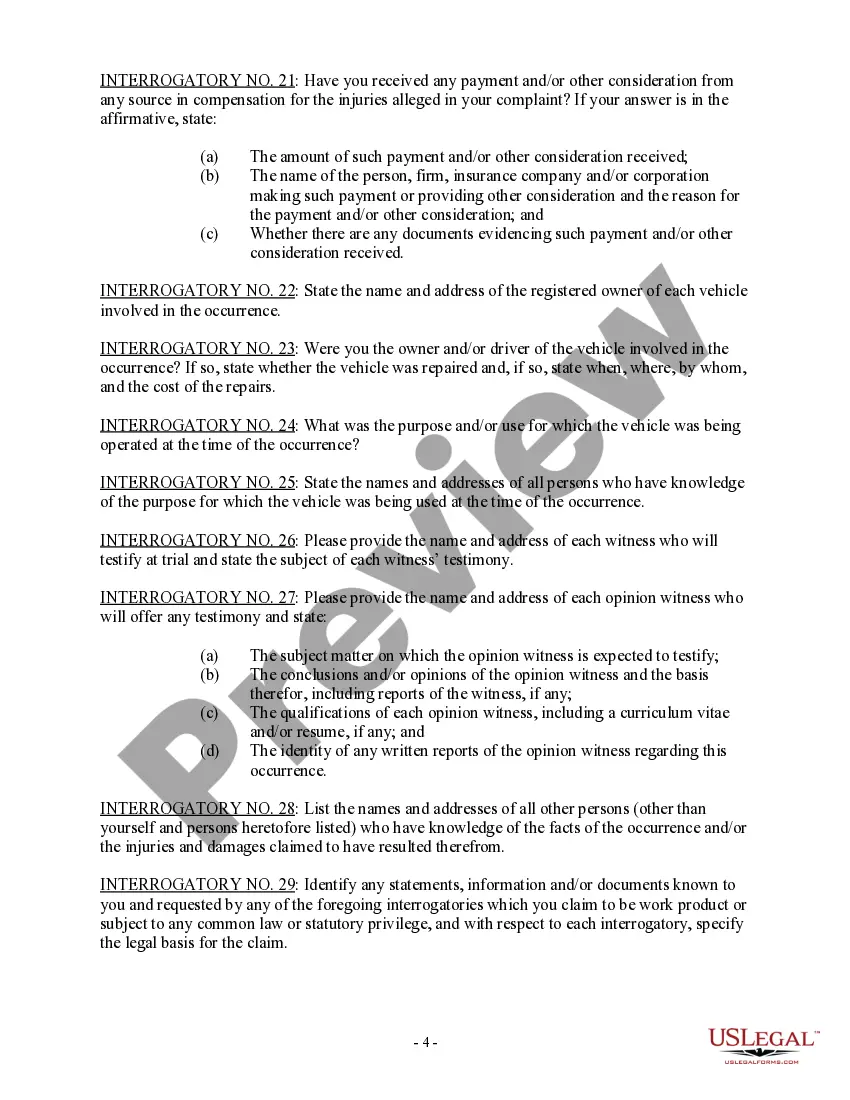
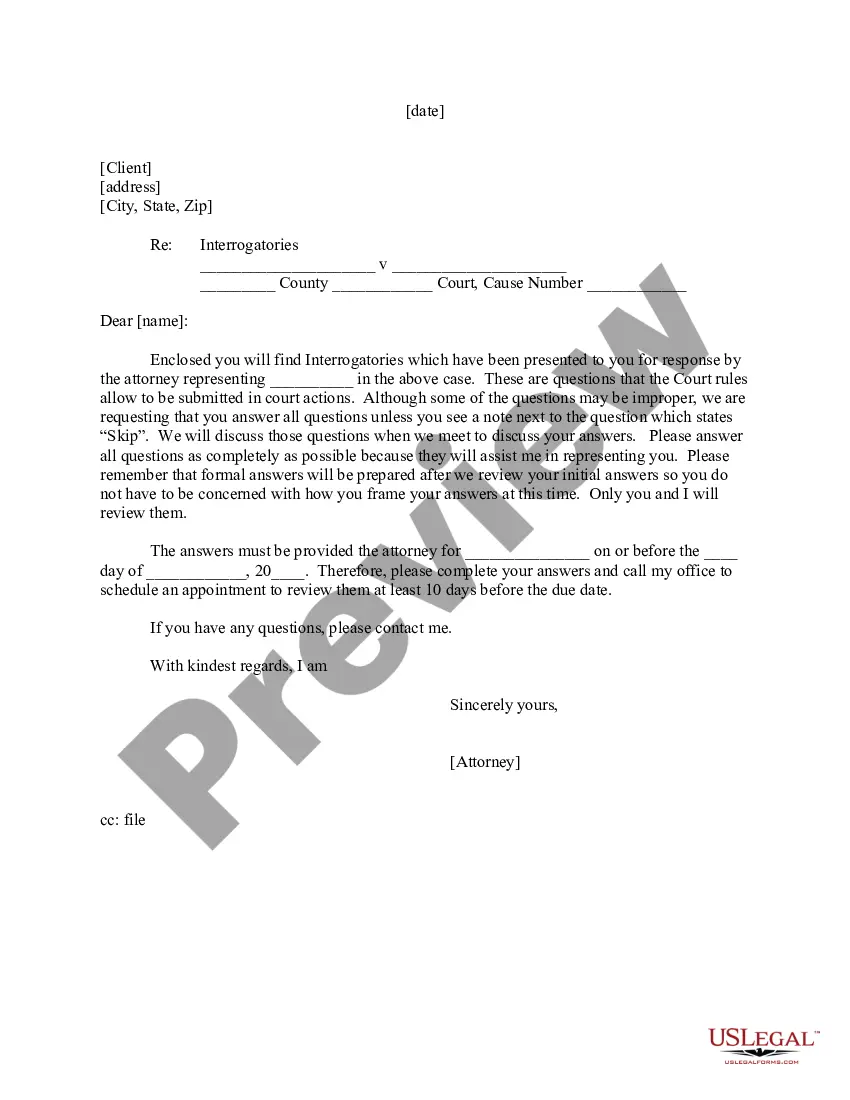
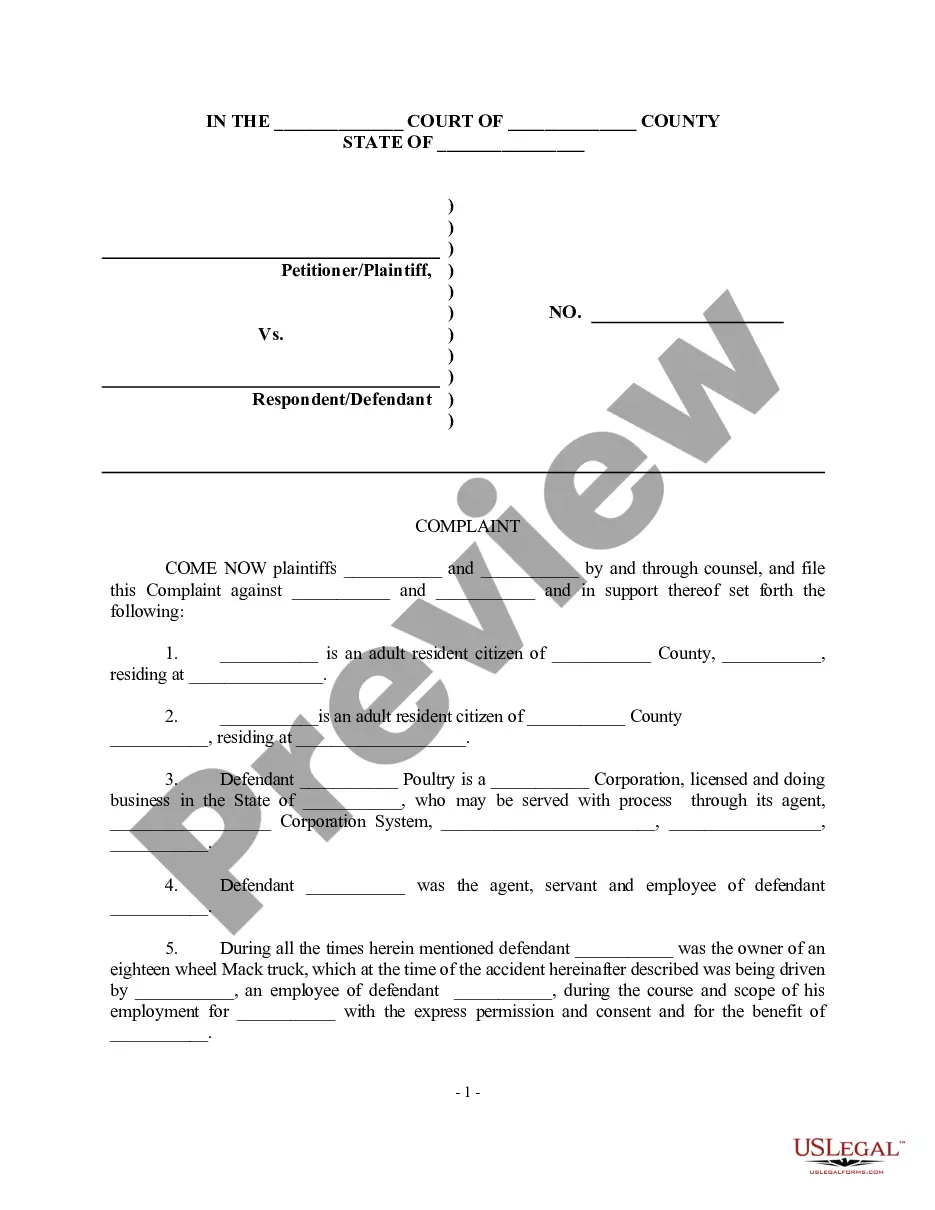
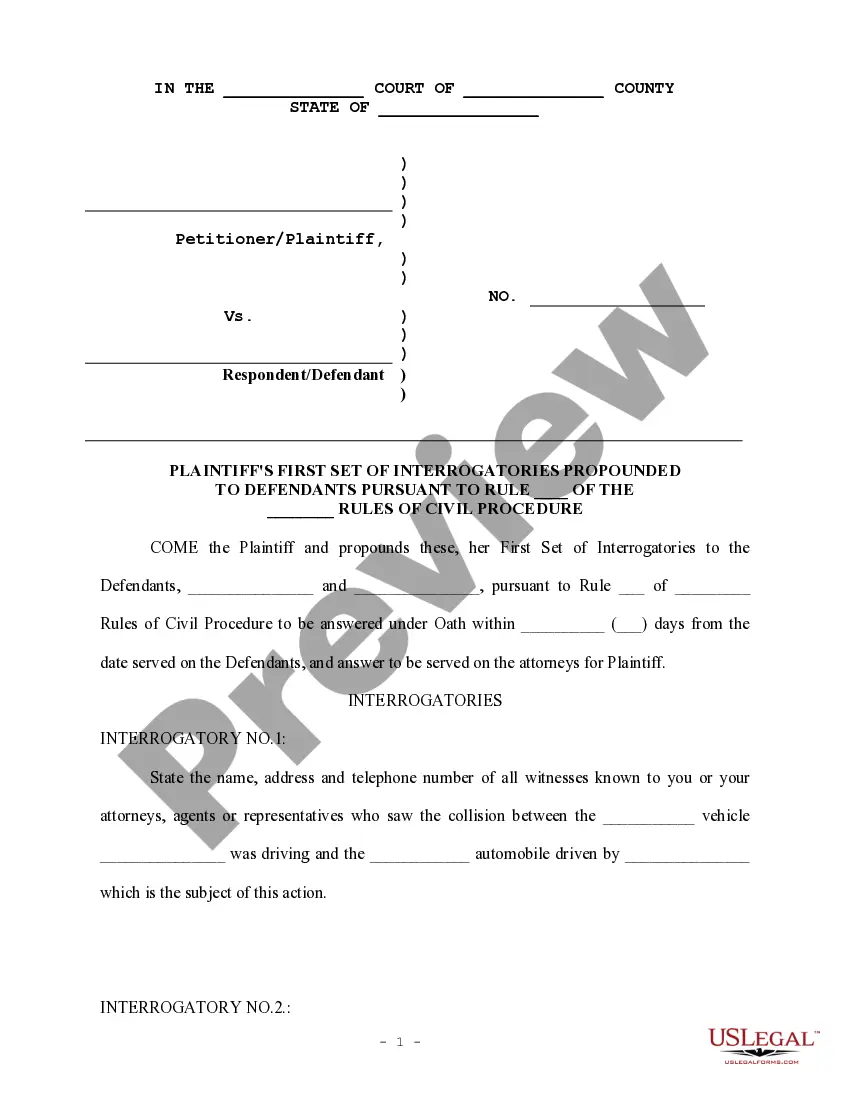
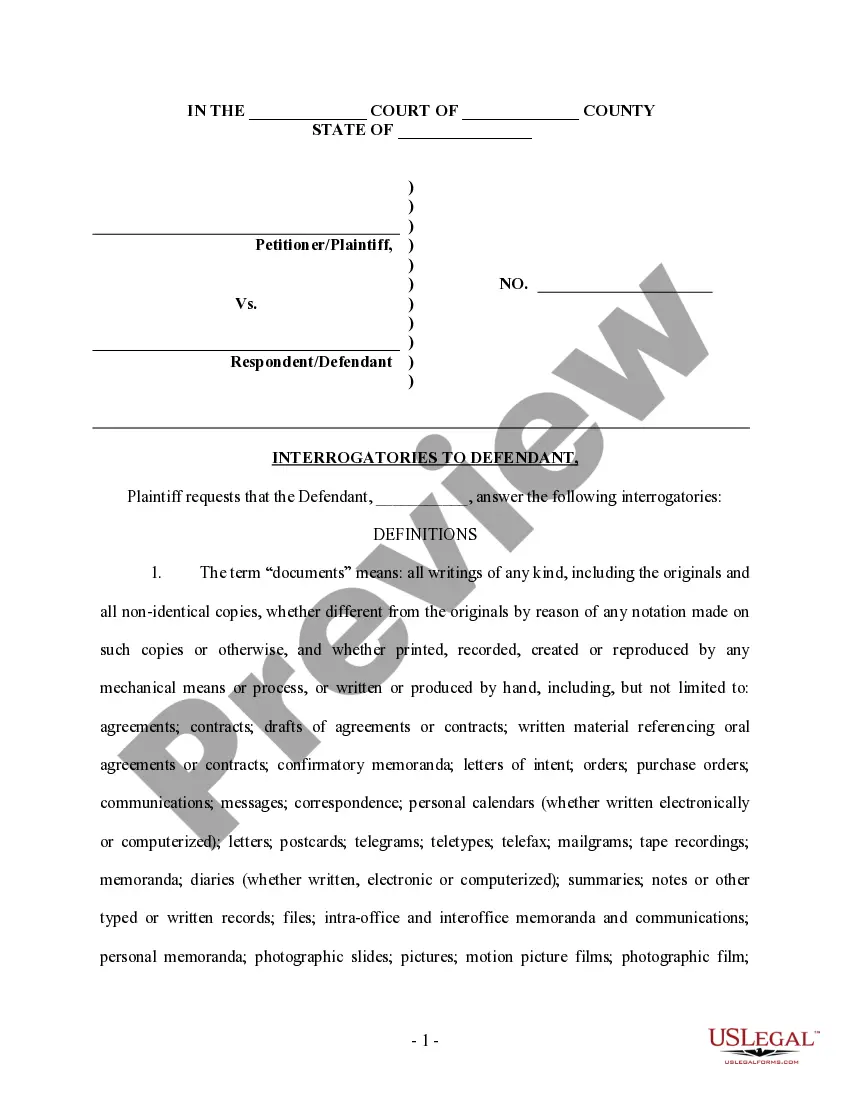
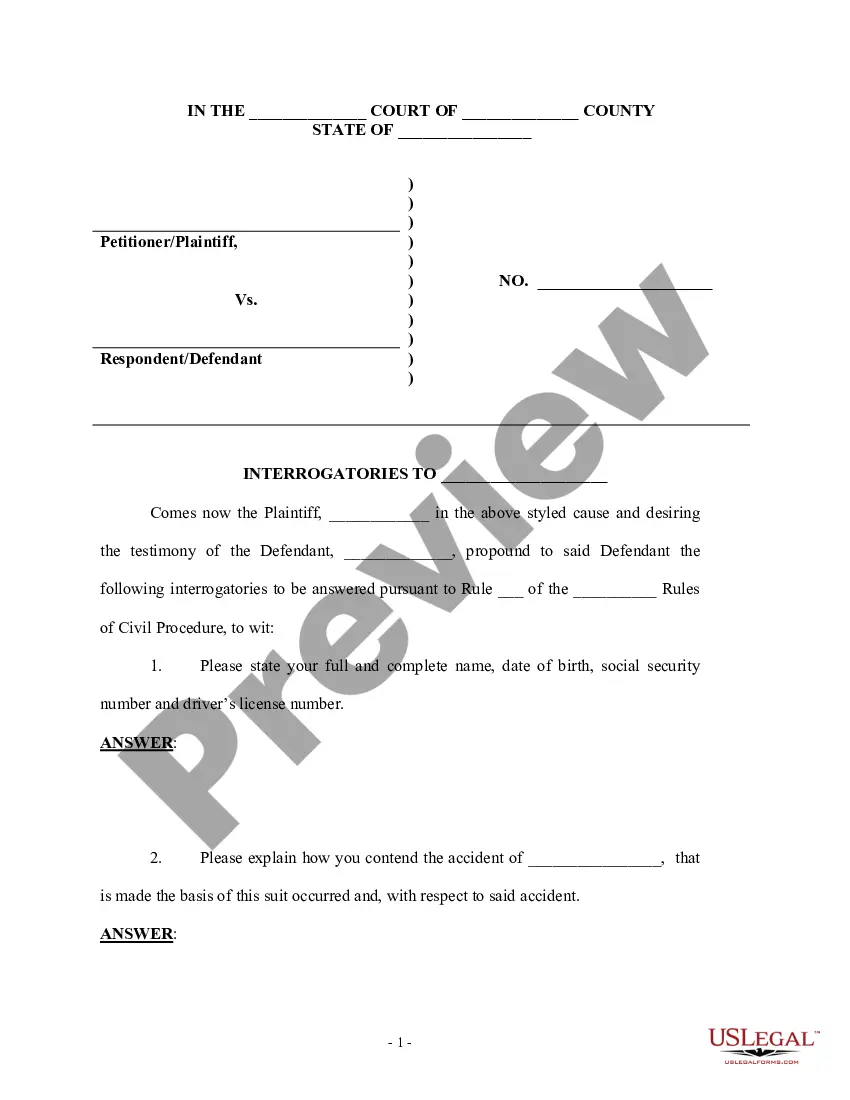
The Interrogatories to Plaintiff for Motor Vehicle Occurrence is a legal document used in litigation involving vehicle incidents, such as automobile accidents. This form consists of a set of 28 interrogatories that the defendant may propound to the plaintiff, requesting detailed responses regarding the occurrence, injuries, and any related claims. Unlike other forms, this specific type is tailored to gather critical information necessary for the discovery phase of a vehicle accident case.
Form components explained
- Personal information about the plaintiff, including name, address, and social security number.
- Details of witnesses and other individuals present during the vehicle incident.
- Descriptions of personal injuries and medical treatment received following the occurrence.
- Information on employment, including any lost wages or income due to injuries.
- Specific inquiries about past injuries, legal actions, and any benefits claimed.
- Questions relating to the vehicles involved, their ownership, and purpose at the time of the occurrence.
Common use cases
This form should be used during the discovery phase of a legal case involving a motor vehicle occurrence. It is appropriate when a defendant needs detailed information from the plaintiff to prepare a defense or to settle claims. Situations where this form is applicable include personal injury lawsuits, insurance claims, or any legal proceedings arising from automobile accidents.
Who should use this form
- Defendants involved in a motor vehicle accident case seeking to gather information from the plaintiff.
- Attorneys representing defendants to formulate questions relevant to the case.
- Individuals contesting personal injury claims related to vehicle incidents.
Completing this form step by step
- Identify the parties involved by filling out their names and relevant details at the beginning of the form.
- Review each interrogatory and determine which questions are relevant to your specific case.
- Provide detailed and accurate responses to each question posed in the interrogatories.
- Ensure that any necessary supporting documentation is referenced in your answers.
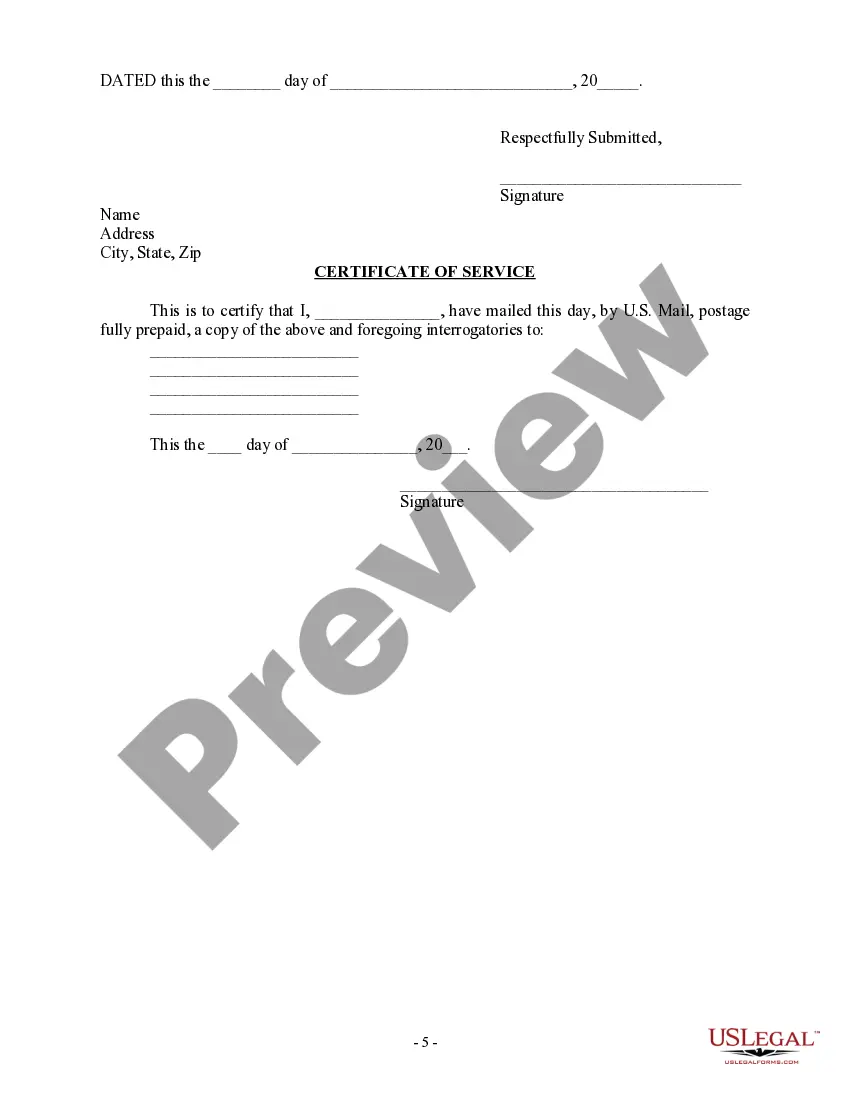
- Sign and date the document before serving it to the plaintiff.
Does this document require notarization?
In most cases, this form does not require notarization. However, some jurisdictions or signing circumstances might. US Legal Forms offers online notarization powered by Notarize, accessible 24/7 for a quick, remote process.
Get your form ready online
Our built-in tools help you complete, sign, share, and store your documents in one place.
Make edits, fill in missing information, and update formatting in US Legal Forms—just like you would in MS Word.
Download a copy, print it, send it by email, or mail it via USPS—whatever works best for your next step.
Sign and collect signatures with our SignNow integration. Send to multiple recipients, set reminders, and more. Go Premium to unlock E-Sign.
If this form requires notarization, complete it online through a secure video call—no need to meet a notary in person or wait for an appointment.
We protect your documents and personal data by following strict security and privacy standards.

Make edits, fill in missing information, and update formatting in US Legal Forms—just like you would in MS Word.

Download a copy, print it, send it by email, or mail it via USPS—whatever works best for your next step.

Sign and collect signatures with our SignNow integration. Send to multiple recipients, set reminders, and more. Go Premium to unlock E-Sign.

If this form requires notarization, complete it online through a secure video call—no need to meet a notary in person or wait for an appointment.

We protect your documents and personal data by following strict security and privacy standards.
Common mistakes
- Failing to answer all relevant interrogatories, risking incomplete information.
- Providing vague or unclear answers that may lead to further questions.
- Missing deadlines for responding, which can have legal consequences.
- Neglecting to update answers if new relevant information arises during the case.
Advantages of online completion
- Immediate access to standardized forms that save time and reduce errors.
- Easy editing capabilities to customize interrogatories based on specific case needs.
- Secure storage and management of legal documents for organized case handling.
- Access to up-to-date legal templates that reflect current laws and practices.
Legal use & context
- The form serves as a legal tool to obtain critical information for case preparation.
- Responses to the interrogatories become part of the discovery process in litigation.
- Improper use or failure to comply with rules can affect the admissibility of evidence.
Summary of main points
Key takeaways:
- The Interrogatories to Plaintiff for Motor Vehicle Occurrence is essential for defendants during the discovery phase.
- It gathers crucial information regarding the details of the vehicle incident and any claims made by the plaintiff.
- Completing the form accurately and thoroughly can impact the outcome of the case.
Looking for another form?

Form popularity
FAQ
Rule 609 addresses the admissibility of prior convictions to impeach a witness's credibility. This rule is crucial in legal proceedings, as it can affect how interrogatories are perceived in court. When dealing with Minnesota Interrogatories to Plaintiff for Motor Vehicle Occurrence, understanding Rule 609 can help you better frame your questions and anticipate responses.
Rule 69 in Minnesota pertains to the enforcement of judgments, specifically regarding the execution of judgments and the collection of debts. While not directly related to interrogatories, understanding this rule can be important for cases involving financial matters. If your case involves Minnesota Interrogatories to Plaintiff for Motor Vehicle Occurrence, awareness of Rule 69 can aid in the overall management of the case.
Rule 33 outlines the specific guidelines for serving interrogatories in Minnesota. It states that a party may serve written questions that the other party must answer under oath. This rule is essential for gathering critical information, especially when using Minnesota Interrogatories to Plaintiff for Motor Vehicle Occurrence.
Rule 37 of the Minnesota Rules of Civil Procedure addresses the failure to make disclosures or cooperate in discovery. If a party does not respond to interrogatories, the opposing party may file a motion to compel responses. This rule reinforces the importance of timely and complete responses to Minnesota Interrogatories to Plaintiff for Motor Vehicle Occurrence.
In Minnesota, the rule for interrogatories is established under Rule 33 of the Minnesota Rules of Civil Procedure. This rule permits parties to ask questions that require written responses, facilitating the sharing of information pertinent to the case. Utilizing Minnesota Interrogatories to Plaintiff for Motor Vehicle Occurrence can significantly aid in developing your case strategy.
The rules for interrogatories in Minnesota require that they be relevant to the case and not overly burdensome. Each interrogatory must be clear and concise, allowing for straightforward answers. Using Minnesota Interrogatories to Plaintiff for Motor Vehicle Occurrence helps gather essential information while adhering to these rules, promoting an efficient discovery process.
In Minnesota, you can typically serve up to 25 interrogatories on a party without needing permission from the court. This limit applies to Minnesota Interrogatories to Plaintiff for Motor Vehicle Occurrence as well. If you find that you need more than 25, you will need to seek the court's approval, ensuring your case remains compliant with procedural rules.
In interrogatories, you can ask for a range of information relevant to the case. This includes details about the incident, witness information, and any documentation that supports the claims. Specifically, Minnesota Interrogatories to Plaintiff for Motor Vehicle Occurrence can cover aspects like vehicle damage, insurance details, and medical records. It’s essential to frame your questions to gather the most pertinent facts for your case.
To properly answer interrogatories, read each question meticulously and respond with factual, relevant information. When dealing with Minnesota Interrogatories to Plaintiff for Motor Vehicle Occurrence, be open and honest in your answers, avoiding any unnecessary jargon. If you need additional time or resources, consider using uslegalforms to find templates and examples that can help you structure your responses effectively.
When responding to a plaintiff's first set of interrogatories, first review each question carefully. Provide thorough answers, making sure to reference any pertinent evidence or documentation that supports your response. If any questions are unclear, you may seek clarification to ensure that your answers are accurate and comprehensive. Utilize platforms like uslegalforms to access templates and guidance for your responses.