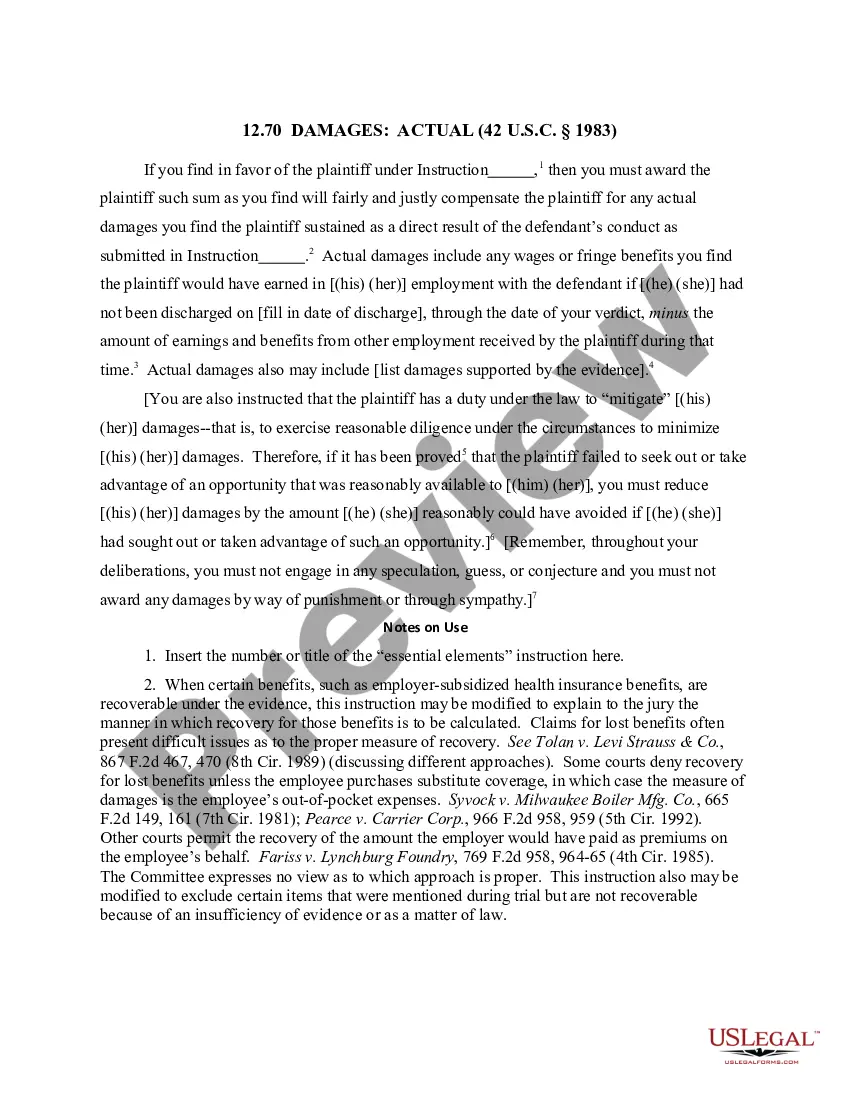
13.70 DAMAGES: ACTUAL (42 U.S.C. CIV. 1983) refers to a type of damages award that is available in civil actions brought under 42 U.S.C. Section 1983. This type of damages award is intended to compensate the injured party for any actual loss or harm that was suffered as a result of the wrongful conduct of the defendant. This includes compensatory damages for any economic losses, such as lost wages or medical expenses, as well as non-economic losses, such as pain and suffering. In addition, punitive damages may be available in certain cases, if the wrongful conduct of the defendant was found to be especially egregious.
13.70 DAMAGES: ACTUAL (42 U.S.C. Civ. 1983)
State:
Multi-State
Control #:
US-8THCIR-JURY-13-70
Format:
Word
Instant download
This website is not affiliated with any governmental entity
Public form
Description
http://www.juryinstructions.ca8.uscourts.gov/8th%20Circuit%20Manual%20of%20Model%20Civil%20Jury%20Instructions.pdf
How to fill out 13.70 DAMAGES: ACTUAL (42 U.S.C. Civ. 1983)?
If you’re searching for a way to properly complete the 13.70 DAMAGES: ACTUAL (42 U.S.C. Civ. 1983) without hiring a lawyer, then you’re just in the right place. US Legal Forms has proven itself as the most extensive and reputable library of official templates for every individual and business scenario. Every piece of paperwork you find on our online service is created in accordance with nationwide and state regulations, so you can be sure that your documents are in order.
Follow these simple instructions on how to acquire the ready-to-use 13.70 DAMAGES: ACTUAL (42 U.S.C. Civ. 1983):
- Make sure the document you see on the page meets your legal situation and state regulations by examining its text description or looking through the Preview mode.
- Type in the form title in the Search tab on the top of the page and select your state from the dropdown to locate another template in case of any inconsistencies.
- Repeat with the content check and click Buy now when you are confident with the paperwork compliance with all the demands.
- Log in to your account and click Download. Register for the service and opt for the subscription plan if you still don’t have one.
- Use your credit card or the PayPal option to pay for your US Legal Forms subscription. The blank will be available to download right after.
- Choose in what format you want to save your 13.70 DAMAGES: ACTUAL (42 U.S.C. Civ. 1983) and download it by clicking the appropriate button.
- Import your template to an online editor to complete and sign it rapidly or print it out to prepare your hard copy manually.
Another wonderful thing about US Legal Forms is that you never lose the paperwork you purchased - you can pick any of your downloaded templates in the My Forms tab of your profile any time you need it.
Form popularity
FAQ
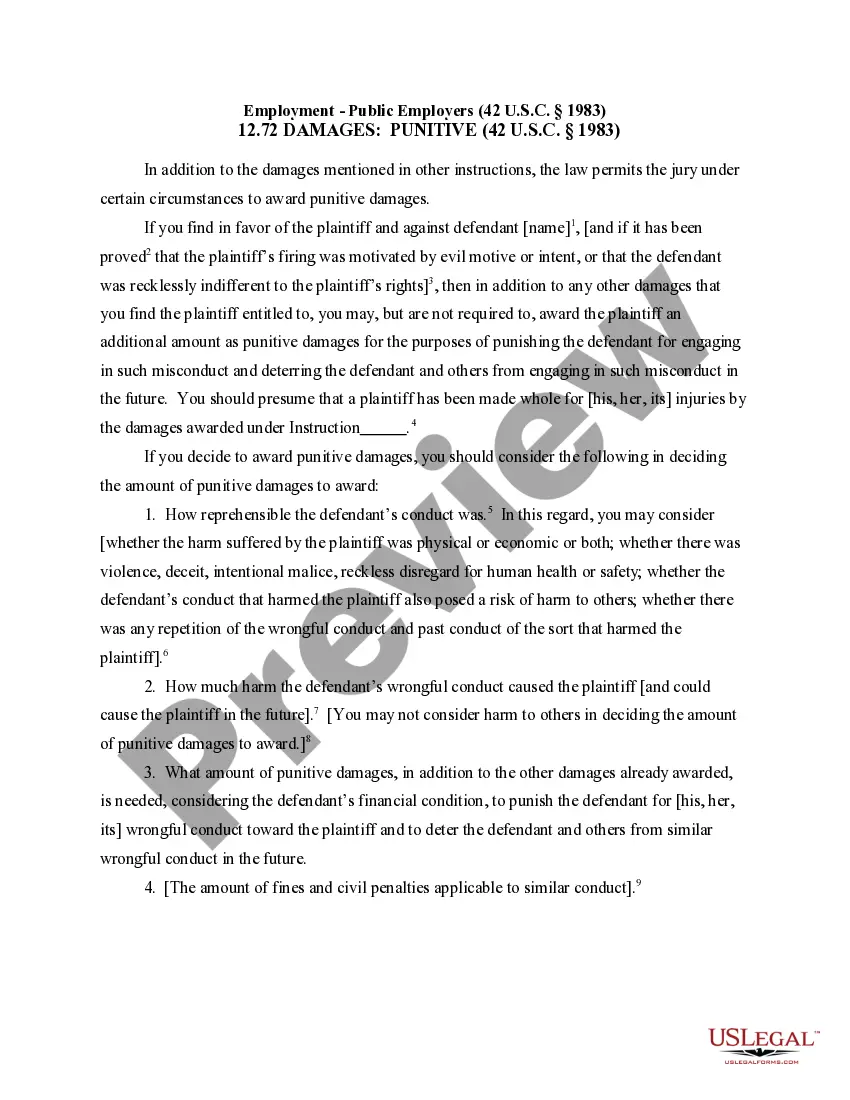
Punitive damages are awarded when the defendant's conduct is determined to have been so "willful, malicious, or fraudulent" that it exceeds the legal criteria for mere or gross negligence. Punitive damages typically involve awards over and above the compensatory damage award.
Punitive Damagesedit edit source. In Smith v. Wade, the Supreme Court held that a § 1983 plaintiff may recover punitive damages against an official in her personal capacity if the official acted with malicious or evil intent or in callous disregard of the plaintiff's federally protected rights.
In a case where you anticipate there will be such evidence, it is likely that the plaintiff will seek bifurcation on the issues of liability, compensatory damages and punitive damages. I cannot imagine any other way this evidence would not have a spillover effect on compensatory damages.
As noted by the appellate court, ?Punitive damages may be awarded under 42 U.S.C. § 1983 when the defendant's conduct is shown to be motivated by evil motive or intent, or when it involves reckless or callous indifference to the federally protected rights of others.?
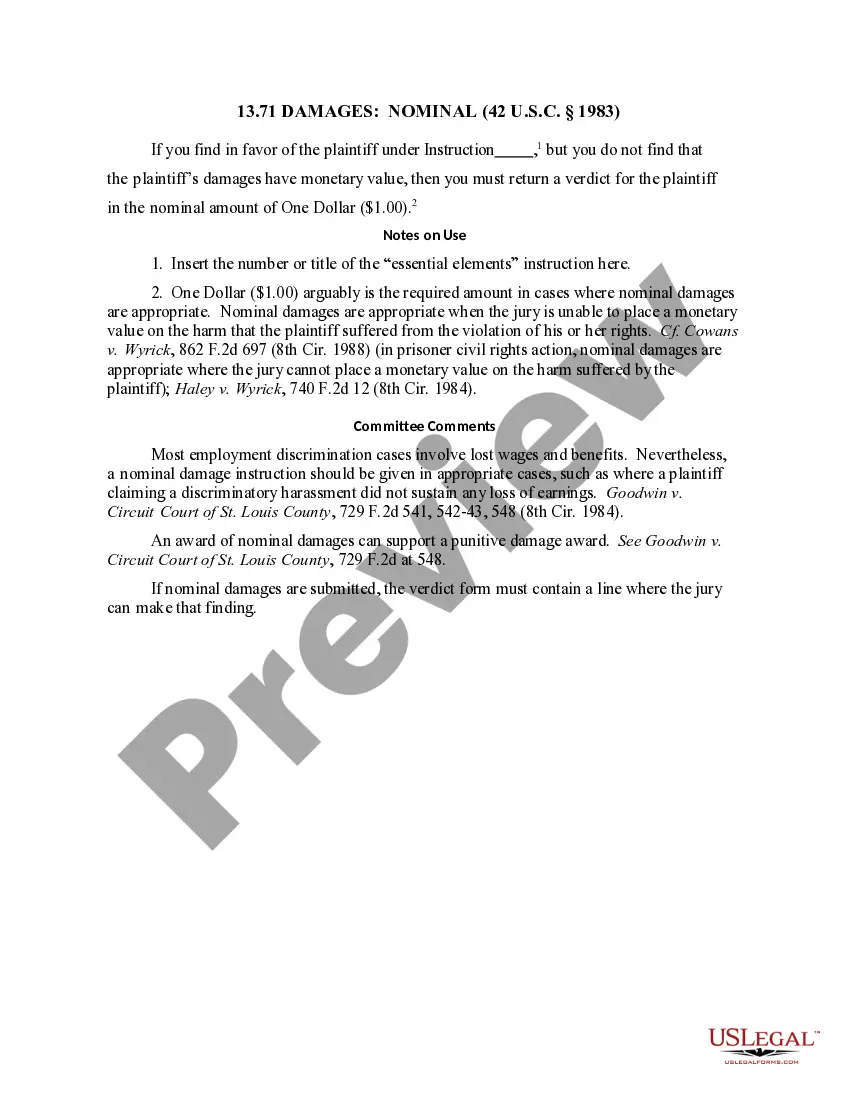
Nominal damages of $1 are awarded when a section 1983 plaintiff who seeks compensatory damages proves that a defendant has violated his or her constitutional rights, but is unable to persuade the fact-finder, typically a jury, that the plaintiff suffered actual damages of any kind, whether physical and financial (?
In Smith v. Wade, the Supreme Court held that a § 1983 plaintiff may recover punitive damages against an official in her personal capacity if the official acted with malicious or evil intent or in callous disregard of the plaintiff's federally protected rights.