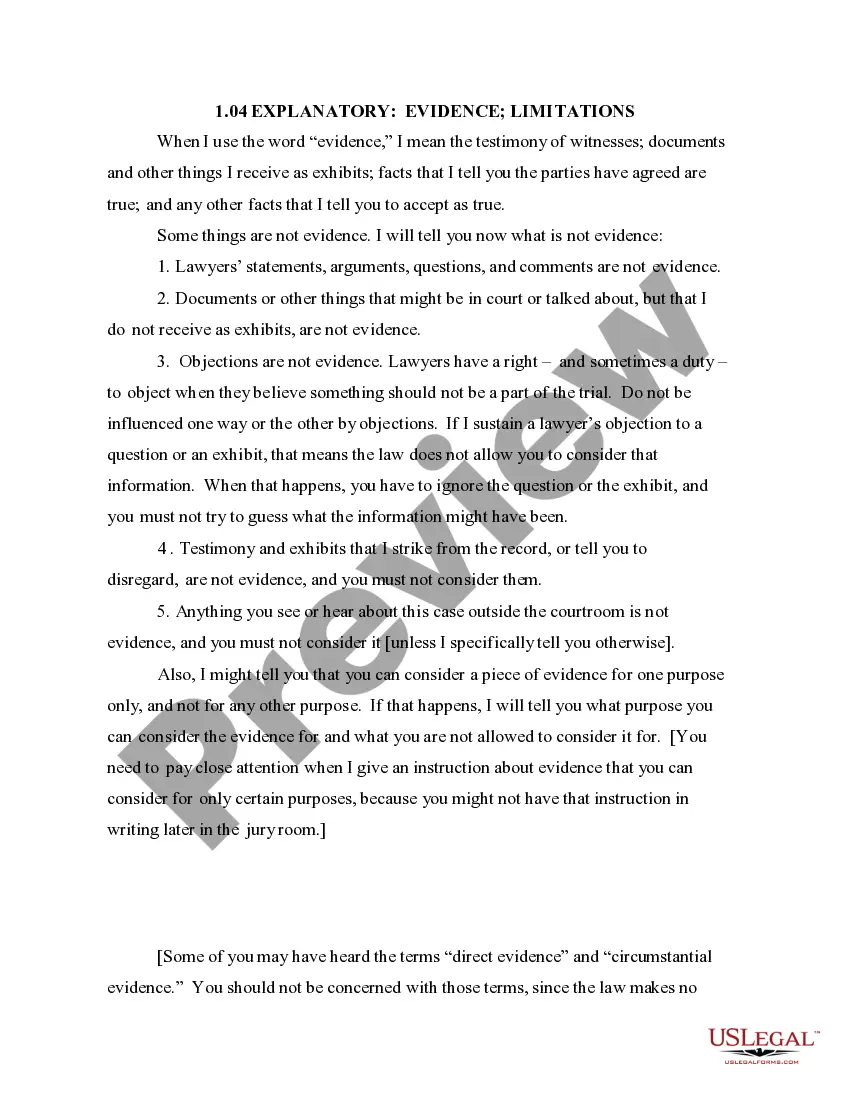
1.04 EXPLANATORY: EVIDENCE; LIMITATIONS
Overview of this form
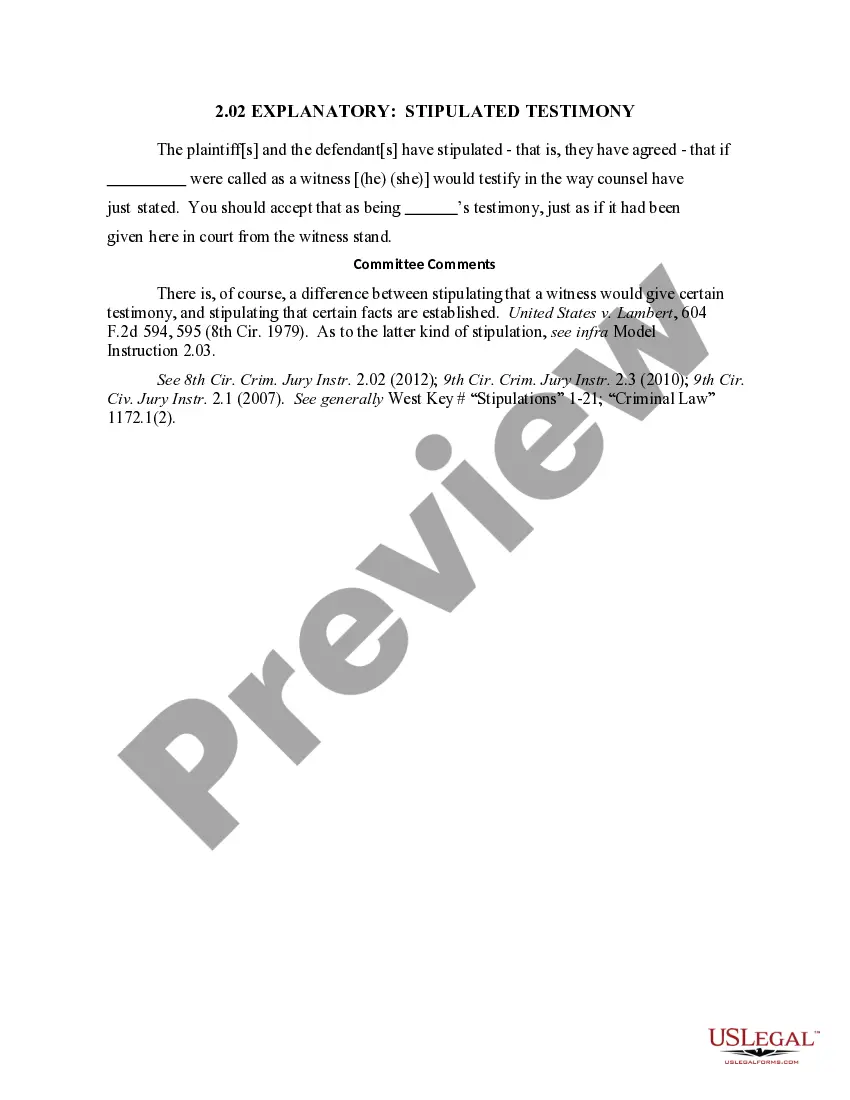
The 1.04 Explanatory: Evidence; Limitations form serves as a simplified instruction for jurors regarding what constitutes evidence in a court case. It clarifies various types of evidence and specifies what should not be considered during deliberation. Understanding these guidelines is essential for making informed decisions in legal cases, distinguishing it from similar jury instruction forms that may not cover limitations as comprehensively.
Key parts of this document
- Definition of evidence, including witness testimony, documents, and agreed-upon facts.
- Clarification of non-evidence, such as lawyer statements and objections.
- Instructions on evidence striking or disregarding specific information.
- Guidelines on external information sources and their relevance.
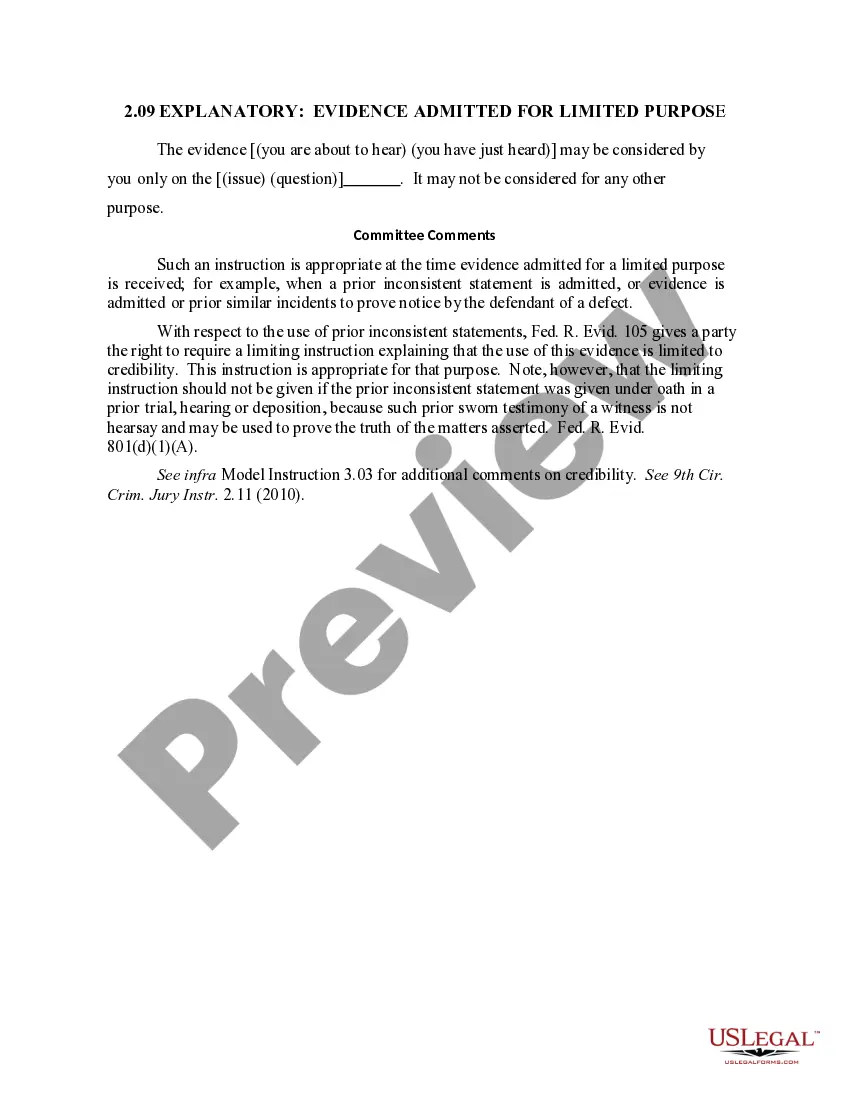
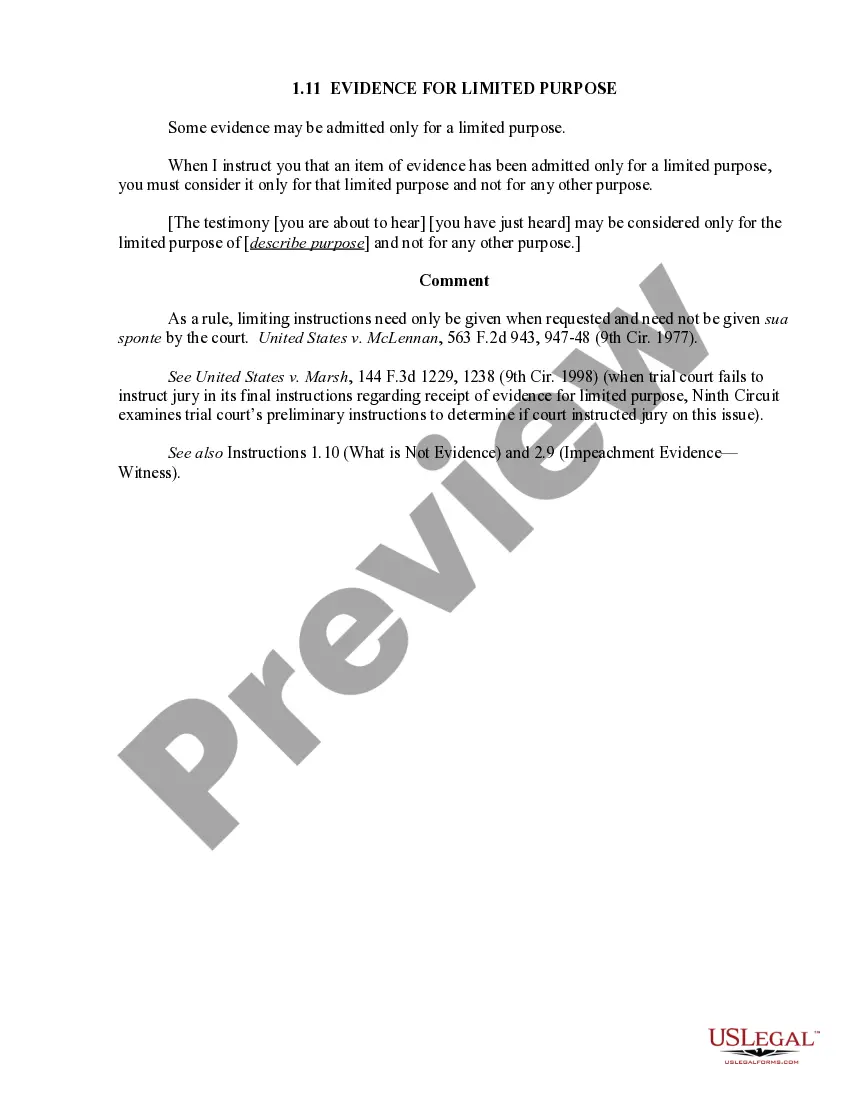
- Explanation of purpose-limited evidence consideration.
- Overview of evidence types without stressing terminology distinctions.

Situations where this form applies
This form is useful during civil trials when jurors need clarity on what information can be used for making decisions. It should be referenced whenever jurors seek guidance on distinguishing between admissible evidence and statements or documents that cannot be considered as part of the trial. This ensures a fair and focused deliberation process.
Who should use this form
This form is intended for:
- Juries involved in civil trials.
- Judges instructing juries on evidence considerations.
- Attorneys seeking to ensure jurors understand evidence limitations.
Steps to complete this form
To appropriately use this form, follow these steps:
- Read the definitions of what qualifies as evidence carefully.
- Take note of what is explicitly stated as non-evidence.
- Listen attentively to any evidence that the judge instructs you to disregard.
- Pay attention to any limitations on how certain pieces of evidence may be used.
- Review your notes on these parameters when deliberating a verdict.
Notarization guidance
This form usually doesn’t need to be notarized. However, local laws or specific transactions may require it. Our online notarization service, powered by Notarize, lets you complete it remotely through a secure video session, available 24/7.
Get your form ready online
Our built-in tools help you complete, sign, share, and store your documents in one place.
Make edits, fill in missing information, and update formatting in US Legal Forms—just like you would in MS Word.
Download a copy, print it, send it by email, or mail it via USPS—whatever works best for your next step.
Sign and collect signatures with our SignNow integration. Send to multiple recipients, set reminders, and more. Go Premium to unlock E-Sign.
If this form requires notarization, complete it online through a secure video call—no need to meet a notary in person or wait for an appointment.
We protect your documents and personal data by following strict security and privacy standards.

Make edits, fill in missing information, and update formatting in US Legal Forms—just like you would in MS Word.

Download a copy, print it, send it by email, or mail it via USPS—whatever works best for your next step.

Sign and collect signatures with our SignNow integration. Send to multiple recipients, set reminders, and more. Go Premium to unlock E-Sign.

If this form requires notarization, complete it online through a secure video call—no need to meet a notary in person or wait for an appointment.

We protect your documents and personal data by following strict security and privacy standards.
Common mistakes to avoid
- Misunderstanding what constitutes evidence and relying on statements made by lawyers during the trial.
- Considering irrelevant information obtained outside the courtroom.
- Failing to follow instructions regarding evidence that can only be used for specific purposes.
Advantages of online completion
- Convenient access to critical legal guidelines for juries.
- Edit and adapt the form as needed for clarity and understanding.
- Reliable resource drafted by licensed attorneys to ensure legal accuracy.
- The form outlines the limitations of evidence, ensuring jurors understand their responsibilities.
- Validates the importance of following the judgeâs instructions regarding what is permissible as evidence.
Summary of main points
- The form defines what constitutes evidence in court and what is not admissible.
- It is crucial for jurors to understand these definitions to reach fair verdicts.
- Attention to instructions regarding objections and limited-purpose evidence is essential for proper deliberation.