Corporate Governance Guidelines
About this form
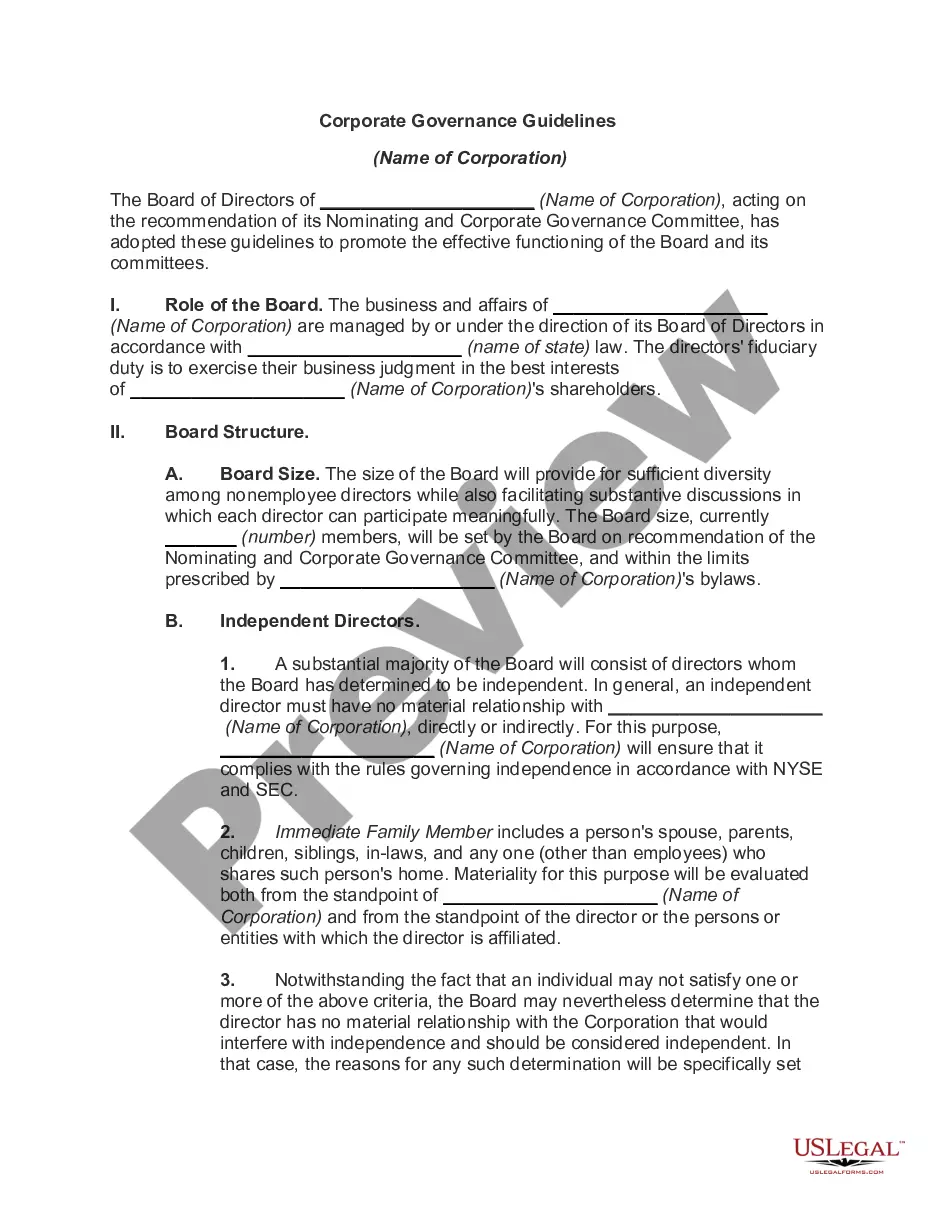
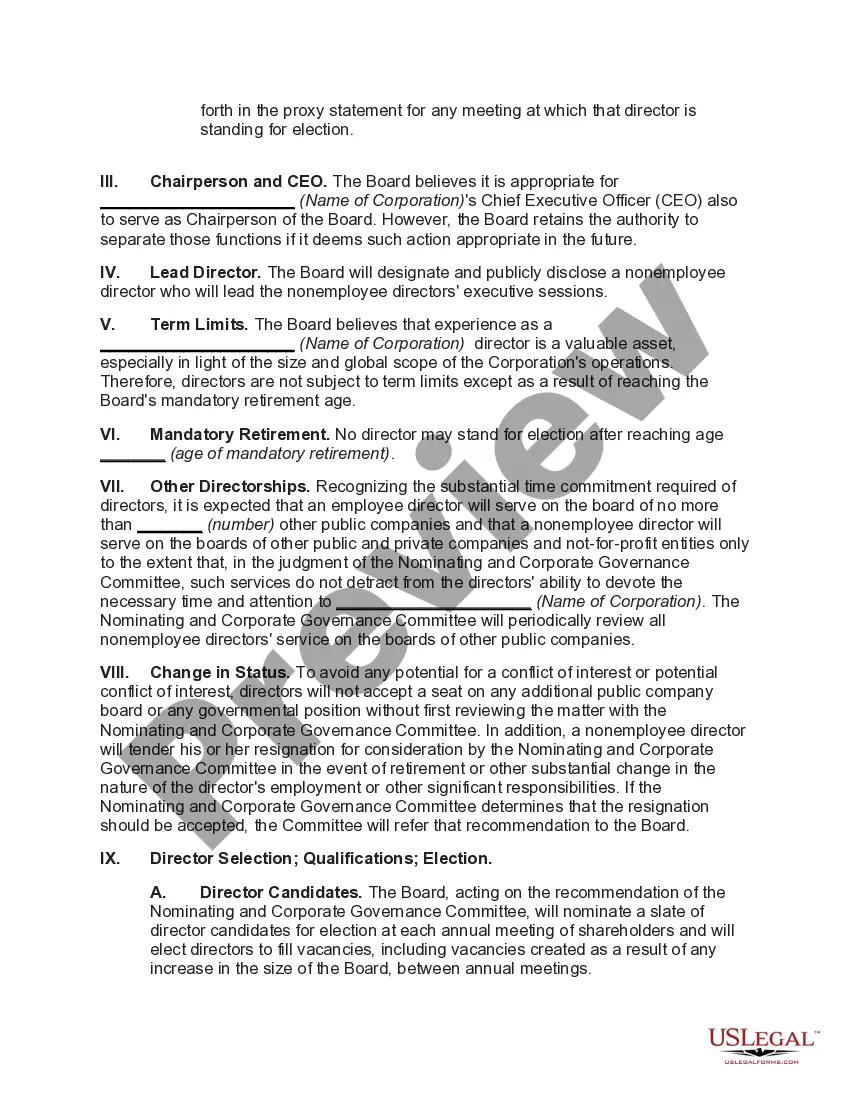
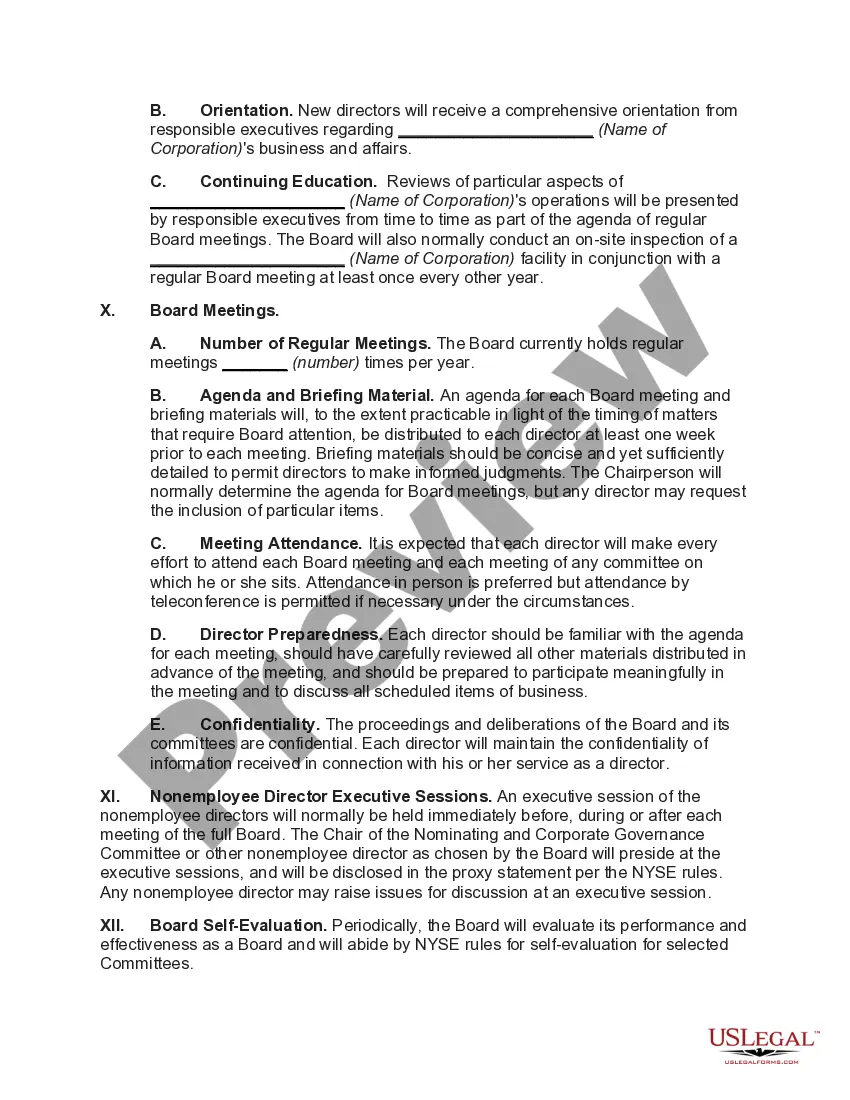
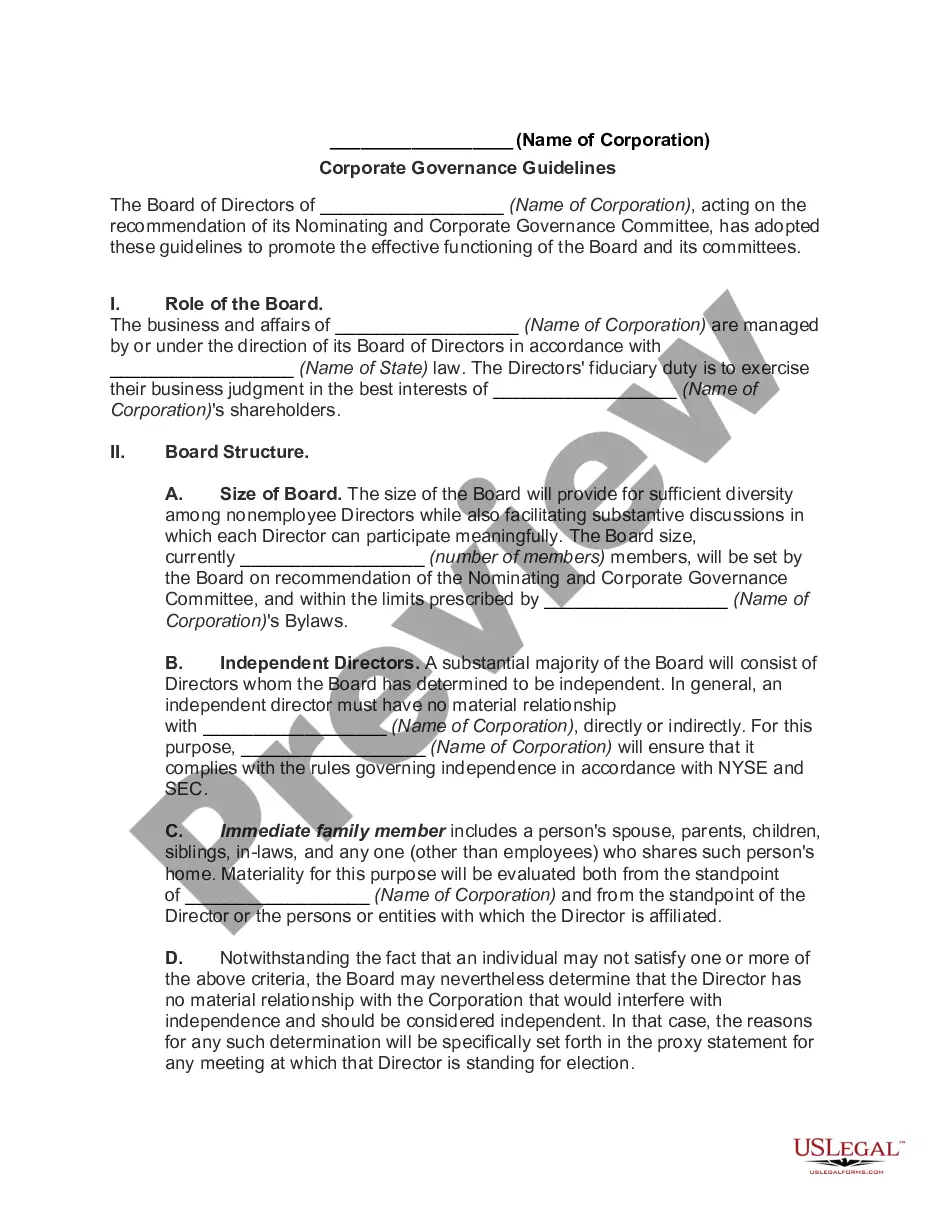
The Corporate Governance Guidelines form outlines the principles and practices that govern the Board of Directors of a corporation. It serves to promote effective functioning of the Board and its committees, ensuring that the directors fulfill their fiduciary responsibilities while adhering to state laws and relevant regulations. This form is critical for maintaining transparency and accountability in corporate governance, distinguishing itself from other legal forms that may focus on specific requirements for annual meetings or financial disclosures.
Form components explained
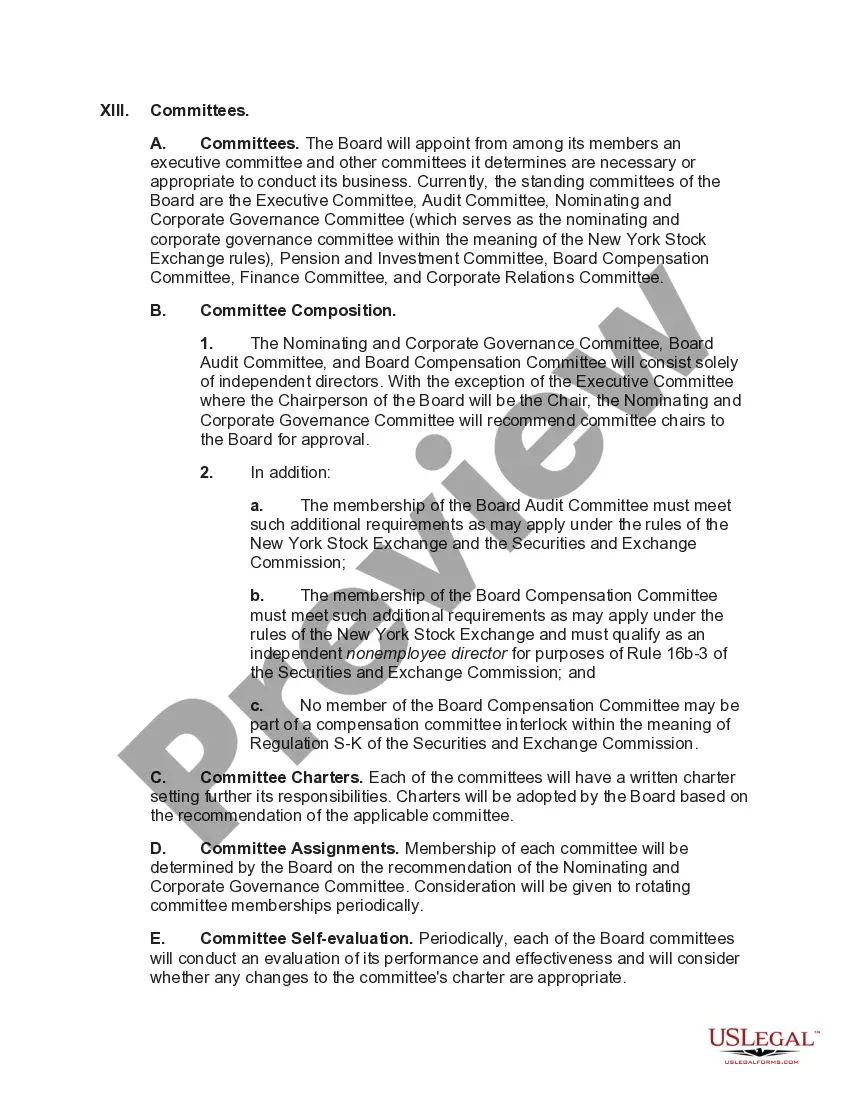
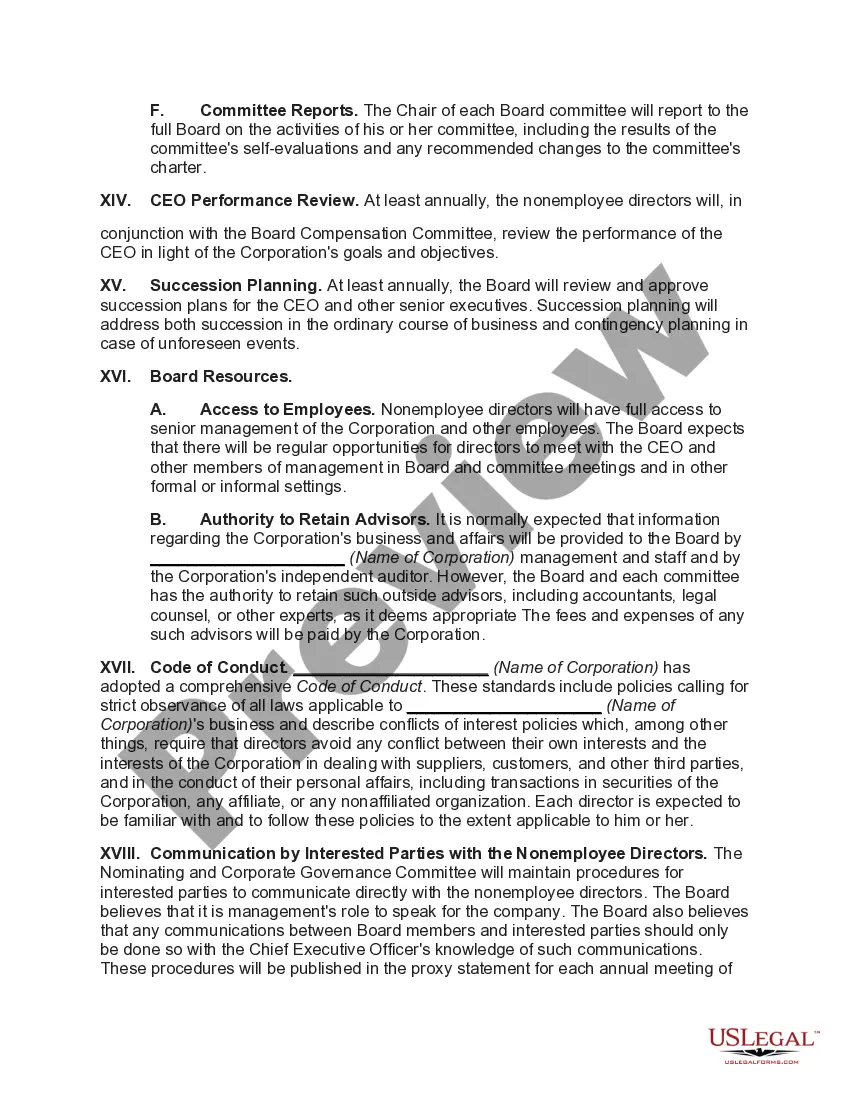
- Role of the Board: Defines the Board's responsibilities and oversight of the corporation.
- Board Structure: Details on size, independent directors, and their qualifications.
- Committee Composition: Specifications on the structure and membership of various Board committees.
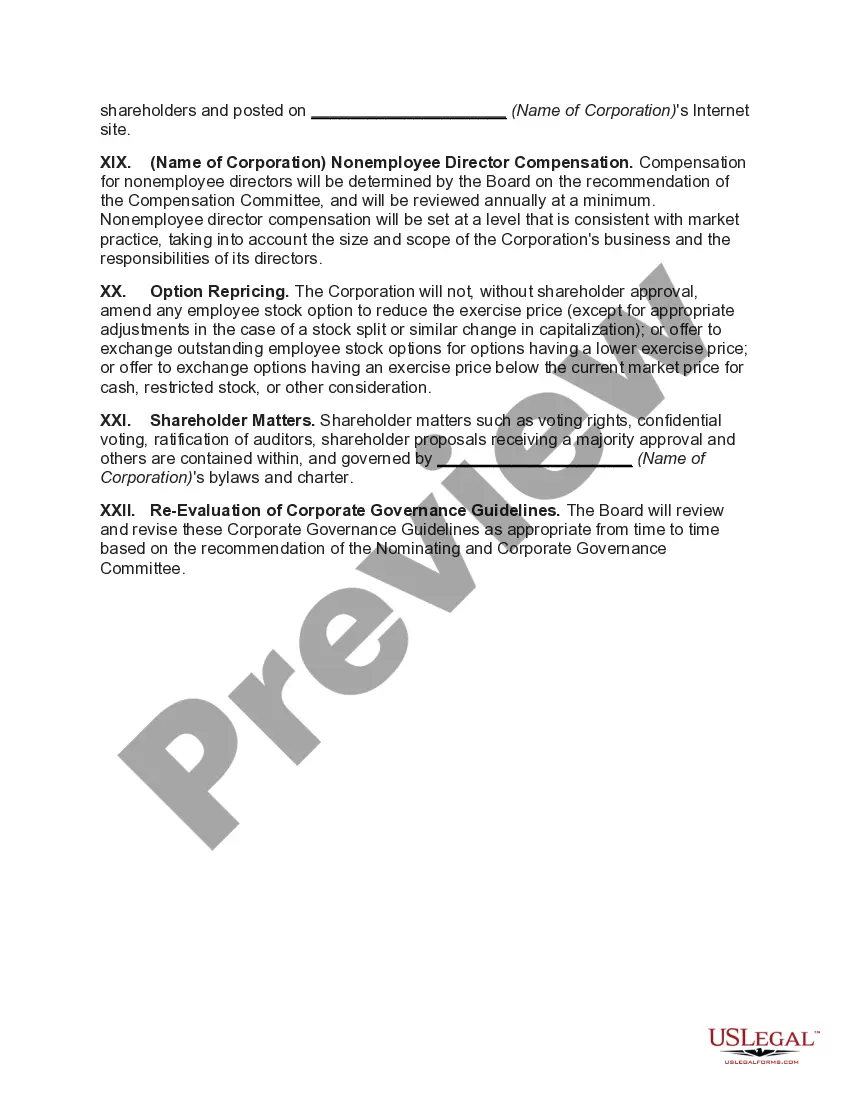
- CEO Performance Review: Guidelines on how and when to evaluate the CEO.
- Communication Procedures: Outlines how interested parties may communicate with nonemployee directors.


Common use cases
This form is used when a corporation seeks to establish or revise its governance structure and protocols. It is particularly relevant during the creation of a new corporation, organizational restructuring, or when implementing best practices in response to regulatory changes or shareholder requirements.
Who needs this form
- Corporate boards looking to standardize governance practices.
- Newly formed corporations establishing initial governance documents.
- Existing corporations aiming to update or revise their governance guidelines.
- Legal professionals assisting corporations in drafting compliance documents.
How to complete this form
- Identify the name of the corporation and fill it in throughout the document.
- Establish the size of the Board by inputting the number of directors.
- Specify the state in which the corporation is incorporated to align with local laws.
- Outline any specific age limit for mandatory retirement of directors.
- Detail the procedures for selecting director candidates and their qualification criteria.
Does this form need to be notarized?
This form does not typically require notarization unless specified by local law. Ensure to check the specific requirements for your jurisdiction to confirm compliance.
Get your form ready online
Our built-in tools help you complete, sign, share, and store your documents in one place.
Make edits, fill in missing information, and update formatting in US Legal Forms—just like you would in MS Word.
Download a copy, print it, send it by email, or mail it via USPS—whatever works best for your next step.
Sign and collect signatures with our SignNow integration. Send to multiple recipients, set reminders, and more. Go Premium to unlock E-Sign.
If this form requires notarization, complete it online through a secure video call—no need to meet a notary in person or wait for an appointment.
We protect your documents and personal data by following strict security and privacy standards.

Make edits, fill in missing information, and update formatting in US Legal Forms—just like you would in MS Word.

Download a copy, print it, send it by email, or mail it via USPS—whatever works best for your next step.

Sign and collect signatures with our SignNow integration. Send to multiple recipients, set reminders, and more. Go Premium to unlock E-Sign.

If this form requires notarization, complete it online through a secure video call—no need to meet a notary in person or wait for an appointment.

We protect your documents and personal data by following strict security and privacy standards.
Avoid these common issues
- Failing to include all required disclosures regarding director independence.
- Not updating the guidelines regularly to reflect changes in law or corporate structure.
- Overlooking the need for Board and committee evaluations.
- Not specifying the criteria used to evaluate CEO performance.
Benefits of completing this form online
- Convenience of downloading and customizing the document to fit specific corporate needs.
- Editability allows for easy updates as corporate governance evolves.
- Reliability, as the guidelines are drafted by licensed attorneys.
- These guidelines serve as a frame of reference for compliance with state and federal regulations, helping to maintain legal and ethical standards in corporate governance.
- Implementing governance guidelines can strengthen a corporation's risk management and operational effectiveness.
What to keep in mind
- The Corporate Governance Guidelines provide a structured approach to board operations and decision-making.
- Usage of this form is critical for promoting accountability within the board and to stakeholders.
- Regular review and updating of these guidelines is essential for maintaining compliance with evolving laws and best practices.
Looking for another form?


Form popularity
FAQ
The five principles of corporate governance are responsibility, accountability, awareness, impartiality and transparency.
They are accountability, fairness, transparency and Independence. Fairness: Fairness means ?treating all stakeholders equally and ensure their rights. The corporate governance framework should protect shareholder rights and ensure the equitable treatment of all stakeholders, including minority and foreign shareholders.
The pillars of successful corporate governance are: accountability, fairness, transparency, assurance, leadership and stakeholder management.
Instruments of Informal Governance: Co-optation, Control and Camouflage. The evidence collected in the research supports the relevance of three types of informal governance practices. Nicknamed ?the 3C's?, they are associated with high levels of corruption.
Corporate Governance Guidelines Size of the Board.Board Membership Criteria.Director Independence.Director Tenure.Directors Who Change Their Present Job Responsibility.Election of Directors.
Corporate governance covers the areas of environmental awareness, ethical behavior, corporate strategy, compensation, and risk management. The basic principles of corporate governance are accountability, transparency, fairness, responsibility, and risk management.
Corporate governance refers to the framework of policies and guidelines that inform a company's conduct, decision-making and practice. This infrastructure is built upon four key principles: accountability, transparency, fairness and responsibility.
The Four Models of Governance Advisory Model. The advisory board is one of the most traditional styles of nonprofit governance seen today.Cooperative Mode.Management Team Model.Policy Board Model.