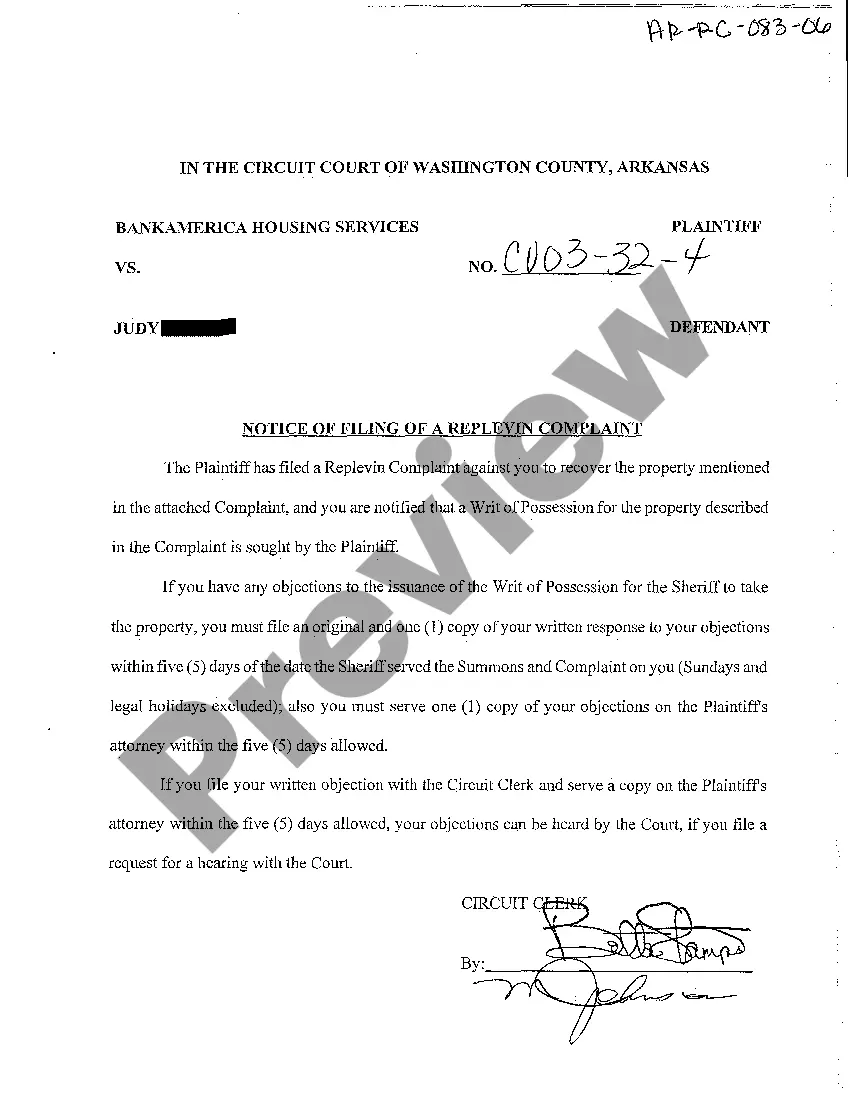
Idaho Mechanics Lien Claim
About this form
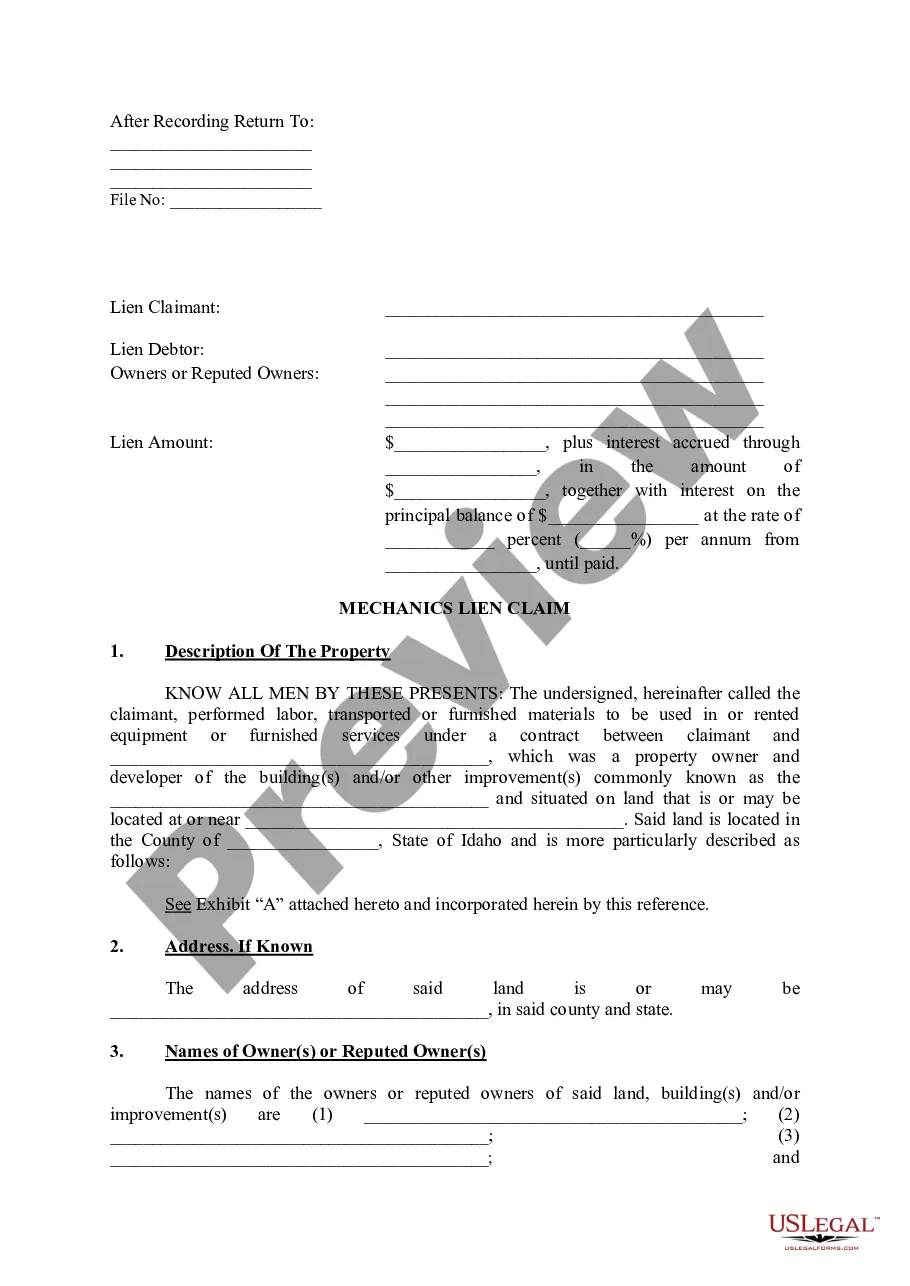
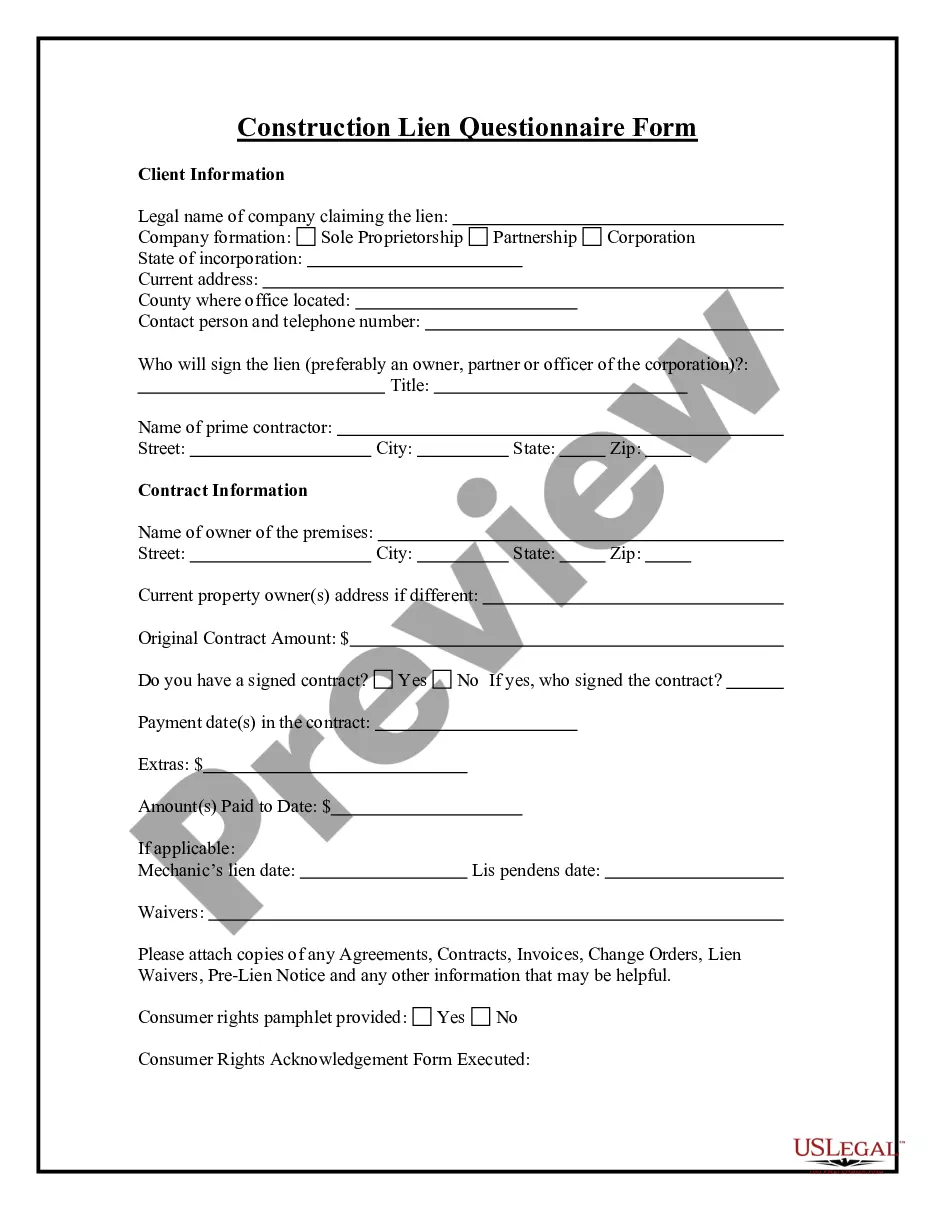
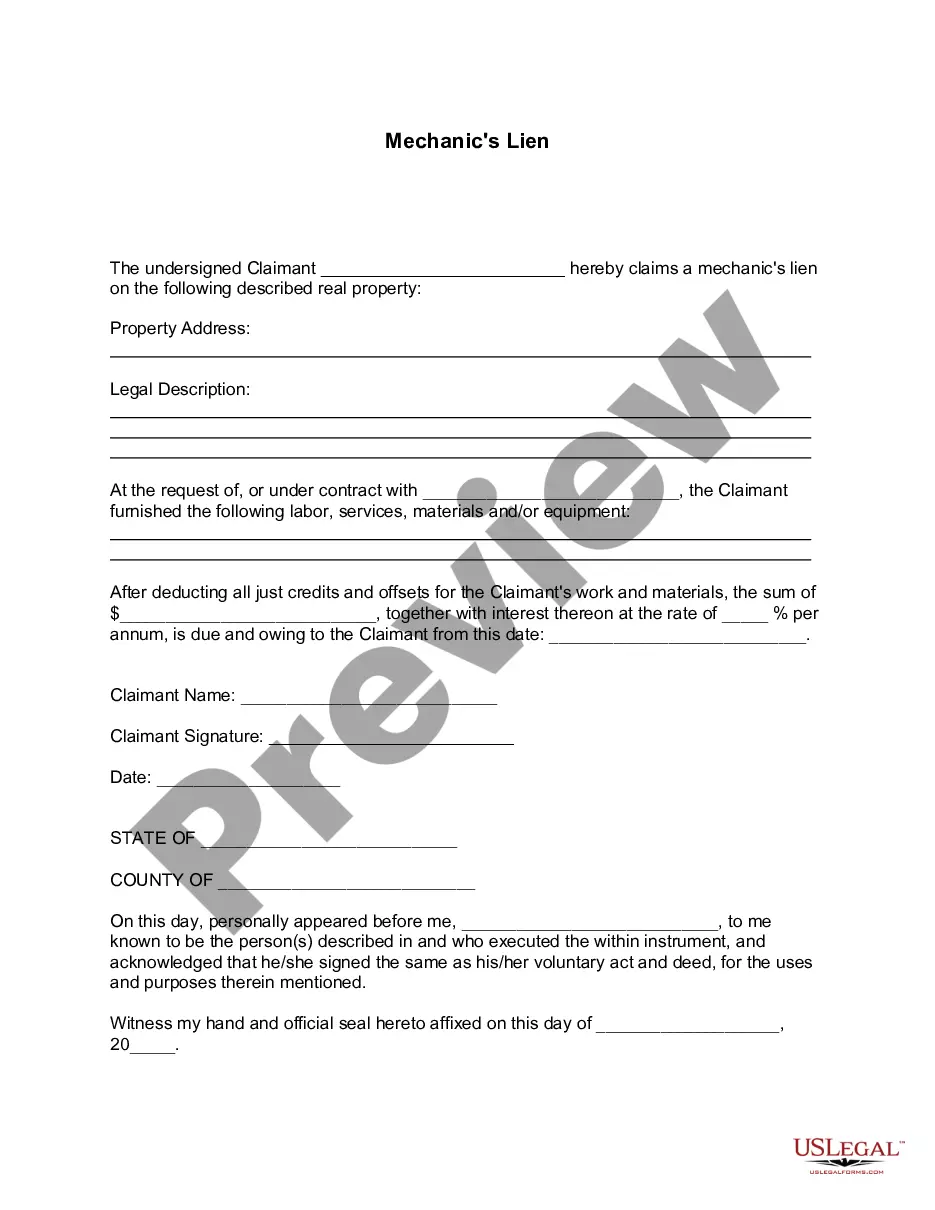
The Mechanics Lien Claim form is a legal document that allows contractors, subcontractors, or suppliers to assert their right to payment for labor or materials supplied in the construction or improvement of a property. This document establishes a lien on the property to ensure that the claimant receives compensation. Unlike other forms of lien, this one specifically pertains to construction-related debts and asserts the claimantâs legal right to seek repayment through the property itself.
What’s included in this form
- Claimant and lien debtor identification fields
- Description of the property and its location
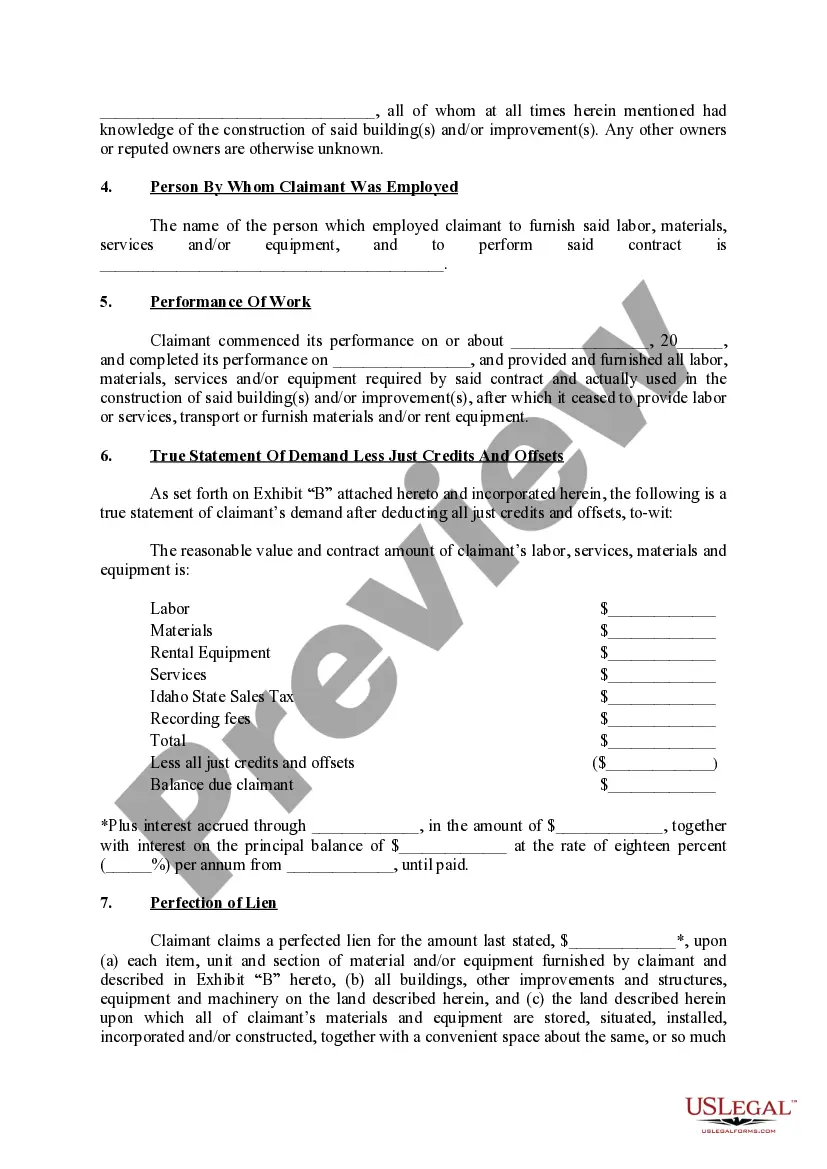
- Details of the work performed and the contract terms
- Statement of the amount due, including interest calculations
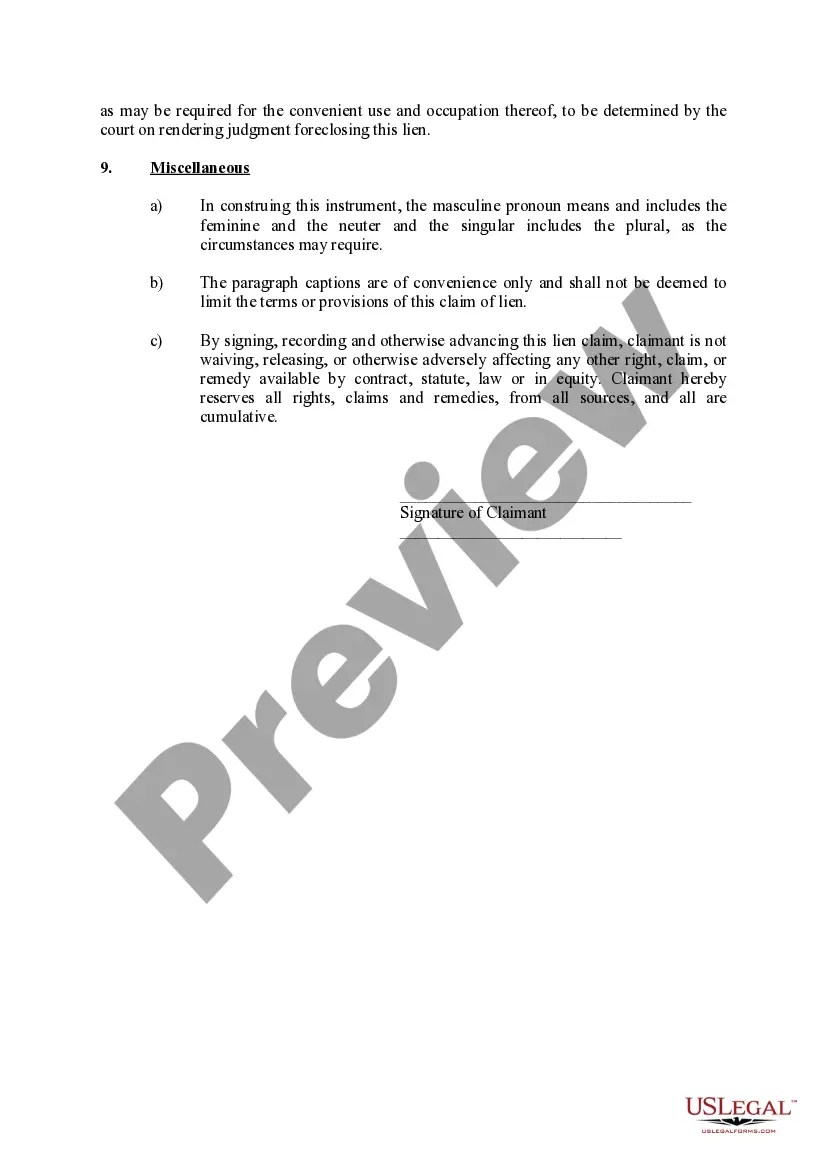
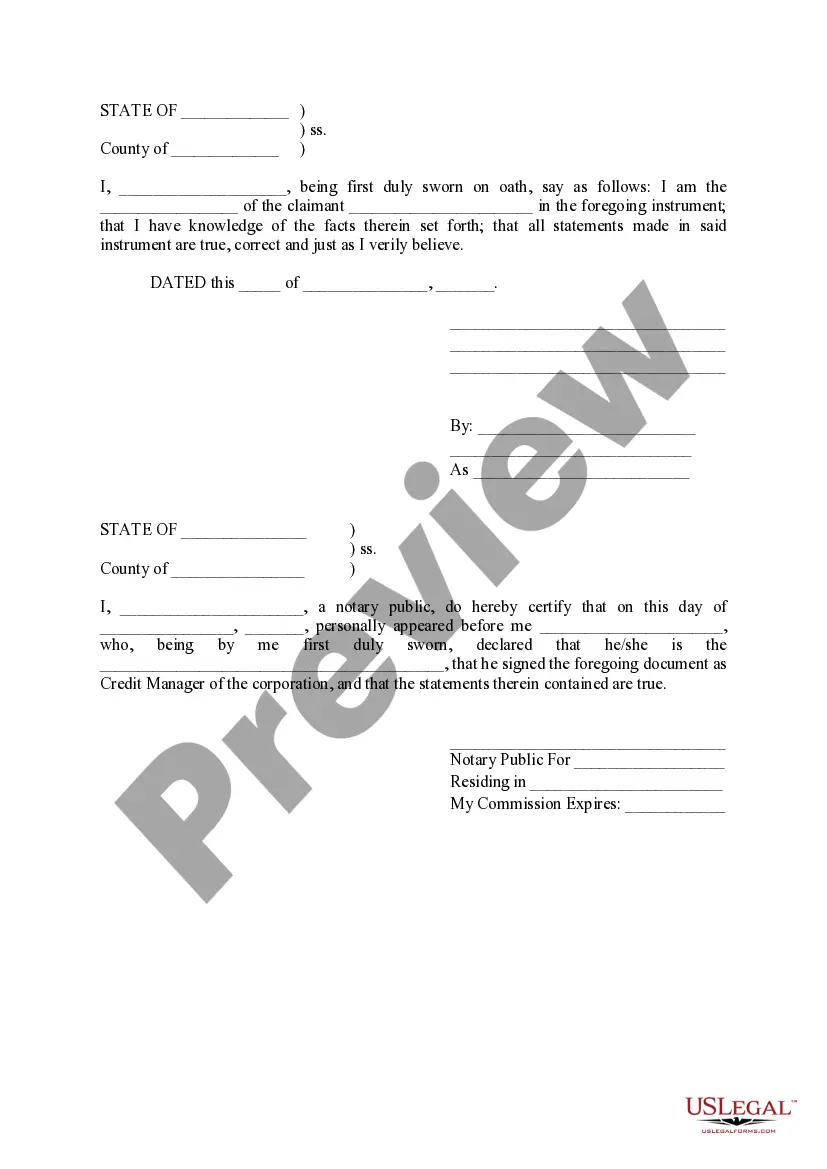
- Signature requirements and notary acknowledgment
Common use cases
This form should be used when a contractor or supplier has not been paid for work completed or materials provided for a construction project. It is important to file a Mechanics Lien Claim within the applicable timeframe based on state laws, which may require the claimant to notify the property owner and file the lien within a specific period after the work has been completed or payment was due.
Who can use this document
- Contractors who provided labor or materials in construction projects
- Subcontractors hired by general contractors
- Suppliers of construction materials or equipment
- Businesses or individuals who have a financial claim against a property for unpaid services related to construction or improvements
Completing this form step by step
- Identify the claimant and lien debtor by entering their names in the specified fields.
- Provide a complete description of the property, including location details.
- Fill out the details of the work performed, including dates of service and contract value.
- Calculate and enter the total amount due, accounting for labor, materials, taxes, and interest.
- Sign the form and have it notarized as required to validate the claim.
Is notarization required?
Yes, this form must be notarized to be legally valid. It is essential to have the claimant's signature witnessed by a notary public to ensure that the claim can be enforced effectively. US Legal Forms offers integrated online notarization services, allowing you to complete this process securely via video call at any time.
Get your form ready online
Our built-in tools help you complete, sign, share, and store your documents in one place.
Make edits, fill in missing information, and update formatting in US Legal Forms—just like you would in MS Word.
Download a copy, print it, send it by email, or mail it via USPS—whatever works best for your next step.
Sign and collect signatures with our SignNow integration. Send to multiple recipients, set reminders, and more. Go Premium to unlock E-Sign.
If this form requires notarization, complete it online through a secure video call—no need to meet a notary in person or wait for an appointment.
We protect your documents and personal data by following strict security and privacy standards.

Make edits, fill in missing information, and update formatting in US Legal Forms—just like you would in MS Word.

Download a copy, print it, send it by email, or mail it via USPS—whatever works best for your next step.

Sign and collect signatures with our SignNow integration. Send to multiple recipients, set reminders, and more. Go Premium to unlock E-Sign.

If this form requires notarization, complete it online through a secure video call—no need to meet a notary in person or wait for an appointment.

We protect your documents and personal data by following strict security and privacy standards.
Typical mistakes to avoid
- Failing to provide all required identifying information for the claimant and debtor.
- Not accurately describing the property or including necessary legal descriptions.
- Incorrectly calculating the total amount due, including interest.
- Neglecting to sign or have the form notarized, leading to invalid claims.
Benefits of completing this form online
- Convenience of downloading and completing the form from anywhere at any time.
- Editable fields to ensure all information is accurate and easy to input.
- Access to forms drafted by licensed attorneys, ensuring legal compliance.
- Quick access to resources and additional support, if needed.
Looking for another form?
Form popularity
FAQ
While they don't require lien filings to be notarized, they do require a lien filer to jump through various other hoops that, if not done properly, might cause your filing to be rejected or invalidated: Delaware.
When a contractor files a mechanics' (construction) lien on your home, the lien makes your home into what's called security for an outstanding debt, which the contractor claims is due and unpaid for services or materials.
The simplest way to prevent liens and ensure that subcontractors and suppliers are paid is to pay with joint checks. This is when both parties endorse the check. Compare the contractor's materials or labor bill to the schedule of payments in your contract and the Preliminary Notices.
Prepare the Idaho mechanics lien form. File the lien with the county recorder's office. Deliver your lien to the property owner.
To enforce the lien, the contractor must file a lawsuit within 90 days from the date of recording the lien. If this deadline is passed, the contractor may not be able to enforce the lien and may be required to remove the lien.
A Claim of Lien must be filed containing a statement of the claimant's demand, the names of relevant parties, and a property description. It must be verified by the oath of the claimant and a copy must be served personally or by certified mail to the property owner. Idaho Code § 45-507.
Mechanic's liens create a cloud on title, meaning that they appear in public property records. Liens are sometimes said to travel with the land, meaning that anyone who buys your house would take the property subject to the contractor's lien (or, more likely, demand that you pay it off first).
Even though these states may permit project participants to secure lien rights and claim a mechanics lien even without a written contract, it is generally best practice to have a signed written contract for work provided.