Treatment Planning, Treatment Goals and Informed Consent - Adult and Therapist
Understanding this form
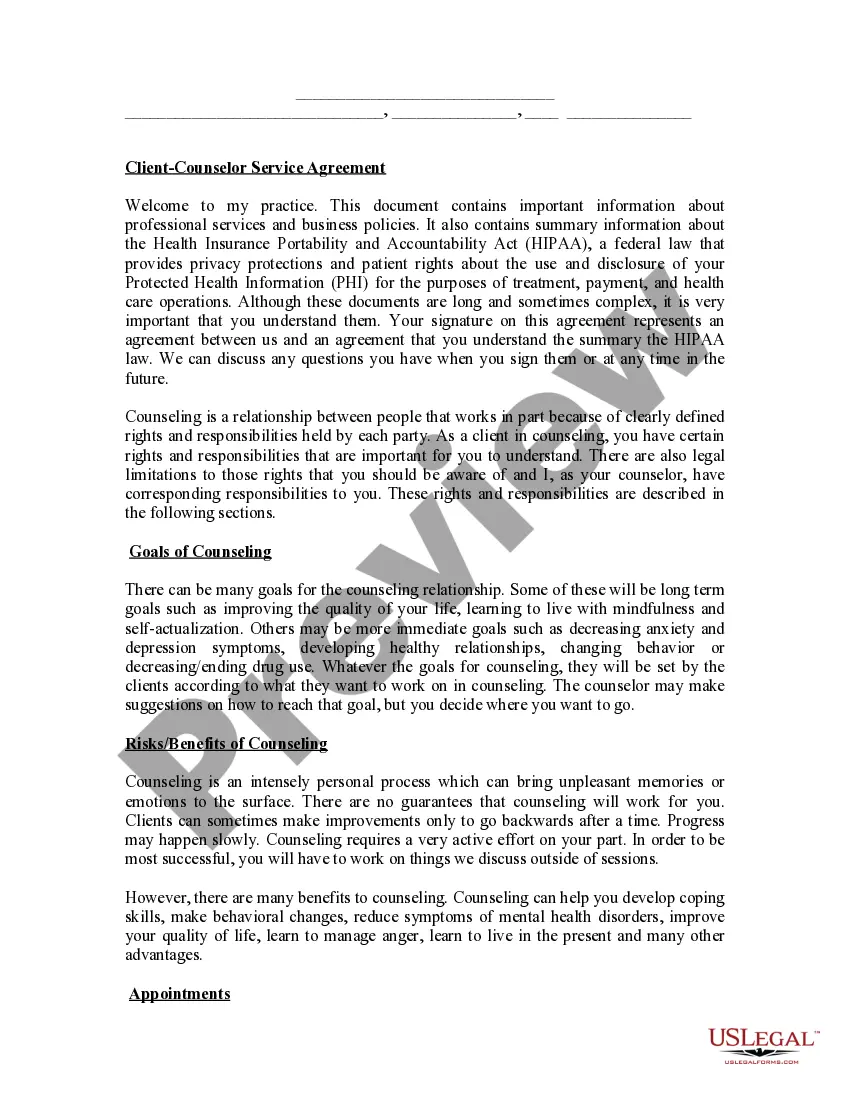
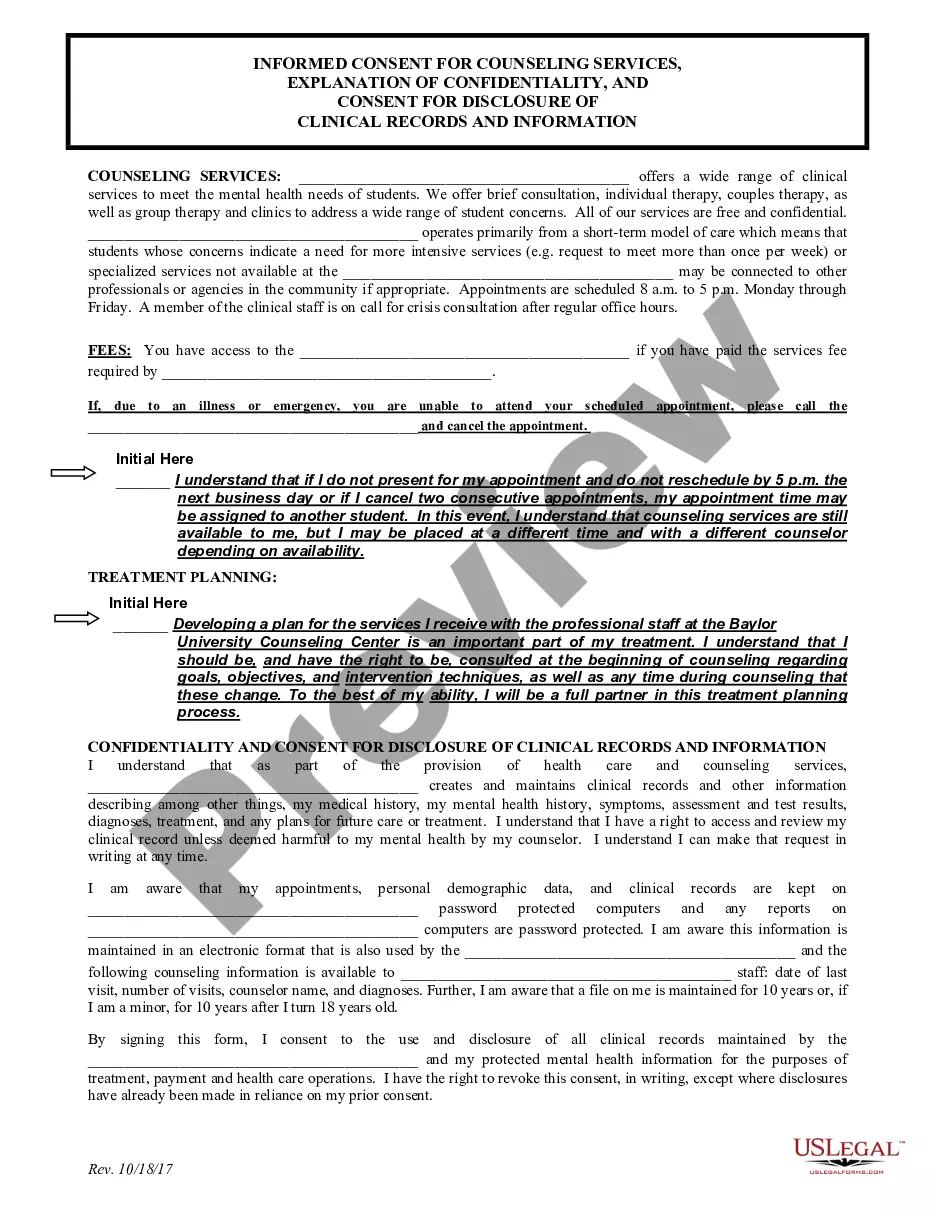
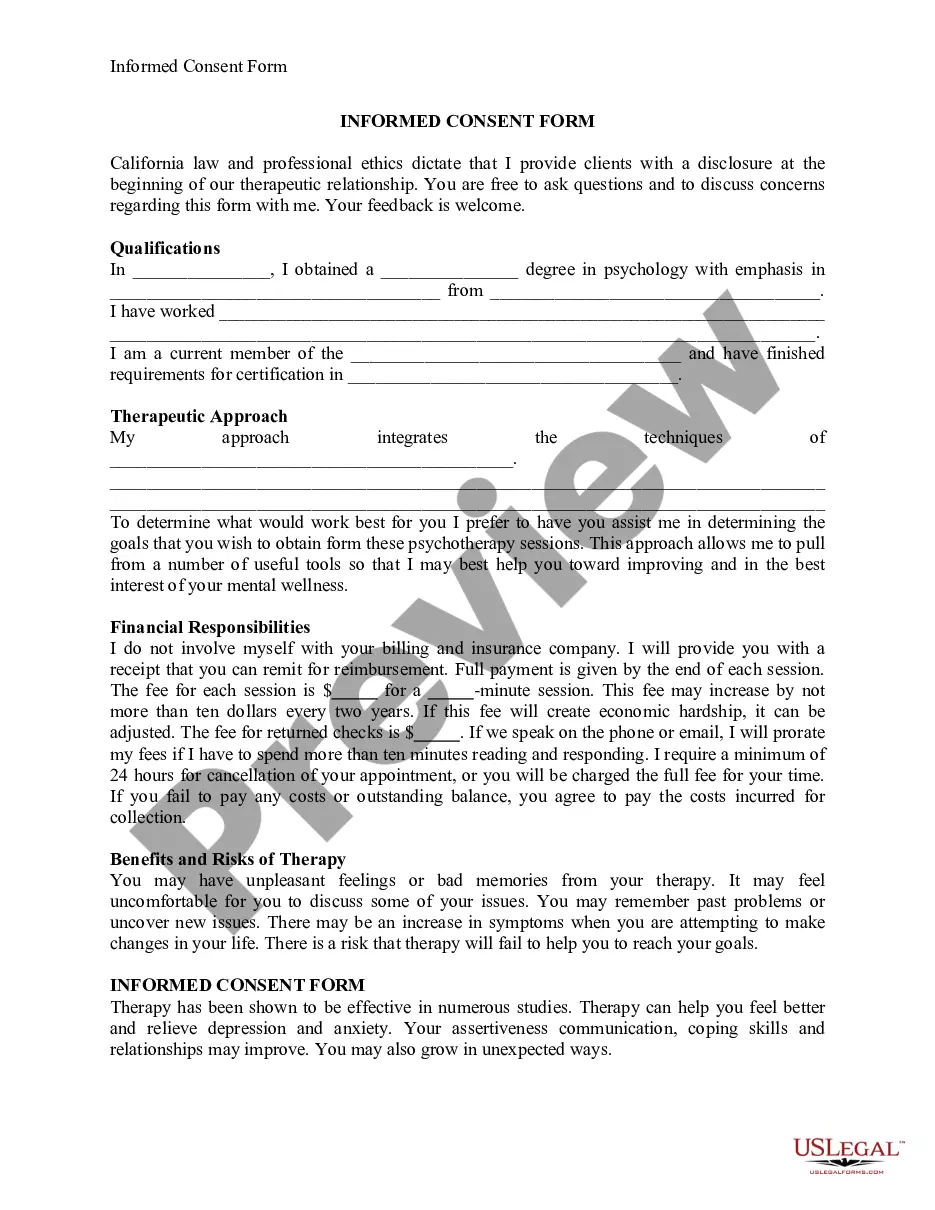
This Treatment Planning, Treatment Goals and Informed Consent form is designed for adults receiving therapy. It provides a structured approach to obtaining informed consent from clients before therapy sessions begin. This form differs from other consent documents as it integrates treatment planning and outlines the goals and expectations of therapy, ensuring that clients understand their rights, confidentiality, and the therapeutic process involved.
Key parts of this document
- Client consent for treatment alongside therapy goals and objectives.
- Confidentiality assurances detailing the limits of confidentiality.
- Informed understanding of the therapy process and therapeutic relationship.
- Outline of the treatment planning process, including client involvement.
- Details on cancellation policies and attendance requirements.
- Information regarding referrals and communication with other professionals.
Situations where this form applies
This form should be used when an adult is beginning therapy and needs to provide informed consent before receiving treatment. It is appropriate for individuals who seek mental health services for issues such as trauma, anxiety, depression, or other emotional challenges. This form ensures that clients are aware of their rights and the specific procedures of their therapy.
Who this form is for
- Adults seeking therapy from licensed mental health professionals.
- Therapists and counselors providing services to adult clients.
- Clinical facilities and practices that require a standardized consent process.
Instructions for completing this form
- Identify the client by entering their name and personal information at the top of the form.
- Read the confidentiality and treatment planning sections carefully to understand your rights.
- Discuss the therapy process with your therapist and ask any questions related to the treatment goals.
- Sign and date the consent section to acknowledge your understanding and acceptance of the form.
- Keep a copy for your records and provide any necessary information for scheduling and fees.
Does this form need to be notarized?
This form does not typically require notarization unless specified by local law. It is important to check with your therapist or legal advisor for any specific requirements related to your location.
Get your form ready online
Our built-in tools help you complete, sign, share, and store your documents in one place.
Make edits, fill in missing information, and update formatting in US Legal Forms—just like you would in MS Word.
Download a copy, print it, send it by email, or mail it via USPS—whatever works best for your next step.
Sign and collect signatures with our SignNow integration. Send to multiple recipients, set reminders, and more. Go Premium to unlock E-Sign.
If this form requires notarization, complete it online through a secure video call—no need to meet a notary in person or wait for an appointment.
We protect your documents and personal data by following strict security and privacy standards.

Make edits, fill in missing information, and update formatting in US Legal Forms—just like you would in MS Word.

Download a copy, print it, send it by email, or mail it via USPS—whatever works best for your next step.

Sign and collect signatures with our SignNow integration. Send to multiple recipients, set reminders, and more. Go Premium to unlock E-Sign.

If this form requires notarization, complete it online through a secure video call—no need to meet a notary in person or wait for an appointment.

We protect your documents and personal data by following strict security and privacy standards.
Common mistakes
- Failing to read the entire form thoroughly before signing.
- Not discussing concerns or questions with the therapist prior to consenting.
- Overlooking the cancellation policy or attendance requirements.
Why use this form online
- Convenient download and easy to fill out.
- Allows for immediate access to necessary consent documents before sessions.
- Reliable templates drafted by licensed attorneys ensure legal compliance.
Main things to remember
- The Treatment Planning and Informed Consent form ensures clients understand their therapy process.
- It highlights a client's rights, confidentiality limits, and the role of the therapist.
- Completion of the form is necessary before receiving mental health services.
Looking for another form?
Form popularity
FAQ
Examples of where treatment plans are critical supportive documents include physical therapy, rehabilitation, speech therapy, crisis counseling, and family or couples therapy. These documents are also useful treatment planners for mental health conditions such as the following: Depression.
How to write therapy treatment goals - YouTube YouTube Start of suggested clip End of suggested clip One goal for reducing symptoms. And one goal for increasing a coping skill. Okay so what does thisMoreOne goal for reducing symptoms. And one goal for increasing a coping skill. Okay so what does this look like well let's play it out. Okay let's say you have a client come to you with anxiety.
Examples of Goals to Include Some examples of therapy goals include things like: Coping with negative feelings without relying on substance use. Building communication skills to interact with others in a positive way. Learning how to express emotions, such as anger, toward loved ones in a healthy way.
The overall goal of mental health therapy is to help you better understand and manage how to overcome life's challenges. Whether you are experiencing obstacles you believe to be minor or significant, it's never too soon to work towards your life goals in a constructive way.
First, the clinician behaviorally defines the counseling problems to be addressed. Second, achievable goals are selected. Third, the modes of treatment and methods of interven- tion are determined. Fourth, the counselor explains how change will be measured and how outcomes will be demonstrated.
The checklist breaks down treatment plans into five sections: Problem Statements, Goals, Objectives, Interventions, and General Checklist.
Treatment goals can be just about anything that you want to achieve through therapy. They must be things that a therapist can help you with, and they can evolve over time. Many therapists use the SMART goal model, creating therapy goals that are: Specific: What exactly are you trying to gain from treatment?
Objectives/treatment focus: Identify personal needs and goals, and problem solve how to reach goals. Encourage individual goal setting, and support efforts towards those goals. Support adoption of new (positive) values. Practice problem solving behavior and use of new coping skills.