Medical Consent for Treatment
About this form
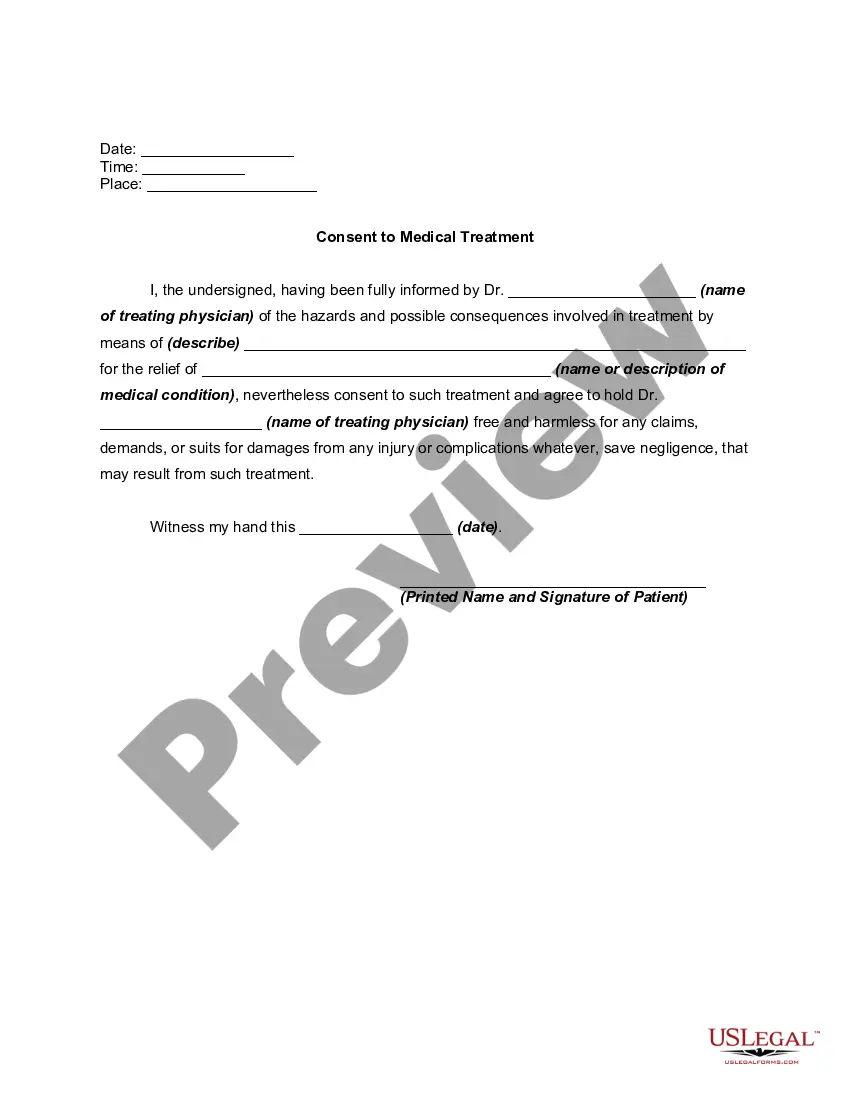
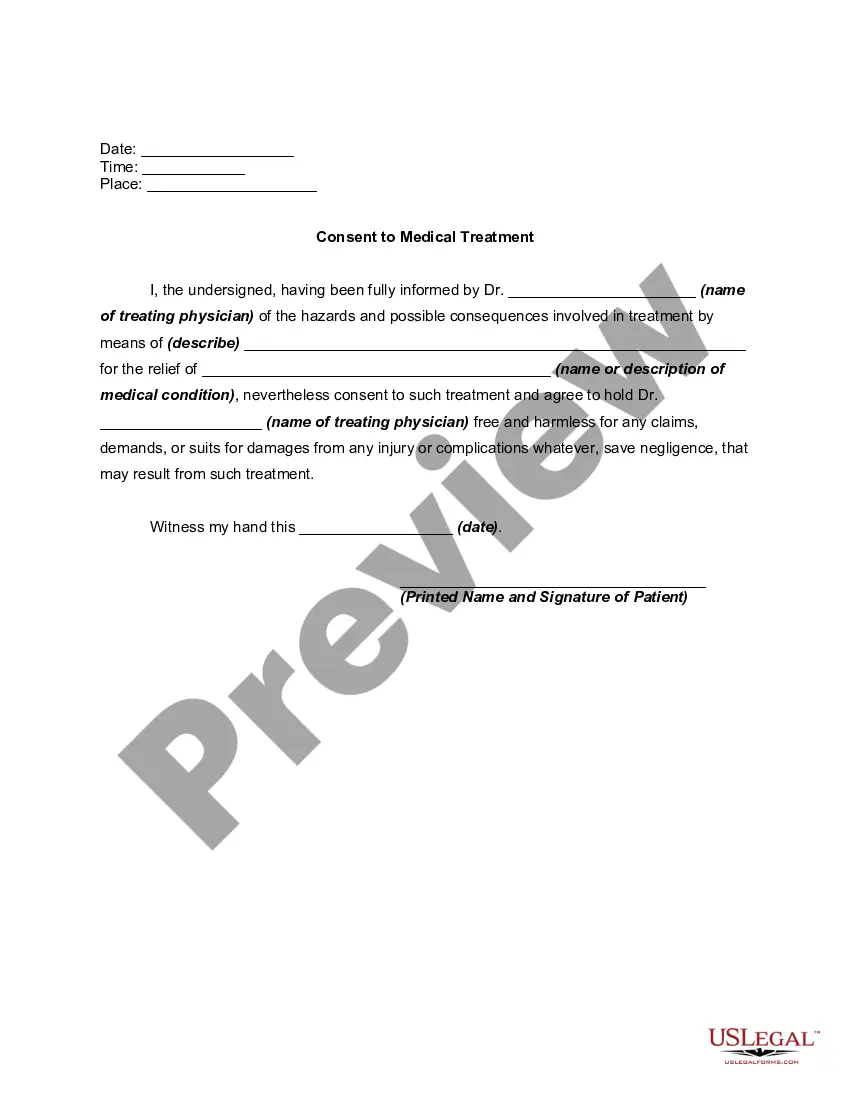
The Medical Consent for Treatment form is a legal document that allows a patient to give informed consent to a medical professional before undergoing treatment. This form is essential as it ensures that the patient is fully aware of the potential risks, benefits, and alternatives associated with the proposed treatment, which distinguishes it from other healthcare forms. It's vital for ensuring that the rights of the patient are protected and that medical practitioners comply with legal requirements before proceeding with treatment.
Form components explained
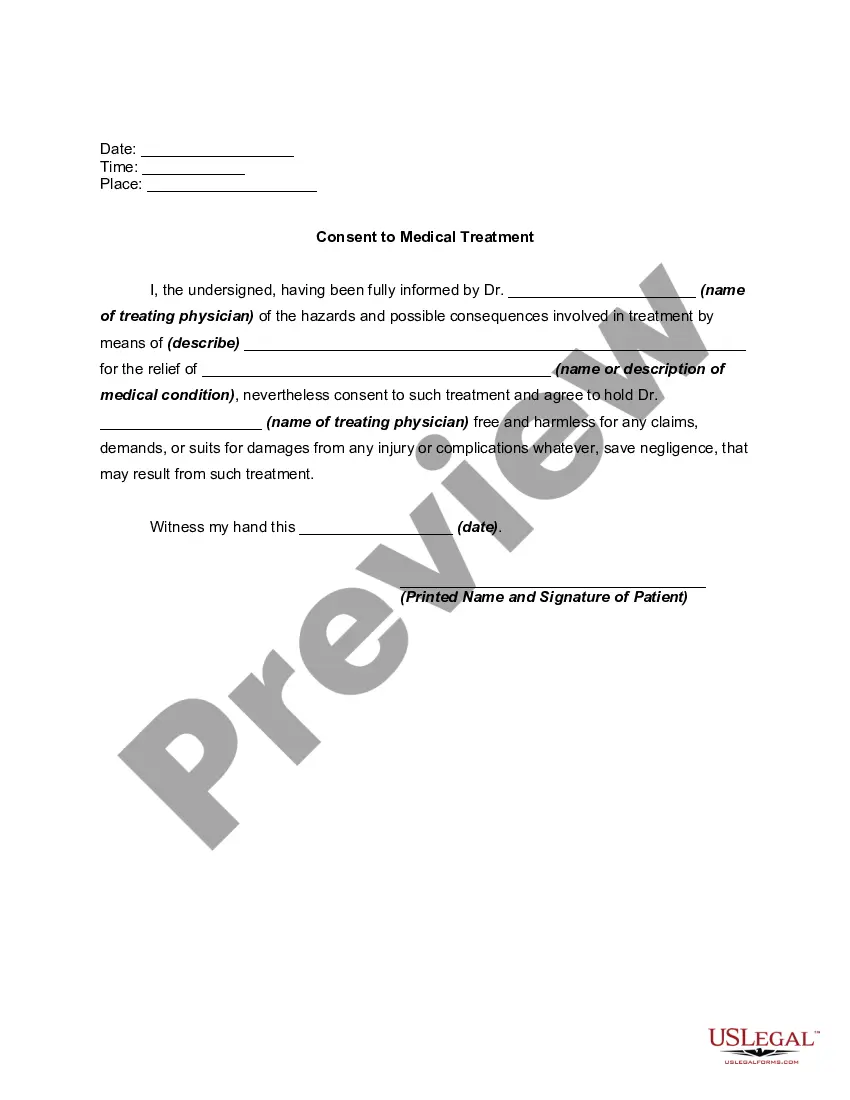
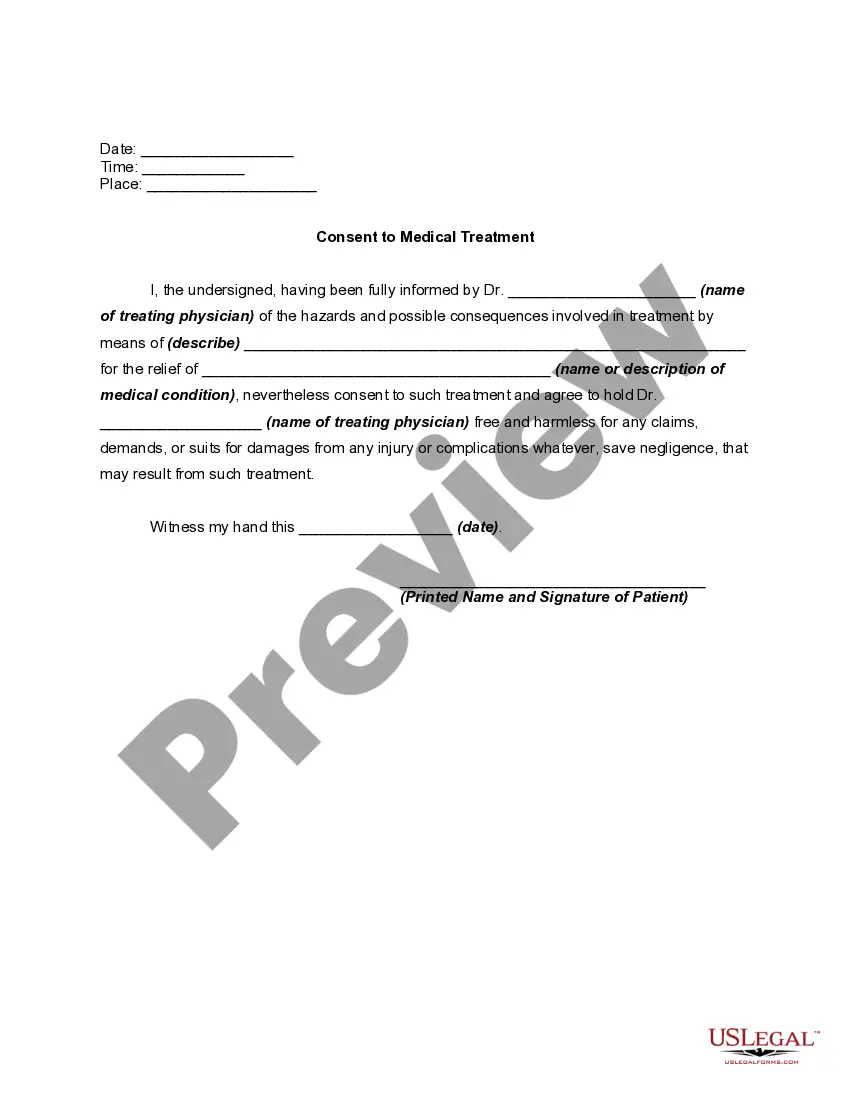
- Patient's printed name and signature: Confirms the patient's agreement to the proposed treatment.
- Treating physician's name: Identifies the medical professional who will administer care.
- Description of treatment: Clearly outlines the type of medical procedure or treatment being consented to.
- Medical condition: Specifies the condition for which the treatment is being administered.
- Statement of understanding: Indicates that the patient has been informed of the risks and consequences of the treatment.
- Release of liability clause: Protects the physician from claims, except in cases of negligence.
When to use this form
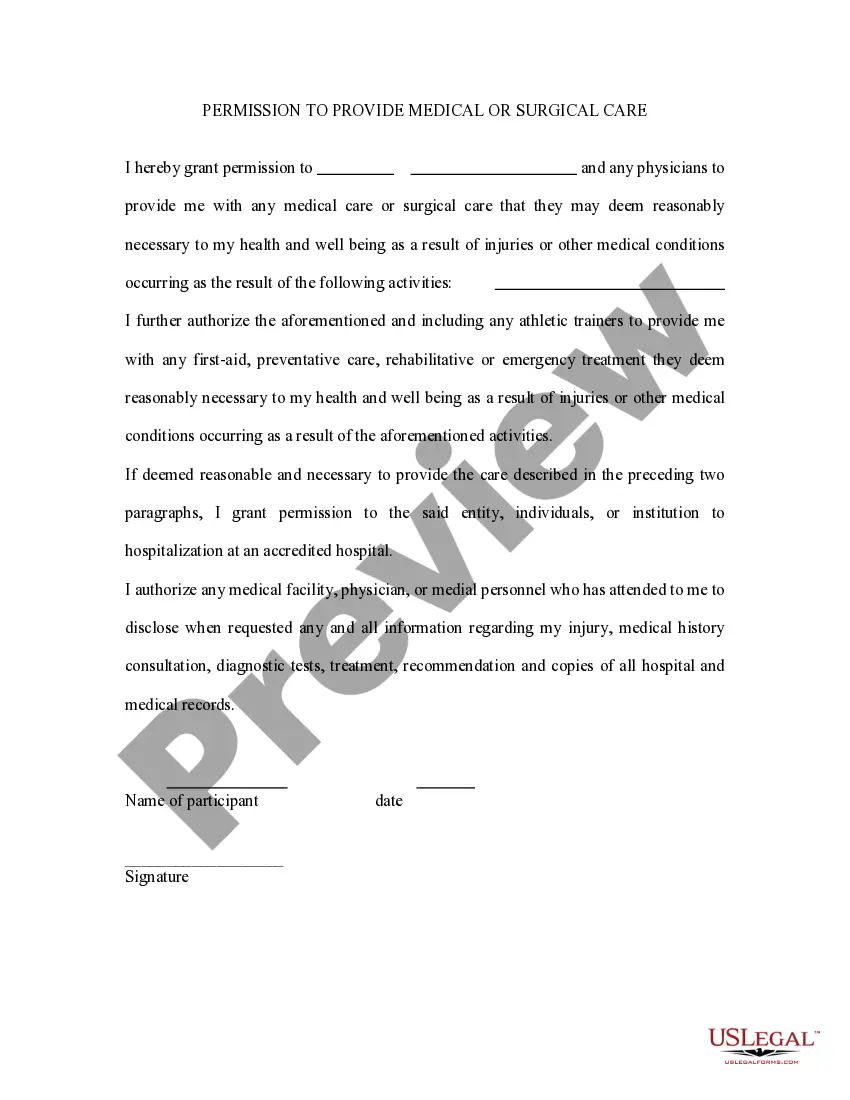
This form should be used when a patient is about to undergo any medical or surgical procedure that requires informed consent. Typical situations include non-emergency surgeries, specialized treatments, or any intervention where the risks must be communicated clearly to the patient. It is essential to have this form completed to comply with legal and ethical standards in healthcare.
Intended users of this form
- Patients who are about to receive medical treatment.
- Healthcare providers looking to ensure legal compliance before administering treatment.
- Legal representatives of patients who may not be able to provide consent themselves.
How to prepare this document
- Identify the patient: Enter the printed name of the patient who is providing consent.
- Include the date of consent: Write in the date on which the consent is being given.
- Specify the treating physician: Fill in the name of the medical professional responsible for the treatment.
- Describe the treatment: Clearly outline the medical procedure or treatment being consented to.
- State medical condition: Provide a brief description of the medical condition that is the reason for treatment.
- Sign and date: The patient must sign the form to acknowledge understanding and agreement.
Does this document require notarization?
This form does not typically require notarization unless specified by local law. Ensure you check your state's regulations to confirm if notarization is needed.
Get your form ready online
Our built-in tools help you complete, sign, share, and store your documents in one place.
Make edits, fill in missing information, and update formatting in US Legal Forms—just like you would in MS Word.
Download a copy, print it, send it by email, or mail it via USPS—whatever works best for your next step.
Sign and collect signatures with our SignNow integration. Send to multiple recipients, set reminders, and more. Go Premium to unlock E-Sign.
If this form requires notarization, complete it online through a secure video call—no need to meet a notary in person or wait for an appointment.
We protect your documents and personal data by following strict security and privacy standards.

Make edits, fill in missing information, and update formatting in US Legal Forms—just like you would in MS Word.

Download a copy, print it, send it by email, or mail it via USPS—whatever works best for your next step.

Sign and collect signatures with our SignNow integration. Send to multiple recipients, set reminders, and more. Go Premium to unlock E-Sign.

If this form requires notarization, complete it online through a secure video call—no need to meet a notary in person or wait for an appointment.

We protect your documents and personal data by following strict security and privacy standards.
Common mistakes
- Failing to include the treating physician's name.
- Not clearly describing the proposed treatment or medical condition.
- Skipping the patient's signature or date.
- Not providing enough information about the risks and benefits of the treatment.
Why use this form online
- Immediate access to professional templates drafted by licensed attorneys.
- Editable to meet specific needs before printing or sharing.
- Time-efficient; download and complete from anywhere at any time.
Looking for another form?
Form popularity
FAQ
An adult 18 years of age and older can give consent for his or her own treatment, unless they have a guardian who is designated to provide consent for the individual.
If you are asked to consent the patient you must ensure that you have an adequate knowledge of both the patient and the procedure to do so competently or you may be vulnerable to criticism.
This must be done on the basis of an explanation by a clinician. Consent from a patient is needed regardless of the procedure, whether it's a physical examination, organ donation or something else. The principle of consent is an important part of medical ethics and international human rights law.
The process of informed consent occurs when communication between a patient and physician results in the patient's authorization or agreement to undergo a specific medical intervention.
The process of establishing consent is instrumental to developing trust between care worker and the individual. The individual is more likely to want to take part in an activity they have given permission for.
Patients have a right, supported in law, to make informed decisions about their care and treatment. Nurses and other health professionals are required to obtain valid consent before starting any form of treatment or intervention.
Consent can involve a combination of people parent or legal guardian. court (eg for permanent sterilisation procedures) other agencies (eg in NSW the consent of Guardianship Tribunal is required for 'special medical treatment'. Special medical treatment includes sterilisation, vasectomy or tubal occlusion).
To be valid, consent must be freely and voluntarily given by a patient with capacity who has been given all the information he or she needs to reach a decision. Patients should not be subjected to undue pressure or influence by medical staff or their family or friends.
If you agree to receive all or some of the treatment options, you give your consent (agree) by signing a consent form. The completed and signed form is a legal document that lets your doctor go ahead with the treatment plan.