Laundering of Monetary Instruments - Propperty Represented to be Proceeds of Unlawful Activity
What is this form?
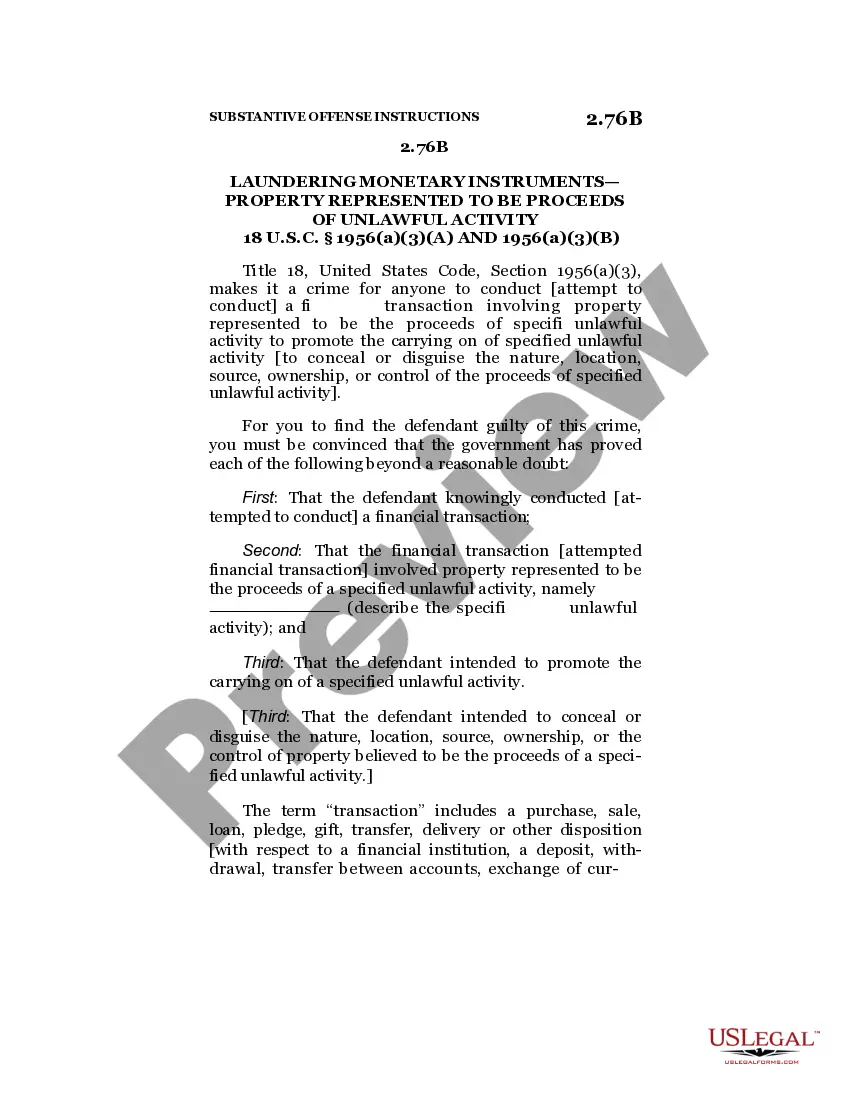
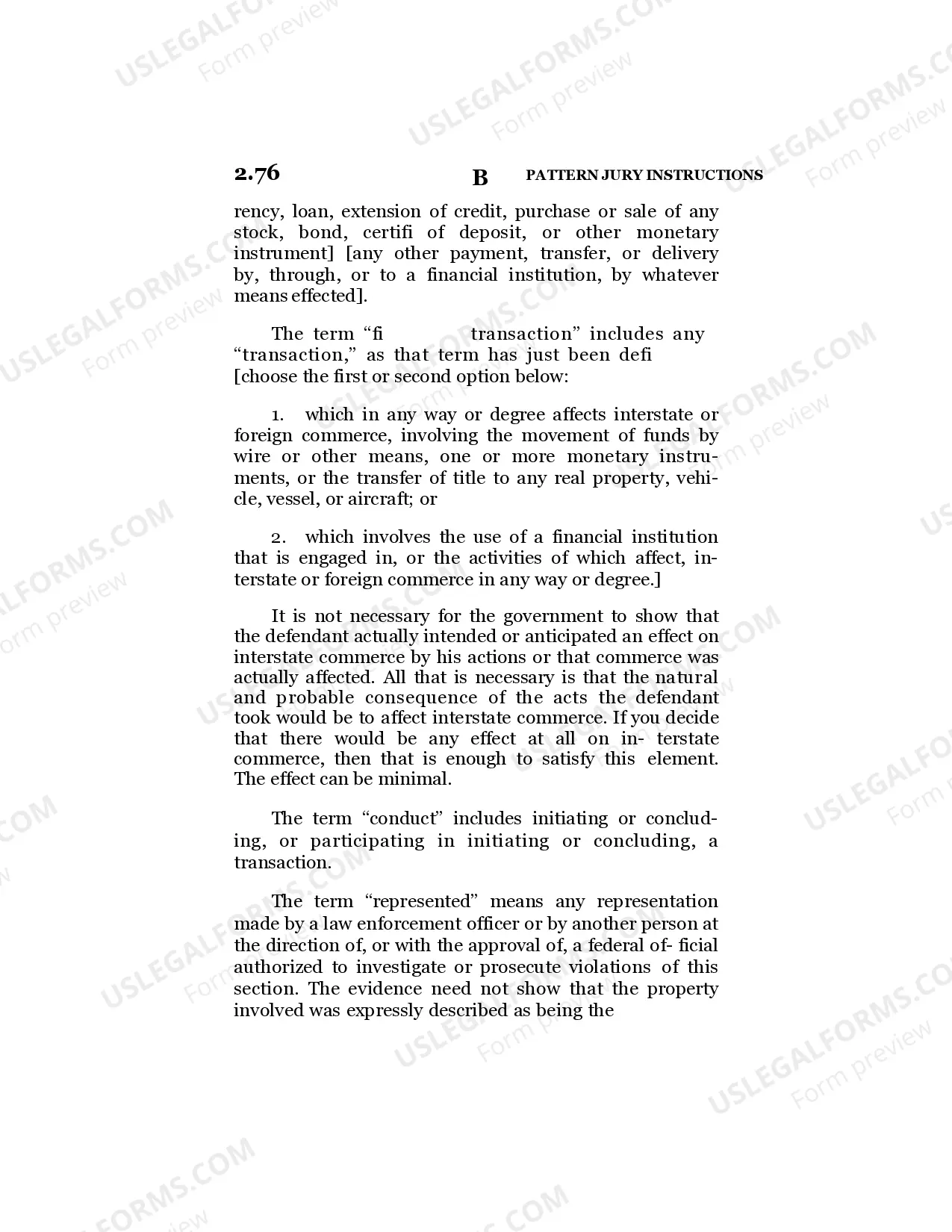
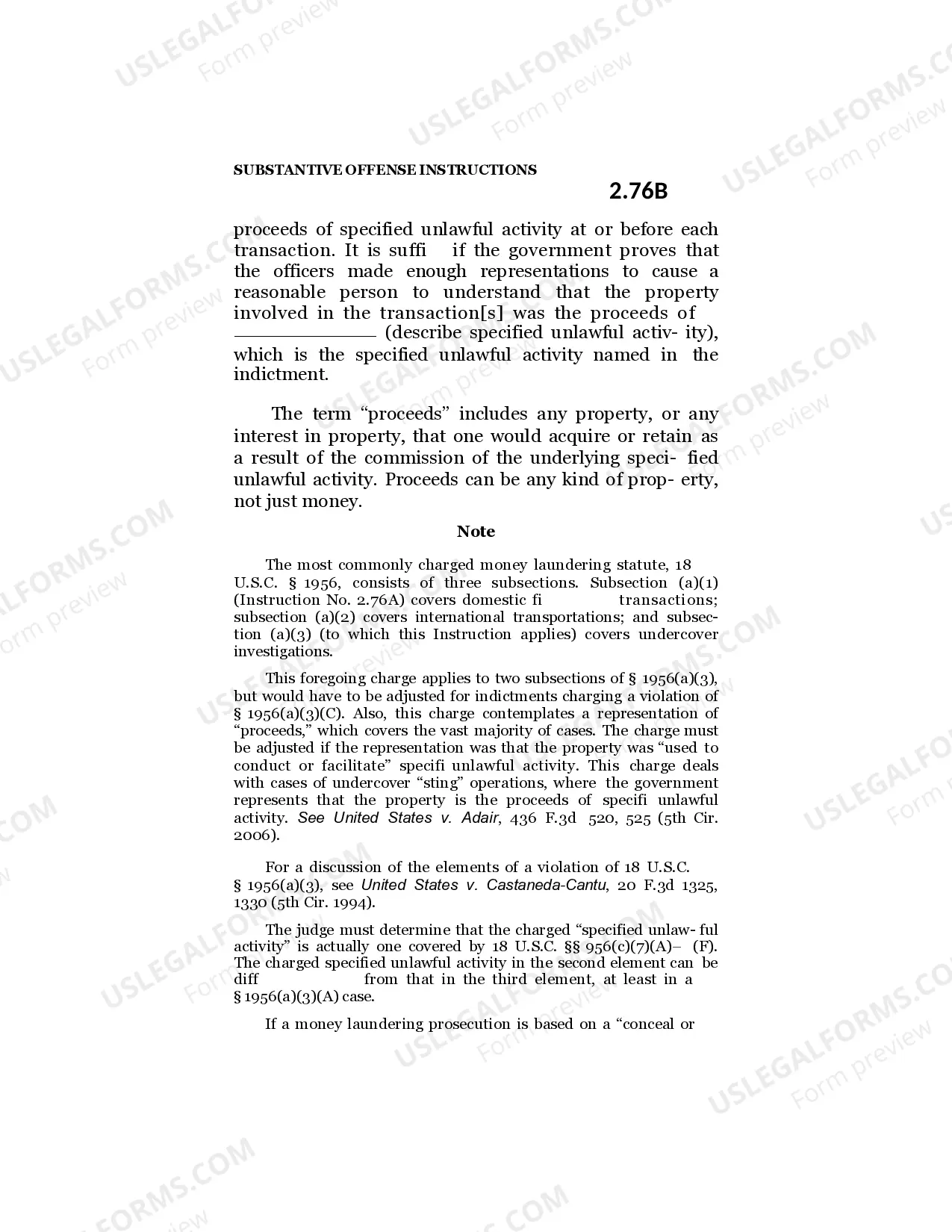
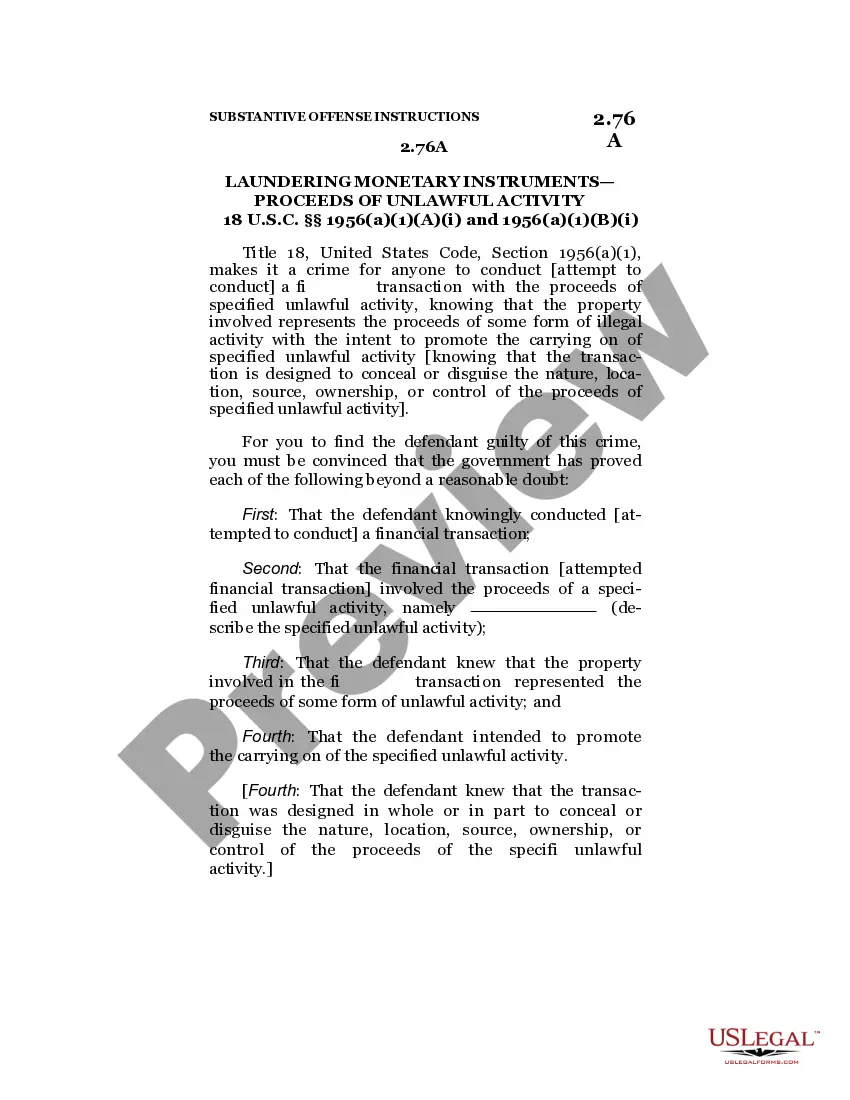
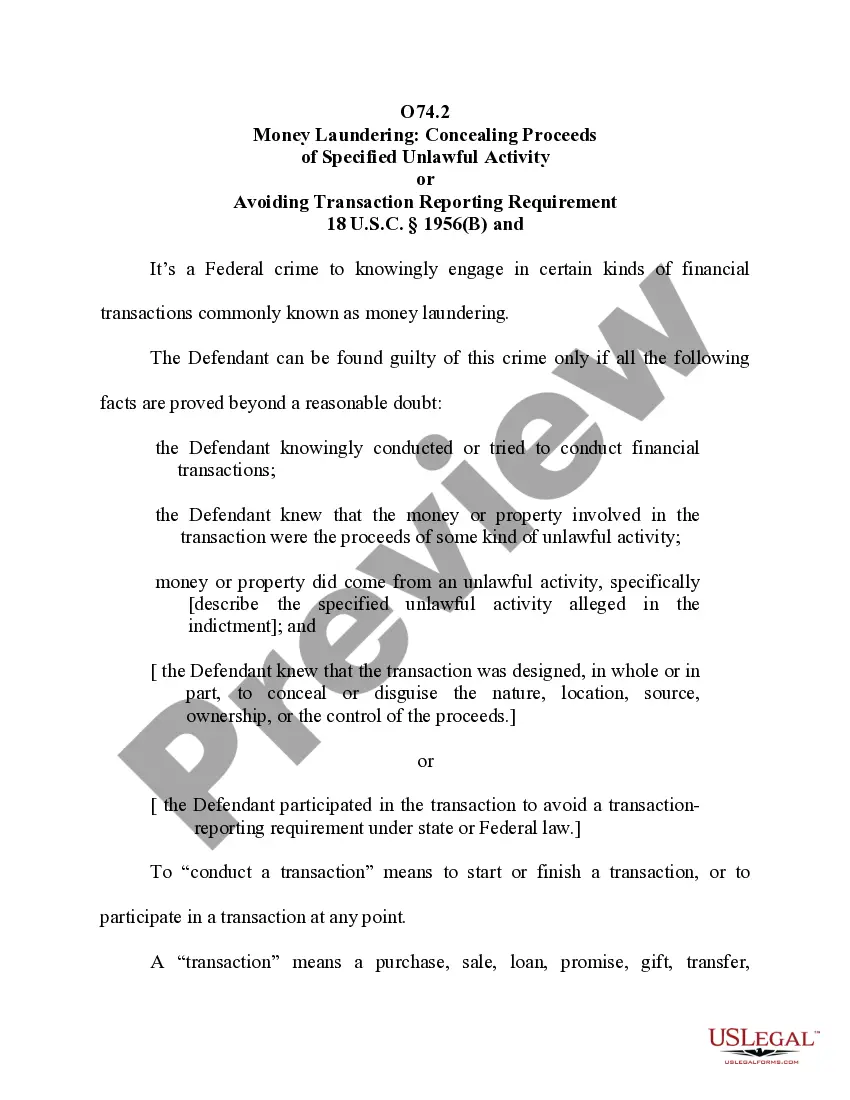
The Laundering of Monetary Instruments form addresses the legal implications of conducting financial transactions involving property believed to be proceeds from unlawful activities. This form is used to outline specific allegations against an individual for engaging in financial dealings that conceal or disguise the source of illegal funds. It is distinct from other legal forms related to financial transactions due to its focus on money laundering laws under Title 18, Section 1956 of the U.S. Code.
Main sections of this form
- Description of the defendant's conduct.
- Details of the financial transaction involved.
- Specification of the alleged unlawful activity.
- Intent to promote or conceal unlawful activities.
- Clarification of what constitutes proceeds of unlawful activity.
When to use this document
This form is necessary in cases where a person is accused of attempting to carry out a financial transaction that involves property represented as illegally obtained. It is commonly utilized in undercover investigations by law enforcement when they have made representations regarding the criminal nature of the funds involved in a transaction.
Who needs this form
- Defendants facing charges of money laundering.
- Law enforcement officials conducting related investigations.
- Attorneys representing clients in money laundering cases.
How to prepare this document
- Identify and provide the parties involved in the transaction.
- Describe the financial transaction and the nature of the funds involved.
- State the specific unlawful activity linked to the alleged proceeds.
- Sign and date the form to validate the information provided.
- Ensure all statements align with the legal requirements outlined in Title 18, Section 1956.
Does this form need to be notarized?
In most cases, this form does not require notarization. However, some jurisdictions or signing circumstances might. US Legal Forms offers online notarization powered by Notarize, accessible 24/7 for a quick, remote process.
Get your form ready online
Our built-in tools help you complete, sign, share, and store your documents in one place.
Make edits, fill in missing information, and update formatting in US Legal Forms—just like you would in MS Word.
Download a copy, print it, send it by email, or mail it via USPS—whatever works best for your next step.
Sign and collect signatures with our SignNow integration. Send to multiple recipients, set reminders, and more. Go Premium to unlock E-Sign.
If this form requires notarization, complete it online through a secure video call—no need to meet a notary in person or wait for an appointment.
We protect your documents and personal data by following strict security and privacy standards.

Make edits, fill in missing information, and update formatting in US Legal Forms—just like you would in MS Word.

Download a copy, print it, send it by email, or mail it via USPS—whatever works best for your next step.

Sign and collect signatures with our SignNow integration. Send to multiple recipients, set reminders, and more. Go Premium to unlock E-Sign.

If this form requires notarization, complete it online through a secure video call—no need to meet a notary in person or wait for an appointment.

We protect your documents and personal data by following strict security and privacy standards.
Common mistakes
- Failing to accurately describe the financial transaction conducted.
- Not providing enough detail regarding the unlawful activity linked to the funds.
- Omitting signatures or dates which may invalidate the form.
- Confusing legal terms or failing to clarify the nature of the proceeds involved.
Advantages of online completion
- Convenience of completing the form from any location with internet access.
- Easy download and printing options for immediate use.
- Access to attorney-drafted templates ensuring accuracy and reliability.
Legal use & context
- This form is legally binding when properly completed and signed.
- It assists in complying with federal regulations regarding money laundering.
- Understanding this form is crucial for parties involved in financial transactions connected to criminal activities.
Looking for another form?
Form popularity
FAQ
Money laundering generally refers to financial transactions in which criminals, including terrorist organizations, attempt to disguise the proceeds, sources or nature of their illicit activities.
(a)(1) Whoever, knowing that the property involved in a financial transaction represents the proceeds of some form of unlawful activity, conducts or attempts to conduct such a financial transaction which in fact involves the proceeds of specified unlawful activity-
See §§ 1956(c)(7)(A), 1957(f)(3), and 1961(1)(B) ("Specified unlawful activity" is defined as any act or activity constituting an offense listed in section 1961(1), which includes both mail and wire fraud statutes.).
Specified unlawful activities include over 250 crimes in six categories: (1) most RICO predicate offenses; (2) certain offenses against foreign nations; (3) acts constituting a criminal enterprise under the Controlled Substances Act; (4) miscellaneous offenses against persons and property; (5) federal health care
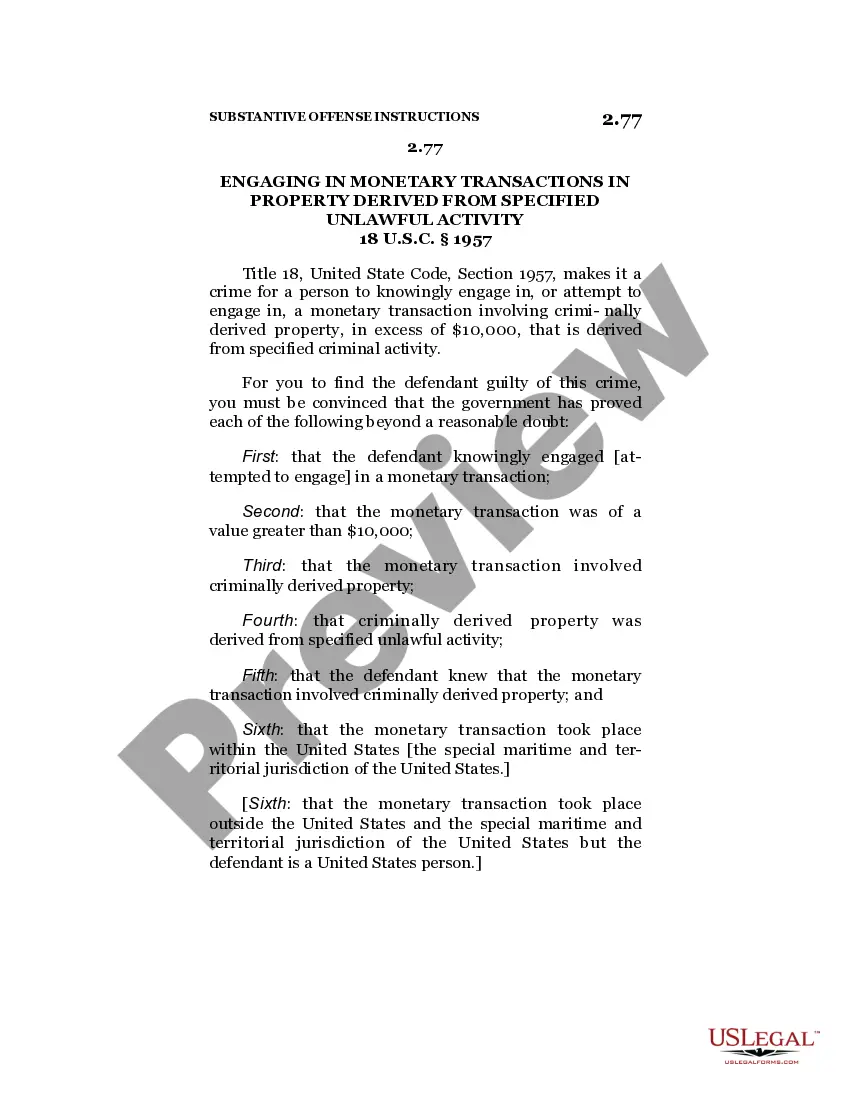
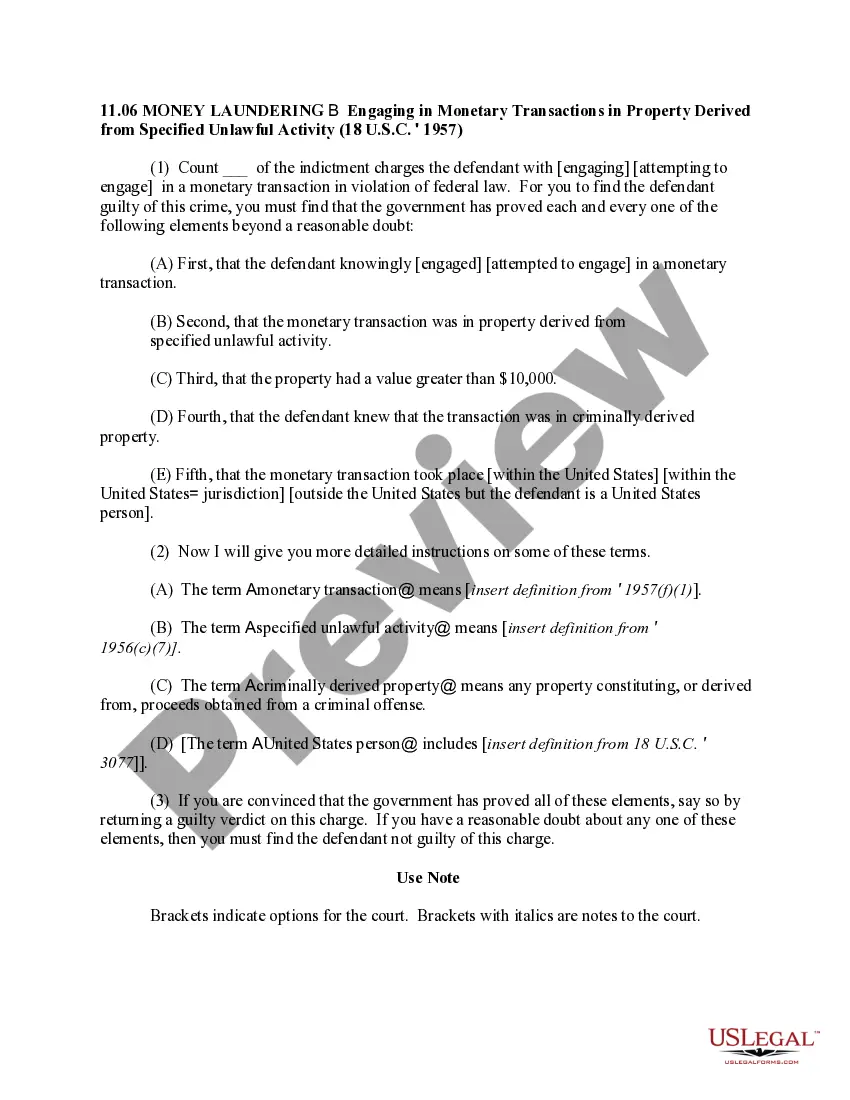
§ 1957 arise when the defendant knowingly conducts a monetary transaction in criminally derived property in an amount greater than $10,000, which is in fact proceeds of a specified unlawful activity.
See §§ 1956(c)(7)(A), 1957(f)(3), and 1961(1)(B) ("Specified unlawful activity" is defined as any act or activity constituting an offense listed in section 1961(1), which includes both mail and wire fraud statutes.).
Money Laundering - Engaging in Monetary Transactions in Property Derived From Specified Unlawful Activity.