Confidentiality Agreement for Data Protection
Understanding this form
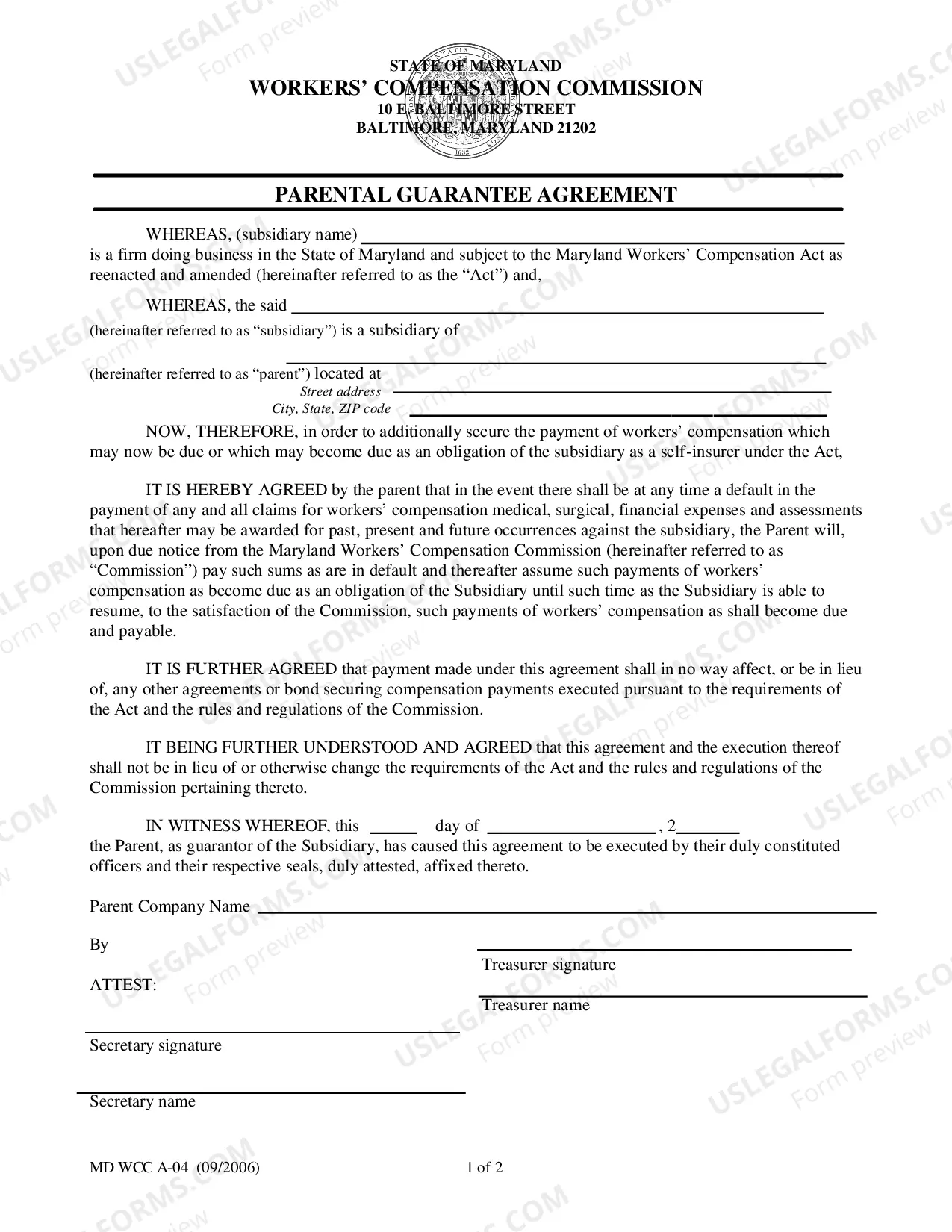
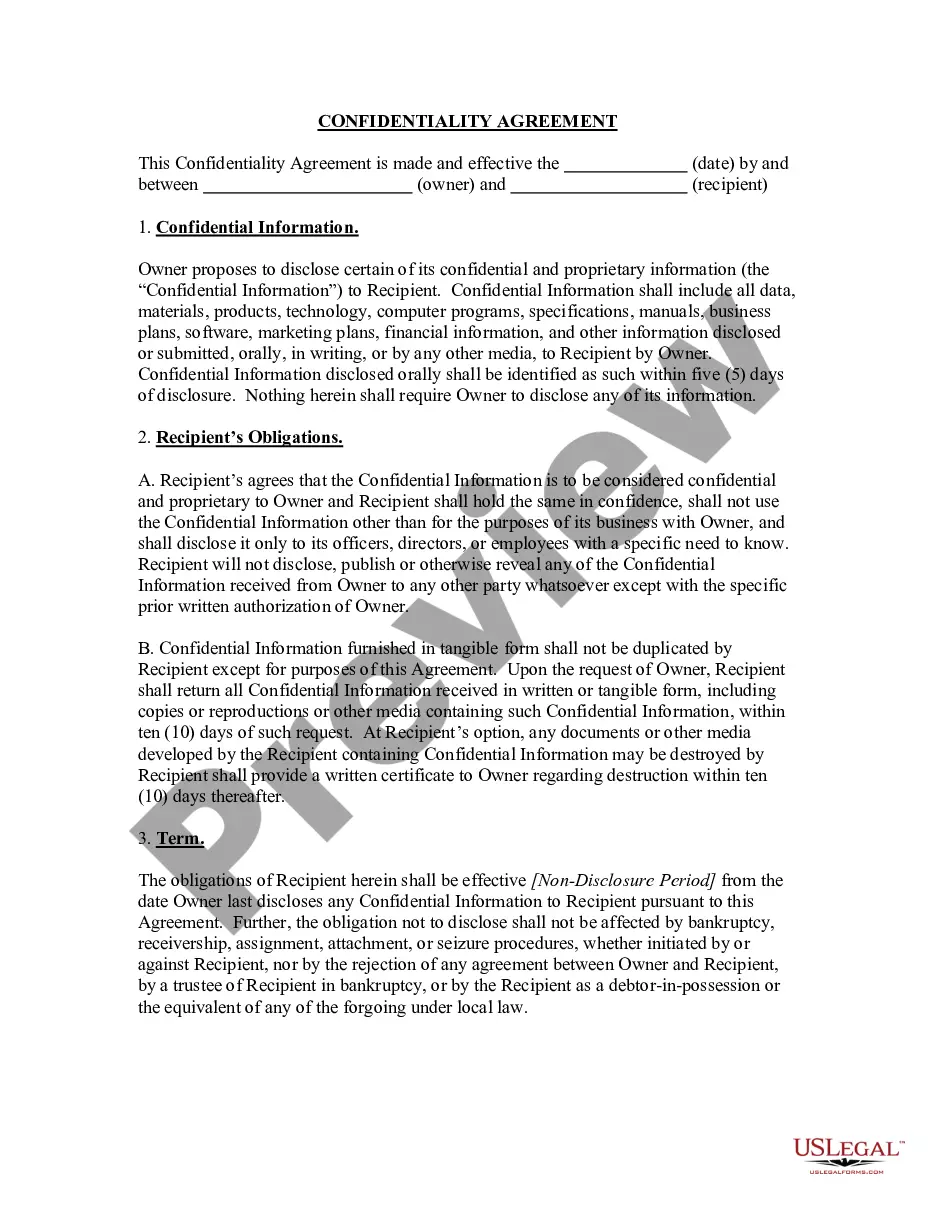
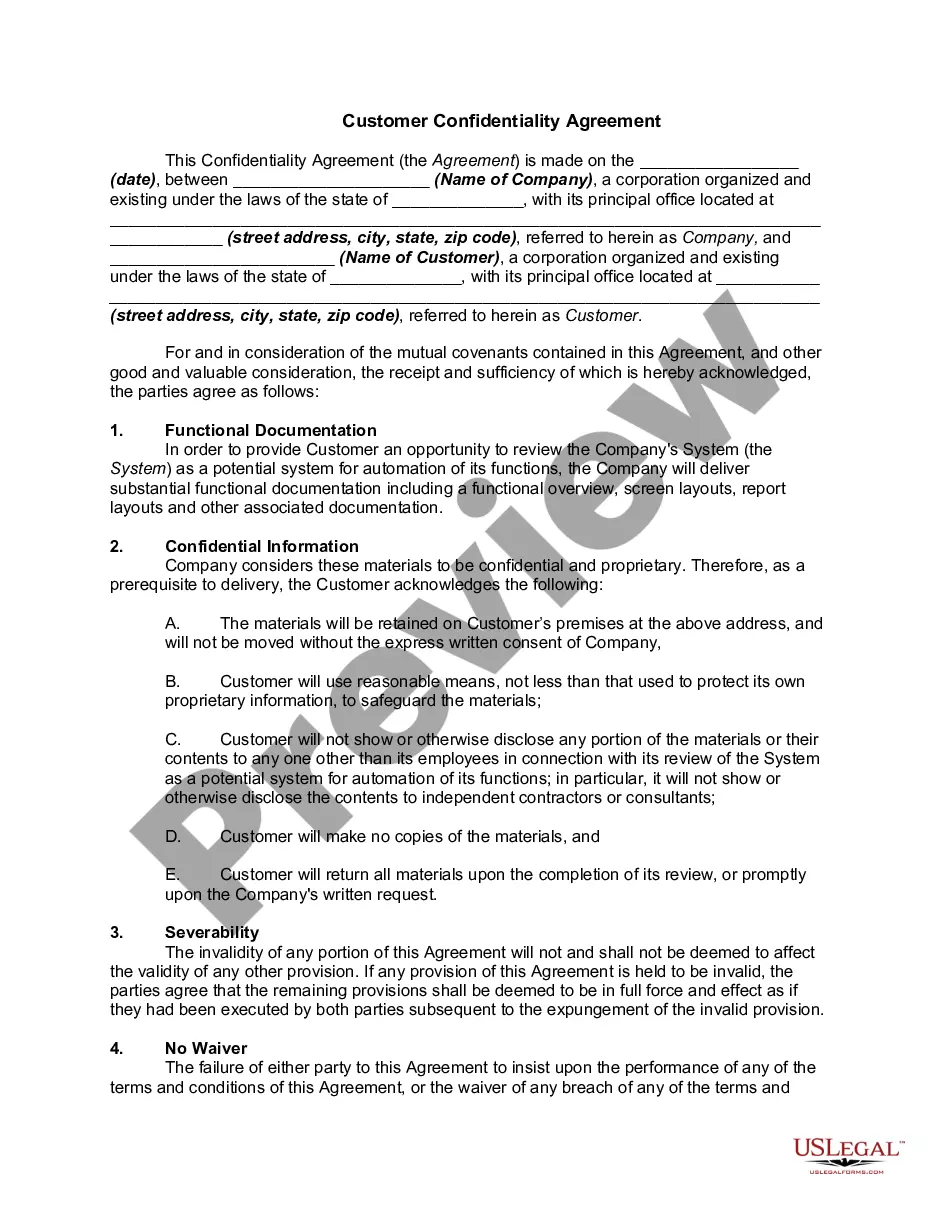
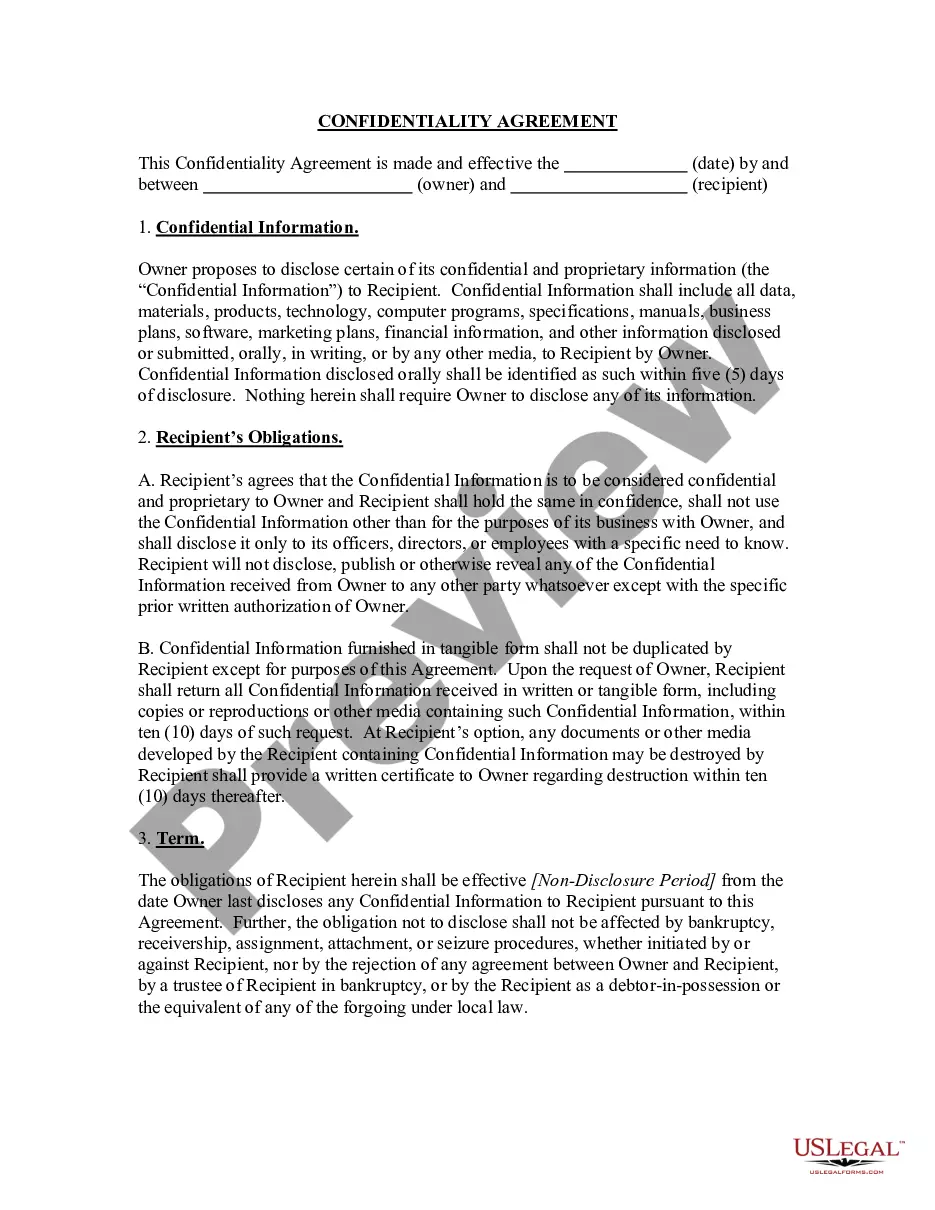
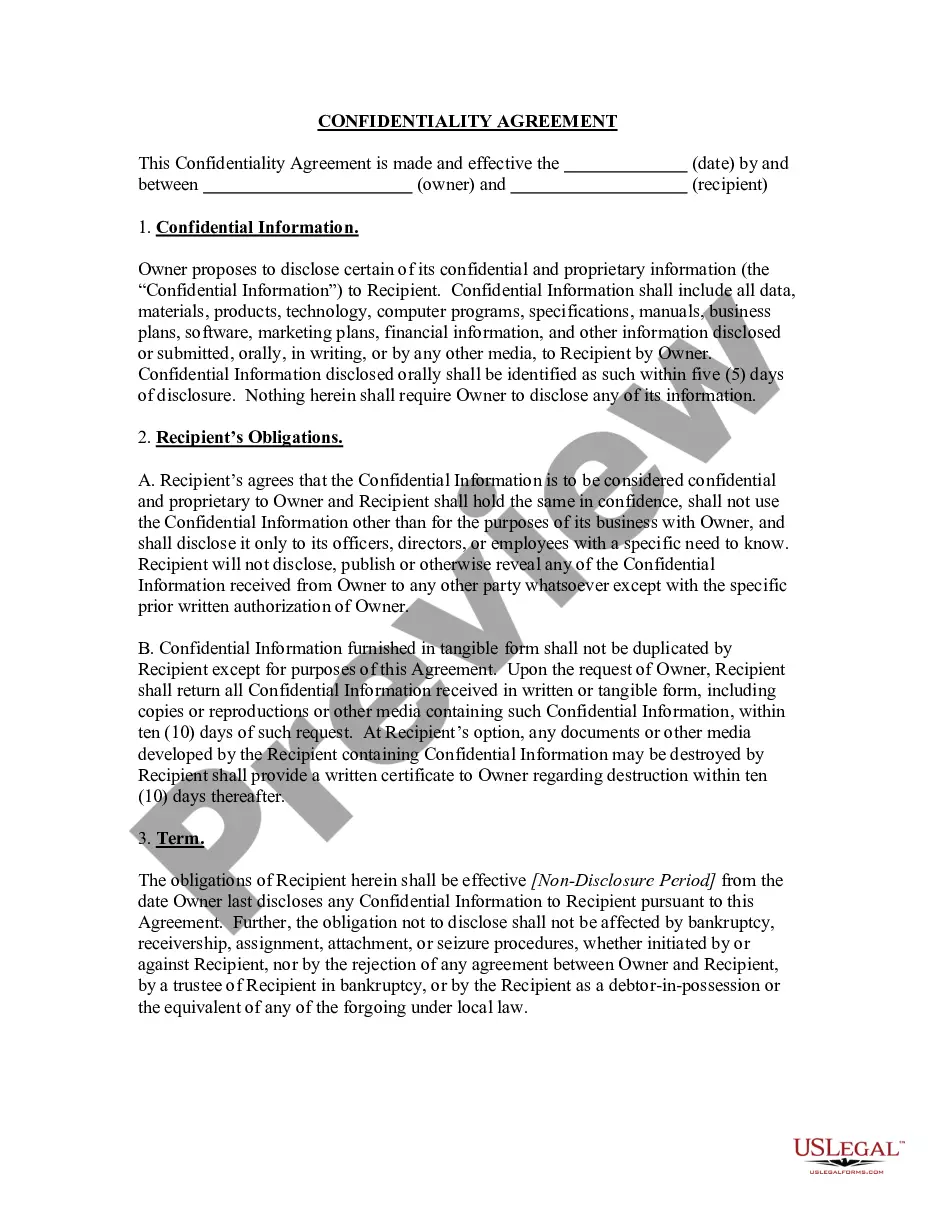
The Confidentiality Agreement for Data Protection is a legal document that establishes the terms under which confidential information can be shared between parties. This agreement ensures that the recipient of the confidential information does not disclose it to unauthorized parties, thus protecting the proprietary interests of the disclosing party. Unlike other non-disclosure agreements, this form specifically addresses data protection, providing clear guidelines on how confidential information should be treated and safeguarded.
Main sections of this form
- Recipient's Obligations: Defines the recipient's duty to keep information confidential and restrict its use.
- Term of Agreement: Outlines how long the confidentiality obligations remain in effect.
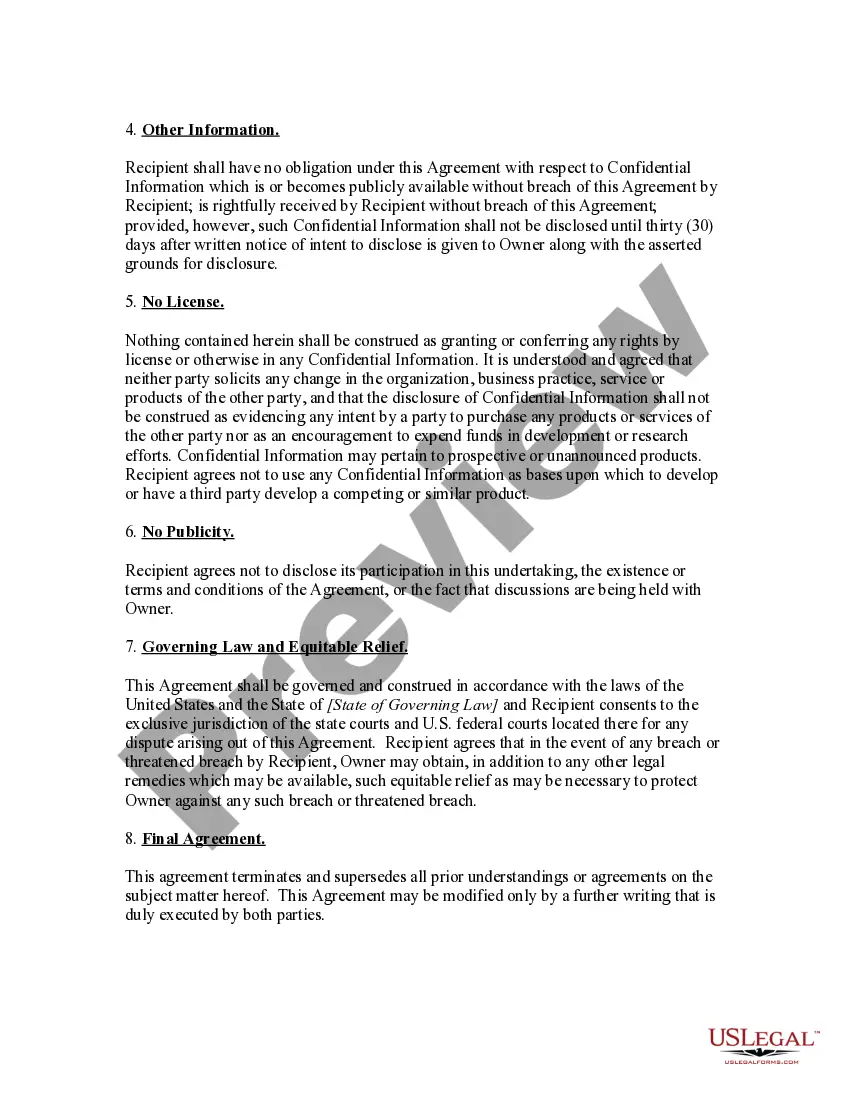
- Legal Protections: States the governing law and the option for equitable relief in case of breach.
- No License Granted: Clarifies that sharing this information does not grant any rights between the parties.
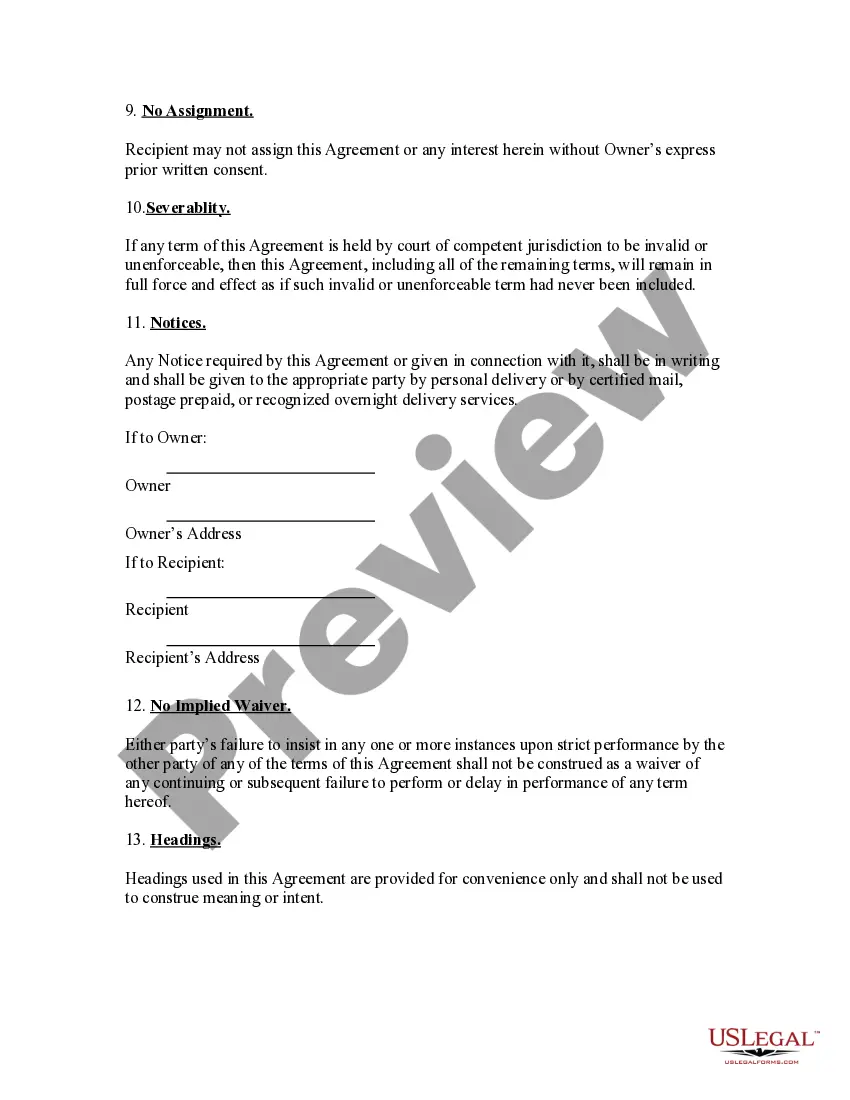
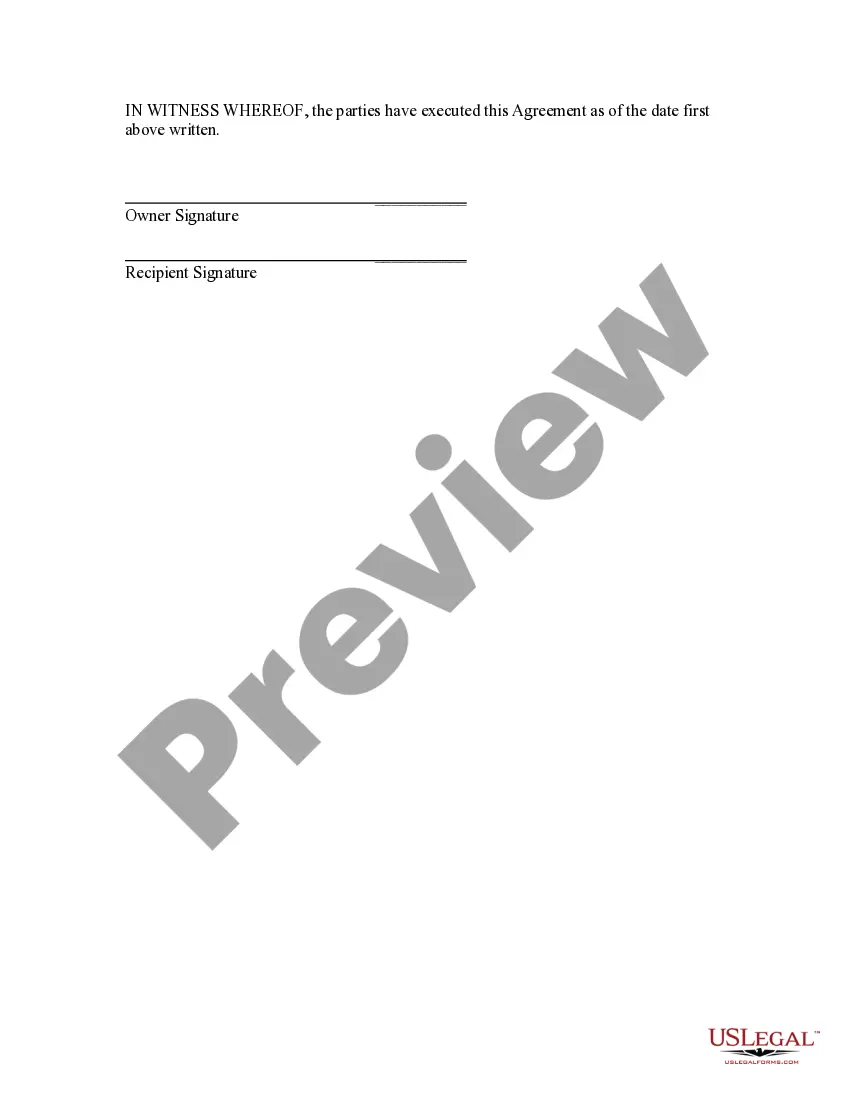
- Termination Clause: Indicates the dissolution of any prior agreements and terms for modifying the agreement.
Common use cases
This Confidentiality Agreement for Data Protection should be used when businesses or individuals intend to share sensitive or proprietary information with others but want to ensure that this information remains confidential. Common scenarios include discussions of new products, business negotiations, or sharing data in research projects. If you are concerned about protecting your intellectual property or sensitive business data, this form provides the necessary legal framework to guard against unauthorized disclosures.
Who needs this form
- Business owners seeking to protect proprietary information when working with partners or consultants.
- Employees who need to understand their obligations regarding company secrets.
- Freelancers or contractors requiring legal assurance about confidentiality when handling sensitive data.
- Organizations involved in data exchanges or collaborations that need to ensure proper handling of confidential information.
Steps to complete this form
- Identify the parties involved in the agreement by entering their names and contact information.
- Clearly specify the type of confidential information that will be shared under this agreement.
- Include the duration of the confidentiality obligations to specify how long the agreement will remain in effect.
- Ensure both parties sign and date the agreement to acknowledge their consent to the terms.
- Consider retaining a copy for your records once the agreement is finalized.
Does this form need to be notarized?
This form does not typically require notarization unless specified by local law. Ensure all parties have signed the agreement and keep a copy for your records to maintain its enforceability.
Get your form ready online
Our built-in tools help you complete, sign, share, and store your documents in one place.
Make edits, fill in missing information, and update formatting in US Legal Forms—just like you would in MS Word.
Download a copy, print it, send it by email, or mail it via USPS—whatever works best for your next step.
Sign and collect signatures with our SignNow integration. Send to multiple recipients, set reminders, and more. Go Premium to unlock E-Sign.
If this form requires notarization, complete it online through a secure video call—no need to meet a notary in person or wait for an appointment.
We protect your documents and personal data by following strict security and privacy standards.

Make edits, fill in missing information, and update formatting in US Legal Forms—just like you would in MS Word.

Download a copy, print it, send it by email, or mail it via USPS—whatever works best for your next step.

Sign and collect signatures with our SignNow integration. Send to multiple recipients, set reminders, and more. Go Premium to unlock E-Sign.

If this form requires notarization, complete it online through a secure video call—no need to meet a notary in person or wait for an appointment.

We protect your documents and personal data by following strict security and privacy standards.
Typical mistakes to avoid
- Neglecting to clearly define what constitutes "confidential information."
- Failing to specify the duration of the confidentiality obligations.
- Allowing unauthorized individuals to access or review the agreement.
- Not obtaining signatures from both parties before disclosing confidential information.
Advantages of online completion
- Convenience of downloading and filling out the form at any time from anywhere.
- Editability to ensure you can customize the agreement to your specific needs.
- Access to professionally drafted templates prepared by licensed attorneys for clarity and reliability.
Looking for another form?
Form popularity
FAQ
A confidentiality agreement is a legal contract or clause that is used to protect the owner proprietary or sensitive information from disclosure by others.
A data processing agreement (DPA) is a legally binding document to be entered into between the controller and the processor in writing or in electronic form. It regulates the particularities of data processing such as its scope and purpose as well as the relationship between the controller and the processor.
Employers must be prepared to terminate any employee who refuses to sign the agreement. If an employer allows even one employee to refuse and remain employed, the agreements signed by the other employees will not be legally binding.
The cold hard truth is that most NDAs do not hold up in court. Non-Disclosure Agreements are most effective in establishing a paper trail of confidential information as it relates to partnerships, and discouraging partners from misappropriating proprietary information.
A confidentiality agreement is a legally binding contract that states two parties will not share or profit from confidential information. A business usually gives a confidentiality agreement to an employee or contractor to make sure its trade secrets or proprietary information remains private.
A definition of confidential information. Who is involved. Why the recipient knows the information. Exclusions or limits on confidential information. Receiving party's obligations. Time frame or term. Discloser to the recipient.
Set the date of the agreement. Describe the two parties, sometimes called the Disclosing Party and the Receiving Party.7feff Include names and identification, so there can be no misunderstanding about who signed the agreement.
Confidentiality agreements usually allow the recipient to disclose confidential information if required to do so by court order or other legal process.
Confidential information is generally defined as information disclosed to an individual employee or known to that employee as a consequence of the employee's employment at a company.Confidential information can include information in any form, such as written documents/records or electronic data.