Research Study Consent Form with Assent for Minor Participant
Understanding this form
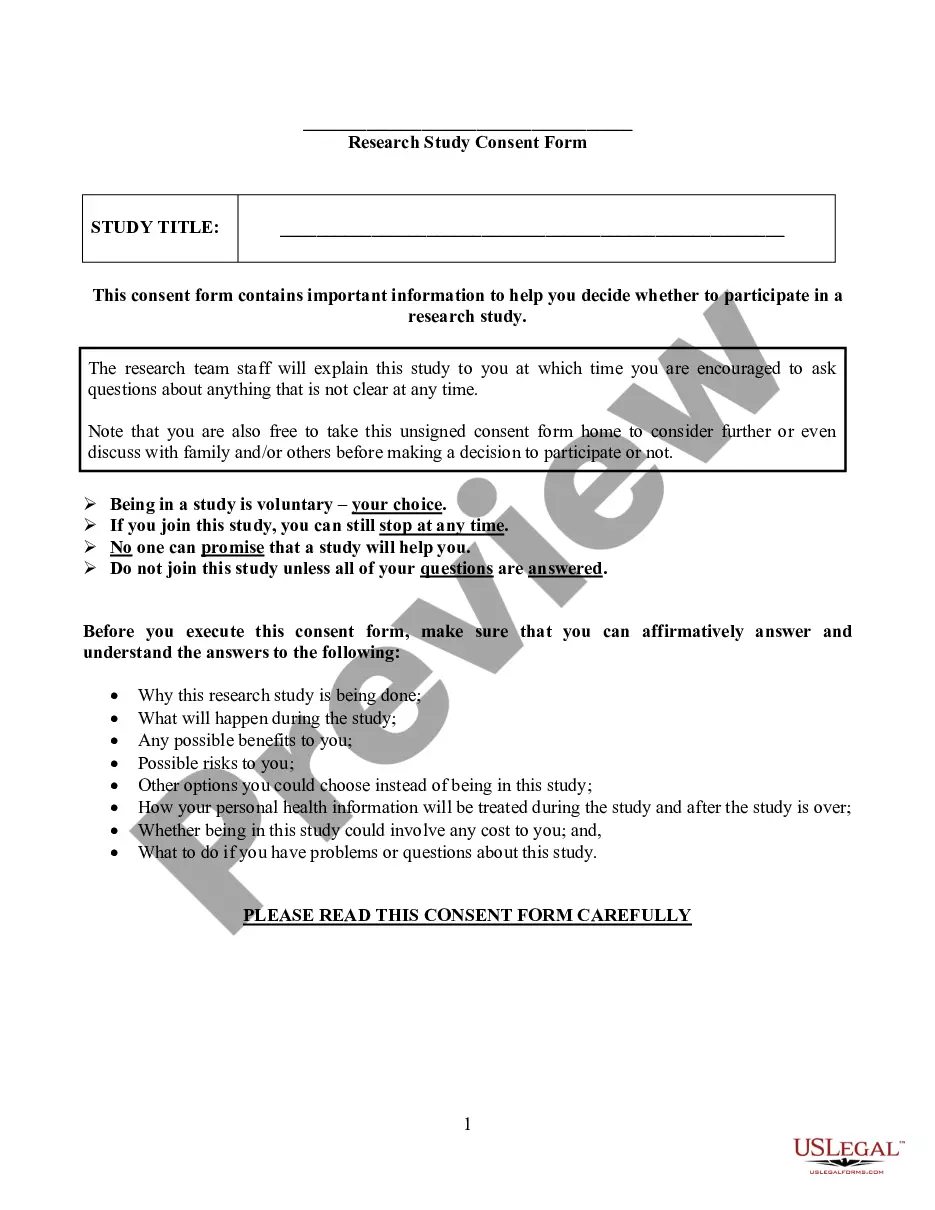
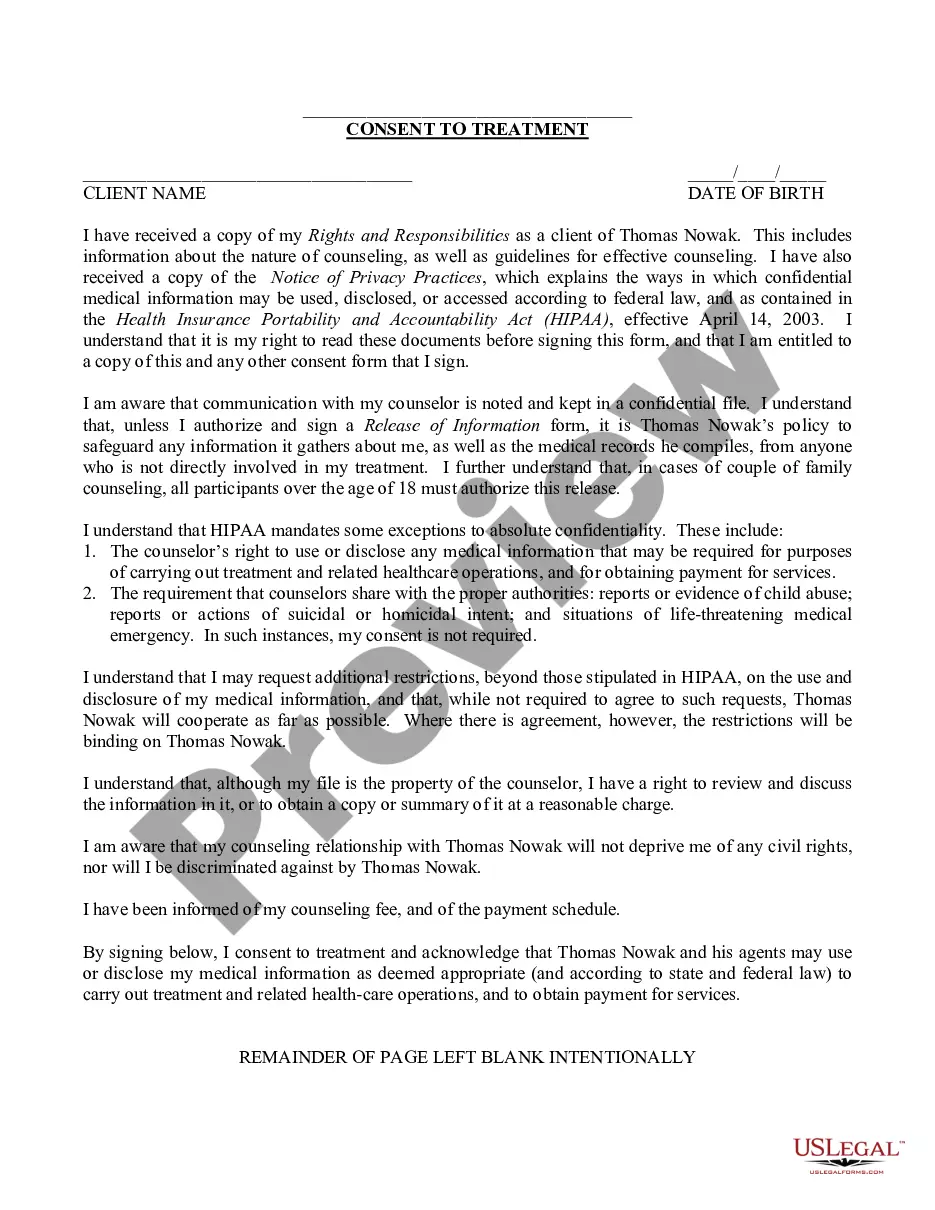
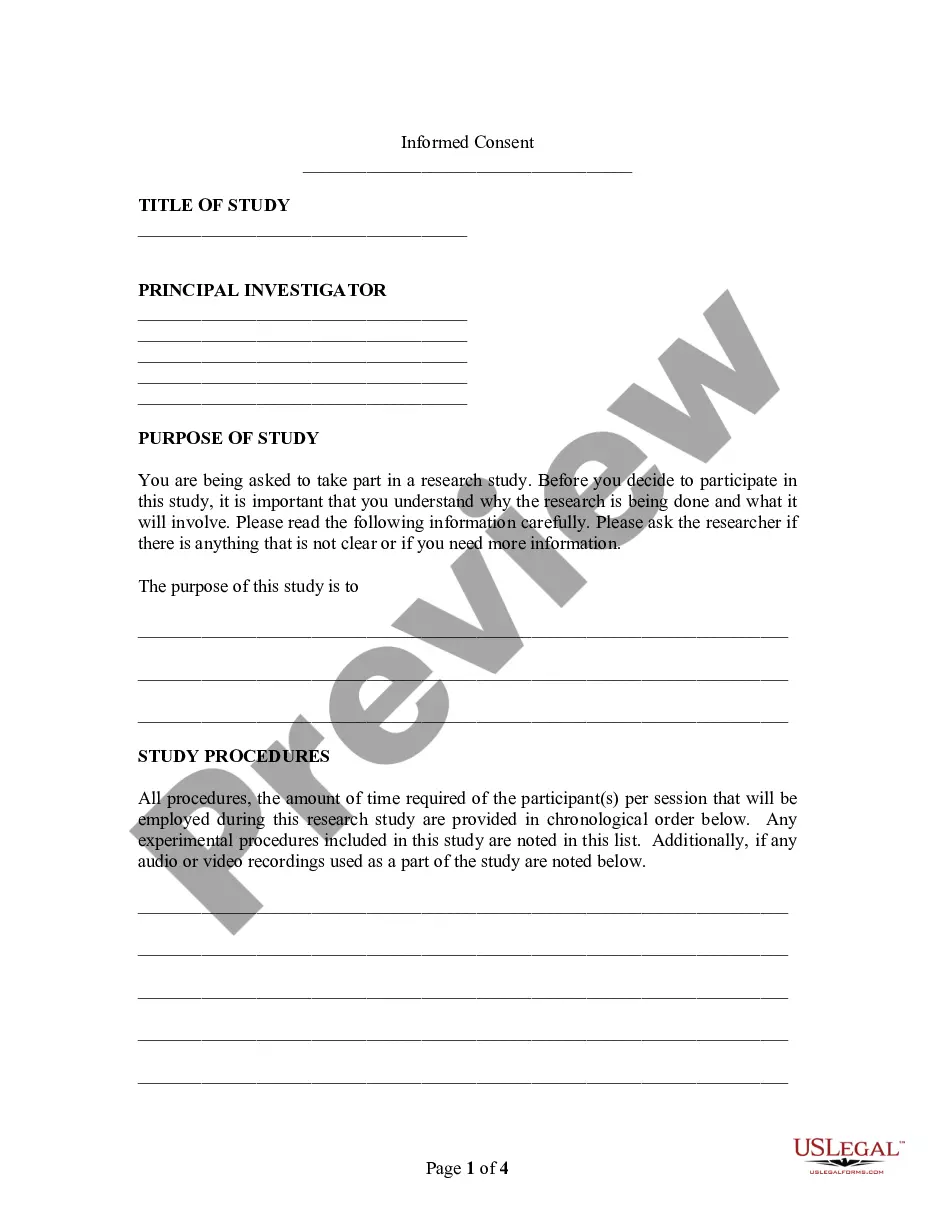
The Research Study Consent Form with Assent for Minor Participant is a crucial document designed to obtain informed consent from participants in a research study, particularly minors. This form ensures that both the participant and their guardians are aware of the study's purpose, procedures, risks, and benefits. It differs from standard consent forms by including specific information relevant to minor participants and their unique circumstances in research studies.
Key parts of this document
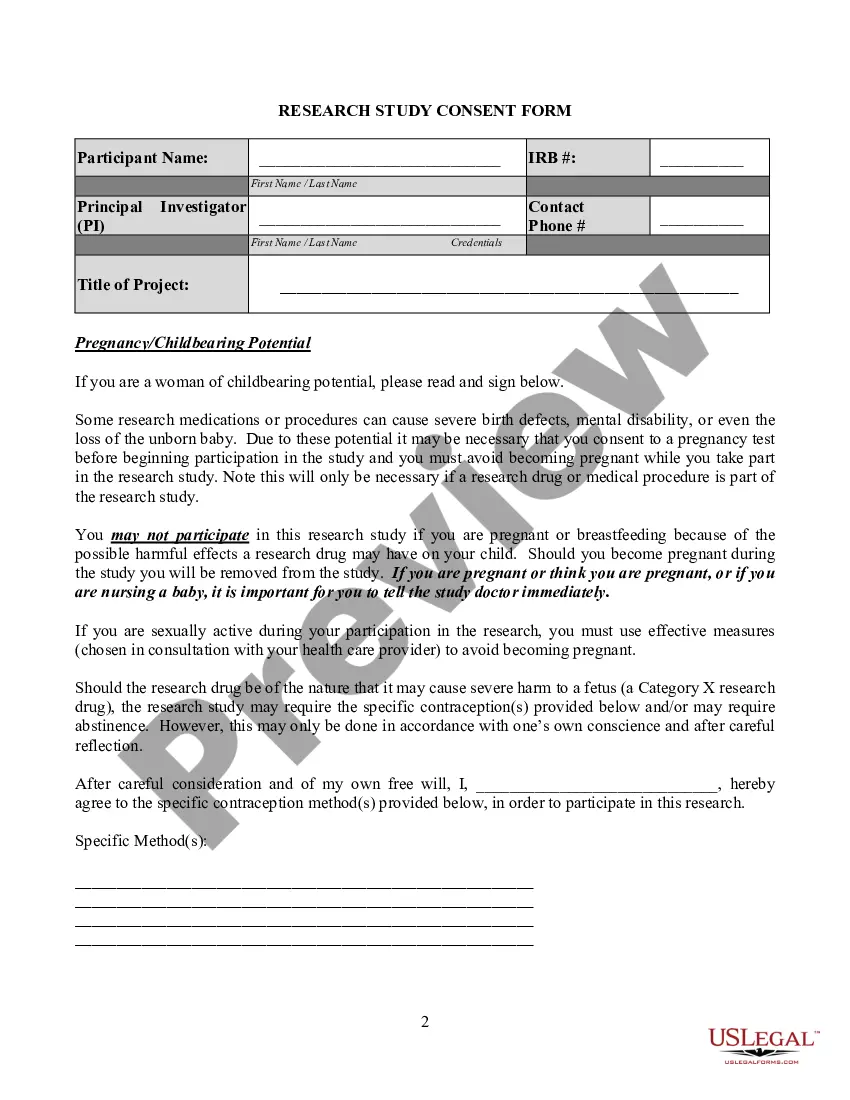
- Study title and contact information for the principal investigator.
- A checklist of important questions and statements regarding voluntary participation and understanding of the study.
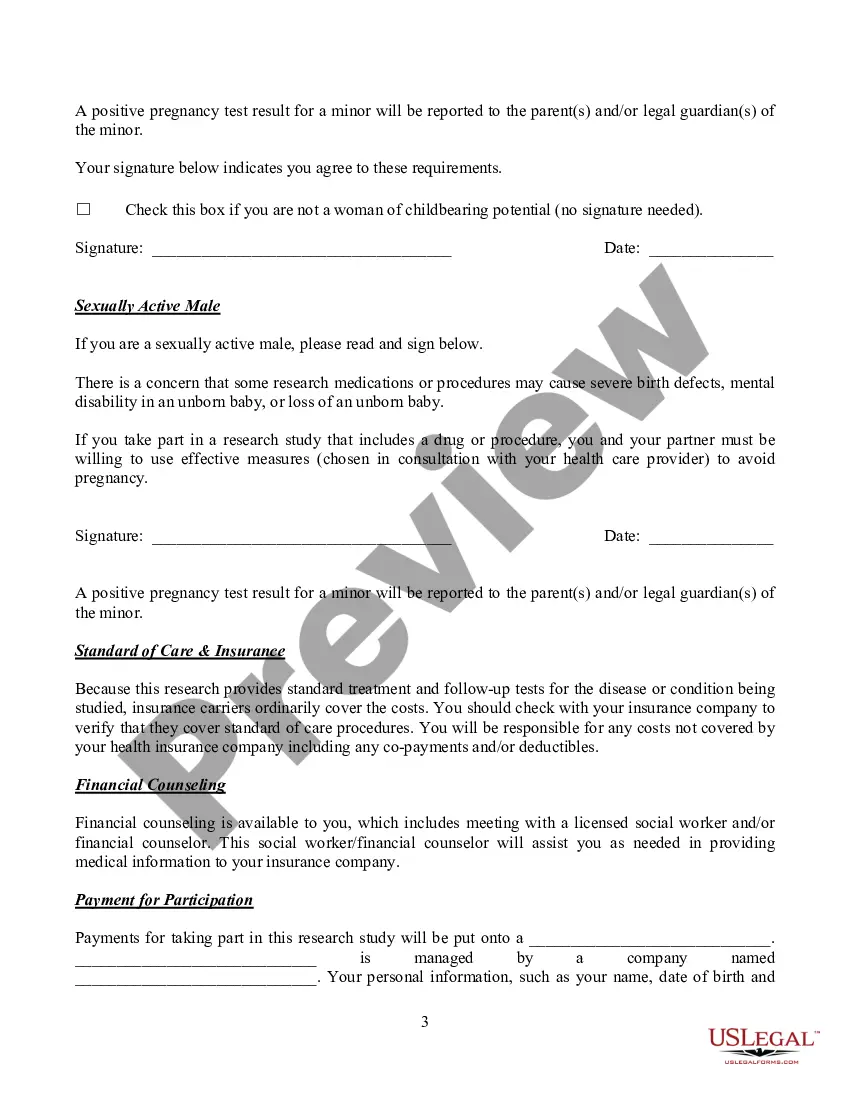
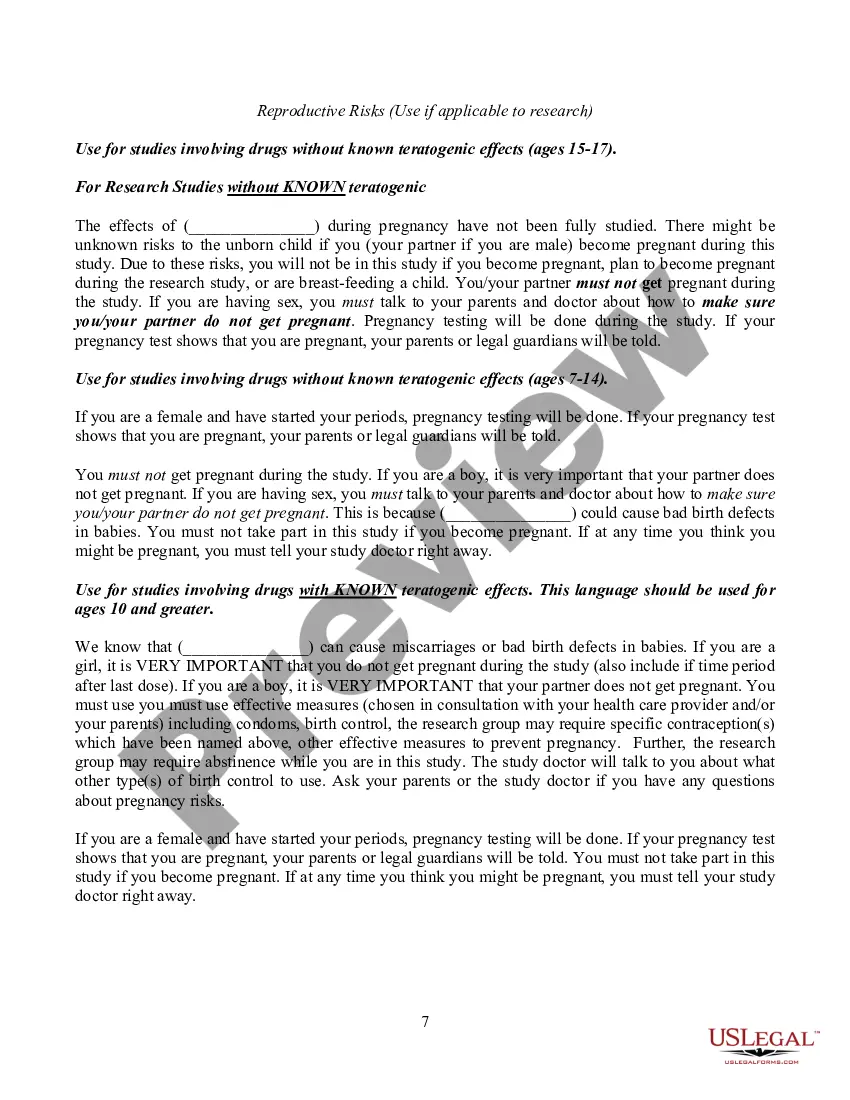
- Sections addressing reproductive risks, including those for sexually active minors.
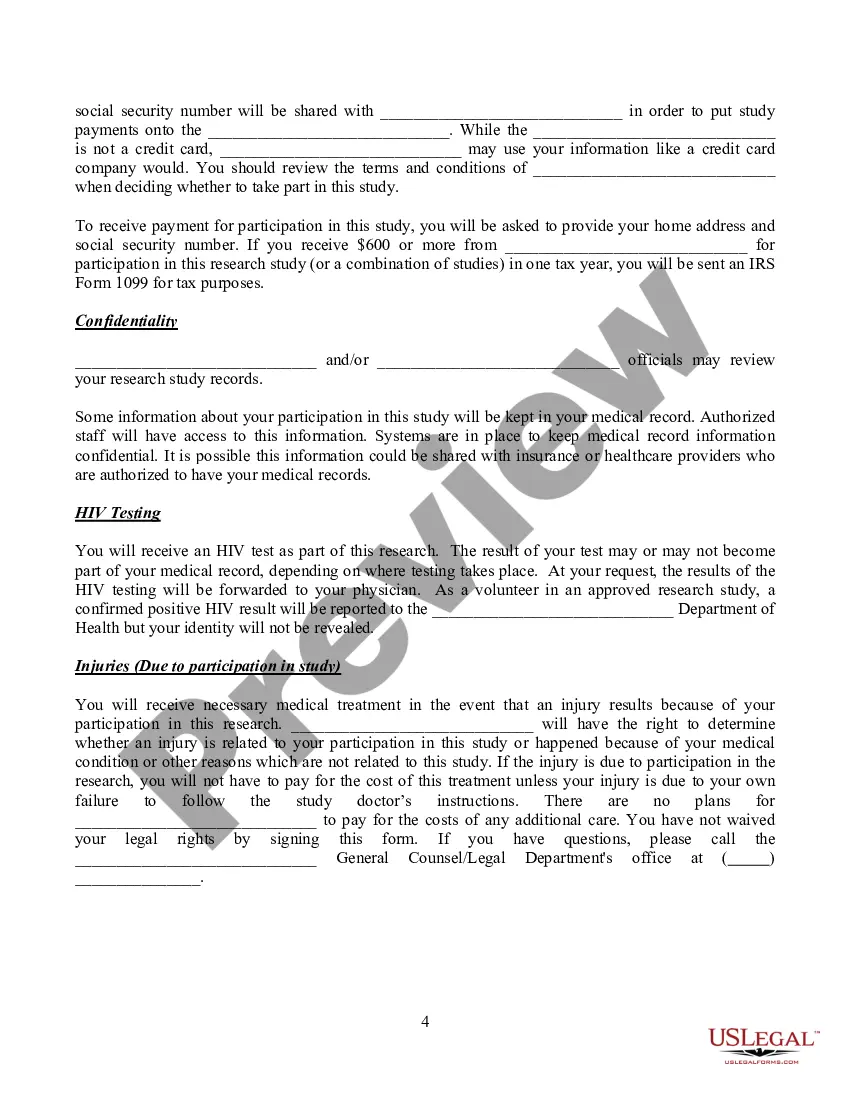
- Confidentiality assurances and explanation of how personal health information will be handled.
- Details on payment for participation, financial counseling, and insurance coverage.
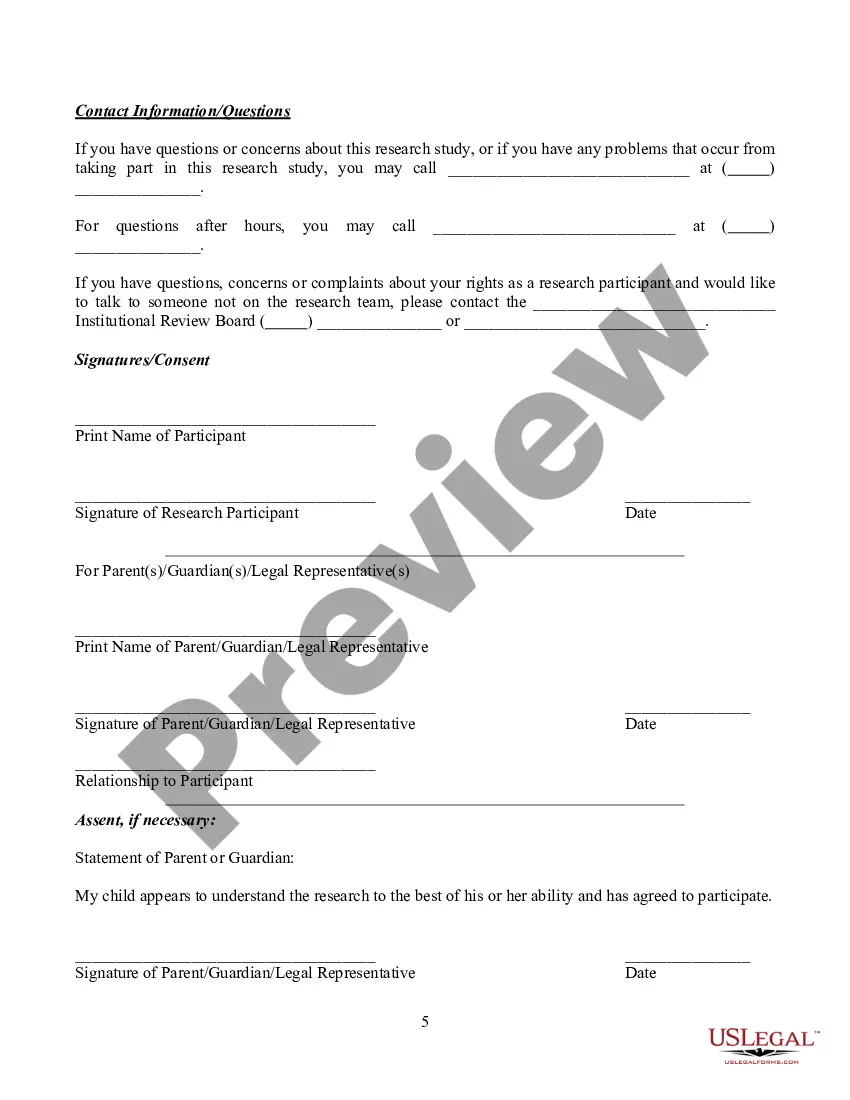
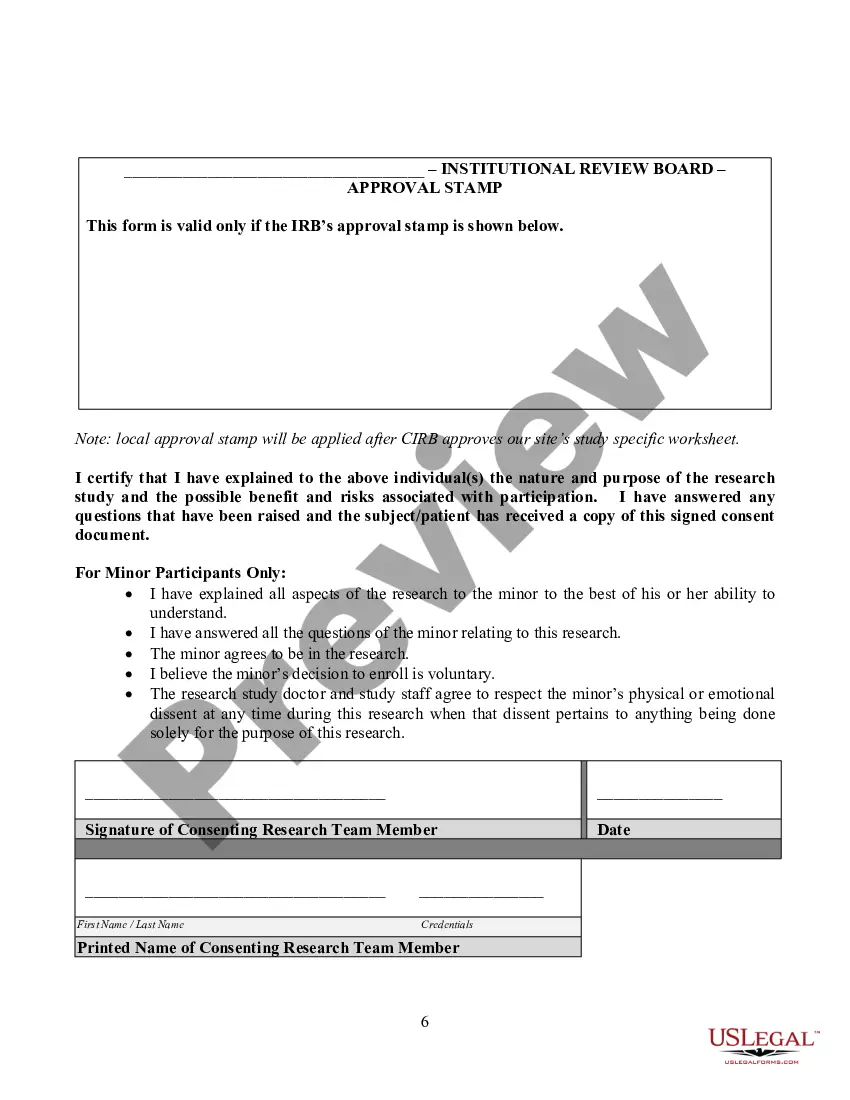
- Signature areas for both the participant and the parent/guardian to acknowledge consent and assent.
When this form is needed
This form should be used when a minor is being asked to participate in a research study, particularly those that may involve medical interventions or drugs with unknown side effects. It is essential for any research involving minors' health or behavior to ensure that proper consent and assent are obtained, protecting the rights and safety of these participants.
Who can use this document
- Researchers conducting studies involving minor participants.
- Parents or guardians of minors who are considering research participation for their children.
- Institutional Review Boards overseeing the ethical aspects of research involving minors.
How to complete this form
- Enter the full study title and principal investigatorâs contact details at the top of the form.
- Carefully read each section, primarily focusing on the risks, benefits, and participant rights.
- Fill in the participant's name and other personal information as required.
- Ensure all necessary signatures are obtained from both the participant (if applicable) and their parent or guardian.
- Keep a copy of the signed form for your records and submit the required documentation to the research team.
Notarization requirements for this form
Notarization is not commonly needed for this form. However, certain documents or local rules may make it necessary. Our notarization service, powered by Notarize, allows you to finalize it securely online anytime, day or night.
Get your form ready online
Our built-in tools help you complete, sign, share, and store your documents in one place.
Make edits, fill in missing information, and update formatting in US Legal Forms—just like you would in MS Word.
Download a copy, print it, send it by email, or mail it via USPS—whatever works best for your next step.
Sign and collect signatures with our SignNow integration. Send to multiple recipients, set reminders, and more. Go Premium to unlock E-Sign.
If this form requires notarization, complete it online through a secure video call—no need to meet a notary in person or wait for an appointment.
We protect your documents and personal data by following strict security and privacy standards.

Make edits, fill in missing information, and update formatting in US Legal Forms—just like you would in MS Word.

Download a copy, print it, send it by email, or mail it via USPS—whatever works best for your next step.

Sign and collect signatures with our SignNow integration. Send to multiple recipients, set reminders, and more. Go Premium to unlock E-Sign.

If this form requires notarization, complete it online through a secure video call—no need to meet a notary in person or wait for an appointment.

We protect your documents and personal data by following strict security and privacy standards.
Avoid these common issues
- Failing to ensure all questions on the form are answered before signing.
- Omitting signatures from parents or guardians, especially when required.
- Not providing a copy of the signed consent form to the participant or their guardian.
- Overlooking specific reproductive risk disclosures related to the research.
Why use this form online
- Convenience of downloading and printing the form from anywhere with internet access.
- Editable format allows for easy customization to meet specific research needs.
- Prompt access to updated legal language and compliance guidelines.
- Reliable storage of consent forms for future reference.
Legal use & context
- This form is legally binding under both federal and state laws related to research ethics and participant rights.
- It helps ensure compliance with Institutional Review Board (IRB) requirements for studies involving minors.
- Participants retain the right to withdraw at any time, which is highlighted in the consent process.
Key takeaways
- The Research Study Consent Form with Assent for Minor Participant protects the rights and safety of minor participants in research studies.
- Parents or guardians must be fully informed and provide consent before their child participates.
- Awareness of reproductive risks is crucial and is explicitly addressed within the form.
- Maintaining confidentiality and proper management of personal health information is emphasized throughout.
Looking for another form?

Form popularity
FAQ
Child Assent Assent is defined as a minor's affirmative agreement to participate in research. In most cases, this must be documented in writing if the subjects are at least 7 years old.
I have been informed that my parent(s) have given permission for me to participate, if I want to, in a study concerning . My participation in this project is voluntary and I have been told that I may stop my participation in this study at any time.
An assent form is different from an informed consent form, and is specifically designed to simply indicate that the minor is willing to participate in the study and understands what he or she will be expected to do as part of the study.
Child Assent Federal regulation and state statute require that minors assent to participate in research. Assent is defined as a minor's affirmative agreement to participate in research. In most cases, this must be documented in writing if the subjects are at least 7 years old.
Legally, children are not able to give true informed consent until they turn 18. So, before taking part in a clinical trial, they are asked for their assent. Assent means that they agree to take part. They may also dissent, which means they do not agree.
What is the difference between consent and assent? Consent may only be given by individuals who have reached the legal age of consent (in the U.S. this is typically 18 years old). Assent is the agreement of someone not able to give legal consent to participate in the activity.
Parental permission protects the child from assuming unreasonable risks. Assent demonstrates respect for the child and his developing autonomy. In order to give meaningful assent, the child must understand that procedures will be performed, voluntarily choose to undergo the procedures, and communicate this choice.