Confidentiality Agreement for Intellectual Property
About this form
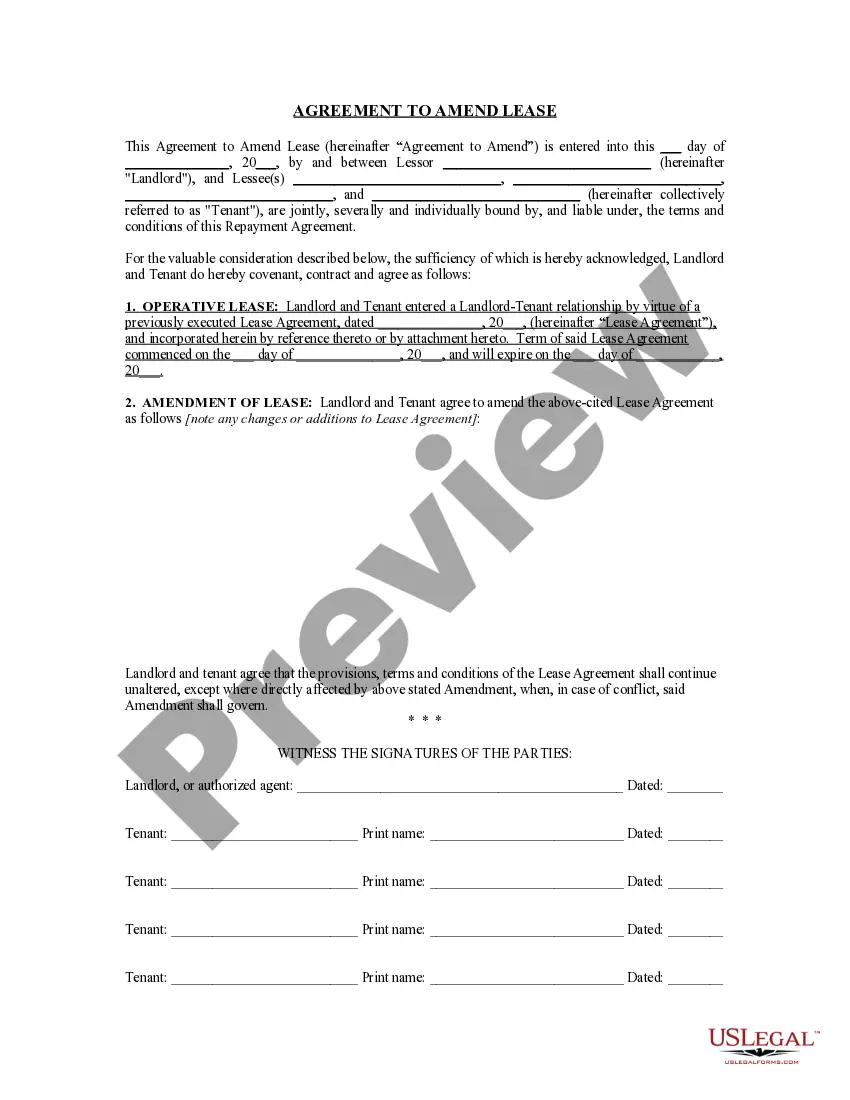
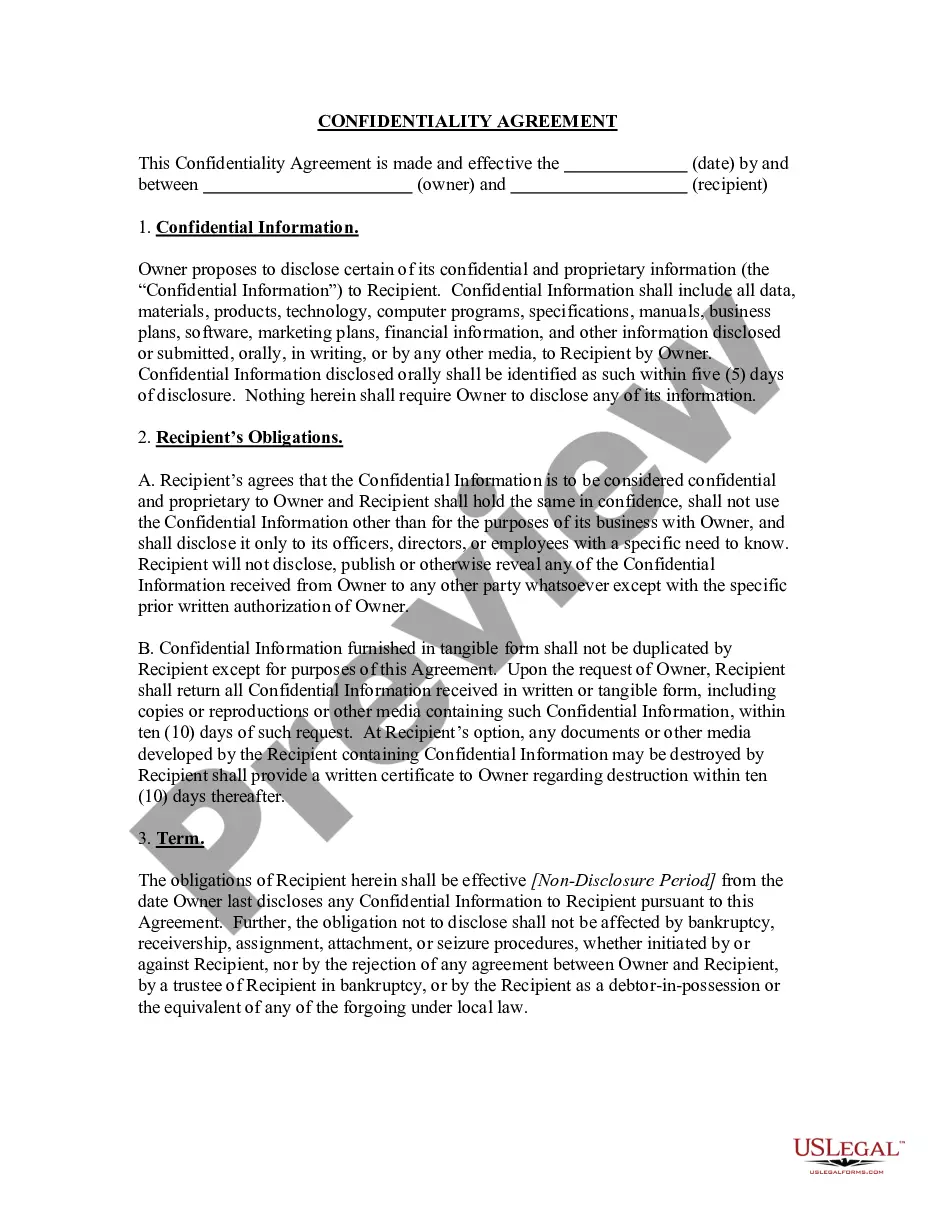
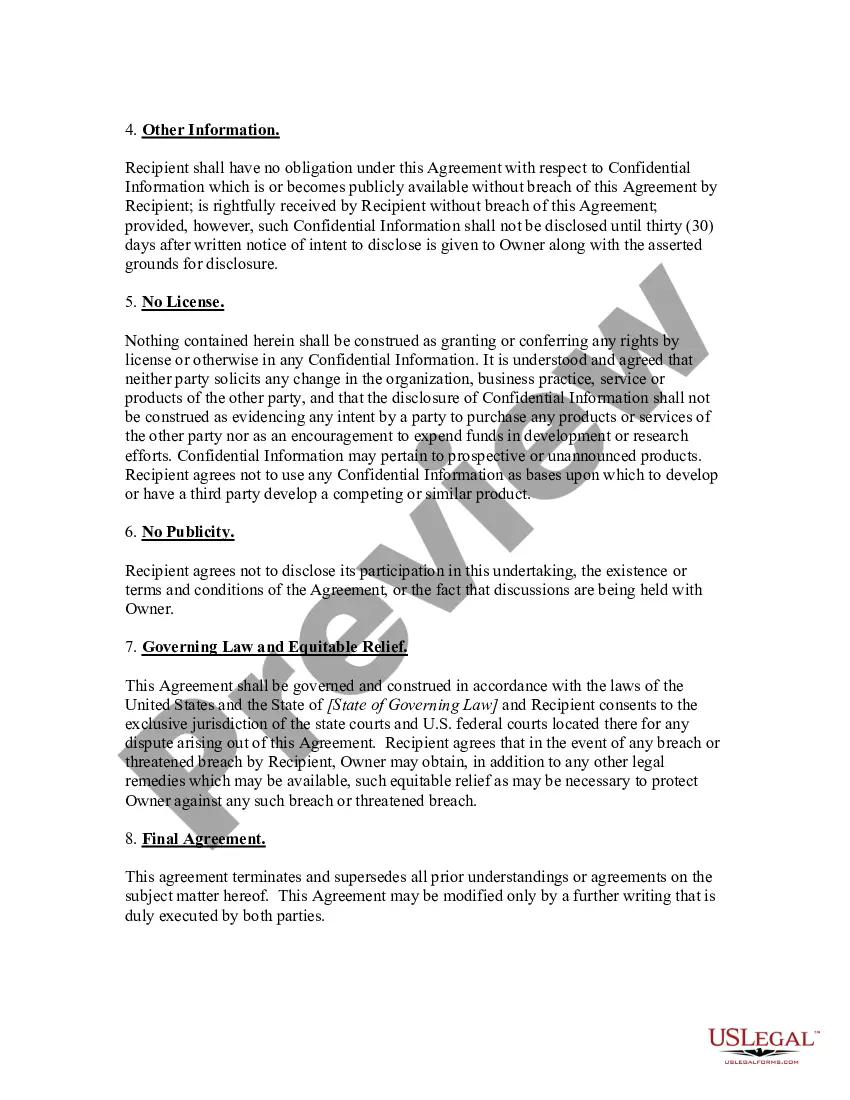
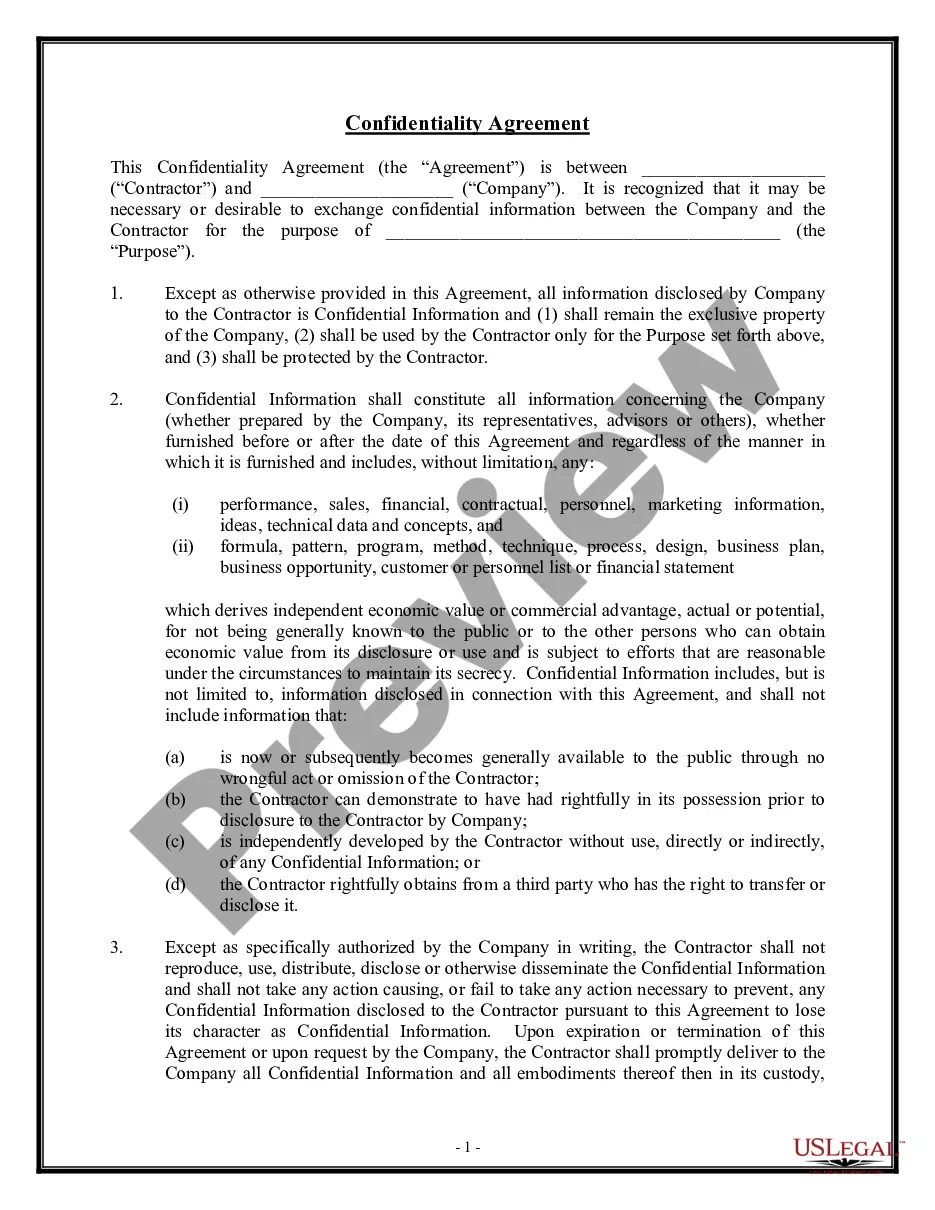
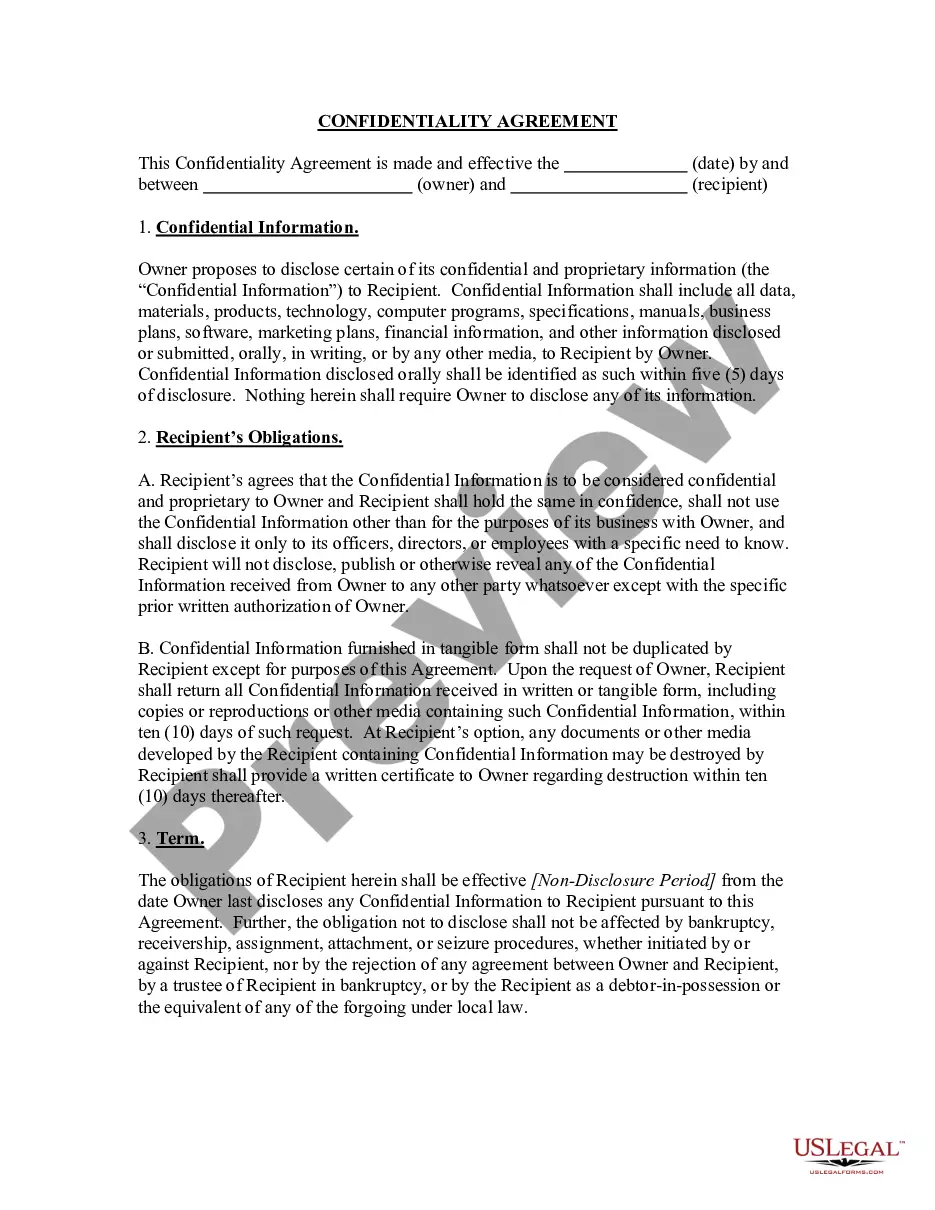
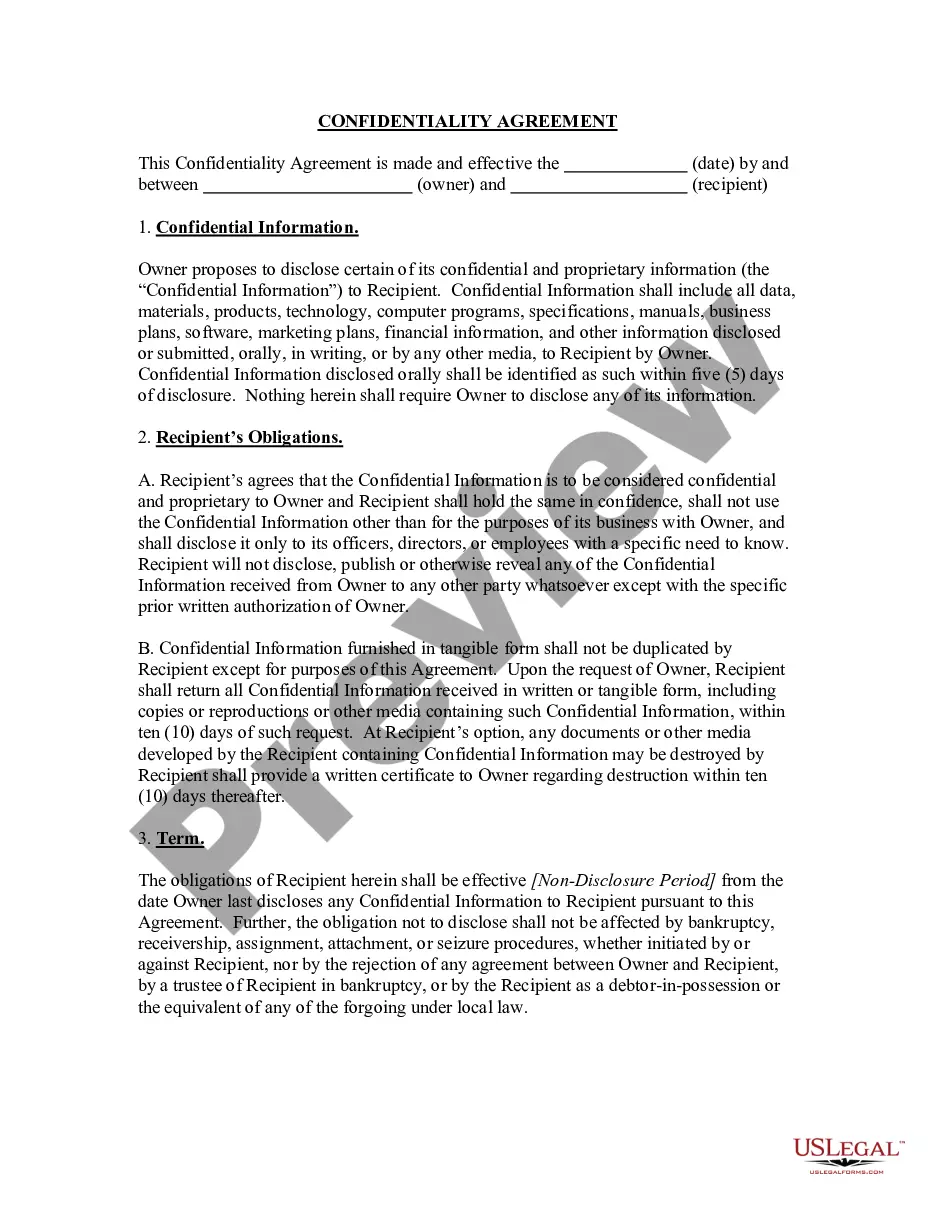
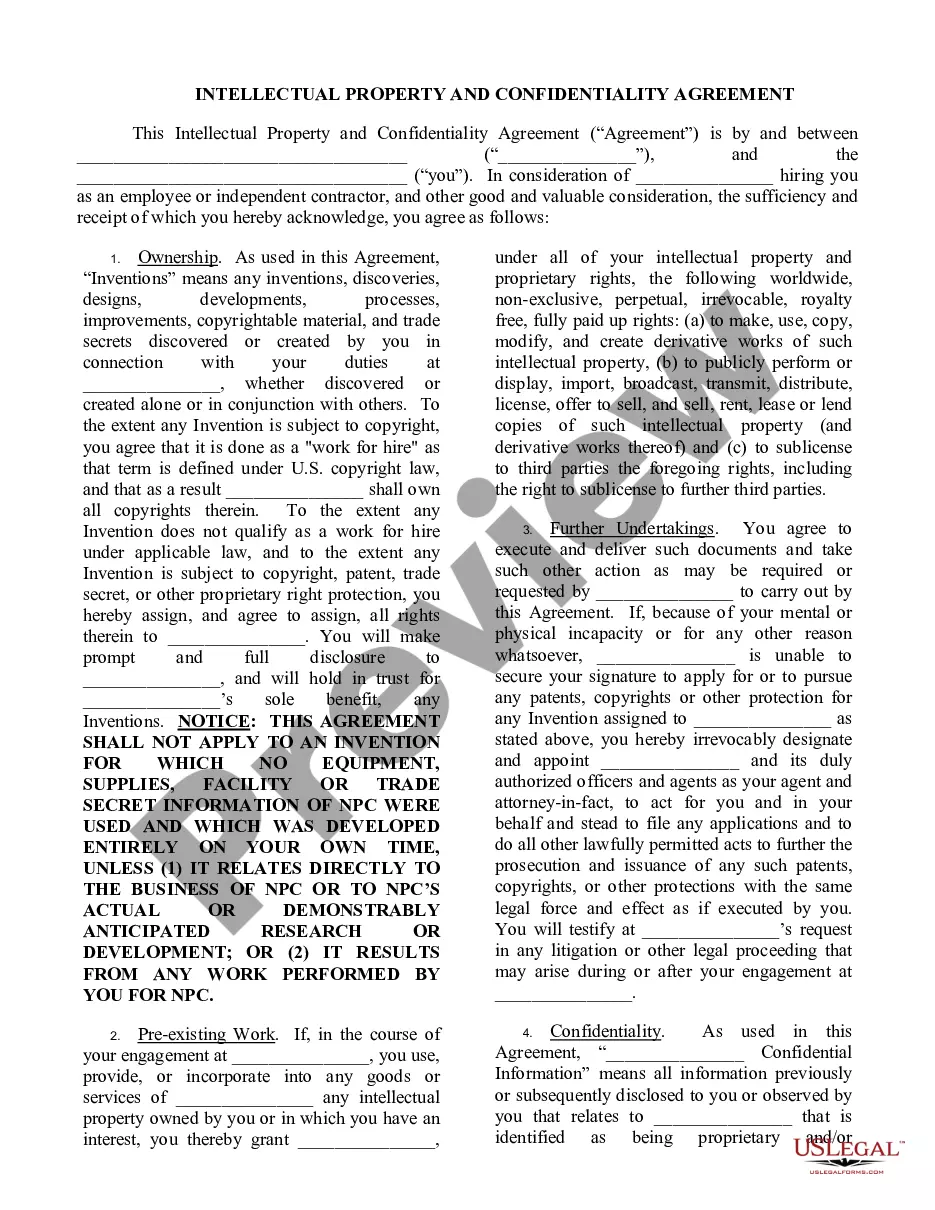
The Confidentiality Agreement for Intellectual Property, often referred to as a confidentiality agreement, is a legal contract that safeguards proprietary information shared between parties. Its primary purpose is to ensure that sensitive information remains confidential and is not disclosed improperly. This form is specifically tailored for protecting intellectual property rights, distinguishing it from general confidentiality agreements that may cover a broader scope of information.
Main sections of this form
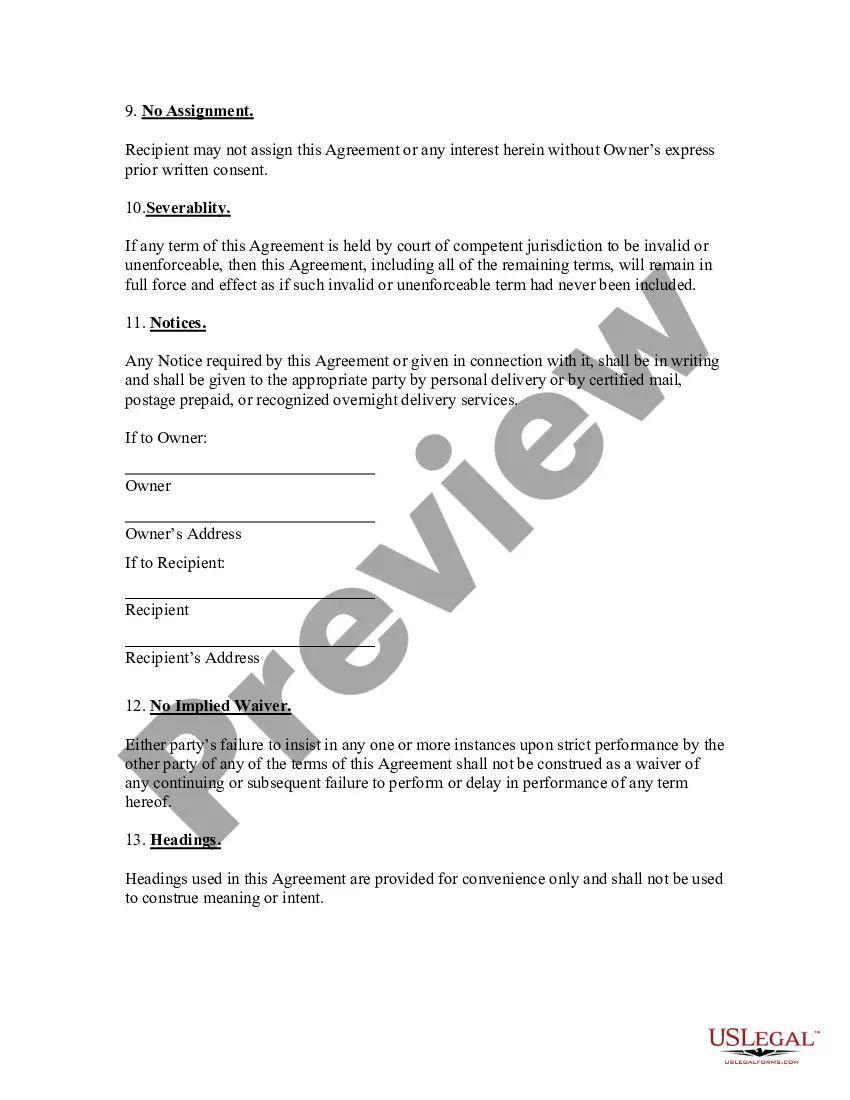
- Recipientâs Obligations: Defines how the recipient must handle confidential information, including restrictions on use and disclosure.
- Non-Disclosure Period: Specifies how long the confidentiality obligations remain in effect.
- Return or Destruction of Information: Requires the recipient to return or destroy all confidential information upon request.
- No License Granted: Clarifies that the agreement does not grant any rights to use the confidential information beyond the scope outlined.
- Governing Law: States which jurisdiction's laws will govern the agreement and any disputes that may arise.
Common use cases
This form should be used when two parties are entering a relationship where sensitive information will be shared, such as during the development of a new product, partnership discussions, or research collaborations. It is especially relevant for businesses seeking to protect their intellectual property rights when disclosing proprietary information to potential clients, investors, or collaborators.
Who this form is for
- Business owners and entrepreneurs looking to protect their intellectual property.
- Employers sharing confidential employee information.
- Companies engaged in partnerships requiring the exchange of proprietary information.
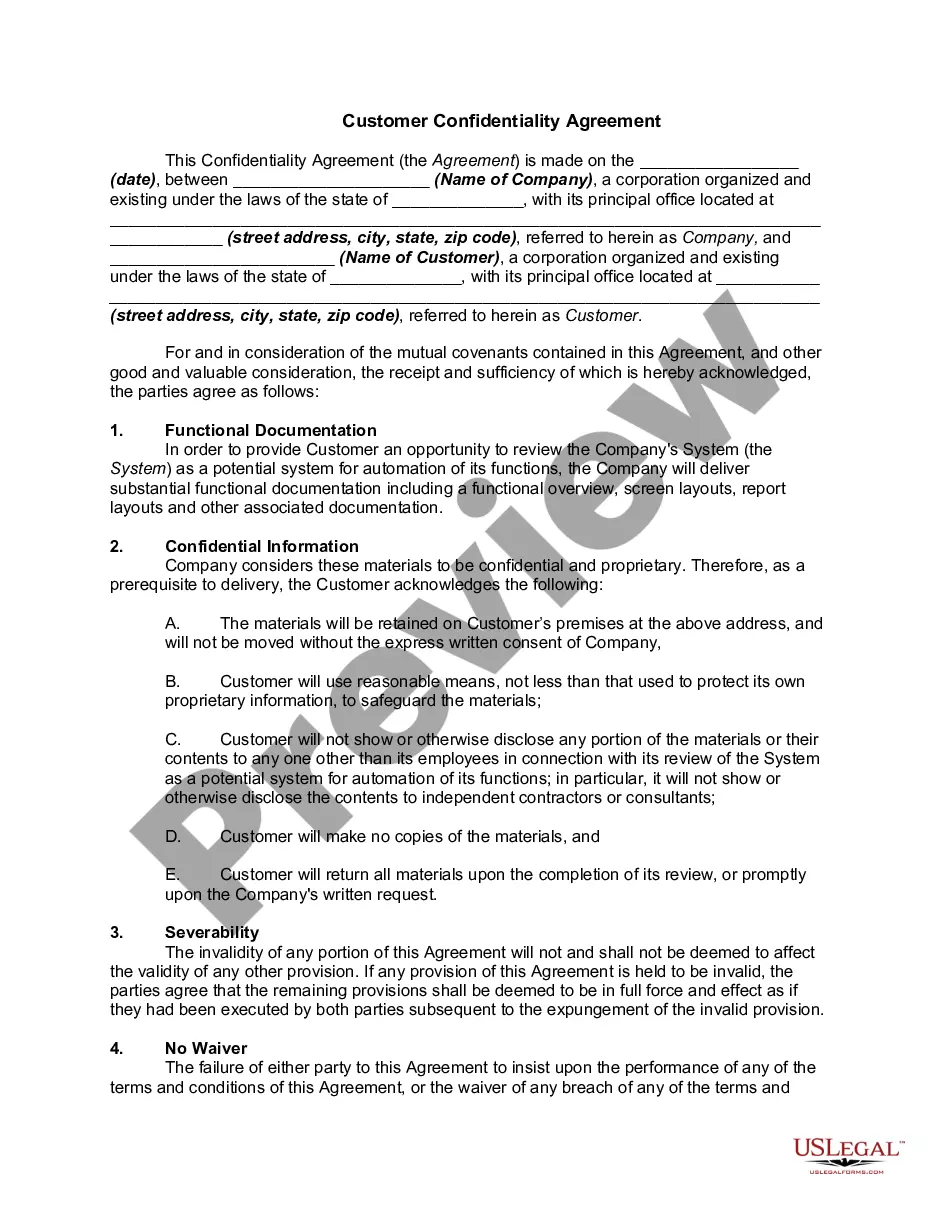
- Individuals working with contractors or freelancers who will have access to sensitive data.
Completing this form step by step
- Identify the parties involved by entering their names and addresses.
- Clearly describe the confidential information that will be shared.
- Enter the duration of the confidentiality obligations, outlining the non-disclosure period.
- Specify how the confidential information should be handled, including return or destruction upon request.
- Have both parties sign and date the form to finalize the agreement.
Is notarization required?
This form does not typically require notarization unless specified by local law. It is advisable, however, to have the agreement notarized to provide an additional layer of verification and authenticity.
Get your form ready online
Our built-in tools help you complete, sign, share, and store your documents in one place.
Make edits, fill in missing information, and update formatting in US Legal Forms—just like you would in MS Word.
Download a copy, print it, send it by email, or mail it via USPS—whatever works best for your next step.
Sign and collect signatures with our SignNow integration. Send to multiple recipients, set reminders, and more. Go Premium to unlock E-Sign.
If this form requires notarization, complete it online through a secure video call—no need to meet a notary in person or wait for an appointment.
We protect your documents and personal data by following strict security and privacy standards.

Make edits, fill in missing information, and update formatting in US Legal Forms—just like you would in MS Word.

Download a copy, print it, send it by email, or mail it via USPS—whatever works best for your next step.

Sign and collect signatures with our SignNow integration. Send to multiple recipients, set reminders, and more. Go Premium to unlock E-Sign.

If this form requires notarization, complete it online through a secure video call—no need to meet a notary in person or wait for an appointment.

We protect your documents and personal data by following strict security and privacy standards.
Mistakes to watch out for
- Failing to clearly define what constitutes confidential information.
- Not specifying the duration of the confidentiality obligations.
- Omitting signatures from both parties, making the agreement unenforceable.
- Not including terms for how breaches of confidentiality will be handled.
Why use this form online
- Convenience of downloading and completing the form from anywhere.
- Editability to customize the agreement according to specific needs.
- Access to professionally drafted legal templates to ensure compliance.
- Immediate availability without the need for physical paperwork.
Looking for another form?
Form popularity
FAQ
Here's some breach of confidentiality examples you could find yourself facing: Saving sensitive information on an unsecure computer that leaves the data accessible to others. Sharing employees' personal data, like payroll details, bank details, home addresses and medical records.
2. Clearly label all confidential information as confidential. This means writing confidential on documents or any folder you keep them in. If you are sending an email, make sure the title clearly identifies it as confidential.
Simply defined, a confidentiality statement for documents is a legally binding document stating that two parties won't profit from or share confidential information.
Under an intellectual property licensing agreement (also known as an intellectual property license or an intellectual property license agreement), you retain ownership of your patent, copyright, or trademark, but you give another party permission to use some or all of your intellectual property rights for a specific
Depending on the complexity of what you need protected and the number of parties involved, the cost of having an NDA drafted can vary significantly. When you hire a lawyer in the Priori network, drafting an NDA typically costs anywhere from $175-$1,500.
Among the many uses of a Non-Disclosure Agreement (sometimes called an NDA) is the protection of Intellectual Property.By definition, an NDA agreement is a simple contract compelling two or more parties to keep certain pieces of shared information confidential and private.
An NDA creates a confidential relationship between the parties, typically to protect any type of confidential and proprietary information or trade secrets. As such, an NDA protects non-public business information. Like all contracts, they cannot be enforced if the contracted activities are illegal.
Set the date of the agreement. Describe the two parties, sometimes called the Disclosing Party and the Receiving Party.7feff Include names and identification, so there can be no misunderstanding about who signed the agreement.
Trade secrets are intellectual property (IP) rights on confidential information which may be sold or licensed. In general, to qualify as a trade secret, the information must be: commercially valuable because it is secret, be known only to a limited group of persons, and.