RICO - Verdict Form and Special Interrogatories
Understanding this form
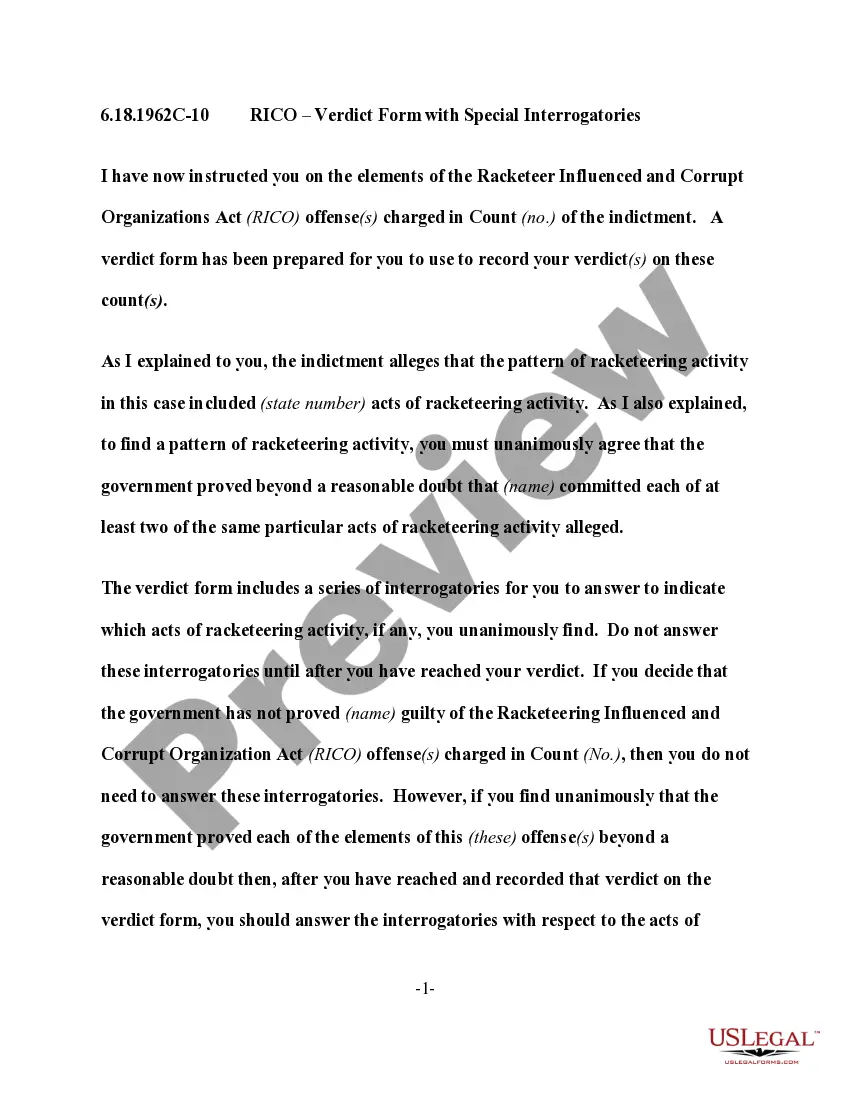
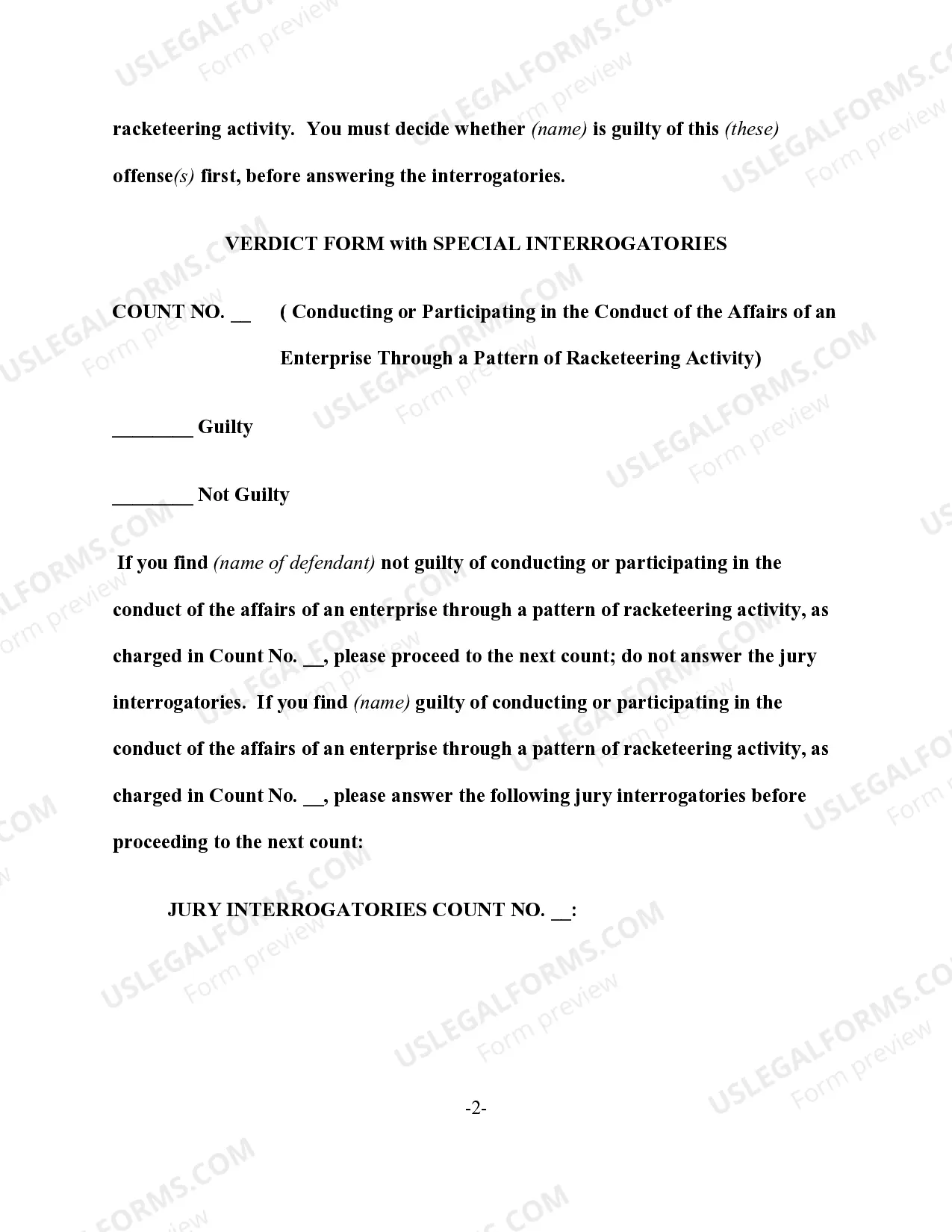
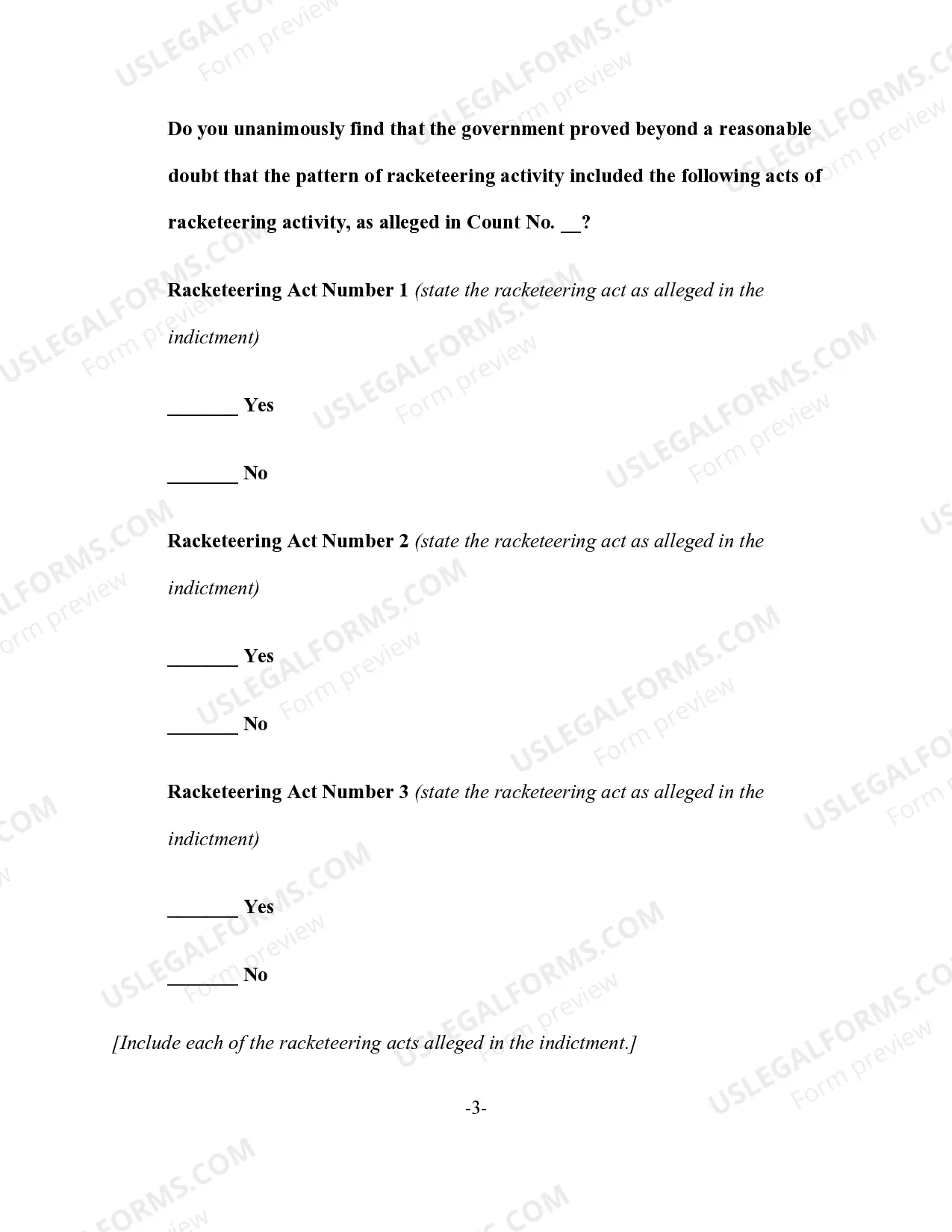
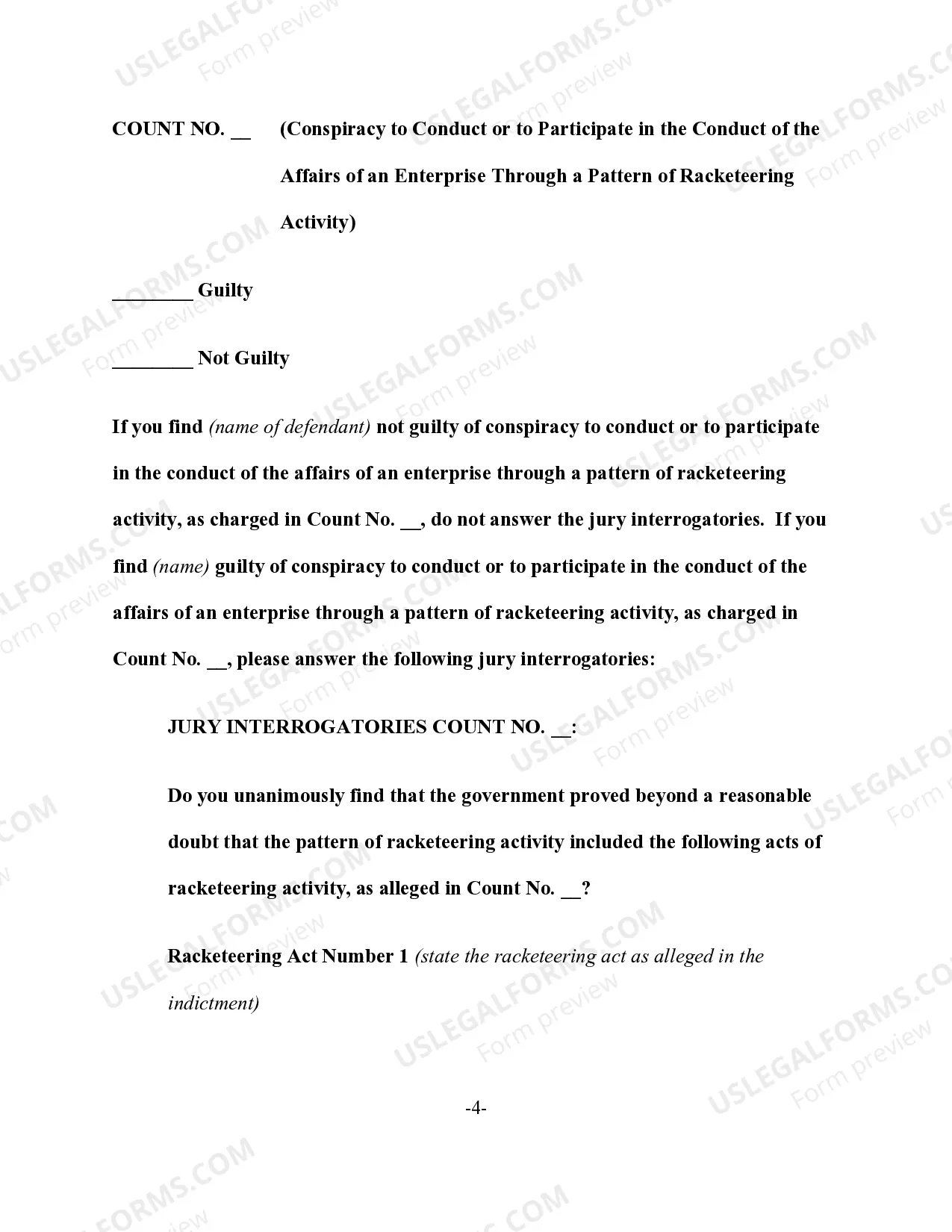
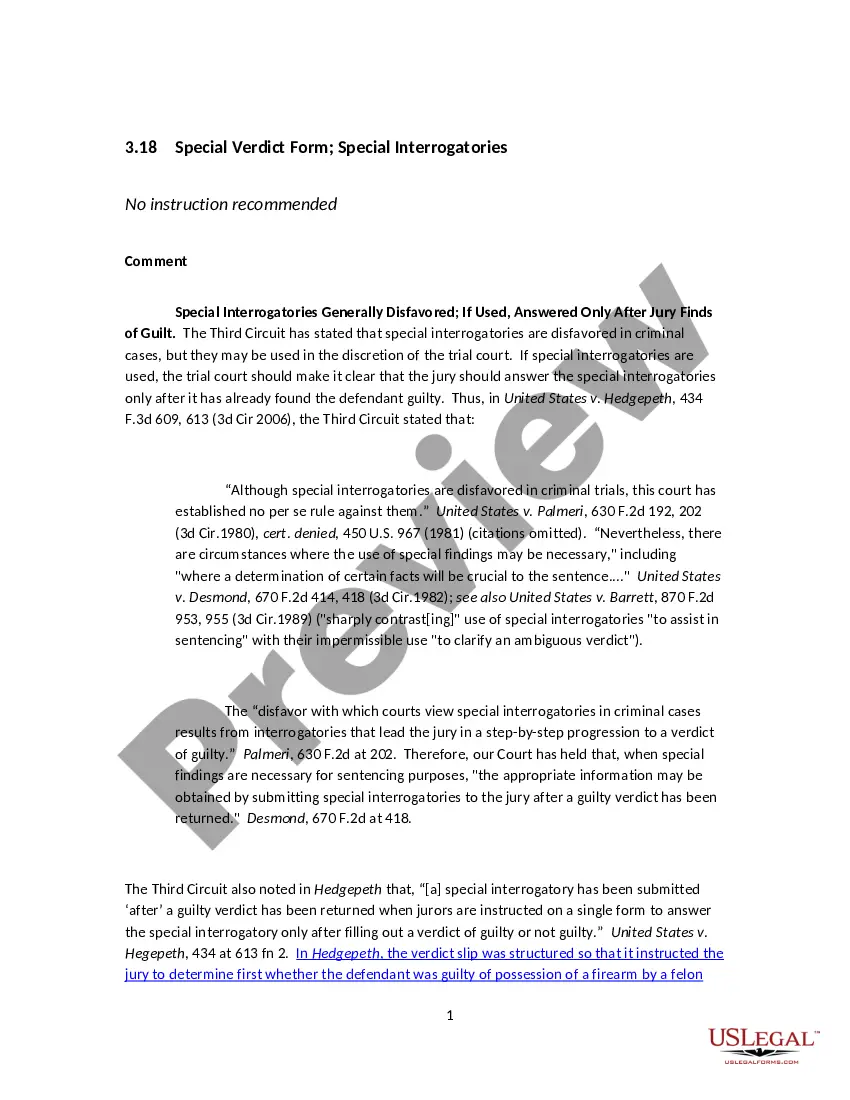
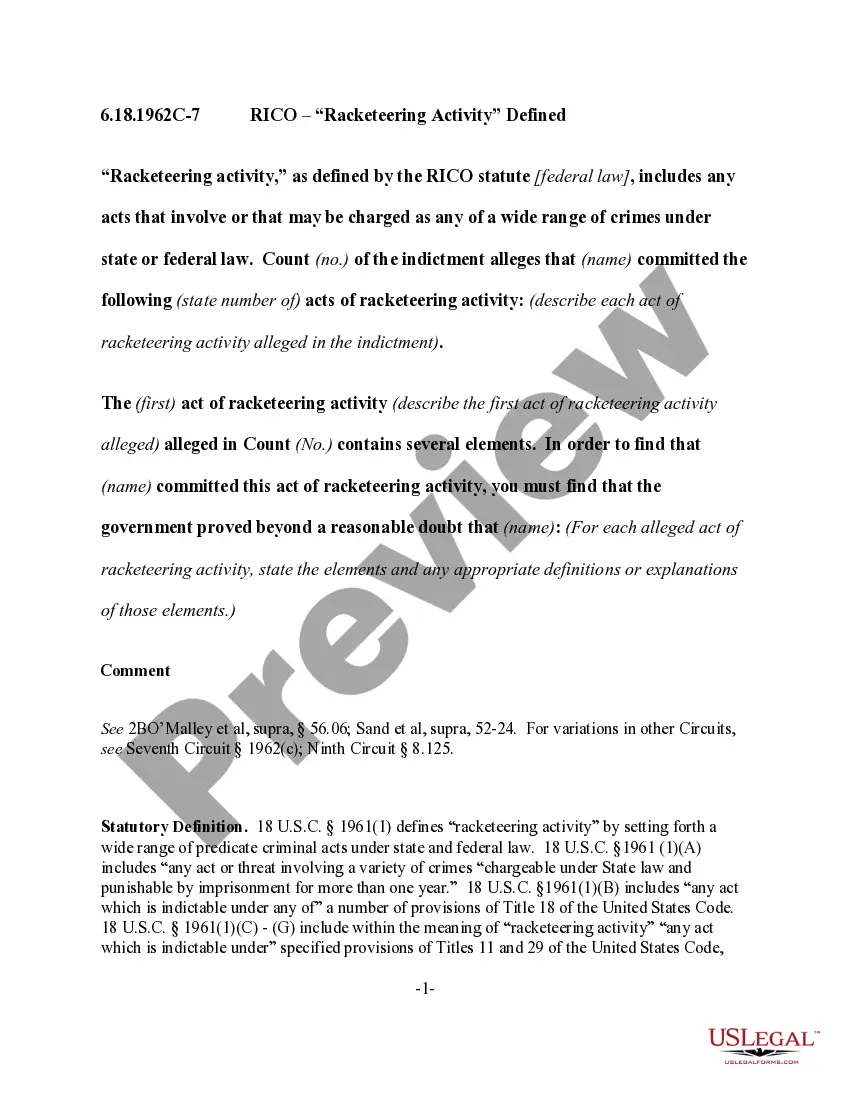
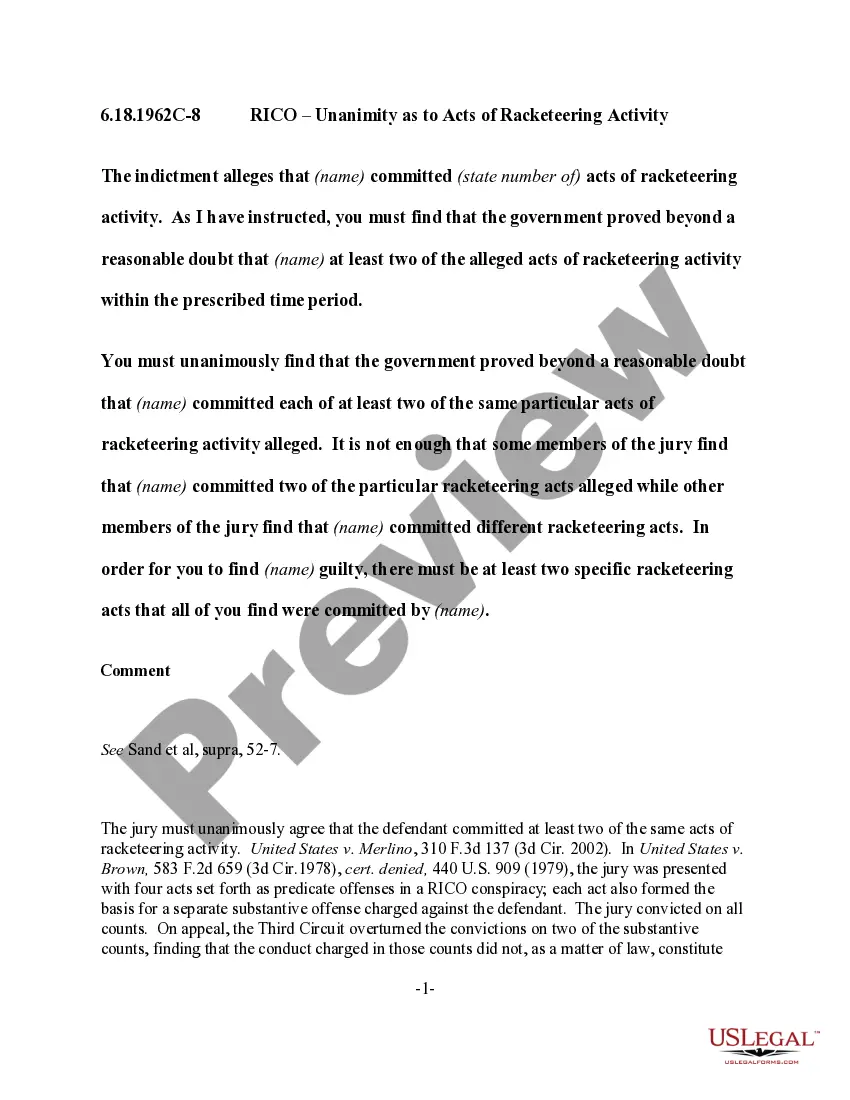
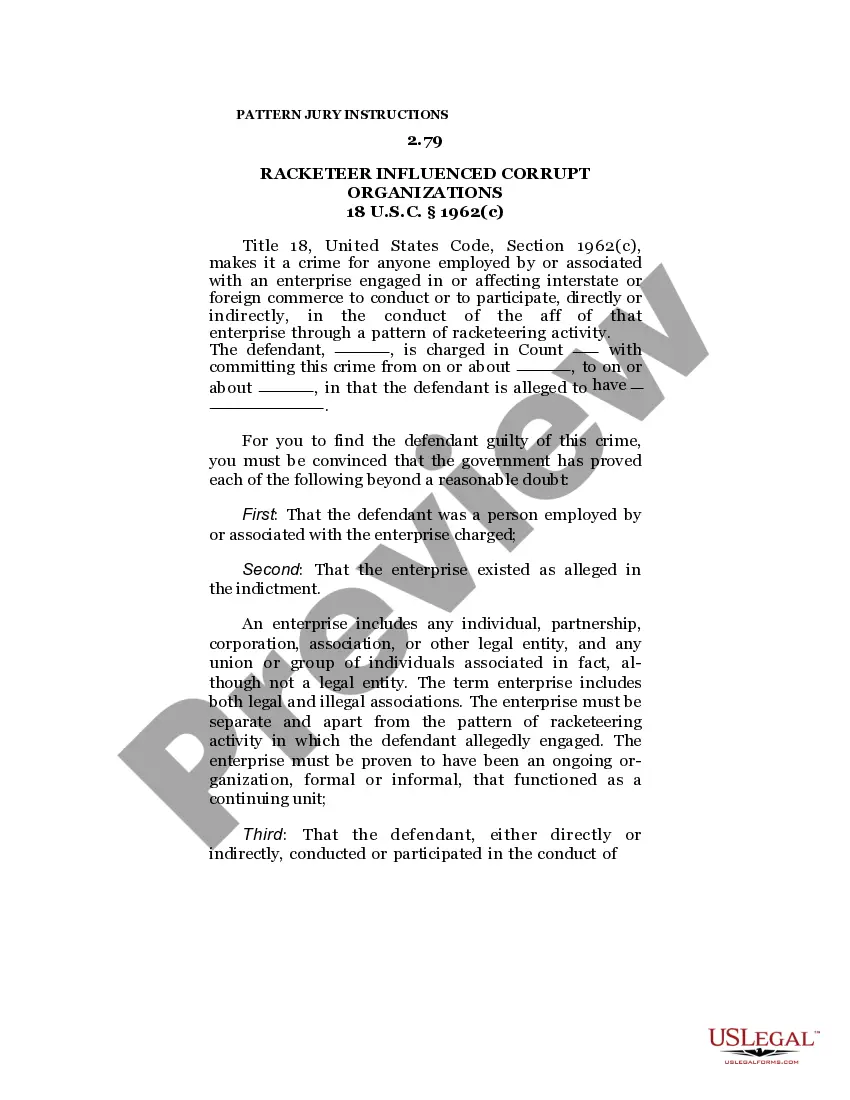
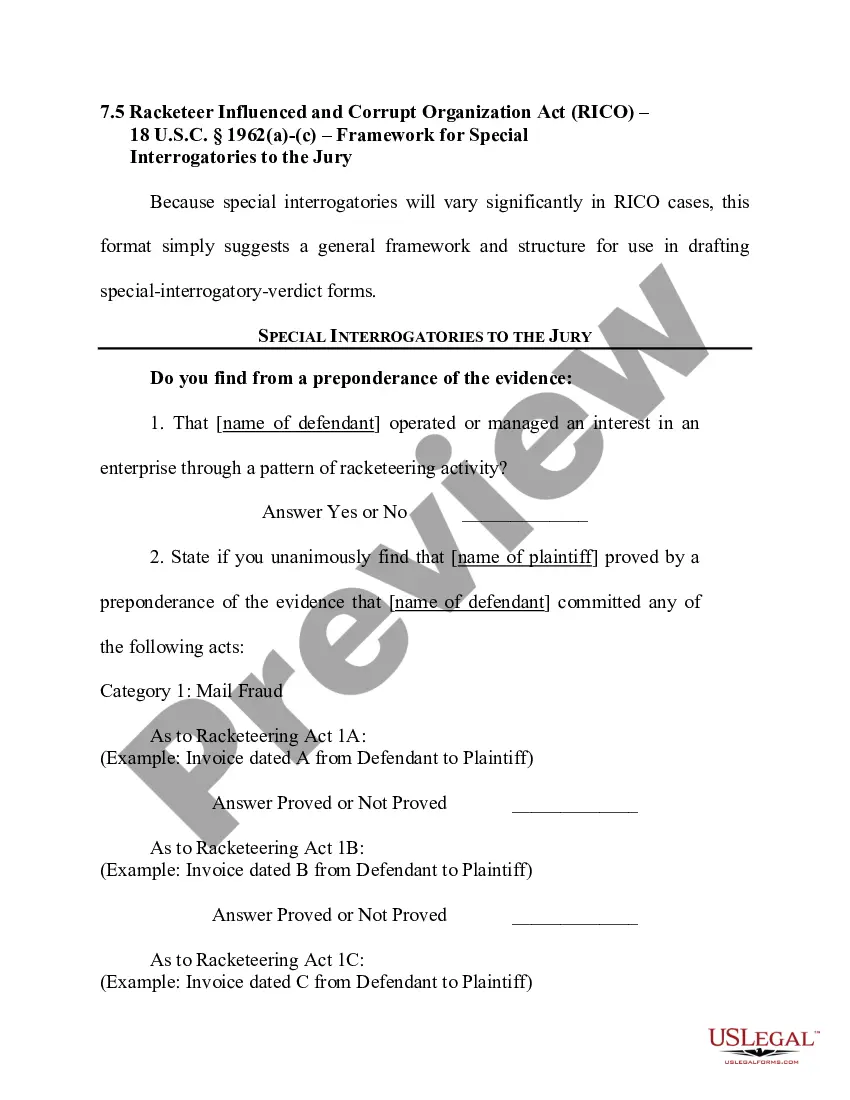
The RICO Verdict Form and Special Interrogatories is a legal document used in criminal cases involving the Racketeer Influenced and Corrupt Organizations Act (RICO). This form enables juries to record their verdicts and answer specific questions about the alleged racketeering activities of the defendant. It is essential for appropriately determining guilt or innocence based on the elements outlined in the RICO statute and differs from regular verdict forms by including detailed interrogatories regarding specific acts of racketeering.
Key parts of this document
- Verdict section determining guilt or innocence on RICO charges.
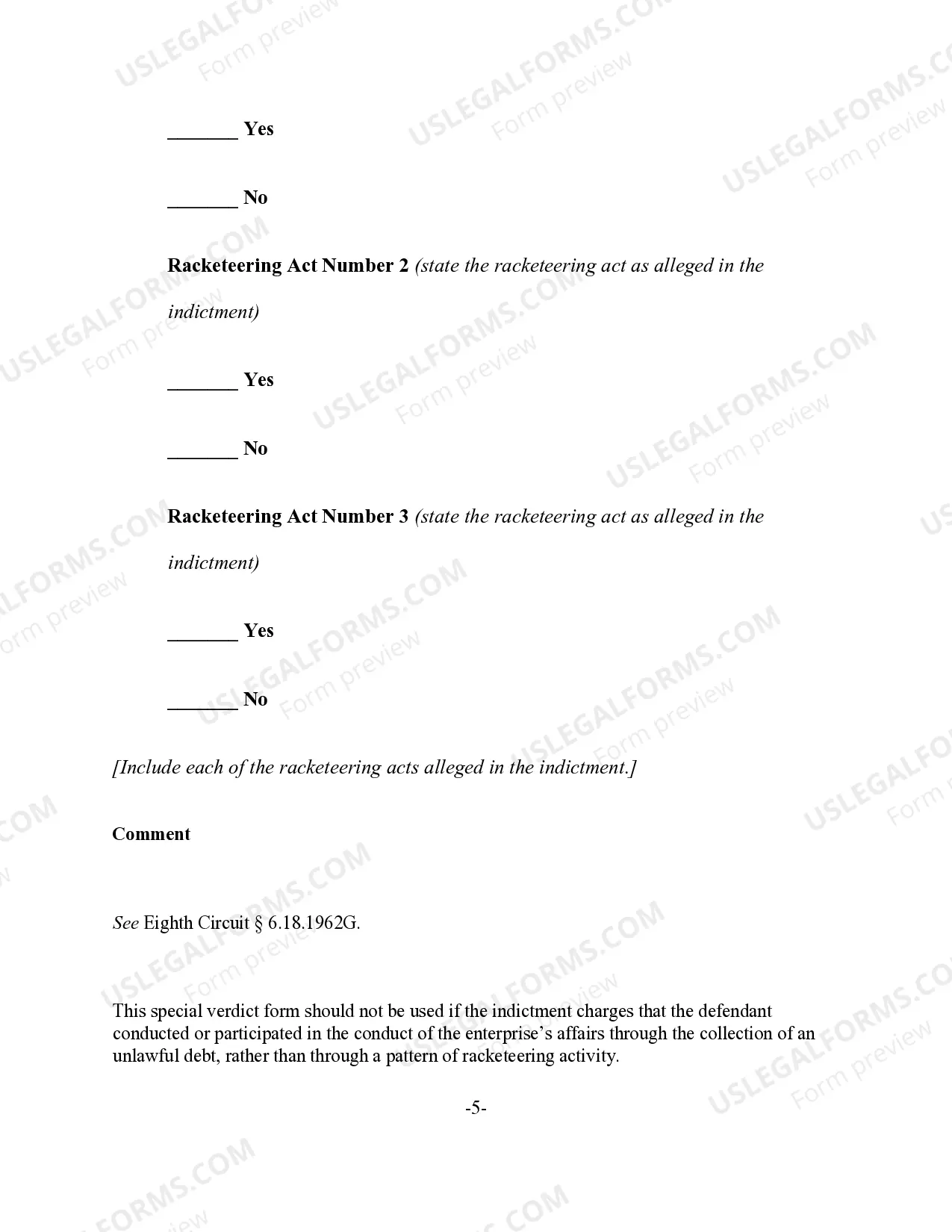
- Special interrogatories to assess specific acts of racketeering.
- Counts for both conducting and conspiracy to conduct racketeering activities.
- Instructions on when to answer the special interrogatories.

Situations where this form applies
This form is used during trials when a defendant is charged with violations of the RICO Act. It is specifically necessary when the jury must determine if the defendant engaged in a pattern of racketeering activity through specific acts, leading to a potential verdict of guilty or not guilty.
Intended users of this form
- Juries in criminal trials involving RICO charges.
- Judges overseeing RICO cases to structure jury instructions.
Instructions for completing this form
- Review the charges and understand the elements required for a guilty verdict under RICO.
- Decide on the verdict for each count: guilty or not guilty.
- If guilty, respond to each special interrogatory regarding the acts of racketeering listed in the indictment.
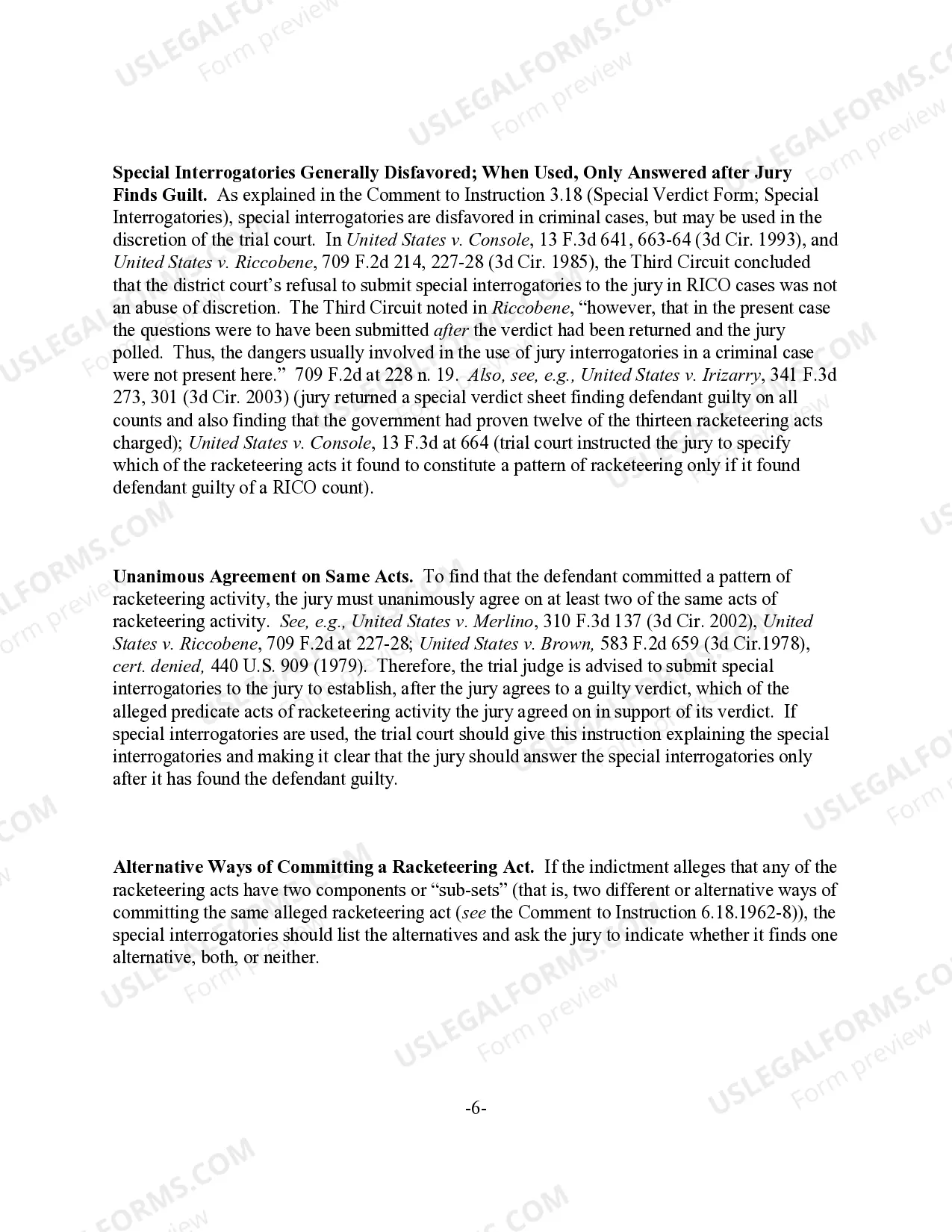
- Record unanimous agreement on the specific acts of racketeering if found guilty.
- Proceed to the next count if applicable.
Does this form need to be notarized?
In most cases, this form does not require notarization. However, some jurisdictions or signing circumstances might. US Legal Forms offers online notarization powered by Notarize, accessible 24/7 for a quick, remote process.
Get your form ready online
Our built-in tools help you complete, sign, share, and store your documents in one place.
Make edits, fill in missing information, and update formatting in US Legal Forms—just like you would in MS Word.
Download a copy, print it, send it by email, or mail it via USPS—whatever works best for your next step.
Sign and collect signatures with our SignNow integration. Send to multiple recipients, set reminders, and more. Go Premium to unlock E-Sign.
If this form requires notarization, complete it online through a secure video call—no need to meet a notary in person or wait for an appointment.
We protect your documents and personal data by following strict security and privacy standards.

Make edits, fill in missing information, and update formatting in US Legal Forms—just like you would in MS Word.

Download a copy, print it, send it by email, or mail it via USPS—whatever works best for your next step.

Sign and collect signatures with our SignNow integration. Send to multiple recipients, set reminders, and more. Go Premium to unlock E-Sign.

If this form requires notarization, complete it online through a secure video call—no need to meet a notary in person or wait for an appointment.

We protect your documents and personal data by following strict security and privacy standards.
Typical mistakes to avoid
- Forgetting to consult the special interrogatories after reaching a guilty verdict.
- Misunderstanding the need for unanimity on specific racketeering acts.
- Answering the interrogatories before determining the overall verdict on guilt.
Benefits of using this form online
- Convenient access to a legally sound verdict form anytime, anywhere.
- Editability allows for adapting specific sections as needed.
- Reliable guidance ensures compliance with legal standards and requirements.
Legal use & context
- The form is crucial for juries to accurately communicate their findings in RICO cases.
- It helps ensure the trial follows procedural fairness and legal correctness.
- Using the form helps document the jury's decisions clearly for the court record.
Looking for another form?
Form popularity
FAQ
An example of racketeering might include a gang acquiring money through murders, money laundering, drug trafficking, and home invasion robberies. RICO conspiracy charges could be levied against gang members committing the crimes.
To charge under RICO, at least two predicate crimes within 10 years must have been committed through the enterprise. Note that an enterprise is required. This might be a crime family, a street gang or a drug cartel. But it may also be a corporation, a political party, or a managed care company.
Modern racketeering crimes include credit card frauds, data theft, and cybercrimes. They belong to the category of white-collar crimes.
The verdict of a jury is either general or special. A general verdict is that by which they pronounce generally upon all or any of the issues, either in favor of the plaintiff or defendant; a special verdict is that by which the jury find the facts only, leaving the judgment to the Court.
A general verdict is a verdict in which the jury decides which party should win the case, without listing its specific findings on any disputed issues. Juries issuing a general verdict are not required to provide the court with the justifications or reasonings underlying their decision.
Pattern of racketeering activity means engaging in at least two incidents of racketeering activity that have the same or similar intents, results, accomplices, victims or methods of commission or that otherwise are interrelated by distinguishing characteristics and are not isolated incidents, provided at least one of
Key Takeaways Racketeering is the act of acquiring a business through illegal activity, operating a business with illegally-derived income, or using a business to commit illegal acts. The U.S. government introduced the Racketeer Influenced and Corrupt Organizations Act in October 1970 to contain racketeering.
Set of illegal activities aimed at commercial profit that may be disguised as legitimate business deals. Common examples include fraud, extortion, bribery, and actual or threatened violence. criminal law.