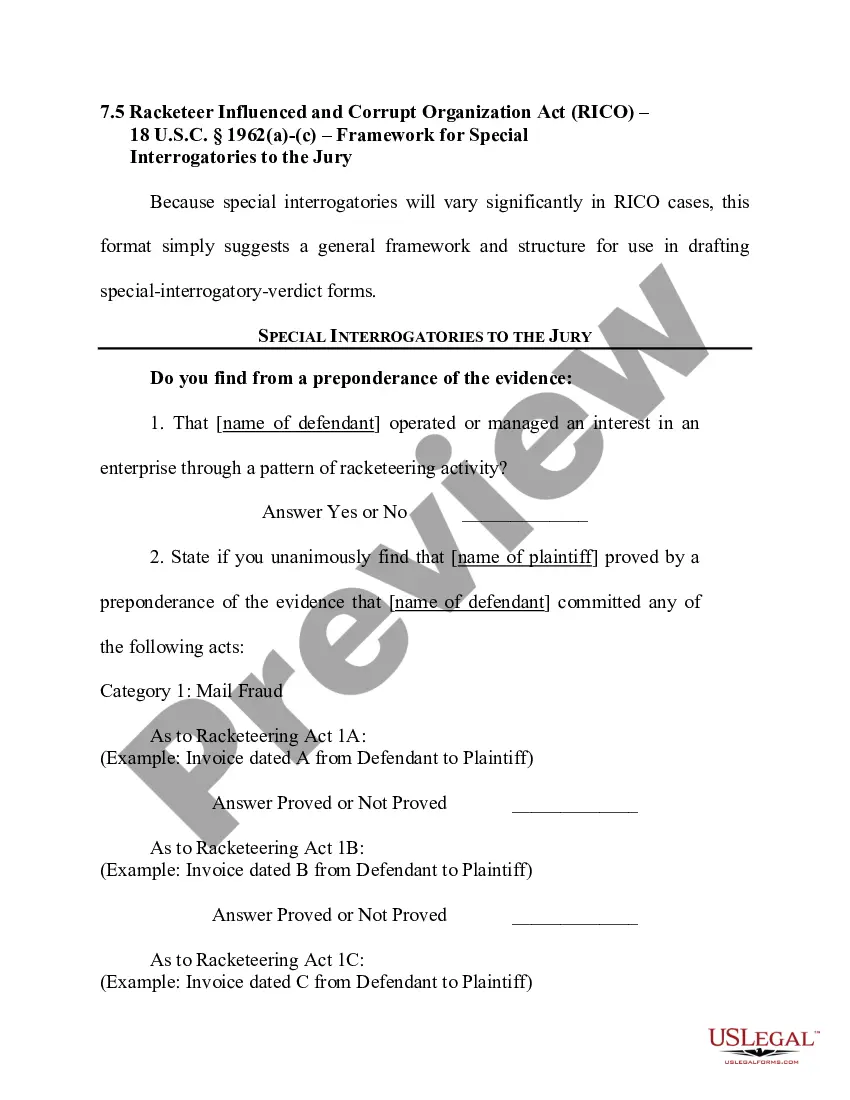
Racketeer Influenced and Corrupt Organization Act (RICO) - 18 U.S.C. Sec. 1962(a)-(c) - Framework for Special Interrogatories to the Jury
Understanding this form
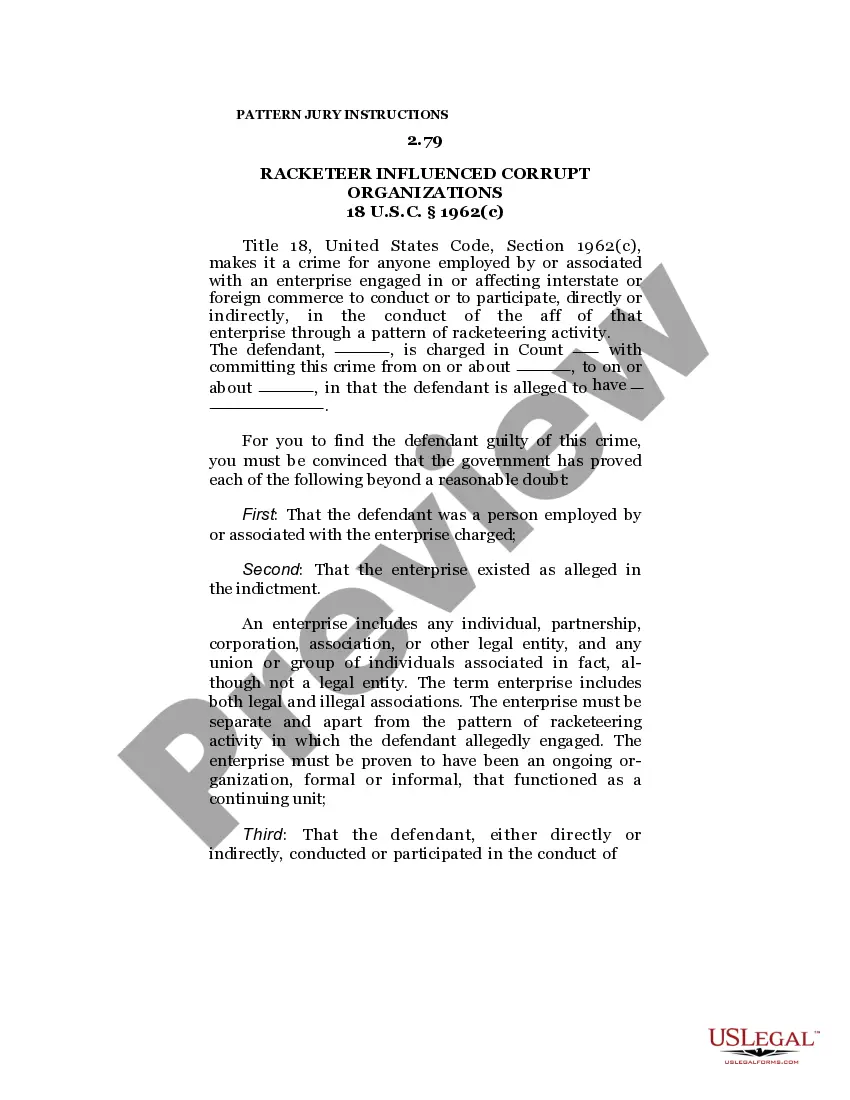
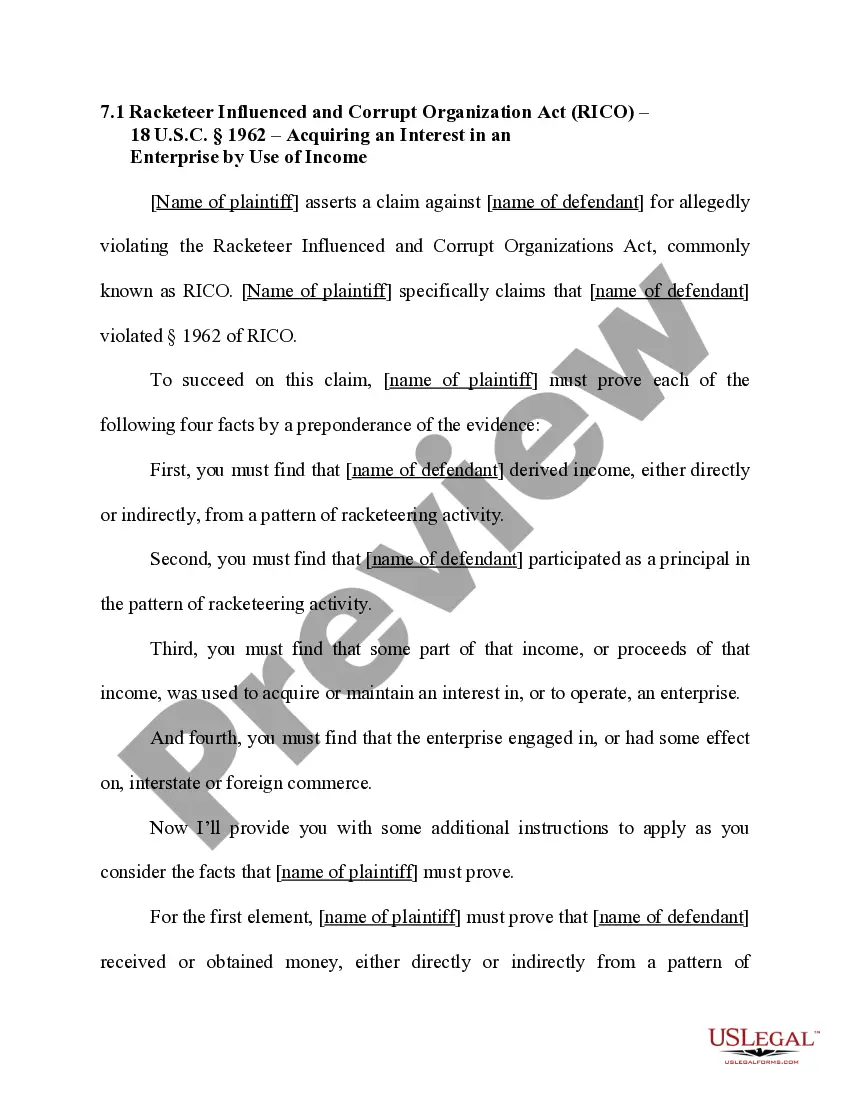
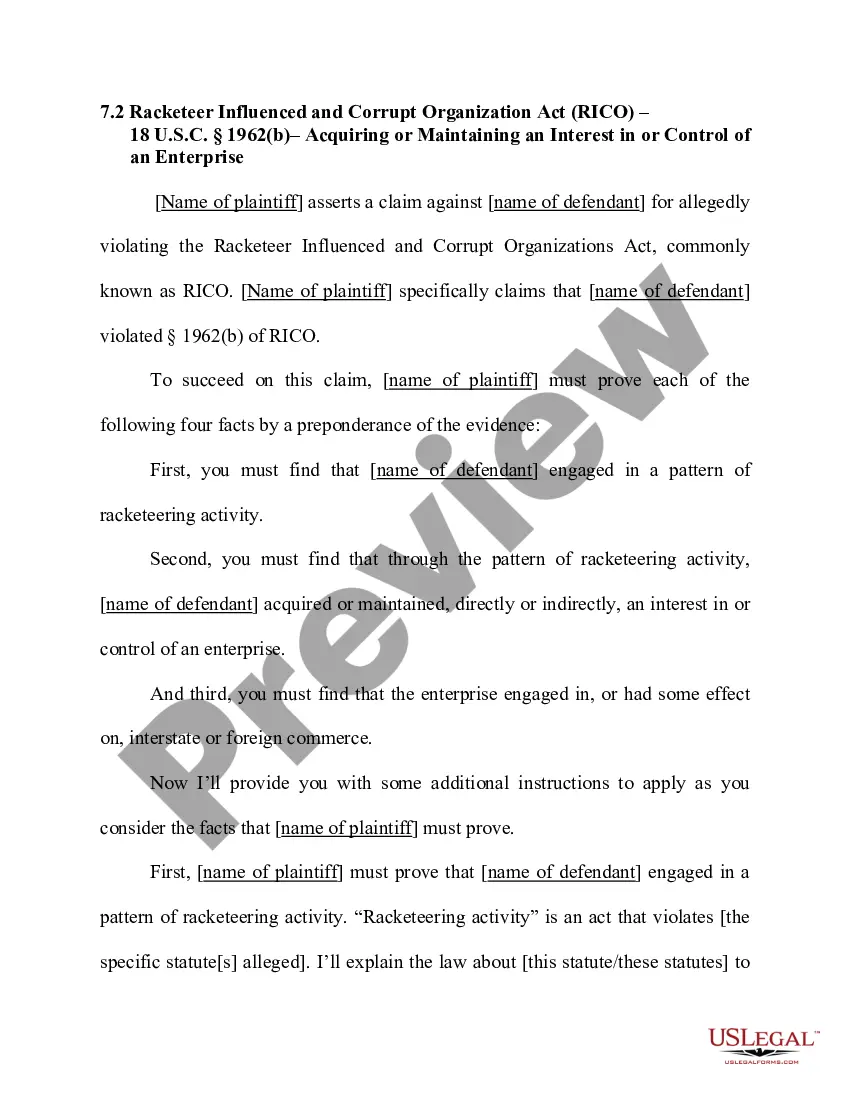
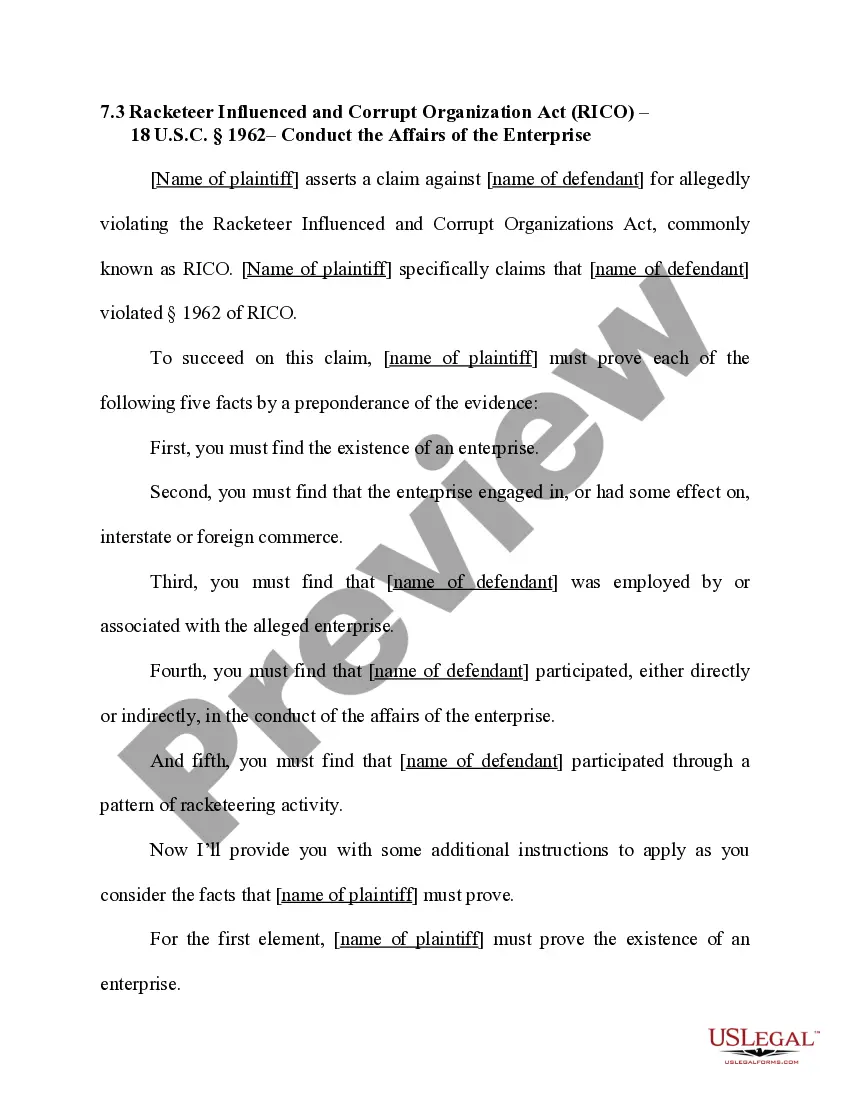
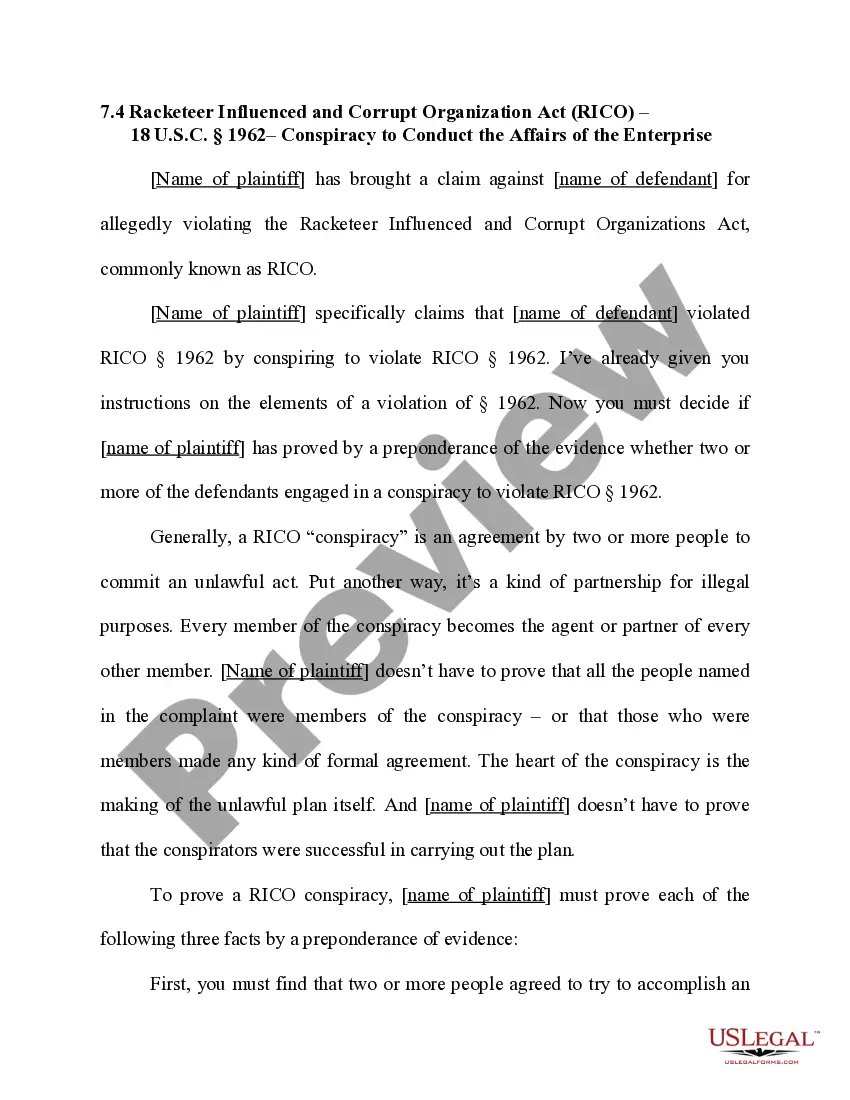
The Racketeer Influenced and Corrupt Organization Act (RICO) framework for special interrogatories to the jury is a legal document designed to assist juries in making crucial decisions in RICO cases. This form outlines specific questions related to racketeering activities, helping jurors evaluate evidence in a structured manner. Unlike generic jury instructions, this framework provides tailored interrogatories that fit the specific nuances of racketeering cases, promoting clarity and precision in jury deliberations.
What’s included in this form
- Identification of the defendant's role in managing an enterprise through racketeering.
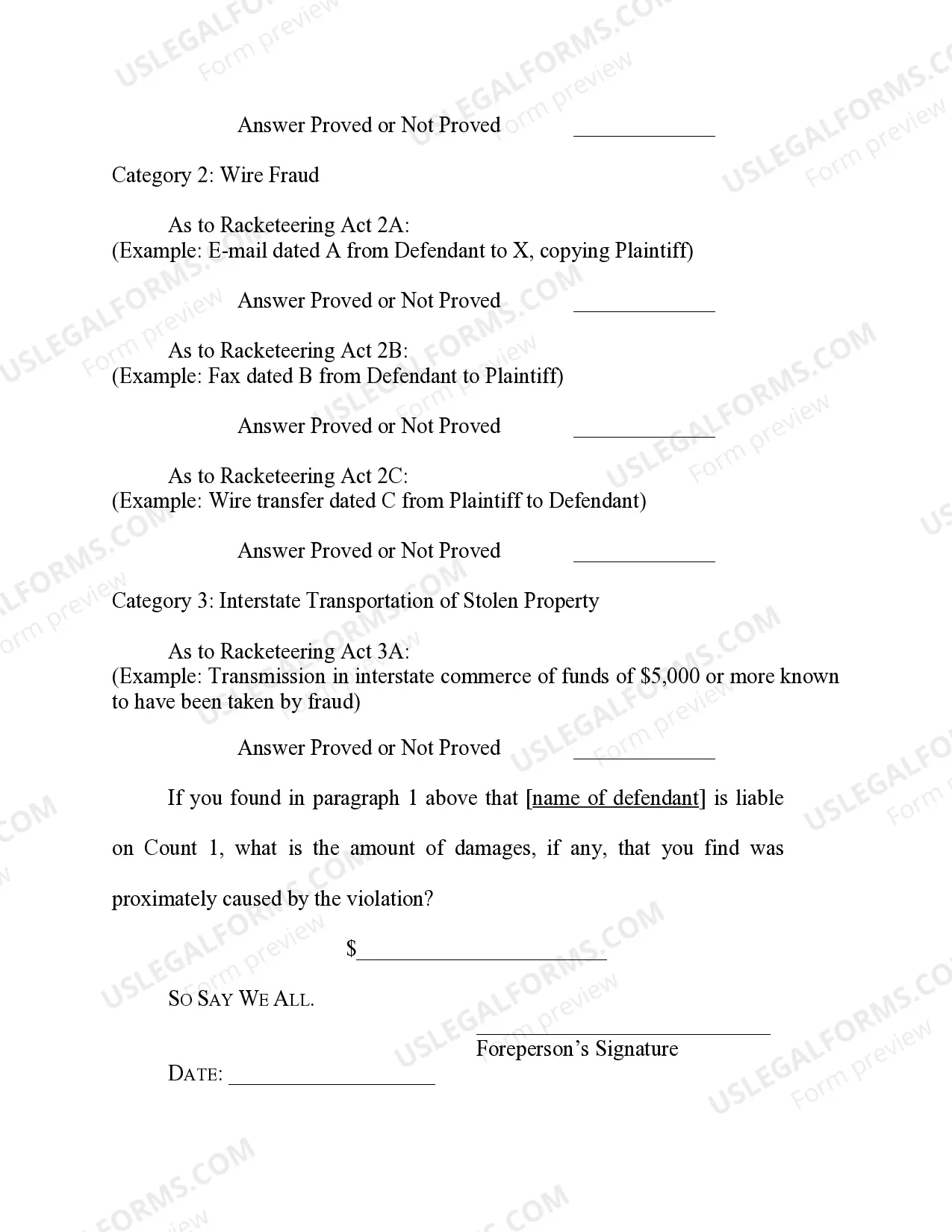
- Detailed categories of racketeering acts, including mail fraud and wire fraud.
- Options for jurors to indicate whether specific acts were proved or not proved.
- A section for the jury to determine the amount of damages caused by the defendantâs violations.
- Signature line for the foreperson and the date of the verdict.
When to use this document
This form is used during legal proceedings involving allegations under the RICO Act. It is particularly necessary when a jury needs to deliberate on complex cases where multiple instances of racketeering are claimed. Its structured format is beneficial for presenting evidence clearly and obtaining a quick yet comprehensive jury verdict based on legal standards.
Who needs this form
- Lawyers representing clients involved in RICO litigation.
- Judges presiding over cases that require jury involvement in RICO-related claims.
- Jury members tasked with evaluating evidence and making a verdict in a RICO case.
Completing this form step by step
- Identify the name of the defendant and enter it in the specified section.
- Determine whether the defendant operated or managed an enterprise through racketeering and circle Yes or No.
- For each racketeering act listed, state whether it is proved or not, based on the evidence presented.
- If applicable, calculate and enter the amount of damages attributed to the defendantâs actions.
- Have the foreperson sign the form and enter the date to finalize the verdict.
Is notarization required?
Notarization is not commonly needed for this form. However, certain documents or local rules may make it necessary. Our notarization service, powered by Notarize, allows you to finalize it securely online anytime, day or night.
Get your form ready online
Our built-in tools help you complete, sign, share, and store your documents in one place.
Make edits, fill in missing information, and update formatting in US Legal Forms—just like you would in MS Word.
Download a copy, print it, send it by email, or mail it via USPS—whatever works best for your next step.
Sign and collect signatures with our SignNow integration. Send to multiple recipients, set reminders, and more. Go Premium to unlock E-Sign.
If this form requires notarization, complete it online through a secure video call—no need to meet a notary in person or wait for an appointment.
We protect your documents and personal data by following strict security and privacy standards.

Make edits, fill in missing information, and update formatting in US Legal Forms—just like you would in MS Word.

Download a copy, print it, send it by email, or mail it via USPS—whatever works best for your next step.

Sign and collect signatures with our SignNow integration. Send to multiple recipients, set reminders, and more. Go Premium to unlock E-Sign.

If this form requires notarization, complete it online through a secure video call—no need to meet a notary in person or wait for an appointment.

We protect your documents and personal data by following strict security and privacy standards.
Typical mistakes to avoid
- Failing to accurately document the juryâs findings on each racketeering act.
- Omitting signatures or dates, which can invalidate the verdict.
- Misunderstanding the distinction between different categories of racketeering behavior.
Why use this form online
- Access to a structured and legally vetted framework tailored for RICO cases.
- Editable format allows for customization based on specific case details and jury requirements.
- Convenience of downloading and managing legal documents without the need for in-person visits to legal firms.
Legal use & context
- This form is recognized by federal courts when handling RICO cases.
- Utilizing this structured format increases the likelihood of a clear understanding by the jury regarding complex racketeering issues.
- It helps satisfy the legal standards for jury instructions under RICO law.
Key takeaways
- The RICO framework for special interrogatories is critical for organizing jury decisions in racketeering cases.
- Accurate completion of this form helps ensure that jurors can deliberate effectively.
- Compliance with specific state requirements is essential for the formâs legality.
Looking for another form?
Form popularity
FAQ
Racketeering is a federal crime, typically categorized as a white-collar crime, that involves the use of an illegal enterprise to commit fraud or other crimes. It's typically associated with organized crime and can include a wide range of activities, from narcotics trafficking to money laundering.
At the state level, racketeering includes crimes such as murder, kidnapping, gambling, arson, robbery, bribery, extortion, dealing in obscene matters, and drug crimes.
The Racketeer Influenced and Corrupt Organizations Act (RICO) of 1970 seeks to strengthen the legal tools in evidence gathering by establishing new penal prohibitions and providing enhanced sanctions and new remedies for dealing with the unlawful activities of those engaged in organized crime.
What are Federal Racketeering (RICO) Offenses? Gambling. Murder. Kidnapping. Extortion. Arson. Robbery. Bribery. Dealing in obscene matter.
The mandatory minimum sentence for someone who is convicted under the CCE statute is at least 20 years in federal prison along with a maximum fine of up to $2 million. The defendant must also forfeit all assets gained in commission of the crimes and relinquish all ties to the criminal enterprise.
Among the most common examples were prostitution, the numbers racket (an illegally operated lottery), and loan sharking (private loans where the borrowers were charged exorbitant interest rates, such as 10% per week).
Modern racketeering crimes include credit card frauds, data theft, and cybercrimes. They belong to the category of white-collar crimes.
Popular Examples of RICO Cases in the United States Mail and wire fraud, tax evasion, money laundering, honest services fraud. The more crimes an organization commits, the higher their penalties.