Racketeer Influenced and Corrupt Organization Act (RICO) - 18 U.S.C. Sec. 1962(a) - Acquiring an Interest in an Enterprise by Use of Income
What is this form?
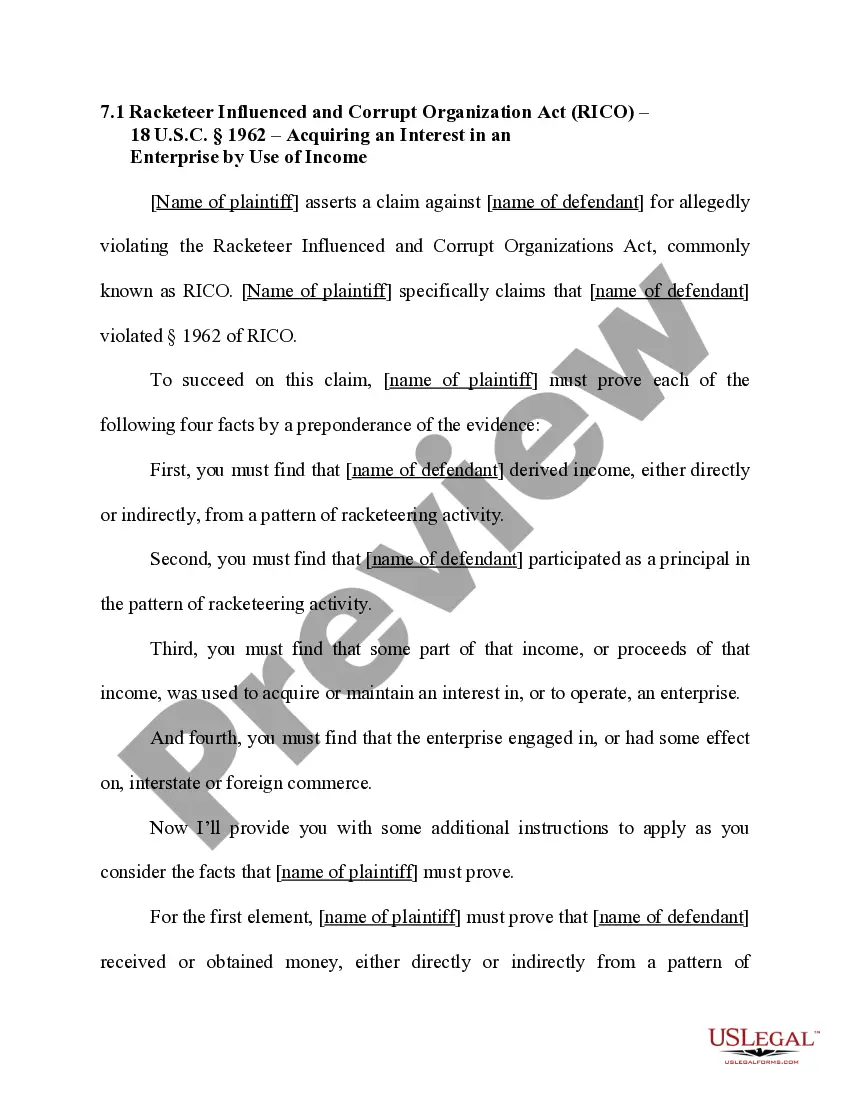
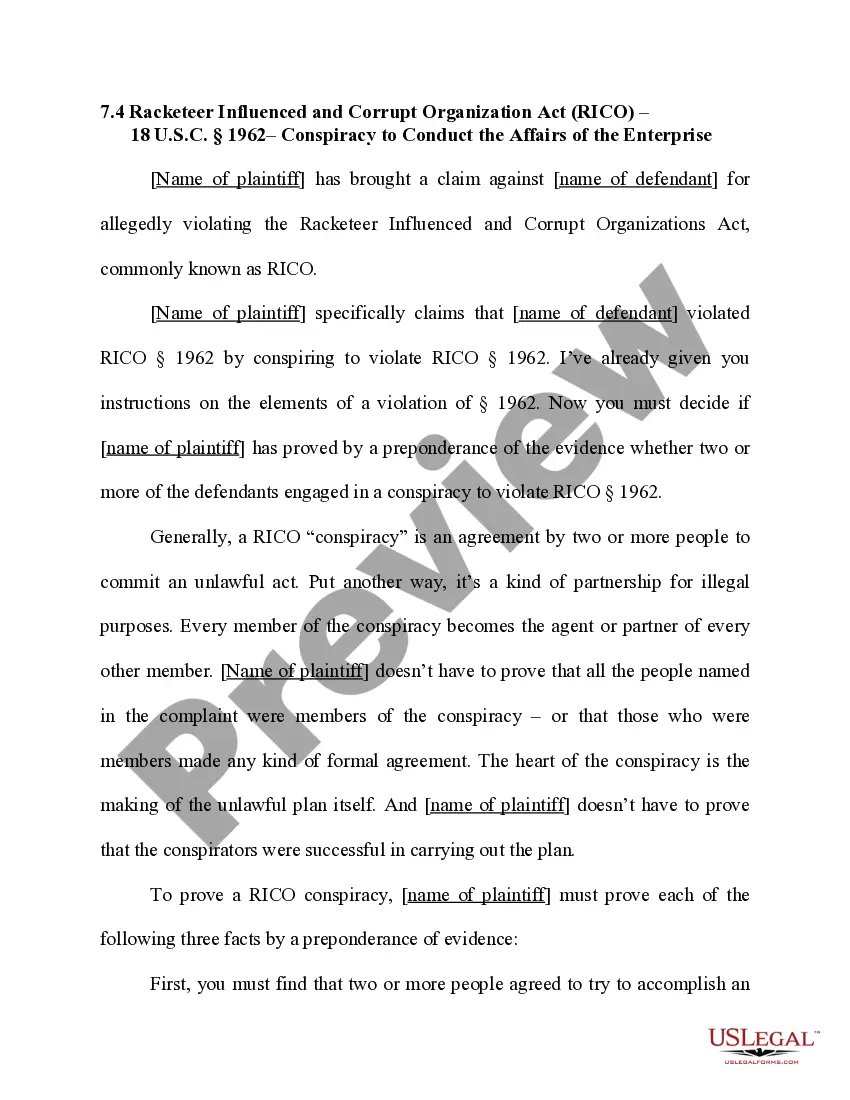
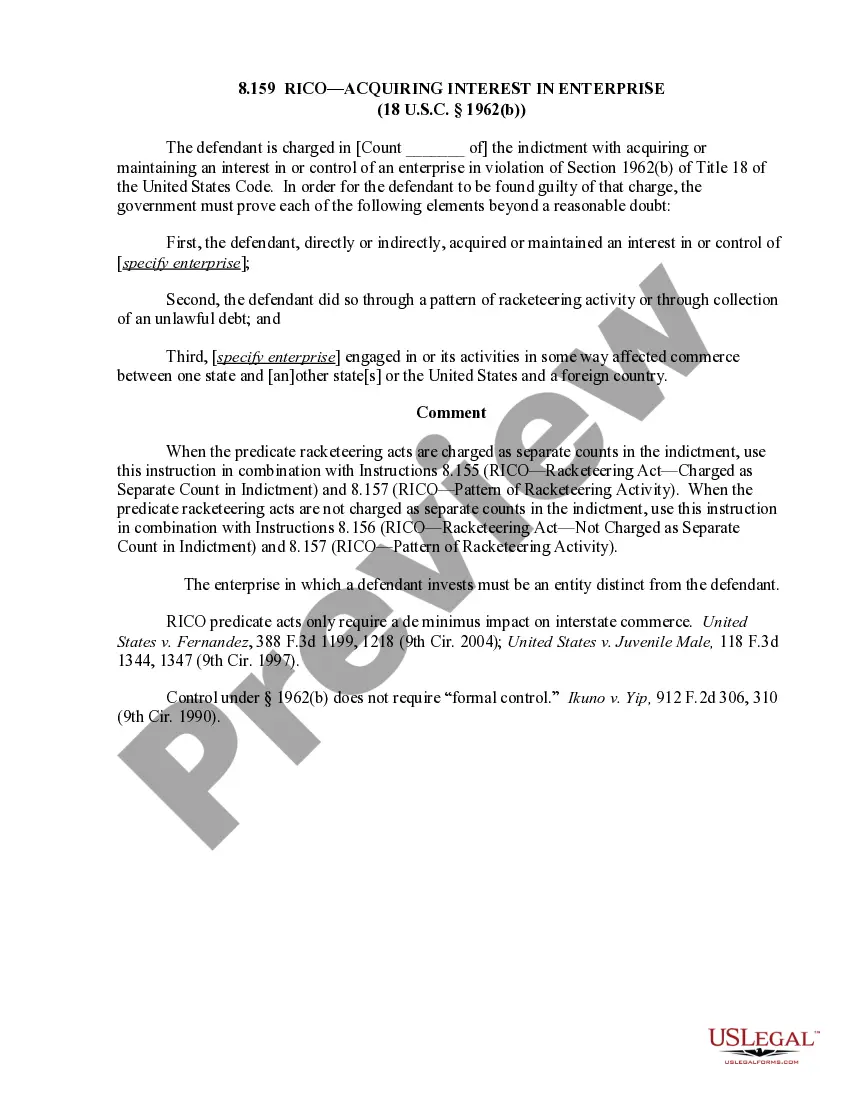
The Racketeer Influenced and Corrupt Organization Act (RICO) - 18 U.S.C. Sec. 1962(a) form is used to assert a claim against an individual or entity for acquiring an interest in an enterprise through income derived from racketeering activities. This legal framework aims to combat organized crime and corruption by holding individuals accountable for their involvement in illegal enterprises. Unlike other legal forms, this RICO form specifically addresses the intricate relationship between racketeering activities and the acquisition of enterprise interests, making it essential for cases involving organized crime.
Form components explained
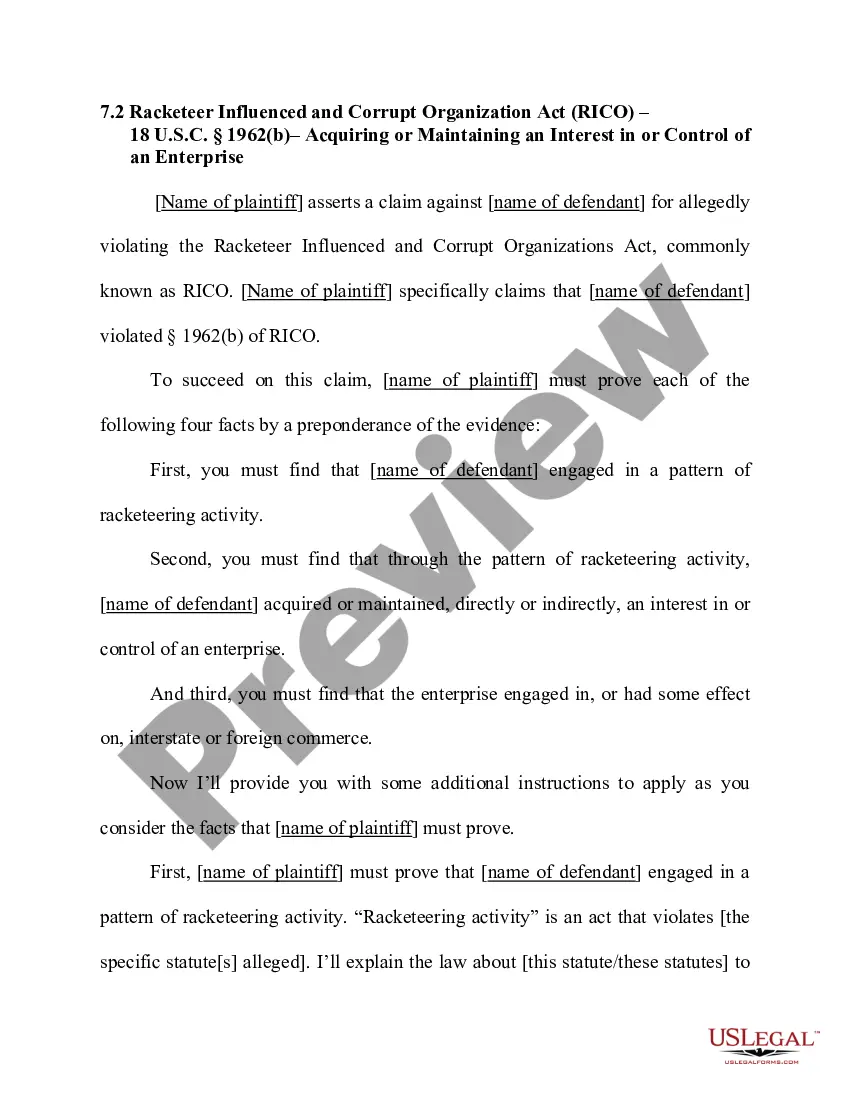
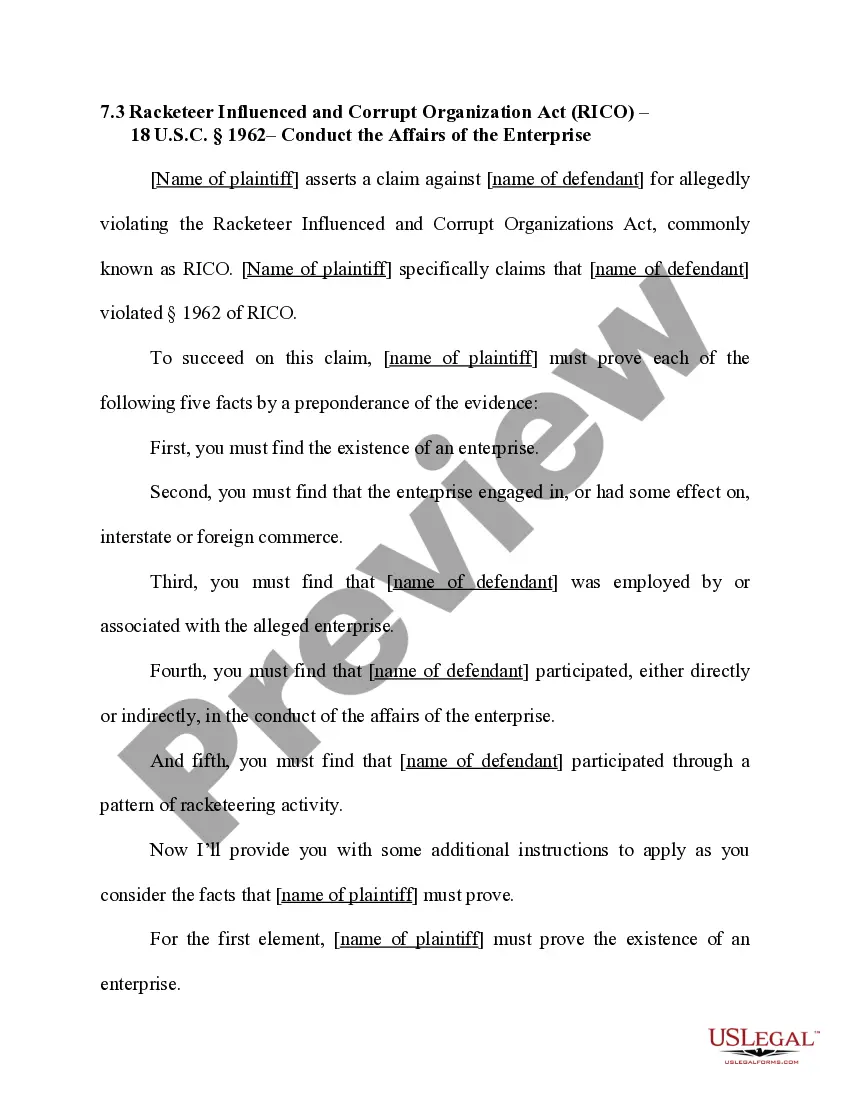
- Claim elements: Outlines the four essential facts the plaintiff must prove to establish a RICO violation.
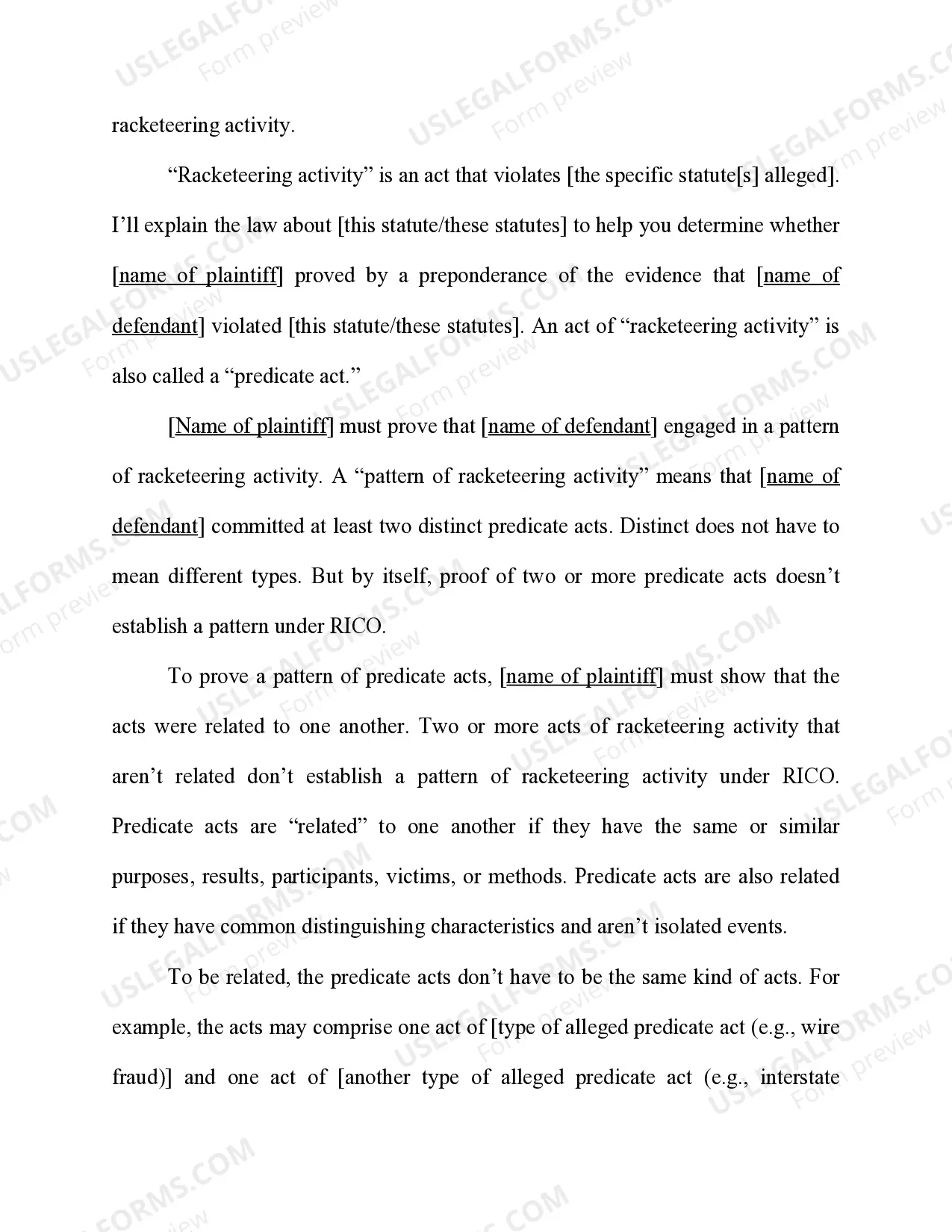
- Racketeering activity definition: Clarifies what constitutes racketeering acts under the relevant statutes.
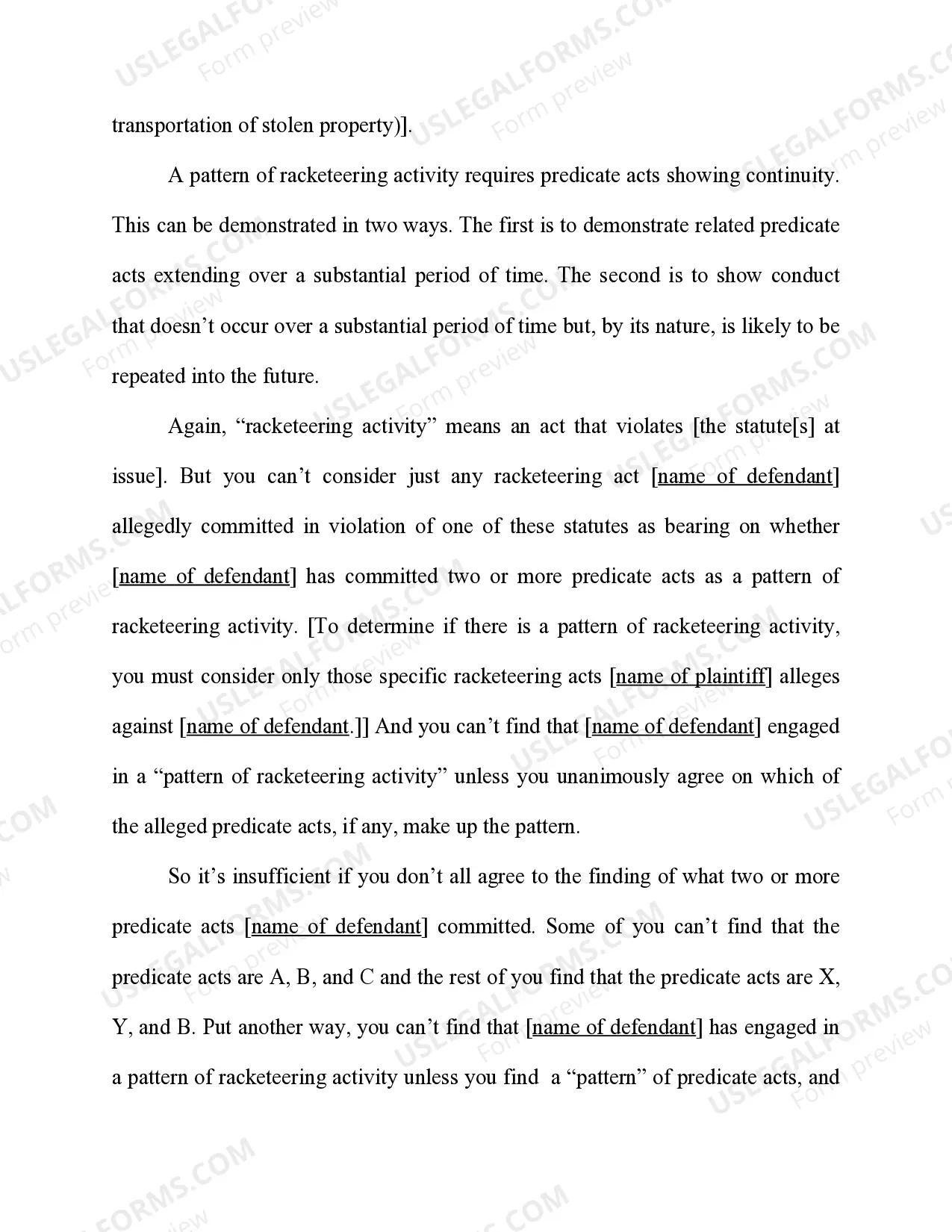
- Pattern of racketeering: Explains how to demonstrate a pattern through related predicate acts over time.
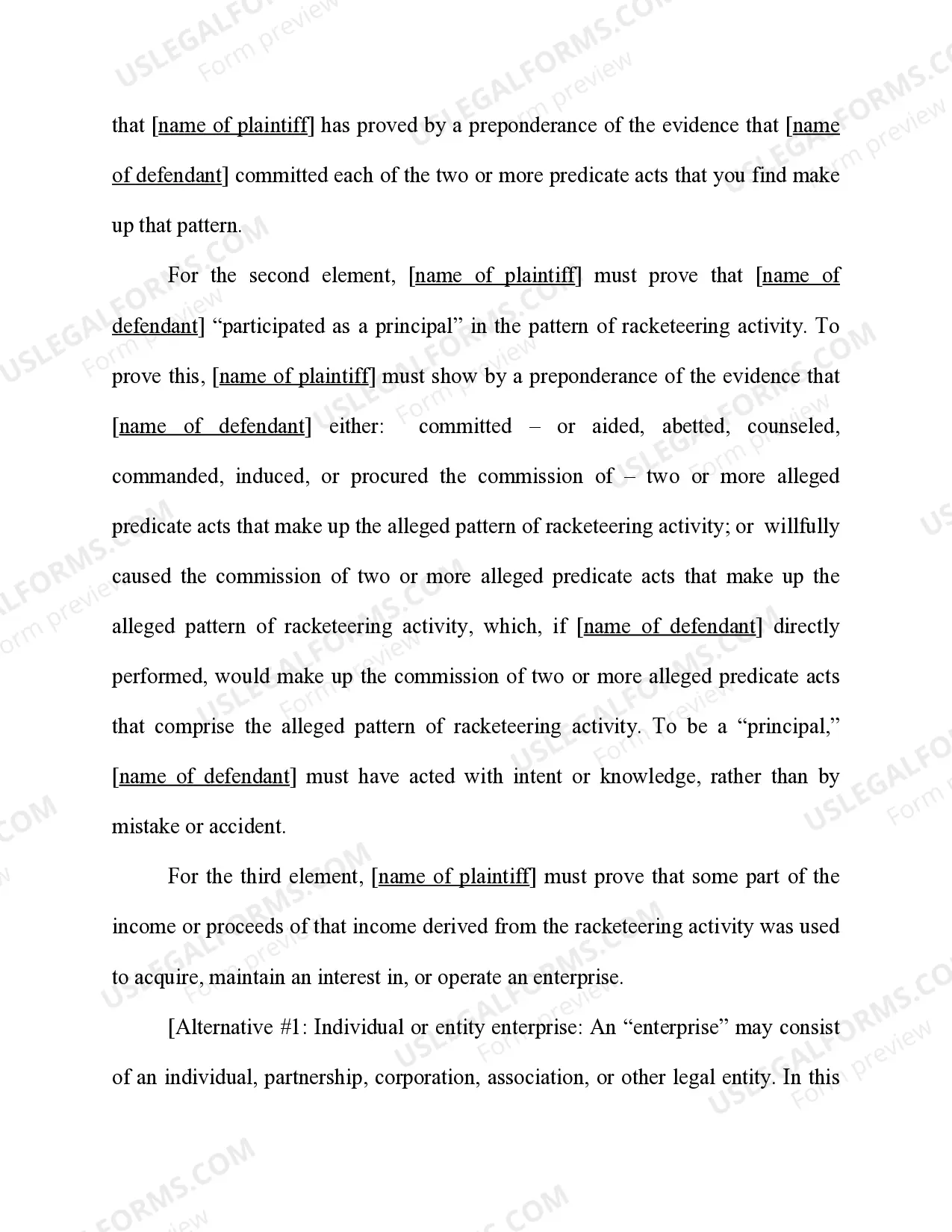
- Participation requirements: Details what it means for a defendant to participate as a principal in racketeering activities.
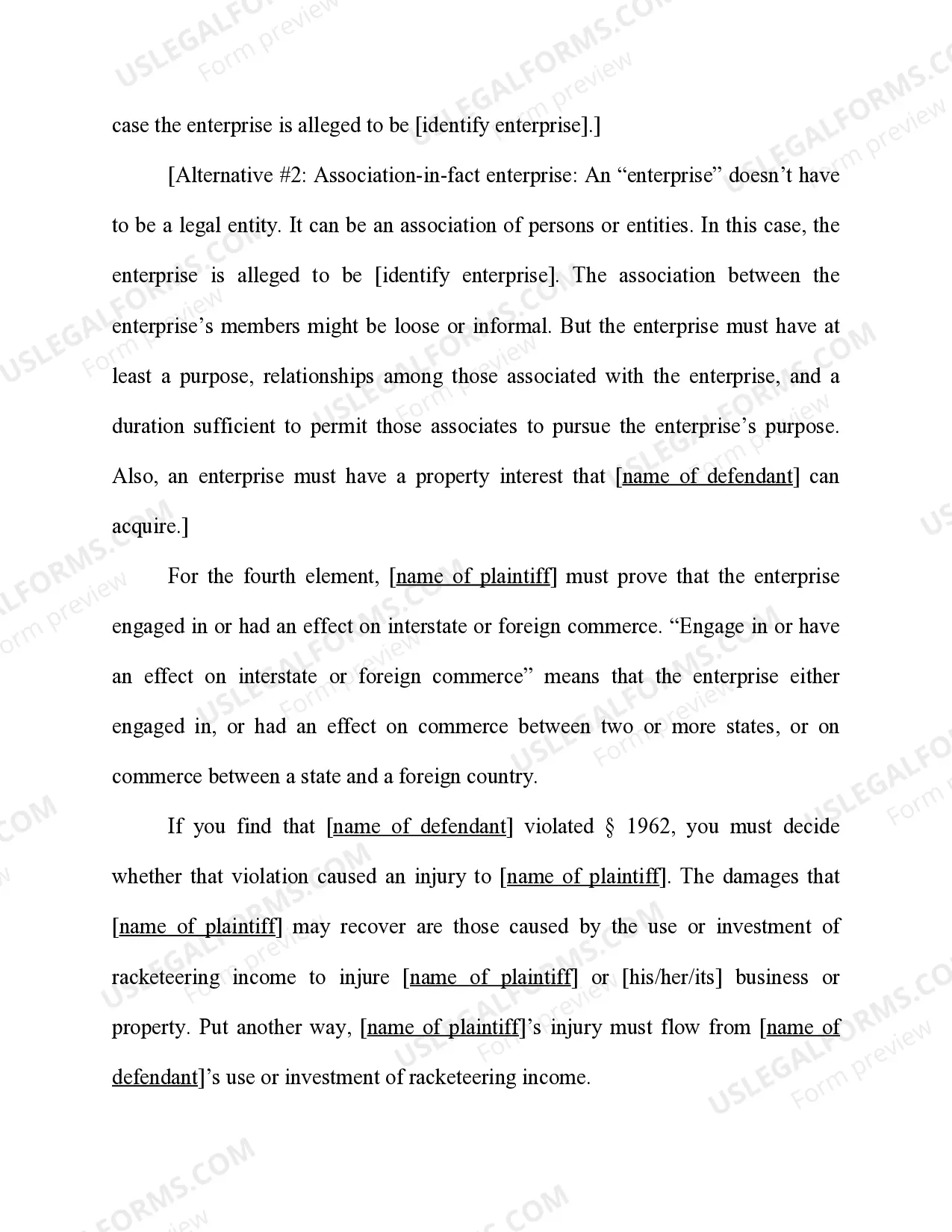
- Enterprise definitions: Describes the nature of the enterprise involved in the claims, including individual and association-in-fact enterprises.
- Commerce impact: Reviews the requirement for the enterprise to affect interstate or foreign commerce.
Common use cases
This form is applicable when an individual or business believes they have been harmed by another party's illegal activities that fall under the RICO statute. It is used in cases involving organized crime, fraud, or corruption where the plaintiff can demonstrate that the defendant derived income from racketeering activities and subsequently used that income to acquire or maintain an interest in an enterprise. Common scenarios include situations involving corruption in business dealings, fraud schemes, or other organized illegal conduct that affects more than one state or foreign commerce.
Who can use this document
Individuals or entities who may consider filing a RICO claim include:
- Business owners seeking restitution for losses caused by fraudulent practices.
- Individuals affected by organized crime and racketeering activities.
- Legal representatives acting on behalf of plaintiffs in RICO cases.
- Victims of scheme-based crimes that demonstrate a pattern of racketeering.
Completing this form step by step
- Identify the parties: Clearly state the names of the plaintiff and defendant involved in the case.
- Detail the racketeering activities: Specify the predicate acts that constitute the racketeering activities the defendant is alleged to have committed.
- Establish the pattern: Show how the alleged predicate acts are related and demonstrate a continuous pattern.
- Define the enterprise: Describe the nature of the enterprise that the defendant is accused of operating or maintaining.
- Connect to commerce: Explain how the enterprise affects interstate or foreign commerce as required by the statute.
Does this form need to be notarized?
Notarization is generally not required for this form. However, certain states or situations might demand it. You can complete notarization online through US Legal Forms, powered by Notarize, using a verified video call available anytime.
Get your form ready online
Our built-in tools help you complete, sign, share, and store your documents in one place.
Make edits, fill in missing information, and update formatting in US Legal Forms—just like you would in MS Word.
Download a copy, print it, send it by email, or mail it via USPS—whatever works best for your next step.
Sign and collect signatures with our SignNow integration. Send to multiple recipients, set reminders, and more. Go Premium to unlock E-Sign.
If this form requires notarization, complete it online through a secure video call—no need to meet a notary in person or wait for an appointment.
We protect your documents and personal data by following strict security and privacy standards.

Make edits, fill in missing information, and update formatting in US Legal Forms—just like you would in MS Word.

Download a copy, print it, send it by email, or mail it via USPS—whatever works best for your next step.

Sign and collect signatures with our SignNow integration. Send to multiple recipients, set reminders, and more. Go Premium to unlock E-Sign.

If this form requires notarization, complete it online through a secure video call—no need to meet a notary in person or wait for an appointment.

We protect your documents and personal data by following strict security and privacy standards.
Common mistakes
- Failing to prove the required elements of a RICO violation, particularly the pattern of racketeering.
- Using vague descriptions of predicate acts or failing to establish their relation to one another.
- Neglecting to define the enterprise clearly or failing to explain its impact on commerce properly.
Why use this form online
- Convenience: Easily access and complete the form from anywhere.
- Editability: Modify the form as needed before final submission.
- Confidence: Ensure that the form is drafted in accordance with legal standards by using templates prepared by licensed attorneys.
Looking for another form?


Form popularity
FAQ
Is it possible to beat charges for RICO violations? RICO charges are serious federal crimes accompanied by serious consequences. To avoid a conviction for racketeering and a lengthy stay in a federal prison, you need to hire the right attorney. Beating a RICO charge is tough, but it isn't impossible.
Modern racketeering crimes include credit card frauds, data theft, and cybercrimes. They belong to the category of white-collar crimes.
Criminal RICO To violate RICO, a person must engage in a pattern of racketeering activity connected to an enterprise. The law defines 35 offenses as constituting racketeering, including gambling, murder, kidnapping, arson, drug dealing, bribery. Significantly, mail and wire fraud are included on the list.
Penalties Under the RICO Act A person convicted can face a fine of either $250,000 or double the amount of proceeds earned from illicit activity. The prison time can increase to up to a life sentence depending on the underlying crime that was committed.
The Racketeer Influenced and Corrupt Organizations Act (RICO) of 1970 seeks to strengthen the legal tools in evidence gathering by establishing new penal prohibitions and providing enhanced sanctions and new remedies for dealing with the unlawful activities of those engaged in organized crime.
Popular Examples of RICO Cases in the United States Mail and wire fraud, tax evasion, money laundering, honest services fraud. The more crimes an organization commits, the higher their penalties.
It shall be unlawful for any person through a pattern of racketeering activity or through collection of an unlawful debt to acquire or maintain, directly or indirectly, any interest in or control of any enterprise which is engaged in, or the activities of which affect, interstate or foreign commerce.
The mandatory minimum sentence for someone who is convicted under the CCE statute is at least 20 years in federal prison along with a maximum fine of up to $2 million. The defendant must also forfeit all assets gained in commission of the crimes and relinquish all ties to the criminal enterprise.