Racketeer Influenced and Corrupt Organization Act (RICO) - 18 U.S.C. Sec. 1962(b)- Acquiring or Maintaining an Interest in or Control of an Enterprise
What this document covers
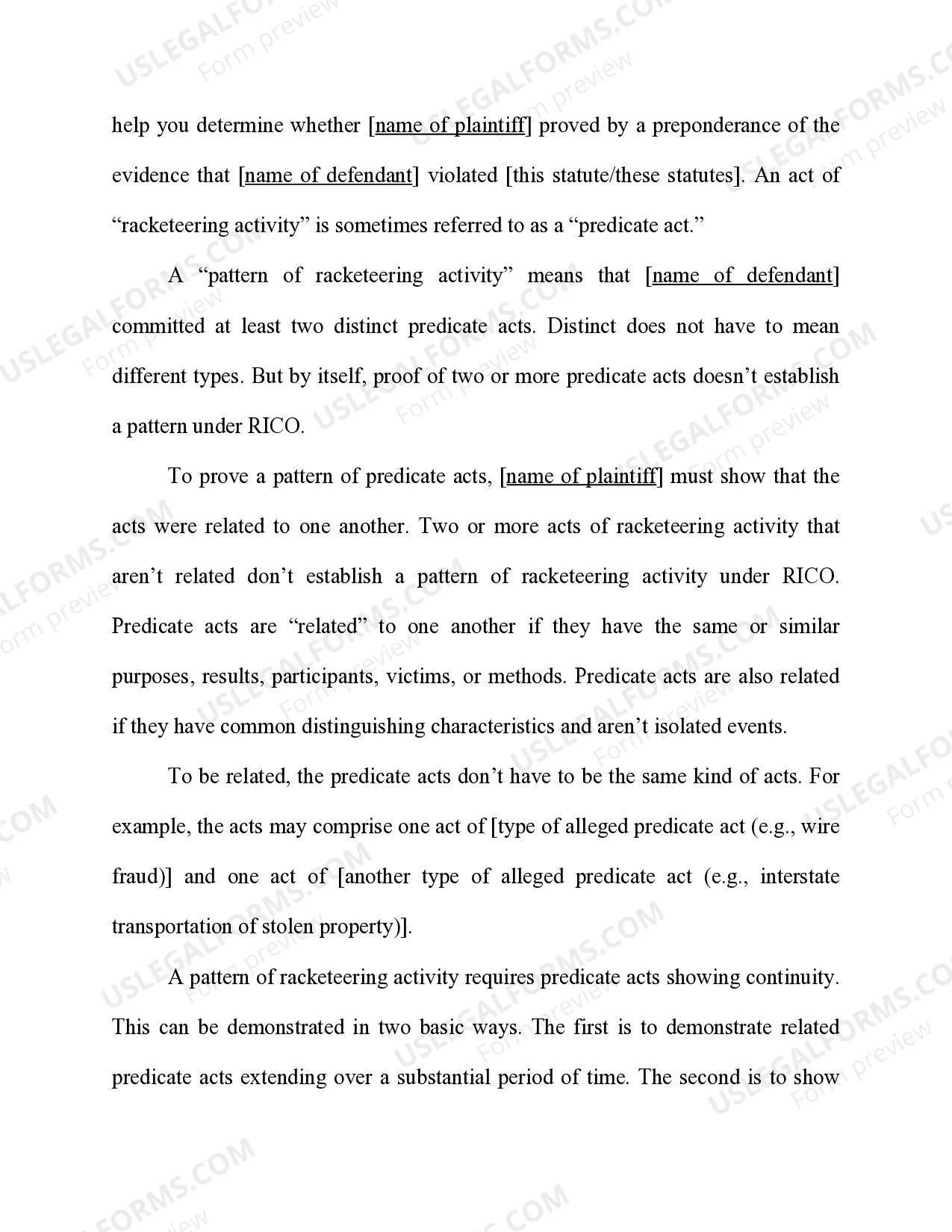
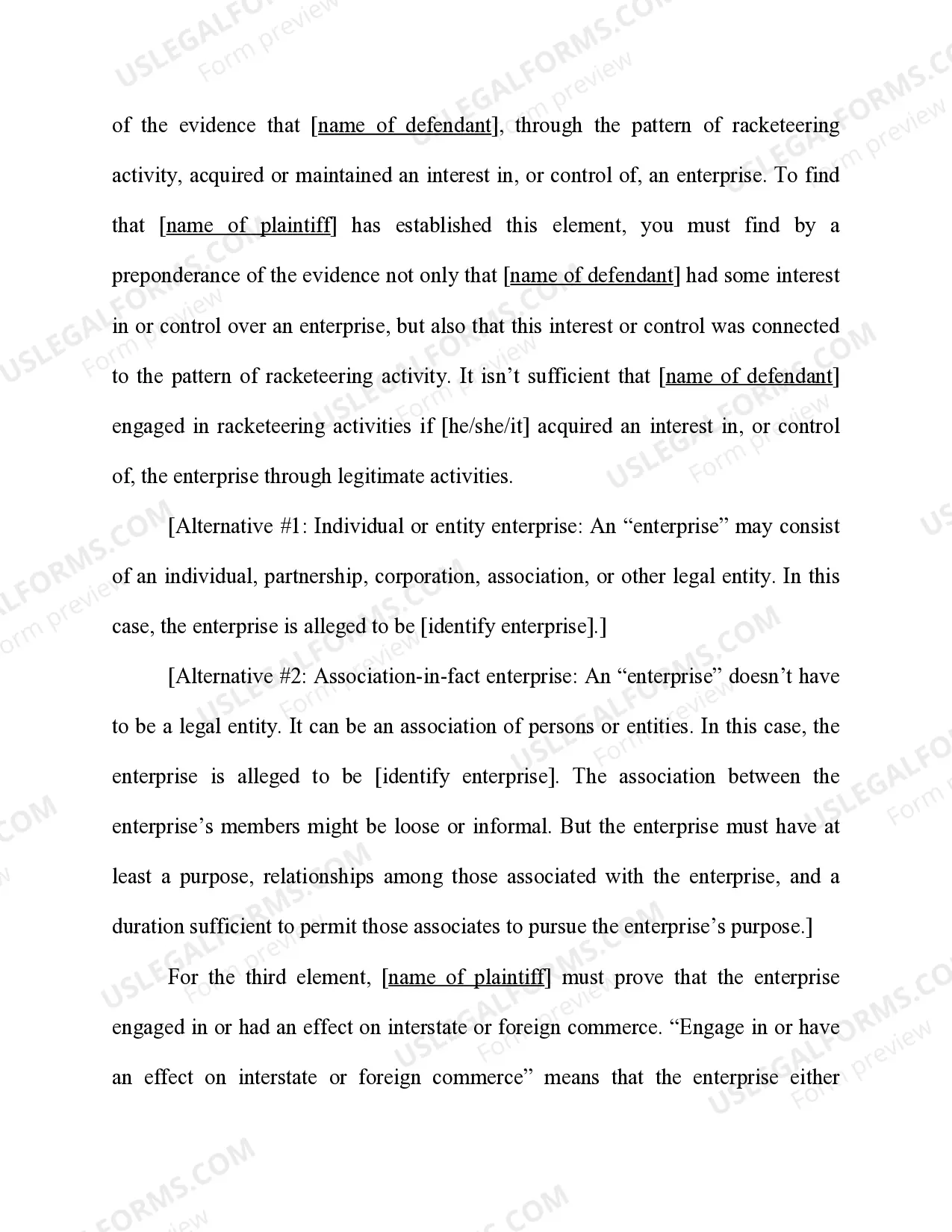
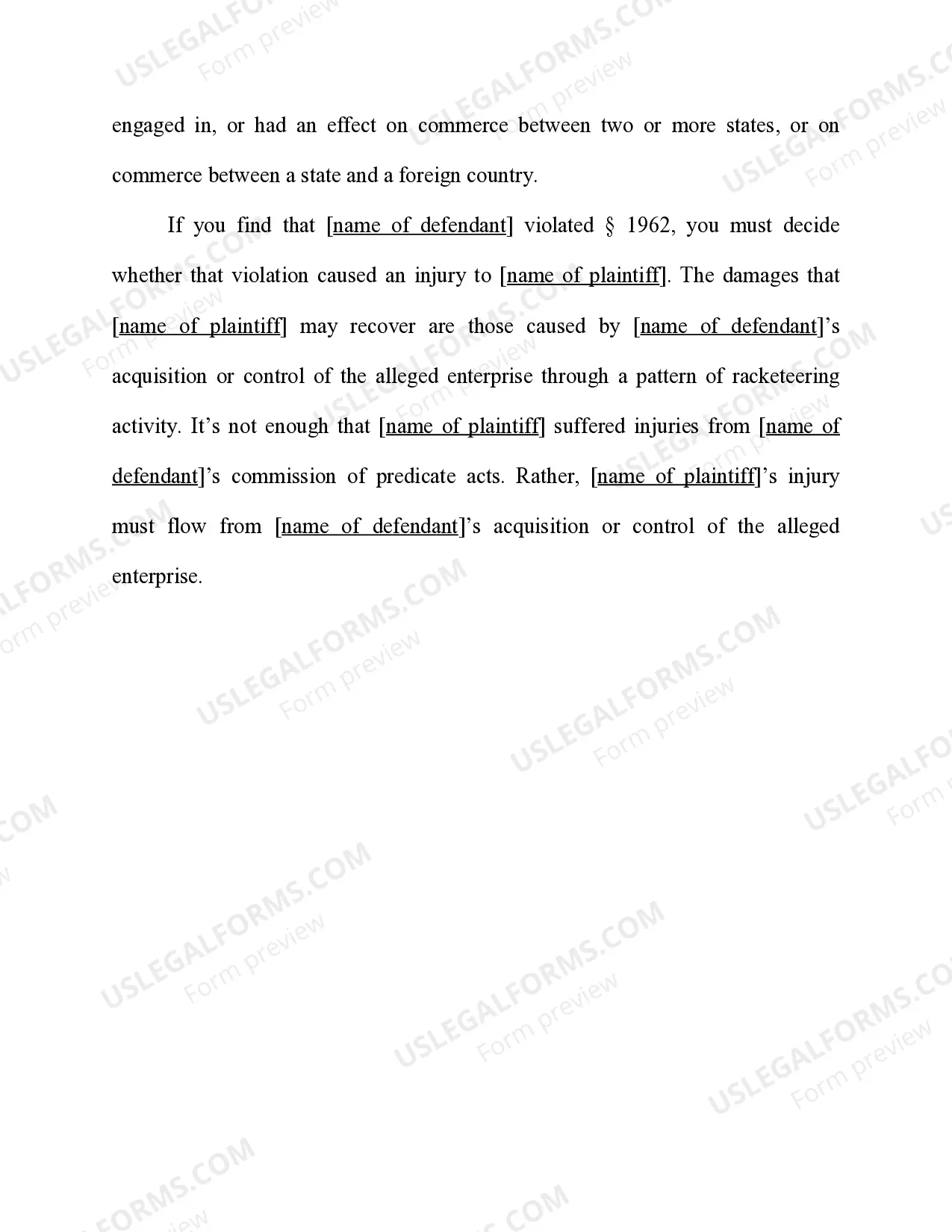
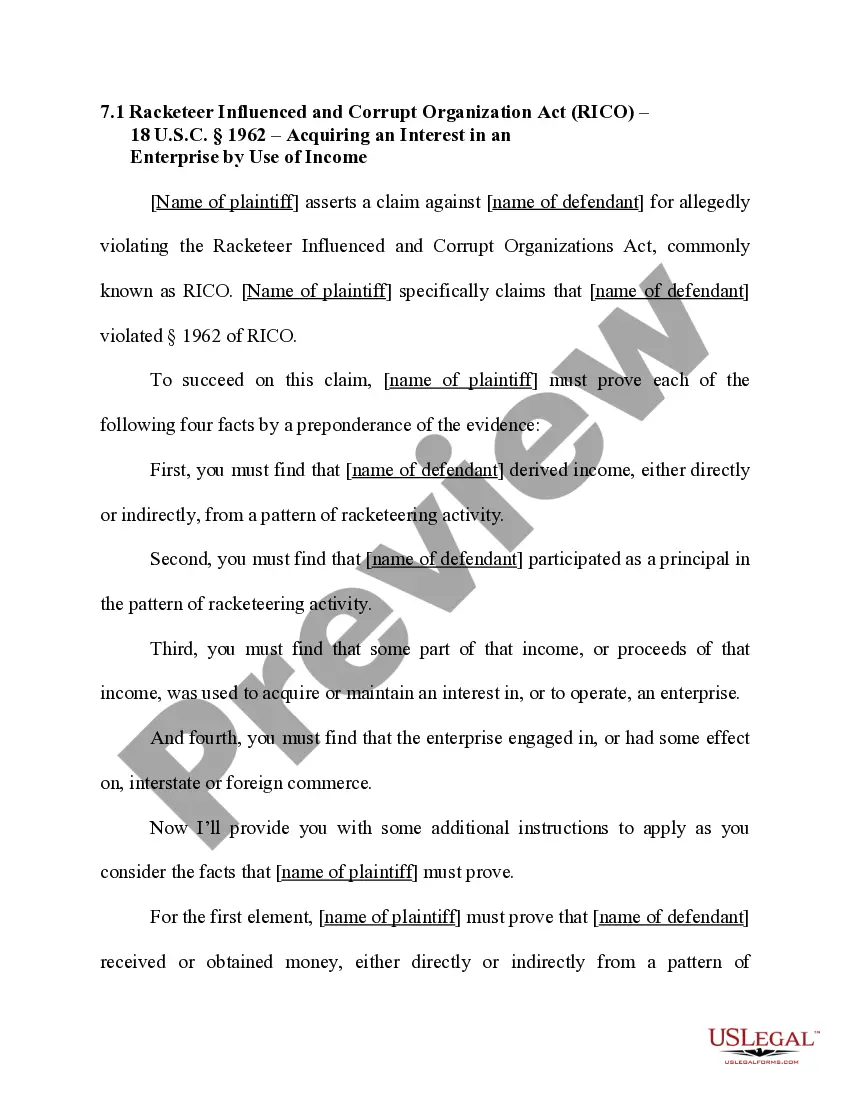
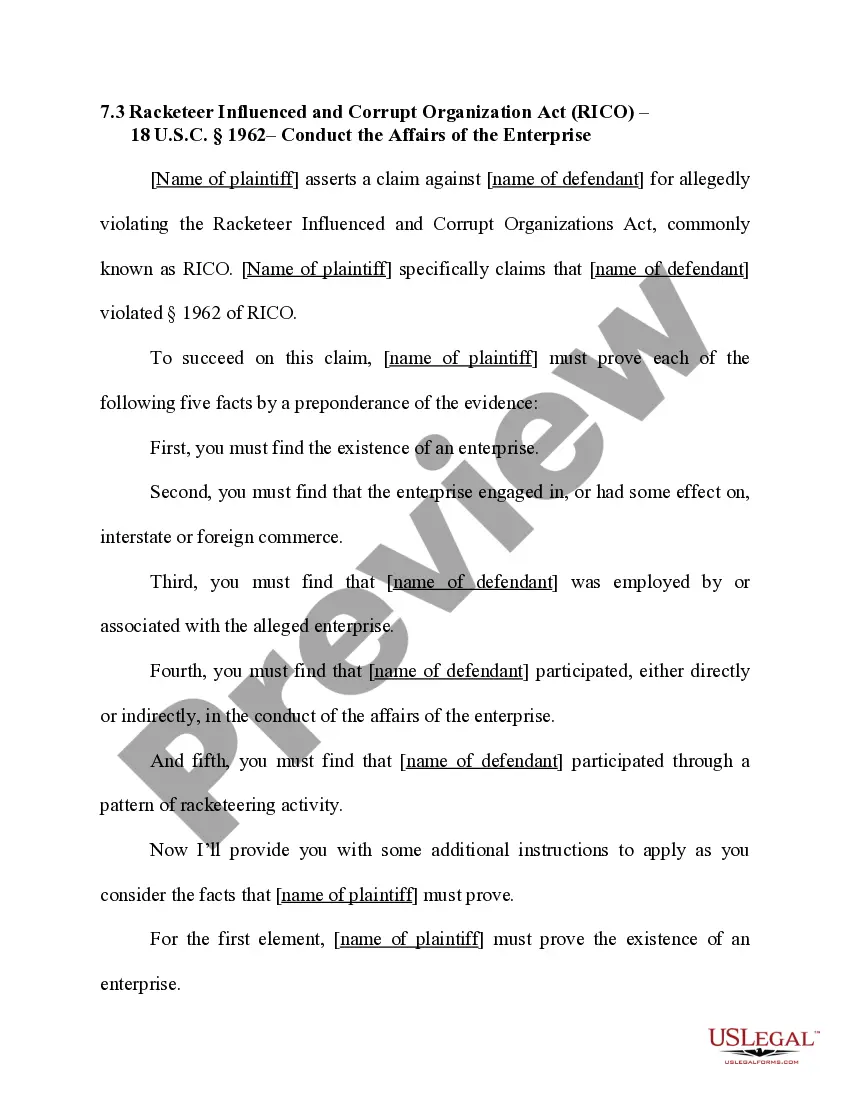
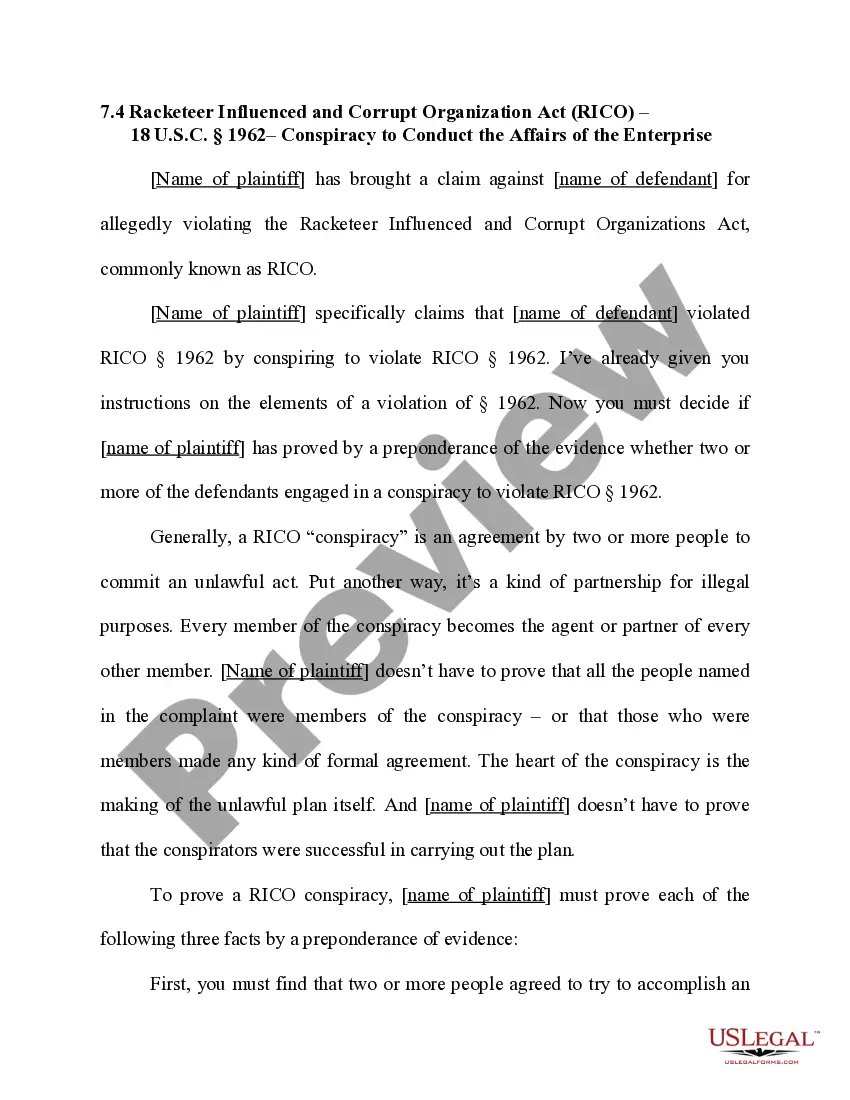
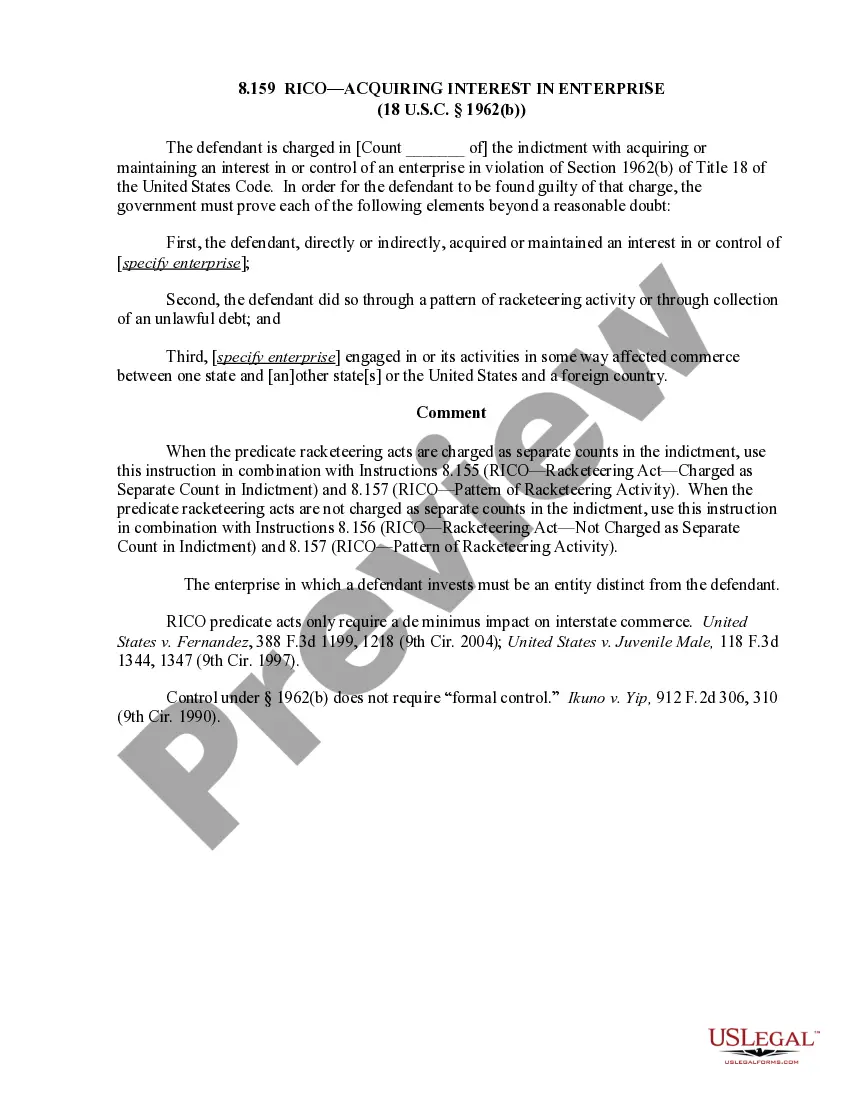
The Racketeer Influenced and Corrupt Organization Act (RICO) form is a legal document used to assert claims against individuals or entities involved in organized criminal activities. This form specifically pertains to 18 U.S.C. Sec. 1962(b), which focuses on acquiring or maintaining an interest in or control of an enterprise through a pattern of racketeering activity. It is essential for plaintiffs who seek to prove that the defendant has engaged in illegal practices affecting commerce and has caused injuries related to those actions. Unlike general civil claims, RICO claims carry specific legal requirements that must be demonstrated to succeed.
Key parts of this document
- Claim details: Information about the plaintiff and defendant.
- Definition of racketeering activity: Detailed explanation of what constitutes racketeering under the law.
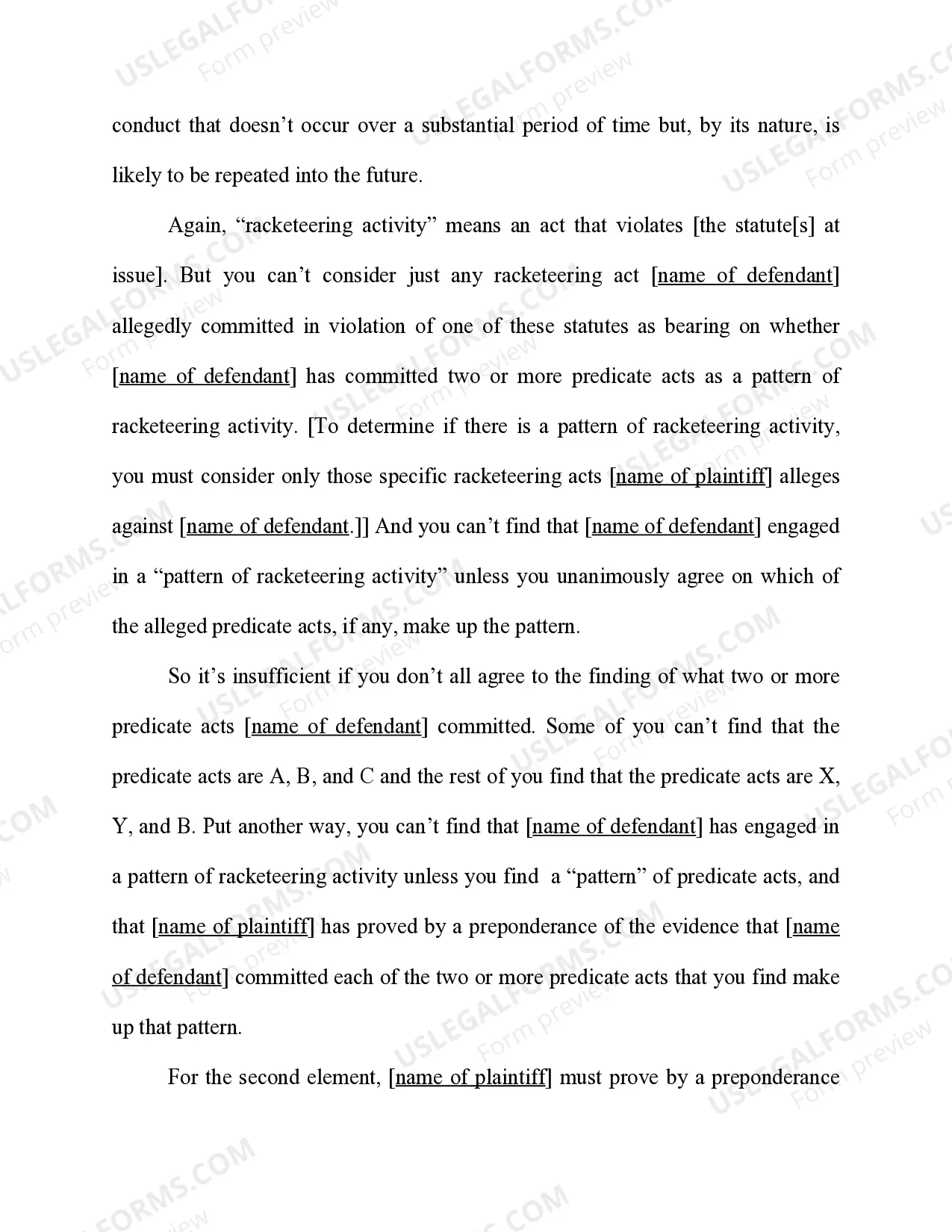
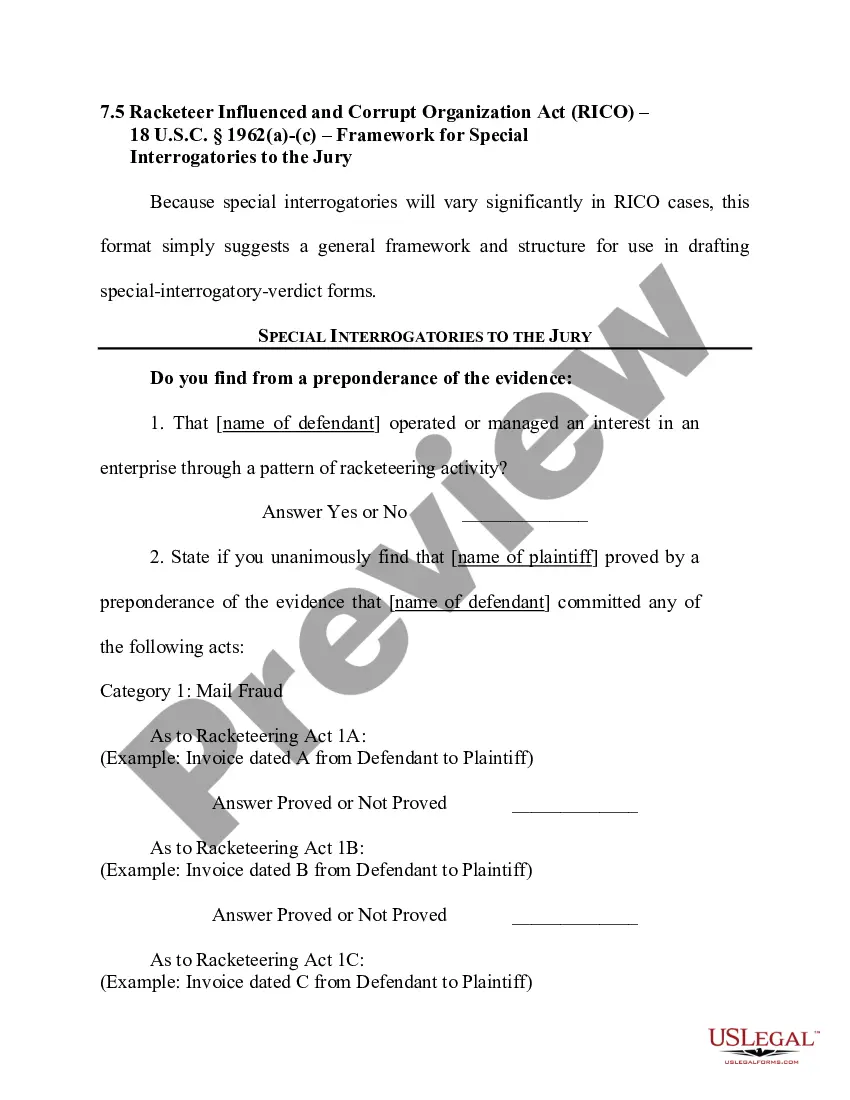
- Pattern of racketeering: Requirement for proving at least two related predicate acts.
- Enterprise connection: Demonstration of how the racketeering activity is tied to an enterprise.
- Impact on commerce: Evidence showing the enterpriseâs effect on interstate or foreign commerce.
- Injury causation: Proof that the plaintiff's injuries are a direct result of the defendantâs actions.
When this form is needed
This form should be used when a plaintiff believes that a defendant has violated the RICO statute by engaging in illicit activities that affect their business or personal interests. It is appropriate in cases involving complex organized crime, fraud schemes, or when illegal activities are conducted through legitimate enterprises. If a plaintiff has suffered damages as a result of these activities, this form is critical to assert their claims effectively in court.
Who can use this document
The following individuals or entities should consider using this form:
- Individuals who believe they have sustained damages due to racketeering activities.
- Businesses affected by the illegal practices of competitors or associates.
- Attorneys representing clients in cases involving organized crime or complex fraud.
- Organizations seeking to hold individuals or groups accountable for RICO violations.
Steps to complete this form
- Identify the parties involved, including the plaintiff and defendant.
- Detail the specific allegations of racketeering activity.
- Provide evidence of a pattern of racketeering, including the predicate acts.
- Illustrate the connection between the defendantâs actions and the enterprise.
- Document any injuries sustained and how they relate to the defendant's enterprise activities.
Is notarization required?
This form does not typically require notarization to be legally valid. However, some jurisdictions or document types may still require it. US Legal Forms provides secure online notarization powered by Notarize, available 24/7 for added convenience.
Get your form ready online
Our built-in tools help you complete, sign, share, and store your documents in one place.
Make edits, fill in missing information, and update formatting in US Legal Forms—just like you would in MS Word.
Download a copy, print it, send it by email, or mail it via USPS—whatever works best for your next step.
Sign and collect signatures with our SignNow integration. Send to multiple recipients, set reminders, and more. Go Premium to unlock E-Sign.
If this form requires notarization, complete it online through a secure video call—no need to meet a notary in person or wait for an appointment.
We protect your documents and personal data by following strict security and privacy standards.

Make edits, fill in missing information, and update formatting in US Legal Forms—just like you would in MS Word.

Download a copy, print it, send it by email, or mail it via USPS—whatever works best for your next step.

Sign and collect signatures with our SignNow integration. Send to multiple recipients, set reminders, and more. Go Premium to unlock E-Sign.

If this form requires notarization, complete it online through a secure video call—no need to meet a notary in person or wait for an appointment.

We protect your documents and personal data by following strict security and privacy standards.
Typical mistakes to avoid
- Failing to demonstrate the connection between racketeering activities and the enterprise.
- Not providing sufficient evidence for the pattern of racketeering.
- Confusing predicate acts that are unrelated to one another.
- Overlooking the requirement of proving damages directly caused by the racketeering.
Why complete this form online
- Convenient access to legal templates without needing in-person visits.
- Editable forms that can be tailored to specific case details.
- Immediate availability of structured legal documentation.
- Reliability stemming from forms drafted by licensed attorneys.
Legal use & context
- This form is used to initiate legal action under the RICO statute, which has strict requirements.
- Claims under RICO are more complex than standard fraud cases and often involve extensive evidence.
- The statute serves to combat organized crime and can entail severe penalties for violations.
Key takeaways
- The RICO Act addresses issues of organized crime through civil litigation.
- Demonstrating a pattern of racketeering is crucial for a successful claim.
- Injuries must be clearly linked to the defendant's enterprise activities.
- Consulting legal advice can help navigate the complexities involved in RICO claims.
Looking for another form?




Form popularity
FAQ
The Racketeer Influenced and Corrupt Organizations Act (RICO) of 1970 seeks to strengthen the legal tools in evidence gathering by establishing new penal prohibitions and providing enhanced sanctions and new remedies for dealing with the unlawful activities of those engaged in organized crime.
Racketeering is a federal crime, typically categorized as a white-collar crime, that involves the use of an illegal enterprise to commit fraud or other crimes.
Penalties Under the RICO Act Not only does the RICO statute provide for criminal penalties including 20 years of prison, but the financial penalties are severe. A person convicted can face a fine of either $250,000 or double the amount of proceeds earned from illicit activity.
9-110.100 - Racketeer Influenced and Corrupt Organizations (RICO) On October 15, 1970, the Organized Crime Control Act of 1970 became law. Title IX of the Act is the Racketeer Influenced and Corrupt Organizations Statute (18 U.S.C. §§ 1961-1968), commonly referred to as the "RICO" statute.
(b) It shall be unlawful for any person through a pattern of racketeering activity or through collection of an unlawful debt to acquire or maintain, directly or indirectly, any interest in or control of any enterprise which is engaged in, or the activities of which affect, interstate or foreign commerce.
? (1) ''racketeering activity'' means (A) any act or threat. involving murder, kidnapping, gambling, arson, robbery, bribery, extortion, dealing in obscene matter, or dealing in a controlled. substance or listed chemical (as defined in section 102 of the. Controlled Substances Act), which is chargeable under State law.
RICO is a federal statute short for the Racketeering Influenced and Corrupt Organizations. It's part of the Organized Crime Control Act of 1970. Before RICO, only the individual members of crime organizations who committed illegal could be arrested, indicted, and convicted.
It shall be unlawful for any person through a pattern of racketeering activity or through collection of an unlawful debt to acquire or maintain, directly or indirectly, any interest in or control of any enterprise which is engaged in, or the activities of which affect, interstate or foreign commerce.