New York Petition for a Compulsory Accounting and Related Relief
About this form
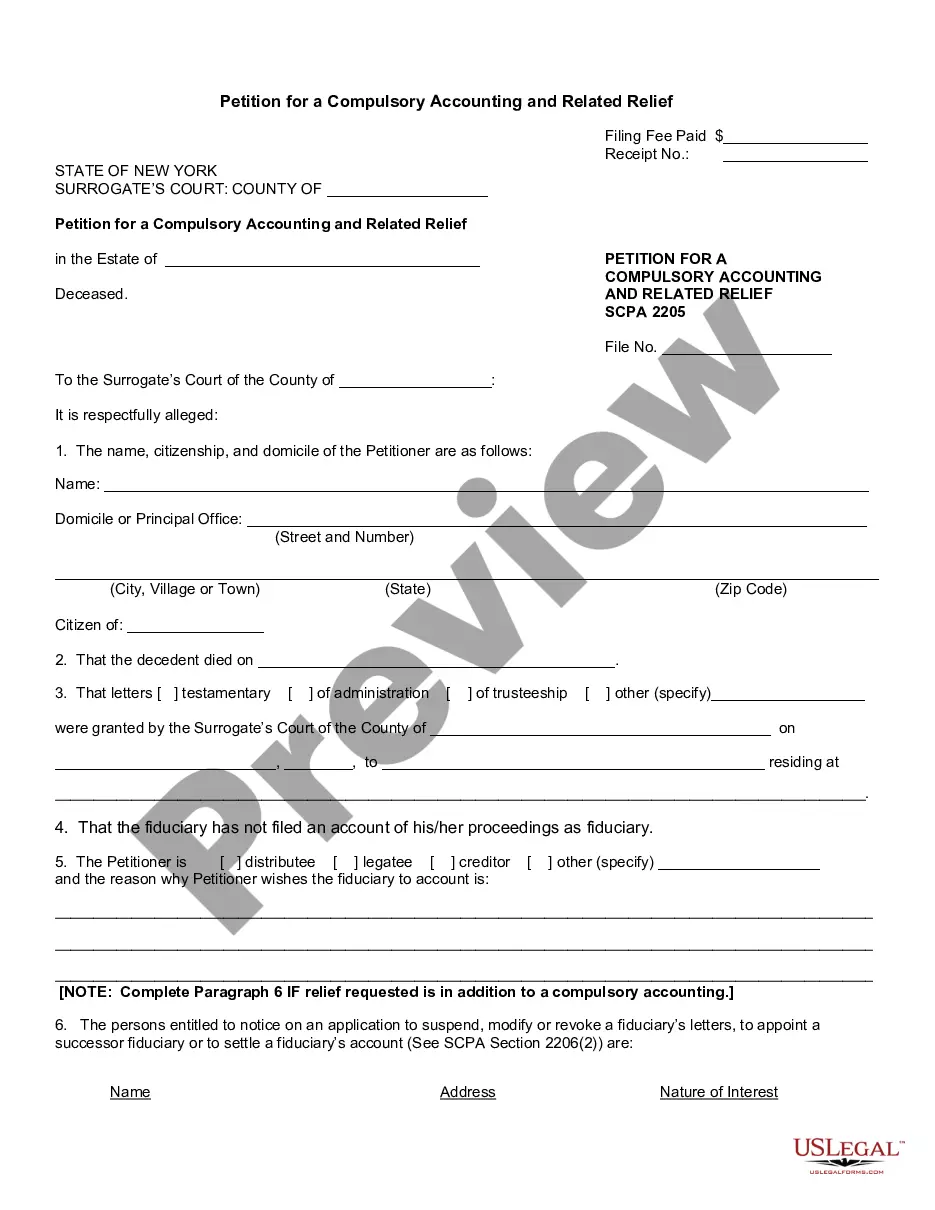
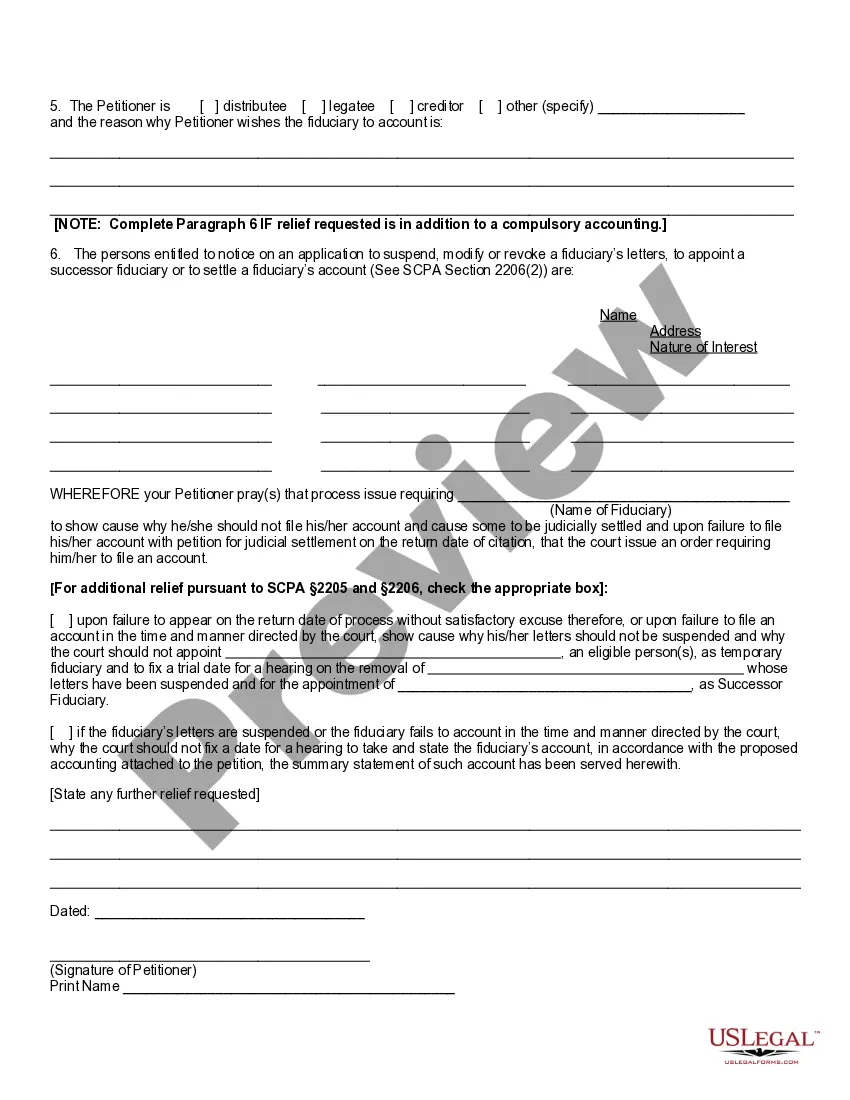
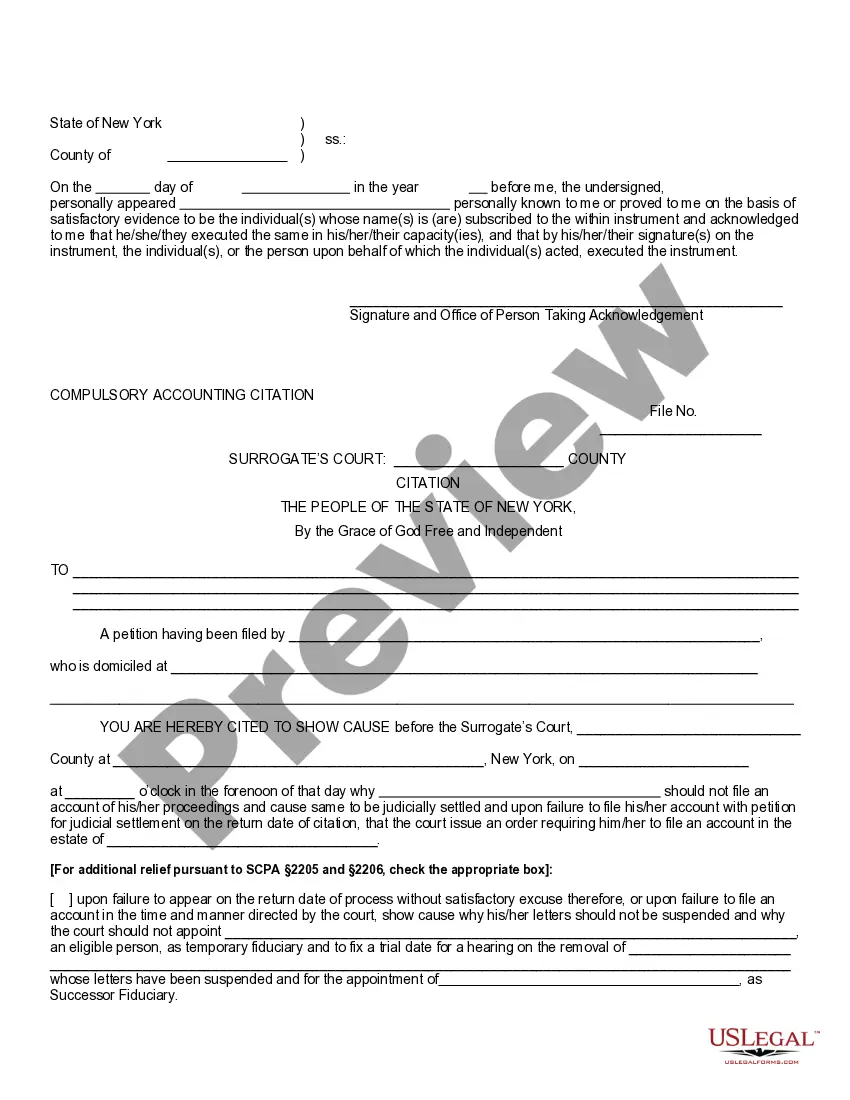
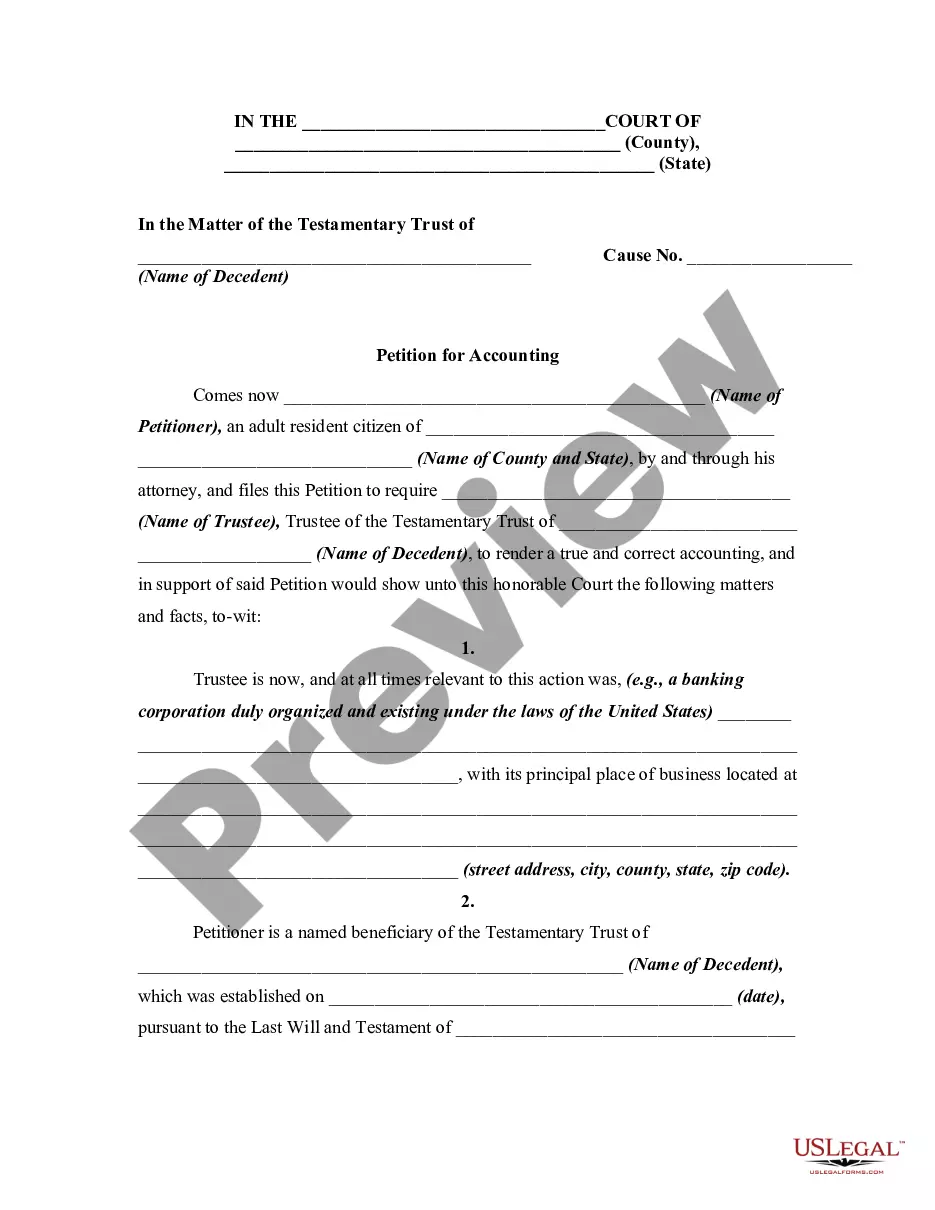
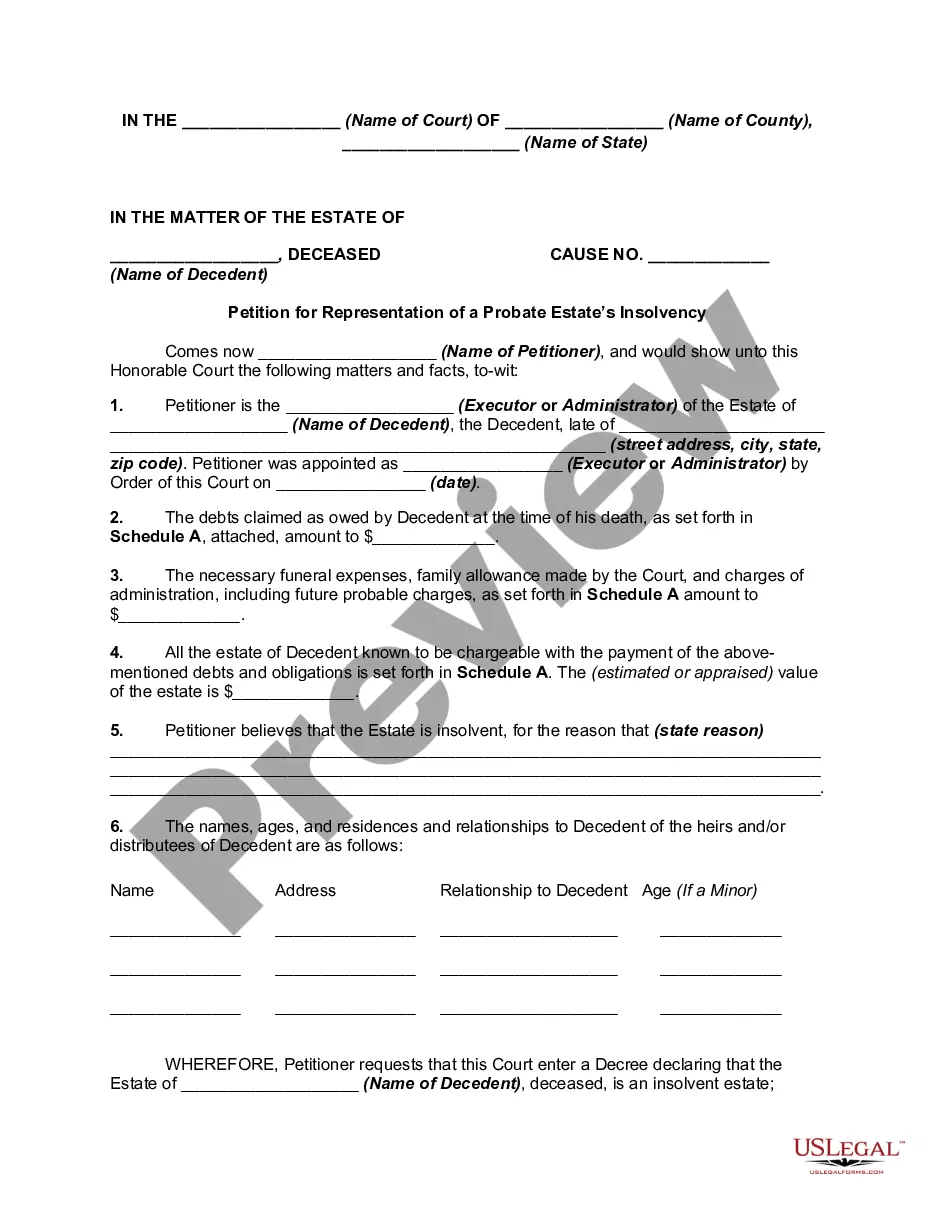
The Petition for a Compulsory Accounting and Related Relief is a legal document that allows beneficiaries to request the court to mandate a personal representative of a decedent's estate to file an accounting of their actions or take other necessary steps to close probate. This form is used when a personal representative fails to provide the required accounting, ensuring transparent management of the estate during probate proceedings.
Main sections of this form
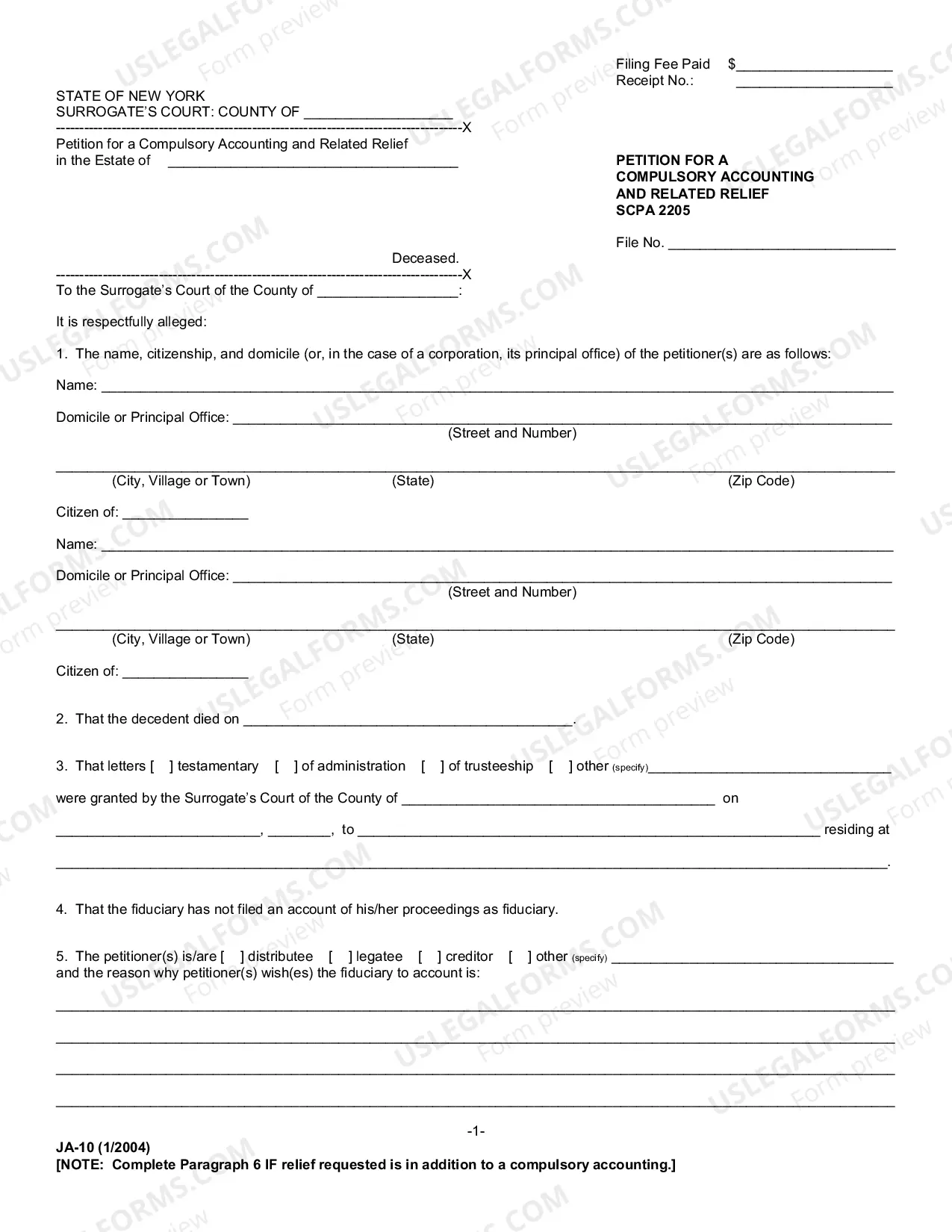
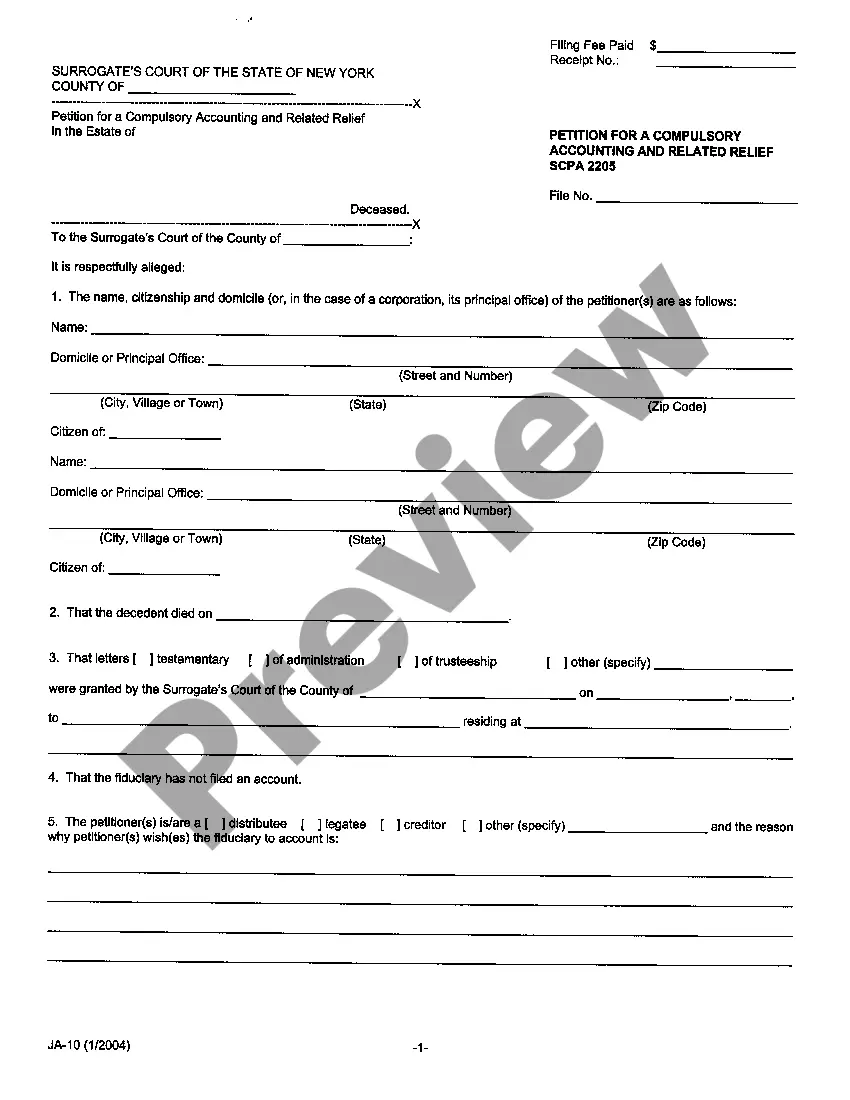
- Petitioner's details: Name, domicile, and citizenship of the person filing the petition.
- Decedent's information: Includes the date of death and details on the granted letters (testamentary, administration, etc.).
- Fiduciary's actions: Statements indicating whether the personal representative has failed to file an account.
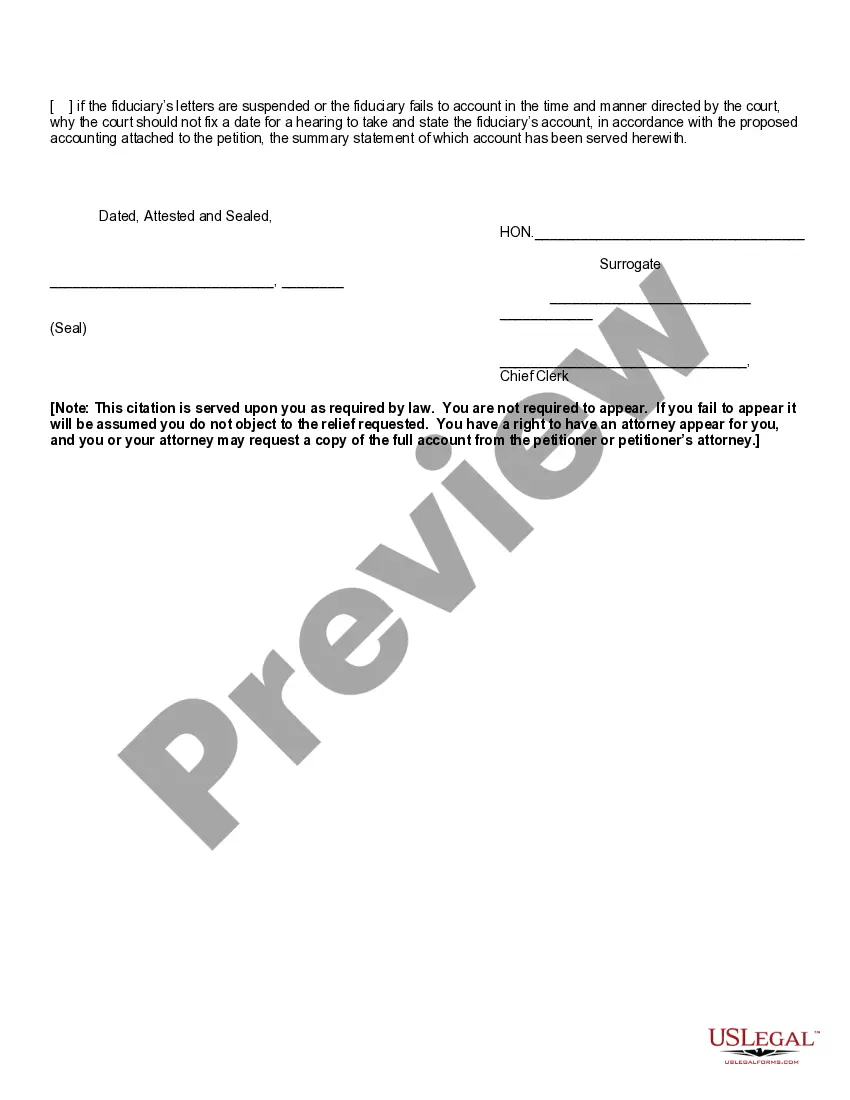
- Request for relief: Specific actions requested from the court regarding the fiduciaryâs accounting.
- Notice of interested parties: Identification of those entitled to notice regarding the petition.
Situations where this form applies
This form is necessary when beneficiaries of a decedent's estate suspect that the personal representative is not fulfilling their obligations, such as failing to file an accounting or manage estate assets properly. It may be used when there is a need to request the court to compel the fiduciary to account for their management of the estate, or when seeking to potentially replace the fiduciary with a successor.
Who this form is for
- Beneficiaries of a decedent's estate who wish to ensure proper management of the estate.
- Individuals who have a legal interest, such as distributees or creditors, who seek transparency in the probate process.
- Any party interested in contesting or challenging the actions of a personal representative in a probate case.
Instructions for completing this form
- Provide the petitioner's full name, address, and citizenship information.
- Fill in the details of the decedent, including the date of death and the type of letters issued.
- State the reasons the petitioner is requesting the fiduciary to account for their actions.
- Identify all parties entitled to notice regarding the application.
- Complete any additional requests for relief that may be pertinent to the case.
Is notarization required?
This form must be notarized to be legally valid. US Legal Forms provides an integrated online notarization service that is available 24/7 via secure video call, ensuring that you can complete your paperwork without the need for physical travel.
Get your form ready online
Our built-in tools help you complete, sign, share, and store your documents in one place.
Make edits, fill in missing information, and update formatting in US Legal Forms—just like you would in MS Word.
Download a copy, print it, send it by email, or mail it via USPS—whatever works best for your next step.
Sign and collect signatures with our SignNow integration. Send to multiple recipients, set reminders, and more. Go Premium to unlock E-Sign.
If this form requires notarization, complete it online through a secure video call—no need to meet a notary in person or wait for an appointment.
We protect your documents and personal data by following strict security and privacy standards.

Make edits, fill in missing information, and update formatting in US Legal Forms—just like you would in MS Word.

Download a copy, print it, send it by email, or mail it via USPS—whatever works best for your next step.

Sign and collect signatures with our SignNow integration. Send to multiple recipients, set reminders, and more. Go Premium to unlock E-Sign.

If this form requires notarization, complete it online through a secure video call—no need to meet a notary in person or wait for an appointment.

We protect your documents and personal data by following strict security and privacy standards.
Mistakes to watch out for
- Failing to provide complete information about the decedent and fiduciary.
- Omitting required signatures or not properly notarizing the form.
- Not listing all interested parties who should receive notice, which can delay proceedings.
Benefits of completing this form online
- Convenience of immediate access to the form from home without the need for office visits.
- Editability allows you to customize the form according to specific details of your case.
- Secure storage and retrieval of forms for future reference.
Looking for another form?


Form popularity
FAQ
It is not difficult to change your name in California. In some cases, you no longer need a court order.
In about 2 or 3 weeks after you file your papers, the Court will mail you either: A court order that allows you to change your name, or.
Where to File for Custody. Custody cases are usually started in Family Court. The petition should be filed in the county where the child lives. Sometimes, if the parents are married and getting a divorce, one of the parents file for custody as part of the divorce in Supreme Court.
When you file your name change forms, you'll have to pay the California state filing fee. The California name change cost is $435.
Complete the Application for Change of Name form. Gather the supporting documents. Get fingerprints. Provide a criminal record check or police information check. Find any existing birth certificates. Submit the application form. Change of Name certificates. Birth certificates.
You can legally change your name by filing an action with the New York State Unified Court System. Along with your petition and other forms, you must submit a birth certificate with your old name.
It's a long process. While a legal document such as a marriage certificate or court granted petition will allow you to change your name, it won't be truly official until you've submitted name change applications with the Social Security Administration, the DMV, and other relevant institutions.
The petitioner is the party who presents a petition to the court. On appeal, the petitioner is usually the party who lost in the lower court. This can be either the plaintiff or defendant from the court below, as either of the parties can present the case to a higher court for further proceedings. See also respondent.
The Social Security Administration has its own form which you can get for free. The good folks at SSI will also let the IRS know about the name change, so you're good to go. When you go to the DMV, you'll just need to bring the certified copy of the marriage certificate and you'll be done.
A petition is provided to a court by a petitioner, while a complaint is filed by a plaintiff. The party that the lawsuit is filed against is called the respondent when a petition is filed, and the defendant in the case of a complaint.