Limited Admissibility: Evidence Admitted Against Only One Defendant
What this document covers
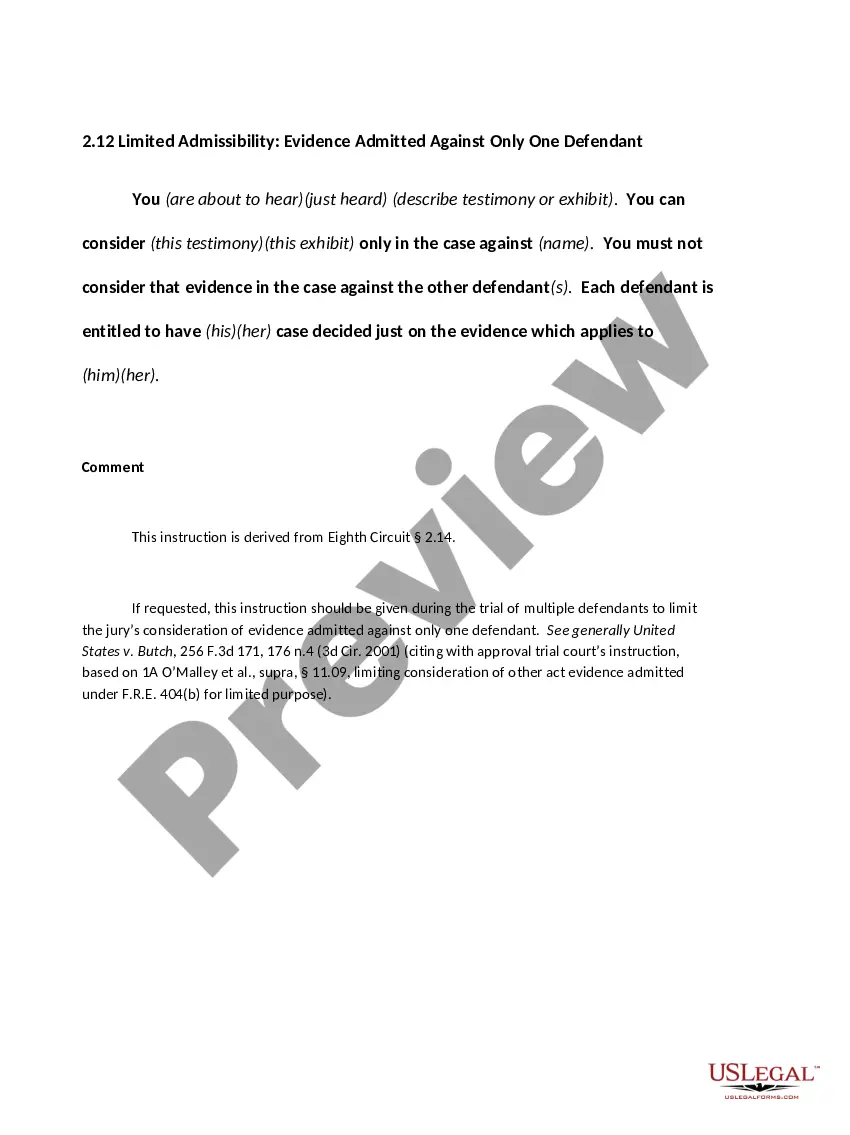
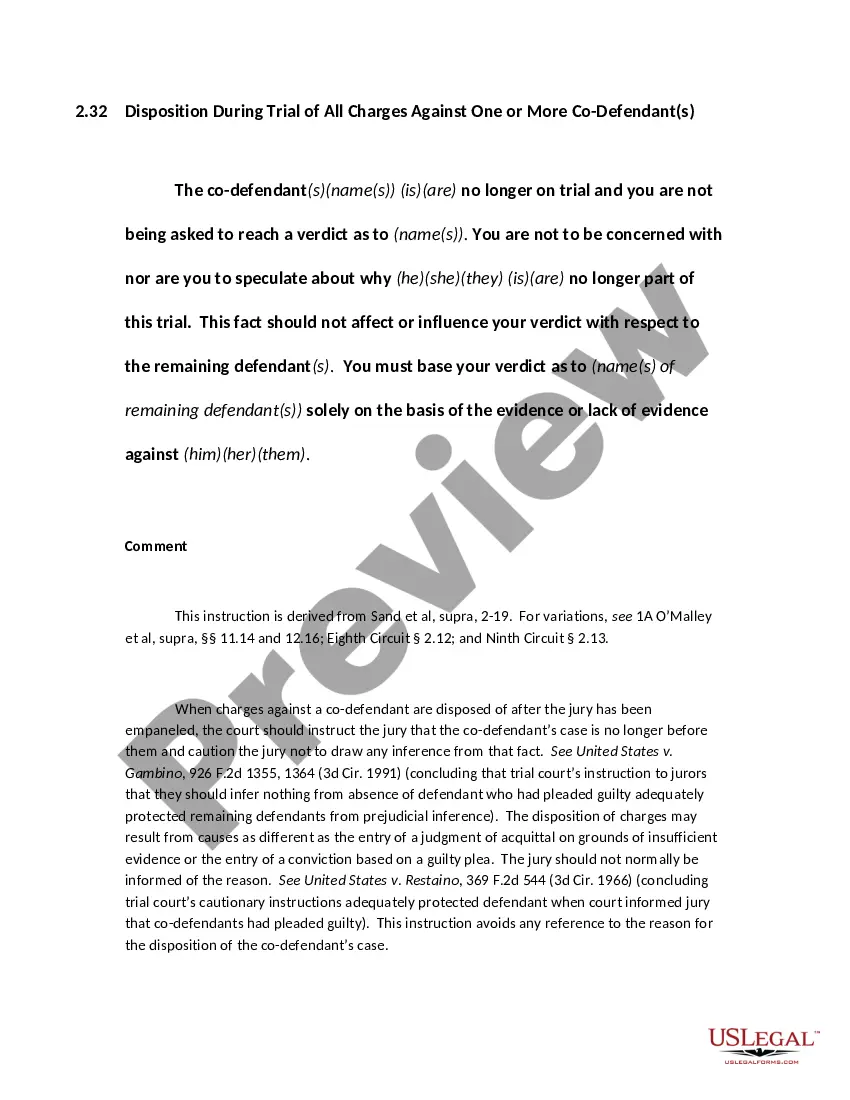
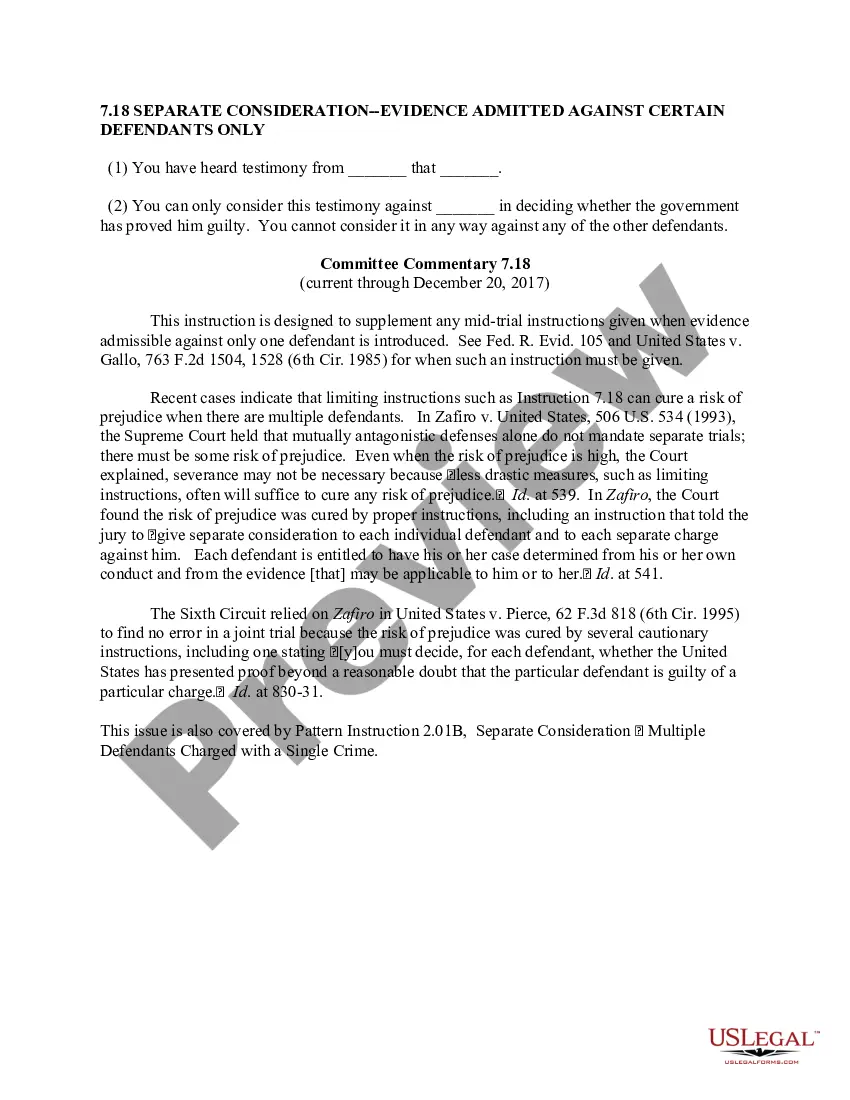
The Limited Admissibility: Evidence Admitted Against Only One Defendant form is a legal instruction used in trials involving multiple defendants. Its purpose is to clarify for the jury that certain evidence can only be considered against one defendant, ensuring that each defendant's case is evaluated independently. This form is distinct from other legal guidelines as it specifically addresses the limited use of evidence in multi-defendant scenarios.
What’s included in this form
- The instruction statement about evidence admissibility for a specific defendant.
- Clarification that evidence must not be considered against other defendants.
- A reference framework for jurors to decide cases based only on relevant evidence.
Common use cases
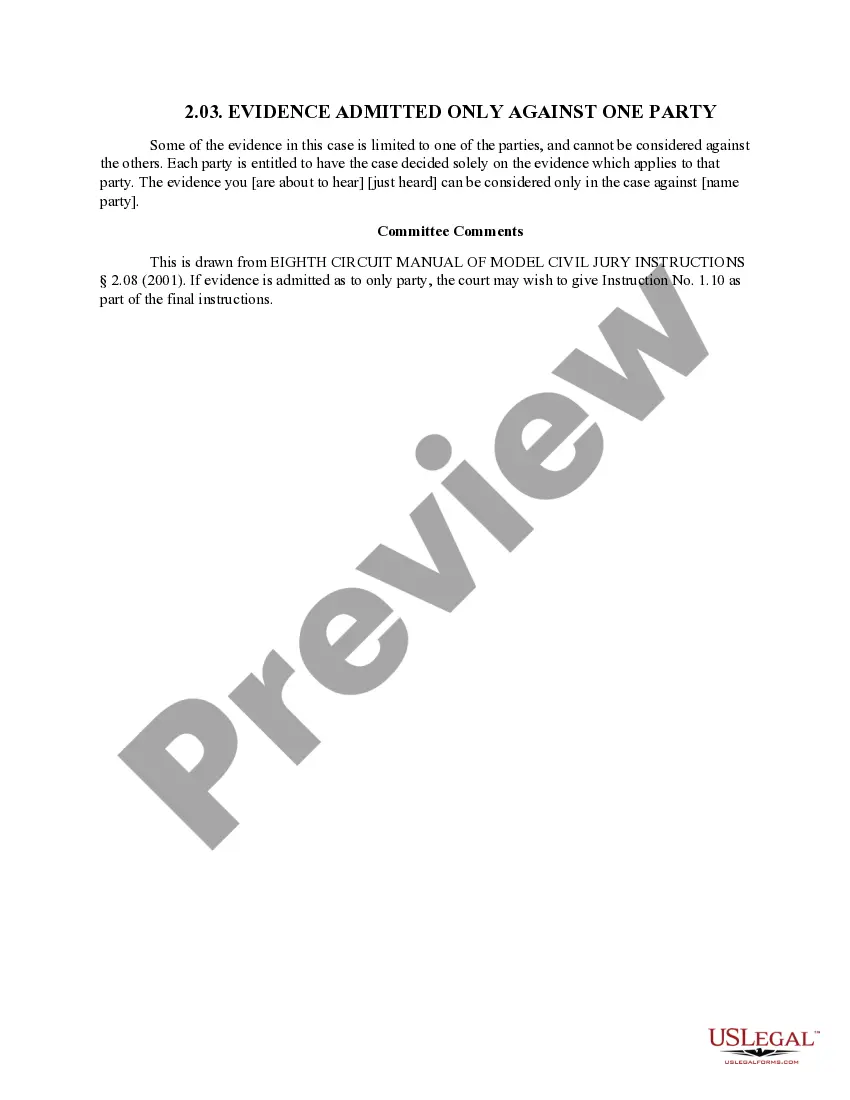
This form should be used during trials where there are multiple defendants and certain evidence is relevant to only one of them. It helps prevent jurors from unfairly using evidence against a defendant for whom that evidence is not applicable, thereby preserving the fairness of the trial.
Who this form is for
- Attorneys representing defendants in multi-defendant criminal trials.
- Judges who need to provide clear instructions to jurors regarding the admissibility of evidence.
How to complete this form
- Identify the defendant the evidence applies to and specify their name.
- Clearly describe the testimony or exhibit being presented.
- Emphasize to jurors that this evidence should only be considered for the named defendant.
Notarization guidance
In most cases, this form does not require notarization. However, some jurisdictions or signing circumstances might. US Legal Forms offers online notarization powered by Notarize, accessible 24/7 for a quick, remote process.
Get your form ready online
Our built-in tools help you complete, sign, share, and store your documents in one place.
Make edits, fill in missing information, and update formatting in US Legal Forms—just like you would in MS Word.
Download a copy, print it, send it by email, or mail it via USPS—whatever works best for your next step.
Sign and collect signatures with our SignNow integration. Send to multiple recipients, set reminders, and more. Go Premium to unlock E-Sign.
If this form requires notarization, complete it online through a secure video call—no need to meet a notary in person or wait for an appointment.
We protect your documents and personal data by following strict security and privacy standards.

Make edits, fill in missing information, and update formatting in US Legal Forms—just like you would in MS Word.

Download a copy, print it, send it by email, or mail it via USPS—whatever works best for your next step.

Sign and collect signatures with our SignNow integration. Send to multiple recipients, set reminders, and more. Go Premium to unlock E-Sign.

If this form requires notarization, complete it online through a secure video call—no need to meet a notary in person or wait for an appointment.

We protect your documents and personal data by following strict security and privacy standards.
Mistakes to watch out for
- Failing to clearly specify which defendant the evidence applies to.
- Not emphasizing the limited applicability of the evidence for other defendants.
- Ineffective communication of the instruction to the jury, leading to confusion.
Why use this form online
- Convenient access to carefully drafted legal language.
- Editability allows for customization based on specific case needs.
- Reliability, as forms are vetted by licensed attorneys.
Looking for another form?

Form popularity
FAQ
During trial, the court may need to give the jury limiting instructions, advising the jury that evidence is being admitted only for a limited purpose. Or the court may give the jury a curative instruction to correct some error during trial.
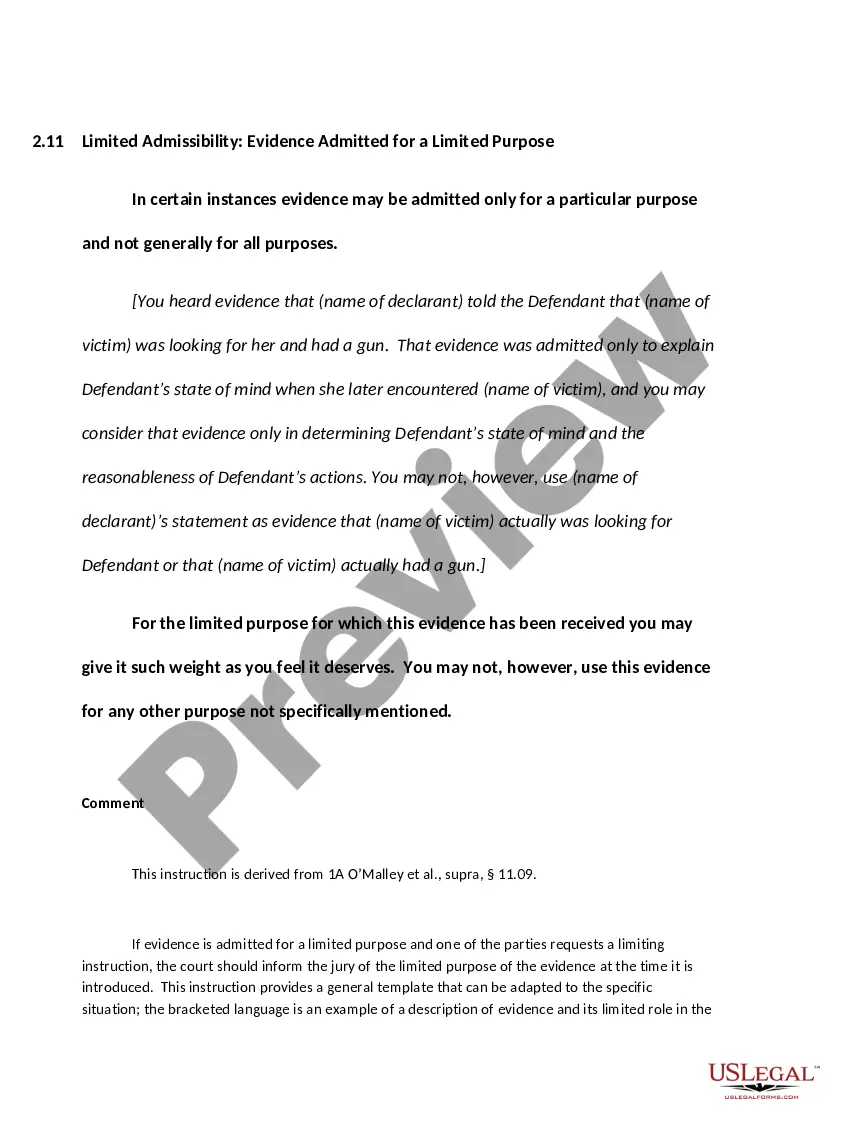
If the court admits evidence that is admissible against a party or for a purpose ? but not against another party or for another purpose ? the court, on timely request, must restrict the evidence to its proper scope and instruct the jury ingly.
If the court admits evidence that is admissible against a party or for a purpose ? but not against another party or for another purpose ? the court, on timely request, must restrict the evidence to its proper scope and instruct the jury ingly.
Rule 403 requires the trial court to conduct a balancing test to determine if evidence has ?probative value? or ?is substantially outweighed by the danger of one or the more of the following: unfair prejudice, confusing the issues, misleading the jury, undue delay, wasting time, or needlessly presenting cumulative
The Basic Rule Rule 105 ? Limited Admissibility. When evidence which is admissible as to one party or for one purpose but not admissible as to another party or for another purpose is admitted, the court, upon request, shall restrict the evidence to its proper scope and instruct the jury ingly.
Rule 404(b) of the Federal Rules of Evidence makes inadmissible most character evidence regarding crimes or acts for which no charges were filed, but this rule should not be used to eliminate evidence of criminal activity committed by the defendant at the same time as the crime charged, as a predicate to the crime
(2) Limiting instruction. The party against whom a hearsay is entered is entitled to an instruction to the jury that the statement may not be considered for its truth.
A jury instruction in which the judge instructs the jury to consider a piece of evidence for a specific purpose and ignore it for any other purpose. At trial, a court may admit evidence that is admissible for one purpose or against one party but not another.